Mediterranean
Fishing regions · Last reviewed 2026-08-10
A nearly enclosed, low-tide, historically overfished sea with the oldest continuous fishing culture in the world and the strongest spearfishing tradition in Europe.
Safety: boat traffic and being seen — can cause serious injury or death. 7 more points apply here.
Shallow water blackout and breath-hold loss of consciousness — Can cause serious injury or death
Warm, clear, comfortable water encourages longer dives, and hypoxic blackout gives no warning. The physiology is unaffected by how pleasant the conditions are.
What reduces it: Formal training first. One up, one down with a named buddy. Never hyperventilate. Set the dive time on the surface and surface on it.
Being listed here is not permission to fish. What that meansClose
Access, fishing rights, seasons, licences, local bylaws and permitted methods vary and can change. Check current access, permission, local regulations, closures and restrictions before you travel or fish. FishingHQ describes what the ground is and names who holds the answer; it does not hold the answer itself.
Find the authority for a jurisdiction · What FishingHQ does and does not cover
The Mediterranean is unusual enough physically that it changes how fishing works there. It is almost enclosed, connected to the Atlantic through a single narrow strait, and it has a very small tidal range — in many places a few tens of centimetres. An angler arriving from an Atlantic coast where the tide governs everything finds that the organising variable has simply been removed.
What replaces it is wind, water clarity, and the structure of the bottom. The water is typically clear and nutrient-poor, which produces exceptional visibility and relatively low productivity — good for anything done by sight, less generous in sheer biomass than colder, richer seas.
It is also the sea with the longest continuous record of human fishing anywhere, and the place where recreational spearfishing developed into a major sport. Several of the techniques, and much of the vocabulary, that the rest of the world uses for spearfishing came from here — aspetto is an Italian word for a reason.
And it is under serious pressure. Stocks in the Mediterranean have been among the most heavily exploited in the world, and the conservation dimension is not an appendix to the fishing here but part of its present condition.
What fishing here is like
An old, deeply embedded fishing culture where the line between recreational, artisanal and subsistence fishing has always been less sharp than in northern Europe. Shore fishing from rock and harbour is widespread and accessible; small-boat fishing is ubiquitous; and spearfishing is a mainstream sport with a long competitive history rather than the minority activity it is further north.
The clear water shapes everything. Sight-based methods work here in a way they do not in turbid northern seas, which is part of why spearfishing developed as it did, and why light line and refined presentation matter more than power for much shore fishing.
What you can target here
One entry per fish, grouped by how you would be fishing — because the answer is a different one from the rocks and from a boat. Each entry says how strongly the sources support it and how much evidence sits behind it. These are documented catches, not a forecast, and none of it is a statement that you may fish any particular ground.
From the shore · 11
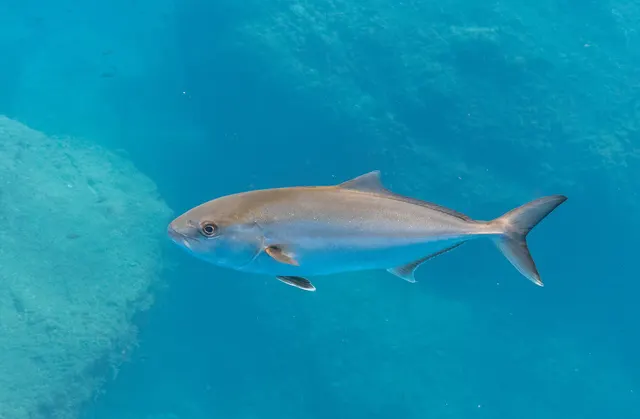 Greater amberjackCharacteristic of this water2 placesPunta del Faro, Messina, The south coast of CreteOver rock mark, tidal race
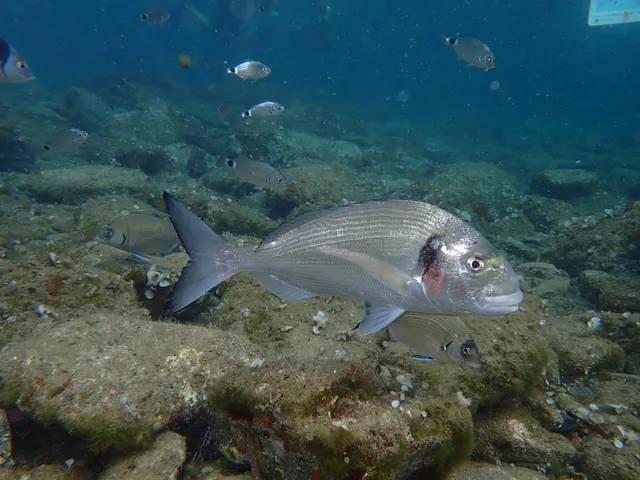 Gilthead breamCharacteristic of this water1 placeThe Venice lagoonOver estuary
- White seabreamRegular local target5 placesFormentera and Es Freus, The north coast of Menorca, Cape Sounion, The west coast of Naxos and 1 moreOver beach section, headland, rock mark, sound or strait
- Common octopusRegular local target4 placesThe north coast of Menorca, Cape Sounion, The west coast of Naxos, Formentera and Es FreusOver beach section, headland, rock mark, sound or strait
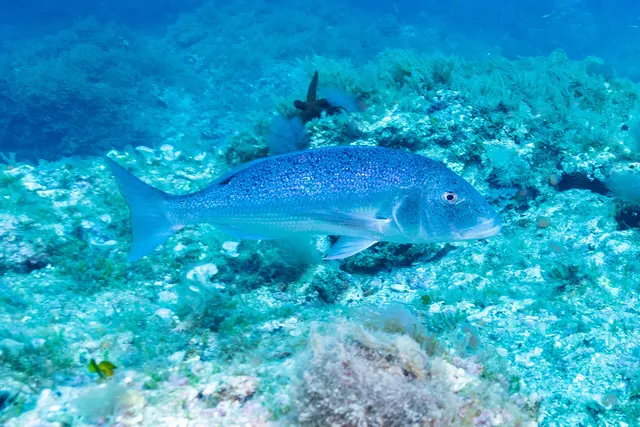 Common dentexRegular local target2 placesThe south coast of Crete, Cape SounionOver headland, rock mark
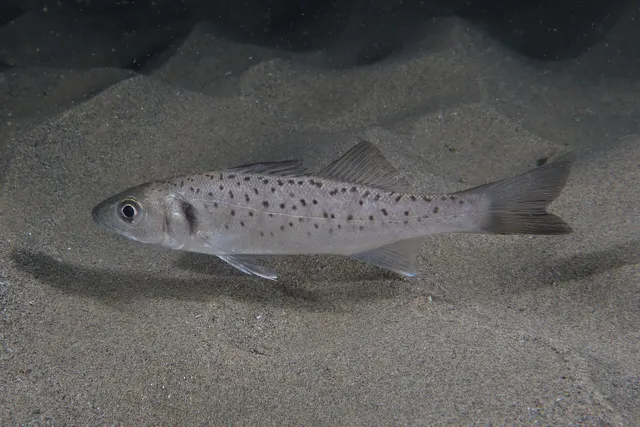 European sea bassRegular local target1 placeThe Venice lagoonOver estuary
Also documented from the shore: Flathead grey mullet · European squid · Atlantic bonito · Common cuttlefish · Red scorpionfish
From a boat · 7
- Greater amberjackCharacteristic of this water2 placesPunta del Faro, Messina, The south coast of CreteOver rock mark, tidal race
- Gilthead breamCharacteristic of this water1 placeThe Venice lagoonOver estuary
- Common dentexRegular local target6 placesFormentera and Es Freus, Punta del Faro, Messina, The south coast of Crete, The north coast of Menorca and 2 moreOver beach section, headland, rock mark, sound or strait, tidal raceAround Jun–Sept
- European sea bassRegular local target1 placeThe Venice lagoonOver estuary
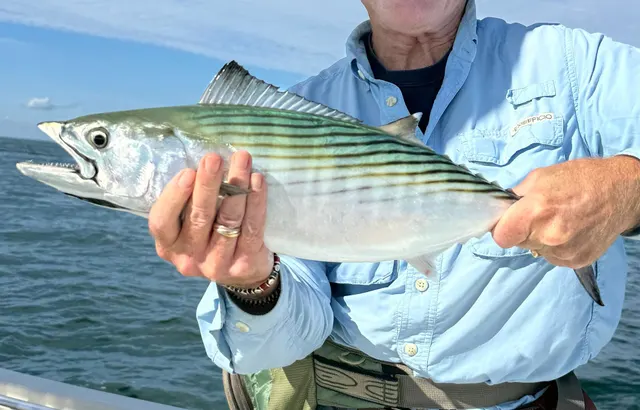 Atlantic bonitoSeasonal1 placePunta del Faro, MessinaOver tidal raceAround Jun–Oct
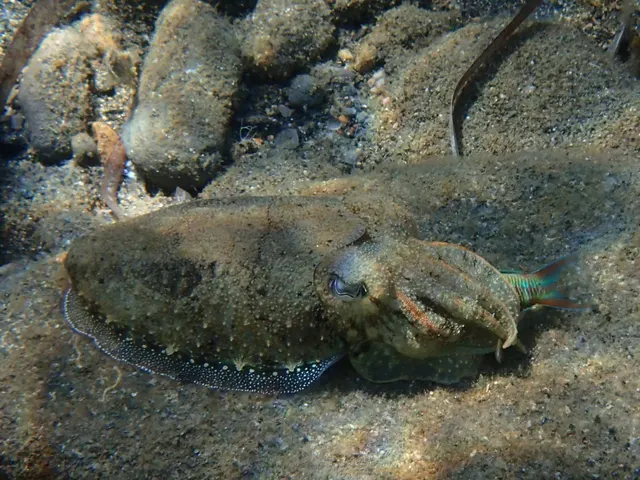 Common cuttlefishSeasonal1 placeThe Venice lagoonOver estuaryAround Mar–May, Oct–Nov
Also documented from a boat: Dusky grouper
What these strengths mean
- Characteristic of this water
- This water is strongly identified with this species by the sources that cover it.
- Regular local target
- Fishing sources describe this as a normal local target here, not merely as caught.
- Seasonal
- Well supported, and concentrated in part of the year rather than spread through it.
- Recorded here
- At least one credible public account of this species being caught here. That is all it means.
- How breadth is counted
- A fish documented at six marks is shown as six marks: breadth never raises the strength on its own. A fishery account describes the fishing; a recorded catch reports one specific catch. How evidence is weighed.
How people fish here
12 methods are recorded on the places documented here, counted from the records themselves rather than from what is practised in the country. Each opens a full guide to the technique.
Float fishing
Recorded at 11 places here, over headland, estuary, rock mark, bay.
Suspending a bait at a controlled depth beneath a buoyant indicator — the most visual, most controllable and most widely applicable method in angling.
Documented on the same ground: Gilthead bream, Common dentex, Common octopus, European sea bass, Flathead grey mullet, Greater amberjack.
Shore diving
Recorded at 8 places here, over headland, rock mark, beach section, island.
Entering and leaving the water from land under your own power — the most accessible spearfishing and the one where the entry and exit are the dangerous part.
Documented on the same ground: Common dentex, Common octopus, Greater amberjack, White seabream, European squid, Dusky grouper.
Kayak fishing
Recorded at 5 places here, over bay, beach section, estuary, island.
A platform rather than a technique: quiet, shallow-draught access to water no other craft reaches, bought at the price of exposure, and a discipline where the decision not to launch is part of the skill.
Documented on the same ground: Gilthead bream, Common dentex, Common octopus, European sea bass, Flathead grey mullet, White seabream.
Spinning
Recorded at 5 places here, over estuary, bay, lake, river reach.
Casting an artificial lure and retrieving it so that it moves like something alive — the most direct form of lure fishing.
Documented on the same ground: Gilthead bream, European sea bass, Flathead grey mullet, Common cuttlefish.
Eging
Recorded at 4 places here, over headland, beach section, sound or strait.
Jigging for squid and cuttlefish with a barbed, weighted lure worked in lifts and pauses — a Japanese discipline with its own tackle, vocabulary and competitive scene.
Documented on the same ground: Common dentex, Common octopus, White seabream, European squid, Red scorpionfish.
Ledgering
Recorded at 4 places here, over estuary, bay, river reach.
Fishing a bait on the bottom held by a weight, with no float — the simplest way to fish at distance, in depth, or in wind.
Documented on the same ground: Gilthead bream, European sea bass, Flathead grey mullet, Common cuttlefish.
Aspetto (waiting)
Recorded at 3 places here, over headland, island, rock mark.
Descending, settling on the bottom and waiting for fish to come to you — the technique that produces most of the large fish taken by shore divers.
Documented on the same ground: Common dentex, Greater amberjack, White seabream, Dusky grouper, Red scorpionfish.
Jigging
Recorded at 3 places here, over lake, reef, tidal race.
Working a weighted lure with a rising-and-falling motion, usually vertically, so it behaves like a wounded or fleeing baitfish.
Documented on the same ground: Greater amberjack, Common dentex, Atlantic bonito, European squid.
Trolling
Recorded at 3 places here, over lake, reef, tidal race.
Towing lures or baits behind a moving boat to cover large volumes of water and locate scattered fish.
Documented on the same ground: Greater amberjack, Common dentex, Atlantic bonito, European squid.
3 further methods are recorded at one or two places each: Drift fishing, Big-game fishing, Deadbaiting.
These are the methods documented at the places FishingHQ holds here. A species listed beside a method is documented on the same ground, which is not the same as being taken that way — where a source establishes the method a fish was caught on, it is stated on that place’s own page. All fishing methods.
The fishing year here
The months the records under this area actually name, tightest season first. This is “observed in these months” rather than a season: a species whose months nobody recorded is not listed, because a gap in the evidence is not a year-round fishery.
- Common dentexJune to September
- Atlantic bonitoJune to October
- Common cuttlefishMarch, April, May, October and November
- European squidSeptember to March
Areas within this one
6 coasts, island groups and systems inside this area have fishing guides of their own.
Balearic Islands
2 documented places
A near-tideless archipelago on its own shelf, with water clear enough that sight matters more than scent, extensive seagrass meadows that decide where everything lives, and a squid and cephalopod tradition that defines the local fishing year.
Documented here: Common dentex, Common octopus, White seabream, European squid, Red scorpionfish
Fished by: float fishing, shore diving, eging, kayak fishing
Greece
4 documented places across 1 coast
Fifteen thousand kilometres of coast, six thousand islands, a sea that is nearly tideless and among the least productive on earth — and permission that comes from the harbourmaster rather than from any fisheries body.
Documented here: Common dentex, White seabream, Common octopus, Greater amberjack, European squid
Fished by: float fishing, shore diving, eging, kayak fishing
Inside it: The Aegean and Crete
Italy
5 documented places
Eight thousand kilometres of Mediterranean coast, an Alpine river system at the other end of the same country, and a spearfishing tradition that shaped the equipment the rest of the world uses.
Documented here: Gilthead bream, European sea bass, Flathead grey mullet, Common cuttlefish
Fished by: spinning, float fishing, ledgering, aspetto (waiting)
The Croatian Adriatic
2 documented places
A thousand islands on drowned limestone, the clearest coastal water in the Mediterranean, almost no tide and a fierce local wind — and the densest spearfishing culture in Europe.
Fished by: float fishing, shore diving, aspetto (waiting), eging
The Strait of Gibraltar
Fourteen kilometres between two continents, where Atlantic water flows in on the surface and Mediterranean water flows out beneath it, and where tuna have been intercepted in fixed traps for three thousand years.
The Strait of Messina
1 documented place
A narrow channel where two seas at different levels exchange water twice a day, driving deep-sea fish to the surface and supporting a swordfish harpoon fishery of documented antiquity.
Documented here: Greater amberjack, Common dentex, Atlantic bonito, European squid
Fished by: drift fishing, jigging, trolling
What dominates
Spearfishing and freediving, which are more established here than anywhere else in Europe and which contributed much of the discipline's technique and vocabulary. Shore fishing from rock and harbour with light tackle for a diverse inshore species list. Small-boat fishing, including bottom fishing and trolling. Big-game fishing for tuna and billfish in specific areas, with a long history. Freshwater fishing exists in the surrounding countries but is a minor part of the picture relative to the sea.
The water available
Rocky coast and shallow reef; seagrass meadows, which are a distinctive and ecologically critical habitat of this sea; sandy bays; harbours and breakwaters, which function as artificial reef; and deep water close inshore in many places because the shelf is narrow. Tidal range is very small over most of the sea, so intertidal habitat of the kind that dominates Atlantic coasts is largely absent — a structural difference, not a matter of degree.
How the rules are structured
There is no single Mediterranean framework. Rules are set by each coastal state, with a regional fisheries management organisation coordinating at the sea-basin level and, for European Union member states, a further layer of EU-level fisheries policy. Recreational fishing is regulated at national level and frequently at regional level below that, and requirements — licensing, catch reporting, permitted gear, spearfishing rules in particular — differ substantially between countries on the same coastline. Marine protected areas are numerous and their zoning determines what is permitted within them. Spearfishing is subject to specific and varied restriction, including on equipment, on the use of breathing apparatus, on night diving and on proximity to bathers, and those rules differ markedly between neighbouring countries. FishingHQ does not state what any current rule is.
Who to ask
- The national fisheries authority of the specific country whose waters you are in
- Regional or provincial fisheries administrations, which set rules below national level in several countries
- The managing authority of any marine protected area, whose zoning governs what is permitted inside it
- The regional fisheries management organisation for the Mediterranean, for basin-level measures and stock advice
- National diving or spearfishing federations, which publish plain-language explanations of equipment and activity rules
Words you will meet
- Aspetto
- Italian for the wait. The spearfishing technique of descending, settling motionless and letting fish come to you. The word travelled with the technique and is used internationally.
- Agguato
- Ambush. Used in spearfishing for hunting from concealment against structure, as distinct from open-water waiting.
- Posidonia
- The seagrass forming extensive meadows across the sea bed here. A protected, slow-growing, habitat-forming species that supports much of the inshore fish community.
- Sarago
- Sea bream of the genus Diplodus, a defining inshore target for both shore anglers and spearfishers across the region.
Conditions and hazards
The small tidal range removes the cut-off hazard that dominates Atlantic coasts, and it removes it so completely that visitors sometimes carry the resulting complacency to coasts where it matters. The live hazards here are different: strong local winds that arrive fast and turn a calm sea dangerous within an hour, particularly for small boats; boat traffic in summer, which is intense and is the principal risk to divers; sun and heat; and, for spearfishers, all the standing hazards of breath-hold diving in water clear enough to make long dives feel comfortable. Clear, warm, pleasant water is not a safer place to black out than cold, murky water.
A sea without a tide, and what that removes
The tidal range over most of this basin is measured in tens of centimetres, and almost everything else follows from it.
WHAT IT REMOVES. No cut-off risk on rock platforms. No two-hour fishing window dictated by the state of tide. No tidal streams to plan around at most marks. No exposed ground at low water to read. A shore angler here can fish a mark at any hour and find it much as they left it, which is simply not true anywhere on the Atlantic coast of the same countries.
WHAT IT PRODUCES INSTEAD. Fishing organised around light and season rather than around tide — dawn, dusk and night carry far more weight here than any state of water. And a shore culture that is genuinely casual in a way northern European sea angling cannot be.
AND THE HAZARD IT CREATES. The complacency travels. Anglers who learned on a tideless coast and then fish Atlantic Iberia, Brittany or the Bristol Channel arrive without the habit of checking a tide table, on ground where that habit is what keeps people alive. The absence of a hazard in one place is not its absence generally, and this is the clearest example of it in FishingHQ.
Where the line between sport, artisanal and subsistence blurs
Northern European angling grew up as a sport with a separate commercial industry beside it. Here the separation was never clean and still is not.
SMALL-BOAT FISHING is ubiquitous and much of it is for the table. A family boat may fish handlines, small longlines, traps and rods in the same week, and whether that is recreation or provisioning is not a question anybody feels obliged to answer.
SHORE FISHING from rock and harbour wall is widespread, accessible and unpretentious.
SPEARFISHING IS MAINSTREAM here in a way it is nowhere else in Europe. It has a competitive history running back decades, it produced most of the world's equipment vocabulary, and a spearfisher is an ordinary kind of fisherman rather than a specialist.
AND THE CONSEQUENCE FOR A VISITOR. The categories a British or Scandinavian angler brings — coarse, game, sea, sport against commercial — do not map onto what is happening on this coast. Somebody fishing a harbour wall with a handline for supper is doing a normal thing, and treating it as a lesser version of rod-and-line sport misreads the culture entirely.
Seagrass, rock and a shelf that runs out fast
Three features define the fishing ground here and two of them are unusual.
POSIDONIA MEADOWS. Extensive seagrass beds are the signature habitat of this sea and are ecologically critical — nursery ground for a large part of the inshore fish community, and slow-growing to the point that damage is effectively permanent on any human timescale. Anchoring into them is the commonest way recreational boats do lasting harm, and it is why anchoring restrictions exist in many places.
ROCKY COAST AND SHALLOW REEF, with harbours and breakwaters functioning as artificial reef and holding a genuine fish community rather than being merely convenient.
AND A NARROW SHELF. In much of the basin the bottom drops away close inshore, which means deep water is reachable from small boats and sometimes from the rocks. That is why the same coastline offers shallow bream fishing and genuinely deep-water fishing within a few hundred metres.
WHAT IS LARGELY ABSENT: big surf beaches, large estuaries with strong salinity gradients, and the tidal flats that structure fishing on Atlantic coasts.
Twenty-odd countries, one sea, no common rulebook
This is the practical difficulty that most affects a visiting angler, and it has no shortcut.
MORE THAN TWENTY COASTAL STATES share this sea. Some are European Union members operating within shared framework measures while retaining their own national rules; others are not members at all and legislate independently. Recreational licensing, permitted methods, size limits, protected species and spearfishing restrictions differ between neighbours, and sometimes between regions of one country or between islands of one archipelago.
MARINE PROTECTED AREAS overlay all of it, with conditions that vary by site rather than by designation.
SPEARFISHING IS THE MOST VARIABLE OF ALL — restrictions on compressed air, on distance from shore, on proximity to other water users, on night diving and on particular species, all set nationally or regionally.
FishingHQ does not state what any of it currently says. The national fisheries authority for the country you are in, the regional administration where one exists, and the protected-area manager for the specific site are the sources, and an answer obtained for one country tells you nothing about the next coastline along.
A year shaped by heat rather than by cold
Northern seasonal thinking is built around water being too cold. Here the limiting condition is at the other end.
HIGH SUMMER IS OFTEN THE HARDEST PERIOD inshore. Surface water becomes very warm, the water column stratifies, oxygen falls in the warmest layer, and a great many fish move deeper or feed only at night. The response is not to fish harder in daylight but to fish the dark, and night fishing here is a mainstream response to heat rather than a specialism.
SPRING AND AUTUMN ARE THE PRODUCTIVE SHOULDERS, with moderate water temperatures and active feeding.
WINTER remains fishable throughout — nothing freezes and nothing shuts down — and several species are at their best in the coldest months, which surprises visitors from colder countries who expect a closed season imposed by weather.
AND THE TOURIST INVERSION IS WORTH NAMING. The months when most visitors arrive are the months when inshore fishing is hardest and most crowded, which is why local anglers are conspicuously absent from the same marks in August.
A species list that rewards refinement rather than power
The fish here are on average smaller, more numerous, more varied and considerably harder to deceive than on the Atlantic coasts of the same countries, and every one of those follows from the same physical facts: a warm, clear, nutrient-poor and nearly enclosed sea.
THE SHORE FISHERY is dominated by sea breams — a large group, several of them superficially similar, and collectively the fish most Mediterranean shore angling is about. Gilthead bream are the prestige catch of the group and are genuinely difficult: cautious, strong for their size, and taken on refined tackle. Sea bass are present throughout and are less exclusively the fish of estuaries and surf than they are in the north. Mullets are everywhere, are taken seriously here rather than dismissed, and support their own methods.
THE PREDATORS. Barracuda, amberjack, dentex, bluefish and various groupers occupy the rough ground and the drop-offs. Dentex in particular is a fish with no real northern European equivalent — a fast, deep-bodied, sight-hunting predator of clear water over rock — and much of the region's lure fishing exists because of it.
THE OPEN WATER holds tuna, including Atlantic bluefin, which spawn in this sea and whose management here has been among the most contested in world fisheries. Swordfish are present and are fished commercially and recreationally.
WHY IT MATTERS THAT THE WATER IS CLEAR AND POOR. Nutrient-poor water supports less biomass, so the fish are smaller than the same species in richer seas. Clear water means the fish see the tackle, so line diameter, hook size and presentation matter more than they do in turbid conditions. Those two together are why Mediterranean shore fishing has developed toward extremely light and refined tackle while northern European sea angling developed toward power — the difference is the water, not the anglers.
AND ONE STRUCTURAL CHANGE. A substantial number of Indo-Pacific species have entered through the Suez Canal and established themselves, particularly in the eastern basin. Some are now ordinary catches. Two of them, the silver-cheeked toadfish and the lionfish, are hazardous — the first seriously toxic to eat, the second venomous to handle — and both are met by anglers who do not recognise them. This is a live and changing situation rather than a curiosity, and it is the strongest reason to identify an unfamiliar fish here before touching or eating it.
Why the terminology problem here is not the words
Every region has local terms a visitor must learn. This one has a different problem, and recognising which problem you have is most of the answer.
THERE IS NO COMMON LANGUAGE. The basin is bordered by more than twenty countries speaking a dozen unrelated languages across three writing systems. There is no Mediterranean fishing vocabulary in the sense that there is a British or an American one. What exists is a set of national vocabularies whose only shared layer is the scientific name.
SO THE OPERATIVE SKILL IS NOT VOCABULARY BUT CROSS-REFERENCE. An angler working here who needs to know what is protected, what is undersized and what is closed will be reading a rulebook in a language they may not have, describing fish by names that do not translate. The reliable route is the scientific binomial, which is the same in every jurisdiction in the basin and is what fisheries regulations are ultimately keyed to.
AND THE FALSE FRIENDS ARE THE DANGEROUS PART. Common names collide across languages and within them. Several unrelated fish are called some version of "sea bream" in English alone; regional names attach to different species in different countries; and a name learned on one coast will be applied to a different fish two hundred miles away. A fish identified by common name from a phrasebook is not identified.
THE ONE VOCABULARY THAT DID TRAVEL is spearfishing's. Because the sport developed here and the competitive circuit was here, a large part of the equipment and technique vocabulary used worldwide is Mediterranean in origin — much of it French and Italian — and it is now used by people who have never fished this sea.
PRACTICAL INTERPRETATION. Learn the scientific names of the species you intend to catch and keep before you travel, not the local names. Local names are for talking to people; binomials are for reading rules. In a basin with this many jurisdictions the second is what keeps you legal.
RELATED INTELLIGENCE. The framework section explains why there is no single rulebook to read; this section explains why the rulebook you do find may not be readable.
Two and a half thousand years of the same argument
This is the longest continuously documented fishery in the world, and what makes the record valuable to an angler is not its age but what it shows: the problems are old.
THE CLASSICAL RECORD. Greek and Roman writers describe fishing methods, tackle, bait, species and markets in enough detail to be recognisable. Rod, line, hook, net, trap, spear and lure are all documented. Salted and fermented fish products were traded across the whole basin at industrial scale, with the archaeological remains of the processing sites still visible on several coasts. This was never a subsistence backwater; it was a commercial fishery with a supply chain.
THE TUNA TRAPS. The elaborate fixed-net systems intercepting migrating bluefin — known as tonnara, almadraba and by other names around the basin — operated for many centuries, in some places continuously from antiquity into the twentieth century. They were community institutions as much as fishing gear, with their own hierarchies, calendars and rituals, and their decline through the twentieth century tracked the decline of the stock they depended on. A handful still operate.
WHAT THE LONG RECORD ACTUALLY SHOWS. Depletion is not a modern discovery here. Classical sources already complain about it. The Mediterranean has been fished hard for longer than anywhere else, which is part of why its stocks are among the most heavily exploited in the world today, and why the baseline an angler imagines — what this sea "should" hold — is itself a historical artefact rather than a natural state.
SPEARFISHING'S HISTORY IS RECENT AND CONCENTRATED. The modern sport was largely developed on this coast in the middle of the twentieth century, the competitive structure and much of the equipment came from here, and that is why the region treats a spearfisher as an ordinary fisherman rather than a specialist.
WHAT NOT TO CONCLUDE. That a long history means a stable one. The species composition of this sea is changing now, through warming and through arrivals via the Suez Canal, faster than at any point in the documented record. The history is long; it is not a guide to the next fifty years.
No tide, warm clear water, and the two things that kill people anyway
This sea removes the hazard that organises safety thinking on every Atlantic coast, and what it replaces it with is easy to miss precisely because the obvious danger is gone.
THE TIDE IS ESSENTIALLY ABSENT and that is genuinely good news. There is no cut-off mechanism on the rocks, no race through a sound, no ground that uncovers and covers twice a day, and no need to plan a session around a tide table. It also produces a specific export problem: anglers who learn to fish here and then fish an Atlantic coast carry the resulting habits with them, and those habits are actively dangerous somewhere with a ten-metre range. That is worth naming because it is the one way this sea's safety profile hurts people elsewhere.
THE FIRST LIVE HAZARD IS TRAFFIC. Summer boat traffic here is heavy and fast, and a freediver is close to invisible from a moving vessel — a head in a chop is nothing and a small buoy not much more. Propeller injuries are catastrophic. The measures are a surface marker with a flag that is actually visible, staying with it rather than ranging away, and treating approaching engine noise as a reason to surface beside the float.
THE SECOND IS BREATH-HOLD BLACKOUT, and it is the hazard this sea disguises best. Hypoxic blackout gives no warning symptoms — that is its defining clinical feature rather than an unlucky variant of it. A diver does not feel it coming, does not become aware that they are close, and loses consciousness without any signal that would prompt them to surface. The urge to breathe comes from carbon dioxide rather than from oxygen, so a person who has hyperventilated has suppressed the alarm without adding any oxygen, which is why that practice is specifically warned against.
AND WARM CLEAR COMFORTABLE WATER MAKES IT MORE LIKELY RATHER THAN LESS. Cold, murky, unpleasant water shortens dives because the diver wants to come up. Twenty-five-degree visibility of thirty metres over a reef, on a still day, with a fish in sight, lengthens them — and the physiology is entirely unaffected by how pleasant the conditions are. A comfortable dive is a longer dive, and length is the variable that matters.
WHICH GIVES THE ONE RULE THAT ACTUALLY WORKS, and it is not a technique. One up, one down: a buddy on the surface watching the diver's ascent and the first thirty seconds after it, close enough to reach them, every dive, with no exceptions for a shallow one. Solo freediving is the common factor in freediving fatalities, and no amount of experience substitutes for somebody watching. Take proper surface intervals, and never dive after hyperventilating.
THE THIRD IS WIND. Regional winds here rise fast and turn a flat sea dangerous within an hour, which catches small boats offshore and shore anglers on exposed rock. Check the forecast on the day and treat a named local wind as a schedule rather than a possibility. And the sun and the heat do their usual quiet work on judgement across a long day.
Official guidance — why, and the sources (3)
Stated by a fisheries authority, scientific institute or recognised angling body. Authoritative, but summarising rather than demonstrating.
- DAN guidance on freediving safety, hypoxia and shallow-water blackout — Divers Alert Network (Water-safety or diver-training authority)Relied on for: Hypoxic blackout in breath-hold diving, its absence of warning symptoms, and the direct supervision practice that addresses it.States this directlyPassage read and verified
- AIDA International freediving education and safety standards — AIDA International (Water-safety or diver-training authority)Relied on for: Freediving training and safety standards, including one-up-one-down direct supervision and surface interval practice.States this directlyCitation checked — the work exists and is described correctly
- RNLI water safety guidance: cold water shock and Float to Live — Royal National Lifeboat Institution (Water-safety or diver-training authority)Relied on for: Cold water shock and the immersion response, and water-safety guidance for shore anglers and small-craft users.States this directlyPassage read and verified
Some of what lives here
Fish recorded here that FishingHQ holds a reviewed photograph of. It is not a complete list of what Mediterranean holds, and it is not a prediction that you will catch any of them — it is a way in to the ones we can show you.
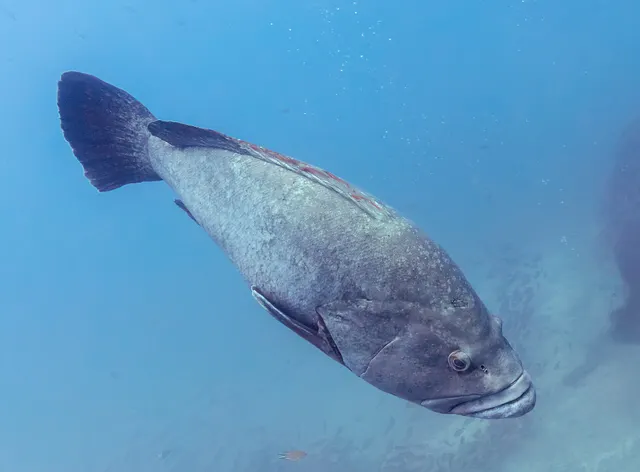 Dusky grouperThe Mediterranean's iconic reef predator: territorial, slow to mature, sex-changing, and the species whose decline made the case for marine protected areas there.
Diego Delso — CC BY-SA 4.0, via Wikimedia Commons
- Common dentexThe Mediterranean's fastest and warriest inshore predator — a sea bream that hunts like a jack, and the fish spearfishers there rate above all others.
Diego Delso — CC BY-SA 4.0, via Wikimedia Commons
Places within this area
Publicly documented fishing geography. FishingHQ describes what the ground is; it does not say whether you may fish it, and every one of these sends that question to the body that holds the answer. Browse every place in this part of the world.
Who to ask before fishing any of these
FishingHQ does not know the current access position here. Recreational sea fishing in France is not generally licensed for shore angling, but national and European measures on species, sizes, quantities and gear apply, some species carry a declaration or marking requirement, and access to structures, beaches and shellfish grounds is governed locally. All of it changes. Check the current position with the maritime prefecture or the departmental directorate for the sea, and with the commune, before going.
The Gulf of Lion shelf edge
Reef · Salt water
The outer edge of the widest continental shelf in the Mediterranean, cut by a series of submarine canyons that reach in towards the coast, with soft sediment on the shelf and hard ground and coralligenous growth on the canyon walls.
Open water in a gulf notorious for the mistral and tramuntana, which blow offshore, hard and for days at a time, and build a steep sea in a short fetch.
Particular to this ground: weather and lightning.
Severe hazards of Mediterranean apply here: boat traffic and being seen, shallow water blackout and breath-hold loss of consciousness.
Safety
Shallow water blackout and breath-hold loss of consciousness is set out at the top of this page, where it cannot be missed.
Boat traffic and being seen — Can cause serious injury or death
Summer boat traffic on this coast is heavy and fast, and a diver or a swimming angler is close to invisible from a moving vessel. Propeller injuries are catastrophic.
What reduces it: A conspicuous flagged float per diver, kept close rather than trailing. Stay clear of channels and moorings. Understand that what a dive flag legally obliges other vessels to do differs between countries here and that many skippers do not know.
Weather and lightning — Can cause injury needing treatment
Regional winds can rise quickly and turn a flat sea into a dangerous one within an hour, which catches out small boats and shore anglers on exposed rock.
What reduces it: Check the forecast for the whole window rather than the start, know the local wind names and what they do, and leave early rather than late.
Precautions that always apply here
- Never spearfish or freedive alone.
- Dive one up, one down: one diver down, one on the surface actively watching, every single dive.
- Never hyperventilate before a breath-hold. It delays the urge to breathe without adding oxygen, which is precisely the mechanism behind shallow water blackout.
- Tell somebody where you are going and when you expect to be back.
- Carry a charged phone in a waterproof case, or another means of calling for help.
Further safety reading
- Breath-hold blackout — Clear, warm, comfortable water encourages longer dives, and the physiology of hypoxic blackout is entirely indifferent to how pleasant the conditions are.
Check the rules before you fish
Fishing laws, bylaws, access rules, seasons, bait restrictions and permitted methods vary by location and can change. Check the current rules from the relevant authority and the water you intend to fish before fishing.
Check with:
- Current national or regional law for where you are fishing
- Current local bylaws
- The relevant fisheries authority
- The landowner, club or fishery whose water it is
- Any restrictions specific to the species or the method you intend to use
Where to go next
What swims here
- Common dentexThe most prized spearfishing target across much of the sea, and the benchmark by which divers there judge a session — mobile, extremely wary, and seen for a few seconds at the edge of visibility.
- Dusky grouperThe fish Mediterranean spearfishers built a culture around, and the one whose disappearance from much of that sea became the argument for protecting parts of it.
Local knowledge
- Reading a tide for fishingThe clearest case in FishingHQ of a sea whose fishing has to be organised by something other than a tide, and the reason the record now says what does the tide's job where there is almost none.
- Reading the tideThe tidal range here is very small over most of the sea, which removes the organising variable of Atlantic fishing entirely — and visitors sometimes carry the resulting complacency back to coasts where it matters.
- Turbidity and visibilityA sea whose transparency is the visible symptom of its low productivity, which is the single most misread fact about fishing here.
How this compares
- Balearic IslandsThe islands sit on their own shelf within the Mediterranean, and the near-absent tide, the clarity and the seagrass that define them are properties of that sea rather than of the islands.
- Britain and IrelandTwo European seas that could hardly be less alike to fish: one with a very large tidal range, cold turbid water and a kelp coast, the other nearly tideless, clear and warm. Almost every technique assumption differs between them.
- Coastal lagoonsMediterranean coastal lagoons are among the most productive and most heavily designated water in the basin, and their near-absent tide makes the mouth the only place with real current.
- The Aegean and CreteThe general Mediterranean page explains the sea's tidelessness, clarity and long exploitation; this archipelago is where all three are at their most extreme, and where the Red Sea arrivals have gone furthest. It is the specific case the general record predicts.
- The Moroccan Mediterranean coastThe Alboran is where the Mediterranean exchanges with the Atlantic, so it is both an instance of the basin record and the exception that explains why the rest of the basin is less productive.
- The Strait of MessinaThe strait's entire character comes from two sub-basins of the Mediterranean being out of tidal phase with one another, which is a fact about this narrows rather than about the sea as a whole — so it is set out here, where it can be explained properly.
Rules and access
Environment and conservation
Sources and evidence
- ICES Advice on fishing opportunities, catch and effort — International Council for the Exploration of the Sea (Scientific institute)Relied on for: That fish stocks are assessed and managed through regional scientific advice processes, and the general structure of stock assessment feeding management measures.Background and mechanism onlyCitation checked — the work exists and is described correctly
- DAN guidance on freediving safety, hypoxia and shallow-water blackout — Divers Alert Network (Water-safety or diver-training authority)Relied on for: Hypoxic blackout physiology and that comfortable conditions do not reduce the risk.States this directlyPassage read and verified
- BSAC diving safety guidance and annual incident report — British Sub-Aqua Club (Water-safety or diver-training authority)Relied on for: Buddy protocol and surface marking for breath-hold divers in trafficked water.FishingHQ's interpretation of what it saysCitation checked — the work exists and is described correctly
Why the 15 connections on this page are here, and the sources
What swims here
Backed by research — 2 connections
Supported by peer-reviewed research or fisheries science. The sources are listed and can be checked.
Common dentex
A distribution claim held to a scientific standard.
- FishBase: a global information system on fishes — Froese, R. and D. Pauly, eds. — FishBase Consortium (Scientific institute)Relied on for: That Dentex dentex is common in the Mediterranean south of 40 degrees north and occurs on hard bottoms of rock or rubble typically at 15 to 50 m.States this directlyPassage read and verified
Dusky grouper
A distribution claim held to a scientific standard.
- FishBase: a global information system on fishes — Froese, R. and D. Pauly, eds. — FishBase Consortium (Scientific institute)Relied on for: That Epinephelus marginatus ranges from the Mediterranean Sea through the southern Bay of Biscay to southern Africa, and is reef-associated on rocky bottoms usually shallower than 50 m.States this directlyPassage read and verified
How people fish here
What experienced anglers do — 1 connection
Widely and independently recommended by experienced anglers and specialist sources. This is real angling knowledge, not proof: controlled evidence for it is limited, and FishingHQ records it as convention rather than as a demonstrated effect.
Spearfishing
A claim about where a discipline's modern form and vocabulary originated, which is exactly the kind of thing a British-authored catalogue would otherwise omit.
- BSAC diving safety guidance and annual incident report — British Sub-Aqua Club (Water-safety or diver-training authority)Relied on for: The established position of breath-hold spearfishing as an organised sport with its own safety practice.Citation checked — the work exists and is described correctly
- General angling website restatements of established technique — Various (Credible secondary source)Relied on for: General descriptions of Mediterranean spearfishing tradition and terminology.Citation checked — the work exists and is described correctly
Local knowledge
Backed by research — 3 connections
Supported by peer-reviewed research or fisheries science. The sources are listed and can be checked.
Reading a tide for fishing
A link from a practice, an environment or a geography to the mechanism it rests on. It asserts that the mechanism is load-bearing here rather than merely relevant, which is the test applied throughout this file.
- ICES Advice on fishing opportunities, catch and effort — International Council for the Exploration of the Sea (Scientific institute)Relied on for: Hydrography, stratification, salinity structure and stock distribution across the European sea areas assessed, which is the physical basis for the mechanism named.States this directlyCitation checked — the work exists and is described correctly
- NOAA National Ocean Service education on estuaries and the National Estuarine Research Reserve System — National Oceanic and Atmospheric Administration, United States (Government fisheries body)Relied on for: Estuarine and coastal process: salt wedges, stratification, tidal exchange and the way water of different densities behaves where it meets.States this directlyCitation checked — the work exists and is described correctly
Reading the tide
A physical claim about regional tidal behaviour, held to a scientific standard on the mechanism.
- NOAA Ocean Service tides and water levels educational tutorial — National Oceanic and Atmospheric Administration, United States (Government fisheries body)Relied on for: That tidal range and pattern vary regionally with basin and coastal geometry rather than being uniform.States this directlyPassage read and verified
- RNLI water safety guidance: cold water shock and Float to Live — Royal National Lifeboat Institution (Water-safety or diver-training authority)Relied on for: That tidal behaviour governs coastal risk and differs between coasts.FishingHQ's interpretation of what it saysPassage read and verified
Turbidity and visibility
A link from a practice, an environment or a geography to the mechanism it rests on. It asserts that the mechanism is load-bearing here rather than merely relevant, which is the test applied throughout this file.
- ICES Advice on fishing opportunities, catch and effort — International Council for the Exploration of the Sea (Scientific institute)Relied on for: Hydrography, stratification, salinity structure and stock distribution across the European sea areas assessed, which is the physical basis for the mechanism named.States this directlyCitation checked — the work exists and is described correctly
- NOAA National Ocean Service education on estuaries and the National Estuarine Research Reserve System — National Oceanic and Atmospheric Administration, United States (Government fisheries body)Relied on for: Estuarine and coastal process: salt wedges, stratification, tidal exchange and the way water of different densities behaves where it meets.States this directlyCitation checked — the work exists and is described correctly
How this compares
What experienced anglers do — 5 connections
Widely and independently recommended by experienced anglers and specialist sources. This is real angling knowledge, not proof: controlled evidence for it is limited, and FishingHQ records it as convention rather than as a demonstrated effect.
Balearic Islands
One of these areas contains the other, so the conditions described in the larger are the conditions the smaller inherits — which makes the comparison a matter of geography rather than of opinion.
- General angling website restatements of established technique — Various (Credible secondary source)Relied on for: Widely restated practice associating this discipline with this place, recorded as practitioner consensus rather than as tested fact.Background and mechanism onlyCitation checked — the work exists and is described correctly
- Fishers' Craft and Lettered Art: Tracts on Fishing from the End of the Middle Ages — University of Toronto Press, 1997 (Scientific literature)Relied on for: That fishing traditions develop around the water and fish available to them, and the historical method of reading such traditions.States this directlyCitation checked — the work exists and is described correctly
Britain and Ireland
A regional comparison that makes the internationalisation point concretely rather than in the abstract.
- Sea Angler — Bauer Media (Specialist angling publication)Relied on for: The tidal and environmental conditions characterising north-east Atlantic shore fishing.Citation checked — the work exists and is described correctly
- General angling website restatements of established technique — Various (Credible secondary source)Relied on for: General descriptions of Mediterranean inshore conditions and their contrast with Atlantic coasts.Citation checked — the work exists and is described correctly
The Aegean and Crete
A claim that two places are worth reading against one another, because a reader choosing between them or generalising from one to the other needs to know how the underlying process differs.
- General angling website restatements of established technique — Various (Credible secondary source)Relied on for: Widely restated descriptions of which practices are conventionally used in the waters named, recorded as practitioner consensus rather than as scholarship.Background and mechanism onlyCitation checked — the work exists and is described correctly
- Sea Angler — Bauer Media (Specialist angling publication)Relied on for: Long-running published description of European sea angling practice by region and by ground type.FishingHQ's interpretation of what it saysCitation checked — the work exists and is described correctly
The Moroccan Mediterranean coast
Two places a reader would reasonably weigh against one another, joined where the comparison teaches something about both. It is also how the larger geography is linked to what sits inside it.
- Cefas science, advice and data on marine and freshwater environments — Centre for Environment, Fisheries and Aquaculture Science (Government fisheries body)Relied on for: Marine and freshwater environmental science, including coastal physical processes, productivity and the monitoring behind them.States this directlyCitation checked — the work exists and is described correctly
- ICES Advice on fishing opportunities, catch and effort — International Council for the Exploration of the Sea (Scientific institute)Relied on for: Stock assessment and advice for north-east Atlantic and adjacent stocks, including the environmental drivers of productivity.Background and mechanism onlyCitation checked — the work exists and is described correctly
The Strait of Messina
Two places a reader would reasonably weigh against one another, joined where the comparison teaches something about both. It is also how the larger geography is linked to what sits inside it.
- General angling website restatements of established technique — Various (Credible secondary source)Relied on for: Widely restated practice associating this discipline with this place, recorded as practitioner consensus rather than as tested fact.Background and mechanism onlyCitation checked — the work exists and is described correctly
- Fishers' Craft and Lettered Art: Tracts on Fishing from the End of the Middle Ages — University of Toronto Press, 1997 (Scientific literature)Relied on for: That fishing traditions develop around the water and fish available to them, and the historical method of reading such traditions.States this directlyCitation checked — the work exists and is described correctly
Backed by research — 1 connection
Supported by peer-reviewed research or fisheries science. The sources are listed and can be checked.
Coastal lagoons
A named water joined to the kind of habitat it is an example of, so the habitat page carries real examples and the place page can stop restating the physics.
- NOAA National Ocean Service education on estuaries and the National Estuarine Research Reserve System — National Oceanic and Atmospheric Administration, United States (Government fisheries body)Relied on for: The physical structure and ecology of estuarine, lagoon and coastal systems, including salinity gradients, exchange and nursery function.States this directlyCitation checked — the work exists and is described correctly
- Cefas science, advice and data on marine and freshwater environments — Centre for Environment, Fisheries and Aquaculture Science (Government fisheries body)Relied on for: Coastal and transitional water science, including salinity, water quality and the biology those conditions support.States this directlyCitation checked — the work exists and is described correctly
Safety reading
Official guidance — 1 connection
Stated by a fisheries authority, scientific institute or recognised angling body. Authoritative, but summarising rather than demonstrating.
Breath-hold blackout
A regional safety claim, sourced to diving medicine.
- DAN guidance on freediving safety, hypoxia and shallow-water blackout — Divers Alert Network (Water-safety or diver-training authority)Relied on for: Hypoxic blackout physiology and the risk factors that increase it.States this directlyPassage read and verified
- AIDA International freediving education and safety standards — AIDA International (Water-safety or diver-training authority)Relied on for: That structured, assessed freediving training exists and addresses these limits.States this directlyCitation checked — the work exists and is described correctly
Rules and access
Official guidance — 1 connection
Stated by a fisheries authority, scientific institute or recognised angling body. Authoritative, but summarising rather than demonstrating.
Method and bait restrictions
A regulatory-structure claim, stated as variation rather than as content.
- FAO fishing gear types and fishing technology information — Food and Agriculture Organization of the United Nations (Scientific institute)Relied on for: That gear types are classified and regulated distinctly in fisheries management.States this directlyCitation checked — the work exists and is described correctly
- Environment Agency fisheries management, byelaws and rod licensing information — Environment Agency (Government fisheries body)Relied on for: That method restrictions are a standard instrument of fisheries regulation.FishingHQ's interpretation of what it saysCitation checked — the work exists and is described correctly
Environment and conservation
Official guidance — 1 connection
Stated by a fisheries authority, scientific institute or recognised angling body. Authoritative, but summarising rather than demonstrating.
Fish stocks and sustainability
A stock-status claim held to an authoritative standard, stated at the level of general condition rather than as a figure that would immediately date.
- ICES Advice on fishing opportunities, catch and effort — International Council for the Exploration of the Sea (Scientific institute)Relied on for: The structure of scientific stock assessment and advice feeding fisheries management.Background and mechanism onlyCitation checked — the work exists and is described correctly
- Good Fish Guide — Marine Conservation Society (Conservation authority)Relied on for: That stock status assessments distinguish heavily exploited stocks from sustainable ones.FishingHQ's interpretation of what it saysCitation checked — the work exists and is described correctly
How FishingHQ labels evidence is explained in the evidence policy.