The Strait of Messina
Fishing regions · Last reviewed 2026-08-14
A narrow channel where two seas at different levels exchange water twice a day, driving deep-sea fish to the surface and supporting a swordfish harpoon fishery of documented antiquity.
Safety: moving water and currents — can cause serious injury or death. 2 more points apply here.
Being listed here is not permission to fish. What that meansClose
Access, fishing rights, seasons, licences, local bylaws and permitted methods vary and can change. Check current access, permission, local regulations, closures and restrictions before you travel or fish. FishingHQ describes what the ground is and names who holds the answer; it does not hold the answer itself.
Find the authority for a jurisdiction · What FishingHQ does and does not cover
The Strait of Messina is the strait FishingHQ explains at this depth, and it earns the place because the hydrography is genuinely exceptional and the fishery it supports is one of the oldest continuously documented in Europe.
TWO SEAS MEET AND THEY ARE NOT AT THE SAME LEVEL. The Tyrrhenian and Ionian seas have different tidal phases and different water column structures, and they are connected by a channel a few kilometres wide with a sill across it. The result is a strong exchange flow that reverses roughly every six hours.
THE FLOW IS FAST AND TURBULENT. Water forced over a shallow sill in a narrow channel accelerates, and the interaction with the sill generates internal waves, upwelling and violent surface features — whirlpools, standing waves and boils that were sufficiently notorious in antiquity to be personified as monsters.
THE UPWELLING BRINGS DEEP-WATER LIFE TO THE SURFACE. Water from depth is drawn up through the strait, and with it deep-sea organisms that are almost never seen at the surface elsewhere. The strait is famous among biologists for the deep-water and mesopelagic species stranded on its shores and taken in its surface waters, and that has been the case since the earliest marine biology.
THE SWORDFISH FISHERY IS THE HUMAN CONSEQUENCE. Swordfish come to the surface in the strait, and a harpoon fishery developed to take them there — documented in classical sources and continuing today in modernised form, using a boat with an enormous forward walkway and a high spotting mast.
AND THE FISHERY IS NOW A CONSERVATION QUESTION. Mediterranean swordfish is a heavily exploited stock managed internationally, and a fishery of this antiquity now operates under quota, closure and size regulation.
What fishing here is like
A narrow, deep, violently tidal channel between two Mediterranean basins, where reversing exchange flow over a sill drives upwelling, whirlpools and standing waves. Deep-water and mesopelagic species are brought to the surface, and swordfish surfacing in the strait support a harpoon fishery documented since antiquity and modernised rather than replaced. Small-scale line fishing, shore fishing from the rocky margins and a substantial artisanal sector work the same water.
What you can target here
One entry per fish, grouped by how you would be fishing — because the answer is a different one from the rocks and from a boat. Each entry says how strongly the sources support it and how much evidence sits behind it. These are documented catches, not a forecast, and none of it is a statement that you may fish any particular ground.
From the shore · 3
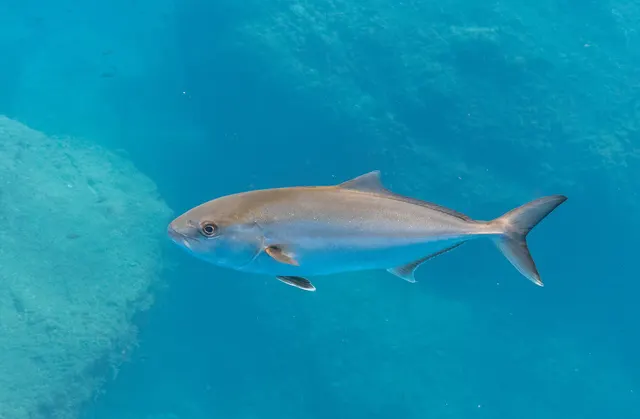
From a boat · 3
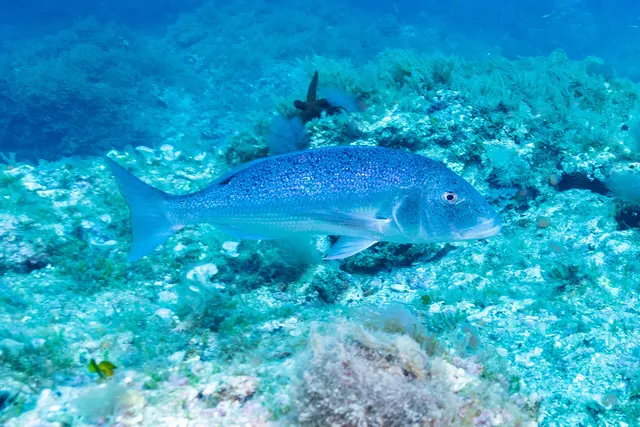
What these strengths mean
- Characteristic of this water
- This water is strongly identified with this species by the sources that cover it.
- Regular local target
- Fishing sources describe this as a normal local target here, not merely as caught.
- Seasonal
- Well supported, and concentrated in part of the year rather than spread through it.
- How breadth is counted
- A fish documented at six marks is shown as six marks: breadth never raises the strength on its own. A fishery account describes the fishing; a recorded catch reports one specific catch. How evidence is weighed.
How people fish here
3 methods are recorded on the places documented here, counted from the records themselves rather than from what is practised in the country. Each opens a full guide to the technique.
Drift fishing
Recorded at 1 place here, over tidal race.
Letting the boat move with tide and wind while fishing, so the tackle searches ground instead of waiting on it — and the decision that determines whether a boat session works at all.
Documented on the same ground: Greater amberjack, Common dentex, Atlantic bonito, European squid.
Jigging
Recorded at 1 place here, over tidal race.
Working a weighted lure with a rising-and-falling motion, usually vertically, so it behaves like a wounded or fleeing baitfish.
Documented on the same ground: Greater amberjack, Common dentex, Atlantic bonito, European squid.
Trolling
Recorded at 1 place here, over tidal race.
Towing lures or baits behind a moving boat to cover large volumes of water and locate scattered fish.
Documented on the same ground: Greater amberjack, Common dentex, Atlantic bonito, European squid.
These are the methods documented at the places FishingHQ holds here. A species listed beside a method is documented on the same ground, which is not the same as being taken that way — where a source establishes the method a fish was caught on, it is stated on that place’s own page. All fishing methods.
What dominates
Harpoon fishing for swordfish from a purpose-built vessel with a long forward walkway and a high spotting mast, which is the strait's signature and internationally distinctive practice. Small-scale line and longline fishing from artisanal boats. Shore fishing from the rocky margins and harbour structures, largely for seabream, mullet and pelagic species. Trolling for pelagic species in and around the strait. Recreational and commercial fishing for the small pelagic and demersal species of the surrounding coast. Spearfishing, which has a long Mediterranean tradition, on the calmer margins rather than in the flow itself.
The water available
A narrow channel between two seas, with a shallow sill across it and deep water on both sides; strong reversing tidal exchange flow with velocities among the highest in the Mediterranean; whirlpools, standing waves, boils and shear lines generated at the sill and along the margins; upwelling drawing deep water and deep-sea organisms towards the surface; steep rocky shorelines dropping quickly into deep water on both sides; and, beyond the strait itself, the open Tyrrhenian and Ionian basins with their own quite different characters.
How the rules are structured
Fishing here is governed by national fisheries law within a European framework, with regional administration, and the swordfish fishery in particular is subject to international management. Mediterranean swordfish is managed by the international commission responsible for Atlantic tunas and tuna-like species, which sets catch limits, seasonal closures and minimum sizes for the stock; those measures are implemented through European and national regulation. Harpoon fishing is a recognised and authorised gear for this fishery with its own vessel and licensing arrangements. Driftnets, which historically took swordfish in these waters, are prohibited. Recreational fishing for the regulated large pelagic species is separately controlled, with authorisation and reporting requirements. Marine protected areas exist along the adjacent coasts, and the strait itself is subject to navigation regulation because it carries significant shipping and a ferry crossing. FishingHQ does not state what any current rule is.
Who to ask
- The national fisheries authority and its regional administration, which implement fishing rules and licensing for these waters.
- The international commission managing Atlantic and Mediterranean swordfish and tuna stocks, whose measures set the catch limits, closures and sizes.
- The European fisheries authorities, through which international measures are implemented in national law.
- The maritime authority and port captaincy, for navigation, vessel safety and the operation of the strait as a shipping route.
- The management authority of any marine protected area on the adjacent coasts.
Words you will meet
- Passerella
- The long forward walkway on a swordfish harpoon vessel, extending many metres ahead of the bow, from which the harpooner strikes a surfaced fish. Together with the high spotting mast it makes these boats immediately recognisable.
- Feluca
- The local name for the modern harpoon vessel used in the strait, with its high mast and long walkway. The design is a specialised evolution of an older craft for a fishery that requires seeing a fish at distance and reaching it silently.
- Scylla and Charybdis
- The classical personifications of the strait's hazards — a rock and a whirlpool on opposite sides. They name real hydrographic features: the violent water generated by exchange flow over the sill, described in mythological terms because the mechanism was not understood.
- Bastardo and montante
- Local names for the two directions of the exchange current through the strait, which reverses roughly every six hours. Knowing which way the current is running is the basic operational information for anybody on this water.
- Deep scattering layer
- The layer of mesopelagic organisms that migrates vertically in the open ocean. Upwelling in the strait brings such organisms to the surface, which is why deep-sea species turn up here at the surface and on the beaches.
Conditions and hazards
The strait's currents are among the strongest in the Mediterranean and they reverse roughly every six hours, generating whirlpools, standing waves, boils and shear lines that can overwhelm a small craft. The hazards were notorious enough in antiquity to be personified, and the physical reality behind that reputation is real. The strait carries substantial commercial shipping and a frequent ferry crossing, so a small boat is operating in a busy navigational channel with limited room to manoeuvre and vessels that cannot stop. Ashore, the rocky margins drop quickly into deep fast-moving water. Wind against current steepens the sea sharply as it does in every tidal race. Water temperature is mild by northern European standards but the current is not survivable to swim against, so an immersion is a serious event regardless of temperature.
Two seas, one sill, and a current that reverses twice a day
The Strait of Messina is one of the most hydrographically remarkable pieces of water in Europe, and the mechanism is worth setting out because it is unusual even among straits.
THE TWO SEAS ARE OUT OF PHASE. The Tyrrhenian and Ionian basins have tidal regimes that are close to opposite in phase, so when one is at high water the other is near low. Since they are connected through the strait, that difference in level drives a flow through it.
THE FLOW REVERSES ROUGHLY EVERY SIX HOURS as the phase relationship swings, and the local names for the two directions reflect how fundamental that reversal is to anybody working the water.
THE SILL TURNS FLOW INTO VIOLENCE. A shallow ridge crosses the narrowest part of the strait, with deep water either side. Water forced over that sill accelerates, and the interaction generates internal waves at the density interface below the surface, upwelling on one side, and — at the surface — whirlpools, standing waves, boils and sharp shear lines.
THE TWO WATER MASSES ARE ALSO DIFFERENT. The basins differ in temperature and salinity structure, so the exchange is not simply water moving back and forth; it is one water mass replacing another, with a density interface that the sill forces upward.
UPWELLING IS THE BIOLOGICALLY IMPORTANT CONSEQUENCE. Deep water drawn towards the surface brings nutrients, and it brings organisms that live at depth. That is why the strait has been a site of marine biological interest since the nineteenth century: deep-sea and mesopelagic species turn up at the surface and on the beaches here in a way they do almost nowhere else accessible.
AND THE ANCIENT NAMES DESCRIBE REAL FEATURES. Scylla and Charybdis — a rock and a whirlpool on opposite sides of the channel — are mythological personifications of hydrography that was genuinely lethal to a small sailing vessel and that was not otherwise explicable.
Backed by research — why, and the sources (2)
Supported by peer-reviewed research or fisheries science. The sources are listed and can be checked.
- NOAA Ocean Service tides and water levels educational tutorial — National Oceanic and Atmospheric Administration, United States (Government fisheries body)Relied on for: The mechanism of tides, tidal range, tidal streams and the amplification of tidal range in converging estuaries.States this directlyPassage read and verified
- Met Office shipping forecast, inshore waters forecast and marine warnings — Met Office, United Kingdom (Government fisheries body)Relied on for: Inshore waters forecasting, sea state, swell and the marine warning products issued for British coastal waters.Background and mechanism onlyCitation checked — the work exists and is described correctly
Swordfish at the surface and deep-sea fish on the beach
The strait's species picture is unusual because vertical mixing puts fish where they should not be.
SWORDFISH ARE THE FISHERY. Mediterranean swordfish move through and hold in the strait, and — critically — they come to the surface here, basking with dorsal and caudal fins showing. A fish that spends most of its time at depth becomes visible and reachable, which is what made a harpoon fishery possible.
THE SURFACING BEHAVIOUR IS THE KEY. Swordfish are known to spend time near the surface, and the conditions in the strait bring them up in numbers and in daylight. The fishery exists because of that behaviour, not because of the abundance alone.
BLUEFIN TUNA, ALBACORE AND BONITO work the same water and the same current lines, and Mediterranean bluefin is one of the most closely managed stocks anywhere.
DEEP-SEA AND MESOPELAGIC SPECIES APPEAR AT THE SURFACE. Lanternfish, hatchetfish, deep-water squid and other organisms of the mesopelagic layer are brought up by the upwelling and are found stranded on the beaches after storms. This has made the strait a classic locality in marine biology, and it is the clearest illustration on FishingHQ of a physical process making an invisible ecosystem visible.
THE RESIDENT COASTAL FAUNA IS MEDITERRANEAN. Seabreams including white seabream and common pandora, dentex, mullet, dusky grouper on the rock, and the small pelagic species — anchovy, sardine and horse mackerel — that support the artisanal fishery.
EUROPEAN SQUID AND CUTTLEFISH occur along the margins and are taken recreationally and commercially, and FishingHQ's non-finfish catches records apply here as they do across the Mediterranean.
AND THE STOCK POSITION MATTERS. Mediterranean swordfish has been assessed as overexploited and is managed under international measures including quota, closure and minimum size, and Mediterranean stocks generally are among the most heavily fished in the world. A fishery of great antiquity is now operating inside a modern quota system, and that tension is the honest present-day story.
Backed by research — why, and the sources (2)
Supported by peer-reviewed research or fisheries science. The sources are listed and can be checked.
- FAO Species Identification Guides for Fishery Purposes and the FAO Species Catalogues — Food and Agriculture Organization of the United Nations (Scientific institute)Relied on for: Distribution, habitat, depth and fishery accounts for the species of the Mediterranean in the FAO regional identification guides.States this directlyCitation checked — the work exists and is described correctly
- FAO fishing gear types and fishing technology information — Food and Agriculture Organization of the United Nations (Scientific institute)Relied on for: Descriptions of fishing gear types and their operation, including traditional and small-scale gears of the Mediterranean.States this directlyCitation checked — the work exists and is described correctly
A harpoon fishery, modernised rather than replaced
The swordfish harpoon fishery of the strait is one of the most distinctive fishing practices in Europe and deserves describing as a system.
THE VESSEL IS PURPOSE-BUILT AND UNMISTAKABLE. A high mast — many metres above the deck — carries a lookout who spots surfaced fish at distance. A long walkway extends far forward of the bow, carrying the harpooner out ahead of the hull. The design exists to solve two problems: seeing a fish before it sees you, and reaching it without the hull passing over it first.
THE APPROACH IS THE SKILL. A surfaced swordfish is approached slowly and quietly, with the boat conned from the mast, so that the harpooner on the walkway is over the fish before it reacts. Everything about the vessel's proportions follows from that requirement.
IT IS SELECTIVE IN A WAY ALMOST NO OTHER LARGE-PELAGIC METHOD IS. The harpooner sees the individual fish, judges its size and strikes or does not. There is no bycatch of turtles, sharks or non-target species, because nothing is caught that is not aimed at. That is a genuine advantage of the method and it is why it retains support.
DRIFTNETS WERE THE ALTERNATIVE AND ARE PROHIBITED. Large-scale driftnetting for swordfish in the Mediterranean took enormous quantities of non-target species including cetaceans and turtles, and it was banned. The contrast between the two methods for the same species is one of the sharpest illustrations of gear selectivity available.
LONGLINING TAKES THE BULK OF THE MODERN CATCH regionally, and it is neither as selective as harpooning nor as indiscriminate as driftnetting.
THE ARTISANAL FISHERY WORKS THE SAME WATER with lines, small longlines and nets for coastal and small pelagic species.
AND SHORE FISHING WORKS THE ROCKY MARGINS AND HARBOUR STRUCTURES, where deep water is close and the current is manageable, for seabream, mullet and passing pelagics.
What experienced anglers do — why, and the sources (2)
Widely and independently recommended by experienced anglers and specialist sources. This is real angling knowledge, not proof: controlled evidence for it is limited, and FishingHQ records it as convention rather than as a demonstrated effect.
- FAO Species Identification Guides for Fishery Purposes and the FAO Species Catalogues — Food and Agriculture Organization of the United Nations (Scientific institute)Relied on for: Distribution, habitat, depth and fishery accounts for the species of the Mediterranean in the FAO regional identification guides.States this directlyCitation checked — the work exists and is described correctly
- FAO fishing gear types and fishing technology information — Food and Agriculture Organization of the United Nations (Scientific institute)Relied on for: Descriptions of fishing gear types and their operation, including traditional and small-scale gears of the Mediterranean.States this directlyCitation checked — the work exists and is described correctly
A summer fishery, a six-hour cycle and a closed season
The strait has an annual rhythm, a six-hourly one and a regulatory one, and all three govern what happens.
THE SWORDFISH FISHERY IS A WARM-SEASON ONE. Fish are present and surfacing through the warmer months, and the harpoon fishery operates in that window because it requires calm conditions and good visibility to spot a fish at distance. It is a fishery that depends on being able to see, which constrains it more than most.
CALM CONDITIONS ARE ESSENTIAL RATHER THAN PREFERABLE. A surfaced swordfish shows a fin above the water; in a chop it cannot be seen. The fishery therefore operates on flat days, and a windy summer is a poor season regardless of fish abundance.
THE CURRENT CYCLE IS THE SIX-HOURLY SEASON. The exchange flow reverses roughly every six hours, and which way it is running determines where the shear lines and eddies are, where fish concentrate and where a small vessel can work. Local operators plan around it as a matter of course.
THE UPWELLING IS PERSISTENT RATHER THAN SEASONAL, which is why the strait's biological peculiarity is available all year.
CLOSED SEASONS ARE A REGULATORY FACT. International management of Mediterranean swordfish includes seasonal closures intended to protect the stock, and those closures are part of the fishing calendar in a way that biology alone would not produce.
THE COASTAL AND ARTISANAL FISHERIES follow the general Mediterranean pattern, with squid and cuttlefish inshore in the cooler months and around spawning, small pelagics through the year, and seabream fishing best in the shoulder seasons.
AND THE CLASSICAL SOURCES RECORD THE SAME SEASONALITY. Descriptions of the swordfish fishery from antiquity note the summer timing and the spotting method, which is a remarkable continuity of a seasonal practice over two thousand years.
Backed by research — why, and the sources (2)
Supported by peer-reviewed research or fisheries science. The sources are listed and can be checked.
- FAO Species Identification Guides for Fishery Purposes and the FAO Species Catalogues — Food and Agriculture Organization of the United Nations (Scientific institute)Relied on for: Distribution, habitat, depth and fishery accounts for the species of the Mediterranean in the FAO regional identification guides.States this directlyCitation checked — the work exists and is described correctly
- FAO fishing gear types and fishing technology information — Food and Agriculture Organization of the United Nations (Scientific institute)Relied on for: Descriptions of fishing gear types and their operation, including traditional and small-scale gears of the Mediterranean.States this directlyCitation checked — the work exists and is described correctly
An ancient fishery inside a modern quota
The regulatory position here is a good illustration of how an old local practice is governed by international stock management.
MEDITERRANEAN SWORDFISH IS MANAGED INTERNATIONALLY. The stock is the responsibility of the international commission for Atlantic tunas and tuna-like species, which sets total catch limits, national allocations, seasonal closures and minimum sizes. Those measures pass into European and then national law.
SO THE HARPOON FISHERY OPERATES INSIDE A QUOTA SYSTEM. A practice documented in classical sources now fishes to a number decided by an international scientific and political process, and the vessels are licensed, authorised for the gear and subject to reporting. That is not a criticism; it is what managing an overexploited migratory stock requires.
HARPOON IS A RECOGNISED AND AUTHORISED GEAR, with its own arrangements, and its selectivity is part of the argument for its continued authorisation.
DRIFTNETS ARE PROHIBITED. Large-scale driftnetting was banned in these waters after sustained evidence of cetacean, turtle and shark bycatch, and enforcement against illegal use has been a continuing issue.
RECREATIONAL FISHING FOR THE REGULATED LARGE PELAGICS IS SEPARATELY CONTROLLED, generally requiring authorisation and reporting, because recreational catch of bluefin and swordfish counts against managed stocks.
MARINE PROTECTED AREAS EXIST ON THE ADJACENT COASTS with their own rules.
NAVIGATION REGULATION MATTERS AS MUCH AS FISHERIES REGULATION HERE. The strait is a significant shipping route with a frequent ferry crossing, and a small vessel fishing in it is operating in a managed navigational channel.
AND FISHINGHQ DOES NOT STATE WHAT ANY OF THIS CURRENTLY PERMITS. Quotas and closures for these stocks are revised annually, which is precisely the kind of information FishingHQ refuses to hold.
Official guidance — why, and the sources (2)
Stated by a fisheries authority, scientific institute or recognised angling body. Authoritative, but summarising rather than demonstrating.
- FAO Species Identification Guides for Fishery Purposes and the FAO Species Catalogues — Food and Agriculture Organization of the United Nations (Scientific institute)Relied on for: Distribution, habitat, depth and fishery accounts for the species of the Mediterranean in the FAO regional identification guides.States this directlyCitation checked — the work exists and is described correctly
- FAO fishing gear types and fishing technology information — Food and Agriculture Organization of the United Nations (Scientific institute)Relied on for: Descriptions of fishing gear types and their operation, including traditional and small-scale gears of the Mediterranean.States this directlyCitation checked — the work exists and is described correctly
Passerella, feluca and two names for a current
The vocabulary of the strait is partly technical, partly local and partly classical, and all three layers are useful.
PASSERELLA NAMES THE FORWARD WALKWAY on a harpoon vessel, extending many metres ahead of the bow. It is the defining feature of the boat and the reason the fishery works: it puts the harpooner over the fish before the hull arrives.
FELUCA NAMES THE VESSEL ITSELF in local usage — the high-masted, long-walkwayed swordfish boat. The word has a wider Mediterranean history attached to quite different craft, and its local application here is specific.
THE TWO CURRENT DIRECTIONS HAVE THEIR OWN NAMES, reflecting the fact that the exchange flow reverses roughly every six hours and that knowing which way it is running is the basic operational information on this water. A single English word for 'the current' would lose the information the local pair carries.
SCYLLA AND CHARYBDIS ARE CLASSICAL NAMES FOR REAL FEATURES. A rock on one side and a whirlpool on the other, personified as monsters in the Odyssey, describing hydrography that genuinely destroyed small vessels. Reading them as pure myth misses that they are among the oldest recorded descriptions of a tidal hazard in European literature.
DEEP SCATTERING LAYER IS THE TECHNICAL TERM for the mesopelagic community that upwelling here brings towards the surface. It is worth knowing because it explains why deep-sea animals appear on these beaches.
AND SILL IS THE HYDROGRAPHIC WORD THAT EXPLAINS EVERYTHING ELSE. A shallow ridge across a channel connecting two deeper basins, forcing flow to accelerate and interact. Once a reader has the concept, every strait in the world becomes more legible.
What experienced anglers do — why, and the sources (2)
Widely and independently recommended by experienced anglers and specialist sources. This is real angling knowledge, not proof: controlled evidence for it is limited, and FishingHQ records it as convention rather than as a demonstrated effect.
- NOAA Ocean Service tides and water levels educational tutorial — National Oceanic and Atmospheric Administration, United States (Government fisheries body)Relied on for: The mechanism of tides, tidal range, tidal streams and the amplification of tidal range in converging estuaries.States this directlyPassage read and verified
- Met Office shipping forecast, inshore waters forecast and marine warnings — Met Office, United Kingdom (Government fisheries body)Relied on for: Inshore waters forecasting, sea state, swell and the marine warning products issued for British coastal waters.Background and mechanism onlyCitation checked — the work exists and is described correctly
Two thousand years of the same fishery, and the science that came to watch
The strait has an unusually deep documentary record, and the continuity in it is genuinely remarkable.
THE SWORDFISH FISHERY IS DESCRIBED IN CLASSICAL SOURCES. Ancient authors describe swordfish being taken in these waters by spotting a surfaced fish and striking it from a boat, with a lookout and a striker — recognisably the same operation conducted today with a taller mast and a longer walkway. Very few fisheries anywhere have that degree of documented continuity.
THE HAZARDS WERE MYTHOLOGISED EVEN EARLIER. Scylla and Charybdis appear in Homeric epic as monsters on either side of a narrow passage, and they correspond to real hydrographic features. That is one of the earliest surviving descriptions of a tidal hazard in European literature, and it is a reminder that dangerous water gets named long before it gets explained.
THE STRAIT BECAME A SITE OF MARINE SCIENCE IN THE NINETEENTH CENTURY. The appearance of deep-sea organisms at the surface and on the shore made it a locality of exceptional interest to early marine biologists, and a substantial body of research on mesopelagic and deep-sea fauna has its origins here.
THE FISHERY MODERNISED WITHOUT CHANGING METHOD. Engines replaced oars and sail, masts and walkways grew, and spotting improved — but the essential operation of seeing a surfaced fish and striking it by hand remained. That is unusual: most fisheries that mechanised also changed gear.
DRIFTNETTING ARRIVED AND WAS BANNED. Large-scale driftnets took swordfish far more efficiently and killed enormous quantities of cetaceans, turtles and sharks alongside them. Their prohibition, and the enforcement effort that followed, is a significant recent chapter.
AND THE STOCK ASSESSMENT ERA IS THE CURRENT ONE. Mediterranean swordfish is assessed as overexploited and managed by quota and closure, so a fishery with two thousand years of continuity now operates within limits set annually by an international commission.
Official guidance — why, and the sources (2)
Stated by a fisheries authority, scientific institute or recognised angling body. Authoritative, but summarising rather than demonstrating.
- FAO Species Identification Guides for Fishery Purposes and the FAO Species Catalogues — Food and Agriculture Organization of the United Nations (Scientific institute)Relied on for: Distribution, habitat, depth and fishery accounts for the species of the Mediterranean in the FAO regional identification guides.States this directlyCitation checked — the work exists and is described correctly
- FAO fishing gear types and fishing technology information — Food and Agriculture Organization of the United Nations (Scientific institute)Relied on for: Descriptions of fishing gear types and their operation, including traditional and small-scale gears of the Mediterranean.States this directlyCitation checked — the work exists and is described correctly
A fishery that is a local identity and a contested one
The culture around this fishery is strong, specific and genuinely conflicted, and an honest page says so.
THE HARPOON FISHERY IS A LOCAL IDENTITY. The boats are distinctive, the crews are specialists, and the practice is closely associated with the communities on both sides of the strait. It is a source of considerable local pride and features heavily in the region's self-presentation.
THE SKILL IS REAL AND NARROW. Spotting a fin at distance from a mast, conning a boat onto a fish without alarming it, and striking accurately from the end of a long walkway are specialised abilities acquired over years and transmitted within families and crews.
SELECTIVITY IS THE FISHERY'S STRONGEST ARGUMENT. Taking one identified fish at a time with no bycatch is a genuine advantage over the alternatives, and it is the basis on which the practice is defended.
THE CONSERVATION ARGUMENT IS NEVERTHELESS LIVE. Mediterranean swordfish is overexploited, and the fact that a particular method is selective does not by itself settle whether the stock can support the total catch. Both positions in that argument are reasonable and this page holds them together rather than choosing.
THE FOOD CULTURE IS INSEPARABLE FROM IT. Swordfish is central to the local cuisine on both sides of the strait, and the fishery is a food fishery embedded in a regional identity rather than a sport.
THE ARTISANAL FISHERY IS THE LARGER EMPLOYER and the less visible one, working coastal and small pelagic species from small boats along both shores.
AND THE STRAIT IS A CROSSING AS MUCH AS A FISHERY. Ferries, shipping and the long-argued bridge proposal are part of daily life here, and any account of the water that treated it as purely a fishing ground would be describing a place that does not exist.
What experienced anglers do — why, and the sources (2)
Widely and independently recommended by experienced anglers and specialist sources. This is real angling knowledge, not proof: controlled evidence for it is limited, and FishingHQ records it as convention rather than as a demonstrated effect.
- FAO Species Identification Guides for Fishery Purposes and the FAO Species Catalogues — Food and Agriculture Organization of the United Nations (Scientific institute)Relied on for: Distribution, habitat, depth and fishery accounts for the species of the Mediterranean in the FAO regional identification guides.States this directlyCitation checked — the work exists and is described correctly
- FAO fishing gear types and fishing technology information — Food and Agriculture Organization of the United Nations (Scientific institute)Relied on for: Descriptions of fishing gear types and their operation, including traditional and small-scale gears of the Mediterranean.States this directlyCitation checked — the work exists and is described correctly
A three-thousand-year-old reputation that turns out to be physically accurate
This is the rare case where a piece of ancient reputation survives being checked. The strait's hazards were notorious enough in antiquity to be personified as two monsters on either side of it, and what the physical description turns out to be is a fairly exact account of a strong reversing tidal exchange in a narrow channel.
WHAT ACTUALLY HAPPENS. Two basins with slightly different tidal timing are joined by a narrow, shallow-silled strait, so water is pushed through it in one direction, then the other, roughly every six hours. In a Mediterranean where tidal streams are otherwise negligible, this produces genuinely strong flow — and where that flow crosses the sill, meets the coast or meets water going the other way, it makes whirlpools, standing waves, boils and sharp shear lines. Those features form, strengthen, weaken and vanish on the tidal clock, not on the weather.
WHICH MEANS THE SAME PIECE OF WATER IS TWO DIFFERENT PLACES within one afternoon. A crossing made comfortably on the slack tells a skipper nothing about the return an hour and a half later, and that specific misreading — treating an earlier passage as evidence about a later one — is the trap this water sets.
THE SHEAR LINE IS THE PART TO UNDERSTAND. Where two bodies of water moving differently meet, the boundary between them is abrupt rather than gradual. A small craft crossing one is pushed hard on one side of the hull and not the other, which spins it; an eddy alongside can hold it and swamp it. This is not rough water in the ordinary sense — it can be doing this on a windless day — and it does not respond to being motored through with more throttle.
WIND AGAINST CURRENT DOES HERE WHAT IT DOES IN EVERY TIDAL RACE: it shortens and steepens the waves out of proportion to the wind strength.
THE SECOND SYSTEM IS THE TRAFFIC. This is a significant shipping route with a frequent ferry crossing running across it. Vessels in a narrow channel have limited room to manoeuvre and cannot stop, the ferries run a fixed line, and a small boat working a current line is in the way of both — and the current will carry it there while nobody is steering.
ASHORE, THE MARGINS ARE STEEP and drop quickly into deep fast water. A slip puts a person into a current they cannot swim against with few places to get out. The water is mild, and mild water does nothing about a current — which is worth saying, because the temperature is what makes it feel otherwise.
WHAT ACTUALLY HELPS. Get the tidal timing for the strait itself rather than for a distant port, and plan every movement around it including the return. Do not cross shear lines or work close to visible whirlpools and overfalls, and remember their positions move through the cycle. Stay clear of the shipping lane and the ferry track, cross quickly and at right angles if you must, and carry the means of being seen. Wear flotation. And treat the old names on the chart as information rather than decoration.
Official guidance — why, and the sources (3)
Stated by a fisheries authority, scientific institute or recognised angling body. Authoritative, but summarising rather than demonstrating.
- NOAA Ocean Service tides and water levels educational tutorial — National Oceanic and Atmospheric Administration, United States (Government fisheries body)Relied on for: How tides and tidal currents are generated, why range and stream speed vary so greatly between coasts, and how tidal predictions are produced and used.States this directlyPassage read and verified
- NOAA National Weather Service marine forecasts and marine weather services — National Oceanic and Atmospheric Administration, United States (Government fisheries body)Relied on for: Marine forecasting, warning products, sea state and swell information, and the coastal and offshore zones at which those forecasts are issued.States this directlyCitation checked — the work exists and is described correctly
- RNLI water safety guidance: cold water shock and Float to Live — Royal National Lifeboat Institution (Water-safety or diver-training authority)Relied on for: Cold water shock and the immersion response, and water-safety guidance for shore anglers and small-craft users.States this directlyPassage read and verified
Some of what lives here
Fish recorded here that FishingHQ holds a reviewed photograph of. It is not a complete list of what The Strait of Messina holds, and it is not a prediction that you will catch any of them — it is a way in to the ones we can show you.
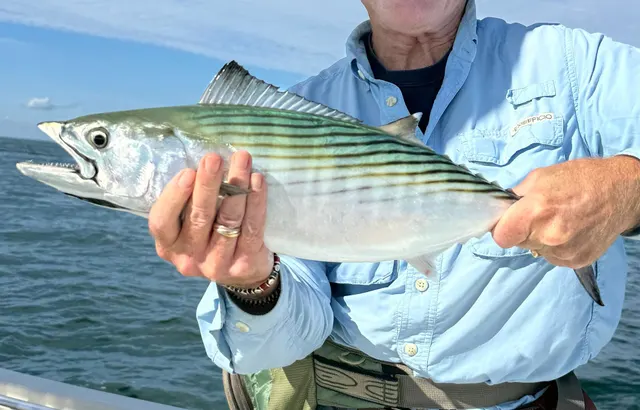 Atlantic bonitoA small, fast, striped tuna relative that arrives on temperate coasts in shoals each year and is the most accessible member of the family to a shore angler.
ricofish — CC0, via Wikimedia Commons
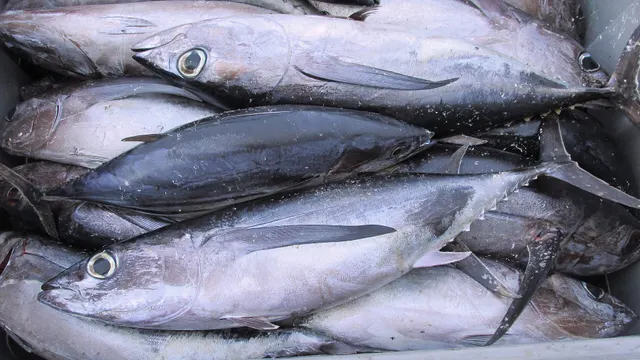 AlbacoreThe long-finned tuna of temperate open ocean — smaller and cooler-water than its relatives, with pectoral fins so long they are the identification.
Joachim Langeneck — CC BY-SA 4.0, via Wikimedia Commons
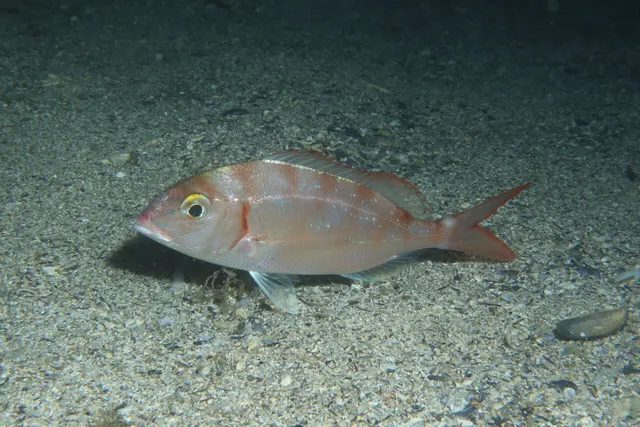 Common pandoraA pink-silver Mediterranean sparid of sand and mixed ground, changing sex from female to male with age, and a staple of light bottom fishing.
jujurenoult — CC BY 4.0, via Wikimedia Commons
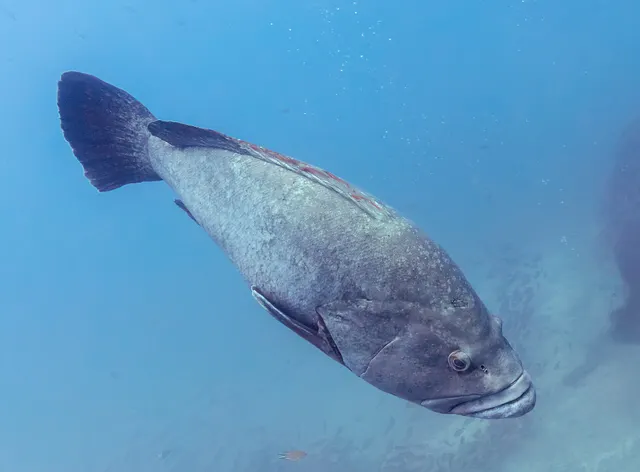 Dusky grouperThe Mediterranean's iconic reef predator: territorial, slow to mature, sex-changing, and the species whose decline made the case for marine protected areas there.
Diego Delso — CC BY-SA 4.0, via Wikimedia Commons
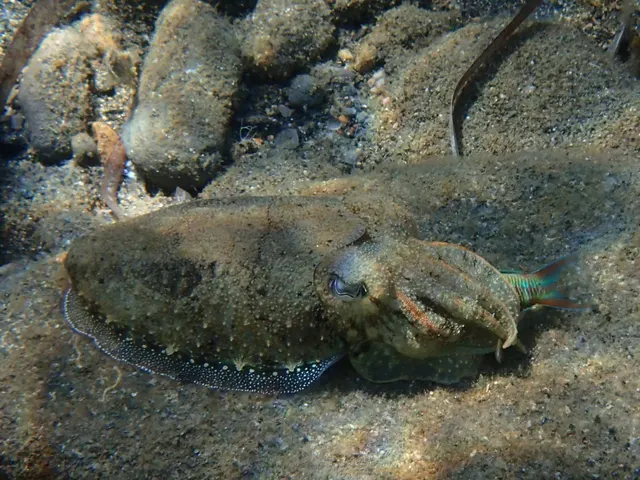 Common cuttlefishA bottom-oriented cephalopod with an internal buoyancy shell, the best-studied invertebrate mind in the sea, and a fishery that works quite differently from squid.
Katerina Kalogerini — CC BY, via iNaturalist
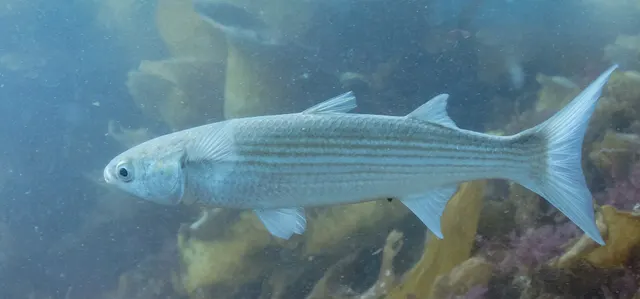 Flathead grey mulletThe most widely distributed mullet in the world, found on almost every warm and temperate coast, and a detritus feeder with a gizzard-like stomach.
Diego Delso, CC BY-SA 4.0, via Wikimedia Commons
Places within this area
Publicly documented fishing geography. FishingHQ describes what the ground is; it does not say whether you may fish it, and every one of these sends that question to the body that holds the answer. Browse every place in this part of the world.
Who to ask before fishing any of these
FishingHQ does not know the current access position here. Recreational sea fishing in Italy is registered nationally rather than licensed in the British sense, with quantity and species measures on top and separate treatment for underwater fishing, which has its own minimum age, its own equipment rules and its own prohibitions near bathers and moored craft. Marine protected areas along this coast carry zone-by-zone rules. Everything changes. Check the current position with the national fisheries ministry and the local port captaincy before going.
Punta del Faro, Messina
Tidal race · Salt water
The north-eastern tip of Sicily at the narrowest point of the Strait of Messina, with a shingle and sand point, two coastal lagoons behind it and deep scoured water in the channel a short distance offshore.
Sheltered from swell by the geography and dominated entirely by current, which is the opposite of almost every other Mediterranean mark.
Particular to this ground: moving water and currents, boat traffic and being seen.
Safety
Moving water and currents — Can cause serious injury or death
Exchange flow through the strait reverses roughly every six hours and generates whirlpools, standing waves, boils and sharp shear lines. The current runs faster than a person can swim, and a small craft caught in a shear line or an eddy can be spun or swamped. The hazards were notorious enough in antiquity to be personified.
What reduces it: Know which way the current is running and when it turns before going on the water, avoid the sill area at peak flow, stay out of visible boils and shear lines in a small craft, and never enter the water. Wear a buoyancy aid.
Worse when:
- At peak flow, midway between reversals.
- With wind against current, which steepens the sea as it does in any tidal race.
- In a small or underpowered craft with no ability to hold position against the stream.
Boat traffic and being seen — Can cause serious injury or death
The strait is a significant shipping route with a frequent ferry crossing. Large vessels transiting a narrow channel have limited room to manoeuvre and cannot stop, and a small fishing boat working the current is in their path.
What reduces it: Keep clear of the shipping channel and the ferry routes, be visible, monitor traffic, and assume a large vessel has not seen you and could not avoid you if it had.
Cliffs and rock platforms — Can cause injury needing treatment
The rocky margins on both sides drop quickly into deep, fast-moving water. A fall or a slip from the rocks puts a person into a current they cannot swim against, with limited places to get out.
What reduces it: Fish from stable ground well above the water, wear a buoyancy aid where the drop is straight into deep water, and do not fish the rocky margins alone.
Further safety reading
- Boat safety for anglers — Exchange flow reversing roughly every six hours generates whirlpools, standing waves and shear lines that were notorious enough in antiquity to be personified, and the physical reality behind that reputation is real.
- Surface markers and boat traffic — The strait is a significant shipping route with a frequent ferry crossing, and a small boat working the current is in the path of vessels that cannot stop.
Check the rules before you fish
Fishing laws, bylaws, access rules, seasons, bait restrictions and permitted methods vary by location and can change. Check the current rules from the relevant authority and the water you intend to fish before fishing.
Check with:
- Current national or regional law for where you are fishing
- Current local bylaws
- The relevant fisheries authority
- The landowner, club or fishery whose water it is
- Any restrictions specific to the species or the method you intend to use
Where to go next
What swims here
- AlbacoreWorks the deeper water either side of the sill and is taken by the longline fishery of the surrounding coast.
- Atlantic bluefin tunaWorks the same current lines through the strait and is among the most closely managed stocks anywhere.
- Atlantic bonitoOccurs on the current lines and shear zones the exchange flow generates.
- Common cuttlefishMoves into shallow water along the strait's margins to spawn in the warmer months.
- Common pandoraA resident of the harder ground and deeper margins of the strait and the coasts either side of it.
- Dusky grouperHolds the rock and structure of the strait's margins, where it is a long-lived resident of considerable conservation concern in the Mediterranean.
- European anchovyOne of the small pelagic species supporting the artisanal fishery of the surrounding coast and the forage base beneath the larger predators.
- European squidOccurs along the margins of the strait and is taken recreationally and commercially, as it is across the Mediterranean.
3 more
- Flathead grey mullet Fish
- Swordfish Fish
- White seabream Fish
Local knowledge
How this compares
- MediterraneanThe strait's entire character comes from two sub-basins of the Mediterranean being out of tidal phase with one another, which is a fact about this narrows rather than about the sea as a whole — so it is set out here, where it can be explained properly.
- The Strait of GibraltarTwo Mediterranean straits whose fisheries were both built on intercepting migrating large pelagics in a narrows, one with a fixed trap and one with a harpoon, and both documented since antiquity.
Rules and access
- Close seasonsSeasonal closures set through international management of Mediterranean swordfish are part of the fishing calendar here in a way biology alone would not produce.
- Size limits and retentionMinimum sizes and catch limits for swordfish and bluefin are set by international commission and implemented through European and national law, and recreational catch counts against them.
Environment and conservation
- Bycatch and discardsLarge-scale driftnetting for swordfish here took enormous quantities of cetaceans, turtles and sharks and was prohibited, and the contrast with harpooning is one of the sharpest illustrations of gear selectivity available.
- Fish stocks and sustainabilityMediterranean swordfish is assessed as overexploited, so a fishery with two thousand years of documented continuity now operates inside limits set annually by an international commission.
Sources and evidence
- FAO Species Identification Guides for Fishery Purposes and the FAO Species Catalogues — Food and Agriculture Organization of the United Nations (Scientific institute)Relied on for: Distribution, habitat, depth and fishery accounts for the species of the Mediterranean in the FAO regional identification guides.States this directlyCitation checked — the work exists and is described correctly
- FAO fishing gear types and fishing technology information — Food and Agriculture Organization of the United Nations (Scientific institute)Relied on for: Descriptions of fishing gear types and their operation, including traditional and small-scale gears of the Mediterranean.States this directlyCitation checked — the work exists and is described correctly
- NOAA Ocean Service tides and water levels educational tutorial — National Oceanic and Atmospheric Administration, United States (Government fisheries body)Relied on for: The mechanism of tides, tidal range, tidal streams and the amplification of tidal range in converging estuaries.States this directlyPassage read and verified
- Met Office shipping forecast, inshore waters forecast and marine warnings — Met Office, United Kingdom (Government fisheries body)Relied on for: Inshore waters forecasting, sea state, swell and the marine warning products issued for British coastal waters.Background and mechanism onlyCitation checked — the work exists and is described correctly
Why the 23 connections on this page are here, and the sources
What swims here
Backed by research — 11 connections
Supported by peer-reviewed research or fisheries science. The sources are listed and can be checked.
Albacore
A distribution association between an animal and a kind of water, rather than a claim about any named mark.
- FishBase: a global information system on fishes — Froese, R. and D. Pauly, eds. — FishBase Consortium (Scientific institute)Relied on for: Distribution, habitat association and depth range recorded for the species, including its occurrence in the water body concerned.States this directlyPassage read and verified
- The IUCN Red List of Threatened Species — International Union for Conservation of Nature (Conservation authority)Relied on for: Assessment and range account for the species, including the systems and coasts it occupies.Background and mechanism onlyCitation checked — the work exists and is described correctly
Atlantic bluefin tuna
A distribution association between an animal and a kind of water, rather than a claim about any named mark.
- FAO Species Identification Guides for Fishery Purposes and the FAO Species Catalogues — Food and Agriculture Organization of the United Nations (Scientific institute)Relied on for: Distribution, habitat, depth and fishery accounts for the species in the FAO regional identification guides for the ocean area concerned.States this directlyCitation checked — the work exists and is described correctly
- FishBase: a global information system on fishes — Froese, R. and D. Pauly, eds. — FishBase Consortium (Scientific institute)Relied on for: Distribution, habitat association and depth range recorded for the species.States this directlyPassage read and verified
Atlantic bonito
A distribution association between an animal and a kind of water, rather than a claim about any named mark.
- FishBase: a global information system on fishes — Froese, R. and D. Pauly, eds. — FishBase Consortium (Scientific institute)Relied on for: Distribution, habitat association and depth range recorded for the species, including its occurrence in the water body concerned.States this directlyPassage read and verified
- The IUCN Red List of Threatened Species — International Union for Conservation of Nature (Conservation authority)Relied on for: Assessment and range account for the species, including the systems and coasts it occupies.Background and mechanism onlyCitation checked — the work exists and is described correctly
Common cuttlefish
A distribution association between an animal and a kind of water, rather than a claim about any named mark.
- FishBase: a global information system on fishes — Froese, R. and D. Pauly, eds. — FishBase Consortium (Scientific institute)Relied on for: Distribution, habitat association and depth range recorded for the species, including its occurrence in the water body concerned.States this directlyPassage read and verified
- The IUCN Red List of Threatened Species — International Union for Conservation of Nature (Conservation authority)Relied on for: Assessment and range account for the species, including the systems and coasts it occupies.Background and mechanism onlyCitation checked — the work exists and is described correctly
Common pandora
A distribution association between an animal and a kind of water, rather than a claim about any named mark.
- FishBase: a global information system on fishes — Froese, R. and D. Pauly, eds. — FishBase Consortium (Scientific institute)Relied on for: Distribution, habitat association and depth range recorded for the species, including its occurrence in the water body concerned.States this directlyPassage read and verified
- The IUCN Red List of Threatened Species — International Union for Conservation of Nature (Conservation authority)Relied on for: Assessment and range account for the species, including the systems and coasts it occupies.Background and mechanism onlyCitation checked — the work exists and is described correctly
Dusky grouper
A distribution association between an animal and a kind of water, rather than a claim about any named mark.
- FishBase: a global information system on fishes — Froese, R. and D. Pauly, eds. — FishBase Consortium (Scientific institute)Relied on for: Distribution, habitat association and depth range recorded for the species, including its occurrence in the water body concerned.States this directlyPassage read and verified
- The IUCN Red List of Threatened Species — International Union for Conservation of Nature (Conservation authority)Relied on for: Assessment and range account for the species, including the systems and coasts it occupies.Background and mechanism onlyCitation checked — the work exists and is described correctly
European anchovy
A distribution association between an animal and a kind of water, rather than a claim about any named mark.
- FishBase: a global information system on fishes — Froese, R. and D. Pauly, eds. — FishBase Consortium (Scientific institute)Relied on for: Distribution, habitat association and depth range recorded for the species, including its occurrence in the water body concerned.States this directlyPassage read and verified
- The IUCN Red List of Threatened Species — International Union for Conservation of Nature (Conservation authority)Relied on for: Assessment and range account for the species, including the systems and coasts it occupies.Background and mechanism onlyCitation checked — the work exists and is described correctly
European squid
A distribution association between an animal and a kind of water, rather than a claim about any named mark.
- FishBase: a global information system on fishes — Froese, R. and D. Pauly, eds. — FishBase Consortium (Scientific institute)Relied on for: Distribution, habitat association and depth range recorded for the species, including its occurrence in the water body concerned.States this directlyPassage read and verified
- The IUCN Red List of Threatened Species — International Union for Conservation of Nature (Conservation authority)Relied on for: Assessment and range account for the species, including the systems and coasts it occupies.Background and mechanism onlyCitation checked — the work exists and is described correctly
Flathead grey mullet
A distribution association between an animal and a kind of water, rather than a claim about any named mark.
- FishBase: a global information system on fishes — Froese, R. and D. Pauly, eds. — FishBase Consortium (Scientific institute)Relied on for: Distribution, habitat association and depth range recorded for the species, including its occurrence in the water body concerned.States this directlyPassage read and verified
- The IUCN Red List of Threatened Species — International Union for Conservation of Nature (Conservation authority)Relied on for: Assessment and range account for the species, including the systems and coasts it occupies.Background and mechanism onlyCitation checked — the work exists and is described correctly
Swordfish
A distribution association between an animal and a kind of water, rather than a claim about any named mark.
- FAO Species Identification Guides for Fishery Purposes and the FAO Species Catalogues — Food and Agriculture Organization of the United Nations (Scientific institute)Relied on for: Distribution, habitat, depth and fishery accounts for the species in the FAO regional identification guides for the ocean area concerned.States this directlyCitation checked — the work exists and is described correctly
- FishBase: a global information system on fishes — Froese, R. and D. Pauly, eds. — FishBase Consortium (Scientific institute)Relied on for: Distribution, habitat association and depth range recorded for the species.States this directlyPassage read and verified
White seabream
A distribution association between an animal and a kind of water, rather than a claim about any named mark.
- FishBase: a global information system on fishes — Froese, R. and D. Pauly, eds. — FishBase Consortium (Scientific institute)Relied on for: Distribution, habitat association and depth range recorded for the species, including its occurrence in the water body concerned.States this directlyPassage read and verified
- The IUCN Red List of Threatened Species — International Union for Conservation of Nature (Conservation authority)Relied on for: Assessment and range account for the species, including the systems and coasts it occupies.Background and mechanism onlyCitation checked — the work exists and is described correctly
How people fish here
What experienced anglers do — 3 connections
Widely and independently recommended by experienced anglers and specialist sources. This is real angling knowledge, not proof: controlled evidence for it is limited, and FishingHQ records it as convention rather than as a demonstrated effect.
Handlining
A discipline that is characteristic of the place rather than merely possible there, joined so a reader can move between the place and the practice.
- General angling website restatements of established technique — Various (Credible secondary source)Relied on for: Widely restated practice associating this discipline with this place, recorded as practitioner consensus rather than as tested fact.Background and mechanism onlyCitation checked — the work exists and is described correctly
- Fishers' Craft and Lettered Art: Tracts on Fishing from the End of the Middle Ages — University of Toronto Press, 1997 (Scientific literature)Relied on for: That fishing traditions develop around the water and fish available to them, and the historical method of reading such traditions.States this directlyCitation checked — the work exists and is described correctly
Longlining
A discipline that is characteristic of the place rather than merely possible there, joined so a reader can move between the place and the practice.
- General angling website restatements of established technique — Various (Credible secondary source)Relied on for: Widely restated practice associating this discipline with this place, recorded as practitioner consensus rather than as tested fact.Background and mechanism onlyCitation checked — the work exists and is described correctly
- Fishers' Craft and Lettered Art: Tracts on Fishing from the End of the Middle Ages — University of Toronto Press, 1997 (Scientific literature)Relied on for: That fishing traditions develop around the water and fish available to them, and the historical method of reading such traditions.States this directlyCitation checked — the work exists and is described correctly
Sea fishing
A discipline that is characteristic of the place rather than merely possible there, joined so a reader can move between the place and the practice.
- General angling website restatements of established technique — Various (Credible secondary source)Relied on for: Widely restated practice associating this discipline with this place, recorded as practitioner consensus rather than as tested fact.Background and mechanism onlyCitation checked — the work exists and is described correctly
- Fishers' Craft and Lettered Art: Tracts on Fishing from the End of the Middle Ages — University of Toronto Press, 1997 (Scientific literature)Relied on for: That fishing traditions develop around the water and fish available to them, and the historical method of reading such traditions.States this directlyCitation checked — the work exists and is described correctly
Local knowledge
Backed by research — 1 connection
Supported by peer-reviewed research or fisheries science. The sources are listed and can be checked.
Currents, eddies and where fish hold
A link from a practice, an environment or a geography to the mechanism it rests on. It asserts that the mechanism is load-bearing here rather than merely relevant, which is the test applied throughout this file.
- ICES Advice on fishing opportunities, catch and effort — International Council for the Exploration of the Sea (Scientific institute)Relied on for: Hydrography, stratification, salinity structure and stock distribution across the European sea areas assessed, which is the physical basis for the mechanism named.States this directlyCitation checked — the work exists and is described correctly
- NOAA National Ocean Service education on estuaries and the National Estuarine Research Reserve System — National Oceanic and Atmospheric Administration, United States (Government fisheries body)Relied on for: Estuarine and coastal process: salt wedges, stratification, tidal exchange and the way water of different densities behaves where it meets.States this directlyCitation checked — the work exists and is described correctly
How this compares
What experienced anglers do — 2 connections
Widely and independently recommended by experienced anglers and specialist sources. This is real angling knowledge, not proof: controlled evidence for it is limited, and FishingHQ records it as convention rather than as a demonstrated effect.
Mediterranean
Two places a reader would reasonably weigh against one another, joined where the comparison teaches something about both. It is also how the larger geography is linked to what sits inside it.
- General angling website restatements of established technique — Various (Credible secondary source)Relied on for: Widely restated practice associating this discipline with this place, recorded as practitioner consensus rather than as tested fact.Background and mechanism onlyCitation checked — the work exists and is described correctly
- Fishers' Craft and Lettered Art: Tracts on Fishing from the End of the Middle Ages — University of Toronto Press, 1997 (Scientific literature)Relied on for: That fishing traditions develop around the water and fish available to them, and the historical method of reading such traditions.States this directlyCitation checked — the work exists and is described correctly
The Strait of Gibraltar
Two places a reader would reasonably weigh against one another, joined where the comparison teaches something about both. It is also how the larger geography is linked to what sits inside it.
- General angling website restatements of established technique — Various (Credible secondary source)Relied on for: Widely restated practice associating this discipline with this place, recorded as practitioner consensus rather than as tested fact.Background and mechanism onlyCitation checked — the work exists and is described correctly
- Fishers' Craft and Lettered Art: Tracts on Fishing from the End of the Middle Ages — University of Toronto Press, 1997 (Scientific literature)Relied on for: That fishing traditions develop around the water and fish available to them, and the historical method of reading such traditions.States this directlyCitation checked — the work exists and is described correctly
Safety reading
Official guidance — 2 connections
Stated by a fisheries authority, scientific institute or recognised angling body. Authoritative, but summarising rather than demonstrating.
Boat safety for anglers
A place is joined to the safety topic that explains a hazard genuinely characteristic of it, so the mechanism is reachable rather than restated as a weak warning.
- RNLI water safety guidance: cold water shock and Float to Live — Royal National Lifeboat Institution (Water-safety or diver-training authority)Relied on for: Cold water shock and the immersion response, shore angling hazards, small-craft guidance and the circumstances in which water users are most often killed.States this directlyPassage read and verified
- RoSPA water safety information and UK accidental drowning statistics — Royal Society for the Prevention of Accidents (Water-safety or diver-training authority)Relied on for: Accidental drowning statistics and the circumstances in which recreational water users are most often killed.Background and mechanism onlyPassage read and verified
Surface markers and boat traffic
A place is joined to the safety topic that explains a hazard genuinely characteristic of it, so the mechanism is reachable rather than restated as a weak warning.
- RNLI water safety guidance: cold water shock and Float to Live — Royal National Lifeboat Institution (Water-safety or diver-training authority)Relied on for: Cold water shock and the immersion response, shore angling hazards, small-craft guidance and the circumstances in which water users are most often killed.States this directlyPassage read and verified
- RoSPA water safety information and UK accidental drowning statistics — Royal Society for the Prevention of Accidents (Water-safety or diver-training authority)Relied on for: Accidental drowning statistics and the circumstances in which recreational water users are most often killed.Background and mechanism onlyPassage read and verified
Rules and access
Official guidance — 2 connections
Stated by a fisheries authority, scientific institute or recognised angling body. Authoritative, but summarising rather than demonstrating.
Close seasons
A place joined to the regulatory concept whose structure it illustrates. The edge asserts that the concept applies here, never what any current rule says.
- Code of Conduct for Responsible Fisheries — Food and Agriculture Organization of the United Nations, Rome, 1995 (Standards body)Relied on for: Principles for the management of fisheries, including licensing, closed seasons, size limits and the treatment of small-scale and shared stocks.States this directlyCitation checked — the work exists and is described correctly
- Good Fish Guide — Marine Conservation Society (Conservation authority)Relied on for: Assessment of fisheries and the management measures applied to them, including the instruments used and their purpose.Background and mechanism onlyCitation checked — the work exists and is described correctly
Size limits and retention
A place joined to the regulatory concept whose structure it illustrates. The edge asserts that the concept applies here, never what any current rule says.
- Code of Conduct for Responsible Fisheries — Food and Agriculture Organization of the United Nations, Rome, 1995 (Standards body)Relied on for: Principles for the management of fisheries, including licensing, closed seasons, size limits and the treatment of small-scale and shared stocks.States this directlyCitation checked — the work exists and is described correctly
- Good Fish Guide — Marine Conservation Society (Conservation authority)Relied on for: Assessment of fisheries and the management measures applied to them, including the instruments used and their purpose.Background and mechanism onlyCitation checked — the work exists and is described correctly
Environment and conservation
Backed by research — 2 connections
Supported by peer-reviewed research or fisheries science. The sources are listed and can be checked.
Bycatch and discards
An environmental pressure that is specific to this place rather than general to fishing, joined so the issue is anchored to a real example.
- The IUCN Red List of Threatened Species — International Union for Conservation of Nature (Conservation authority)Relied on for: Assessment of the species and habitats affected, and the pressures acting on them, including habitat change and exploitation.States this directlyCitation checked — the work exists and is described correctly
- Code of Conduct for Responsible Fisheries — Food and Agriculture Organization of the United Nations, Rome, 1995 (Standards body)Relied on for: Principles for responsible fisheries management, precaution, gear selectivity and the treatment of shared and small-scale fisheries.Background and mechanism onlyCitation checked — the work exists and is described correctly
Fish stocks and sustainability
An environmental pressure that is specific to this place rather than general to fishing, joined so the issue is anchored to a real example.
- The IUCN Red List of Threatened Species — International Union for Conservation of Nature (Conservation authority)Relied on for: Assessment of the species and habitats affected, and the pressures acting on them, including habitat change and exploitation.States this directlyCitation checked — the work exists and is described correctly
- Code of Conduct for Responsible Fisheries — Food and Agriculture Organization of the United Nations, Rome, 1995 (Standards body)Relied on for: Principles for responsible fisheries management, precaution, gear selectivity and the treatment of shared and small-scale fisheries.Background and mechanism onlyCitation checked — the work exists and is described correctly
How FishingHQ labels evidence is explained in the evidence policy.