Punta del Faro, Messina
Tidal race · Salt water · in The Strait of Messina
The north-eastern tip of Sicily at the narrowest point of the Strait of Messina, with a shingle and sand point, two coastal lagoons behind it and deep scoured water in the channel a short distance offshore.
Safety: moving water and currents — can cause serious injury or death. One more point applies here.
FishingHQ describes what this place is, not whether you may fish it. Access, permits and who to ask.
What you can catch here
Documented at this place, grouped by how you would be fishing, with how strongly the sources support each one. This is what has been written down, not a forecast, and being listed is never permission to fish.
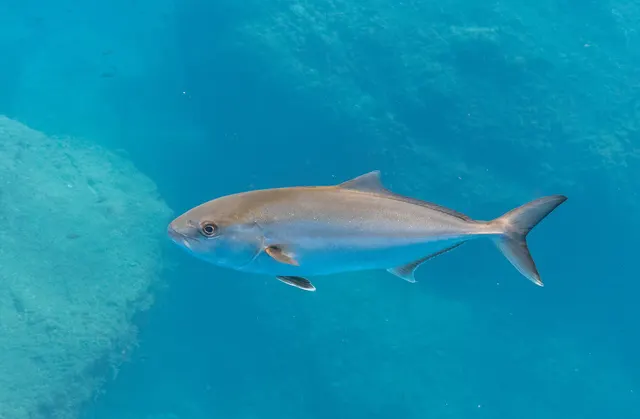
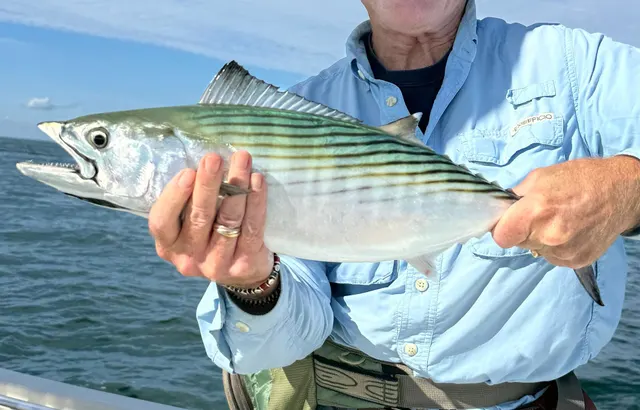
From the shore · 3
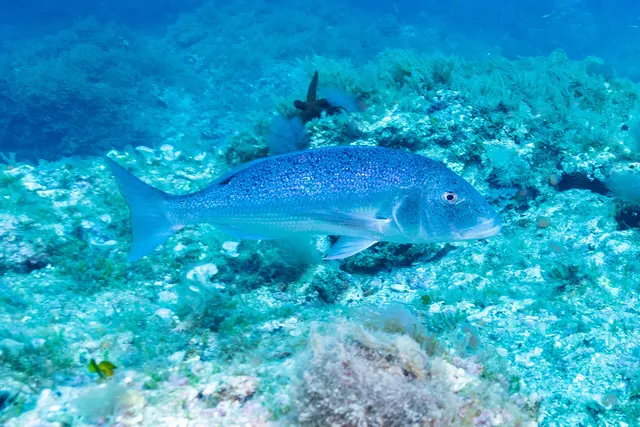
From a boat · 3
What these strengths mean
- Characteristic of this water
- This water is strongly identified with this species by the sources that cover it.
- Regular local target
- Fishing sources describe this as a normal local target here, not merely as caught.
- Seasonal
- Well supported, and concentrated in part of the year rather than spread through it.
- How breadth is counted
- A fish documented at six marks is shown as six marks: breadth never raises the strength on its own. A fishery account describes the fishing; a recorded catch reports one specific catch. How evidence is weighed.
Also associated with this ground
Recorded as present here without a documented method or strength behind them.
How people fish it
Practised here: Sea fishing.
Methods the sources name for this ground. Each one is explained in full on its own page.
- Trolling
Towing lures or baits behind a moving boat to cover large volumes of water and locate scattered fish.
- Jigging
Working a weighted lure with a rising-and-falling motion, usually vertically, so it behaves like a wounded or fleeing baitfish.
- Drift fishing
Letting the boat move with tide and wind while fishing, so the tackle searches ground instead of waiting on it — and the decision that determines whether a boat session works at all.
The ground and the water
- The ground
- The north-eastern tip of Sicily at the narrowest point of the Strait of Messina, with a shingle and sand point, two coastal lagoons behind it and deep scoured water in the channel a short distance offshore.
- Exposure
- Sheltered from swell by the geography and dominated entirely by current, which is the opposite of almost every other Mediterranean mark.
- Depth
- Very deep water immediately offshore, with the upwelling bringing mesopelagic animals into the upper layer in a way that happens almost nowhere else in this sea.
- Tide and flow
- The exchange between the Tyrrhenian and Ionian basins runs through a gap a few kilometres wide, reversing roughly every six hours and producing genuine overfalls, upwelling and standing waves — the phenomenon behind the Scylla and Charybdis of the Odyssey, and the reason deep-water species appear at the surface here.
Through the year
The swordfish season through the warmer months is the strait's defining fishery, worked visually from high-masted boats.
The months the sources attach to each species here. Where a species carries no season it is listed underneath rather than assumed to run through the year.
| Species | J | F | M | A | M | J | J | A | S | O | N | D |
|---|---|---|---|---|---|---|---|---|---|---|---|---|
| Atlantic bonito — seasonal, recorded in June, July, August, September, October. | ||||||||||||
| European squid — seasonal, recorded in October, November, December, January, February, March. |
Recorded here with no season stated: Greater amberjack, Common dentex.
Safety
Moving water and currents — Can cause serious injury or death
The exchange between two basins through a narrow gap produces streams, overfalls and standing waves unusual for the Mediterranean, reversing on a cycle, and a small craft that has misjudged the timing is carried rather than steered.
What reduces it: Plan any small-craft movement from tidal stream information for the strait specifically rather than from the weather, and treat local pilotage knowledge as a requirement rather than an advantage.
Boat traffic and being seen — Can cause serious injury or death
Summer small-craft traffic on this coast is heavy and fast, and a swimmer, breath-hold diver or small float is nearly invisible from a planing hull until it is too close to alter course.
What reduces it: Carry a surface marker buoy with a dive flag and keep it directly above the diver, work inside marked zones where they exist, and leave water where traffic is heavy rather than trying to be seen in it.
Rules and access
FishingHQ does not know the current access position here. Recreational sea fishing in Italy is registered nationally rather than licensed in the British sense, with quantity and species measures on top and separate treatment for underwater fishing, which has its own minimum age, its own equipment rules and its own prohibitions near bathers and moored craft. Marine protected areas along this coast carry zone-by-zone rules. Everything changes. Check the current position with the national fisheries ministry and the local port captaincy before going.
Who holds the answer:
- The national ministry responsible for fisheries, for recreational sea fishing registration and national measures.
- The local port captaincy, for local measures, for structures and for what underwater fishing may do where.
- The marine protected area administration, where the water is inside one.
- The national fisheries authority and its regional administration, which implement fishing rules and licensing for these waters.
- The international commission managing Atlantic and Mediterranean swordfish and tuna stocks, whose measures set the catch limits, closures and sizes.
- The European fisheries authorities, through which international measures are implemented in national law.
- The maritime authority and port captaincy, for navigation, vessel safety and the operation of the strait as a shipping route.
- The management authority of any marine protected area on the adjacent coasts.
Sources for this place
- EMODnet — the European Marine Observation and Data Network — The European Commission, assembled from the national hydrographic offices, geological surveys and marine institutes of the member states (Scientific institute)Relied on for: Charted bathymetry, seabed substrate and seabed habitat for European sea areas, assembled from the national hydrographic and geological surveys, at the resolution the product publishes.States this directlyCitation checked — the work exists and is described correctly
- The European Environment Agency's assessments of Europe's waters, seas and coasts — European Environment Agency, Copenhagen (Conservation authority)Relied on for: Assessment of Europe's coasts and regional seas, including the condition of coastal water bodies, the pressures recorded on them and the coverage of designated sites.Background and mechanism onlyCitation checked — the work exists and is described correctly
- FAO Species Identification Guides for Fishery Purposes and the FAO Species Catalogues — Food and Agriculture Organization of the United Nations (Scientific institute)Relied on for: Identification, distribution and habitat association of the fishes and invertebrates of the Mediterranean and Black Sea.States this directlyCitation checked — the work exists and is described correctly
- FishBase: a global information system on fishes — Froese, R. and D. Pauly, eds. — FishBase Consortium (Scientific institute)Relied on for: Recorded distribution, depth range and habitat association of the species named for this ground.States this directlyPassage read and verified
- RNLI water safety guidance: cold water shock and Float to Live — Royal National Lifeboat Institution (Water-safety or diver-training authority)Relied on for: Cold water shock and the immersion response, tidal cut-off, and water-safety guidance for shore anglers and small-craft users. Cited for the mechanism, which does not vary by coast.States this directlyPassage read and verified
How FishingHQ labels evidence is explained in the evidence policy. Last reviewed 2026-08-18.