The south coast of Crete
Rock mark · Salt water · in The Aegean and Crete
A steep limestone coast where the White Mountains fall directly into the Libyan Sea, with cliffs, gorge mouths, shingle beaches at the foot of ravines and very deep water within a short distance of the shore.
Safety: drowning and immersion — can cause serious injury or death. 4 more points apply here.
FishingHQ describes what this place is, not whether you may fish it. Access, permits and who to ask.
What you can catch here
Documented at this place, grouped by how you would be fishing, with how strongly the sources support each one. This is what has been written down, not a forecast, and being listed is never permission to fish.
From the shore · 4
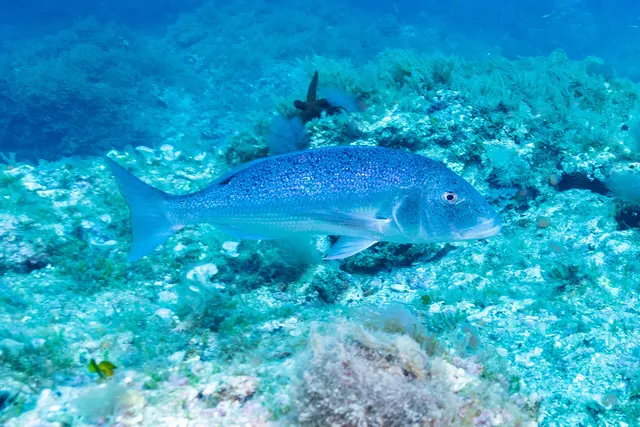 Common dentexRegular local target1 placeThe south coast of CreteOver rock mark
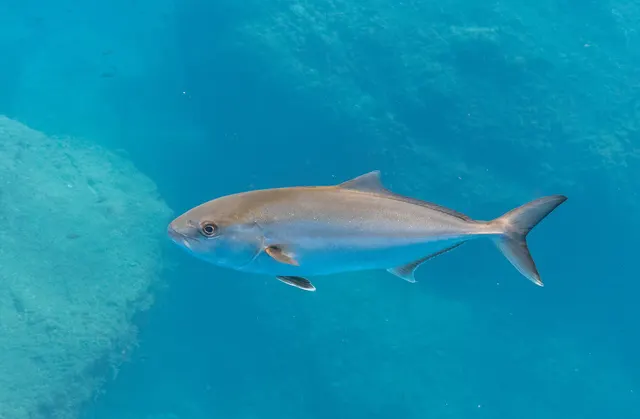 Greater amberjackRegular local target1 placeThe south coast of CreteOver rock mark
- White seabreamRegular local target1 placeThe south coast of CreteOver rock mark
- Red scorpionfishRecorded here1 placeThe south coast of CreteOver rock mark
From a boat · 3
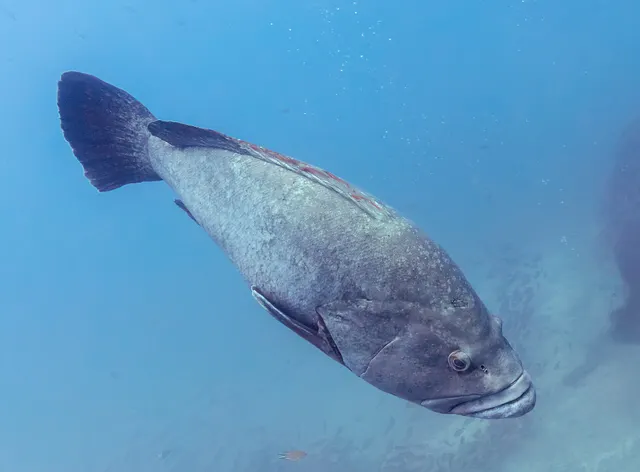
What these strengths mean
- Regular local target
- Fishing sources describe this as a normal local target here, not merely as caught.
- Recorded here
- At least one credible public account of this species being caught here. That is all it means.
- How breadth is counted
- A fish documented at six marks is shown as six marks: breadth never raises the strength on its own. A fishery account describes the fishing; a recorded catch reports one specific catch. How evidence is weighed.
How people fish it
Practised here: Sea fishing, Spearfishing.
Methods the sources name for this ground. Each one is explained in full on its own page.
- Float fishing
Suspending a bait at a controlled depth beneath a buoyant indicator — the most visual, most controllable and most widely applicable method in angling.
- Shore diving
Entering and leaving the water from land under your own power — the most accessible spearfishing and the one where the entry and exit are the dangerous part.
- Aspetto (waiting)
Descending, settling on the bottom and waiting for fish to come to you — the technique that produces most of the large fish taken by shore divers.
The ground and the water
- The ground
- A steep limestone coast where the White Mountains fall directly into the Libyan Sea, with cliffs, gorge mouths, shingle beaches at the foot of ravines and very deep water within a short distance of the shore.
- Exposure
- Sheltered from the meltemi by the mountains behind and exposed to southerly weather off North Africa, which is the opposite of the island's north coast.
- Depth
- Among the deepest inshore water in the Mediterranean: the seabed south of Crete drops into the Hellenic Trench, and depth of a thousand metres is not far offshore.
Through the year
Fishable and diveable year-round, and used most heavily outside the summer when the north coast is unworkable.
Safety
Drowning and immersion — Can cause serious injury or death
Mediterranean rock shores drop into deep water within a body length of the edge, so a slip puts somebody into water they cannot stand up in, frequently with no beach within reach and nobody in sight.
What reduces it: Wear a flotation aid rather than carry one, fish rock ground with somebody else, carry a means of calling for help on the person, and treat wet or weeded rock at the water's edge as unusable rather than as careful ground.
Cliffs and rock platforms — Can cause serious injury or death
Anglers are swept from rock platforms by individual large sets rather than by the average sea, which means the conditions that kill frequently look survivable for the twenty minutes before they arrive. Wet rock, weed and a swell running onto a sloping platform remove any chance of recovery.
What reduces it: Watch the water for a full set cycle before committing to a position, know the escape route and how long it takes, wear a flotation aid rather than carry one, never fish a platform alone, and treat a rising swell forecast as a reason not to go rather than a reason to be careful.
Weather and lightning — Can cause serious injury or death
The meltemi blows strongly and persistently across the Aegean through the summer, sometimes for several consecutive days, accelerating through channels between islands and building a substantial sea across open water. A small craft that left a sheltered bay may face a serious crossing later the same day.
What reduces it: Plan the crossing rather than the departure, check the forecast and know where the lee side is, and treat staying ashore for a day or several as an ordinary part of fishing here.
Shallow water blackout and breath-hold loss of consciousness — Can cause serious injury or death
Warm, clear, comfortable water lengthens dives and hypoxic blackout gives no warning symptoms. Hyperventilation removes the urge to breathe without adding oxygen, and the diver loses consciousness with no signal to surface.
What reduces it: One up, one down on every dive including shallow ones, with the buddy watching the ascent and the first thirty seconds after it. Take proper surface intervals and never dive after hyperventilating.
Sun, dehydration and fatigue — Can cause injury needing treatment
Long summer sessions on shadeless rock produce dehydration and heat exhaustion, and both degrade judgement and coordination well before they produce collapse, on ground where both are what keep somebody safe.
What reduces it: Carry substantially more water than the session appears to need, fish the ends of the day rather than the middle of it in high summer, and treat shade and a stopping time as part of the plan.
Rules and access
FishingHQ does not know the current access position here. Recreational sea fishing in Greece is permitted through the port authority rather than a national angling body, boat and underwater fishing carry their own separate permissions, and underwater fishing is subject to distance rules from bathers, harbours and moored craft and to equipment prohibitions. Archaeological protection closes water in places for reasons that have nothing to do with fisheries. All of it changes. Check the current position with the local port authority before going.
Particular to this water: Underwater fishing is licensed and regulated separately from rod fishing throughout this jurisdiction, with its own age, equipment and distance requirements, and holding a rod licence is not permission to spearfish.
Who holds the answer:
- The local port authority, which administers recreational sea and underwater fishing permission in its area.
- The ministry responsible for rural development and food, for national fisheries measures.
- The archaeological service, where the water carries a designation.
- The Hellenic Coast Guard and the local port authority, which enforce recreational fishing and spearfishing rules and are the practical body to ask.
- The Greek ministry responsible for rural development and food, for national fisheries measures, minimum sizes and prohibited gears.
- The management body for the marine park or protected area concerned, where fishing is restricted or prohibited independently of any other rule.
- The local municipality, for rules applying to harbours, moles and bathing areas from which fishing may be restricted.
Sources for this place
- EMODnet — the European Marine Observation and Data Network — The European Commission, assembled from the national hydrographic offices, geological surveys and marine institutes of the member states (Scientific institute)Relied on for: Charted bathymetry, seabed substrate and seabed habitat for European sea areas, assembled from the national hydrographic and geological surveys, at the resolution the product publishes.States this directlyCitation checked — the work exists and is described correctly
- The European Environment Agency's assessments of Europe's waters, seas and coasts — European Environment Agency, Copenhagen (Conservation authority)Relied on for: Assessment of Europe's coasts and regional seas, including the condition of coastal water bodies, the pressures recorded on them and the coverage of designated sites.Background and mechanism onlyCitation checked — the work exists and is described correctly
- FAO Species Identification Guides for Fishery Purposes and the FAO Species Catalogues — Food and Agriculture Organization of the United Nations (Scientific institute)Relied on for: Identification, distribution and habitat association of the fishes and invertebrates of the Mediterranean and Black Sea.States this directlyCitation checked — the work exists and is described correctly
- FishBase: a global information system on fishes — Froese, R. and D. Pauly, eds. — FishBase Consortium (Scientific institute)Relied on for: Recorded distribution, depth range and habitat association of the species named for this ground.States this directlyPassage read and verified
- RNLI water safety guidance: cold water shock and Float to Live — Royal National Lifeboat Institution (Water-safety or diver-training authority)Relied on for: Cold water shock and the immersion response, tidal cut-off, and water-safety guidance for shore anglers and small-craft users. Cited for the mechanism, which does not vary by coast.States this directlyPassage read and verified
How FishingHQ labels evidence is explained in the evidence policy. Last reviewed 2026-08-18.