Balearic Islands
Fishing regions · Last reviewed 2026-08-13
A near-tideless archipelago on its own shelf, with water clear enough that sight matters more than scent, extensive seagrass meadows that decide where everything lives, and a squid and cephalopod tradition that defines the local fishing year.
Safety: cliffs and rock platforms — can cause serious injury or death. 2 more points apply here.
Being listed here is not permission to fish. What that meansClose
Access, fishing rights, seasons, licences, local bylaws and permitted methods vary and can change. Check current access, permission, local regulations, closures and restrictions before you travel or fish. FishingHQ describes what the ground is and names who holds the answer; it does not hold the answer itself.
Find the authority for a jurisdiction · What FishingHQ does and does not cover
The Balearics are modelled as an archipelago rather than as four islands because the things that decide the fishing are shared across all of them, and where the same description would fit the next island along just as well, treating them as a group is the honest thing to do.
THE SHELF IS THE FIRST SHARED FACT. The islands sit on their own submarine platform separated from mainland Iberia by a deep channel, which gives them a distinct inshore environment: shallow ground extending some way out, then a fall to depth. That shelf carries the reef, sand and seagrass the inshore fishery is built on.
POSIDONIA IS THE SECOND AND IT IS THE MOST IMPORTANT. Extensive meadows of Posidonia oceanica — a Mediterranean seagrass, not an alga — cover large areas of shallow sandy bottom around the islands. The meadows are protected, they are extremely slow-growing, and they are the single most important habitat in the archipelago: they oxygenate the water, stabilise the sediment, produce the clarity the islands are known for, and function as nursery ground for a large share of the inshore fish and cephalopods. Anchor damage to posidonia is a live and heavily regulated issue, and understanding that a boat's anchor is the main threat to the habitat that makes the water clear is the most useful single thing a visitor can know.
THE SEA IS EFFECTIVELY TIDELESS, which changes the fishing more than people expect. There is no tidal stream to fish, no cut-off risk on the flats, no window on a mark, and no reason to consult a tide table. What replaces tide as the daily variable is LIGHT and WIND: the water is exceptionally clear, so fish are visual and cautious, and dawn, dusk and darkness matter far more than any state of water.
CEPHALOPODS ARE THE DEFINING CATCH. Squid and cuttlefish are taken from harbour walls, quaysides and small boats through the cooler months, on jigs, principally at night — the practice FishingHQ holds as eging, and locally a substantial social activity rather than a specialism. Octopus are taken on the rock and seagrass margins. The season for these runs counter to the tourist year, which is part of why visitors rarely see it.
AND MENORCA CARRIES SOMETHING THE OTHERS DO NOT: the red lobster fishery of its northern coast, a small-scale, seasonal, tightly managed fishery of considerable local economic and cultural importance, and the reason the island's fishing calendar has a shape the rest of the archipelago's lacks.
What fishing here is like
A clear, warm, near-tideless archipelago on its own shelf, where seagrass meadows rather than tide decide where fish are. Shore fishing from rock and harbour dominates, cephalopods are the defining seasonal target, and the exceptional water clarity makes the fishing visual and demanding. Spearfishing is culturally established and heavily regulated. The recreational fishing year runs opposite to the tourist year for several of the main species.
What you can target here
One entry per fish, grouped by how you would be fishing — because the answer is a different one from the rocks and from a boat. Each entry says how strongly the sources support it and how much evidence sits behind it. These are documented catches, not a forecast, and none of it is a statement that you may fish any particular ground.
From the shore · 4
- Common octopusRegular local target2 placesThe north coast of Menorca, Formentera and Es FreusOver rock mark, sound or strait
- White seabreamRegular local target2 placesFormentera and Es Freus, The north coast of MenorcaOver rock mark, sound or strait
- European squidSeasonal1 placeFormentera and Es FreusOver sound or straitAround Sept–Dec
- Red scorpionfishRecorded here1 placeThe north coast of MenorcaOver rock mark
What these strengths mean
- Regular local target
- Fishing sources describe this as a normal local target here, not merely as caught.
- Seasonal
- Well supported, and concentrated in part of the year rather than spread through it.
- Recorded here
- At least one credible public account of this species being caught here. That is all it means.
- How breadth is counted
- A fish documented at six marks is shown as six marks: breadth never raises the strength on its own. A fishery account describes the fishing; a recorded catch reports one specific catch. How evidence is weighed.
How people fish here
4 methods are recorded on the places documented here, counted from the records themselves rather than from what is practised in the country. Each opens a full guide to the technique.
Float fishing
Recorded at 2 places here, over rock mark, sound or strait.
Suspending a bait at a controlled depth beneath a buoyant indicator — the most visual, most controllable and most widely applicable method in angling.
Documented on the same ground: Common dentex, Common octopus, White seabream, European squid, Red scorpionfish.
Shore diving
Recorded at 2 places here, over rock mark, sound or strait.
Entering and leaving the water from land under your own power — the most accessible spearfishing and the one where the entry and exit are the dangerous part.
Documented on the same ground: Common dentex, Common octopus, White seabream, European squid, Red scorpionfish.
Eging
Recorded at 1 place here, over sound or strait.
Jigging for squid and cuttlefish with a barbed, weighted lure worked in lifts and pauses — a Japanese discipline with its own tackle, vocabulary and competitive scene.
Documented on the same ground: Common dentex, White seabream, European squid, Common octopus.
Kayak fishing
Recorded at 1 place here, over sound or strait.
A platform rather than a technique: quiet, shallow-draught access to water no other craft reaches, bought at the price of exposure, and a discipline where the decision not to launch is part of the skill.
Documented on the same ground: Common dentex, White seabream, European squid, Common octopus.
These are the methods documented at the places FishingHQ holds here. A species listed beside a method is documented on the same ground, which is not the same as being taken that way — where a source establishes the method a fish was caught on, it is stated on that place’s own page. All fishing methods.
What dominates
Shore fishing from rock and harbour walls for seabream species, and light lure fishing for them. Squid and cuttlefish jigging from quays and small boats through the cooler months. Octopus fishing on the rock and seagrass margins. Small-boat fishing over the shelf and the drop-offs beyond it. Spearfishing, which has a long Mediterranean tradition here and is separately licensed and tightly restricted. Recreational potting where permitted. Big-game and pelagic fishing offshore in season.
The water available
Rocky coast with cliffs, coves and wave-cut platforms; sand and shingle beaches in sheltered bays; extensive Posidonia oceanica seagrass meadows on shallow sandy bottom; rocky reef and boulder ground; a shelf platform separated from mainland Iberia by a deep channel; and offshore drop-offs and open Mediterranean water beyond. Effectively no tidal range.
How the rules are structured
Recreational sea fishing is administered by the Balearic autonomous community government rather than by the Spanish state, and requires a licence issued at that level with separate categories for shore, boat and underwater fishing. Spearfishing carries its own licence, its own minimum age and equipment conditions, and restrictions on where and when it may take place, including prohibitions in marine reserves and constraints relating to the use of breathing apparatus. Minimum sizes, daily limits and species restrictions apply. A network of marine reserves covers substantial areas of the archipelago with their own rules, and anchoring restrictions protect posidonia meadows. Rules differ from mainland Spain and from neighbouring autonomous communities. FishingHQ does not state what any current rule is.
Who to ask
- The Govern de les Illes Balears fisheries department, which issues recreational sea fishing and spearfishing licences and sets local rules.
- The managing body of the relevant marine reserve, several of which cover significant areas of the archipelago's coast.
- The port authority or harbour master where fishing takes place from harbour infrastructure.
- The Spanish national fisheries administration for offshore waters and highly migratory species.
- The regional environment authority for posidonia protection and anchoring restrictions.
Words you will meet
- Posidonia
- Posidonia oceanica, a Mediterranean seagrass forming extensive slow-growing meadows on shallow sandy bottom. It is a protected habitat, it produces much of the archipelago's water clarity, and it is nursery ground for a large share of the inshore fish and cephalopods.
- Calamar and sépia
- Squid and cuttlefish. Both are taken on jigs from quays and small boats, principally in the cooler months and principally after dark, in what is a substantial social as well as culinary activity.
- Llampuga
- The local name for mahi-mahi, taken seasonally in late summer and autumn around floating structure, and the subject of a distinct traditional fishery and festival calendar in Mallorca.
- Cala
- A cove or small sheltered inlet. The characteristic coastal form of the islands, and the shelter that makes small-boat and shore fishing possible on an otherwise rocky coast.
- Caldera de Menorca
- The northern Menorcan ground supporting the archipelago's red lobster fishery — small-scale, seasonal and tightly managed, and of considerable local economic importance.
Conditions and hazards
The absence of tide removes the hazards a British or Atlantic angler is trained to watch for — there is no cut-off risk on the flats and no tidal stream — and that absence lulls people into ignoring the ones that remain. Wind is the dominant variable: the tramuntana can rise quickly and build a short steep sea, and a small boat or kayak that launched in calm conditions can be unable to return. The rocky coast means shore fishing is frequently done from cliffs and low platforms above deep water where a fall is straight in and the exit is not obvious, and unofficial paths down to fishing platforms are unmaintained. Summer water temperature is high and sun, dehydration and fatigue are genuine risks on exposed rock through the middle of the day. Boat traffic is very heavy in the summer months around the popular coasts, which matters for kayak fishing and for spearfishing visibility.
A sea with no tide: what replaces it as the daily variable
The most disorienting thing about fishing the Balearics for anybody trained on an Atlantic coast is that the variable they have built their whole approach around is simply absent.
THE MEDITERRANEAN IS EFFECTIVELY TIDELESS. Range around the islands is measured in tens of centimetres rather than metres, and there is no tidal stream worth fishing. That removes at a stroke the entire framework an Atlantic shore angler uses: no window on a mark, no fishing the flood up a beach, no slack water on a wreck, no being cut off, no tide table.
WHAT REPLACES IT IS LIGHT. The water is exceptionally clear, frequently with visibility measured in tens of metres, and that changes the fishing fundamentally: fish see the angler, see the line, and see the bait properly. Fishing is therefore visual and cautious, terminal tackle is finer than an Atlantic angler would expect, and the productive periods are dawn, dusk and darkness rather than any state of water. Bright still midday over clear water on shallow ground is close to the worst condition available.
AND WIND REPLACES IT AS THE SAFETY VARIABLE. With no tide to plan around, the thing that decides whether a small boat or kayak can operate is the wind, and Mediterranean wind can rise faster than the sea state at launch suggests. The tramuntana coming down off the mountains onto the northern coasts is the specific case: it builds a short, steep, uncomfortable sea quickly, and because the water is shallow over the shelf it does so with less warning than an ocean swell gives.
THE CLARITY ALSO EXPLAINS THE SPEARFISHING TRADITION. Mediterranean spearfishing developed where it did partly because the water permits it: a diver can see, identify and select in a way that is impossible in most northern European water. That is the reason the discipline is culturally established here, and it is also the reason it is regulated as tightly as it is — a visual, selective method in clear water over an accessible coast is extremely effective, and the large, slow-growing, approachable reef fish were the first to go.
SO THE TRANSFERABLE POINT: on this coast, read the wind forecast and the light rather than the tide table, and expect the fish to have seen you first.
What experienced anglers do — why, and the sources (4)
Widely and independently recommended by experienced anglers and specialist sources. This is real angling knowledge, not proof: controlled evidence for it is limited, and FishingHQ records it as convention rather than as a demonstrated effect.
- ICES Advice on fishing opportunities, catch and effort — International Council for the Exploration of the Sea (Scientific institute)Relied on for: Stock distribution, ecoregion description and the hydrography of the sea areas assessed.States this directlyCitation checked — the work exists and is described correctly
- FishBase: a global information system on fishes — Froese, R. and D. Pauly, eds. — FishBase Consortium (Scientific institute)Relied on for: Distribution and habitat association of the species named as characteristic of these waters.States this directlyPassage read and verified
- Fishers' Craft and Lettered Art: Tracts on Fishing from the End of the Middle Ages — University of Toronto Press, 1997 (Scientific literature)Relied on for: That fishing traditions develop around the water and fish available to them, and the historical method of reading such traditions.States this directlyCitation checked — the work exists and is described correctly
- Words of the Lagoon: Fishing and Marine Lore in the Palau District of Micronesia — University of California Press, Berkeley, 1981 (Reference work)Relied on for: That local fishing practice encodes detailed knowledge of fish and conditions, and that the practice is frequently the record of the ecology.Background and mechanism onlyCitation checked — the work exists and is described correctly
Posidonia: the habitat that makes the water clear, and the anchor that destroys it
If one thing about the Balearics is worth a visitor understanding, it is the seagrass — because it explains the water, the fish and one of the more consequential environmental conflicts in the western Mediterranean.
POSIDONIA OCEANICA IS A FLOWERING PLANT, NOT AN ALGA. It is endemic to the Mediterranean, it forms dense meadows on shallow sandy bottom, and it grows extraordinarily slowly — meadows expand by a few centimetres a year, and some individual clonal stands in the archipelago are estimated to be thousands of years old. That growth rate is the whole of the conservation problem: damage is effectively permanent on any human timescale.
WHAT THE MEADOWS DO. They oxygenate the water column. They trap and stabilise sediment, which is the direct cause of the clarity the islands are famous for. They provide nursery and feeding habitat for a large proportion of the inshore fish and cephalopods, including the seabreams that dominate shore fishing and the cuttlefish that spawn among them. And the dead leaves that wash up and form banks on the beaches — which tourists complain about and hotels remove — protect those beaches from winter erosion.
THE PRINCIPAL THREAT IS ANCHORING. A boat anchor dropped into a meadow and dragged as the vessel swings tears out plants that will not regrow within a lifetime, and the summer concentration of recreational and charter vessels in exactly the sheltered sandy coves where posidonia grows has produced measurable, mapped loss. This is now regulated: anchoring is restricted or prohibited over mapped meadows, mooring buoys have been installed in many bays, and enforcement has increased.
WHICH MAKES IT A FISHING SUBJECT RATHER THAN ONLY AN ECOLOGICAL ONE. An angler in a small boat, a kayak angler, and a spearfisher swimming out from a cala are all operating over this habitat, and the anchoring decision is one they make personally. The clarity that makes the fishing what it is, and the nursery ground that produces the fish, are the same plant.
FishingHQ does not state where anchoring is currently permitted or prohibited — that is mapped, local and changing, and the harbour and environment authorities hold it. What generalises is knowing what the bottom is and why it matters.
Official guidance — why, and the sources (3)
Stated by a fisheries authority, scientific institute or recognised angling body. Authoritative, but summarising rather than demonstrating.
- ICES Advice on fishing opportunities, catch and effort — International Council for the Exploration of the Sea (Scientific institute)Relied on for: Stock distribution, ecoregion description and the hydrography of the sea areas assessed.States this directlyCitation checked — the work exists and is described correctly
- FishBase: a global information system on fishes — Froese, R. and D. Pauly, eds. — FishBase Consortium (Scientific institute)Relied on for: Distribution and habitat association of the species named as characteristic of these waters.States this directlyPassage read and verified
- JNCC species and habitat conservation advice — Joint Nature Conservation Committee (Conservation authority)Relied on for: Conservation advice on marine habitats and the assessment of physical damage to slow-growing seabed communities.Background and mechanism onlyCitation checked — the work exists and is described correctly
A tourist archipelago with a working fishery underneath it
The Balearics' fishing culture has two layers that barely acknowledge each other, and both are real.
THE LOCAL FISHERY IS SMALL-SCALE AND OLD. Artisanal boats working trammel nets, traps and lines out of small harbours for red mullet, scorpionfish, seabream and lobster is a continuing practice with its own guild structure, and the llaüt — the traditional Balearic boat — is still in use and still built.
THE VISITOR ECONOMY IS THE OTHER LAYER, and it dominates the islands economically. Charter fishing, dive tourism and enormous summer boat traffic share water with a fishery that predates all of it, and the pressure on anchorages, on seagrass and on quiet water is a live local issue.
SQUID FISHING IS THE POPULAR RECREATIONAL PRACTICE. Eging from harbour walls, quaysides and small boats after dark is ordinary here, and cephalopods are mainstream food rather than a curiosity.
SHORE ANGLING FROM ROCK AND HARBOUR is widely practised for seabream, and the Mediterranean shore fishing culture — light tackle, fine lines, bread and small baits for wary fish in clear water — is quite different in temperament from Atlantic surfcasting.
SPEARFISHING HAS A STRONG TRADITION HERE, as it does across the western Mediterranean, and the islands have contributed to its competitive history.
CATALAN IS SPOKEN and the local variety carries the fishing vocabulary, so the boat, the ground and the fish frequently have names that a Castilian dictionary will not give.
AND THE POSIDONIA MEADOWS ARE A CULTURAL AS WELL AS ECOLOGICAL FACT. Protection of the seagrass that underpins the islands' water clarity and fish production is now a visible public issue, and anchoring rules exist because of it.
What experienced anglers do — why, and the sources (2)
Widely and independently recommended by experienced anglers and specialist sources. This is real angling knowledge, not proof: controlled evidence for it is limited, and FishingHQ records it as convention rather than as a demonstrated effect.
- General angling website restatements of established technique — Various (Credible secondary source)Relied on for: Widely restated practice associating this discipline or technique with this place, recorded as practitioner consensus rather than as tested fact.Background and mechanism onlyCitation checked — the work exists and is described correctly
- Fishers' Craft and Lettered Art: Tracts on Fishing from the End of the Middle Ages — University of Toronto Press, 1997 (Scientific literature)Relied on for: That fishing traditions develop around the water and fish available to them, and the historical method of reading such traditions from their documentary record.States this directlyCitation checked — the work exists and is described correctly
Eging after dark, light-line shore fishing and the boats
The disciplines here are Mediterranean disciplines, and they are calibrated to clear water and wary fish.
SHORE FISHING WITH LIGHT TACKLE IS THE MAINSTREAM. Clear water, cautious seabream and no tide to speak of produce a fishery built on fine lines, small hooks, light or no lead and careful presentation — the opposite of Atlantic surfcasting in almost every respect. Bread, small crustacean and paste baits are standard.
EGING FOR SQUID AND CUTTLEFISH is practised after dark from harbour walls, rocks and small boats, and it is one of the most popular recreational activities on the islands.
BOAT FISHING WORKS THE SHARED SHELF between the islands, drifting and anchoring over rock, sand and seagrass edges for seabream, dentex, amberjack and scorpionfish.
TRAMMEL NETTING AND TRAP FISHING is the artisanal commercial discipline, worked from small boats out of many harbours, and the traditional llaüt is the vessel.
SPEARFISHING IS WELL ESTABLISHED, practised on the rocky coast and around the islets, with the usual Mediterranean catch and a strong competitive history. It is separately licensed and equipment-restricted.
TROLLING AND JIGGING work the deeper water and the drop-offs for amberjack, dentex and pelagics.
AND THE THING THAT IS ABSENT IS TIDE-DRIVEN FISHING. With negligible tidal range, none of the tide-reading skill that dominates Atlantic and Channel angling applies here. What replaces it is reading light, wind, seagrass edges and water clarity, which is a different discipline entirely and catches out visiting Atlantic anglers.
What experienced anglers do — why, and the sources (2)
Widely and independently recommended by experienced anglers and specialist sources. This is real angling knowledge, not proof: controlled evidence for it is limited, and FishingHQ records it as convention rather than as a demonstrated effect.
- General angling website restatements of established technique — Various (Credible secondary source)Relied on for: Widely restated practice associating this discipline or technique with this place, recorded as practitioner consensus rather than as tested fact.Background and mechanism onlyCitation checked — the work exists and is described correctly
- Fishers' Craft and Lettered Art: Tracts on Fishing from the End of the Middle Ages — University of Toronto Press, 1997 (Scientific literature)Relied on for: That fishing traditions develop around the water and fish available to them, and the historical method of reading such traditions from their documentary record.States this directlyCitation checked — the work exists and is described correctly
Seabream, squid and the grouper that came back
The Balearic species set is western Mediterranean, and a few of its members are worth singling out.
SEABREAMS DOMINATE THE INSHORE FISHERY. White seabream, common pandora, gilthead bream and their relatives occupy rock, sand and seagrass edges and are the principal recreational and artisanal catch. They are wary in clear water, which is what shapes the tackle.
COMMON DENTEX IS THE PRESTIGE FISH. A powerful, wary, sight-hunting predator of the rocky ground and drop-offs, it is the target that Mediterranean lure and spearfishing culture is oriented around.
DUSKY GROUPER IS THE CONSERVATION STORY. Long-lived, slow-growing, site-attached and historically depleted throughout the Mediterranean, groupers have recovered measurably inside the islands' marine reserves, and that recovery is one of the better-documented reserve effects in Europe.
EUROPEAN SQUID AND COMMON CUTTLEFISH are mainstream catch, taken on jigs from shore and boat, with cuttlefish coming into shallow water to spawn in the warmer months.
GREATER AMBERJACK AND ATLANTIC BONITO work the deeper water and the current lines around the islands.
STRIPED RED MULLET AND SCORPIONFISH occupy the sand and rock and are mainstays of the artisanal fishery and the local kitchen.
SPINY LOBSTER IS THE HIGH-VALUE INVERTEBRATE, taken in traps, and it has its own seasons and controls.
AND POSIDONIA SEAGRASS IS THE HABITAT UNDERNEATH ALL OF IT. The meadows are nursery ground, sediment stabiliser and the reason the water is as clear as it is, and their decline under anchoring, development and warming is the single most consequential ecological question in these islands.
Backed by research — why, and the sources (2)
Supported by peer-reviewed research or fisheries science. The sources are listed and can be checked.
- FAO Species Identification Guides for Fishery Purposes and the FAO Species Catalogues — Food and Agriculture Organization of the United Nations (Scientific institute)Relied on for: Distribution, habitat, depth and fishery accounts for the species of the Mediterranean and eastern central Atlantic in the FAO regional identification guides.States this directlyCitation checked — the work exists and is described correctly
- FishBase: a global information system on fishes — Froese, R. and D. Pauly, eds. — FishBase Consortium (Scientific institute)Relied on for: Distribution, habitat association and depth range recorded for the species.States this directlyPassage read and verified
Llaüt, posidonia, reserva marina
The Balearic vocabulary is Catalan with a strong conservation overlay, and three terms carry most of what a visitor needs.
LLAÜT NAMES THE TRADITIONAL BALEARIC BOAT — a small, beamy, lateen-derived working craft, still built and still fished from. It is a specific hull with a specific history rather than a general word for a boat, and seeing one in a harbour is seeing the artisanal fishery.
POSIDONIA NAMES THE SEAGRASS that carpets the shallow seabed around the islands. It is not a weed and it is not algae: it is a flowering marine plant forming meadows that are nursery habitat, sediment stabiliser and the reason the water is clear. Some meadows here are of extraordinary age. Anchoring restrictions exist to protect it, and a visitor who understands the word understands the rules.
RESERVA MARINA NAMES A MARINE RESERVE, and the Balearics have a well-developed network of them with graduated protection. The measurable recovery of grouper and other species inside them is one of the clearer demonstrations of reserve effect in European waters.
CALA NAMES A SMALL SHELTERED COVE, and the coastline is described in calas rather than in bays. They are the sheltered access points and, in summer, the crowded ones.
SÉPIA AND CALAMAR NAME CUTTLEFISH AND SQUID, and their prominence in ordinary conversation reflects how mainstream cephalopod fishing and eating are here.
RAOR NAMES THE PEARLY RAZORFISH, a small sand-dwelling wrasse whose short season is a genuine local event with a following out of all proportion to the fish's size — a good example of a fishery that exists because of culture rather than because of biomass.
AND ANFÓS NAMES THE DUSKY GROUPER, the fish whose recovery inside the reserves is the islands' conservation success story.
What experienced anglers do — why, and the sources (2)
Widely and independently recommended by experienced anglers and specialist sources. This is real angling knowledge, not proof: controlled evidence for it is limited, and FishingHQ records it as convention rather than as a demonstrated effect.
- General angling website restatements of established technique — Various (Credible secondary source)Relied on for: Widely restated practice associating this discipline or technique with this place, recorded as practitioner consensus rather than as tested fact.Background and mechanism onlyCitation checked — the work exists and is described correctly
- Fishers' Craft and Lettered Art: Tracts on Fishing from the End of the Middle Ages — University of Toronto Press, 1997 (Scientific literature)Relied on for: That fishing traditions develop around the water and fish available to them, and the historical method of reading such traditions from their documentary record.States this directlyCitation checked — the work exists and is described correctly
Trap fisheries, tourism and the reserves that followed
The Balearics' fishing history is a small-island artisanal history overtaken by a tourism economy, with a conservation response arriving late but effectively.
THE ARTISANAL FISHERY IS OLD AND CONTINUOUS. Trammel nets, traps and lines worked from small boats out of many harbours has been the pattern for centuries, organised through guilds and supplying local markets. The llaüt and the gear traditions descend directly from it.
TUNA TRAPS OPERATED IN THE WESTERN MEDITERRANEAN for two thousand years, intercepting migrating bluefin in fixed net systems, and the almadraba tradition of the Spanish coast is part of the same family. The collapse of bluefin stocks in the twentieth century ended most of it.
TOURISM TRANSFORMED THE ISLANDS FROM THE 1960s onwards, and the transformation was total in economic terms. Fishing became a minor sector in a service economy, coastal development altered the shore, and summer boat traffic became a pressure on the shallow seabed.
SEAGRASS DECLINE BECAME VISIBLE and was traced substantially to anchoring, coastal development, sewage and warming. The response — anchoring restrictions, monitoring and public campaigning — is recent and is one of the more determined seagrass protection efforts in the Mediterranean.
THE MARINE RESERVE NETWORK WAS BUILT FROM THE 1980s ONWARDS, with graduated protection, and the recovery of fish biomass and of large predators inside the strongest reserves has been measured and published. It is a European reference case for reserve effectiveness.
SPEARFISHING'S COMPETITIVE HISTORY IS PART OF THE ISLANDS' RECORD, and the sport's relationship with the reserves has had to be negotiated.
AND THE ARTISANAL FLEET IS NOW SMALL AND AGEING, which is a common European story, and the guild structure that supports it is under the same pressure.
Official guidance — why, and the sources (2)
Stated by a fisheries authority, scientific institute or recognised angling body. Authoritative, but summarising rather than demonstrating.
- Fishers' Craft and Lettered Art: Tracts on Fishing from the End of the Middle Ages — University of Toronto Press, 1997 (Scientific literature)Relied on for: The historical development of European fishing practice, its transmission and its documentary record, including medieval and early modern fisheries.States this directlyCitation checked — the work exists and is described correctly
- Code of Conduct for Responsible Fisheries — Food and Agriculture Organization of the United Nations, Rome, 1995 (Standards body)Relied on for: Principles for fisheries management including the treatment of traditional, small-scale and shared fisheries, against which historical arrangements can be read.Background and mechanism onlyCitation checked — the work exists and is described correctly
Regional government, licences by category, and reserves with real teeth
The Balearics are governed as an autonomous community with substantial fisheries competence, and the structure has features a visitor should know.
THE REGIONAL GOVERNMENT ADMINISTERS INSHORE FISHERIES, with the autonomous community holding competence over coastal fishing and shellfish, inside the Spanish national and European framework.
RECREATIONAL FISHING REQUIRES A LICENCE, issued by the regional government, with separate categories for shore, boat and underwater fishing. Bag limits, minimum sizes and species restrictions attach to it. A visitor from a jurisdiction where sea angling is unlicensed will need to arrange this before fishing.
UNDERWATER FISHING IS SEPARATELY LICENSED AND TIGHTLY CONDITIONED, with restrictions on equipment, on combining it with breathing apparatus, and on where and when it may be practised.
MARINE RESERVES ARE THE PRINCIPAL SPATIAL INSTRUMENT and they have graduated zones: integral no-take cores, buffer areas permitting some activity, and outer zones with lighter rules. Which zone a boat is in decides what may happen, and the reserves are actively enforced.
POSIDONIA PROTECTION CONSTRAINS ANCHORING, with regulation and monitoring aimed at preventing anchor damage to seagrass meadows. It is a habitat rule rather than a fisheries one and it applies to any vessel.
SPECIES-SPECIFIC MEASURES APPLY to several taxa, including spiny lobster, grouper and the short-season razorfish fishery, with closed periods and quotas.
AND FISHINGHQ DOES NOT STATE WHAT ANY OF THIS CURRENTLY PERMITS. Licence categories, reserve boundaries and species measures here are set regionally and revised, and the regional fisheries directorate is the durable answer.
Official guidance — why, and the sources (2)
Stated by a fisheries authority, scientific institute or recognised angling body. Authoritative, but summarising rather than demonstrating.
- Code of Conduct for Responsible Fisheries — Food and Agriculture Organization of the United Nations, Rome, 1995 (Standards body)Relied on for: Principles for the management of fisheries, including licensing, closed seasons, size limits and the treatment of small-scale and shared stocks.States this directlyCitation checked — the work exists and is described correctly
- Good Fish Guide — Marine Conservation Society (Conservation authority)Relied on for: Assessment of fisheries and the management measures applied to them, including the instruments used and their purpose.Background and mechanism onlyCitation checked — the work exists and is described correctly
The missing warning: a rock coast with no tide to tell you
Almost everything written about rock-mark safety was written for a tidal ocean, and the Balearics quietly remove the single most useful signal in it.
AN ATLANTIC ANGLER LEARNS TO READ THE TIDE AS A CLOCK. The water is coming in or going out, it does so predictably, a mark that is safe now becomes unsafe on a known schedule, and the schedule is printed. That habit is not a nice-to-have — it is the mechanism by which a person decides when to leave, and it works whether or not they are paying attention, because the water tells them.
HERE THE TIDAL RANGE IS A FEW TENS OF CENTIMETRES AND THE CLOCK IS GONE. The sea level at a Balearic rock mark is governed by wind, by atmospheric pressure and by swell rather than by the moon, which means it does not change gradually and it does not change on a timetable. What actually happens is that a swell arrives — frequently generated by weather a long way off and days earlier, under a sky that is doing nothing — and the water goes from lapping to breaking across a ledge in the course of an afternoon with no gradual advance to notice.
SO THE LEAVING DECISION HAS TO BE MADE DIFFERENTLY. On a tidal coast you leave because the tide says so. Here you have to leave because the SWELL FORECAST said so before you set out, and that is a decision made at home rather than on the rock. There is nothing at the mark that will prompt you.
THE CALES COMPOUND IT. The characteristic Balearic mark is a ledge or a low cliff above deep clear water in a small cove, reached by a scramble. Deep water immediately below means no shallow margin to be washed into and no gradient to walk out up: somebody who goes in is in swimming water instantly, against a rock face, with a scramble rather than a beach as the only exit. The clarity makes it look benign, and clarity is a fact about the water, not about the exit.
AND THE SUMMER BOAT TRAFFIC IS THE OTHER HALF. These are among the most intensively used recreational waters in Europe between June and September. Small craft and swimmers share narrow coves with fast powered traffic whose operators are frequently on holiday rather than experienced. A kayak angler in a Balearic cala in August is in a busy road with no lane markings, and being seen is the whole problem.
Official guidance — why, and the sources (3)
Stated by a fisheries authority, scientific institute or recognised angling body. Authoritative, but summarising rather than demonstrating.
- Rock fishing safety and the declared lifejacket areas of New South Wales — NSW Department of Primary Industries and Surf Life Saving NSW (Water-safety or diver-training authority)Relied on for: Rock-platform fishing hazards, the mechanism by which anglers are swept from platforms by sets rather than by average conditions, and the measures that address it.States this directlyCitation checked — the work exists and is described correctly
- Met Office shipping forecast, inshore waters forecast and marine warnings — Met Office, United Kingdom (Government fisheries body)Relied on for: That marine and inshore forecasts, sea state, swell and wind are the operative inputs for shore and small-craft decisions, and the spatial and temporal resolution at which such forecasts are issued.States this directlyCitation checked — the work exists and is described correctly
- NOAA National Weather Service marine forecasts and marine weather services — National Oceanic and Atmospheric Administration, United States (Government fisheries body)Relied on for: Marine forecasting practice, the interpretation of sea state and swell products, and the limits of forecast resolution in coastal and enclosed waters.States this directlyCitation checked — the work exists and is described correctly
Some of what lives here
Fish recorded here that FishingHQ holds a reviewed photograph of. It is not a complete list of what Balearic Islands holds, and it is not a prediction that you will catch any of them — it is a way in to the ones we can show you.
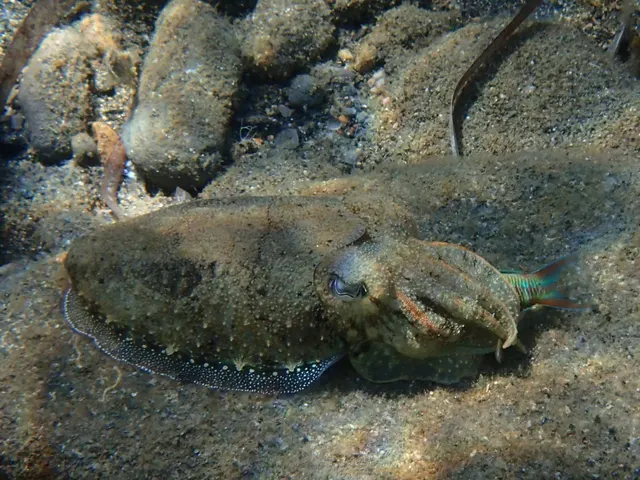 Common cuttlefishA bottom-oriented cephalopod with an internal buoyancy shell, the best-studied invertebrate mind in the sea, and a fishery that works quite differently from squid.
Katerina Kalogerini — CC BY, via iNaturalist
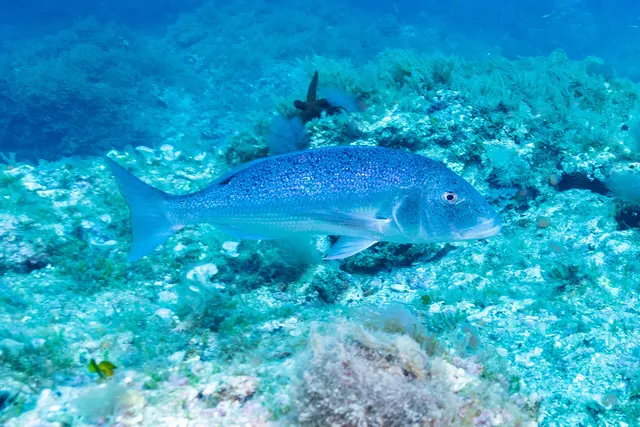 Common dentexThe Mediterranean's fastest and warriest inshore predator — a sea bream that hunts like a jack, and the fish spearfishers there rate above all others.
Diego Delso — CC BY-SA 4.0, via Wikimedia Commons
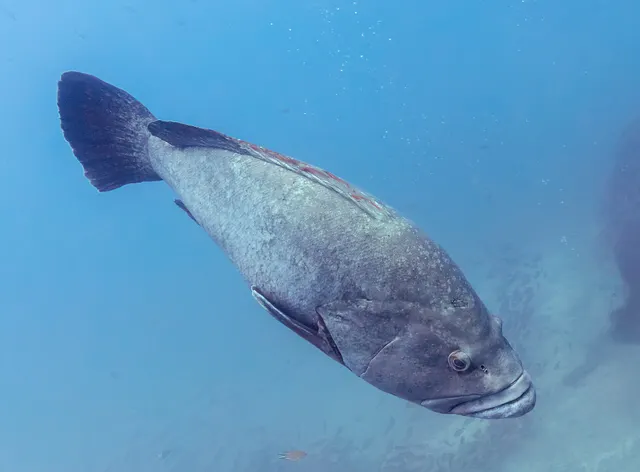 Dusky grouperThe Mediterranean's iconic reef predator: territorial, slow to mature, sex-changing, and the species whose decline made the case for marine protected areas there.
Diego Delso — CC BY-SA 4.0, via Wikimedia Commons
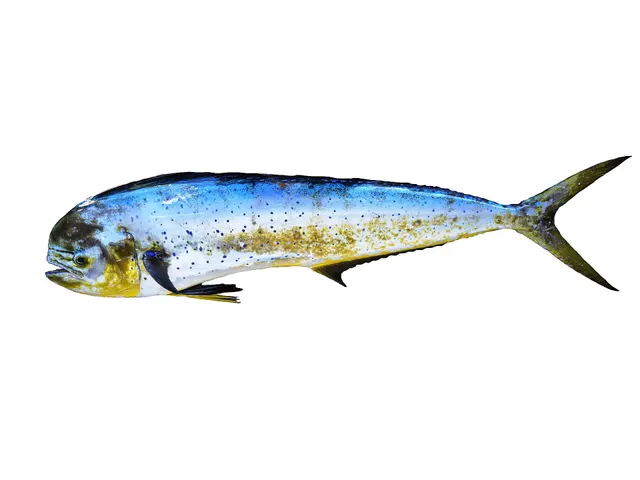 Mahi-mahiThe fastest-growing large fish an angler is likely to meet — brilliantly coloured, mature within months, and gathered around anything floating in the open ocean.
Hugues Evano (IFREMER, Délégation océan Indien (DOI), Département Ressources Biologiques et Environnement (RBE), F-97420 Le Port, France) — CC BY 4.0, via Wikimedia Commons
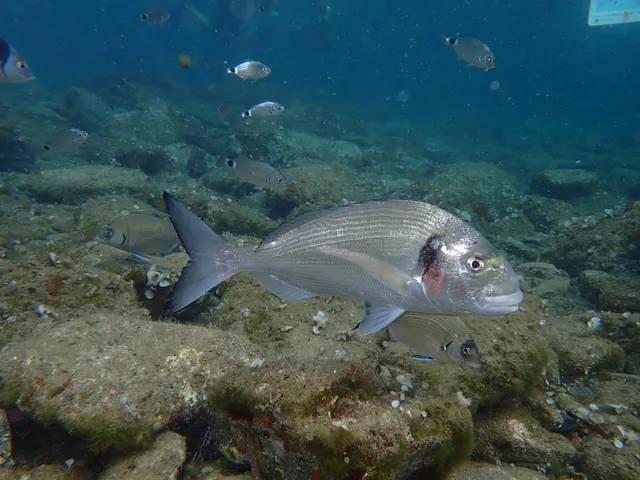 Gilthead breamThe Mediterranean's most prized sea bream, marked by a golden band between the eyes, with a jaw powerful enough to crush shellfish and a range now expanding northward.
jujurenoult — CC BY 4.0, via Wikimedia Commons
Places within this area
Publicly documented fishing geography. FishingHQ describes what the ground is; it does not say whether you may fish it, and every one of these sends that question to the body that holds the answer. Browse every place in this part of the world.
Who to ask before fishing any of these
FishingHQ does not know the current access position here. The Balearic Islands license their own recreational sea, boat and underwater fishing, and the archipelago carries an extensive network of marine reserves and seagrass protections with rules that differ reserve by reserve. Measures, seasons and reserve boundaries change. Check the current position with the Balearic government's fisheries administration before going.
Formentera and Es Freus
Sound or strait · Salt water
The channel of shallow islets and sand between Ibiza and Formentera, floored by one of the largest and oldest continuous posidonia seagrass meadows in the world, with white sand between the meadows and rock on the islets.
Sheltered in the lee of one island or the other depending on the wind, and open across the channel itself.
Particular to this ground: boat traffic and being seen, sun, dehydration and fatigue.
Severe hazards of Balearic Islands apply here: cliffs and rock platforms.
Particular to this water: This ground lies in or beside a marine protected area whose zoning constrains fishing, diving, anchoring and collection independently of any licence, with rules that differ between zones and boundaries that are not visible from the water. Underwater fishing is licensed and regulated separately from rod fishing throughout this jurisdiction, with its own age, equipment and distance requirements, and holding a rod licence is not permission to spearfish.
The north coast of Menorca
Rock mark · Salt water
An indented coast of dark, older rock on the northern side of Menorca — geologically quite unlike the island's limestone south — with steep cliffs, small deep coves and boulder ground below the surface.
Takes the tramuntana directly, which is why this side of the island is rougher, cooler and far less developed than the south.
Particular to this ground: drowning and immersion, cliffs and rock platforms.
Severe hazards of Balearic Islands apply here: boat traffic and being seen.
Particular to this water: This ground lies in or beside a marine protected area whose zoning constrains fishing, diving, anchoring and collection independently of any licence, with rules that differ between zones and boundaries that are not visible from the water. Underwater fishing is licensed and regulated separately from rod fishing throughout this jurisdiction, with its own age, equipment and distance requirements, and holding a rod licence is not permission to spearfish.
Safety
Cliffs and rock platforms — Can cause serious injury or death
Shore fishing and shore diving entries here are frequently from cliffs and low rock platforms above deep water, reached by unofficial and unmaintained paths. A fall goes straight into deep water with no beach and frequently no obvious way back out, and the absence of tide means there is no rising water to signal that a position is becoming untenable.
What reduces it: Identify the exit before committing to a platform rather than after, and treat a position with no way back out as one not to take. Do not fish or enter alone from cliff ground, and wear a buoyancy aid where a fall into deep water is possible.
Worse when:
- Swell running, which reaches platforms that are dry in calm conditions.
- Darkness, when the unofficial paths that reach the platforms are hardest to use.
Boat traffic and being seen — Can cause serious injury or death
Recreational and charter boat traffic around the popular coasts is very heavy through the summer, and a spearfisher or a freediver in the water is invisible to it. The clear water that makes the diving worthwhile does nothing to make the diver visible from the surface.
What reduces it: Dive with a marked surface float and flag, keep close to it, and stay well clear of the approaches to harbours, moorings and popular anchorages. Dive with a competent buddy, one up and one down, on every dive.
Sun, dehydration and fatigue — Can cause injury needing treatment
Summer heat on exposed rock through the middle of the day is severe, and the absence of tide removes the natural session limit that would end a session on an Atlantic coast. People stay out longer than they would elsewhere and are more depleted than they realise.
What reduces it: Fish the ends of the day rather than the middle of it, which also suits the fish in clear water, and carry more water than the session appears to need.
Further safety reading
- Rock platform and cliff safety — Shore fishing is frequently done from cliffs and low platforms above deep water, reached by unofficial and unmaintained paths, where a fall goes straight in and the exit is not obvious.
- Sun, dehydration and fatigue — Summer heat on exposed rock through the middle of the day is a genuine risk, and the absence of tide removes the natural session limit an Atlantic angler would have.
- Surface markers and boat traffic — Recreational boat traffic around the popular coasts is very heavy in summer, which matters directly for kayak fishing and for spearfishing visibility.
Check the rules before you fish
Fishing laws, bylaws, access rules, seasons, bait restrictions and permitted methods vary by location and can change. Check the current rules from the relevant authority and the water you intend to fish before fishing.
Check with:
- Current national or regional law for where you are fishing
- Current local bylaws
- The relevant fisheries authority
- The landowner, club or fishery whose water it is
- Any restrictions specific to the species or the method you intend to use
Where to go next
What swims here
- Common cuttlefishComes into shallow water over sand and seagrass in the warmer months to spawn, attaching egg clusters to weed and structure, and is taken on jigs from shore and boat.
- Common dentexPresent over rocky ground and drop-offs, and one of the large predators the Mediterranean spearfishing tradition here is built around.
- Dusky grouperOccurs on rocky reef, and its presence and size are used as an indicator of effectively protected ground because it is among the first species lost from accessible coast.
- European lobsterPresent on rocky ground, alongside the separately managed red lobster fishery of the northern Menorcan caldera.
- European squidTaken on jigs from quays, harbour walls and small boats through the cooler months, principally after dark — the defining seasonal target of the archipelago's recreational fishing year.
- Gilthead breamPresent around the islands over sand, seagrass and shellfish ground, where its crushing dentition suits the bottom it feeds on.
- Mahi-mahiLlampuga, taken seasonally in late summer and autumn around floating structure, and the subject of a distinct traditional fishery and festival calendar in Mallorca.
- White seabreamAbundant around rock, harbour walls and the margins of seagrass meadows, and the principal shore-angling target across the islands.
How this compares
- Malta and GozoTwo intensively visited Mediterranean archipelagos with clear water, protected Posidonia and strong local spearfishing cultures — and different national rules governing all three of those things.
- MediterraneanThe islands sit on their own shelf within the Mediterranean, and the near-absent tide, the clarity and the seagrass that define them are properties of that sea rather than of the islands.
- The Croatian AdriaticThe two ends of the Mediterranean spearfishing world, both on limestone and both in clear water, with opposite tourism pressures and different regulatory temperaments. Reading them together shows how much of a fishery's character is set by how many people can reach it.
Environment and conservation
Sources and evidence
- ICES Advice on fishing opportunities, catch and effort — International Council for the Exploration of the Sea (Scientific institute)Relied on for: Stock distribution, ecoregion description and the hydrography of the sea areas assessed.States this directlyCitation checked — the work exists and is described correctly
- FishBase: a global information system on fishes — Froese, R. and D. Pauly, eds. — FishBase Consortium (Scientific institute)Relied on for: Distribution and habitat association of the species named as characteristic of these waters.States this directlyPassage read and verified
- Fishers' Craft and Lettered Art: Tracts on Fishing from the End of the Middle Ages — University of Toronto Press, 1997 (Scientific literature)Relied on for: That fishing traditions develop around the water and fish available to them, and the historical method of reading such traditions.States this directlyCitation checked — the work exists and is described correctly
- Words of the Lagoon: Fishing and Marine Lore in the Palau District of Micronesia — University of California Press, Berkeley, 1981 (Reference work)Relied on for: That local fishing practice encodes detailed knowledge of fish and conditions, and that the practice is frequently the record of the ecology.Background and mechanism onlyCitation checked — the work exists and is described correctly
Why the 18 connections on this page are here, and the sources
What swims here
Backed by research — 8 connections
Supported by peer-reviewed research or fisheries science. The sources are listed and can be checked.
Common cuttlefish
Occurrence of the species in these waters: a statement about the animal's distribution, not a venue recommendation.
- The Fishes of the British Isles and North-West Europe — Macmillan, 1969 (Reference work)Relied on for: Distribution and habitat association of fishes in north-west European and eastern Atlantic waters.States this directlyCitation checked — the work exists and is described correctly
- FishBase: a global information system on fishes — Froese, R. and D. Pauly, eds. — FishBase Consortium (Scientific institute)Relied on for: Distribution, depth range and habitat association recorded for the species.States this directlyPassage read and verified
Common dentex
Occurrence of the species in these waters: a statement about the animal's distribution, not a venue recommendation.
- The Fishes of the British Isles and North-West Europe — Macmillan, 1969 (Reference work)Relied on for: Distribution and habitat association of fishes in north-west European and eastern Atlantic waters.States this directlyCitation checked — the work exists and is described correctly
- FishBase: a global information system on fishes — Froese, R. and D. Pauly, eds. — FishBase Consortium (Scientific institute)Relied on for: Distribution, depth range and habitat association recorded for the species.States this directlyPassage read and verified
Dusky grouper
Occurrence of the species in these waters: a statement about the animal's distribution, not a venue recommendation.
- The Fishes of the British Isles and North-West Europe — Macmillan, 1969 (Reference work)Relied on for: Distribution and habitat association of fishes in north-west European and eastern Atlantic waters.States this directlyCitation checked — the work exists and is described correctly
- FishBase: a global information system on fishes — Froese, R. and D. Pauly, eds. — FishBase Consortium (Scientific institute)Relied on for: Distribution, depth range and habitat association recorded for the species.States this directlyPassage read and verified
European lobster
Occurrence of the species in these waters: a statement about the animal's distribution, not a venue recommendation.
- The Fishes of the British Isles and North-West Europe — Macmillan, 1969 (Reference work)Relied on for: Distribution and habitat association of fishes in north-west European and eastern Atlantic waters.States this directlyCitation checked — the work exists and is described correctly
- FishBase: a global information system on fishes — Froese, R. and D. Pauly, eds. — FishBase Consortium (Scientific institute)Relied on for: Distribution, depth range and habitat association recorded for the species.States this directlyPassage read and verified
European squid
Occurrence of the species in these waters: a statement about the animal's distribution, not a venue recommendation.
- The Fishes of the British Isles and North-West Europe — Macmillan, 1969 (Reference work)Relied on for: Distribution and habitat association of fishes in north-west European and eastern Atlantic waters.States this directlyCitation checked — the work exists and is described correctly
- FishBase: a global information system on fishes — Froese, R. and D. Pauly, eds. — FishBase Consortium (Scientific institute)Relied on for: Distribution, depth range and habitat association recorded for the species.States this directlyPassage read and verified
Gilthead bream
Occurrence of the species in these waters: a statement about the animal's distribution, not a venue recommendation.
- The Fishes of the British Isles and North-West Europe — Macmillan, 1969 (Reference work)Relied on for: Distribution and habitat association of fishes in north-west European and eastern Atlantic waters.States this directlyCitation checked — the work exists and is described correctly
- FishBase: a global information system on fishes — Froese, R. and D. Pauly, eds. — FishBase Consortium (Scientific institute)Relied on for: Distribution, depth range and habitat association recorded for the species.States this directlyPassage read and verified
Mahi-mahi
Occurrence of the species in these waters: a statement about the animal's distribution, not a venue recommendation.
- The Fishes of the British Isles and North-West Europe — Macmillan, 1969 (Reference work)Relied on for: Distribution and habitat association of fishes in north-west European and eastern Atlantic waters.States this directlyCitation checked — the work exists and is described correctly
- FishBase: a global information system on fishes — Froese, R. and D. Pauly, eds. — FishBase Consortium (Scientific institute)Relied on for: Distribution, depth range and habitat association recorded for the species.States this directlyPassage read and verified
White seabream
Occurrence of the species in these waters: a statement about the animal's distribution, not a venue recommendation.
- The Fishes of the British Isles and North-West Europe — Macmillan, 1969 (Reference work)Relied on for: Distribution and habitat association of fishes in north-west European and eastern Atlantic waters.States this directlyCitation checked — the work exists and is described correctly
- FishBase: a global information system on fishes — Froese, R. and D. Pauly, eds. — FishBase Consortium (Scientific institute)Relied on for: Distribution, depth range and habitat association recorded for the species.States this directlyPassage read and verified
How people fish here
What experienced anglers do — 3 connections
Widely and independently recommended by experienced anglers and specialist sources. This is real angling knowledge, not proof: controlled evidence for it is limited, and FishingHQ records it as convention rather than as a demonstrated effect.
Lure fishing
The discipline that dominates fishing in this place, recorded as established practice rather than as a ranking.
- General angling website restatements of established technique — Various (Credible secondary source)Relied on for: Widely restated practice associating this discipline with this place, recorded as practitioner consensus rather than as tested fact.Background and mechanism onlyCitation checked — the work exists and is described correctly
- Fishers' Craft and Lettered Art: Tracts on Fishing from the End of the Middle Ages — University of Toronto Press, 1997 (Scientific literature)Relied on for: That fishing traditions develop around the water and fish available to them, and the historical method of reading such traditions.States this directlyCitation checked — the work exists and is described correctly
Sea fishing
The discipline that dominates fishing in this place, recorded as established practice rather than as a ranking.
- General angling website restatements of established technique — Various (Credible secondary source)Relied on for: Widely restated practice associating this discipline with this place, recorded as practitioner consensus rather than as tested fact.Background and mechanism onlyCitation checked — the work exists and is described correctly
- Fishers' Craft and Lettered Art: Tracts on Fishing from the End of the Middle Ages — University of Toronto Press, 1997 (Scientific literature)Relied on for: That fishing traditions develop around the water and fish available to them, and the historical method of reading such traditions.States this directlyCitation checked — the work exists and is described correctly
Spearfishing
The discipline that dominates fishing in this place, recorded as established practice rather than as a ranking.
- General angling website restatements of established technique — Various (Credible secondary source)Relied on for: Widely restated practice associating this discipline with this place, recorded as practitioner consensus rather than as tested fact.Background and mechanism onlyCitation checked — the work exists and is described correctly
- Fishers' Craft and Lettered Art: Tracts on Fishing from the End of the Middle Ages — University of Toronto Press, 1997 (Scientific literature)Relied on for: That fishing traditions develop around the water and fish available to them, and the historical method of reading such traditions.States this directlyCitation checked — the work exists and is described correctly
How this compares
What experienced anglers do — 3 connections
Widely and independently recommended by experienced anglers and specialist sources. This is real angling knowledge, not proof: controlled evidence for it is limited, and FishingHQ records it as convention rather than as a demonstrated effect.
Malta and Gozo
A comparison a traveller choosing between two destinations genuinely needs.
- General angling website restatements of established technique — Various (Credible secondary source)Relied on for: Widely restated descriptions of regional practice, ground and species, recorded as consensus rather than as scholarship.Background and mechanism onlyCitation checked — the work exists and is described correctly
- Code of Conduct for Responsible Fisheries — Food and Agriculture Organization of the United Nations, Rome, 1995 (Standards body)Relied on for: International principles for responsible fisheries, including the management of small-scale and artisanal fisheries.Background and mechanism onlyCitation checked — the work exists and is described correctly
Mediterranean
One of these areas contains the other, so the conditions described in the larger are the conditions the smaller inherits — which makes the comparison a matter of geography rather than of opinion.
- General angling website restatements of established technique — Various (Credible secondary source)Relied on for: Widely restated practice associating this discipline with this place, recorded as practitioner consensus rather than as tested fact.Background and mechanism onlyCitation checked — the work exists and is described correctly
- Fishers' Craft and Lettered Art: Tracts on Fishing from the End of the Middle Ages — University of Toronto Press, 1997 (Scientific literature)Relied on for: That fishing traditions develop around the water and fish available to them, and the historical method of reading such traditions.States this directlyCitation checked — the work exists and is described correctly
The Croatian Adriatic
A claim that two places are worth reading against one another, because a reader choosing between them or generalising from one to the other needs to know how the underlying process differs.
- General angling website restatements of established technique — Various (Credible secondary source)Relied on for: Widely restated descriptions of which practices are conventionally used in the waters named, recorded as practitioner consensus rather than as scholarship.Background and mechanism onlyCitation checked — the work exists and is described correctly
- Sea Angler — Bauer Media (Specialist angling publication)Relied on for: Long-running published description of European sea angling practice by region and by ground type.FishingHQ's interpretation of what it saysCitation checked — the work exists and is described correctly
Safety reading
Official guidance — 3 connections
Stated by a fisheries authority, scientific institute or recognised angling body. Authoritative, but summarising rather than demonstrating.
Rock platform and cliff safety
A hazard characteristic of this place, connected to the safety topic that explains the mechanism.
- RNLI water safety guidance: cold water shock and Float to Live — Royal National Lifeboat Institution (Water-safety or diver-training authority)Relied on for: Cold water shock and the immersion response, tidal cut-off, shore angling hazards and small-craft guidance.States this directlyPassage read and verified
- RoSPA water safety information and UK accidental drowning statistics — Royal Society for the Prevention of Accidents (Water-safety or diver-training authority)Relied on for: Accidental drowning statistics and the circumstances in which recreational water users are most often killed.States this directlyPassage read and verified
Sun, dehydration and fatigue
A hazard characteristic of this place, connected to the safety topic that explains the mechanism.
- RNLI water safety guidance: cold water shock and Float to Live — Royal National Lifeboat Institution (Water-safety or diver-training authority)Relied on for: Cold water shock and the immersion response, tidal cut-off, shore angling hazards and small-craft guidance.States this directlyPassage read and verified
- RoSPA water safety information and UK accidental drowning statistics — Royal Society for the Prevention of Accidents (Water-safety or diver-training authority)Relied on for: Accidental drowning statistics and the circumstances in which recreational water users are most often killed.States this directlyPassage read and verified
Surface markers and boat traffic
A hazard characteristic of this place, connected to the safety topic that explains the mechanism.
- RNLI water safety guidance: cold water shock and Float to Live — Royal National Lifeboat Institution (Water-safety or diver-training authority)Relied on for: Cold water shock and the immersion response, tidal cut-off, shore angling hazards and small-craft guidance.States this directlyPassage read and verified
- RoSPA water safety information and UK accidental drowning statistics — Royal Society for the Prevention of Accidents (Water-safety or diver-training authority)Relied on for: Accidental drowning statistics and the circumstances in which recreational water users are most often killed.States this directlyPassage read and verified
Environment and conservation
Official guidance — 1 connection
Stated by a fisheries authority, scientific institute or recognised angling body. Authoritative, but summarising rather than demonstrating.
Marine protected areas and spearfishing
An environmental pressure operating here, recorded rather than adjudicated.
- ICES Advice on fishing opportunities, catch and effort — International Council for the Exploration of the Sea (Scientific institute)Relied on for: Stock status, environmental pressures and the scientific basis for advice in the sea area concerned.States this directlyCitation checked — the work exists and is described correctly
- Good Fish Guide — Marine Conservation Society (Conservation authority)Relied on for: Stock and method assessment and the conservation measures applied to the fisheries.Background and mechanism onlyCitation checked — the work exists and is described correctly
How FishingHQ labels evidence is explained in the evidence policy.