Reading the tide
Explainer · Last reviewed 2026-08-10
The single most important variable in sea fishing: what moves the water, when it moves fastest, and why the same mark is a different place at every hour.
Safety: tides and being cut off — can cause serious injury or death. 2 more points apply here.
Tide is the gravitational rise and fall of the sea, and understanding it is the difference between fishing the sea and guessing at it.
The cycle most coasts experience is semi-diurnal: two high waters and two low waters roughly every 24 hours and 50 minutes, so the times shift later each day. Between them the water FLOODS in and EBBS out, and the current that produces is frequently stronger and more consequential than any river flow.
SPRINGS AND NEAPS are the fortnightly cycle laid over that. When sun and moon align — at new and full moon — their pull combines and the range is at its greatest: spring tides, with more water moving, faster currents and greater exposure at low water. A week later, at the quarters, the pulls partly cancel and neap tides produce a small range and gentle flow. Spring tides are not seasonal, and the name has nothing to do with the season.
Within each tide the flow is not constant. It is slowest around high and low water — SLACK — and fastest around the middle of each phase, which anglers describe as the rule of twelfths: roughly one twelfth of the range in the first hour, two in the second, three in each of the middle two, then two and one.
Why any of it matters: moving water carries food, triggers feeding, and dictates where fish can physically be. A shallow flat is unfishable at low water and holds feeding fish at high. And the local reality is modified enormously by coastal shape — tidal range varies from a few tens of centimetres in parts of the Mediterranean to well over ten metres in the most extreme funnelled estuaries.
Why local tide behaviour varies so much
The tide-generating force is nearly the same everywhere. What arrives at a given coast is not, and the difference is worth understanding because it is why generalisations about tide travel badly.
The range depends on the shape of the ocean basin, the width and gradient of the continental shelf, and the geometry of the coast. Water funnelled into a narrowing bay or estuary piles up, producing very large ranges. An open coast on a steep shelf sees far less. Some places have a semi-diurnal cycle of two tides a day; others have a diurnal cycle of one; and some have a mixed pattern where the two daily tides are markedly unequal.
TIMES ARE NOT SIMPLE EITHER. High water does not sweep along a coast at a uniform rate, and two marks a few miles apart can differ by more than an hour. Local tide tables exist for that reason and are not interchangeable.
And weather modifies all of it. Sustained onshore wind and low atmospheric pressure raise water levels above prediction — a surge — while offshore wind and high pressure lower them. A predicted height is a prediction, not a measurement, and the discrepancy is exactly the kind that catches people out on intertidal ground.
The practical conclusion for an international catalogue is that FishingHQ can explain the mechanism and must not state what the tide does at any particular place. Use a local tide table for where you actually are.
Backed by research — why, and the sources (1)
Supported by peer-reviewed research or fisheries science. The sources are listed and can be checked.
- NOAA Ocean Service tides and water levels educational tutorial — National Oceanic and Atmospheric Administration, United States (Government fisheries body)Relied on for: That tidal range, timing and pattern vary substantially with coastal and shelf geometry, that local tidal predictions are required, and that meteorological conditions cause departures from predicted heights.States this directlyPassage read and verified
Safety
Tides and being cut off — Can cause serious injury or death
A rising tide cuts off access from beaches, rock platforms, sandbanks and estuary flats. Water frequently arrives from behind before it arrives in front, so the situation looks safe until it is not.
What reduces it: Use a local tide table for the actual location. Check the HEIGHT as well as the time, because a spring tide covers ground a neap leaves dry. Identify the exit before you commit, leave on a set clock time, and allow for the fact that surge can put the water higher than predicted.
Precautions that always apply here
- Check the tide before you go and know your exit route. Being cut off is the commonest way a shore session becomes a rescue.
- Tell somebody where you are going and when you expect to be back.
Further safety reading
- Tides and being cut off — The safety guidance makes far more sense once the mechanism is understood: a spring tide floods faster and higher than a neap, and a predicted height is a prediction rather than a measurement.
Where to go next
Fish this applies to
Where it matters
- Drift fishingDrift speed is tide plus wind, and tide changes continuously through the cycle — so the weight that held bottom at the start of a drift will not two hours later.
- LedgeringIn salt water the weight is chosen for the flow rather than for the distance, and the flow is a tidal variable that changes continuously through a session.
- SurfcastingThe lead weight that holds bottom at slack water will not hold it two hours later. Beach fishing is organised around a flow rate that changes continuously through the tide.
Gear this affects
Water and ground
- EstuaryAn estuary is not a place with a tide; it is a place made by one. Salinity, depth, current direction and where the fish are all change with the state of tide rather than with the hour.
- Inshore groundCurrent running over uneven bottom creates upwellings, eddies and slack pockets, and fish position themselves relative to those rather than to the ground — which is why the same mark fishes differently either side of slack water.
Where this applies
- AngleseyThe Menai Strait is a tidal channel rather than an estuary — open at both ends to seas that turn at different times — and the resulting streams are the single variable that decides what is possible here.
- MediterraneanThe tidal range here is very small over most of the sea, which removes the organising variable of Atlantic fishing entirely — and visitors sometimes carry the resulting complacency back to coasts where it matters.
- The Clare coast and the Shannon estuaryThis coast divides at a headland into two fisheries with an hour's drive between them, and what separates them is exposure rather than latitude: Atlantic platform and cliff on one side, and on the other a sheltered estuary whose tidal prism is what concentrates the fish. The estuary is the wind-day alternative, and that is a fact about hydrography.
- The Kerry coastThe sources for this coast state the STATE OF THE TIDE mark by mark — the last of the ebb and the first two hours of the flood, late flood and high water best — which almost nothing else published does. A mark that fishes for two hours of the cycle and is dead for the rest is the single most useful fact about it, and it is why the guides here are the strongest location sources behind any FishingHQ geography.
- The Louth and Meath coastThe bay here is very large, very flat and very shallow, it drains a long way and it fills fast over ground with no gradient. Several marks on this coast fish only the incoming tide because they are mud-locked at low water, which is a property of the ground rather than a preference.
- The Norfolk and Suffolk sandbank coastTidal streams over and around the offshore banks are what make the ground fish. A stream forced over a bank accelerates, scours the channel edge and sweeps food into a defined lane; which side of a bank works reverses with the tide, so the same feature is fished from opposite sides six hours apart.
- The north-east England coastThe tide decides which ground can be used at all here rather than merely where the fish are. Scars dry on a low spring and are covered on a neap high, so a mark may be fishable for only a couple of hours around one state of one tide — a much tighter constraint than a sand coast imposes.
- The Solway FirthA shallow funnel produces one of the largest ranges in Britain, and on flat sand a large range means the flood advances horizontally faster than a person can walk. Every other fact about this firth follows from that one.
1 more
- The Welsh coast and Anglesey Fishing regions
Related reading
- At anchor or on the driftThe tide usually decides which option is available before preference does: at full spring flow a drift can be unfishably fast and an anchor unable to hold.
- Currents, eddies and where fish holdTidal flow produces the marine version of the same features.
- Depth and length: fathoms, metres and feetA charted depth is measured from a datum rather than from the surface you are floating on, so converting the number changes the units and not what it is measured from. The tide is the missing term.
- Estuary fishing: tide, salinity and the moving frontEverything an estuary does over six hours is driven by the tide, so the tidal page is the mechanism this one applies.
- Grip leads, plain leads and holding bottomThe weight that holds changes twice within a single tide, because the stream that is moving the lead changes continuously through the cycle.
- Holding position: anchoring and drifting from a kayakAnchoring in a tidal stream is the specific case where the mechanism decides the risk. A hull held against moving water is a hull being pulled down at the point of attachment, and the tide record is where that force comes from.
- Moon phase and fishingThe moon's well-evidenced effect on fishing is tidal.
- Presenting bait in strong tideTidal flow accelerates from slack, peaks and decays, so the practical answer to an unfishable run is usually to fish either side of it.
5 more
- Reading a tide for fishing Explainer
- Reading underwater conditions Explainer
- Slack water, and why it is different Explainer
- Weather windows in sea fishing Explainer
- What a tide table is telling you Explainer
How this compares
Sources and evidence
- NOAA Ocean Service tides and water levels educational tutorial — National Oceanic and Atmospheric Administration, United States (Government fisheries body)Relied on for: The semidiurnal cycle, and the spring and neap variation arising from the alignment of sun, moon and Earth at new and full moon and their opposition at the quarters.States this directlyPassage read and verified
Why the 33 connections on this page are here, and the sources
Fish this applies to
Backed by research — 2 connections
Supported by peer-reviewed research or fisheries science. The sources are listed and can be checked.
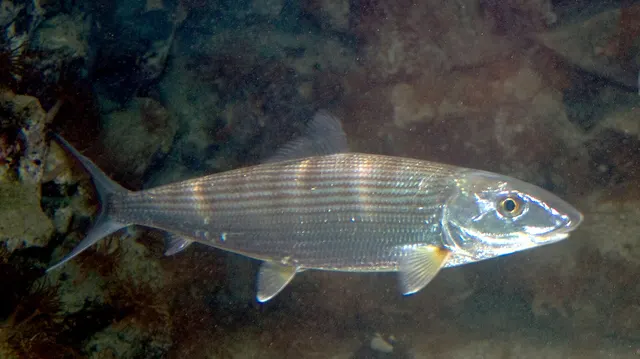
Bonefish
A behavioural claim driven by a physical mechanism, held to a scientific standard on both sides.
- FishBase: a global information system on fishes — Froese, R. and D. Pauly, eds. — FishBase Consortium (Scientific institute)Relied on for: Tidal movement onto and off shallow flats to feed in Albula vulpes.States this directlyPassage read and verified
- NOAA Ocean Service tides and water levels educational tutorial — National Oceanic and Atmospheric Administration, United States (Government fisheries body)Relied on for: The tidal cycle that governs when a flat floods and drains.States this directlyPassage read and verified
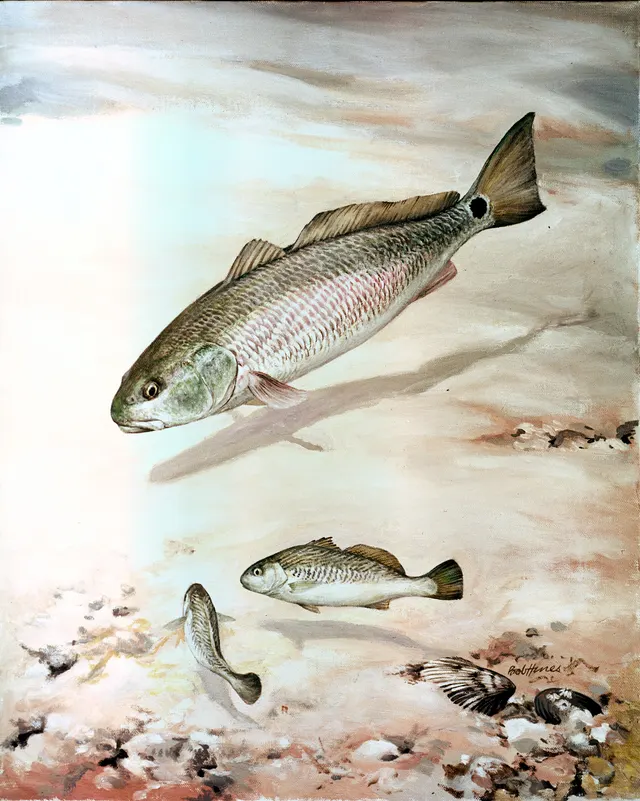
Red drum
A behavioural claim driven by a physical mechanism, held on both sides.
- FishBase: a global information system on fishes — Froese, R. and D. Pauly, eds. — FishBase Consortium (Scientific institute)Relied on for: That Sciaenops ocellatus occurs over sand and sandy mud in coastal waters and estuaries and is abundant in the surf zone.States this directlyPassage read and verified
- NOAA Ocean Service tides and water levels educational tutorial — National Oceanic and Atmospheric Administration, United States (Government fisheries body)Relied on for: The tidal cycle that governs when shallow ground floods and drains.States this directlyPassage read and verified
Where it matters
Backed by research — 3 connections
Supported by peer-reviewed research or fisheries science. The sources are listed and can be checked.
Drift fishing
A physical claim about what governs the technique.
- NOAA Ocean Service tides and water levels educational tutorial — National Oceanic and Atmospheric Administration, United States (Government fisheries body)Relied on for: That tidal current varies in strength and direction through the cycle.States this directlyPassage read and verified
Ledgering
The same mechanism from the general technique's side.
- NOAA Ocean Service tides and water levels educational tutorial — National Oceanic and Atmospheric Administration, United States (Government fisheries body)Relied on for: That tidal flow rate varies through the cycle.States this directlyPassage read and verified
- Sea Angler — Bauer Media (Specialist angling publication)Relied on for: Practitioner treatment of bottom fishing in tidal flow.FishingHQ's interpretation of what it saysCitation checked — the work exists and is described correctly
Surfcasting
A claim about the physical driver of a technique decision, held to a scientific standard on the tidal mechanism.
- NOAA Ocean Service tides and water levels educational tutorial — National Oceanic and Atmospheric Administration, United States (Government fisheries body)Relied on for: That tidal flow rate varies through the cycle rather than being constant.States this directlyPassage read and verified
- Sea Angler — Bauer Media (Specialist angling publication)Relied on for: Practitioner treatment of lead weight selection in relation to tidal flow.FishingHQ's interpretation of what it saysCitation checked — the work exists and is described correctly
Gear this affects
What experienced anglers do — 1 connection
Widely and independently recommended by experienced anglers and specialist sources. This is real angling knowledge, not proof: controlled evidence for it is limited, and FishingHQ records it as convention rather than as a demonstrated effect.
Uptide rig
A link from an arrangement to the concept that explains why it is built the way it is, so this page carries the mechanism rather than restating it.
- Sea Angler — Bauer Media (Specialist angling publication)Relied on for: Long-running published description of British sea angling practice, including boat and shore terminal arrangements, grip leads and the conditions each is chosen for.States this directlyCitation checked — the work exists and is described correctly
- Angling Times — Bauer Media (Specialist angling publication)Relied on for: Contemporary UK angling practice as reported by practitioners, including sea terminal tackle convention and its development.States this directlyCitation checked — the work exists and is described correctly
Water and ground
Backed by research — 2 connections
Supported by peer-reviewed research or fisheries science. The sources are listed and can be checked.
Estuary
A claim about what physically drives the habitat, held to a scientific standard on the tidal mechanism.
- NOAA Ocean Service tides and water levels educational tutorial — National Oceanic and Atmospheric Administration, United States (Government fisheries body)Relied on for: The tidal cycle and the currents it generates.States this directlyPassage read and verified
- JNCC species and habitat conservation advice — Joint Nature Conservation Committee (Conservation authority)Relied on for: The characterisation of estuaries as tidally driven mixing zones.FishingHQ's interpretation of what it saysCitation checked — the work exists and is described correctly
Inshore ground
A physical claim about what drives fish position, held to a scientific standard on the tidal mechanism.
- NOAA Ocean Service tides and water levels educational tutorial — National Oceanic and Atmospheric Administration, United States (Government fisheries body)Relied on for: That tidal currents vary in strength and direction through the cycle and interact with coastal and seabed geometry.States this directlyPassage read and verified
- Sea Angler — Bauer Media (Specialist angling publication)Relied on for: Practitioner treatment of how tidal flow over structure determines where fish hold on inshore ground.FishingHQ's interpretation of what it saysCitation checked — the work exists and is described correctly
Where this applies
Backed by research — 7 connections
Supported by peer-reviewed research or fisheries science. The sources are listed and can be checked.
Anglesey
A link from a place to the mechanism record that explains why its fishing works the way it does.
- The Fishes of the British Isles and North-West Europe — Macmillan, 1969 (Reference work)Relied on for: Distribution, habitat association and biology of the fishes of the British Isles and north-west Europe.States this directlyCitation checked — the work exists and is described correctly
- Cefas science, advice and data on marine and freshwater environments — Centre for Environment, Fisheries and Aquaculture Science (Government fisheries body)Relied on for: UK marine fisheries science: distribution, survey data and the biological basis of management advice.States this directlyCitation checked — the work exists and is described correctly
Mediterranean
A physical claim about regional tidal behaviour, held to a scientific standard on the mechanism.
- NOAA Ocean Service tides and water levels educational tutorial — National Oceanic and Atmospheric Administration, United States (Government fisheries body)Relied on for: That tidal range and pattern vary regionally with basin and coastal geometry rather than being uniform.States this directlyPassage read and verified
- RNLI water safety guidance: cold water shock and Float to Live — Royal National Lifeboat Institution (Water-safety or diver-training authority)Relied on for: That tidal behaviour governs coastal risk and differs between coasts.FishingHQ's interpretation of what it saysPassage read and verified
The Clare coast and the Shannon estuary
A link from a coast to the physical mechanism that governs its fishing, which is a claim about coastal process or hydrography rather than about angling.
- ICES Advice on fishing opportunities, catch and effort — International Council for the Exploration of the Sea (Scientific institute)Relied on for: Ecoregion description, stock distribution and the hydrography of the sea areas named, including seasonal inshore movement.States this directlyCitation checked — the work exists and is described correctly
- Cefas science, advice and data on marine and freshwater environments — Centre for Environment, Fisheries and Aquaculture Science (Government fisheries body)Relied on for: Marine environmental science for north-west European shelf seas, including sediment character, coastal process and inshore monitoring.States this directlyCitation checked — the work exists and is described correctly
The Kerry coast
A link from a coast to the physical mechanism that governs its fishing, which is a claim about coastal process or hydrography rather than about angling.
- ICES Advice on fishing opportunities, catch and effort — International Council for the Exploration of the Sea (Scientific institute)Relied on for: Ecoregion description, stock distribution and the hydrography of the sea areas named, including seasonal inshore movement.States this directlyCitation checked — the work exists and is described correctly
- Cefas science, advice and data on marine and freshwater environments — Centre for Environment, Fisheries and Aquaculture Science (Government fisheries body)Relied on for: Marine environmental science for north-west European shelf seas, including sediment character, coastal process and inshore monitoring.States this directlyCitation checked — the work exists and is described correctly
The Louth and Meath coast
A link from a coast to the physical mechanism that governs its fishing, which is a claim about coastal process or hydrography rather than about angling.
- ICES Advice on fishing opportunities, catch and effort — International Council for the Exploration of the Sea (Scientific institute)Relied on for: Ecoregion description, stock distribution and the hydrography of the sea areas named, including seasonal inshore movement.States this directlyCitation checked — the work exists and is described correctly
- Cefas science, advice and data on marine and freshwater environments — Centre for Environment, Fisheries and Aquaculture Science (Government fisheries body)Relied on for: Marine environmental science for north-west European shelf seas, including sediment character, coastal process and inshore monitoring.States this directlyCitation checked — the work exists and is described correctly
The Norfolk and Suffolk sandbank coast
A link from a place to the physical mechanism that governs its fishing, which is a claim about coastal process or hydrography rather than about angling.
- ICES Advice on fishing opportunities, catch and effort — International Council for the Exploration of the Sea (Scientific institute)Relied on for: Ecoregion description, stock distribution and the hydrography of the sea areas named, including seasonal inshore movement.States this directlyCitation checked — the work exists and is described correctly
- Cefas science, advice and data on marine and freshwater environments — Centre for Environment, Fisheries and Aquaculture Science (Government fisheries body)Relied on for: Marine environmental science for UK shelf seas, including sediment character, coastal process and inshore monitoring.States this directlyCitation checked — the work exists and is described correctly
The north-east England coast
A link from a place to the physical mechanism that governs its fishing, which is a claim about coastal process or hydrography rather than about angling.
- ICES Advice on fishing opportunities, catch and effort — International Council for the Exploration of the Sea (Scientific institute)Relied on for: Ecoregion description, stock distribution and the hydrography of the sea areas named, including seasonal inshore movement.States this directlyCitation checked — the work exists and is described correctly
- Cefas science, advice and data on marine and freshwater environments — Centre for Environment, Fisheries and Aquaculture Science (Government fisheries body)Relied on for: Marine environmental science for UK shelf seas, including sediment character, coastal process and inshore monitoring.States this directlyCitation checked — the work exists and is described correctly
What experienced anglers do — 2 connections
Widely and independently recommended by experienced anglers and specialist sources. This is real angling knowledge, not proof: controlled evidence for it is limited, and FishingHQ records it as convention rather than as a demonstrated effect.
The Solway Firth
Why it works, resting on shore-fishing practice reported consistently across independent practitioner sources rather than on experiment.
- NOAA Ocean Service tides and water levels educational tutorial — National Oceanic and Atmospheric Administration, United States (Government fisheries body)Relied on for: Public education on tidal generation, the semi-diurnal cycle, spring and neap tides, datums and predicted tide heights.States this directlyPassage read and verified
- Met Office shipping forecast, inshore waters forecast and marine warnings — Met Office, United Kingdom (Government fisheries body)Relied on for: Marine forecasting including sea state, swell, tidal stream information and the interpretation of inshore waters forecasts.States this directlyCitation checked — the work exists and is described correctly
The Welsh coast and Anglesey
Why it works, resting on shore-fishing practice reported consistently across independent practitioner sources rather than on experiment.
- NOAA Ocean Service tides and water levels educational tutorial — National Oceanic and Atmospheric Administration, United States (Government fisheries body)Relied on for: Public education on tidal generation, the semi-diurnal cycle, spring and neap tides, datums and predicted tide heights.States this directlyPassage read and verified
- Met Office shipping forecast, inshore waters forecast and marine warnings — Met Office, United Kingdom (Government fisheries body)Relied on for: Marine forecasting including sea state, swell, tidal stream information and the interpretation of inshore waters forecasts.States this directlyCitation checked — the work exists and is described correctly
Related reading
Backed by research — 7 connections
Supported by peer-reviewed research or fisheries science. The sources are listed and can be checked.
At anchor or on the drift
Tidal stream strength varies predictably through the cycle.
- NOAA Ocean Service tides and water levels educational tutorial — National Oceanic and Atmospheric Administration, United States (Government fisheries body)Relied on for: Tidal currents, their acceleration and decay through the cycle.States this directlyPassage read and verified
Currents, eddies and where fish hold
Tidal flow produces the marine version of the same features.
- FishBase: a global information system on fishes — Froese, R. and D. Pauly, eds. — FishBase Consortium (Scientific institute)Relied on for: Species and habitat data underlying this connection. Tidal flow produces the marine version of the same features.States this directlyPassage read and verified
Estuary fishing: tide, salinity and the moving front
Tidal dynamics are the physical driver of estuarine circulation.
- NOAA Ocean Service tides and water levels educational tutorial — National Oceanic and Atmospheric Administration, United States (Government fisheries body)Relied on for: Tidal cycles, ranges and the currents they generate.States this directlyPassage read and verified
Moon phase and fishing
The moon's well-evidenced effect on fishing is tidal.
- FishBase: a global information system on fishes — Froese, R. and D. Pauly, eds. — FishBase Consortium (Scientific institute)Relied on for: Species and habitat data underlying this connection. The moon's well-evidenced effect on fishing is tidal.States this directlyPassage read and verified
Presenting bait in strong tide
The tidal current cycle is predictable and well described.
- NOAA Ocean Service tides and water levels educational tutorial — National Oceanic and Atmospheric Administration, United States (Government fisheries body)Relied on for: The acceleration and decay of tidal streams and the spring and neap pattern.States this directlyPassage read and verified
Reading underwater conditions
A physical claim about what drives underwater conditions, held to a scientific standard on the tidal mechanism.
- NOAA Ocean Service tides and water levels educational tutorial — National Oceanic and Atmospheric Administration, United States (Government fisheries body)Relied on for: The tidal cycle and its variation, which drives the current and clarity changes a diver experiences.States this directlyPassage read and verified
- RNLI water safety guidance: cold water shock and Float to Live — Royal National Lifeboat Institution (Water-safety or diver-training authority)Relied on for: That tide state governs the viability of coastal entries and exits.FishingHQ's interpretation of what it saysPassage read and verified
Weather windows in sea fishing
The interaction between wind-driven waves and tidal streams is described.
- NOAA Ocean Service tides and water levels educational tutorial — National Oceanic and Atmospheric Administration, United States (Government fisheries body)Relied on for: Tidal streams and their direction through the cycle.Background and mechanism onlyPassage read and verified
What experienced anglers do — 6 connections
Widely and independently recommended by experienced anglers and specialist sources. This is real angling knowledge, not proof: controlled evidence for it is limited, and FishingHQ records it as convention rather than as a demonstrated effect.
Depth and length: fathoms, metres and feet
Why it works, resting on practice reported consistently across independent sources rather than on experiment.
- Angling Times — Bauer Media (Specialist angling publication)Relied on for: Contemporary UK coarse, match and lure angling practice as reported by practitioners, including tackle convention.States this directlyCitation checked — the work exists and is described correctly
- Sea Angler — Bauer Media (Specialist angling publication)Relied on for: Contemporary UK sea angling practice as reported by practitioners, including tackle, bait and lure convention.States this directlyCitation checked — the work exists and is described correctly
Grip leads, plain leads and holding bottom
Why it works, resting on shore-fishing practice reported consistently across independent practitioner sources rather than on experiment.
- NOAA Ocean Service tides and water levels educational tutorial — National Oceanic and Atmospheric Administration, United States (Government fisheries body)Relied on for: Public education on tidal generation, the semi-diurnal cycle, spring and neap tides, datums and predicted tide heights.States this directlyPassage read and verified
- Met Office shipping forecast, inshore waters forecast and marine warnings — Met Office, United Kingdom (Government fisheries body)Relied on for: Marine forecasting including sea state, swell, tidal stream information and the interpretation of inshore waters forecasts.States this directlyCitation checked — the work exists and is described correctly
Holding position: anchoring and drifting from a kayak
Why it works, and what that rests on. It rests on established practitioner knowledge rather than on experiment, and the strength shown says so rather than borrowing an authority it does not have.
- Sea Angler — Bauer Media (Specialist angling publication)Relied on for: Contemporary UK sea angling practice as reported and restated by practitioners, including shore technique, bait use and species behaviour.States this directlyCitation checked — the work exists and is described correctly
- General angling website restatements of established technique — Various (Credible secondary source)Relied on for: Widely restated angling practice and belief, recorded as practitioner consensus rather than as tested fact.Background and mechanism onlyCitation checked — the work exists and is described correctly
Reading a tide for fishing
The physical or biological reason behind a situation. Where that reason is documented science the page for it carries the citation; the association itself is practitioner observation and is labelled as such.
- Sea Angler — Bauer Media (Specialist angling publication)Relied on for: Contemporary UK sea angling practice as reported by practitioners, including tidal timing and shore conditions.States this directlyCitation checked — the work exists and is described correctly
- NOAA Ocean Service tides and water levels educational tutorial — National Oceanic and Atmospheric Administration, United States (Government fisheries body)Relied on for: Public education on tidal generation, tidal streams and the relationship between water level and flow.States this directlyPassage read and verified
Slack water, and why it is different
The physical or biological reason behind a situation. Where that reason is documented science the page for it carries the citation; the association itself is practitioner observation and is labelled as such.
- Sea Angler — Bauer Media (Specialist angling publication)Relied on for: Contemporary UK sea angling practice as reported by practitioners, including tidal timing and shore conditions.States this directlyCitation checked — the work exists and is described correctly
- NOAA Ocean Service tides and water levels educational tutorial — National Oceanic and Atmospheric Administration, United States (Government fisheries body)Relied on for: Public education on tidal generation, tidal streams and the relationship between water level and flow.States this directlyPassage read and verified
What a tide table is telling you
Why it works, resting on shore-fishing practice reported consistently across independent practitioner sources rather than on experiment.
- NOAA Ocean Service tides and water levels educational tutorial — National Oceanic and Atmospheric Administration, United States (Government fisheries body)Relied on for: Public education on tidal generation, the semi-diurnal cycle, spring and neap tides, datums and predicted tide heights.States this directlyPassage read and verified
- Met Office shipping forecast, inshore waters forecast and marine warnings — Met Office, United Kingdom (Government fisheries body)Relied on for: Marine forecasting including sea state, swell, tidal stream information and the interpretation of inshore waters forecasts.States this directlyCitation checked — the work exists and is described correctly
How this compares
Official guidance — 1 connection
Stated by a fisheries authority, scientific institute or recognised angling body. Authoritative, but summarising rather than demonstrating.
Tide and current for divers
The tidal science and the diver's version of it.
- NOAA Ocean Service tides and water levels educational tutorial — National Oceanic and Atmospheric Administration, United States (Government fisheries body)Relied on for: Tidal mechanics including lunar phase, spring and neap ranges, and tidal stream timing.States this directlyPassage read and verified
Backed by research — 1 connection
Supported by peer-reviewed research or fisheries science. The sources are listed and can be checked.
Why the fish are not where they were last week
The established cause that folklore most often misattributes to the moon.
- Cefas science, advice and data on marine and freshwater environments — Centre for Environment, Fisheries and Aquaculture Science (Government fisheries body)Relied on for: Environmental determinants of fish distribution, including temperature, oxygen and prey availability.States this directlyCitation checked — the work exists and is described correctly
Safety reading
Backed by research — 1 connection
Supported by peer-reviewed research or fisheries science. The sources are listed and can be checked.
Tides and being cut off
The mechanism behind a safety topic, held to a scientific standard because the safety advice depends on it being right.
- NOAA Ocean Service tides and water levels educational tutorial — National Oceanic and Atmospheric Administration, United States (Government fisheries body)Relied on for: Spring and neap variation with lunar phase, and regional variation in tidal pattern.States this directlyPassage read and verified
- RNLI water safety guidance: cold water shock and Float to Live — Royal National Lifeboat Institution (Water-safety or diver-training authority)Relied on for: The practical safety consequence of tidal range and timing on coastal ground.States this directlyPassage read and verified
How FishingHQ labels evidence is explained in the evidence policy.