Uptide rig
Rig · Last reviewed 2026-08-18
A boat rig cast up-tide of the boat with a grip lead that anchors, then deliberately breaks out when a fish takes.
Safety: line under tension — can cause serious injury or death. One more point applies here.
What it is for
To fish a bait on the bottom well away from an anchored boat in shallow tidal water, on ground the boat and its chain have not disturbed, using a grip lead that anchors under the pressure of a bowed line and releases when a fish pulls it out.
Components, from rod to hook
- A shock leader, because this is a genuine cast with a heavy lead and it is made from a moving deck.
- A grip lead with wire spikes, either fixed or of a breakout pattern that releases under load.
- A boom or lead link keeping the lead away from the trace during the cast.
- A single long flowing trace, usually one hook, to a bait sized for the fish.
- A bait clip holding the hook and bait against the trace for the cast, releasing on impact.
What it does in the water
The rig is cast up-tide and across, and sinks while the boat's tide pushes a bow into the line. The grip lead's spikes bed into the ground and the pressure of tide on that bow is what keeps them there — the rig is anchored by the water rather than by its own weight. The bait fishes on a long flowing trace, moving naturally in the tide well away from the boat's disturbance. When a fish takes, it pulls the spikes free; the tension that was holding the bow disappears and the rod tip springs back and goes slack. The angler winds down hard to regain contact, and from that moment the lead is trailing rather than anchoring, so the fish is played with the tide and swings down-tide of the boat.
When to use it
From an anchored boat in relatively shallow tidal water — the classic case is sandbank and mixed ground for bass, smoothhound, ray and cod — where fish are being pushed off the ground by the boat itself. In deep water, in slack tide, or from a drifting boat it has no advantage and a straight down-tide arrangement is simpler and better.
Common mistakes
- Waiting for the tip to pull round, and missing the take entirely, because the bite is the tip springing back and the line going slack.
- Failing to pay out enough line to form a bow, so the lead never grips properly and the rig drags down-tide.
- Casting without a shock leader, which on a moving deck with a heavy grip lead is how people and boats get hurt.
- Using a grip lead so heavy or so firmly spiked that a fish cannot break it out at all.
- Casting across other anglers' lines on a crowded boat, where everyone is fishing up-tide into the same water.
How this rig behaves, and where it goes wrong
Ordinary boat fishing drops a bait straight down beneath the boat. In shallow tidal water that is a poor place for it to be, because the boat's hull, its anchor chain and the noise of both sit directly above the bait and push fish away from exactly the ground being fished.
Uptiding solves it by casting away from the boat, up-tide, so the bait fishes ground the boat has not disturbed. Doing that requires a lead that will hold on the bottom against the tide at the end of a long bow of line, which is what a grip lead with wire spikes provides.
The part that surprises people is that the grip is designed to fail. Once the lead is down, line is paid out to create a large bow, and the tide's pressure on that bow is what holds the lead's spikes into the ground. When a fish takes, it pulls the spikes out — the lead breaks out, and the bite registers not as a pull but as the rod tip springing BACK as the tension is released. A slack line is the bite. Anglers used to shore fishing consistently miss their first several takes because they are waiting for the tip to pull round.
The fish is then played with the lead trailing free, and the whole arrangement swings down-tide of the boat as it comes in.
Safety
Line under tension — Can cause serious injury or death
This is a full power cast with a heavy grip lead, made from a moving deck within a few feet of other people. A crack-off sends a lead a long distance at speed, and a lead swung on a short drop on a rolling boat can strike somebody standing behind or beside the caster.
What reduces it: Use a shock leader matched to the lead weight and check the leader knot every few casts, look and call before casting, agree a casting direction and order with the skipper and the other anglers, and never cast while somebody is moving on the deck behind you.
Worse when:
- On a crowded charter boat where everyone is casting into the same up-tide arc.
- In a swell, where the deck moves under the caster during the stroke.
Fish welfare — Can cause injury needing treatment
A grip lead that will not break out leaves a fish pulling against an anchored weight, and if the line parts above the lead the fish is left towing a spiked lead that will snag on the ground.
What reduces it: Use a breakout pattern or a grip weight the fish can actually pull free, and arrange the rig so the trace is the weakest part and a break leaves the lead behind rather than attached to the fish.
Further safety reading
- Boat safety for anglers — Everything unusual about this rig happens on a moving deck: a full-power cast, a heavy spiked lead, and several anglers casting into the same up-tide arc.
Where to go next
Fish it is built for
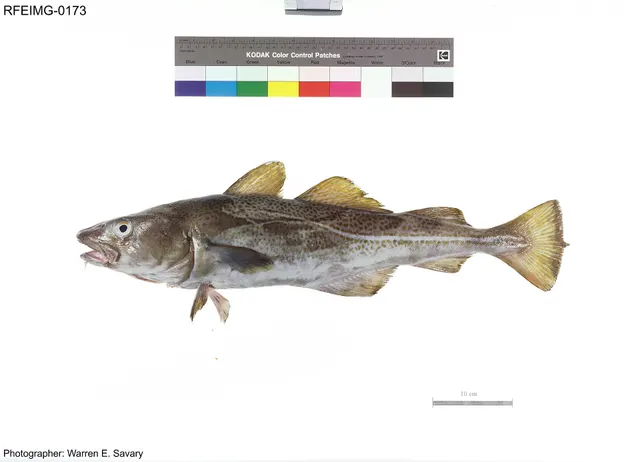 Atlantic codInshore winter cod over shallow rough and mixed ground are a traditional uptide target from anchored boats.
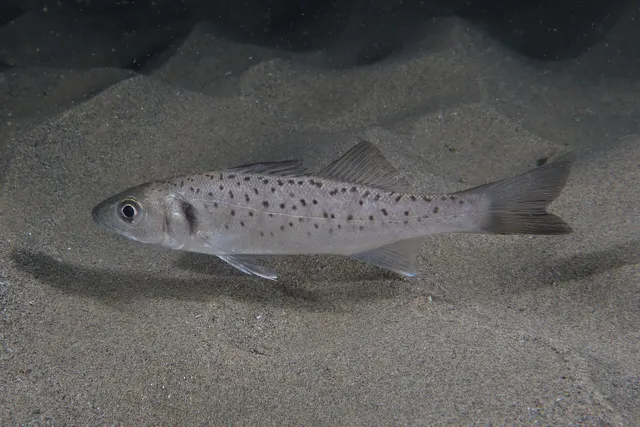 European sea bassBass over shallow sandbanks and mixed ground are pushed off by an anchored hull, which is the exact problem uptiding was developed to solve.
- Starry smooth-houndA shallow-water summer target over sandbank ground, fished from anchored boats on crab baits well away from the boat's disturbance.
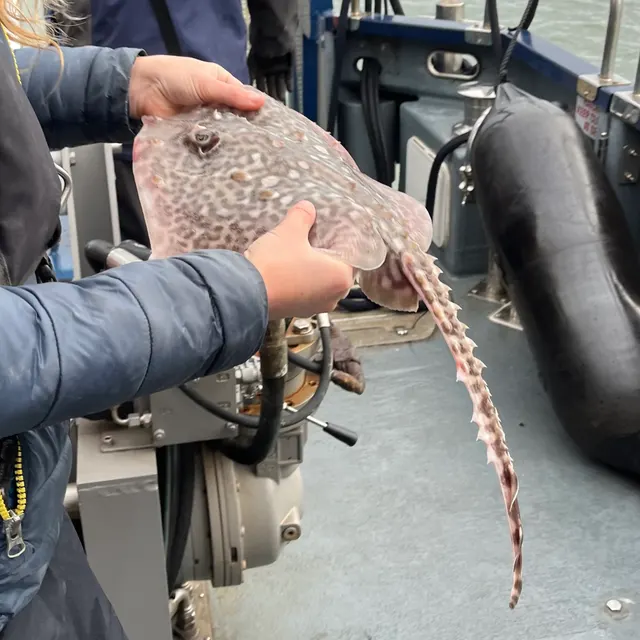 Thornback rayRays feed over the clean and mixed ground uptiding reaches, and a long flowing trace presents a bait on the bottom in the way they take it.
What it is made of
Worth understanding first
- Choosing a rig for the conditionsThe boat answer for shallow tidal ground where the hull pushes fish off — cast away from the boat on a grip lead meant to break out, and where the bite is the rod tip springing BACK as the line goes slack.
- Reading the tideThe rig is anchored by tide pressure on a bowed line rather than by the weight of its lead, so the state of the tide decides whether it grips at all. This is the arrangement in FishingHQ most directly dependent on understanding tide.
- Running and fixed rigs: where the resistance isAn instructive edge case for the running/fixed distinction: the lead is fixed while it grips and effectively free once it breaks out, so the arrangement changes category during the take.
- Shock leaders, and why they are not optionalA full-power cast with a heavy grip lead made from a moving deck within a few feet of other people. The leader is a condition of casting it safely rather than a refinement.
- Why rigs tangle, and the principles that stop itA long flowing trace cast at full power is the classic tangle geometry, and the bait clip is the fix — the same fix, for the same reason, as on a clipped-down beach rig.
Instead of this
Sources and evidence
Why the 12 connections on this page are here, and the sources
Fish it is built for
What experienced anglers do — 4 connections
Widely and independently recommended by experienced anglers and specialist sources. This is real angling knowledge, not proof: controlled evidence for it is limited, and FishingHQ records it as convention rather than as a demonstrated effect.
Atlantic cod
That anglers conventionally choose this arrangement when targeting this fish. It is a claim about practice rather than about the fish, and it does not assert that the arrangement is necessary or that it will succeed.
- Sea Angler — Bauer Media (Specialist angling publication)Relied on for: Long-running published description of British sea angling practice, including boat and shore terminal arrangements, grip leads and the conditions each is chosen for.States this directlyCitation checked — the work exists and is described correctly
- Angling Times — Bauer Media (Specialist angling publication)Relied on for: Contemporary UK angling practice as reported by practitioners, including sea terminal tackle convention and its development.States this directlyCitation checked — the work exists and is described correctly
European sea bass
That anglers conventionally choose this arrangement when targeting this fish. It is a claim about practice rather than about the fish, and it does not assert that the arrangement is necessary or that it will succeed.
- Sea Angler — Bauer Media (Specialist angling publication)Relied on for: Long-running published description of British sea angling practice, including boat and shore terminal arrangements, grip leads and the conditions each is chosen for.States this directlyCitation checked — the work exists and is described correctly
- Angling Times — Bauer Media (Specialist angling publication)Relied on for: Contemporary UK angling practice as reported by practitioners, including sea terminal tackle convention and its development.States this directlyCitation checked — the work exists and is described correctly
Starry smooth-hound
That anglers conventionally choose this arrangement when targeting this fish. It is a claim about practice rather than about the fish, and it does not assert that the arrangement is necessary or that it will succeed.
- Sea Angler — Bauer Media (Specialist angling publication)Relied on for: Long-running published description of British sea angling practice, including boat and shore terminal arrangements, grip leads and the conditions each is chosen for.States this directlyCitation checked — the work exists and is described correctly
- Angling Times — Bauer Media (Specialist angling publication)Relied on for: Contemporary UK angling practice as reported by practitioners, including sea terminal tackle convention and its development.States this directlyCitation checked — the work exists and is described correctly
Thornback ray
That anglers conventionally choose this arrangement when targeting this fish. It is a claim about practice rather than about the fish, and it does not assert that the arrangement is necessary or that it will succeed.
- Sea Angler — Bauer Media (Specialist angling publication)Relied on for: Long-running published description of British sea angling practice, including boat and shore terminal arrangements, grip leads and the conditions each is chosen for.States this directlyCitation checked — the work exists and is described correctly
- Angling Times — Bauer Media (Specialist angling publication)Relied on for: Contemporary UK angling practice as reported by practitioners, including sea terminal tackle convention and its development.States this directlyCitation checked — the work exists and is described correctly
What it is made of
What experienced anglers do — 1 connection
Widely and independently recommended by experienced anglers and specialist sources. This is real angling knowledge, not proof: controlled evidence for it is limited, and FishingHQ records it as convention rather than as a demonstrated effect.
Dropper loop
An arrangement joined to the knot that actually builds it, written where the knot is characteristic of that arrangement rather than merely possible in it. This is the edge a reader travels: they arrive looking for the arrangement and need the connection it depends on.
- Sea Angler — Bauer Media (Specialist angling publication)Relied on for: British sea angling practice: shock leaders, multi-hook trace construction and the dropper loops a trace is built from.FishingHQ's interpretation of what it saysCitation checked — the work exists and is described correctly
- General angling website restatements of established technique — Various (Credible secondary source)Relied on for: Widely restated descriptions of established connection convention, recorded as practitioner consensus rather than as scholarship.Background and mechanism onlyCitation checked — the work exists and is described correctly
Worth understanding first
What experienced anglers do — 5 connections
Widely and independently recommended by experienced anglers and specialist sources. This is real angling knowledge, not proof: controlled evidence for it is limited, and FishingHQ records it as convention rather than as a demonstrated effect.
Choosing a rig for the conditions
An arrangement joined to the guidance that selects it. That guidance names eleven rigs against four questions and pointed at none of them, so a reader following the procedure to its conclusion could not reach the answer.
- Sea Angler — Bauer Media (Specialist angling publication)Relied on for: British sea angling practice: how tide, wind, swell and water clarity change where and how a mark is fished.FishingHQ's interpretation of what it saysCitation checked — the work exists and is described correctly
- Freshwater Fishing — Macdonald & Jane's, 1975 (Specialist angling publication)Relied on for: Comprehensive angling practice across disciplines, including water reading, seasonal condition and the tackle each demands.States this directlyCitation checked — the work exists and is described correctly
Reading the tide
A link from an arrangement to the concept that explains why it is built the way it is, so this page carries the mechanism rather than restating it.
- Sea Angler — Bauer Media (Specialist angling publication)Relied on for: Long-running published description of British sea angling practice, including boat and shore terminal arrangements, grip leads and the conditions each is chosen for.States this directlyCitation checked — the work exists and is described correctly
- Angling Times — Bauer Media (Specialist angling publication)Relied on for: Contemporary UK angling practice as reported by practitioners, including sea terminal tackle convention and its development.States this directlyCitation checked — the work exists and is described correctly
Running and fixed rigs: where the resistance is
A link from an arrangement to the concept that explains why it is built the way it is, so this page carries the mechanism rather than restating it.
- Sea Angler — Bauer Media (Specialist angling publication)Relied on for: Long-running published description of British sea angling practice, including boat and shore terminal arrangements, grip leads and the conditions each is chosen for.States this directlyCitation checked — the work exists and is described correctly
- Angling Times — Bauer Media (Specialist angling publication)Relied on for: Contemporary UK angling practice as reported by practitioners, including sea terminal tackle convention and its development.States this directlyCitation checked — the work exists and is described correctly
Shock leaders, and why they are not optional
A link from an arrangement to the concept that explains why it is built the way it is, so this page carries the mechanism rather than restating it.
- Sea Angler — Bauer Media (Specialist angling publication)Relied on for: Long-running published description of British sea angling practice, including boat and shore terminal arrangements, grip leads and the conditions each is chosen for.States this directlyCitation checked — the work exists and is described correctly
- Angling Times — Bauer Media (Specialist angling publication)Relied on for: Contemporary UK angling practice as reported by practitioners, including sea terminal tackle convention and its development.States this directlyCitation checked — the work exists and is described correctly
Why rigs tangle, and the principles that stop it
A link from an arrangement to the concept that explains why it is built the way it is, so this page carries the mechanism rather than restating it.
- Sea Angler — Bauer Media (Specialist angling publication)Relied on for: Long-running published description of British sea angling practice, including boat and shore terminal arrangements, grip leads and the conditions each is chosen for.States this directlyCitation checked — the work exists and is described correctly
- Angling Times — Bauer Media (Specialist angling publication)Relied on for: Contemporary UK angling practice as reported by practitioners, including sea terminal tackle convention and its development.States this directlyCitation checked — the work exists and is described correctly
Instead of this
What experienced anglers do — 1 connection
Widely and independently recommended by experienced anglers and specialist sources. This is real angling knowledge, not proof: controlled evidence for it is limited, and FishingHQ records it as convention rather than as a demonstrated effect.
Paternoster rig
That one arrangement is recognisably a development of another, offered so a reader who knows the parent can reason about the variant instead of learning it from nothing.
- Sea Angler — Bauer Media (Specialist angling publication)Relied on for: Long-running published description of British sea angling practice, including boat and shore terminal arrangements, grip leads and the conditions each is chosen for.States this directlyCitation checked — the work exists and is described correctly
- Angling Times — Bauer Media (Specialist angling publication)Relied on for: Contemporary UK angling practice as reported by practitioners, including sea terminal tackle convention and its development.States this directlyCitation checked — the work exists and is described correctly
Safety reading
Official guidance — 1 connection
Stated by a fisheries authority, scientific institute or recognised angling body. Authoritative, but summarising rather than demonstrating.
Boat safety for anglers
A link from the arrangement to the safety topic holding the mechanism, rather than a warning restated in the rig's own prose.
- RNLI water safety guidance: cold water shock and Float to Live — Royal National Lifeboat Institution (Water-safety or diver-training authority)Relied on for: Water-safety guidance for shore anglers and small-craft users, including the mechanisms by which anglers are injured or drowned.States this directlyPassage read and verified
How FishingHQ labels evidence is explained in the evidence policy.