Paternoster rig
Rig · Last reviewed 2026-08-10
One or more hooklengths standing off a main stem above a weight — the fundamental sea-fishing terminal arrangement.
Safety: line under tension — can cause serious injury or death.
A paternoster, with the hooklengths standing above the lead
Rig · Draft — not yet checked against an external reference
This drawing has not been checked against any reference outside FishingHQ. It shows how the components are arranged; it is not a certified tying sequence. Follow the written steps.
Describe this diagram in words
A rig standing on the sea bed, seen side on. The main line comes down from the rod and runs to a lead resting on the bottom. Above the lead, two short hooklengths stand off the main line from swivels, one about a third of the way up and one about two thirds, each carrying a hook. Both baits are therefore held clear of the ground, in the layer of water immediately above it, which is where shoaling fish such as whiting feed. A note records that fewer hooklengths cast further and tangle less.
How this drawing was produced
Built during an earlier pass. The rig had full prose from an earlier pass and no drawing, and its defining property — hooklengths standing off ABOVE the lead rather than trailing behind it — is a statement about order along a line, which is what a drawing carries and a paragraph does not. Two snoods are shown rather than three, deliberately: the page's own section argues that the honest default is the fewest that suit the fish.
What it is for
To present one or more baits clear of the seabed above a weight, holding them in the tide where they are visible and where they move naturally, while keeping the hooklengths from tangling around the main stem during a powerful cast.
Components, from rod to hook
- A shockleader from the main line, essential for any heavy cast.
- A main stem of heavy monofilament.
- One or more snood attachment points — swivels, beads and crimps, or booms.
- Short snoods of 15–40 cm carrying the hooks.
- A link or clip at the bottom for the weight.
- A grip or plain lead, chosen for the tide.
What it does in the water
The weight settles and the stem stands up from it in the tide, with the snoods streaming downtide from their attachment points. Baits sit clear of the bottom, where they are visible and where scent disperses more widely than it would from a bait lying in the sand. A fish taking a bait pulls against the weight, which is why bites on a paternoster are usually distinct rattles at the rod tip followed by a slack-lining fish or a solid pull.
When to use it
The default for shore and boat sea fishing over clean and mixed ground, for species that feed on or just above the bottom — flatfish, whiting, codling, dogfish, bass. It is less suited to very rough ground, where a pulley arrangement that lifts the lead clear on the retrieve loses less tackle.
Common mistakes
- Snoods long enough to reach the next attachment point, which guarantees tangles.
- Limp snood material that folds back on itself during the cast.
- Omitting the shockleader, which is both a lost rig and a serious safety failure.
- A plain lead in a running tide, so the rig rolls away from where it was cast.
- Baiting all three hooks with the same thing, rather than using the rig's real advantage of testing several baits at once.
How this rig behaves, and where it goes wrong
A paternoster puts the weight at the bottom and one or more hooklengths on droppers above it, standing off the main stem so they do not tangle around it. It is the basic architecture of most shore and boat sea rigs, and its variants — one-up-one-down, two-hook flappers, pulley rigs — are all rearrangements of the same idea.
The reason it dominates sea fishing is that it holds baits clear of the bottom in a tide. A bait lying flat on sand disappears from view and gets buried; a bait standing off the stem on a short snood moves in the tide and stays visible.
The rig's whole engineering problem is tangling. Snoods that are too long, too limp, or attached badly wrap around the stem during the cast and arrive fishing nothing at all. Booms, stiff snood material and short lengths are all answers to that single problem.
Hooklengths above the lead, or a bait trailing behind it
Sea rigs divide fairly cleanly into two families and the choice between them is about where the fish is feeding rather than about what it is.
A paternoster hangs one or more hooklengths from the main line ABOVE the weight. The baits sit at a known height off the bottom, they stay there, and they are visible to anything cruising just clear of the sea bed — whiting, small codling, pouting, and any of the shoaling fish that feed in the layer immediately above the ground rather than on it.
A flowing trace puts the bait BEHIND the lead, free to move with the tide and to settle on the bottom itself. That suits a fish nosing along the ground: a bass working a gutter, a smoothhound hunting crabs, flatfish on a sandy bottom.
The practical differences follow. A paternoster casts as a tidy, predictable object because the hooklengths can be kept short and clipped down, and it holds its presentation in a run of tide that would sweep a flowing trace into a heap. A flowing trace presents a bait far more naturally and pays for it with tangles and with an indication that arrives softened.
The common mistake is to treat the paternoster as the default sea rig and fish it everywhere. On clean sand at slack water with flatfish feeding on the bottom, hooklengths held a foot clear of the ground are presenting bait to an empty layer of water, and the rig is doing its job perfectly at the wrong height.
What experienced anglers do — why, and the sources (2)
Widely and independently recommended by experienced anglers and specialist sources. This is real angling knowledge, not proof: controlled evidence for it is limited, and FishingHQ records it as convention rather than as a demonstrated effect.
- Sea Angler — Bauer Media (Specialist angling publication)Relied on for: Contemporary UK sea angling practice as reported by practitioners, including rig construction, hooklength arrangement and casting behaviour.States this directlyCitation checked — the work exists and is described correctly
- Freshwater Fishing — Macdonald & Jane's, 1975 (Specialist angling publication)Relied on for: Angling practice including terminal arrangements, leaders and the mechanics of presentation, applied across freshwater and sea contexts.Background and mechanism onlyCitation checked — the work exists and is described correctly
How many hooklengths, and why the answer is usually fewer
The paternoster scales from one hooklength to three or more, and the instinct to fish the maximum is almost always wrong.
THE ARGUMENT FOR MORE is straightforward: more baits in the water, more chances, and with shoaling fish a genuine prospect of two at once.
THE ARGUMENTS AGAINST are several and they compound. Every additional hooklength is another thing to tangle, and a rig that lands tangled fishes as nothing while appearing to fish normally. Every additional hooklength adds drag in the air, which costs distance — and at range, distance is frequently the whole difference. Every additional bait costs time to bait and time out of the water. And a fish hooked on the top hooklength drags the whole rig back through the swim, disturbing it and frequently losing the other baits on the way.
There is also a rule dimension. Several fisheries and some authorities restrict the number of hooks on a rig, and the limits differ by water and by region and change over time. Check the current rules for the water you are fishing.
The practical rule most experienced shore anglers converge on is to use the fewest hooklengths that suit the fish. Three short snoods make sense for a shoal of whiting at moderate range on a slack tide. One strong hooklength makes sense for a single large fish at maximum distance in a run of tide. Fishing three when the answer is one produces shorter casts, more tangles and fewer fish, and it looks like bad luck rather than like a decision.
What experienced anglers do — why, and the sources (2)
Widely and independently recommended by experienced anglers and specialist sources. This is real angling knowledge, not proof: controlled evidence for it is limited, and FishingHQ records it as convention rather than as a demonstrated effect.
- Sea Angler — Bauer Media (Specialist angling publication)Relied on for: Contemporary UK sea angling practice as reported by practitioners, including rig construction, hooklength arrangement and casting behaviour.States this directlyCitation checked — the work exists and is described correctly
- Freshwater Fishing — Macdonald & Jane's, 1975 (Specialist angling publication)Relied on for: Angling practice including terminal arrangements, leaders and the mechanics of presentation, applied across freshwater and sea contexts.Background and mechanism onlyCitation checked — the work exists and is described correctly
Safety
Line under tension — Can cause serious injury or death
A heavy lead cast on line that fails becomes a projectile. Casting a paternoster with a heavy lead and no shockleader, or with a damaged one, can send the whole rig a long distance in an unpredictable direction.
What reduces it: Always use a shockleader rated for the lead — the standard convention is at least ten pounds of leader per ounce of lead — and check the leader knot before every session. Make sure nobody is within the arc of the cast.
Where to go next
Fish it is built for
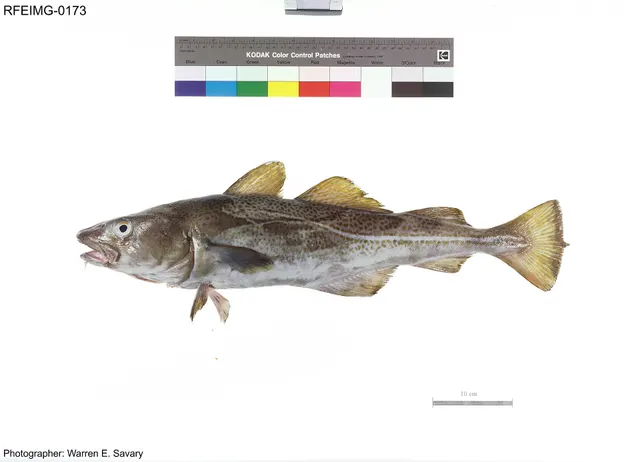 Atlantic codThe same arrangement scaled up, with fewer and stronger hooklengths, is the standard shore and boat presentation for cod over mixed ground.
- DabFished with the hooklengths short and close to the lead for a small flatfish feeding hard on the bottom itself.
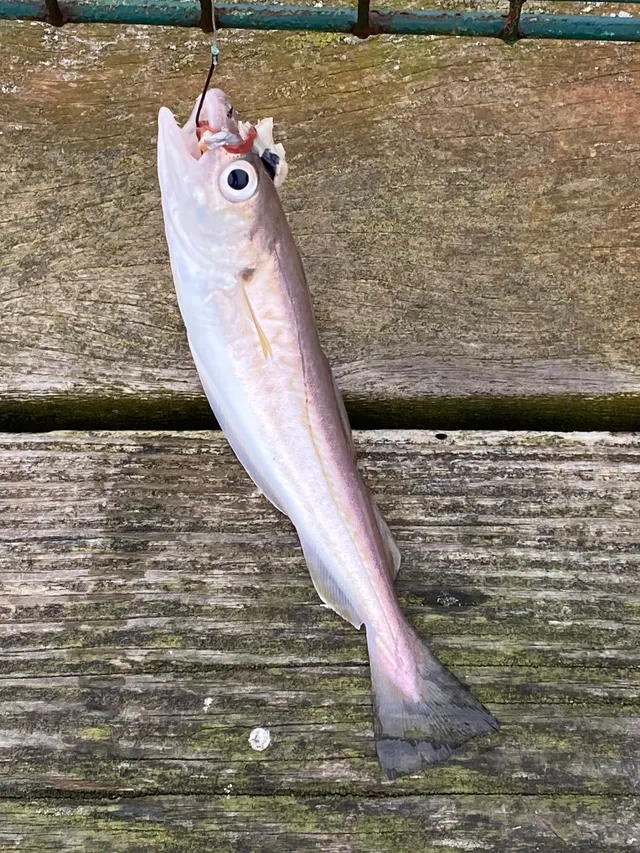 WhitingA standing hooklength above the weight presents baits clear of the bottom, which is what a shoaling fish feeding just off the sea bed will find first.
How it is fished
- LedgeringThe other half of the ledgering family: the bait is held off the bottom on a boom or a loop above the lead rather than lying at it, which is the arrangement for soft ground and for a bait that must stay visible.
- SurfcastingThe standard beach trace. It casts as a compact unit, it presents the bait clear of the lead on the drop, and over rough ground it is the arrangement a weak link can be built into so that the lead is lost and the trace is not.
What it is made of
- Blood knotStanding line and dropper are two lengths of similar line joined mid-trace, which is exactly the blood knot's job.
- Dropper loopThe knot the arrangement is made of. A paternoster is a body line with hook lengths standing off it, and the loops that hold them clear of the line are what stop the whole thing tangling round itself — which is that rig record's own stated failure mode.
Worth understanding first
- Choosing a rig for the conditionsThe answer for two of the spine's cases at once — a soft or weedy bottom where the bait must stay off the bed, and rough ground that takes tackle. On rough ground it is paired with a weak link so a snag costs the lead rather than the trace.
- Paternoster rigs and standing hooklengthsOne arrangement under four regional names — paternoster, dropper rig, high-low — and recognising that is worth more than learning any of them separately.
- Rig components, and what each one is forBooms, beads and swivelled junctions are what make a multi-dropper rig castable, and naming what each is for is what stops them accumulating.
- Swivels, links and connectorsA paternoster is built on a three-way connection, so the component is not an accessory to the rig but its structure.
- Weak links and rotten bottomsThe arrangement most often fished over ground that takes tackle, and the one a weak link is most often built into.
- What a rig isA reader meeting a named rig for the first time needs the general case before the particular one, and this is the general case.
- Why rigs tangle, and the principles that stop itStanding hooklengths on a rig body are exactly the geometry that tangles, and their length relative to the spacing decides whether they can.
Instead of this
- Drop shot rigStructurally the same idea — weight at the bottom, hooks standing off above it — arrived at independently in two traditions two centuries apart.
- Uptide rigBoth are sea bottom arrangements with a lead and a trace, and the difference is the whole point: a paternoster holds the bait off the bed on a standing hooklength, while an uptide rig lays a long flowing trace on the bottom and uses a grip lead that is designed to release.
Environment and conservation
History and culture
Sources and evidence
Why the 18 connections on this page are here, and the sources
Fish it is built for
What experienced anglers do — 3 connections
Widely and independently recommended by experienced anglers and specialist sources. This is real angling knowledge, not proof: controlled evidence for it is limited, and FishingHQ records it as convention rather than as a demonstrated effect.
Atlantic cod
Which species a terminal arrangement is directed at is established practitioner knowledge, converging across independent angling traditions and literatures, and is labelled as consensus rather than as tested result.
- Sea Angler — Bauer Media (Specialist angling publication)Relied on for: Contemporary UK sea angling practice as reported by practitioners, including rig construction and the species each is directed at.States this directlyCitation checked — the work exists and is described correctly
- General angling website restatements of established technique — Various (Credible secondary source)Relied on for: Widely restated descriptions of established terminal-rig convention, recorded as practitioner consensus rather than as scholarship.Background and mechanism onlyCitation checked — the work exists and is described correctly
Dab
Which species a terminal arrangement is directed at is established practitioner knowledge, converging across independent angling traditions and literatures, and is labelled as consensus rather than as tested result.
- Sea Angler — Bauer Media (Specialist angling publication)Relied on for: Contemporary UK sea angling practice as reported by practitioners, including rig construction and the species each is directed at.States this directlyCitation checked — the work exists and is described correctly
- General angling website restatements of established technique — Various (Credible secondary source)Relied on for: Widely restated descriptions of established terminal-rig convention, recorded as practitioner consensus rather than as scholarship.Background and mechanism onlyCitation checked — the work exists and is described correctly
Whiting
Which species a terminal arrangement is directed at is established practitioner knowledge, converging across independent angling traditions and literatures, and is labelled as consensus rather than as tested result.
- Sea Angler — Bauer Media (Specialist angling publication)Relied on for: Contemporary UK sea angling practice as reported by practitioners, including rig construction and the species each is directed at.States this directlyCitation checked — the work exists and is described correctly
- General angling website restatements of established technique — Various (Credible secondary source)Relied on for: Widely restated descriptions of established terminal-rig convention, recorded as practitioner consensus rather than as scholarship.Background and mechanism onlyCitation checked — the work exists and is described correctly
How it is fished
What experienced anglers do — 2 connections
Widely and independently recommended by experienced anglers and specialist sources. This is real angling knowledge, not proof: controlled evidence for it is limited, and FishingHQ records it as convention rather than as a demonstrated effect.
Ledgering
That a method is conventionally fished on a particular terminal arrangement, drawn from angling literature and from widely restated practitioner description rather than from testing.
- Sea Angler — Bauer Media (Specialist angling publication)Relied on for: Long-running published description of British sea angling practice, including trace construction, dropper loops and the knots used in them.States this directlyCitation checked — the work exists and is described correctly
- General angling website restatements of established technique — Various (Credible secondary source)Relied on for: Widely restated public description of which knots are conventionally tied for which sea connections, recorded as practitioner consensus rather than as scholarship.Background and mechanism onlyCitation checked — the work exists and is described correctly
Surfcasting
That a method is conventionally fished on a particular terminal arrangement, drawn from angling literature and from widely restated practitioner description rather than from testing.
- Sea Angler — Bauer Media (Specialist angling publication)Relied on for: Long-running published description of British sea angling practice, including trace construction, dropper loops and the knots used in them.States this directlyCitation checked — the work exists and is described correctly
- General angling website restatements of established technique — Various (Credible secondary source)Relied on for: Widely restated public description of which knots are conventionally tied for which sea connections, recorded as practitioner consensus rather than as scholarship.Background and mechanism onlyCitation checked — the work exists and is described correctly
What it is made of
What experienced anglers do — 2 connections
Widely and independently recommended by experienced anglers and specialist sources. This is real angling knowledge, not proof: controlled evidence for it is limited, and FishingHQ records it as convention rather than as a demonstrated effect.
Blood knot
The rig whose structure is a knot.
- Freshwater Fishing — Macdonald & Jane's, 1975 (Specialist angling publication)Relied on for: Knot selection for joining line to terminal tackle and line to line.States this directlyCitation checked — the work exists and is described correctly
- IGFA International Angling Rules and World Record Requirements — International Game Fish Association (Angling or fisheries organisation)Relied on for: The role of knots and connections in terminal tackle, and the line-class conventions that depend on them.States this directlyPassage read and verified
Dropper loop
An arrangement joined to the knot that actually builds it, written where the knot is characteristic of that arrangement rather than merely possible in it. This is the edge a reader travels: they arrive looking for the arrangement and need the connection it depends on.
- Sea Angler — Bauer Media (Specialist angling publication)Relied on for: British sea angling practice: shock leaders, multi-hook trace construction and the dropper loops a trace is built from.FishingHQ's interpretation of what it saysCitation checked — the work exists and is described correctly
- General angling website restatements of established technique — Various (Credible secondary source)Relied on for: Widely restated descriptions of established connection convention, recorded as practitioner consensus rather than as scholarship.Background and mechanism onlyCitation checked — the work exists and is described correctly
- Freshwater Fishing — Macdonald & Jane's, 1975 (Specialist angling publication)Relied on for: Comprehensive angling practice: reel filling, leader and dropper construction, and the connections each arrangement rests on.States this directlyCitation checked — the work exists and is described correctly
- Coarse Fishing — A. & C. Black, 1912 (Specialist angling publication)Relied on for: Classical coarse angling practice: hooklengths, loops, droppers and the terminal arrangements built from them.States this directlyCitation checked — the work exists and is described correctly
Worth understanding first
What experienced anglers do — 7 connections
Widely and independently recommended by experienced anglers and specialist sources. This is real angling knowledge, not proof: controlled evidence for it is limited, and FishingHQ records it as convention rather than as a demonstrated effect.
Choosing a rig for the conditions
An arrangement joined to the guidance that selects it. That guidance names eleven rigs against four questions and pointed at none of them, so a reader following the procedure to its conclusion could not reach the answer.
- Sea Angler — Bauer Media (Specialist angling publication)Relied on for: British sea angling practice: how tide, wind, swell and water clarity change where and how a mark is fished.FishingHQ's interpretation of what it saysCitation checked — the work exists and is described correctly
- Freshwater Fishing — Macdonald & Jane's, 1975 (Specialist angling publication)Relied on for: Comprehensive angling practice across disciplines, including water reading, seasonal condition and the tackle each demands.States this directlyCitation checked — the work exists and is described correctly
Paternoster rigs and standing hooklengths
Why it works. How knots and rigs behave is established practitioner knowledge converging across independent angling traditions, and is described as agreement between them rather than as a tested result.
- Sea Angler — Bauer Media (Specialist angling publication)Relied on for: Contemporary UK sea angling practice as reported by practitioners, including terminal arrangements and bait presentation.States this directlyCitation checked — the work exists and is described correctly
- Coarse Fishing — A. & C. Black, 1912 (Specialist angling publication)Relied on for: Classical coarse angling practice: terminal arrangements, shotting and bite registration.States this directlyCitation checked — the work exists and is described correctly
Rig components, and what each one is for
Why it works. How knots and rigs behave is established practitioner knowledge converging across independent angling traditions, and is described as agreement between them rather than as a tested result.
- Sea Angler — Bauer Media (Specialist angling publication)Relied on for: Contemporary UK sea angling practice as reported by practitioners, including terminal arrangements and bait presentation.States this directlyCitation checked — the work exists and is described correctly
- Coarse Fishing — A. & C. Black, 1912 (Specialist angling publication)Relied on for: Classical coarse angling practice: terminal arrangements, shotting and bite registration.States this directlyCitation checked — the work exists and is described correctly
Swivels, links and connectors
Boom and three-way swivel construction is the basis of paternoster rigs in sea angling.
- Sea Angler — Bauer Media (Specialist angling publication)Relied on for: Sea angling practice on tackle and presentation in tidal water.States this directlyCitation checked — the work exists and is described correctly
- Freshwater Fishing — Macdonald & Jane's, 1975 (Specialist angling publication)Relied on for: Comparable reasoning from the freshwater tradition, independently arrived at.Background and mechanism onlyCitation checked — the work exists and is described correctly
Weak links and rotten bottoms
A link from a practice or a piece of equipment to the mechanism or explanation it rests on.
- Sea Angler — Bauer Media (Specialist angling publication)Relied on for: Long-running published description of British sea angling practice, including reels, casting, rough-ground technique and terminal arrangement.FishingHQ's interpretation of what it saysCitation checked — the work exists and is described correctly
- General angling website restatements of established technique — Various (Credible secondary source)Relied on for: Widely restated descriptions of equipment convention and its use, recorded as practitioner consensus rather than as scholarship.Background and mechanism onlyCitation checked — the work exists and is described correctly
What a rig is
Why it works, and what that rests on. How tackle behaves is established practitioner knowledge reported consistently across independent traditions, and it is described that way rather than as a test that was never run.
- Sea Angler — Bauer Media (Specialist angling publication)Relied on for: Contemporary UK sea angling practice as reported by practitioners, including tackle convention and terminal arrangements.States this directlyCitation checked — the work exists and is described correctly
- Coarse Fishing — A. & C. Black, 1912 (Specialist angling publication)Relied on for: Classical coarse angling practice: float and ledger tackle, shotting, bite registration and the reasoning behind them.States this directlyCitation checked — the work exists and is described correctly
Why rigs tangle, and the principles that stop it
The rig whose standing hooklengths are the geometry that tangles.
- Freshwater Fishing — Macdonald & Jane's, 1975 (Specialist angling publication)Relied on for: Terminal tackle behaviour, line drag in flow, bait presentation and rig geometry.States this directlyCitation checked — the work exists and is described correctly
- Pike and the Pike Angler — Stanley Paul, 1981 (Specialist angling publication)Relied on for: Rig and terminal-tackle mechanics described independently of the sea-angling tradition.States this directlyCitation checked — the work exists and is described correctly
Instead of this
What experienced anglers do — 2 connections
Widely and independently recommended by experienced anglers and specialist sources. This is real angling knowledge, not proof: controlled evidence for it is limited, and FishingHQ records it as convention rather than as a demonstrated effect.
Drop shot rig
The structural relationship is evident and is noted in contemporary practice.
- Angling Times — Bauer Media (Specialist angling publication)Relied on for: The structural relationship between drop shot and paternoster arrangements.Citation checked — the work exists and is described correctly
- Sea Angler — Bauer Media (Specialist angling publication)Relied on for: Paternoster rig construction, from the sea angling tradition.Citation checked — the work exists and is described correctly
Uptide rig
That one arrangement is recognisably a development of another, offered so a reader who knows the parent can reason about the variant instead of learning it from nothing.
- Sea Angler — Bauer Media (Specialist angling publication)Relied on for: Long-running published description of British sea angling practice, including boat and shore terminal arrangements, grip leads and the conditions each is chosen for.States this directlyCitation checked — the work exists and is described correctly
- Angling Times — Bauer Media (Specialist angling publication)Relied on for: Contemporary UK angling practice as reported by practitioners, including sea terminal tackle convention and its development.States this directlyCitation checked — the work exists and is described correctly
Environment and conservation
Official guidance — 1 connection
Stated by a fisheries authority, scientific institute or recognised angling body. Authoritative, but summarising rather than demonstrating.
Discarded line and lost tackle
An environmental claim attached to the arrangement that causes it, held to the authoritative standard this kind of claim requires because tackle loss and lead use are matters of regulation and of published conservation evidence rather than of preference.
- Angling Trust guidance for anglers — Angling Trust (Angling or fisheries organisation)Relied on for: Guidance to anglers treating lost and discarded line and terminal tackle as an avoidable environmental harm and an avoidable cause of access loss.States this directlyCitation checked — the work exists and is described correctly
- Good Fish Guide — Marine Conservation Society (Conservation authority)Relied on for: That lost fishing gear persists in the marine environment and continues to entangle, which is the mechanism the discarded-tackle page describes.Background and mechanism onlyCitation checked — the work exists and is described correctly
History and culture
What experienced anglers do — 1 connection
Widely and independently recommended by experienced anglers and specialist sources. This is real angling knowledge, not proof: controlled evidence for it is limited, and FishingHQ records it as convention rather than as a demonstrated effect.
Handline and dropline traditions
Where a terminal arrangement came from and what it displaced, drawn from the angling literature and from widely restated practitioner accounts rather than from scholarship.
- Sea Angler — Bauer Media (Specialist angling publication)Relied on for: Contemporary UK sea angling practice as reported by practitioners, including rig construction and the species each is directed at.States this directlyCitation checked — the work exists and is described correctly
- General angling website restatements of established technique — Various (Credible secondary source)Relied on for: Widely restated descriptions of established terminal-rig convention, recorded as practitioner consensus rather than as scholarship.Background and mechanism onlyCitation checked — the work exists and is described correctly
How FishingHQ labels evidence is explained in the evidence policy.