Why the fish are not where they were last week
Explainer · Last reviewed 2026-08-15
Fish move for reasons that are largely documented, and the honest answer separates three tiers — what is established, what correlates without an established mechanism, and what is repeated until it sounds like knowledge.
This is the question an angling site would normally answer with a weather theory. It has large search demand and mixed evidence, and that combination is where a platform either earns its evidence model or reveals it as decoration. So the page is organised by how well each answer is supported rather than by how satisfying it is.
WHAT IS ESTABLISHED. Fish move in response to temperature, oxygen, light, salinity, water level and the distribution of their prey. These are not contested. A species has a thermal range within which its metabolism works, and water outside it is water the fish leaves. Dissolved oxygen falls as water warms and as organic matter decays, and fish concentrate where it is adequate. Rising or falling water in a river changes both the flow refuges available and where food is delivered. Tidal movement in the sea relocates prey twice a day. Spawning migrations move whole populations predictably.
WHAT CORRELATES WITHOUT AN ESTABLISHED MECHANISM. Anglers observe consistently that fishing changes with barometric pressure and with moon phase, and the reasoning offered — swim bladder sensitivity, lunar light, tidal amplitude — is plausible without being demonstrated for most species. The observations are real; the explanations are hypotheses.
WHAT IS FOLKLORE. Confident rules stating which pressure trend or which lunar phase produces feeding, presented as though they were established. FishingHQ does not publish these, and does not publish solunar tables.
A reader whose fish have moved is nearly always looking at the first tier, and the first tier is the one that can actually be acted on.
The established causes, and how to read them on the day
TEMPERATURE. Every species has a range in which it feeds actively, and both ends of it push fish somewhere else — deeper, into shade, into flow, or towards inflows. A summer heatwave and a hard frost move fish for the same reason in opposite directions.
OXYGEN. Warm, still, weedy or heavily fed water can fall low enough to drive fish out, and this is one of the few conditions that empties an area completely rather than merely slowing it. Wind-driven water, riffles, inflows and depth changes are where the oxygen is.
WATER LEVEL AND FLOW. A river in flood delivers food and moves fish out of the main current into the margins and slacks; a river running low concentrates them into deeper holes. The same swim is a different place at two heights.
LIGHT. Many predators feed at the edges of the day because prey are visible to them and they are not visible to prey. That is why a spot fishes at dawn and not at midday, and it is a change in the fish's schedule rather than in its address.
PREY. Fish follow food. Where a bait shoal has moved, its predators have moved, and this is the answer that explains most sudden sea-fishing changes over open ground.
SPAWNING. Whole populations relocate on an annual schedule, and the fish that were there last month may be in a river, on a reef, or in shallow water for reasons that have nothing to do with feeding.
Backed by research — why, and the sources (2)
Supported by peer-reviewed research or fisheries science. The sources are listed and can be checked.
- Cefas science, advice and data on marine and freshwater environments — Centre for Environment, Fisheries and Aquaculture Science (Government fisheries body)Relied on for: Environmental determinants of fish distribution in coastal and freshwater systems, including temperature, oxygen and prey availability.States this directlyCitation checked — the work exists and is described correctly
- NOAA National Ocean Service education on estuaries and the National Estuarine Research Reserve System — National Oceanic and Atmospheric Administration, United States (Government fisheries body)Relied on for: Salinity gradients, tidal exchange and the role of estuarine habitat in fish distribution.States this directlyCitation checked — the work exists and is described correctly
Barometric pressure and moon phase, treated honestly
The claim that fish respond to barometric pressure is widespread and old. The proposed mechanism is that a swim bladder is a gas volume and that a fish is therefore sensitive to pressure change.
What can be said is that the pressure change from a weather system is very small compared with the change a fish experiences by moving a short distance vertically — a metre of water is roughly a tenth of an atmosphere, far more than a passing front. Any sensitivity would therefore have to be to something other than magnitude alone.
Anglers nonetheless report consistent patterns, and the reports are not worthless: many are from people fishing the same waters for decades. But consistent reporting from practitioners who share a literature is exactly the situation in which a belief propagates without being tested, and no controlled evidence establishes the effect for most species.
Moon phase is similar with an additional complication: in tidal water, moon phase and tidal range are not independent. Spring tides move more water, and more water moving is an established cause of fish movement. So a lunar correlation in a tidal fishery may be a tidal effect wearing a lunar name.
FishingHQ's position is that these remain unresolved: worth recording, not worth stating as rules, and not the first thing a reader should look at when their fish have moved.
An open question — why, and the sources (1)
FishingHQ looked into this and could not settle it. The open question is recorded here rather than being papered over.
- NOAA Ocean Service tides and water levels educational tutorial — National Oceanic and Atmospheric Administration, United States (Government fisheries body)Relied on for: The relationship between lunar phase and tidal range, and the magnitude of tidal water movement.States this directlyPassage read and verified
What this page will not do
It will not tell a reader where to fish. FishingHQ does not publish spots, and 'the fish have moved to the deep hole below the bridge' is a statement about one water that a page cannot make.
What it can do is give a reader the questions to ask about their own water: has the temperature moved, has the level changed, is there flow where there was none, where is the light, and where has the food gone.
That is a less satisfying answer than a rule, and it is the one that survives being checked. Somebody who learns to read those five things will relocate fish on a water this platform has never heard of, which is the point.
Where to go next
Fish this applies to
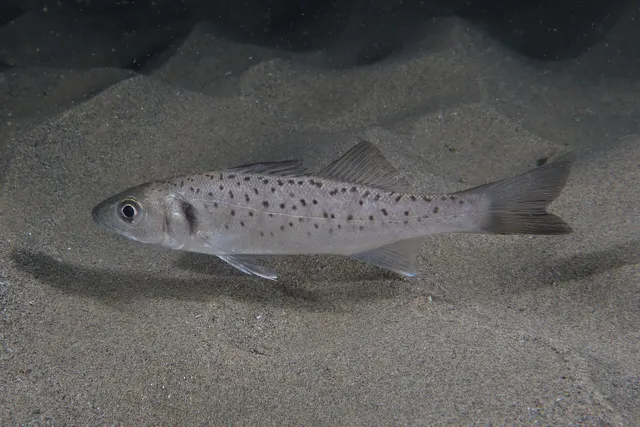 European sea bassA fish whose whole distribution moves seasonally and tidally at once, which is why a mark that produced fish in September produces nothing in December and nothing at the wrong state of tide in September either. Two independent cycles operating on one species is what makes 'it was here last week' so unreliable in sea fishing.
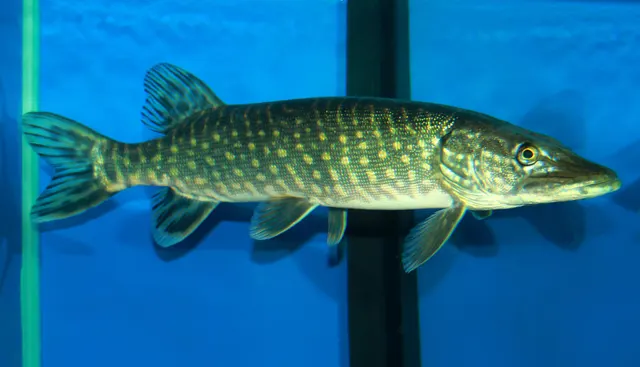 Northern pikeThe freshwater version, and it moves for a reason a reader can act on. Pike follow prey shoals and shift with water temperature between shallow weedy margins and deeper water through the year, so the fish have not left the lake — the productive DEPTH has changed, and the same map fished at a different depth frequently produces.
Water and ground
How this compares
- Dissolved oxygen and fishOne of the few conditions that empties an area completely rather than merely slowing it.
- Reading the tideTide relocates prey twice a day, and in tidal water a lunar correlation may be a tidal effect wearing a lunar name.
- Reading waterFive questions — temperature, level, flow, light, food — relocate fish on a water this platform has never heard of.
- Water temperature and fish activityEvery species has a range in which it feeds, and both ends of it push fish somewhere else.
Sources and evidence
- Cefas science, advice and data on marine and freshwater environments — Centre for Environment, Fisheries and Aquaculture Science (Government fisheries body)Relied on for: Environmental science on fish distribution, temperature and oxygen in freshwater and coastal systems.Background and mechanism onlyCitation checked — the work exists and is described correctly
Why the 7 connections on this page are here, and the sources
Fish this applies to
What experienced anglers do — 2 connections
Widely and independently recommended by experienced anglers and specialist sources. This is real angling knowledge, not proof: controlled evidence for it is limited, and FishingHQ records it as convention rather than as a demonstrated effect.
European sea bass
A fish or a record joined to the comparison it is a worked example of, written only where the subject's own behaviour is what makes the comparison concrete rather than where the comparison could apply to it.
- Freshwater Fishes of the British Isles — HarperCollins (New Naturalist 75), 1992 (Reference work)Relied on for: Feeding biology, behaviour and life history of the freshwater fishes of the British Isles.States this directlyCitation checked — the work exists and is described correctly
- FishBase: a global information system on fishes — Froese, R. and D. Pauly, eds. — FishBase Consortium (Scientific institute)Relied on for: Recorded feeding biology, environment and behaviour of the species named.States this directlyPassage read and verified
Northern pike
A fish or a record joined to the comparison it is a worked example of, written only where the subject's own behaviour is what makes the comparison concrete rather than where the comparison could apply to it.
- Freshwater Fishes of the British Isles — HarperCollins (New Naturalist 75), 1992 (Reference work)Relied on for: Feeding biology, behaviour and life history of the freshwater fishes of the British Isles.States this directlyCitation checked — the work exists and is described correctly
- FishBase: a global information system on fishes — Froese, R. and D. Pauly, eds. — FishBase Consortium (Scientific institute)Relied on for: Recorded feeding biology, environment and behaviour of the species named.States this directlyPassage read and verified
Water and ground
What experienced anglers do — 1 connection
Widely and independently recommended by experienced anglers and specialist sources. This is real angling knowledge, not proof: controlled evidence for it is limited, and FishingHQ records it as convention rather than as a demonstrated effect.
Estuary
A fish or a record joined to the comparison it is a worked example of, written only where the subject's own behaviour is what makes the comparison concrete rather than where the comparison could apply to it.
- Freshwater Fishes of the British Isles — HarperCollins (New Naturalist 75), 1992 (Reference work)Relied on for: Feeding biology, behaviour and life history of the freshwater fishes of the British Isles.States this directlyCitation checked — the work exists and is described correctly
- FishBase: a global information system on fishes — Froese, R. and D. Pauly, eds. — FishBase Consortium (Scientific institute)Relied on for: Recorded feeding biology, environment and behaviour of the species named.States this directlyPassage read and verified
How this compares
Backed by research — 4 connections
Supported by peer-reviewed research or fisheries science. The sources are listed and can be checked.
Dissolved oxygen and fish
Distinguishes a moved shoal from a shoal that has stopped feeding.
- Cefas science, advice and data on marine and freshwater environments — Centre for Environment, Fisheries and Aquaculture Science (Government fisheries body)Relied on for: Environmental determinants of fish distribution, including temperature, oxygen and prey availability.States this directlyCitation checked — the work exists and is described correctly
Reading the tide
The established cause that folklore most often misattributes to the moon.
- Cefas science, advice and data on marine and freshwater environments — Centre for Environment, Fisheries and Aquaculture Science (Government fisheries body)Relied on for: Environmental determinants of fish distribution, including temperature, oxygen and prey availability.States this directlyCitation checked — the work exists and is described correctly
Reading water
The transferable skill this page exists to hand over instead of a rule.
- Cefas science, advice and data on marine and freshwater environments — Centre for Environment, Fisheries and Aquaculture Science (Government fisheries body)Relied on for: Environmental determinants of fish distribution, including temperature, oxygen and prey availability.States this directlyCitation checked — the work exists and is described correctly
Water temperature and fish activity
The first of the established causes and the one most often at work.
- Cefas science, advice and data on marine and freshwater environments — Centre for Environment, Fisheries and Aquaculture Science (Government fisheries body)Relied on for: Environmental determinants of fish distribution, including temperature, oxygen and prey availability.States this directlyCitation checked — the work exists and is described correctly
How FishingHQ labels evidence is explained in the evidence policy.