Reservoirs
Habitat · Last reviewed 2026-08-13
A drowned valley or a walled bowl built to hold drinking water — where most British stillwater trout fishing happens, and a body of water that behaves like no natural lake.
Safety: cold water shock — can cause serious injury or death. 6 more points apply here.
- Water
- Freshwater
A reservoir is an engineered water body, and the engineering shows in every way that matters to fishing. It is either a valley dammed at one end, which produces a deep, steep-sided water with the old river channel running along the bottom, or a bowl built up above the surrounding land with concrete or clay banks and a flat, featureless base.
The defining behaviour is drawdown. Water is taken out for supply, so the level falls — sometimes by many metres — and rises again with rainfall. That does something no natural lake does: it repeatedly exposes and re-floods the margins, which prevents a stable littoral zone from developing. There is little marginal weed, little marginal invertebrate life, and comparatively little for fish in the shallows. The productivity is out in the open water, and so are the fish.
That is why reservoir fishing is boat and bank-fishing at range rather than margin fishing, why stillwater fly fishing developed the way it did in Britain, and why the fish are found by locating food in open water rather than by reading features.
Most large British reservoirs are managed trout fisheries, stocked with rainbow and brown trout and fished by boat and from the bank. Many also hold substantial coarse populations — pike in particular grow very large in them, feeding on stocked trout — and some are primarily coarse waters.
They are also thermally stratified in summer in a way small waters are not, which puts a temperature and oxygen boundary in the water column that decides where the fish can be.
What characterises it
Large, deep and engineered. Valley reservoirs are steep-sided with the drowned river channel as their deepest feature and drowned walls, roads and tree lines as structure. Bunded reservoirs are shallow-edged bowls with a flat base and very little structure at all.
Drawdown is the characteristic behaviour: levels fall through dry periods and recover with rain, exposing bare margins that never develop stable weed or invertebrate communities. Water is generally clear and often nutrient-poor, and in summer the water column stratifies into a warm surface layer over cold deeper water with a sharp boundary between them.
What lives there
In Britain, most large reservoirs are managed trout fisheries stocked with rainbow and brown trout, fished from boat and bank. Natural food is dominated by open-water items — buzzer larvae, daphnia, corixa, fry — rather than by the marginal invertebrate life a natural lake supports, which is a direct consequence of drawdown.
Coarse populations are frequently substantial. Pike reach exceptional sizes in trout reservoirs, feeding on stocked fish, and roach, bream and perch are abundant in many. Some reservoirs are managed primarily as coarse waters.
The stratification matters ecologically as well as practically: below the thermocline in high summer, oxygen can fall low enough to be uninhabitable, which concentrates fish into a band of the water column rather than distributing them through it.
Through the year
The trout fishery is traditionally a spring-to-autumn one, with stocking through the season and the best fishing at either end when water temperatures suit the fish. Many reservoirs now fish through the winter for trout, and pike fishing on them is typically a winter proposition.
The year is organised by stratification and drawdown more than by the calendar. Spring turnover mixes the water column and brings fish within reach; summer stratification pushes them to a depth band; autumn turnover mixes it again; winter leaves the whole column accessible and the fish slow. Drawdown through a dry summer concentrates fish and changes where the structure is, sometimes exposing features that are underwater in a normal year.
Some of what lives here
Fish recorded here that FishingHQ holds a reviewed photograph of. It is not a complete list of what Reservoirs holds, and it is not a prediction that you will catch any of them — it is a way in to the ones we can show you.
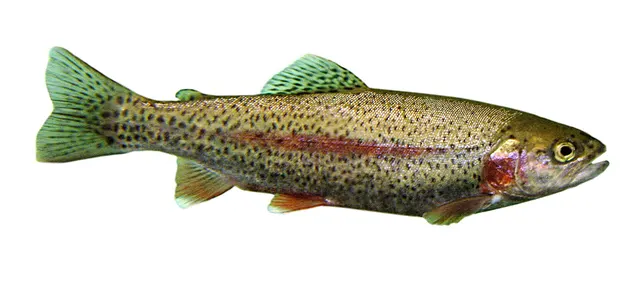 Rainbow troutThe most widely introduced sport fish on Earth — a Pacific salmonid now stocked on every continent except Antarctica, and the same species as the steelhead.
Jonathunder — CC BY-SA 3.0, via Wikimedia Commons
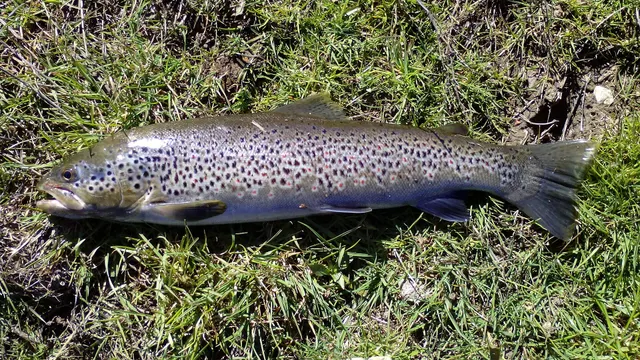 Brown troutA single, extraordinarily plastic species that appears as a tiny hill-stream fish, a deep-bodied loch trout and a silver sea-run migrant — all the same animal.
Robermix, CC0, via Wikimedia Commons
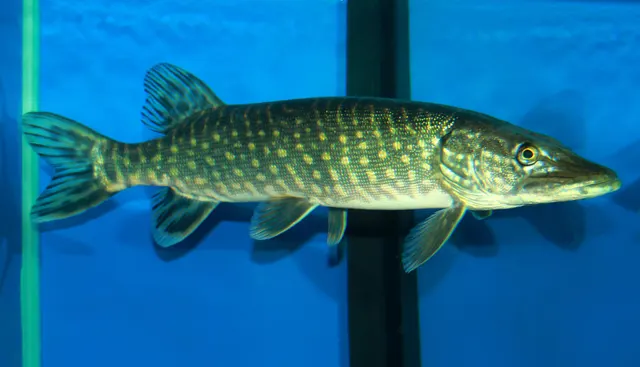 Northern pikeThe dominant freshwater ambush predator of the northern hemisphere: long, cryptic, and built for one violent acceleration rather than pursuit.
Karelj, Public domain, via Wikimedia Commons
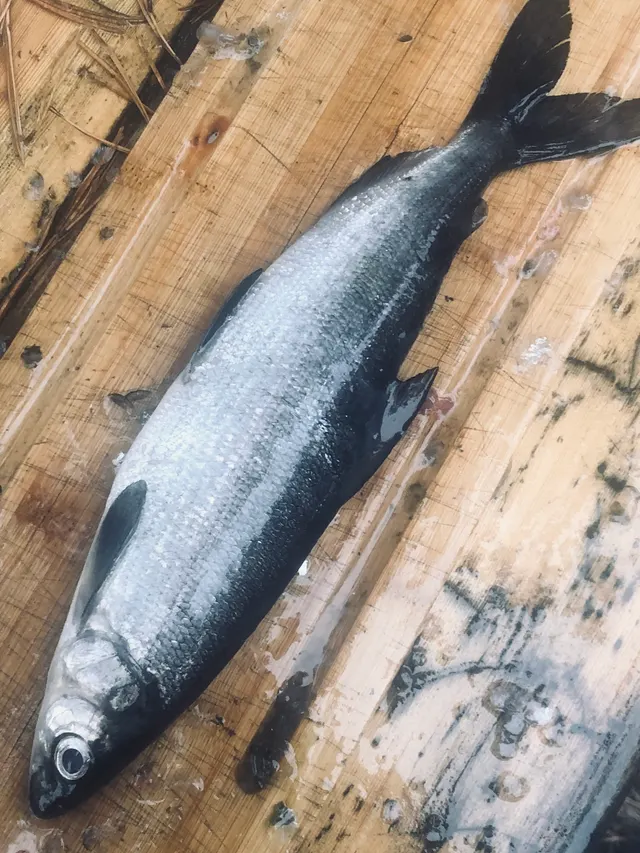 Common whitefishThe Alpine and northern lake fish that carries a different name in every country it lives in — powan, schelly, gwyniad, felchen, renke — and one of the few European species fished with a purpose-built rig of its own.
Vladislav Isaev — CC BY, via iNaturalist
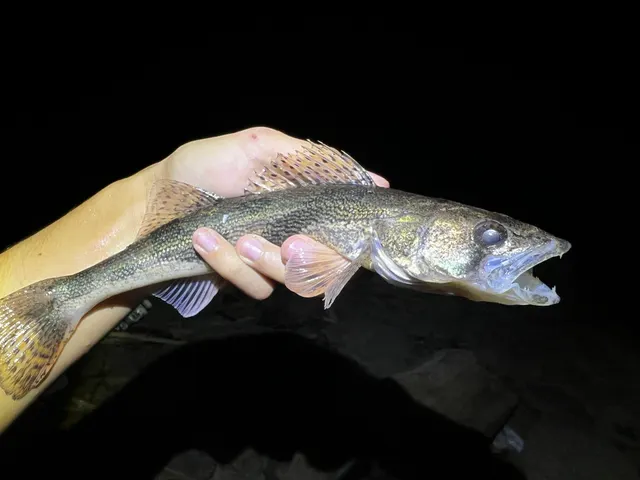 SaugerThe walleye's smaller river-dwelling relative, separated by spotted dorsal membranes and the absence of a white tail tip — a fish of big turbid rivers where walleye are fish of lakes.
Nick Tobler (Cowturtle) — CC BY, via iNaturalist
Safety
Cold water shock — Can cause serious injury or death
Reservoirs are deep, cold below the surface layer even in summer, and frequently have steep-sided or engineered banks with no shallow margin. Entry is sudden and the water is much colder than the surface temperature suggests.
What reduces it: Wear a buoyancy aid in a boat, which most reservoir fisheries require. Stay off steep and engineered banks, respect drawn-down margins which are soft and slippery, and treat the water as cold regardless of air temperature.
Boat safety — Can cause serious injury or death
Large open water with a long fetch produces a substantial wave quickly when the wind gets up, and a small fishing boat a long way from the lodge in a rising wind is a genuine problem.
What reduces it: Follow the fishery's boat rules — they exist because of this. Watch the forecast and the sky, come in early rather than late, and wear the buoyancy aid rather than sitting on it.
Weather and lightning — Can cause injury needing treatment
A large flat open water with somebody holding a carbon rod is an exposed position in a thunderstorm, and reservoirs offer very little shelter.
What reduces it: Come off the water and away from the bank at the first sign of a storm. Put rods down and away from you. Do not wait to see how it develops.
Precautions that always apply here
- Wear a buoyancy aid or lifejacket. Cold water incapacitates strong swimmers within a minute, long before swimming ability matters.
- Tell somebody where you are going and when you expect to be back.
- Look up before you cast. Carbon rods conduct, and contact with overhead lines is regularly fatal.
- Check, clean and dry your kit between different waters — the published guidance is 48 hours’ drying, in sunlight where possible, because a number of invasive species survive over two weeks in damp conditions. Nets, boots and wet mats move invasive species and disease more effectively than anything else anglers do.
Check the rules before you fish
Fishing laws, bylaws, access rules, seasons, bait restrictions and permitted methods vary by location and can change. Check the current rules from the relevant authority and the water you intend to fish before fishing.
Check with:
- Current national or regional law for where you are fishing
- Current local bylaws
- The relevant fisheries authority
- The landowner, club or fishery whose water it is
- Any restrictions specific to the species or the method you intend to use
Where to go next
Fish found here
- Brown troutStocked and in some waters naturally recruiting, generally taking a wider range of food and holding deeper than stocked rainbows.
- Common whitefishPresent in some deep impoundments and in Alpine lakes with regulated levels, where the same depth and temperature requirements apply as in a natural lake.
- Freshwater drumAbundant in large impoundments across its range, feeding over hard bottom, and in the Great Lakes taking large quantities of invasive zebra and quagga mussels.
- Northern pikeReaches exceptional size in trout reservoirs, feeding on stocked fish in open water — one of the clearest cases where a managed fishery creates a predator fishery.
- Rainbow troutThe stocked species most British stillwater trout fishing is built on, feeding on open-water items rather than the marginal life drawdown prevents.
- SaratogaTranslocated into a number of Australian impoundments, where the same edge habitat and the same surface feeding apply.
- SaugerPresent in river-run reservoirs and their tailwaters, which is where most of the recreational fishery happens, though it is a river fish occupying an impounded river rather than a lake fish.
Reading this water
- Floating, sinking and intermediate fly linesThe water that makes the argument physical. A deep artificial stillwater stratifies in summer, draws down through the season, and holds fish at a depth that changes through the day — so a single line fishes one narrow band of a water that has many.
- Reservoir fishing and depthThe habitat page explains how an engineered water differs from a natural lake. This is the practical consequence: the structure is the drowned landscape and it is invisible, so depth is the first question rather than the last.
How this compares
- Moroccan mountain and reservoir fresh waterReservoirs are the dominant Moroccan freshwater environment by volume and by effort, and drawdown for irrigation is the mechanic that governs them.
- Sri LankaThe tank system is a reservoir fishery — shallow, warm, weedy and structurally complex — with two thousand years of history attached to it.
Sources and evidence
- Freshwater Fishes of the British Isles — HarperCollins (New Naturalist 75), 1992 (Reference work)Relied on for: Habitat character, water chemistry and the fish communities associated with the freshwater environments described.States this directlyCitation checked — the work exists and is described correctly
- Environment Agency fisheries management, byelaws and rod licensing information — Environment Agency (Government fisheries body)Relied on for: That freshwater fisheries in England are managed under a licensing framework, that still and running waters are treated differently, and that stocking and biosecurity are regulated activities.Background and mechanism onlyCitation checked — the work exists and is described correctly
Why the 11 connections on this page are here, and the sources
Fish found here
Backed by research — 7 connections
Supported by peer-reviewed research or fisheries science. The sources are listed and can be checked.
Brown trout
Habitat association recorded for the species, in an environment FishingHQ describes on its own page.
- Freshwater Fishes of the British Isles — HarperCollins (New Naturalist 75), 1992 (Reference work)Relied on for: Habitat association and distribution of European freshwater fishes, including occurrence in artificial and modified waters.States this directlyCitation checked — the work exists and is described correctly
- FishBase: a global information system on fishes — Froese, R. and D. Pauly, eds. — FishBase Consortium (Scientific institute)Relied on for: Habitat association, depth range and water-type tolerance recorded for the species.States this directlyPassage read and verified
Common whitefish
A distributional claim about where a species is found, which is a claim about the world and rests on regional reference works rather than on angling report.
- Freshwater Fishes of the British Isles — HarperCollins (New Naturalist 75), 1992 (Reference work)Relied on for: Distribution, habitat association, identification and life history of the freshwater fishes of the British Isles.States this directlyCitation checked — the work exists and is described correctly
- FishBase: a global information system on fishes — Froese, R. and D. Pauly, eds. — FishBase Consortium (Scientific institute)Relied on for: Distribution, habitat association, depth range, diet and reproductive parameters recorded for the species.States this directlyPassage read and verified
Freshwater drum
A distributional claim about a species outside the range of the British reference works, resting on the global databases instead.
- FishBase: a global information system on fishes — Froese, R. and D. Pauly, eds. — FishBase Consortium (Scientific institute)Relied on for: Distribution, habitat association, depth range, diet and reproductive parameters recorded for the species.States this directlyPassage read and verified
- The IUCN Red List of Threatened Species — International Union for Conservation of Nature (Conservation authority)Relied on for: Global conservation assessment, range and recorded threats for the species.States this directlyCitation checked — the work exists and is described correctly
Northern pike
Habitat association recorded for the species, in an environment FishingHQ describes on its own page.
- Freshwater Fishes of the British Isles — HarperCollins (New Naturalist 75), 1992 (Reference work)Relied on for: Habitat association and distribution of European freshwater fishes, including occurrence in artificial and modified waters.States this directlyCitation checked — the work exists and is described correctly
- FishBase: a global information system on fishes — Froese, R. and D. Pauly, eds. — FishBase Consortium (Scientific institute)Relied on for: Habitat association, depth range and water-type tolerance recorded for the species.States this directlyPassage read and verified
Rainbow trout
Habitat association recorded for the species, in an environment FishingHQ describes on its own page.
- Freshwater Fishes of the British Isles — HarperCollins (New Naturalist 75), 1992 (Reference work)Relied on for: Habitat association and distribution of European freshwater fishes, including occurrence in artificial and modified waters.States this directlyCitation checked — the work exists and is described correctly
- FishBase: a global information system on fishes — Froese, R. and D. Pauly, eds. — FishBase Consortium (Scientific institute)Relied on for: Habitat association, depth range and water-type tolerance recorded for the species.States this directlyPassage read and verified
Saratoga
A distributional claim about a species outside the range of the British reference works, resting on the global databases instead.
- FishBase: a global information system on fishes — Froese, R. and D. Pauly, eds. — FishBase Consortium (Scientific institute)Relied on for: Distribution, habitat association, depth range, diet and reproductive parameters recorded for the species.States this directlyPassage read and verified
- The IUCN Red List of Threatened Species — International Union for Conservation of Nature (Conservation authority)Relied on for: Global conservation assessment, range and recorded threats for the species.States this directlyCitation checked — the work exists and is described correctly
Sauger
A distributional claim about a species outside the range of the British reference works, resting on the global databases instead.
- FishBase: a global information system on fishes — Froese, R. and D. Pauly, eds. — FishBase Consortium (Scientific institute)Relied on for: Distribution, habitat association, depth range, diet and reproductive parameters recorded for the species.States this directlyPassage read and verified
- The IUCN Red List of Threatened Species — International Union for Conservation of Nature (Conservation authority)Relied on for: Global conservation assessment, range and recorded threats for the species.States this directlyCitation checked — the work exists and is described correctly
Reading this water
What experienced anglers do — 2 connections
Widely and independently recommended by experienced anglers and specialist sources. This is real angling knowledge, not proof: controlled evidence for it is limited, and FishingHQ records it as convention rather than as a demonstrated effect.
Floating, sinking and intermediate fly lines
A fish or a water joined to the fly-fishing mechanism it is a worked example of, written only where the subject's own behaviour or physical character is what this page explains. The direction is the one FishingHQ writes this kind of connection in, and the one it already uses 176 times, and it is also the semantically correct one: the mechanism explains the fish, not the reverse.
- Still Water Fly-Fishing — Andre Deutsch, 1952 (Specialist angling publication)Relied on for: Stillwater fly practice: line density and depth, leader construction, fly selection against the food present, and the behaviour of stocked and wild trout in still water.States this directlyCitation checked — the work exists and is described correctly
- Trout & Salmon — Bauer Media (Specialist angling publication)Relied on for: Long-running published description of British game angling practice: river and stillwater trout, grayling and salmon fishing, and the presentation each demands.States this directlyCitation checked — the work exists and is described correctly
Reservoir fishing and depth
The physical or biological reason behind a situation. Where that reason is documented science the page for it carries the citation; the association itself is practitioner observation and is labelled as such.
- Freshwater Fishing — Macdonald & Jane's, 1975 (Specialist angling publication)Relied on for: Comprehensive freshwater angling practice including water reading, river conditions, seasonal behaviour and the reasoning behind them.States this directlyCitation checked — the work exists and is described correctly
- Coarse Fishing — A. & C. Black, 1912 (Specialist angling publication)Relied on for: Classical coarse angling practice: swim selection, river and stillwater reading and seasonal observation.States this directlyCitation checked — the work exists and is described correctly
How this compares
What experienced anglers do — 2 connections
Widely and independently recommended by experienced anglers and specialist sources. This is real angling knowledge, not proof: controlled evidence for it is limited, and FishingHQ records it as convention rather than as a demonstrated effect.
Moroccan mountain and reservoir fresh water
Two places a reader would reasonably weigh against one another, joined where the comparison teaches something about both. It is also how the larger geography is linked to what sits inside it.
- Cefas science, advice and data on marine and freshwater environments — Centre for Environment, Fisheries and Aquaculture Science (Government fisheries body)Relied on for: Marine and freshwater environmental science, including coastal physical processes, productivity and the monitoring behind them.States this directlyCitation checked — the work exists and is described correctly
- ICES Advice on fishing opportunities, catch and effort — International Council for the Exploration of the Sea (Scientific institute)Relied on for: Stock assessment and advice for north-east Atlantic and adjacent stocks, including the environmental drivers of productivity.Background and mechanism onlyCitation checked — the work exists and is described correctly
Sri Lanka
A destination joined to the ground it is made of, so a reader can follow from the place to how the habitat behaves.
- General angling website restatements of established technique — Various (Credible secondary source)Relied on for: Widely restated descriptions of regional practice, ground and species, recorded as consensus rather than as scholarship.Background and mechanism onlyCitation checked — the work exists and is described correctly
- Code of Conduct for Responsible Fisheries — Food and Agriculture Organization of the United Nations, Rome, 1995 (Standards body)Relied on for: International principles for responsible fisheries, including the management of small-scale and artisanal fisheries.Background and mechanism onlyCitation checked — the work exists and is described correctly
How FishingHQ labels evidence is explained in the evidence policy.