How histamine forms in a fish, and why the enzyme is the problem
Explainer · Last reviewed 2026-08-15
Bacteria make an enzyme; the enzyme makes histamine; and the enzyme outlives the bacteria, survives freezing and restarts on thawing. That is why chilling late does not undo an early mistake.
Safety: injury while handling fish — can cause injury needing treatment.
The short version of scombroid poisoning — keep mackerel and tuna cold — is correct and is not enough to act on well, because it does not explain why a fish that was warm for two hours cannot be rescued by three days in a fridge. The mechanism explains it, and the mechanism is unusual.
STEP ONE: THE BACTERIA ARE ALREADY THERE. The FDA guidance records that the organisms concerned "naturally exist on the gills, on external surfaces, and in the gut of live, saltwater fish, with no harm to the fish". They are not contamination and their presence is not a sign of poor handling. What changes at death is that the defences of the fish stop inhibiting bacterial growth in the muscle tissue.
STEP TWO: THEY MAKE AN ENZYME. Growing in the muscle, they produce histidine decarboxylase, which converts histidine — an amino acid naturally abundant in the dark muscle of certain fish — into histamine.
STEP THREE, AND THIS IS THE PART THAT MATTERS: THE ENZYME BECOMES INDEPENDENT OF THEM. In the guidance's words, "once the enzyme histidine decarboxylase is present in the fish, it can continue to produce histamine in the fish even if the bacteria are not active. The enzyme can be active at or near refrigeration temperatures. The enzyme remains stable while in the frozen state and may be reactivated very rapidly after thawing."
That single paragraph explains everything anglers find confusing about scombroid. Chilling a fish that has already warmed stops the bacteria multiplying and does not remove the enzyme they left behind, and the enzyme keeps working — slowly — in the fridge. Freezing preserves it intact, and thawing wakes it up. And at the end of all of it: "once histamine is produced, it cannot be eliminated by heat (including retorting) or freezing."
WHICH FISH. The classic group is the scombrids — mackerel, tuna, bonito, skipjack, albacore — hence the name; their common property is a large mass of dark muscle rich in histidine. Several unrelated fish with similar muscle are associated too: mahi-mahi, some jacks, sardines, anchovies, herring and bluefish. These are, unhelpfully, among the commonest fish caught in warm weather.
THE CONTROL IS ONE THING. "Rapid chilling of scombrotoxin-forming fish immediately after death is the most important element in any strategy". Immediately is the operative word, and it is why the chilling page treats ice as equipment rather than as a refinement. What makes the hazard worse, and why FishingHQ publishes no number of hours, is set out below.
AND ON ILLNESS, BRIEFLY AND DELIBERATELY WITHOUT DETAIL. Histamine poisoning produces a reaction resembling an allergic one, usually soon after eating. It is generally short-lived, it can be serious, and it is a medical matter rather than a fishing one. FishingHQ describes the mechanism and the prevention. Anybody who becomes unwell after eating fish should seek medical advice rather than match their symptoms against a website.
What makes it worse, and why no hour figure is published here
THE AGGRAVATING FACTORS ARE NOT ALL OBVIOUS. Tunas, the FDA notes, "generate heat, resulting in internal temperatures that may exceed environmental temperatures" — a large tuna is warm before it dies and its centre stays warm long afterwards. Gutting can make matters worse rather than better if done carelessly, because it can spread gut bacteria onto the flesh. Salting, smoking, drying and pickling do not stop formation: it continues "during processes such as brining, salting, smoking, drying, fermenting, and pickling". And vacuum packing does not help, because a number of the organisms are facultative anaerobes that grow perfectly well without oxygen.
WHAT FISHINGHQ WILL NOT DO IS GIVE A NUMBER OF HOURS, and the reason is worth stating because the number exists and is easy to find. The FDA's Table 7-1 sets maximum times to get fish into a chilling medium — six hours from death in hot air, nine in cooler, twelve if the fish was gilled and gutted first. Those are HACCP critical limits for a commercial vessel: an operation that records the time of death, monitors the chilling medium with a calibrated thermometer, and has a documented corrective action when a limit is breached.
An angler has none of those things. Somebody who remembers 'six hours' will apply it to a fish whose time of death they are estimating, in air whose temperature they are guessing, held in a container whose temperature nobody has measured — and will conclude that five hours is fine. The guessing is where the harm is, and a number lends the guess an authority it has not earned.
So what transfers is the direction and the mechanism: cold, at once, continuously, and warm hours are spent permanently. That is less satisfying than a figure and it is the part that is actually true of a bucket on a beach.
Official guidance — why, and the sources (1)
Stated by a fisheries authority, scientific institute or recognised angling body. Authoritative, but summarising rather than demonstrating.
- Fish and Fishery Products Hazards and Controls Guidance — US Food and Drug Administration, Center for Food Safety and Applied Nutrition, 2022 (Standards body)Relied on for: Hazards and controls for fish and fishery products: scombrotoxin (histamine) formation, seafood parasites and the conditions that kill them, and natural toxins including their stability to cooking and freezing.States this directlyPassage read and verified
Which catch groups this actually bears on
The hazard is not evenly distributed and it is worth being specific, because a rule applied to all fish is a rule that gets ignored.
IT BEARS HARD on the scombrids and their look-alikes: mackerel, tuna of every kind, bonito, skipjack, albacore and the amberjacks and jacks. In British and Irish waters that means mackerel above all — the most-caught fish on the coast, taken in the warmest months, frequently in numbers, and very often carried home in a plastic bag. Scad and herring belong in the same conversation.
IT BEARS ON warm-water pelagics generally, which makes it a live issue for anybody fishing the Canaries, the Mediterranean, the Atlantic islands or the tropics, and for spearfishers in particular — the fish most often speared in warm water are exactly the susceptible ones, and a fish on a stringer in warm surface water is being held in the worst place available.
IT BEARS LITTLE OR NOT AT ALL on the white-fleshed demersals — cod, whiting, pollack, plaice, bass — which have little dark muscle and little histidine. They spoil by ordinary bacterial action, which announces itself, and they are the fish whose smell can actually be trusted as a warning.
And it bears on freshwater fish hardly at all, which is one of the few places in catch handling where the freshwater angler has the easier job.
Official guidance — why, and the sources (1)
Stated by a fisheries authority, scientific institute or recognised angling body. Authoritative, but summarising rather than demonstrating.
- Fish and Fishery Products Hazards and Controls Guidance — US Food and Drug Administration, Center for Food Safety and Applied Nutrition, 2022 (Standards body)Relied on for: Hazards and controls for fish and fishery products: scombrotoxin (histamine) formation, seafood parasites and the conditions that kill them, and natural toxins including their stability to cooking and freezing.States this directlyPassage read and verified
Safety
Injury while handling fish — Can cause injury needing treatment
Histamine accumulates in the muscle of mackerel, tuna and related species left warm after capture, through an enzyme that persists after the bacteria producing it have stopped, survives freezing and reactivates on thawing. The fish typically looks, smells and tastes normal, and cooking, smoking, freezing and canning do not remove histamine once formed.
What reduces it: Chill immediately after dispatch and keep the fish cold continuously — ice or an ice slurry, not a bag. Gut cleanly or not at all, since careless gutting can spread the bacteria into the flesh. Treat warm time as cumulative and irreversible, and discard fish left warm for hours regardless of appearance. Anybody who becomes unwell after eating fish should seek medical advice.
Worse when:
- Hot weather and direct sun
- Tunas and other fish that generate body heat, where the centre is warm before death
- Large fish, where the interior cools slowly
- Curing, smoking, drying or vacuum packing fish that was not chilled promptly — none of these stops formation
Where to go next
Fish this applies to
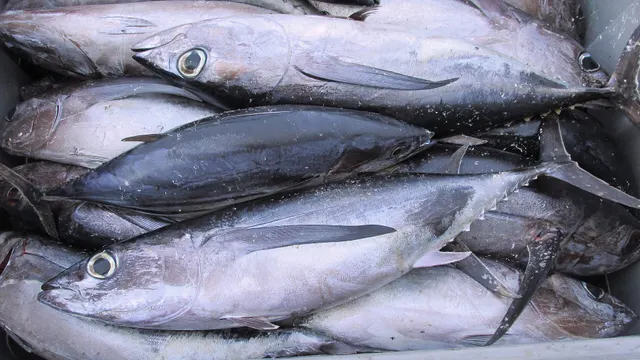 AlbacoreA tuna of the group, and one taken commercially and recreationally at sizes where the interior cools slowly.
- Atlantic bluefin tunaA tuna, and therefore in the group the FDA names — with the additional problem the guidance singles tunas out for: they generate heat in their tissues, so a large fish is warm before it dies and its centre stays warm long afterwards.
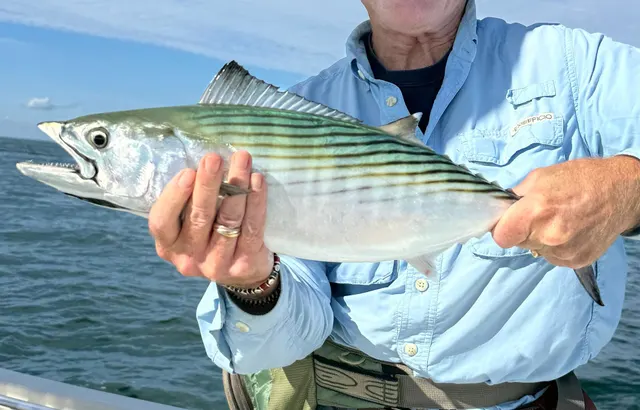 Atlantic bonitoBonito are named explicitly among the scombrotoxin-forming species, and are a warm-water summer fish throughout their range.
- Atlantic herringHerring belong to the associated group, and the guidance is explicit that formation continues through brining, salting, smoking and pickling — which is most of what is traditionally done with them.
- Atlantic horse mackerelScad carry the dark-muscle characteristic that puts a fish in this group, and share the mackerel's habit of being caught in quantity in warm weather.
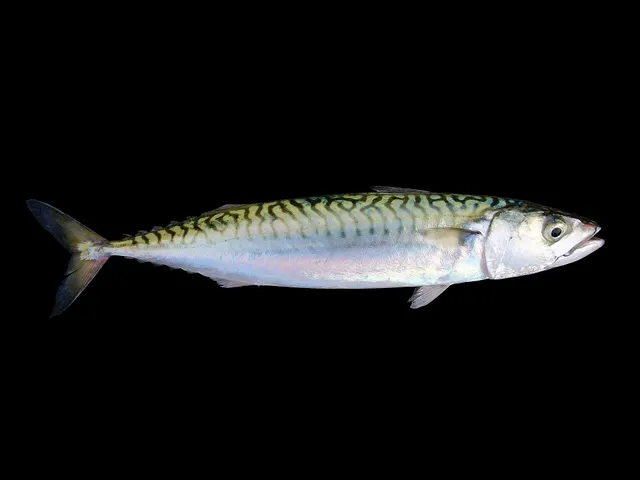 Atlantic mackerelThe species this hazard is named after in everything but Latin: a large proportion of histidine-rich dark muscle, caught in the warmest months, usually in numbers, and very often carried home in a bag. For a British or Irish angler this is the fish the whole subject is about.
- European anchovyAnchovies appear among the species associated with the hazard, and the FDA separately records anchovies as a species in which natural toxins have been identified — two independent reasons for care with a very small fish.
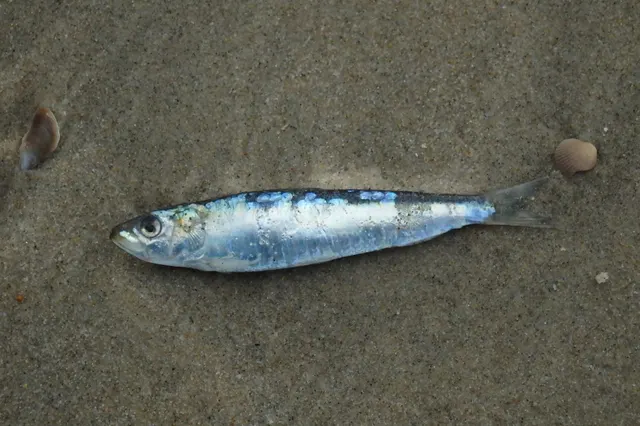 European sardineSardines are among the unrelated fish the guidance associates with histamine formation, on the strength of the same dark-muscle chemistry. They are also small, oily and usually caught in numbers in warm water.
6 more
- Greater amberjack Fish
- Japanese amberjack Fish
- Longtail tuna Fish
- Mahi-mahi Fish
- Wahoo Fish
- Yellowfin tuna Fish
Related reading
- Catch handling and dispatch in spearfishingSpearfishing takes the susceptible species — tunas, amberjacks, bonito — in warm water, and holds them on a stringer in the warmest layer of it. The mechanism page explains why that is worse than it looks.
- Gutting a fish, and why it usually comes firstThe FDA's warning that careless evisceration can spread gut bacteria into the flesh and accelerate histamine formation is the reason this step has a right and a wrong way rather than only a fast and a slow one.
- Icing and chilling a catch: the only variable that matters muchThe mechanism behind the instruction. Chilling is urgent because of what the enzyme does, and the enzyme is why chilling late does not undo an early mistake.
How this compares
Sources and evidence
- Fish and Fishery Products Hazards and Controls Guidance — US Food and Drug Administration, Center for Food Safety and Applied Nutrition, 2022 (Standards body)Relied on for: Hazards and controls for fish and fishery products: scombrotoxin (histamine) formation, seafood parasites and the conditions that kill them, and natural toxins including their stability to cooking and freezing.States this directlyPassage read and verified
- General angling website restatements of established technique — Various (Credible secondary source)Relied on for: Widely restated angling practice, recorded as practitioner consensus rather than as tested fact.Background and mechanism onlyCitation checked — the work exists and is described correctly
Why the 18 connections on this page are here, and the sources
Fish this applies to
Official guidance — 14 connections
Stated by a fisheries authority, scientific institute or recognised angling body. Authoritative, but summarising rather than demonstrating.
Albacore
A claim that a species belongs to the group in which histamine formation is a recognised hazard. That is a statement about the fish's muscle chemistry and about a named regulatory guidance's own species listing, not about angling practice, so it rests on the guidance rather than on report.
- Fish and Fishery Products Hazards and Controls Guidance — US Food and Drug Administration, Center for Food Safety and Applied Nutrition, 2022 (Standards body)Relied on for: Hazards and controls for fish and fishery products: scombrotoxin formation and the species groups associated with it, seafood parasites, and natural toxins.States this directlyPassage read and verified
Atlantic bluefin tuna
A claim that a species belongs to the group in which histamine formation is a recognised hazard. That is a statement about the fish's muscle chemistry and about a named regulatory guidance's own species listing, not about angling practice, so it rests on the guidance rather than on report.
- Fish and Fishery Products Hazards and Controls Guidance — US Food and Drug Administration, Center for Food Safety and Applied Nutrition, 2022 (Standards body)Relied on for: Hazards and controls for fish and fishery products: scombrotoxin formation and the species groups associated with it, seafood parasites, and natural toxins.States this directlyPassage read and verified
Atlantic bonito
A claim that a species belongs to the group in which histamine formation is a recognised hazard. That is a statement about the fish's muscle chemistry and about a named regulatory guidance's own species listing, not about angling practice, so it rests on the guidance rather than on report.
- Fish and Fishery Products Hazards and Controls Guidance — US Food and Drug Administration, Center for Food Safety and Applied Nutrition, 2022 (Standards body)Relied on for: Hazards and controls for fish and fishery products: scombrotoxin formation and the species groups associated with it, seafood parasites, and natural toxins.States this directlyPassage read and verified
Atlantic herring
A claim that a species belongs to the group in which histamine formation is a recognised hazard. That is a statement about the fish's muscle chemistry and about a named regulatory guidance's own species listing, not about angling practice, so it rests on the guidance rather than on report.
- Fish and Fishery Products Hazards and Controls Guidance — US Food and Drug Administration, Center for Food Safety and Applied Nutrition, 2022 (Standards body)Relied on for: Hazards and controls for fish and fishery products: scombrotoxin formation and the species groups associated with it, seafood parasites, and natural toxins.States this directlyPassage read and verified
Atlantic horse mackerel
A claim that a species belongs to the group in which histamine formation is a recognised hazard. That is a statement about the fish's muscle chemistry and about a named regulatory guidance's own species listing, not about angling practice, so it rests on the guidance rather than on report.
- Fish and Fishery Products Hazards and Controls Guidance — US Food and Drug Administration, Center for Food Safety and Applied Nutrition, 2022 (Standards body)Relied on for: Hazards and controls for fish and fishery products: scombrotoxin formation and the species groups associated with it, seafood parasites, and natural toxins.States this directlyPassage read and verified
Atlantic mackerel
A claim that a species belongs to the group in which histamine formation is a recognised hazard. That is a statement about the fish's muscle chemistry and about a named regulatory guidance's own species listing, not about angling practice, so it rests on the guidance rather than on report.
- Fish and Fishery Products Hazards and Controls Guidance — US Food and Drug Administration, Center for Food Safety and Applied Nutrition, 2022 (Standards body)Relied on for: Hazards and controls for fish and fishery products: scombrotoxin formation and the species groups associated with it, seafood parasites, and natural toxins.States this directlyPassage read and verified
European anchovy
A claim that a species belongs to the group in which histamine formation is a recognised hazard. That is a statement about the fish's muscle chemistry and about a named regulatory guidance's own species listing, not about angling practice, so it rests on the guidance rather than on report.
- Fish and Fishery Products Hazards and Controls Guidance — US Food and Drug Administration, Center for Food Safety and Applied Nutrition, 2022 (Standards body)Relied on for: Hazards and controls for fish and fishery products: scombrotoxin formation and the species groups associated with it, seafood parasites, and natural toxins.States this directlyPassage read and verified
European sardine
A claim that a species belongs to the group in which histamine formation is a recognised hazard. That is a statement about the fish's muscle chemistry and about a named regulatory guidance's own species listing, not about angling practice, so it rests on the guidance rather than on report.
- Fish and Fishery Products Hazards and Controls Guidance — US Food and Drug Administration, Center for Food Safety and Applied Nutrition, 2022 (Standards body)Relied on for: Hazards and controls for fish and fishery products: scombrotoxin formation and the species groups associated with it, seafood parasites, and natural toxins.States this directlyPassage read and verified
Greater amberjack
A claim that a species belongs to the group in which histamine formation is a recognised hazard. That is a statement about the fish's muscle chemistry and about a named regulatory guidance's own species listing, not about angling practice, so it rests on the guidance rather than on report.
- Fish and Fishery Products Hazards and Controls Guidance — US Food and Drug Administration, Center for Food Safety and Applied Nutrition, 2022 (Standards body)Relied on for: Hazards and controls for fish and fishery products: scombrotoxin formation and the species groups associated with it, seafood parasites, and natural toxins.States this directlyPassage read and verified
Japanese amberjack
A claim that a species belongs to the group in which histamine formation is a recognised hazard. That is a statement about the fish's muscle chemistry and about a named regulatory guidance's own species listing, not about angling practice, so it rests on the guidance rather than on report.
- Fish and Fishery Products Hazards and Controls Guidance — US Food and Drug Administration, Center for Food Safety and Applied Nutrition, 2022 (Standards body)Relied on for: Hazards and controls for fish and fishery products: scombrotoxin formation and the species groups associated with it, seafood parasites, and natural toxins.States this directlyPassage read and verified
Longtail tuna
A claim that a species belongs to the group in which histamine formation is a recognised hazard. That is a statement about the fish's muscle chemistry and about a named regulatory guidance's own species listing, not about angling practice, so it rests on the guidance rather than on report.
- Fish and Fishery Products Hazards and Controls Guidance — US Food and Drug Administration, Center for Food Safety and Applied Nutrition, 2022 (Standards body)Relied on for: Hazards and controls for fish and fishery products: scombrotoxin formation and the species groups associated with it, seafood parasites, and natural toxins.States this directlyPassage read and verified
Mahi-mahi
A claim that a species belongs to the group in which histamine formation is a recognised hazard. That is a statement about the fish's muscle chemistry and about a named regulatory guidance's own species listing, not about angling practice, so it rests on the guidance rather than on report.
- Fish and Fishery Products Hazards and Controls Guidance — US Food and Drug Administration, Center for Food Safety and Applied Nutrition, 2022 (Standards body)Relied on for: Hazards and controls for fish and fishery products: scombrotoxin formation and the species groups associated with it, seafood parasites, and natural toxins.States this directlyPassage read and verified
Wahoo
A claim that a species belongs to the group in which histamine formation is a recognised hazard. That is a statement about the fish's muscle chemistry and about a named regulatory guidance's own species listing, not about angling practice, so it rests on the guidance rather than on report.
- Fish and Fishery Products Hazards and Controls Guidance — US Food and Drug Administration, Center for Food Safety and Applied Nutrition, 2022 (Standards body)Relied on for: Hazards and controls for fish and fishery products: scombrotoxin formation and the species groups associated with it, seafood parasites, and natural toxins.States this directlyPassage read and verified
Yellowfin tuna
A claim that a species belongs to the group in which histamine formation is a recognised hazard. That is a statement about the fish's muscle chemistry and about a named regulatory guidance's own species listing, not about angling practice, so it rests on the guidance rather than on report.
- Fish and Fishery Products Hazards and Controls Guidance — US Food and Drug Administration, Center for Food Safety and Applied Nutrition, 2022 (Standards body)Relied on for: Hazards and controls for fish and fishery products: scombrotoxin formation and the species groups associated with it, seafood parasites, and natural toxins.States this directlyPassage read and verified
Related reading
Official guidance — 3 connections
Stated by a fisheries authority, scientific institute or recognised angling body. Authoritative, but summarising rather than demonstrating.
Catch handling and dispatch in spearfishing
A link from a vertical's own catch-handling record to the mechanism that governs the hazard it is managing.
- Fish and Fishery Products Hazards and Controls Guidance — US Food and Drug Administration, Center for Food Safety and Applied Nutrition, 2022 (Standards body)Relied on for: Hazards and controls for fish and fishery products: scombrotoxin formation and the species groups associated with it, seafood parasites, and natural toxins.States this directlyPassage read and verified
Gutting a fish, and why it usually comes first
A link from a handling step to the specific mechanism by which the guidance says that step can make matters worse.
- Fish and Fishery Products Hazards and Controls Guidance — US Food and Drug Administration, Center for Food Safety and Applied Nutrition, 2022 (Standards body)Relied on for: Hazards and controls for fish and fishery products: scombrotoxin formation and the species groups associated with it, seafood parasites, and natural toxins.States this directlyPassage read and verified
Icing and chilling a catch: the only variable that matters much
A link from a control to the hazard mechanism that justifies it, both stated in the same guidance.
- Fish and Fishery Products Hazards and Controls Guidance — US Food and Drug Administration, Center for Food Safety and Applied Nutrition, 2022 (Standards body)Relied on for: Hazards and controls for fish and fishery products: scombrotoxin formation and the species groups associated with it, seafood parasites, and natural toxins.States this directlyPassage read and verified
How this compares
What experienced anglers do — 1 connection
Widely and independently recommended by experienced anglers and specialist sources. This is real angling knowledge, not proof: controlled evidence for it is limited, and FishingHQ records it as convention rather than as a demonstrated effect.
Scombroid poisoning, and why some fish must be chilled immediately
A navigational claim that a reader on one of these pages is likely to want the other. It asserts adjacency of subject matter rather than a fact about the world.
- Sea Angler — Bauer Media (Specialist angling publication)Relied on for: Contemporary UK and European sea angling practice as reported by practitioners, including catch handling convention.States this directlyCitation checked — the work exists and is described correctly
- General angling website restatements of established technique — Various (Credible secondary source)Relied on for: Widely restated angling practice, recorded as consensus rather than as scholarship.Background and mechanism onlyCitation checked — the work exists and is described correctly
How FishingHQ labels evidence is explained in the evidence policy.