Atlantic herring
Fish · Last reviewed 2026-08-11
The shoaling fish that shaped the economies of the North Atlantic, and one of the two or three most important prey species in it.
Background, not a fishing profile
This page is here so FishingHQ can describe a biological relationship accurately — usually because a fish covered elsewhere on the site feeds on this. It covers what it is, where it lives and the evidence behind that relationship, and deliberately nothing about methods, bait or tackle. Its presence here is not a statement that anybody fishes for it.
Atlantic herring form some of the largest fish shoals in the world, and they have been the object of one of the most consequential fisheries in human history — the fishery that built ports on both sides of the Atlantic, collapsed spectacularly in the twentieth century, and became one of the earliest case studies in fisheries management.
Biologically the species is organised into distinct spawning stocks, each returning to particular grounds at a particular season. Some spawn in spring, some in autumn, and the stocks maintain their identity over long periods, which is why herring management is conducted stock by stock rather than as a single population.
As prey, herring are large, oily and abundant, and they are taken by almost everything big enough to take them: cod, saithe, ling, halibut, tuna, salmon at sea, together with seabirds, seals and cetaceans.
It is covered here as background because it is not a recreational target. Herring are occasionally caught on small feathered rigs and are overwhelmingly a commercial fish and a bait fish, and the record exists so that predator diets can name them accurately.
Identification
No photograph of Atlantic herring has passed identity review yet, so none is shown. A photograph is published only once somebody has checked the animal in it against the diagnostic features described on this page.
- Scientific name
- Clupea harengus
- Family
- Clupeidae
- Water
- Saltwater
- Conservation status
- Least Concern
- Regions
- Britain & Ireland, Northern Europe, Western Europe, North America, Arctic & Subarctic
- Streamlined silver fish with a deeply forked tail and a single dorsal fin set at about the midpoint of the back.
- Belly keel present but weakly serrated, unlike the sharply saw-edged belly of a sprat.
- The pelvic fins originate beneath or slightly behind the origin of the dorsal fin, which separates it from the sprat.
- No dark spot on the shoulder, distinguishing it from shads of similar size.
Size
- Typical
- 20–30 cm
- Large
- up to about 40 cm
Lifecycle and reproduction
Herring mature at three to five years depending on stock and can live for over fifteen. Growth and maturation vary between stocks, and populations are structured by year class strongly enough that a single good recruitment year can dominate a fishery for a decade.
Unusually among clupeids, herring lay demersal eggs in dense mats on gravel, stones and weed rather than releasing them into the water column. Spawning is stock-specific in both timing and location, and a spawning bed can carry eggs many layers deep.
Feeding and senses
Feeds principally on planktonic crustaceans, especially calanoid copepods and euphausiids, taken by particulate feeding and, in dense plankton, by filter feeding. Larger herring also take fish larvae and small fish.
Herring have exceptionally acute hearing, with a gas-filled connection between the swim bladder and the inner ear that extends their sensitivity well beyond that of most fish. They also school with precision using the lateral line and vision.
Through the year
Undertakes seasonal migrations between feeding grounds, overwintering areas and spawning grounds, with the pattern specific to each stock. The shoals are effectively a moving concentration of food that predators track.
Distribution
Both sides of the North Atlantic, from the Bay of Biscay to the Barents Sea in the east and from Cape Hatteras to Labrador in the west, in shelf waters from the surface to a few hundred metres.
This is a biological range — where the species occurs, not a prediction that you will catch one. To browse the fishing geography FishingHQ holds, start at fishing places.
Why anglers care
Not a recreational target in any substantial fishery, though herring are occasionally taken on small feathers where shoals come inshore. Their importance to anglers is as bait, and as the food that determines where and when larger predators are found.
Handling and returning
Handled by anglers almost entirely as bait. Herring are soft and deteriorate quickly, which is why they are usually used frozen and why they are a poor bait once thawed and refrozen.
Where to go next
Similar and related fish
- Atlantic bluefin tunaBluefin follow herring shoals in the northern part of the range, and the historical distribution of the North Sea and Nordic bluefin fishery tracked the herring stocks closely.
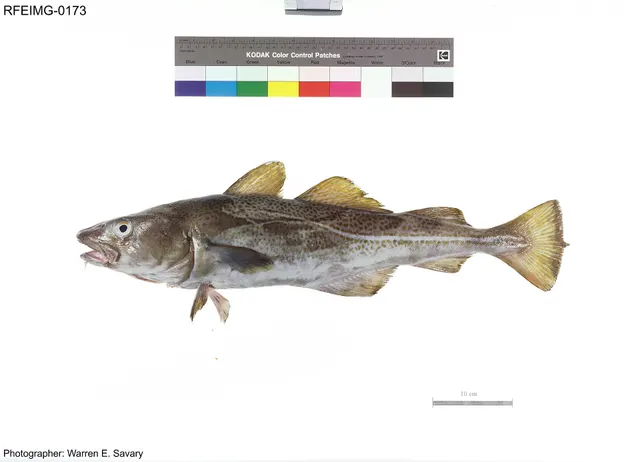 Atlantic codLarger cod take herring where the shoals are available, which is one of the reasons cod condition varies so much between areas with and without a herring stock.
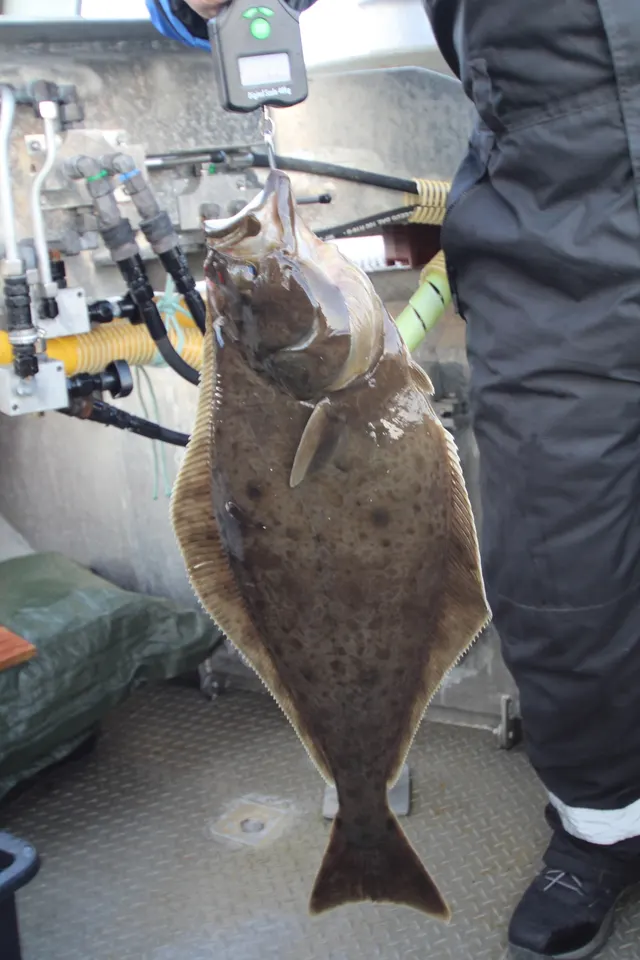 Atlantic halibutHalibut are active pursuit predators despite being flatfish, and herring and other shoaling fish are taken in mid water rather than from the bottom.
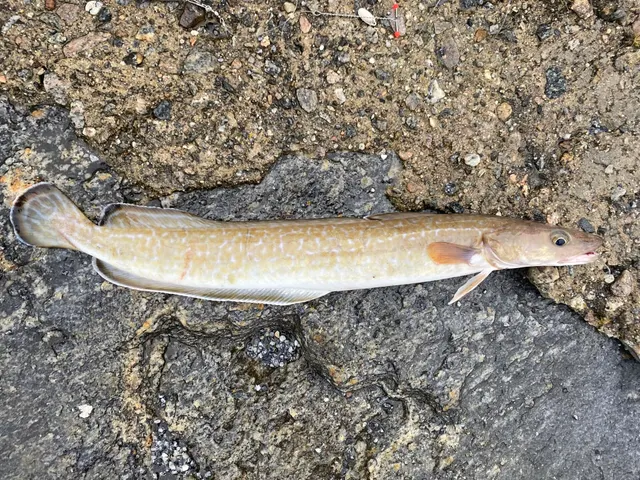 LingLing take herring and other shoaling fish that come within reach of the structure they hold on, rather than hunting them in open water.
- SpurdogA shoaling pelagic fish taken by a shoaling predator — spurdog feed as a pack on concentrations of small fish.
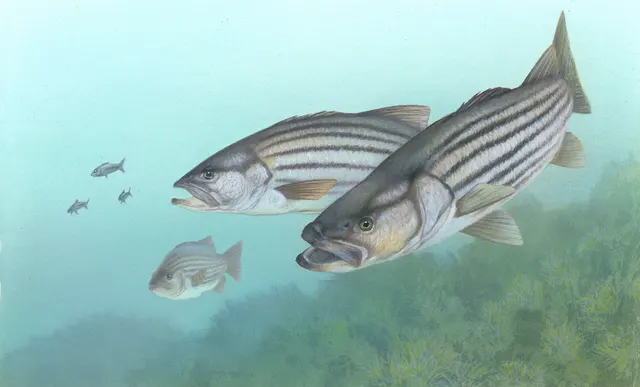 Striped bassAdult herring are taken by large striped bass in the northern part of the range, particularly at night over structure.
Where you will find it
- The Baltic SeaAbundant throughout and the backbone of both the commercial fishery and a widespread traditional recreational fishery on multi-hook traces.
- The Wadden SeaThe system is significant juvenile habitat for herring as well as flatfish, which is part of why its protection is argued for on grounds far wider than its own fishery.
Understanding this fish
History and culture
Sources and evidence
- FishBase: a global information system on fishes — Froese, R. and D. Pauly, eds. — FishBase Consortium (Scientific institute)Relied on for: Species identity, binomial, family placement, size, distribution and recorded biology for this species.States this directlyPassage read and verified
- FAO Species Identification Guides for Fishery Purposes and the FAO Species Catalogues — Food and Agriculture Organization of the United Nations (Scientific institute)Relied on for: The regional species account describing identity, distribution and the role of this species in the fisheries and food webs it belongs to.States this directlyCitation checked — the work exists and is described correctly
Why the 10 connections on this page are here, and the sources
Similar and related fish
Backed by research — 6 connections
Supported by peer-reviewed research or fisheries science. The sources are listed and can be checked.
Atlantic bluefin tuna
Recorded diet evidence identifies Clupea harengus as a food item of this predator at species level. The edge is written at that granularity and no further.
- FishBase: a global information system on fishes — Froese, R. and D. Pauly, eds. — FishBase Consortium (Scientific institute)Relied on for: Food items recorded for this predator, including Clupea harengus.States this directlyPassage read and verified
- FAO Species Identification Guides for Fishery Purposes and the FAO Species Catalogues — Food and Agriculture Organization of the United Nations (Scientific institute)Relied on for: Species account describing the diet of this predator in the region where Clupea harengus occurs.Background and mechanism onlyCitation checked — the work exists and is described correctly
Atlantic cod
Recorded diet evidence identifies Clupea harengus as a food item of this predator at species level. The edge is written at that granularity and no further.
- FishBase: a global information system on fishes — Froese, R. and D. Pauly, eds. — FishBase Consortium (Scientific institute)Relied on for: Food items recorded for this predator, including Clupea harengus.States this directlyPassage read and verified
- FAO Species Identification Guides for Fishery Purposes and the FAO Species Catalogues — Food and Agriculture Organization of the United Nations (Scientific institute)Relied on for: Species account describing the diet of this predator in the region where Clupea harengus occurs.Background and mechanism onlyCitation checked — the work exists and is described correctly
Atlantic halibut
Recorded diet evidence identifies Clupea harengus as a food item of this predator at species level. The edge is written at that granularity and no further.
- FishBase: a global information system on fishes — Froese, R. and D. Pauly, eds. — FishBase Consortium (Scientific institute)Relied on for: Food items recorded for this predator, including Clupea harengus.States this directlyPassage read and verified
- FAO Species Identification Guides for Fishery Purposes and the FAO Species Catalogues — Food and Agriculture Organization of the United Nations (Scientific institute)Relied on for: Species account describing the diet of this predator in the region where Clupea harengus occurs.Background and mechanism onlyCitation checked — the work exists and is described correctly
Ling
Recorded diet evidence identifies Clupea harengus as a food item of this predator at species level. The edge is written at that granularity and no further.
- FishBase: a global information system on fishes — Froese, R. and D. Pauly, eds. — FishBase Consortium (Scientific institute)Relied on for: Food items recorded for this predator, including Clupea harengus.States this directlyPassage read and verified
- FAO Species Identification Guides for Fishery Purposes and the FAO Species Catalogues — Food and Agriculture Organization of the United Nations (Scientific institute)Relied on for: Species account describing the diet of this predator in the region where Clupea harengus occurs.Background and mechanism onlyCitation checked — the work exists and is described correctly
Spurdog
A dietary claim made at SPECIES level because the reference works identify the prey to species: the evidence is about Clupea harengus specifically, which is what a preys_on edge against that record asserts.
- The Fishes of the British Isles and North-West Europe — Macmillan, 1969 (Reference work)Relied on for: The diet of the British sharks, skates and rays as set out in the species accounts, in which Clupea harengus is identified to species among the recorded prey.States this directlyCitation checked — the work exists and is described correctly
- FAO Species Identification Guides for Fishery Purposes and the FAO Species Catalogues — Food and Agriculture Organization of the United Nations (Scientific institute)Relied on for: Feeding habits and prey composition for the eastern Atlantic elasmobranchs, including the occurrence of Clupea harengus in the diet.States this directlyCitation checked — the work exists and is described correctly
Striped bass
Recorded diet evidence identifies Clupea harengus as a food item of this predator at species level. The edge is written at that granularity and no further.
- FishBase: a global information system on fishes — Froese, R. and D. Pauly, eds. — FishBase Consortium (Scientific institute)Relied on for: Food items recorded for this predator, including Clupea harengus.States this directlyPassage read and verified
- FAO Species Identification Guides for Fishery Purposes and the FAO Species Catalogues — Food and Agriculture Organization of the United Nations (Scientific institute)Relied on for: Species account describing the diet of this predator in the region where Clupea harengus occurs.Background and mechanism onlyCitation checked — the work exists and is described correctly
Where you will find it
Backed by research — 2 connections
Supported by peer-reviewed research or fisheries science. The sources are listed and can be checked.
The Baltic Sea
Occurrence of the species in this system or along this coast: a statement about the animal's distribution, not a venue recommendation.
- The Fishes of the British Isles and North-West Europe — Macmillan, 1969 (Reference work)Relied on for: Distribution and habitat association of fishes in British and north-west European waters.States this directlyCitation checked — the work exists and is described correctly
- FishBase: a global information system on fishes — Froese, R. and D. Pauly, eds. — FishBase Consortium (Scientific institute)Relied on for: Distribution, depth range and habitat association recorded for the species.States this directlyPassage read and verified
The Wadden Sea
A claim that a place contains the ground, water and seasonal conditions the species is associated with. It is a distributional statement about the world, it rests on the regional reference literature, and it deliberately asserts nothing about access, permission or catch.
- JNCC species and habitat conservation advice — Joint Nature Conservation Committee (Conservation authority)Relied on for: Habitat classification and description for the intertidal, coastal and freshwater habitats named, and the species characteristically associated with them.States this directlyCitation checked — the work exists and is described correctly
- ICES Advice on fishing opportunities, catch and effort — International Council for the Exploration of the Sea (Scientific institute)Relied on for: Ecoregion description, nursery function and the hydrography of the European sea areas assessed.States this directlyCitation checked — the work exists and is described correctly
Understanding this fish
Official guidance — 1 connection
Stated by a fisheries authority, scientific institute or recognised angling body. Authoritative, but summarising rather than demonstrating.
How histamine forms in a fish, and why the enzyme is the problem
A claim that a species belongs to the group in which histamine formation is a recognised hazard. That is a statement about the fish's muscle chemistry and about a named regulatory guidance's own species listing, not about angling practice, so it rests on the guidance rather than on report.
- Fish and Fishery Products Hazards and Controls Guidance — US Food and Drug Administration, Center for Food Safety and Applied Nutrition, 2022 (Standards body)Relied on for: Hazards and controls for fish and fishery products: scombrotoxin formation and the species groups associated with it, seafood parasites, and natural toxins.States this directlyPassage read and verified
History and culture
What experienced anglers do — 1 connection
Widely and independently recommended by experienced anglers and specialist sources. This is real angling knowledge, not proof: controlled evidence for it is limited, and FishingHQ records it as convention rather than as a demonstrated effect.
Fishing and food culture
A record joined to the history behind it. Historical placement rests on the documentary and scholarly sources cited; where the tradition is living rather than documented, the claim is kept at the level those sources support.
- Fishers' Craft and Lettered Art: Tracts on Fishing from the End of the Middle Ages — University of Toronto Press, 1997 (Scientific literature)Relied on for: Medieval and early-modern European fishing practice, gear, fishery organisation and the communities that used them.States this directlyCitation checked — the work exists and is described correctly
- The Compleat Angler, or the Contemplative Man's Recreation — Richard Marriot, 1653 (Reference work)Relied on for: Seventeenth-century English angling practice, its social setting and the literary tradition it founded.States this directlyPassage read and verified
How FishingHQ labels evidence is explained in the evidence policy.