Norway and the Nordic coast
Fishing regions · Last reviewed 2026-08-10
Deep cold water within reach of the shore, a public right to fish the sea, and a fishing culture built on food rather than on sport.
Safety: cold water shock — can cause serious injury or death. 7 more points apply here.
Being listed here is not permission to fish. What that meansClose
Access, fishing rights, seasons, licences, local bylaws and permitted methods vary and can change. Check current access, permission, local regulations, closures and restrictions before you travel or fish. FishingHQ describes what the ground is and names who holds the answer; it does not hold the answer itself.
Find the authority for a jurisdiction · What FishingHQ does and does not cover
Norway is where a great many European anglers first discover that their assumptions about access are local rather than universal.
Sea fishing here operates under a public right: broadly, anyone may fish in the sea with hand-held tackle without a licence, which is close to the opposite of the arrangement in Britain and Ireland where a right to fish a given water must be obtained from whoever holds it. Freshwater is different and is closer to the British model — fishing rights generally belong to landowners and are sold or leased, and salmon rivers in particular are managed and charged for.
The geography is the other half of the story. The coast is fjord and skerry rather than beach: glacially carved, extremely deep close inshore, and sheltered by an enormous archipelago of islands. Water hundreds of metres deep can lie a short distance from land, which puts species that are offshore fish elsewhere within reach of a small boat or, occasionally, a rock.
And the culture is oriented toward the table. Recreational sea fishing in Norway sits closer to food-gathering than to sport in a way that surprises visitors from countries with strong catch-and-release traditions, and the two attitudes coexist somewhat uneasily where visiting anglers and local practice meet.
What fishing here is like
A cold-water, deep-water fishing culture organised around the fjord and skerry coast and around food. Sea fishing is widely practised, accessible and unlicensed for hand-held tackle, and small boats are the normal means. The freshwater scene is dominated by salmon and trout, with a formal and frequently expensive salmon fishery on the classic rivers alongside a very large amount of low-key lake and upland fishing.
What strikes visitors first is depth and clarity. Water that would be twenty miles offshore in the southern North Sea is a few hundred metres from a Norwegian quay, and the species available reflect that. What strikes them second is the light: at high latitudes the summer working day is effectively unlimited and the winter one barely exists, which changes the shape of a session more than any tackle decision.
What you can target here
One entry per fish, grouped by how you would be fishing — because the answer is a different one from the rocks and from a boat. Each entry says how strongly the sources support it and how much evidence sits behind it. These are documented catches, not a forecast, and none of it is a statement that you may fish any particular ground.
From the shore · 2
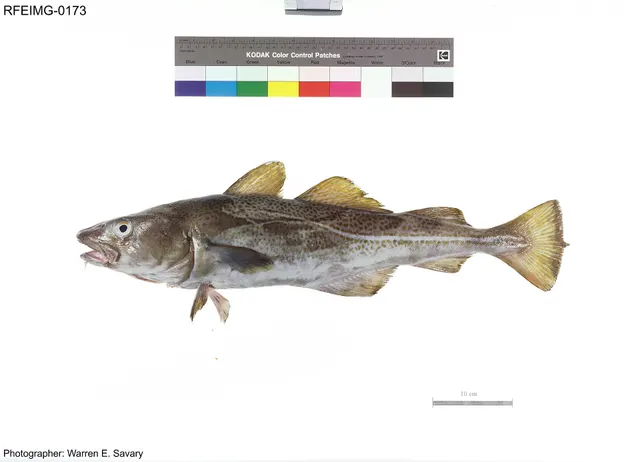 Atlantic codSeasonal5 places · 2 fishery accounts · 1 sourceLofoten and Vestfjorden, Sørøya, Trondheimsfjord, Hardangerfjord and 1 moreOver island, sea loch, sound or strait, tidal raceAround Feb–Apr
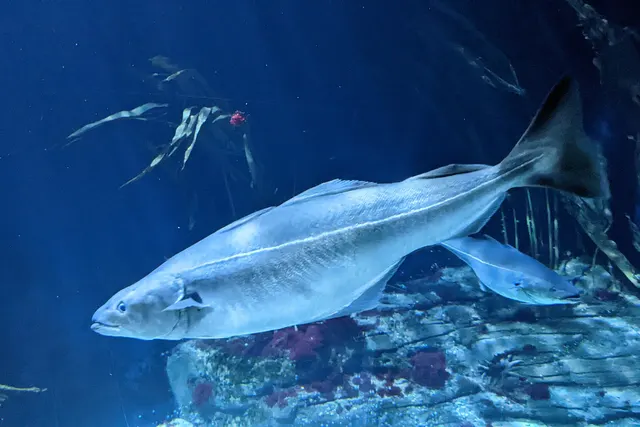 SaitheRepeatedly reported5 places · 2 fishery accounts · 1 sourceLofoten and Vestfjorden, Sørøya, Trondheimsfjord, Hardangerfjord and 1 moreOver island, sea loch, sound or strait, tidal raceAround Jul
From a boat · 5
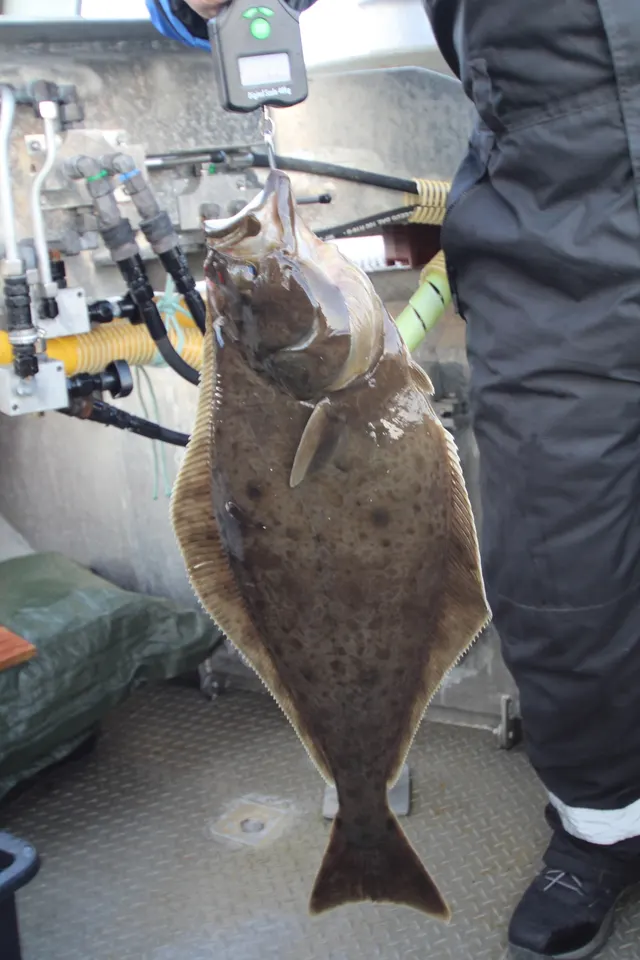 Atlantic halibutSeasonal4 places · 5 fishery accounts · 2 independent sourcesLofoten and Vestfjorden, Sørøya, The Sørøya banks, NappstraumenOver island, offshore bank, sound or strait, tidal raceAround Jun–Aug
- Atlantic codSeasonal6 places · 3 fishery accounts · 1 sourceLofoten and Vestfjorden, Sørøya, The Sørøya banks, Trondheimsfjord and 2 moreOver island, offshore bank, sea loch, sound or strait, tidal raceAround Feb–Apr
- SaitheRepeatedly reported6 places · 3 fishery accounts · 1 sourceLofoten and Vestfjorden, Sørøya, Trondheimsfjord, Hardangerfjord and 2 moreOver island, offshore bank, sea loch, sound or strait, tidal raceAround Jul
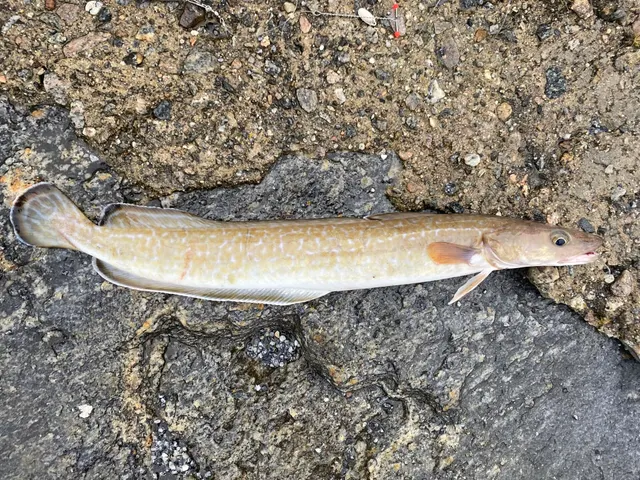 LingRecorded here4 placesLofoten and Vestfjorden, Sørøya, Hardangerfjord, The Sørøya banksOver island, offshore bank, sea loch, sound or strait
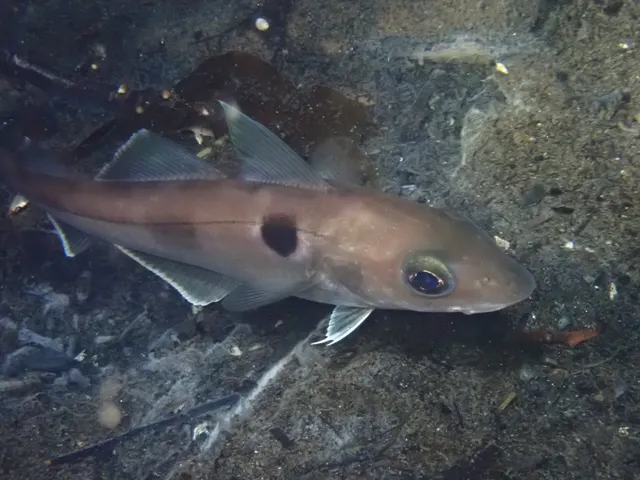 HaddockRecorded here3 placesLofoten and Vestfjorden, Sørøya, The Sørøya banksOver island, offshore bank, sound or strait
On a charter · 5
- Atlantic halibutSeasonal3 places · 4 fishery accounts · 2 independent sourcesLofoten and Vestfjorden, Sørøya, The Sørøya banksOver island, offshore bank, sound or straitAround Jun–Aug
- Atlantic codSeasonal3 places · 3 fishery accounts · 1 sourceLofoten and Vestfjorden, Sørøya, The Sørøya banksOver island, offshore bank, sound or straitAround Feb–Apr
- SaitheRepeatedly reported1 place · 1 fishery account · 1 sourceThe Sørøya banksOver offshore bank
- HaddockRecorded here3 placesLofoten and Vestfjorden, Sørøya, The Sørøya banksOver island, offshore bank, sound or strait
- LingRecorded here3 placesLofoten and Vestfjorden, Sørøya, The Sørøya banksOver island, offshore bank, sound or strait
What these strengths mean
- Seasonal
- Well supported, and concentrated in part of the year rather than spread through it.
- Repeatedly reported
- Several independent public accounts. Enough to say it happens more than once; not enough to call it a fishery.
- Recorded here
- At least one credible public account of this species being caught here. That is all it means.
- How breadth is counted
- A fish documented at six marks is shown as six marks: breadth never raises the strength on its own. A fishery account describes the fishing; a recorded catch reports one specific catch. How evidence is weighed.
How people fish here
8 methods are recorded on the places documented here, counted from the records themselves rather than from what is practised in the country. Each opens a full guide to the technique.
Jigging
Recorded at 7 places here, over sea loch, tidal race, island, offshore bank.
Working a weighted lure with a rising-and-falling motion, usually vertically, so it behaves like a wounded or fleeing baitfish.
Documented on the same ground: Atlantic cod, Atlantic halibut, Saithe, Haddock, Ling.
Spinning
Recorded at 4 places here, over sea loch, tidal race.
Casting an artificial lure and retrieving it so that it moves like something alive — the most direct form of lure fishing.
Documented on the same ground: Atlantic halibut, Atlantic cod, Saithe, Ling.
Deep-drop fishing
Recorded at 3 places here, over island, sea loch, sound or strait.
Fishing baits several hundred metres down with heavy weights and, usually, an electric reel — a method defined entirely by what depth does to everything else.
Documented on the same ground: Atlantic cod, Atlantic halibut, Saithe, Haddock, Ling.
Kayak fishing
Recorded at 3 places here, over sea loch, sound or strait.
A platform rather than a technique: quiet, shallow-draught access to water no other craft reaches, bought at the price of exposure, and a discipline where the decision not to launch is part of the skill.
Documented on the same ground: Atlantic cod, Atlantic halibut, Saithe, Haddock, Ling.
Trolling
Recorded at 3 places here, over offshore bank, sea loch, sound or strait.
Towing lures or baits behind a moving boat to cover large volumes of water and locate scattered fish.
Documented on the same ground: Atlantic cod, Atlantic halibut, Saithe, Haddock, Ling.
Deadbaiting
Recorded at 2 places here, over offshore bank, tidal race.
Presenting a dead fish as bait for predators — a method that works because scavenging is normal predator behaviour, not an exception.
Documented on the same ground: Atlantic cod, Atlantic halibut, Saithe, Haddock, Ling.
Drift fishing
Recorded at 1 place here, over island.
Letting the boat move with tide and wind while fishing, so the tackle searches ground instead of waiting on it — and the decision that determines whether a boat session works at all.
Documented on the same ground: Atlantic cod, Atlantic halibut, Saithe, Haddock, Ling.
Ledgering
Recorded at 1 place here, over tidal race.
Fishing a bait on the bottom held by a weight, with no float — the simplest way to fish at distance, in depth, or in wind.
These are the methods documented at the places FishingHQ holds here. A species listed beside a method is documented on the same ground, which is not the same as being taken that way — where a source establishes the method a fish was caught on, it is stated on that place’s own page. All fishing methods.
The fishing year here
The months the records under this area actually name, tightest season first. This is “observed in these months” rather than a season: a species whose months nobody recorded is not listed, because a gap in the evidence is not a year-round fishery.
- SaitheJuly to July
- Atlantic codFebruary to April
- Atlantic halibutJune to August
What dominates
Sea fishing above all — small-boat bottom fishing and jigging over deep water, shore fishing from rock and quay, and a substantial charter sector serving visitors. Salmon and sea trout fly fishing on the rivers carries the cultural weight and the cost. Ice fishing is widespread in winter across the inland lakes. Spearfishing exists and is practised, in cold water demanding serious thermal protection, and is subject to its own restrictions.
The water available
Fjords — glacially deepened inlets, often extremely deep and sheltered — and a vast skerry archipelago of rock islands and channels. Kelp-dominated inshore reef on the exposed coast. Open Norwegian Sea and Barents Sea to the north and west. Inland, cold oligotrophic lakes and fast rivers running off high ground, and above the treeline a great many small waters that are ice-covered for much of the year. Tidal range is modest compared with the Atlantic coast of Britain and increases northward.
How the rules are structured
The framework distinguishes sharply between salt and fresh water. Sea fishing with hand-held tackle is broadly open to everyone as a public right, without licensing, though rules on species, sizes, quantities, equipment and the export of caught fish exist and are administered nationally. Freshwater fishing rights generally belong to landowners and are sold or leased, and a separate national fee applies for fishing anadromous species. Salmon rivers are managed individually with their own seasons, quotas and disinfection requirements for equipment brought from abroad — the last being a biosecurity measure against parasites rather than a formality. FishingHQ does not state what any current rule is.
Who to ask
- The national directorate responsible for fisheries, for sea fishing rules including species, size and quantity limits and export restrictions
- The national environment agency, for freshwater and anadromous species and the associated fee
- The landowner, association or river management body holding the fishing rights for any given fresh water
- County and municipal authorities, for local rules and for protected areas
- Border and customs authorities, for the rules on taking caught fish out of the country, which catch visitors out regularly
Words you will meet
- Fjord
- A glacially carved inlet, typically deep, steep-sided and sheltered. The word has entered English but the fishing implication — very deep water close to land — is what matters here.
- Skjærgård
- The skerry archipelago: a belt of rock islands, islets and channels along much of the coast, providing shelter and an enormous amount of edge habitat.
- Torsk
- Cod. The single most important species in Norwegian sea fishing, historically and now.
- Sei
- Saithe or coalfish. A hard-fighting, abundant shoaling species that most visiting anglers meet first and frequently underestimate.
- Allemannsretten
- The right of public access to uncultivated land. It concerns walking and camping rather than fishing rights, but it shapes the whole relationship between people and the outdoors here and visitors should understand the distinction.
Conditions and hazards
Cold is the defining hazard and it is present all year. Water temperatures remain low enough that cold water shock and rapid incapacitation are realistic outcomes of immersion in any season, and survival time after going into the sea here is short. Small-boat fishing in fjords is sheltered but the weather changes fast and katabatic winds can come off high ground with little warning. Distances are long, coverage is patchy, and help may be a long way off. Winter adds ice, darkness for most of the day, and road conditions that are frequently the real risk of the trip. Anglers arriving from milder coasts consistently underestimate all of this because the water looks calm.
A public right to fish the sea, and what it does and does not cover
The access question here has close to the opposite answer from Britain, and it is the first thing a visiting angler needs to understand correctly rather than approximately.
SEA FISHING WITH HAND-HELD TACKLE is broadly open to anybody, without a licence, as a matter of long-standing public right. Nobody owns the sea fishing. That single fact shapes the whole culture: fishing is ordinary, unremarkable and food-directed rather than organised into clubs and tickets.
FRESHWATER IS ENTIRELY DIFFERENT. Fishing rights in rivers and lakes belong to landowners, and salmon fishing on the famous rivers is a formal, permit-based and frequently expensive fishery. An angler who has correctly understood that the sea is free and assumes the same of a river has understood exactly half of it.
AND THE RIGHT HAS LIMITS. It concerns hand-held tackle rather than any method; there are restrictions on what non-residents may do with a catch; and salmon, sea trout and char are treated separately from other sea fish even when caught at sea.
What the current requirements are is not something this platform maintains. The national fisheries and environment authorities are the sources, and the freshwater answer comes from the landowner or the fishing association for the water.
Fishing built around food, not around sport
The organising assumption here is that you are catching something to eat, and it explains a great deal that otherwise looks unfamiliar.
BOAT FISHING FROM SMALL CRAFT is the normal mode — jigging and bait fishing over deep water reachable within minutes of leaving a jetty. Heavy pirks and jigs for cod and saithe are ordinary tackle rather than specialist equipment.
SHORE FISHING off rock and from jetties is accessible and productive, again because the water is deep close in.
THE FRESHWATER SCENE splits sharply. Salmon fishing on the classic rivers is a formal, historic and internationally famous fishery with its own etiquette and cost. Inland trout and char fishing in the mountains and lakes is the opposite: quiet, cheap, and closer to a walking activity with a rod.
WHAT IS COMPARATIVELY ABSENT is the competitive and specimen culture that dominates British coarse angling. There is no equivalent of match fishing, and the idea of returning a large edible fish for sport is not the default assumption a visitor should bring — though catch and release has grown, particularly for salmon.
Fjords, skerries, and deep water at the rod tip
The coast here is shaped by ice and the fishing follows the shape directly.
FJORDS are glacially carved inlets, often extraordinarily deep and comparatively sheltered. In many of them a hundred metres of water lies within a short cast of the shore, which is why shore fishing can reach fish that elsewhere require a long boat trip.
THE SKJÆRGÅRD — the skerry belt of rock islands, islets and channels — provides sheltered water, tidal flow through narrows, and an enormous amount of edge and structure. Currents through the narrows can be strong and are the feature that concentrates fish.
KELP REEF on the exposed outer coast, and the open Norwegian and Barents seas beyond.
INLAND, cold, clear, nutrient-poor lakes and rivers — productive of trout and char but not of large numbers, which is a different kind of fishing from the rich lowland waters further south in Europe.
THE PRACTICAL CONSEQUENCE. Depth is available everywhere, so the question is rarely how far to cast and usually how deep to fish, which inverts the instinct a beach angler brings.
Cold, and why it is a year-round hazard rather than a winter one
The framework question here is less about paperwork than about the conditions the rules exist alongside, and one hazard dominates.
WATER TEMPERATURE STAYS LOW ALL YEAR. Immersion produces cold water shock and rapid incapacitation in any season, not only in winter. A summer capsize in a fjord is a cold-water incident. That is the single most important thing for a visitor from a warmer country to internalise, because the air can be pleasant while the water is not.
SMALL BOATS AND DEEP WATER combine badly. Distances are short, help can be far away, and mobile coverage is not universal along a fjord or in the skerries.
DAYLIGHT VARIES ENORMOUSLY with latitude and season, from near-continuous summer light to very short winter days, which changes trip planning far more than most visitors expect.
ON THE REGULATORY SIDE, the structure is national rather than regional, with separate treatment for salmonids and specific provisions affecting non-resident anglers and the export of catch. Marine protected areas and river-specific rules add layers.
FishingHQ does not state current requirements. The national fisheries and environment authorities, and the river owner or association for freshwater, are the sources.
A year of light and cold rather than of temperature swing
The seasonal driver here is light and ice rather than the modest sea-temperature range.
THE SEA CHANGES LESS THAN VISITORS EXPECT. It is cold in August and cold in February, and inshore sea fishing is therefore possible year-round wherever the coast is ice-free — which, thanks to the warm current running along it, is most of it.
WHAT ACTUALLY CHANGES IS ACCESS AND LIGHT. Winter brings short days, weather that closes small-boat fishing for stretches at a time, and ice on inland waters. Summer brings very long days and, in the far north, continuous light — which sounds like an advantage and removes the dawn-and-dusk structure that organises fishing elsewhere.
SALMON RUNS impose the sharpest timing of the year on the rivers, with defined seasons that differ by catchment.
COD MOVEMENTS are the corresponding marine event: the northern spawning migration is one of the largest fish movements in the North Atlantic and is the basis of a fishery that has shaped the coast's economy for a thousand years.
Closed seasons exist and differ by species and by river. Check the current position with the relevant authority before fishing.
What the depth puts within reach, and the fish worth crossing a country for
The species available from a Norwegian quay are the species that elsewhere require a long boat trip, and that single fact explains the shape of the fishery.
COD IS THE CENTRE OF IT. Atlantic cod here reach sizes that have become rare in the southern North Sea, and the winter fishery for the migratory Northeast Arctic stock is the reason a great many visiting anglers come at all. It is not the same fishing as summer cod fishing on the same coast, and the terminology section explains why the distinction has its own word.
COALFISH AND POLLACK are the everyday sport fish of the coast — hard-fighting, abundant, taken on lures from boat and shore, and considerably larger on average than in the southern part of their range.
HALIBUT IS THE SPECIALIST CATCH. Atlantic halibut grow very large, are strong, and are fished deliberately with heavy tackle over specific ground. This is the species that most defines Norwegian big-fish sea angling, and it also carries the clearest conservation caveat: the species is slow-growing and was severely depleted across much of its range, so size restrictions and release of large fish are part of the fishery rather than an optional ethic.
REDFISH, WOLFFISH, LING AND TUSK occupy the deep rough ground and are ordinary catches here in a way they are nowhere further south. Wolffish deserve their own note: the dentition is genuinely dangerous to a careless hand.
FRESHWATER IS SALMONID COUNTRY. Atlantic salmon on the classic rivers is a formal and expensive fishery with a long international history; sea trout, brown trout, Arctic char and grayling support a very large amount of low-key lake and upland fishing that costs almost nothing. Char in particular is the fish of the high country and is available in enormous numbers of small waters.
AND ONE RESTRICTION THAT SURPRISES PEOPLE. Export quantities of fish caught by visiting anglers are limited, and the rules have been tightened. An angler planning to take fish home should establish the current position before travelling rather than at the airport.
WHAT NOT TO ASSUME. That abundance means resilience. Several of these species are long-lived and slow-growing, the halibut most obviously, and the fishery's quality rests on management that has already had to correct course.
Two words for the same fish, and why the difference is the whole fishery
Most regional terminology is a convenience. Here one distinction is load-bearing, and an angler who misses it misunderstands what they are fishing for.
SKREI AND TORSK ARE BOTH ATLANTIC COD. Torsk is cod generally, including the resident coastal fish present year-round. Skrei is the migratory Northeast Arctic stock that spends most of its life in the Barents Sea and moves south to spawn along the northern coast in late winter. Same species, different populations, different life histories, and a distinction that determines when the fish are there, how big they are, what condition they are in, and how the fishery is managed. The word exists because the difference is real and because a national economy was built on the second one.
THE COASTAL GEOGRAPHY HAS ITS OWN VOCABULARY, and it is descriptive rather than decorative. Fjord is the deep glacially cut inlet, and the word has entered English intact. Skjærgård — the skerry belt — is the fringe of thousands of small rocky islands and reefs that shelters much of the coast, and fishing inside it is a completely different proposition from fishing outside it. Whether a mark is inside or outside the skerries is the first thing a visiting angler should establish about it.
OTHER SPECIES NAMES WORTH KNOWING because they are what the rules and the signs use: sei is coalfish, lyr is pollack, kveite is halibut, uer is redfish, steinbit is wolffish, and laks is salmon. This is a short list and it is worth learning, because the regulations that matter — particularly around halibut and salmon — are written with these words.
ALLEMANNSRETTEN is the right of public access, and it is a legal term with defined limits rather than a general permission. It underpins the free sea fishing described in the access section and it does not extend to freshwater salmonids, which are a separate and licensed matter. Treating it as a blanket right to fish anywhere is the commonest visitor error on this coast.
RELATED INTELLIGENCE. The species section describes what skrei season actually offers; the access section describes what allemannsretten covers and, more importantly, what it does not.
One fish, one archipelago, and a thousand years of the same trade
Norwegian fishing history is unusually singular: a great deal of it is the history of one stock of one species arriving in one place every winter.
THE LOFOTEN COD FISHERY is documented from the early medieval period and was operating long before that. Each winter the migratory cod stock arrives to spawn off the islands, and each winter boats have gone out for it. The fishery had formal legal regulation from the twelfth century onward — rules on gear, grounds and conduct — which makes it one of the earliest managed fisheries anywhere with a continuous written record.
STOCKFISH IS WHY IT MATTERED BEYOND NORWAY. Cod dried on wooden racks in cold dry coastal air keeps for years without salt, and it became one of medieval Europe's major traded commodities, moving south through the Hanseatic network in enormous quantities. It fed Catholic Europe's fast days, it provisioned ships, and it made a remote archipelago economically central. The racks are still there and the product is still made and exported.
WHAT THAT HISTORY BUILT. A coastal culture in which fishing is ordinary work rather than a pastime, in which small boats are normal transport, and in which the sea is treated as a shared resource that people have always had access to — which is the cultural ground the modern public right to fish the sea sits on.
THE SALMON RIVERS HAVE A DIFFERENT AND SHORTER HISTORY. British anglers arriving in the nineteenth century established the classic Norwegian salmon fishery as a sporting institution, with the beat and rod-day structure and the prices that came with it. That fishery is genuinely international in origin and remains formal, expensive and separate from the everyday fishing culture around it.
AND THE MODERN CHAPTER IS AQUACULTURE. Norway became the world's largest producer of farmed Atlantic salmon within a few decades, and the industry's interaction with wild stocks — sea lice, escapes and genetic introgression — is the central controversy in Norwegian fisheries today. It is actively researched, actively regulated and not settled, and an angler on a Norwegian salmon river is fishing inside that argument whether or not they know it.
Some of what lives here
Fish recorded here that FishingHQ holds a reviewed photograph of. It is not a complete list of what Norway and the Nordic coast holds, and it is not a prediction that you will catch any of them — it is a way in to the ones we can show you.
- Atlantic codA large, heavily-built demersal predator of the North Atlantic, and the species whose commercial history is the standard example of stock collapse.
The U.S. Food and Drug Administration, Public domain, via Wikimedia Commons
- Atlantic halibutThe largest flatfish in the world, reaching over four metres, and a species whose commercial collapse made it one of the clearest cautionary tales in North Atlantic fisheries.
portulaca — CC BY, via iNaturalist
Places within this area
Publicly documented fishing geography. FishingHQ describes what the ground is; it does not say whether you may fish it, and every one of these sends that question to the body that holds the answer. Browse every place in this part of the world.
Who to ask before fishing any of these
FishingHQ does not know the current access position here. Norway permits recreational sea angling broadly, but rules on gear, quantity, export, minimum sizes, protected species and boat registration apply and change, and they differ for residents and visitors. Check the current position with the Norwegian Directorate of Fisheries before going.
FishingHQ does not know the current access position here. Norway permits recreational sea angling broadly, but rules on gear, quantity, export, minimum sizes, protected species and boat registration apply and change, and they differ for residents and visitors. Check the current position with the Norwegian Directorate of Fisheries before going. This water is tidal and transitional, so the freshwater regime may also apply above the tidal limit: FishingHQ does not know the current access position here. Norwegian freshwater fishing generally requires both a local fishing permit and, for salmon, sea trout and char, a separate national licence fee, and disinfection of equipment brought from abroad is required in many catchments to protect against parasite spread. Seasons and rules change. Check with the Norwegian Environment Agency and the local rights-holder before going.
Lofoten and Vestfjorden
Sound or strait · Salt water
A chain of steep granite and gabbro islands rising straight out of the sea north of the Arctic Circle, with a deep basin — Vestfjorden — inside them, rock and kelp along every shore and very deep water within a short distance of the land.
The seaward side takes the full Norwegian Sea; the inner fjord is sheltered by the island wall, and the difference between the two sides of a single island can be total.
Particular to this ground: cold water shock, moving water and currents.
Severe hazards of Norway and the Nordic coast apply here: boat safety.
Sørøya
Island · Salt water
A large bare island in western Finnmark, well inside the Arctic, with rock and boulder shores, kelp forest, and a shelf edge and deep fjord channels within a short distance of the coast.
Open to the Barents Sea on its northern and western sides with no shelter at all.
Particular to this ground: cold water shock.
Severe hazards of Norway and the Nordic coast apply here: boat safety.
Trondheimsfjord
Sea loch · Brackish water
Norway's third-longest fjord, running some 130 kilometres inland with a shallow sill at its mouth and very deep water behind it, fed by several substantial salmon rivers and fringed by farmland rather than by mountain for much of its length.
Particular to this ground: cold water shock.
Severe hazards of Norway and the Nordic coast apply here: boat safety.
Hardangerfjord
Sea loch · Brackish water
The second-longest fjord in Norway, cut nearly two hundred kilometres into the western mountains, with near-vertical rock walls, glacier-fed rivers entering along its length and exceptionally deep water close to the shore.
Particular to this ground: cold water shock.
Severe hazards of Norway and the Nordic coast apply here: boat safety.
Havøysund
Charter departure port · Salt water
A small Finnmark fishing port on the outer coast north of the Porsangerfjord, one of the northernmost settlements in mainland Europe and a departure point for the sea-fishing camps working the grounds outside it.
Particular to this ground: boat traffic and being seen, cold water shock.
Severe hazards of Norway and the Nordic coast apply here: boat safety.
Particular to this water: A departure port, not a fishing mark. What the boats catch is recorded against the grounds offshore. Sea angling in Norway needs no licence, which is not the whole picture: handheld tackle only, selling your catch is illegal, minimum sizes apply by species and differ for cod inside and outside the fjord line, and taking fish out of the country needs a quota available only through a registered business. The figures change. Check with the Norwegian fisheries authority before you travel.
The Sørøya banks
Offshore bank · Salt water
The shallow banks, drop-offs and current-swept edges in the open water around Sørøya, where the Barents Sea current runs over rising ground and holds the halibut and the migrating cod.
Open Arctic water with no shelter at all when the weather turns.
Particular to this ground: cold water shock, boat traffic and being seen, drowning and immersion.
Severe hazards of Norway and the Nordic coast apply here: boat safety.
Particular to this water: Sea angling in Norway needs no licence, which is not the whole picture: handheld tackle only, selling your catch is illegal, minimum sizes apply by species and differ for cod inside and outside the fjord line, and taking fish out of the country needs a quota available only through a registered business. The figures change. Check with the Norwegian fisheries authority before you travel. Halibut over two metres must always be released.
Nappstraumen
Tidal race · Salt water
The narrow strait between Flakstadøya and Vestvågøy in Lofoten, where the tide is forced through a gap and runs hard over rock and kelp, with deep water either side of the constriction.
Sheltered from ocean swell by the islands; the hazard here is the current, not the sea.
Particular to this ground: cold water shock, boat traffic and being seen.
Severe hazards of Norway and the Nordic coast apply here: boat safety.
Particular to this water: Sea angling in Norway needs no licence, which is not the whole picture: handheld tackle only, selling your catch is illegal, minimum sizes apply by species and differ for cod inside and outside the fjord line, and taking fish out of the country needs a quota available only through a registered business. The figures change. Check with the Norwegian fisheries authority before you travel. Halibut over two metres must always be released.
Saltstraumen
Tidal race · Salt water
A strait three kilometres long and a hundred and fifty metres wide, through which the whole of the Skjerstadfjord empties and fills against the open Norwegian Sea every six hours. The destination authority gives the flow as reaching twenty knots and the eddies as up to ten metres across and four to five metres deep. The ground either side is steep rock into deep water, and what makes it a fishery is not the bottom but the food the current carries through it.
Inside the fjord system rather than on the open coast, so the wind exposure is moderate — and the water state is decided by the tide rather than by the weather, which is the opposite arrangement to every other Norwegian record here.
Particular to this ground: cold water shock, moving water and currents.
Severe hazards of Norway and the Nordic coast apply here: boat safety.
Particular to this water: This strait lies inside a marine protected area. The destination authority's own page states that the protection carries a constraint on wolffish, asks that live fish be returned, and says fishing is done in designated areas away from the current rather than in it. What that means today, and where those areas are, is the authority's to state. Sea angling in Norway needs no licence, which is not the whole picture: handheld tackle only, and minimum sizes by species. Check with the Norwegian fisheries authority before travelling.
Safety
Cold water shock — Can cause serious injury or death
Water here is cold enough year-round that sudden immersion causes involuntary gasping and hyperventilation within seconds, followed by rapid loss of useful movement in the limbs. Swimming ability is close to irrelevant to the outcome.
What reduces it: Wear a buoyancy aid or a flotation suit whenever on or beside the water, including on a small boat in a sheltered fjord. If immersed, float on your back until the initial gasping passes rather than trying to swim immediately. Get out and get warm quickly — the danger continues after the water.
Boat safety — Can cause serious injury or death
Small-boat fishing in cold deep water, frequently in unfamiliar waters, with weather that changes quickly and winds that come off high ground with little warning. Help can be a long way away and mobile coverage is not continuous.
What reduces it: Flotation suits rather than lifejackets in cold water — they buy time that a lifejacket alone does not. Check the forecast for the whole window. File a plan ashore. Carry communications that work beyond phone coverage. Do not go further than the weather and the boat justify.
Biosecurity and disease transfer — Can cause injury needing treatment
Equipment brought from abroad can carry parasites and pathogens into salmon rivers, and Norwegian rivers have suffered severe damage from introduced parasites in the past. This is why disinfection of imported equipment is required rather than suggested.
What reduces it: Have equipment disinfected as required before fishing fresh water, and carry the documentation. Clean, drain, dry and check everything between waters. Never move live fish or water between systems.
Precautions that always apply here
- Wear a buoyancy aid or lifejacket. Cold water incapacitates strong swimmers within a minute, long before swimming ability matters.
- Tell somebody where you are going and when you expect to be back.
- Carry a charged phone in a waterproof case, or another means of calling for help.
- Check, clean and dry your kit between different waters — the published guidance is 48 hours’ drying, in sunlight where possible, because a number of invasive species survive over two weeks in damp conditions. Nets, boots and wet mats move invasive species and disease more effectively than anything else anglers do.
- Never move live fish, live bait or water from one water to another.
Further safety reading
- Cold water shock and immersion — Water here is cold enough all year that immersion incapacitates quickly regardless of swimming ability, and anglers arriving from milder coasts consistently underestimate it because the fjords look calm.
Check the rules before you fish
Fishing laws, bylaws, access rules, seasons, bait restrictions and permitted methods vary by location and can change. Check the current rules from the relevant authority and the water you intend to fish before fishing.
Check with:
- Current national or regional law for where you are fishing
- Current local bylaws
- The relevant fisheries authority
- The landowner, club or fishery whose water it is
- Any restrictions specific to the species or the method you intend to use
Where to go next
What swims here
- Atlantic codCod in numbers and at sizes largely lost further south, in cold deep water close to the shore, which is the basis of the Norwegian coast's reputation.
- Atlantic halibutHalibut on the deeper mixed ground, a fish that is rare and heavily protected across much of its former range and is a headline species here.
Local knowledge
- Dawn and dusk: what changes at the light edgesAbove the Arctic Circle the daily cycle stops for weeks at a time, which stretches the light edge across a whole summer night and removes it entirely in winter.
- Inshore and offshore: what actually changesA fjord coast puts oceanic depth within casting range of a road, which collapses the usual relationship between distance from shore and depth of water.
Rules and access
Environment and conservation
Sources and evidence
- NASCO conservation and management of North Atlantic salmon — North Atlantic Salmon Conservation Organization (Government fisheries body)Relied on for: That Atlantic salmon are managed internationally with national implementation, and that biosecurity measures against parasites and disease are a recognised component of that management.States this directlyCitation checked — the work exists and is described correctly
- RNLI water safety guidance: cold water shock and Float to Live — Royal National Lifeboat Institution (Water-safety or diver-training authority)Relied on for: Cold water shock, the float-to-live response, and the value of flotation and a means of calling for help.States this directlyPassage read and verified
- ICES Advice on fishing opportunities, catch and effort — International Council for the Exploration of the Sea (Scientific institute)Relied on for: That north-east Atlantic stocks including those off Norway are assessed through international scientific advice feeding national management.Background and mechanism onlyCitation checked — the work exists and is described correctly
Why the 7 connections on this page are here, and the sources
What swims here
Backed by research — 2 connections
Supported by peer-reviewed research or fisheries science. The sources are listed and can be checked.
Atlantic cod
A distributional claim taken from reference works on the fishes of the region rather than from angling report. It states presence and asserts nothing about a fishery.
- FishBase: a global information system on fishes — Froese, R. and D. Pauly, eds. — FishBase Consortium (Scientific institute)Relied on for: Distribution, habitat association, depth range and feeding behaviour recorded for the species concerned.States this directlyPassage read and verified
- The Fishes of the British Isles and North-West Europe — Macmillan, 1969 (Reference work)Relied on for: Distribution, habitat and biology of the fishes of the British Isles and north-west Europe.States this directlyCitation checked — the work exists and is described correctly
Atlantic halibut
A distributional claim taken from reference works on the fishes of the region rather than from angling report. It states presence and asserts nothing about a fishery.
- FishBase: a global information system on fishes — Froese, R. and D. Pauly, eds. — FishBase Consortium (Scientific institute)Relied on for: Distribution, habitat association, depth range and feeding behaviour recorded for the species concerned.States this directlyPassage read and verified
- The Fishes of the British Isles and North-West Europe — Macmillan, 1969 (Reference work)Relied on for: Distribution, habitat and biology of the fishes of the British Isles and north-west Europe.States this directlyCitation checked — the work exists and is described correctly
Local knowledge
Backed by research — 1 connection
Supported by peer-reviewed research or fisheries science. The sources are listed and can be checked.
Dawn and dusk: what changes at the light edges
A link from a practice, an environment or a geography to the mechanism it rests on. It asserts that the mechanism is load-bearing here rather than merely relevant, which is the test applied throughout this file.
- The Ecology of Vision — Clarendon Press, Oxford, 1979 (Scientific literature)Relied on for: How light behaves in water, how fish vision is adapted to the light available, and what changes at the transitions between light levels.States this directlyCitation checked — the work exists and is described correctly
What experienced anglers do — 1 connection
Widely and independently recommended by experienced anglers and specialist sources. This is real angling knowledge, not proof: controlled evidence for it is limited, and FishingHQ records it as convention rather than as a demonstrated effect.
Inshore and offshore: what actually changes
A place joined to the mechanism that explains what is distinctive about fishing there, which is what makes a location page transferable rather than local colour.
- Sea Angler — Bauer Media (Specialist angling publication)Relied on for: Contemporary UK and European sea angling practice as reported by practitioners, including regional ground and species behaviour.States this directlyCitation checked — the work exists and is described correctly
- General angling website restatements of established technique — Various (Credible secondary source)Relied on for: Widely restated descriptions of regional angling practice, recorded as consensus rather than as scholarship.Background and mechanism onlyCitation checked — the work exists and is described correctly
Safety reading
Official guidance — 1 connection
Stated by a fisheries authority, scientific institute or recognised angling body. Authoritative, but summarising rather than demonstrating.
Cold water shock and immersion
A regional safety claim sourced to a water safety authority.
- RNLI water safety guidance: cold water shock and Float to Live — Royal National Lifeboat Institution (Water-safety or diver-training authority)Relied on for: Cold water shock, the float-to-live response, and the value of flotation.States this directlyPassage read and verified
- RoSPA water safety information and UK accidental drowning statistics — Royal Society for the Prevention of Accidents (Water-safety or diver-training authority)Relied on for: That immersion rather than tackle dominates angling fatality figures.Background and mechanism onlyPassage read and verified
Rules and access
Official guidance — 1 connection
Stated by a fisheries authority, scientific institute or recognised angling body. Authoritative, but summarising rather than demonstrating.
Licences and permission
A regulatory-structure claim, stated as structure rather than as current requirement, and included precisely because it inverts the assumption FishingHQ grew up with.
- Environment Agency fisheries management, byelaws and rod licensing information — Environment Agency (Government fisheries body)Relied on for: That national licensing frameworks for rod fishing exist and differ in scope, providing the contrast this page draws.FishingHQ's interpretation of what it saysCitation checked — the work exists and is described correctly
- NASCO conservation and management of North Atlantic salmon — North Atlantic Salmon Conservation Organization (Government fisheries body)Relied on for: That Atlantic salmon are managed internationally with national implementation, including separate arrangements for anadromous species.States this directlyCitation checked — the work exists and is described correctly
Environment and conservation
Official guidance — 1 connection
Stated by a fisheries authority, scientific institute or recognised angling body. Authoritative, but summarising rather than demonstrating.
Invasive species and biosecurity
A biosecurity claim held to an authoritative standard.
- NASCO conservation and management of North Atlantic salmon — North Atlantic Salmon Conservation Organization (Government fisheries body)Relied on for: That biosecurity measures against parasites and disease are a recognised component of Atlantic salmon management.States this directlyCitation checked — the work exists and is described correctly
- Check Clean Dry — biosecurity guidance for water users — GB Non-native Species Secretariat (Conservation authority)Relied on for: That equipment is a recognised pathway for the transfer of aquatic parasites and pathogens.States this directlyPassage read and verified
How FishingHQ labels evidence is explained in the evidence policy.