Denmark
Fishing regions · Last reviewed 2026-08-18
Seven thousand kilometres of coast, nothing more than fifty kilometres from the sea, one national licence covering salt and fresh together — and the most developed coastal sea-trout fishery in Europe.
Safety: cold water shock — can cause serious injury or death. 3 more points apply here.
Contamination and toxins in the catch — Can cause injury needing treatment
Bivalves concentrate marine biotoxins and microbiological contamination from the water they filter, and neither cooking nor appearance removes a biotoxin. Harvesting areas are opened and closed on monitoring a gatherer cannot see.
What reduces it: Check the current classification and closures with the food-safety authority before taking anything.
Being listed here is not permission to fish. What that meansClose
Access, fishing rights, seasons, licences, local bylaws and permitted methods vary and can change. Check current access, permission, local regulations, closures and restrictions before you travel or fish. FishingHQ describes what the ground is and names who holds the answer; it does not hold the answer itself.
Find the authority for a jurisdiction · What FishingHQ does and does not cover
Denmark is a jurisdiction record for two reasons, one administrative and one that is simply the fishing.
THE LICENCE STRUCTURE IS THE INVERSE OF BRITAIN'S. A single national fishing licence covers both sea and fresh water for those it applies to. In Britain sea angling needs no licence and freshwater angling does; in Denmark one document covers both, and then almost every inland water additionally requires a day ticket or membership from whoever holds the fishing right. A British angler arriving with British assumptions gets both halves of that wrong.
AND THE COASTAL SEA-TROUT FISHERY IS THE MOST DEVELOPED IN EUROPE. Denmark has an enormous coastline relative to its size — nowhere in the country is more than about fifty kilometres from salt water — and that coast is shallow, brackish, nearly tideless, and lined with the boulder reefs, weed edges, sand bars and points that sea trout patrol. The fish feed there through the colder months and are fished from the shore, wading, with lure and fly. It has produced its own tackle conventions, its own reading of wind, light and water temperature, and a body of practitioner knowledge that anglers travel from across Europe to learn.
IT IS ALSO A WINTER FISHERY, WHICH INVERTS THE NORTHERN EUROPEAN NORM. Brackish water does not freeze as readily as fresh, the fish stay in reach, and the best conditions frequently come in months when most of Europe has stopped. That is the single most useful thing to know about fishing in Denmark.
THE SEAS ON EITHER SIDE ARE DIFFERENT. The North Sea coast on the west is exposed, surf-swept, sandy and genuinely tidal, with a chain of barrier islands and the Danish end of the Wadden system behind them. The Baltic side to the east is sheltered, brackish and nearly tideless, cut into belts and sounds between islands. The country sits on the hinge between an ocean and an almost-fresh inland sea, and the water changes character across a few hours' drive.
INLAND, THE RIVERS ARE SHORT, LOWLAND AND HEAVILY RESTORED. Denmark has no mountains and no long rivers, but it has a considerable body of restoration work — weirs removed, channels remeandered, spawning gravel restored — and wild sea trout and salmon populations that have responded to it. The Skjern and the Storå are the names most often attached to that story.
AND THE PUT-AND-TAKE FISHERY IS A CATEGORY OF ITS OWN, widespread, commercial and accessible, which is a legitimate part of the picture rather than a footnote.
What fishing here is like
A low peninsula and several hundred islands sitting on the hinge between the North Sea and the Baltic, with an enormous coastline relative to land area and no point in the country far from salt water. The western coast is exposed North Sea: long sand beaches, surf, a genuine tidal range, and barrier islands with the Danish end of the Wadden flats behind them. The eastern and southern coasts are Baltic: sheltered, brackish, nearly tideless, cut into belts and sounds between islands, and lined with boulder reef, weed edge, sand bar and point. Inland the country is low, farmed and glacially shaped, with short lowland rivers, a large number of small lakes, and no high ground anywhere.
How people fish here
7 methods are recorded on the places documented here, counted from the records themselves rather than from what is practised in the country. Each opens a full guide to the technique.
Spinning
Recorded at 5 places here, over beach section, river reach, rock mark, sandbank.
Casting an artificial lure and retrieving it so that it moves like something alive — the most direct form of lure fishing.
Saltwater fly fishing
Recorded at 2 places here, over beach section, rock mark.
Fly fishing adapted to the sea: heavier lines, corrosion-proof tackle, fish that run rather than fight, and wind as the permanent constraint.
Dry fly fishing
Recorded at 1 place here, over river reach.
Presenting a floating artificial to a fish feeding at the surface, so that it drifts exactly as a natural insect would.
Float fishing
Recorded at 1 place here, over tidal channel.
Suspending a bait at a controlled depth beneath a buoyant indicator — the most visual, most controllable and most widely applicable method in angling.
Ledgering
Recorded at 1 place here, over tidal channel.
Fishing a bait on the bottom held by a weight, with no float — the simplest way to fish at distance, in depth, or in wind.
Nymphing
Recorded at 1 place here, over river reach.
Fishing sunk imitations of immature insects at the fish's depth — the most productive fly method, and the one where take detection is everything.
Surfcasting
Recorded at 1 place here, over sandbank.
Casting heavy baited tackle from a beach into surf — a method defined by distance, by tide, and by reading water that all looks the same.
These are the methods documented at the places FishingHQ holds here. A species listed beside a method is documented on the same ground, which is not the same as being taken that way — where a source establishes the method a fish was caught on, it is stated on that place’s own page. All fishing methods.
What dominates
Coastal sea-trout fishing from the shore, waded, with lure and fly — the discipline the country is known for and the most developed example of it in Europe. Surfcasting on the exposed west coast for flatfish, cod and whiting. Boat and charter fishing in the belts, sounds and the Kattegat. Fly and spinning for sea trout and salmon in the restored lowland rivers. Coarse and predator fishing for pike, perch, zander and bream in the lakes and slower rivers. Commercial put-and-take stillwater fishing, which is widespread and is a genuine entry route into the sport. Spring garfish fishing from shore, which is a social and accessible seasonal event.
The water available
Exposed North Sea sand beaches with surf and rip systems; barrier islands and the Danish Wadden intertidal flats; sheltered brackish Baltic coast with boulder reef, weed edge, sand bar and point; belts and sounds between islands carrying real current; short restored lowland rivers with spawning gravel; a large number of small lowland lakes; brackish fjords and inlets; and commercially managed put-and-take stillwaters.
How the rules are structured
Denmark runs a single national fishing licence covering both sea and fresh water for those it applies to, which is the reverse of the British arrangement and is the first thing a visiting angler needs to know. That licence is not a permission to fish anywhere: protected zones around river mouths, closed periods for sea trout in spawning condition, size and quantity measures, gear restrictions and local closures all apply and are revised. Separately, almost every inland water requires a day ticket or association membership from whoever holds the fishing right, so the national licence and the water's own permission are two different things and neither substitutes for the other. The Wadden coast carries heavy nature protection with zoning independent of any fishing rule. Shellfish gathering is subject to food-safety classification of harvesting areas. FishingHQ does not state what any current rule is. Check the national licence position with the fisheries agency, and the water's permission with whoever controls it.
Who to ask
- The Danish Fisheries Agency, which administers the national licence and sets coastal measures, closed periods and protected zones.
- The angling association, club or landowner holding the fishing right on an inland water, which issues its day ticket and sets its conditions.
- The municipality or harbour authority, for access to shore structures, harbours and moles.
- The national park and protected-area administration on the Wadden coast, whose zoning constrains access independently of fishing rules.
- The food-safety authority, for shellfish harvesting area classification and closures.
Words you will meet
- Kystfiskeri
- Coastal fishing — specifically the waded shore fishery for sea trout that the country is known for. The word names a whole discipline with its own tackle, its own reading of conditions and its own season, and it is what most Danish anglers mean when they say they are going fishing.
- Fisketegn
- The Danish national fishing licence, covering sea and fresh water together for those it applies to. It is not permission for a particular water: an inland water almost always needs its own ticket as well.
- Blankfisk and farvet fisk
- A silver fish and a coloured fish. A sea trout in silver condition is feeding at sea; one that has coloured is in spawning condition and is treated quite differently by the framework and by the practice. The distinction is central to Danish coastal fishing and is a matter of the fish's state rather than the calendar.
- Put and take
- A commercially stocked stillwater fished on a day ticket with a bag limit. Widespread in Denmark, a normal part of the fishing landscape rather than a lesser one, and for many people the route into the sport.
- Rev
- A reef — here typically a boulder or stone reef running out from a low shore. Reefs, weed edges, bars and points are the structure the coastal sea-trout fishery is read from, on a coast that otherwise offers very little.
Conditions and hazards
The coastal fishery's danger is exactly proportional to how safe it looks. Waded sea-trout fishing happens in shallow, tideless, waveless water — in winter, at first and last light, frequently alone, over slippery boulder and weed, in temperatures where cold water shock decides an immersion in the first minute. Chest waders that fill make swimming harder rather than impossible, but a person who has lost breathing control cannot swim regardless. A wading belt worn tight, a means of calling for help on the person rather than in a bag, telling somebody the plan and the return time, and wading shallower than feels necessary are the standard answers. The west coast is a different matter: exposed North Sea surf, rip currents running back out through the bar systems, and a genuine tidal range. The Danish Wadden behaves like the rest of that system, which means tidal cut-off on ground so flat that the water arrives behind somebody rather than in front. The belts and sounds run real current between islands, which surprises anglers who have decided the Baltic has none. And gathered shellfish carry a food-safety question entirely separate from the fishing one.
Why the best fishing is in the months everybody else stops
The single most useful fact about fishing in Denmark is that its flagship fishery runs through the winter, and the reasons are physical rather than cultural.
BRACKISH WATER BEHAVES DIFFERENTLY FROM FRESH. Lower salinity than the ocean, but salt enough that the coast does not freeze the way an inland lake does, and a shallow shelf that responds quickly to sun and to wind. Sea trout feeding along it stay accessible through months when a freshwater fishery is shut down by ice and a North Atlantic coast is shut down by swell.
THE FISH ARE THERE FOR A REASON. Sea trout feed in the coastal zone rather than heading far offshore, working boulder reefs, weed edges, bars, points and the transitions between them for shrimp, small fish and worms. That puts them within a shore cast, in water a person can wade, for a large part of the year.
WHICH IS WHY THE DISCIPLINE IS AS DEVELOPED AS IT IS. Long light rods, small slim lures designed to be cast a long way into wind, a very specific reading of wind direction, water temperature, light level and clarity, and an enormous accumulated practitioner literature on where a fish will be under a given set of those. This is a fishery people study rather than merely do, and anglers travel from across Europe to learn it.
THE CONDITION OF THE FISH IS PART OF THE FRAMEWORK, not just the practice. A silver fish feeding at sea and a coloured fish in spawning condition are treated differently by the rules and by the etiquette, and the distinction is read from the fish rather than from the date. That is unusual and it is worth understanding before going: the framework asks the angler to make an identification judgement.
SPRING BRINGS GARFISH and it is a genuinely social fishery — an easily caught, freely taking, excellent-eating fish arriving in numbers, fished from the same shores by people who are not otherwise sea anglers. It is one of the few fisheries in Europe that functions as a public event.
THE WEST COAST IS A COMPLETELY DIFFERENT SEASON AND A DIFFERENT KIND OF FISHING — surf beaches, distance casting, flatfish, cod and whiting through the colder half, and a tidal, exposed, rougher coast that has nothing in common with the sheltered Baltic side except a national licence.
AND THE RIVERS ARE A RESTORATION STORY. Short lowland rivers, heavily modified for agriculture over a century, have been substantially restored — weirs removed, meanders reinstated, spawning gravel replaced — and wild sea trout and salmon have responded. It is one of the clearest demonstrations in Europe that habitat work rather than stocking is what rebuilds a run.
What experienced anglers do — why, and the sources (4)
Widely and independently recommended by experienced anglers and specialist sources. This is real angling knowledge, not proof: controlled evidence for it is limited, and FishingHQ records it as convention rather than as a demonstrated effect.
- Sea Angler — Bauer Media (Specialist angling publication)Relied on for: Long-running published description of European sea angling practice by region and by ground type, including the destinations British anglers travel to.FishingHQ's interpretation of what it saysCitation checked — the work exists and is described correctly
- General angling website restatements of established technique — Various (Credible secondary source)Relied on for: Widely restated descriptions of which practices are conventionally used in the waters named, recorded as practitioner consensus rather than as scholarship.Background and mechanism onlyCitation checked — the work exists and is described correctly
- Fishers' Craft and Lettered Art: Tracts on Fishing from the End of the Middle Ages — University of Toronto Press, 1997 (Scientific literature)Relied on for: That European fishing traditions develop around the water and fish available to them, and the historical method of reading such traditions.Background and mechanism onlyCitation checked — the work exists and is described correctly
- General angling website restatements of established technique — Various (Credible secondary source)Relied on for: Widely restated descriptions of regional angling practice, recorded as practitioner consensus rather than as scholarship.Background and mechanism onlyCitation checked — the work exists and is described correctly
One licence for two waters, and a ticket for every water after that
The Danish structure is simple to describe and easy to get half-right, which is worse than getting it wrong.
ONE NATIONAL LICENCE COVERS SEA AND FRESH TOGETHER. That is the opposite of the British arrangement, where the sea needs nothing and fresh water needs a rod licence, and a British angler who reasons by analogy will conclude that the Danish coast needs no document. It does.
AND THE LICENCE IS NOT PERMISSION FOR A WATER. Almost every inland river and lake additionally requires a day ticket or association membership from whoever holds the fishing right. The licence establishes that a person may fish; the ticket establishes where. Both are needed and neither substitutes.
THE COASTAL MEASURES ARE WHERE THE DETAIL LIVES. Protected zones around river mouths — which is where sea trout concentrate and are most vulnerable — closed periods for fish in spawning condition, minimum sizes, quantity limits and gear restrictions all apply and are revised against stock advice. The zone rules in particular are geographically specific and change, which is exactly the kind of thing FishingHQ routes rather than states.
THE CONDITION-BASED RULE IS THE UNUSUAL FEATURE. A framework that distinguishes a silver fish from a coloured one is asking the angler to assess the animal in front of them rather than to consult a calendar. That is a more demanding standard than a date-based close season and it is a better one for the fish, and it means identification and condition assessment are part of compliance rather than part of skill.
THE WADDEN COAST CARRIES A SEPARATE LAYER ENTIRELY — national park and international protection with zoning that constrains access, vehicles, dogs, collection and timing regardless of what any fisheries rule says.
AND SHELLFISH SIT UNDER TWO FRAMEWORKS AT ONCE, as they do everywhere: the fishery framework decides who may take what, and the food-safety framework classifies harvesting areas and opens and closes them on monitoring. Satisfying one says nothing about the other.
WHAT A READER SHOULD DO. Ask the fisheries agency about the national licence and the coastal measures for the stretch concerned. Ask whoever controls an inland water for its ticket and conditions. FishingHQ holds neither answer and both change.
Official guidance — why, and the sources (2)
Stated by a fisheries authority, scientific institute or recognised angling body. Authoritative, but summarising rather than demonstrating.
- Code of Conduct for Responsible Fisheries — Food and Agriculture Organization of the United Nations, Rome, 1995 (Standards body)Relied on for: The international framework within which national and regional fisheries authorities set, revise and enforce measures, and the principle that responsible fishing includes the safety of fishers.Background and mechanism onlyCitation checked — the work exists and is described correctly
- ICES Advice on fishing opportunities, catch and effort — International Council for the Exploration of the Sea (Scientific institute)Relied on for: That the stock advice European fisheries measures are set against is produced internationally and revised annually, which is the mechanism by which a national measure changes without the national law changing.States this directlyCitation checked — the work exists and is described correctly
Shallow, calm, tideless — and cold enough to decide it in a minute
Denmark's flagship fishery is dangerous in inverse proportion to how it looks, and that is worth stating as plainly as possible.
THE COASTAL SCENE IS ALMOST REASSURING. Shallow water, no tide worth naming, no surf on the Baltic side, and an angler standing up in it a few metres from dry land. Nothing about it signals risk.
WHAT THAT DESCRIPTION LEAVES OUT IS THE FOUR THINGS THAT MATTER. It is done in winter. It is done at first light and last light. It is very often done alone, because the good conditions are unsociable ones. And the bottom is boulder and weed, which is as slippery as ground gets.
COLD WATER SHOCK IS THE MECHANISM. An unplanned immersion in water at winter temperature triggers an involuntary gasp and takes away breathing control and swimming ability within the first minute. That happens long before hypothermia is relevant and it happens to fit, experienced people. A person face-down and unable to control their breathing in a metre of water is in as much trouble as one in ten metres.
WADERS ARE NOT THE VILLAIN THEY ARE SAID TO BE, but they are not neutral either: filled waders make swimming harder and make climbing out over slippery boulder harder still, and a wading belt worn tight limits how much water gets in.
WHAT ACTUALLY REDUCES IT. A wading belt worn tight. A means of calling for help carried on the person rather than in a bag on the shore. Telling somebody where and until when. Wading shallower than the fishing seems to demand. And, where possible, fishing with somebody else — because at dawn in January on an empty shore, there is nobody to see.
THE WEST COAST IS A CONVENTIONAL SURF HAZARD. Exposed North Sea beaches with bar and rip systems, real tidal range, and water returning seaward through the gaps in the bars. That is a different set of rules from the sheltered side and an angler should not carry one coast's habits to the other.
THE DANISH WADDEN BEHAVES LIKE THE REST OF THAT SYSTEM: ground flat enough that the flood arrives behind a person rather than in front, creeks that fill first, and a fatality mechanism that has nothing to do with waves.
AND THE BELTS AND SOUNDS RUN REAL CURRENT between the islands, which surprises anglers who have concluded that the Baltic does not have any.
Official guidance — why, and the sources (3)
Stated by a fisheries authority, scientific institute or recognised angling body. Authoritative, but summarising rather than demonstrating.
- RNLI water safety guidance: cold water shock and Float to Live — Royal National Lifeboat Institution (Water-safety or diver-training authority)Relied on for: Cold water shock and the immersion response, tidal cut-off, and water-safety guidance for shore anglers and small-craft users.States this directlyPassage read and verified
- Met Office shipping forecast, inshore waters forecast and marine warnings — Met Office, United Kingdom (Government fisheries body)Relied on for: That inshore waters forecasts, sea state and swell are the operative inputs for shore and small-craft decisions in north-west European waters.States this directlyCitation checked — the work exists and is described correctly
- Shellfish classification — Food Standards Agency, 2026 (Government fisheries body)Relied on for: That shellfish harvesting areas are classified for food safety, that the classification governs what may be taken and how it must be treated, and that it is set and revised by the authority on monitoring results rather than fixed.States this directlyCitation checked — the work exists and is described correctly
Some of what lives here
Fish recorded here that FishingHQ holds a reviewed photograph of. It is not a complete list of what Denmark holds, and it is not a prediction that you will catch any of them — it is a way in to the ones we can show you.
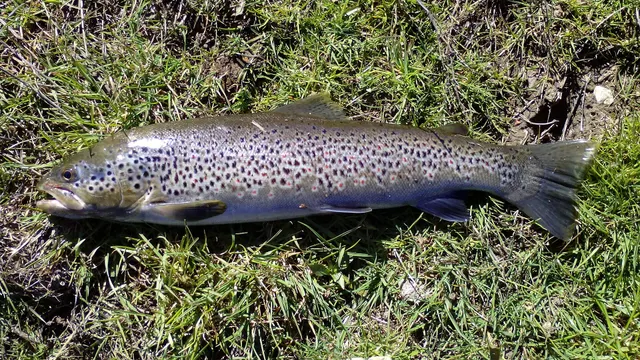 Brown troutA single, extraordinarily plastic species that appears as a tiny hill-stream fish, a deep-bodied loch trout and a silver sea-run migrant — all the same animal.
Robermix, CC0, via Wikimedia Commons
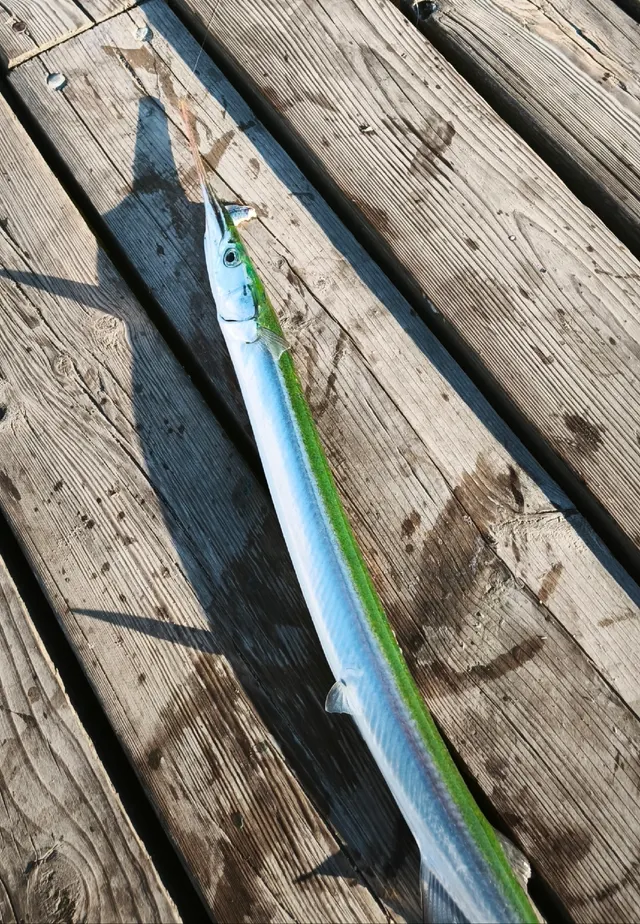 GarfishA slender surface-hunting fish with a long beaked jaw and green bones — a harmless pigment that alarms people unnecessarily.
Dmitry Petrov — CC BY, via iNaturalist
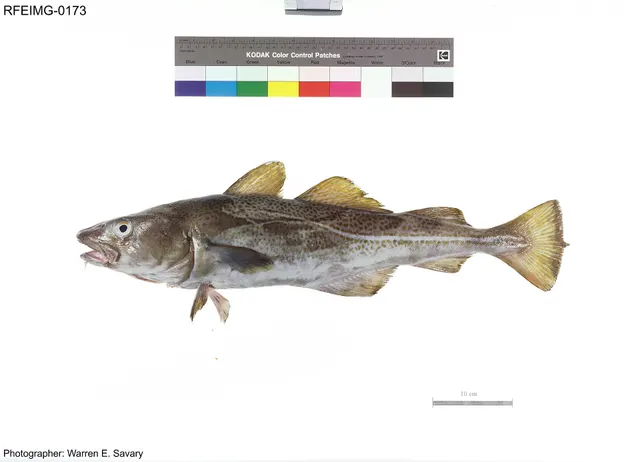 Atlantic codA large, heavily-built demersal predator of the North Atlantic, and the species whose commercial history is the standard example of stock collapse.
The U.S. Food and Drug Administration, Public domain, via Wikimedia Commons
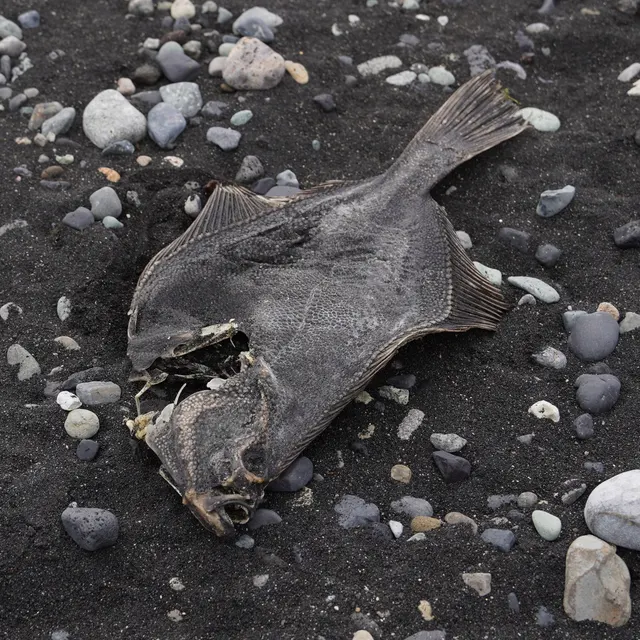 European flounderThe flatfish that runs up rivers — a tolerant, estuarine right-eyed flounder with bony tubercles along its fin bases and a habit of turning up in fresh water.
nbasargin — CC BY, via iNaturalist
Places within this area
Publicly documented fishing geography. FishingHQ describes what the ground is; it does not say whether you may fish it, and every one of these sends that question to the body that holds the answer. Browse every place in this part of the world.
Who to ask before fishing any of these
FishingHQ does not know the current access position here. Denmark runs a single national fishing licence covering both sea and fresh water for those it applies to, and it is not a permission to fish anywhere: protected zones around river mouths, closed seasons for sea trout in colour, size and quantity measures, and local restrictions all apply and change. Check the current position with the Danish fisheries agency before going.
FishingHQ does not know the current access position here. Denmark runs a single national fishing licence covering both sea and fresh water for those it applies to, and it is not a permission to fish anywhere: protected zones around river mouths, closed seasons for sea trout in colour, size and quantity measures, and local restrictions all apply and change. Check the current position with the Danish fisheries agency before going. This water is tidal and transitional, so the freshwater regime may also apply above the tidal limit: FishingHQ does not know the current access position here. The national licence is only half of what an inland angler needs — almost every river and lake also requires a separate day ticket or association membership from whoever holds the fishing right. Seasons and measures change. Check with the Danish fisheries agency and with the association or owner controlling the water before going.
FishingHQ does not know the current access position here. The national licence is only half of what an inland angler needs — almost every river and lake also requires a separate day ticket or association membership from whoever holds the fishing right. Seasons and measures change. Check with the Danish fisheries agency and with the association or owner controlling the water before going.
Møns Klint and the Stevns cliffs
Rock mark · Salt water
White chalk cliffs on the Baltic coast of Zealand and Møn, falling to a boulder and flint shore with weed-covered stone reef running out into shallow water, and blocks of fallen chalk in the shallows.
Faces east into the Baltic, so it takes wind-driven sea rather than swell, and is sheltered from the prevailing westerlies by the land behind.
Particular to this ground: cold water shock, slips, trips and falls.
Severe hazards of Denmark apply here: tides and being cut off.
The south Funen coast
Beach section · Brackish water
A low shore of stone reef, boulder, eelgrass and sand along the southern side of Funen and its archipelago, shallow for a long way out and waded rather than cast from a bank.
Sheltered by the surrounding islands from most directions, which is why it is fishable through the winter when the open coast is not.
Particular to this ground: cold water shock.
Severe hazards of Denmark apply here: tides and being cut off.
Skagen and Grenen
Sandbank · Salt water
A migrating sand spit at the northern tip of Jutland where the Skagerrak and Kattegat meet, with a shoal running out beyond the visible point, strong opposing currents over it and clean sand throughout.
Fully exposed on both sides and to two different seas at once, with the meeting of their currents visible as a line on the water off the point.
Particular to this ground: cold water shock, moving water and currents.
Severe hazards of Denmark apply here: tides and being cut off.
Hvide Sande channel
Tidal channel · Brackish water
A cut through the North Sea dune barrier of west Jutland, carrying the controlled exchange between a large shallow brackish lagoon and the open sea through a sluice and a lock, with concrete piers, moles and a harbour on the fjord side.
The seaward piers take the open North Sea and are closed in heavy weather; the fjord side is sheltered whatever the sea is doing.
Particular to this ground: cold water shock.
Severe hazards of Denmark apply here: tides and being cut off.
Particular to this water: This is working water-management or navigation infrastructure, operated to a schedule set by its authority rather than by anything happening in the fishing, and access to it is that authority's decision. This is an owned and operated structure. Whether angling is allowed on it, when, from where and on what terms is the operator's decision, is frequently seasonal, and changes without notice.
The Skjern river
River reach · Fresh water
Denmark's largest river by discharge, running west across Jutland to Ringkøbing Fjord, with sand and gravel bed, and a lower course that was straightened for agriculture in the twentieth century and then deliberately restored to a meandering channel and floodplain.
Lowland and sheltered, with the weather reaching it rather than shaping it.
Severe hazards of Denmark apply here: cold water shock.
Safety
Contamination and toxins in the catch is set out at the top of this page, where it cannot be missed.
Cold water shock — Can cause serious injury or death
The coastal sea-trout fishery is waded in winter, at first and last light, frequently alone, over slippery boulder and weed. An unplanned immersion removes breathing control and swimming ability within the first minute, and a metre of water is enough for that to be fatal.
What reduces it: Wear a wading belt tight, carry a means of calling for help on the person rather than in a bag on the shore, tell somebody where you are and when you will be back, wade shallower than the fishing seems to demand, and fish with somebody else where you can.
Worse when:
- Alone at first or last light in winter, which is when the fishing is best and when nobody is watching.
Tides and being cut off — Can cause serious injury or death
On the Danish Wadden flats the ground is level enough that a small rise in tide is a large horizontal advance, and the creeks fill first so water appears between a person and the shore while the ground under them is dry.
What reduces it: Do not go out onto the flats unaccompanied, set a leaving time from the tide rather than from the fishing, and treat water appearing behind you as the signal to leave immediately.
Moving water and currents — Can cause injury needing treatment
The belts and sounds between the Danish islands run real current, and the exposed west coast carries surf with rip systems returning water seaward through the gaps in the bars.
What reduces it: Read the beach before wading it and identify where water is returning, do not carry sheltered-coast habits onto the exposed one, and treat current between islands as a planning input for any small craft.
Further safety reading
- Cold water shock and immersion — The coastal fishery is waded in winter, at first and last light, frequently alone, over slippery boulder and weed. It looks entirely safe and contains every condition cold water shock requires.
- Wading safely — A fishery defined by standing in the sea makes wading judgement the central safety skill rather than an adjacent one.
Check the rules before you fish
Fishing laws, bylaws, access rules, seasons, bait restrictions and permitted methods vary by location and can change. Check the current rules from the relevant authority and the water you intend to fish before fishing.
Check with:
- Current national or regional law for where you are fishing
- Current local bylaws
- The relevant fisheries authority
- The landowner, club or fishery whose water it is
- Any restrictions specific to the species or the method you intend to use
Where to go next
What swims here
- Atlantic codTaken from shore and boat through the colder half of the year on both the Baltic and North Sea sides, under measures that have been revised repeatedly as the stocks changed.
- Brown troutIn its sea-run form this is what Denmark is known for: fish feeding along a shallow brackish coast through the colder months, fished from the shore by wading.
- European flounderA staple of the Danish coast and of the exposed North Sea beaches, and one of the species that makes the west coast worth fishing when the sea-trout coast is unfishable.
- GarfishArrives in numbers in spring and produces one of the few fisheries in Europe that functions as a public social event, fished by people who are not otherwise sea anglers.
Local knowledge
How this compares
Rules and access
- Close seasonsThe Danish framework distinguishes a silver fish feeding at sea from a coloured fish in spawning condition, which asks the angler to assess the animal in front of them rather than to consult a calendar — a more demanding standard than a date-based season and a better one for the fish.
- Licences and permissionOne national licence covers sea and fresh water together, which is the inverse of the British arrangement, and almost every inland water still needs its own day ticket from whoever holds the fishing right.
Sources and evidence
- ICES Advice on fishing opportunities, catch and effort — International Council for the Exploration of the Sea (Scientific institute)Relied on for: Ecoregion description, stock distribution and status, nursery function and the hydrography of the European sea areas assessed, including the Baltic, the North Sea, the Celtic Seas and the Iberian and Biscay shelf.States this directlyCitation checked — the work exists and is described correctly
- FAO Species Identification Guides for Fishery Purposes and the FAO Species Catalogues — Food and Agriculture Organization of the United Nations (Scientific institute)Relied on for: Identification, distribution and habitat association of the fishes and invertebrates of the Mediterranean, the Black Sea and the eastern central Atlantic.States this directlyCitation checked — the work exists and is described correctly
- Freshwater Fishes of the British Isles — HarperCollins (New Naturalist 75), 1992 (Reference work)Relied on for: Distribution, ecology, life history and conservation status of European freshwater fishes, including the migratory salmonids and the cyprinid and percid communities named.States this directlyCitation checked — the work exists and is described correctly
- FishBase: a global information system on fishes — Froese, R. and D. Pauly, eds. — FishBase Consortium (Scientific institute)Relied on for: Recorded distribution, habitat association and life history of the freshwater and migratory species named.States this directlyPassage read and verified
- FishBase: a global information system on fishes — Froese, R. and D. Pauly, eds. — FishBase Consortium (Scientific institute)Relied on for: Recorded distribution, depth range, habitat association, size and biology of the species named.States this directlyPassage read and verified
- The IUCN Red List of Threatened Species — International Union for Conservation of Nature (Conservation authority)Relied on for: Current global and regional conservation assessment for the species named, with the assessment date.Background and mechanism onlyCitation checked — the work exists and is described correctly
- Sea Angler — Bauer Media (Specialist angling publication)Relied on for: Long-running published description of European sea angling practice by region and by ground type, including the destinations British anglers travel to.FishingHQ's interpretation of what it saysCitation checked — the work exists and is described correctly
- General angling website restatements of established technique — Various (Credible secondary source)Relied on for: Widely restated descriptions of which practices are conventionally used in the waters named, recorded as practitioner consensus rather than as scholarship.Background and mechanism onlyCitation checked — the work exists and is described correctly
Why the 12 connections on this page are here, and the sources
What swims here
Backed by research — 4 connections
Supported by peer-reviewed research or fisheries science. The sources are listed and can be checked.
Atlantic cod
That a species occurs in these waters, drawn from distribution science and stock assessment. It is a statement about where the animal lives and is not a statement that anybody will catch one, still less where.
- FishBase: a global information system on fishes — Froese, R. and D. Pauly, eds. — FishBase Consortium (Scientific institute)Relied on for: Recorded distribution, depth range and habitat association of the species named, including its occurrence in the waters of the jurisdiction named.States this directlyPassage read and verified
- ICES Advice on fishing opportunities, catch and effort — International Council for the Exploration of the Sea (Scientific institute)Relied on for: Stock distribution and assessment across the European ecoregions, which is the basis for stating that a species occurs in a given national sea area.States this directlyCitation checked — the work exists and is described correctly
Brown trout
That a species occurs in these waters, drawn from distribution science and stock assessment. It is a statement about where the animal lives and is not a statement that anybody will catch one, still less where.
- Freshwater Fishes of the British Isles — HarperCollins (New Naturalist 75), 1992 (Reference work)Relied on for: Distribution, habitat requirement and life history of European freshwater fishes, including their occurrence across the continental range named.States this directlyCitation checked — the work exists and is described correctly
- FishBase: a global information system on fishes — Froese, R. and D. Pauly, eds. — FishBase Consortium (Scientific institute)Relied on for: Recorded distribution and habitat association of the freshwater and migratory species named.States this directlyPassage read and verified
European flounder
That a species occurs in these waters, drawn from distribution science and stock assessment. It is a statement about where the animal lives and is not a statement that anybody will catch one, still less where.
- FishBase: a global information system on fishes — Froese, R. and D. Pauly, eds. — FishBase Consortium (Scientific institute)Relied on for: Recorded distribution, depth range and habitat association of the species named, including its occurrence in the waters of the jurisdiction named.States this directlyPassage read and verified
- ICES Advice on fishing opportunities, catch and effort — International Council for the Exploration of the Sea (Scientific institute)Relied on for: Stock distribution and assessment across the European ecoregions, which is the basis for stating that a species occurs in a given national sea area.States this directlyCitation checked — the work exists and is described correctly
Garfish
That a species occurs in these waters, drawn from distribution science and stock assessment. It is a statement about where the animal lives and is not a statement that anybody will catch one, still less where.
- FishBase: a global information system on fishes — Froese, R. and D. Pauly, eds. — FishBase Consortium (Scientific institute)Relied on for: Recorded distribution, depth range and habitat association of the species named, including its occurrence in the waters of the jurisdiction named.States this directlyPassage read and verified
- ICES Advice on fishing opportunities, catch and effort — International Council for the Exploration of the Sea (Scientific institute)Relied on for: Stock distribution and assessment across the European ecoregions, which is the basis for stating that a species occurs in a given national sea area.States this directlyCitation checked — the work exists and is described correctly
How people fish here
What experienced anglers do — 2 connections
Widely and independently recommended by experienced anglers and specialist sources. This is real angling knowledge, not proof: controlled evidence for it is limited, and FishingHQ records it as convention rather than as a demonstrated effect.
Fly fishing
That a discipline is conventionally practised in these waters, drawn from published description of practice rather than from participation data, and labelled as consensus accordingly.
- Sea Angler — Bauer Media (Specialist angling publication)Relied on for: Long-running published description of European sea angling practice by region and destination, including where British anglers travel and what they fish for there.FishingHQ's interpretation of what it saysCitation checked — the work exists and is described correctly
- General angling website restatements of established technique — Various (Credible secondary source)Relied on for: Widely restated descriptions of which disciplines are conventionally practised in the waters named, recorded as practitioner consensus rather than as scholarship.Background and mechanism onlyCitation checked — the work exists and is described correctly
Sea fishing
That a discipline is conventionally practised in these waters, drawn from published description of practice rather than from participation data, and labelled as consensus accordingly.
- Sea Angler — Bauer Media (Specialist angling publication)Relied on for: Long-running published description of European sea angling practice by region and destination, including where British anglers travel and what they fish for there.FishingHQ's interpretation of what it saysCitation checked — the work exists and is described correctly
- General angling website restatements of established technique — Various (Credible secondary source)Relied on for: Widely restated descriptions of which disciplines are conventionally practised in the waters named, recorded as practitioner consensus rather than as scholarship.Background and mechanism onlyCitation checked — the work exists and is described correctly
Local knowledge
What experienced anglers do — 1 connection
Widely and independently recommended by experienced anglers and specialist sources. This is real angling knowledge, not proof: controlled evidence for it is limited, and FishingHQ records it as convention rather than as a demonstrated effect.
Cold-water fishing: what actually changes
A link from a practice, an environment or a geography to the mechanism it rests on. It asserts that the mechanism is load-bearing here rather than merely relevant, which is the test applied throughout this file.
- Sea Angler — Bauer Media (Specialist angling publication)Relied on for: Long-running published description of how conditions are read in the practice named, by ground type and by region.FishingHQ's interpretation of what it saysCitation checked — the work exists and is described correctly
- General angling website restatements of established technique — Various (Credible secondary source)Relied on for: Widely restated descriptions of how the condition named governs the practice named, recorded as practitioner consensus rather than as scholarship.Background and mechanism onlyCitation checked — the work exists and is described correctly
How this compares
What experienced anglers do — 1 connection
Widely and independently recommended by experienced anglers and specialist sources. This is real angling knowledge, not proof: controlled evidence for it is limited, and FishingHQ records it as convention rather than as a demonstrated effect.
Sweden
A navigational link between two places a reader is genuinely choosing between or reasoning across, offered as orientation rather than as a ranking.
- Sea Angler — Bauer Media (Specialist angling publication)Relied on for: Long-running published description of European sea angling practice by region and destination, including where British anglers travel and what they fish for there.FishingHQ's interpretation of what it saysCitation checked — the work exists and is described correctly
- General angling website restatements of established technique — Various (Credible secondary source)Relied on for: Widely restated descriptions of which disciplines are conventionally practised in the waters named, recorded as practitioner consensus rather than as scholarship.Background and mechanism onlyCitation checked — the work exists and is described correctly
Safety reading
Official guidance — 2 connections
Stated by a fisheries authority, scientific institute or recognised angling body. Authoritative, but summarising rather than demonstrating.
Cold water shock and immersion
A link from the place to the substantial safety topic describing the mechanism that hurts people there, rather than a warning restated in prose on the record itself.
- RNLI water safety guidance: cold water shock and Float to Live — Royal National Lifeboat Institution (Water-safety or diver-training authority)Relied on for: Cold water shock and the immersion response, tidal cut-off, and water-safety guidance for shore anglers and small-craft users.States this directlyPassage read and verified
Wading safely
A link from the place to the substantial safety topic describing the mechanism that hurts people there, rather than a warning restated in prose on the record itself.
- RNLI water safety guidance: cold water shock and Float to Live — Royal National Lifeboat Institution (Water-safety or diver-training authority)Relied on for: Cold water shock and the immersion response, tidal cut-off, and water-safety guidance for shore anglers and small-craft users.States this directlyPassage read and verified
Rules and access
Official guidance — 2 connections
Stated by a fisheries authority, scientific institute or recognised angling body. Authoritative, but summarising rather than demonstrating.
Close seasons
This points to the kind of rule that applies rather than to a rule itself. The same question is administered differently in each of these countries, so the page says that the answer is held elsewhere and changes.
- Code of Conduct for Responsible Fisheries — Food and Agriculture Organization of the United Nations, Rome, 1995 (Standards body)Relied on for: The international framework within which national and regional fisheries authorities set, revise and enforce measures, and the principle that the responsible authority rather than a third party holds the current position.Background and mechanism onlyCitation checked — the work exists and is described correctly
- ICES Advice on fishing opportunities, catch and effort — International Council for the Exploration of the Sea (Scientific institute)Relied on for: That the stock advice European measures are set against is produced internationally and revised annually, which is how a national measure changes without the national law changing.States this directlyCitation checked — the work exists and is described correctly
Licences and permission
This points to the kind of rule that applies rather than to a rule itself. The same question is administered differently in each of these countries, so the page says that the answer is held elsewhere and changes.
- Code of Conduct for Responsible Fisheries — Food and Agriculture Organization of the United Nations, Rome, 1995 (Standards body)Relied on for: The international framework within which national and regional fisheries authorities set, revise and enforce measures, and the principle that the responsible authority rather than a third party holds the current position.Background and mechanism onlyCitation checked — the work exists and is described correctly
- ICES Advice on fishing opportunities, catch and effort — International Council for the Exploration of the Sea (Scientific institute)Relied on for: That the stock advice European measures are set against is produced internationally and revised annually, which is how a national measure changes without the national law changing.States this directlyCitation checked — the work exists and is described correctly
How FishingHQ labels evidence is explained in the evidence policy.