Sweden
Fishing regions · Last reviewed 2026-08-18
A hundred thousand lakes, two seas of very different salinity, and a public right of access with a boundary drawn precisely enough that knowing where it stops is the whole of the regulatory question.
Safety: drowning and immersion — can cause serious injury or death. 2 more points apply here.
Being listed here is not permission to fish. What that meansClose
Access, fishing rights, seasons, licences, local bylaws and permitted methods vary and can change. Check current access, permission, local regulations, closures and restrictions before you travel or fish. FishingHQ describes what the ground is and names who holds the answer; it does not hold the answer itself.
Find the authority for a jurisdiction · What FishingHQ does and does not cover
Sweden is a jurisdiction record because of a right that Britain has no equivalent of and that is routinely misunderstood by the people who benefit from it.
ALLEMANSRÄTTEN IS A RIGHT TO BE THERE, NOT A RIGHT TO FISH. The public right of access permits walking, camping and being on land and water that somebody else owns, subject to responsibilities. It says nothing about taking fish. Those are two separate questions and conflating them is the standard visitor error.
THE FISHING RIGHT IS SEPARATE AND MOSTLY PRIVATE. On the great majority of Swedish inland water the right to fish belongs to the landowner or to a fishery conservation area formed by the owners together, and permission is bought from them. The document is local, cheap and easy to obtain — and it is required.
THE EXCEPTION IS PRECISE AND IT IS THE INTERESTING PART. Free fishing with hand gear applies along the coast and on the five largest lakes — Vänern, Vättern, Mälaren, Hjälmaren and Storsjön — which is an enormous amount of water and a specific, bounded amount. Knowing that the boundary exists, and that it stops at hand gear and at those waters, is the substance of the regulatory answer here.
THE COUNTRY HAS TWO SEAS AND THEY ARE NOT ALIKE. The west coast faces the Skagerrak and Kattegat: fully marine, tidal in a small way, and holding a north-east Atlantic fauna including cod, mackerel, plaice and the Norway lobster fishery. The east coast is Baltic: brackish, becoming nearly fresh towards the north, tideless, and holding a mixed fauna in which pike, perch and zander live in what is nominally the sea alongside herring and sea trout. The Baltic archipelagos — tens of thousands of islands off Stockholm and along the coast — are among the most distinctive fishing environments in Europe.
INLAND IS THE LARGER RESOURCE. Something approaching a hundred thousand lakes, an enormous river network, and a fauna organised by latitude: pike, perch, zander and bream through the south and centre; trout, char, grayling and whitefish in the north; and salmon in the rivers running to both coasts, with the Baltic salmon a distinct and separately managed population.
AND THE NORTH IS ARCTIC. Long ice cover, a very short and intense open-water season, mountain char lakes and grayling rivers, and an ice-fishing culture that is ordinary rather than exotic.
What fishing here is like
A long north–south country with a fully marine western coast, a brackish and nearly tideless eastern one, and an inland resource of approaching a hundred thousand lakes between them. The west coast faces the Skagerrak and Kattegat with rock, skerry and a small tidal range; the east coast is Baltic, its salinity falling northward until it is barely salt, fringed by archipelagos of tens of thousands of islands and skerries. Inland, glacially scoured lakes on ancient rock, stained brown by peat in the forested centre and clear in the mountains, drained by rivers that are heavily used for hydroelectricity in the north. Ice covers the northern and central waters for months.
How people fish here
9 methods are recorded on the places documented here, counted from the records themselves rather than from what is practised in the country. Each opens a full guide to the technique.
Jigging
Recorded at 2 places here, over island, rock mark.
Working a weighted lure with a rising-and-falling motion, usually vertically, so it behaves like a wounded or fleeing baitfish.
Kayak fishing
Recorded at 2 places here, over island, rock mark.
A platform rather than a technique: quiet, shallow-draught access to water no other craft reaches, bought at the price of exposure, and a discipline where the decision not to launch is part of the skill.
Spinning
Recorded at 2 places here, over island, river reach.
Casting an artificial lure and retrieving it so that it moves like something alive — the most direct form of lure fishing.
Drop shotting
Recorded at 1 place here, over island.
A finesse rig with the weight below the hook, letting a small soft plastic be worked in place, off the bottom, without moving anywhere.
Dry fly fishing
Recorded at 1 place here, over river reach.
Presenting a floating artificial to a fish feeding at the surface, so that it drifts exactly as a natural insect would.
Feathering and multi-lure traces
Recorded at 1 place here, over rock mark.
A string of small lures on droppers, worked in the water column — how most people in Britain and Ireland catch their first sea fish, and the method most likely to catch far more than anybody intended.
Float fishing
Recorded at 1 place here, over rock mark.
Suspending a bait at a controlled depth beneath a buoyant indicator — the most visual, most controllable and most widely applicable method in angling.
Nymphing
Recorded at 1 place here, over river reach.
Fishing sunk imitations of immature insects at the fish's depth — the most productive fly method, and the one where take detection is everything.
Trolling
Recorded at 1 place here, over island.
Towing lures or baits behind a moving boat to cover large volumes of water and locate scattered fish.
These are the methods documented at the places FishingHQ holds here. A species listed beside a method is documented on the same ground, which is not the same as being taken that way — where a source establishes the method a fish was caught on, it is stated on that place’s own page. All fishing methods.
What dominates
Predator angling for pike, perch and zander, which is the country's dominant freshwater fishing and is practised in the Baltic archipelagos as well as in fresh water. Trolling and lure fishing on the great lakes, including a distinctive deep-trolling fishery for salmon and trout on Vänern and Vättern. Fly fishing for trout, grayling and char in the northern rivers and mountain lakes. Coastal sea trout fishing on both coasts. Sea angling for cod, mackerel and flatfish on the west coast. Ice fishing across the frozen north and centre, ordinary rather than specialist. Salmon fishing in the rivers of both coasts, closely managed.
The water available
Skagerrak and Kattegat rock and skerry coast with a small tidal range; the brackish Baltic coast with salinity falling northward; the Stockholm and Bothnian archipelagos of tens of thousands of islands; approaching a hundred thousand lakes, peat-stained in the forested belt and clear in the mountains; large hydroelectric-regulated northern rivers; mountain char and grayling water above the treeline; and months of ice cover across the northern and central waters.
How the rules are structured
Two separate questions have to be kept apart in Sweden, and conflating them is the standard visitor error. The public right of access governs being on land and water and carries responsibilities; it is not a permission to take fish. The fishing right is a separate matter and on the great majority of inland water it belongs to the landowner or to a fishery conservation area formed by owners together, from whom a permit is bought. Against that background there is a bounded free-fishing arrangement with hand gear along the coast and on the five largest lakes, which is an enormous quantity of water and a specific quantity — it does not extend to other waters or to other gear. Above all of it sit national measures from the marine and water management agency and county-level protections, closures and salmonid rules, several of which are set tightly because particular coastal and river stocks are under pressure. Ice cover adds its own local rules in places. FishingHQ does not state what any current rule is: establish whether this water is inside the free-fishing arrangement, and if it is not, find the fishery conservation area or owner.
Who to ask
- The Swedish Agency for Marine and Water Management, for national fisheries measures, coastal closures and the scope of the free-fishing arrangement.
- The fishery conservation area or the landowner holding the fishing right on the water, which sells the permit for it.
- The county administrative board, for local protections, seasons and salmonid measures.
- The municipality, for access to shore structures and for local rules on them.
Words you will meet
- Allemansrätten
- The public right of access — the right to walk, camp and be on land and water somebody else owns, with responsibilities attached. It is a right to be present. It is not a right to take fish, and treating it as one is the standard misunderstanding among visitors.
- Fiskekort
- The fishing permit for a specific water, sold by the fishery conservation area or the owner that holds the fishing right there. Cheap, local and usually easy to buy, and required on the great majority of inland water.
- Fiskevårdsområde
- A fishery conservation area — the association of owners who together manage the fishing on a water and issue its permits. It is the body a reader is looking for when asking who controls a Swedish lake.
- Skärgård
- An archipelago. The Swedish Baltic coast carries several, of tens of thousands of islands and skerries, and they are among the most distinctive fishing environments in Europe: brackish, sheltered, shallow and holding freshwater predators in what is nominally the sea.
- Pimpel
- Ice fishing with a short rod and a small jigging lure through a drilled hole. An ordinary winter pastime across the frozen north and centre rather than a specialist pursuit.
Conditions and hazards
Cold and ice dominate, and both are more dangerous in the shoulder seasons than in the depths of winter. Ice thickness varies enormously across a single water — thinner over current, over springs, near inflows and outflows, near reed beds and around any structure that conducts heat — and it is at its most treacherous in early winter and in spring, when it looks the same and is not. Anybody on ice should carry ice picks on the person, a throw line, and go with somebody else. In open water, cold water shock decides immersions within the first minute for most of the year, and the archipelagos add distance: a small boat that fails a long way out among islands is a long way from anybody. The northern rivers are hydroelectrically regulated, so a level can rise quickly with no weather to explain it, which is a specific hazard for wading. The far north adds Arctic conditions, very long distances between people, patchy communications, and a summer insect burden that is genuinely debilitating rather than merely annoying.
A right to be there is not a right to fish, and where the exception stops
Allemansrätten is the most admired thing about Swedish outdoor law and the most frequently misapplied, and the correction is simple enough to state in a sentence: it governs presence, not capture.
WHAT THE PUBLIC RIGHT DOES. It permits walking, passing through, camping briefly and being on land and water that belongs to somebody else, subject to responsibilities about disturbance, damage, distance from dwellings and leaving no trace. It is a genuine right rather than a tolerance, and it is why the Swedish outdoors feels open in a way most of Europe does not.
WHAT IT DOES NOT DO. It says nothing about taking fish. Fishing rights are property, they belong to the landowner or to the association of owners, and they are exercised by permit. A person exercising the right of access to walk to a lake shore has not thereby acquired any right to fish it.
THE FREE-FISHING EXCEPTION IS REAL, LARGE AND BOUNDED. Hand-gear fishing is free along the coast and on the five largest lakes. That is a very great deal of water — an entire coastline plus the five biggest lakes in the country — and it is a defined set rather than a general principle. It does not extend to the sixth-largest lake, and it does not extend beyond hand gear.
SO THE PRACTICAL QUESTION IS ALWAYS THE SAME ONE. Is this water inside the free-fishing arrangement? If yes, national and county measures still apply — closed areas, protected species, salmonid rules, size limits. If no, find the fishery conservation area or the owner and buy the permit, which is usually inexpensive and easy.
THE COUNTY BOARDS DO MORE THAN VISITORS EXPECT. Local protections, spawning closures, salmonid measures and area restrictions are set at county level and differ along the coast, and several coastal and river stocks are managed tightly enough that the measures on them change with the advice.
AND THE SALMON ARE A CASE OF THEIR OWN. Baltic salmon are a distinct population complex, managed internationally and separately from the Atlantic stock, and the rivers they run are among the most closely regulated water in the country.
WHAT A READER SHOULD DO. Establish whether the water is in the free-fishing set. Then ask the county board what applies, and the fishery conservation area if one holds the right. FishingHQ holds neither answer and both change.
Official guidance — why, and the sources (2)
Stated by a fisheries authority, scientific institute or recognised angling body. Authoritative, but summarising rather than demonstrating.
- Code of Conduct for Responsible Fisheries — Food and Agriculture Organization of the United Nations, Rome, 1995 (Standards body)Relied on for: The international framework within which national and regional fisheries authorities set, revise and enforce measures, and the principle that responsible fishing includes the safety of fishers.Background and mechanism onlyCitation checked — the work exists and is described correctly
- ICES Advice on fishing opportunities, catch and effort — International Council for the Exploration of the Sea (Scientific institute)Relied on for: That the stock advice European fisheries measures are set against is produced internationally and revised annually, which is the mechanism by which a national measure changes without the national law changing.States this directlyCitation checked — the work exists and is described correctly
Pike in the sea, char above the treeline, and a hundred thousand lakes between
Sweden is long enough that its fishing changes with latitude the way most countries' changes with altitude, and it has one property that produces something genuinely unusual.
THE BALTIC IS BARELY SALT AND THAT CHANGES EVERYTHING. Salinity falls from something approaching ocean strength at the Danish straits to nearly fresh at the head of the Gulf of Bothnia, and the fish community follows it. In the Swedish archipelagos pike, perch and zander live and spawn in what is nominally the sea, alongside herring, sea trout and flounder. Large pike caught in salt water is not something most of Europe can offer, and it exists here because of a salinity gradient no other European sea has.
THE ARCHIPELAGOS ARE THE ENVIRONMENT THAT DEFINES THE COUNTRY'S FISHING. Tens of thousands of islands and skerries, shallow sheltered bays warming quickly in spring, weed beds, reefs and channels, and enough shelter that small-boat fishing is practicable in weather that would stop it on an open coast. It is predator water of a quality that draws anglers from across Europe.
THE WEST COAST IS A DIFFERENT SEA ENTIRELY. Skagerrak and Kattegat water is fully marine, holds a north-east Atlantic fauna — cod, mackerel, plaice, whiting — and has a real if small tidal range. An angler crossing the country changes ocean.
INLAND, LATITUDE ORGANISES THE FAUNA. The southern and central lakes hold pike, perch, zander, bream, tench and roach, in water stained brown by peat from the forests and bogs around it. Northward the community shifts to trout, char, grayling and whitefish in colder, clearer water, and above the treeline to char lakes that freeze for much of the year and open into a very short and very intense season.
THE GREAT LAKES ARE INLAND SEAS. Vänern and Vättern are large enough to have their own weather and their own landlocked salmon and trout, fished by deep trolling in a way that is more like sea fishing than lake fishing.
AND THE NORTHERN RIVERS ARE WORKING INFRASTRUCTURE. Hydroelectric regulation has changed flow regimes and blocked migrations on a great many of them, which is the context for the salmon and trout measures, for fish passes, and for a stocking history that is substantial and contested. A river that looks wild in the north is frequently a managed one.
Backed by research — why, and the sources (5)
Supported by peer-reviewed research or fisheries science. The sources are listed and can be checked.
- ICES Advice on fishing opportunities, catch and effort — International Council for the Exploration of the Sea (Scientific institute)Relied on for: Ecoregion description, stock distribution and status, nursery function and the hydrography of the European sea areas assessed, including the Baltic, the North Sea, the Celtic Seas and the Iberian and Biscay shelf.States this directlyCitation checked — the work exists and is described correctly
- FAO Species Identification Guides for Fishery Purposes and the FAO Species Catalogues — Food and Agriculture Organization of the United Nations (Scientific institute)Relied on for: Identification, distribution and habitat association of the fishes and invertebrates of the Mediterranean, the Black Sea and the eastern central Atlantic.States this directlyCitation checked — the work exists and is described correctly
- Freshwater Fishes of the British Isles — HarperCollins (New Naturalist 75), 1992 (Reference work)Relied on for: Distribution, ecology, life history and conservation status of European freshwater fishes, including the migratory salmonids and the cyprinid and percid communities named.States this directlyCitation checked — the work exists and is described correctly
- FishBase: a global information system on fishes — Froese, R. and D. Pauly, eds. — FishBase Consortium (Scientific institute)Relied on for: Recorded distribution, habitat association and life history of the freshwater and migratory species named.States this directlyPassage read and verified
- NASCO conservation and management of North Atlantic salmon — North Atlantic Salmon Conservation Organization (Government fisheries body)Relied on for: The status, conservation and restoration of North Atlantic salmon stocks and the international framework within which national bodies manage them.States this directlyCitation checked — the work exists and is described correctly
Ice that is thinnest where it looks the same, and distance as a hazard
Swedish fishing is safe in the ways people expect and dangerous in two they generally do not.
ICE IS THE FIRST AND IT KILLS PEOPLE EVERY YEAR. The critical fact is that ice thickness is not uniform and the variation is invisible: ice is thinner over current, over springs, near inflows and outflows, along reed edges, around jetties, rocks and anything else that conducts heat, and after any period of thaw. A surface that carried somebody yesterday, fifty metres away, tells them nothing about the surface under them now.
THE SHOULDER SEASONS ARE THE DANGEROUS ONES. Early winter ice and spring ice look identical to mid-winter ice and behave completely differently — spring ice in particular can lose strength while retaining thickness, so a measurement is not the reassurance it appears to be. Most incidents happen at the ends of the season rather than in its middle.
WHAT REDUCES IT is specific and universally practised locally: ice picks worn on the person and reachable with either hand, a throw line, going with somebody else, testing as you go rather than at the start, and treating local knowledge of a particular water as the primary source. A person who goes through alone with picks in a bag has picks they cannot reach.
COLD WATER IS THE SECOND, and it operates for most of the year rather than only in winter. Cold water shock removes breathing control and swimming ability within the first minute of immersion, which is long before hypothermia becomes the question and is why flotation must be worn rather than carried.
DISTANCE IS THE THIRD AND IT IS THE ONE VISITORS UNDERESTIMATE. In the archipelagos and across the north, a small boat that fails or a person who is hurt can be a very long way from anybody, with patchy communications and long response times. That converts a minor problem into a serious one purely through geography, and the mitigation is planning: a float plan left with somebody, a means of calling for help carried on the person, and a margin in fuel, food and daylight rather than an exact sufficiency.
THE NORTHERN RIVERS RISE WITHOUT WEATHER. Hydroelectric regulation means a level can change quickly and for reasons that have nothing to do with rain, which is a specific hazard for anybody wading a regulated river.
AND THE SUMMER INSECT BURDEN IN THE NORTH IS A GENUINE PLANNING FACTOR rather than a discomfort — severe enough in the peak weeks to end a trip that has not prepared for it.
Official guidance — why, and the sources (3)
Stated by a fisheries authority, scientific institute or recognised angling body. Authoritative, but summarising rather than demonstrating.
- RNLI water safety guidance: cold water shock and Float to Live — Royal National Lifeboat Institution (Water-safety or diver-training authority)Relied on for: Cold water shock and the immersion response, tidal cut-off, and water-safety guidance for shore anglers and small-craft users.States this directlyPassage read and verified
- Met Office shipping forecast, inshore waters forecast and marine warnings — Met Office, United Kingdom (Government fisheries body)Relied on for: That inshore waters forecasts, sea state and swell are the operative inputs for shore and small-craft decisions in north-west European waters.States this directlyCitation checked — the work exists and is described correctly
- Shellfish classification — Food Standards Agency, 2026 (Government fisheries body)Relied on for: That shellfish harvesting areas are classified for food safety, that the classification governs what may be taken and how it must be treated, and that it is set and revised by the authority on monitoring results rather than fixed.States this directlyCitation checked — the work exists and is described correctly
Some of what lives here
Fish recorded here that FishingHQ holds a reviewed photograph of. It is not a complete list of what Sweden holds, and it is not a prediction that you will catch any of them — it is a way in to the ones we can show you.
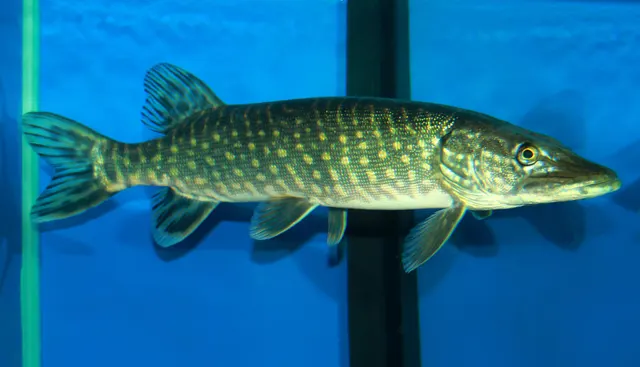 Northern pikeThe dominant freshwater ambush predator of the northern hemisphere: long, cryptic, and built for one violent acceleration rather than pursuit.
Karelj, Public domain, via Wikimedia Commons
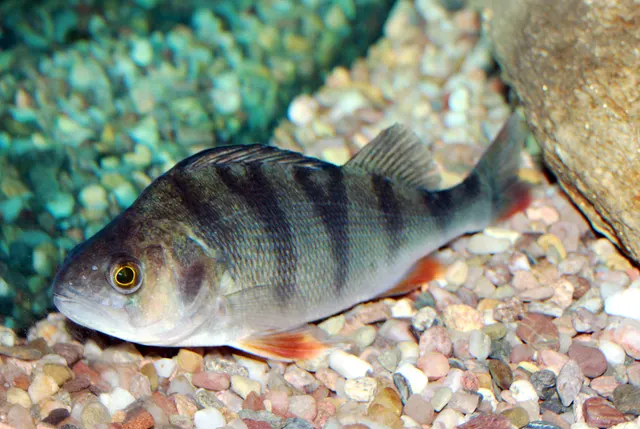 European perchA small, shoaling, spiny-finned predator that is both the most accessible predator to catch and the one most anglers first learn on.
Karelj, Public domain, via Wikimedia Commons
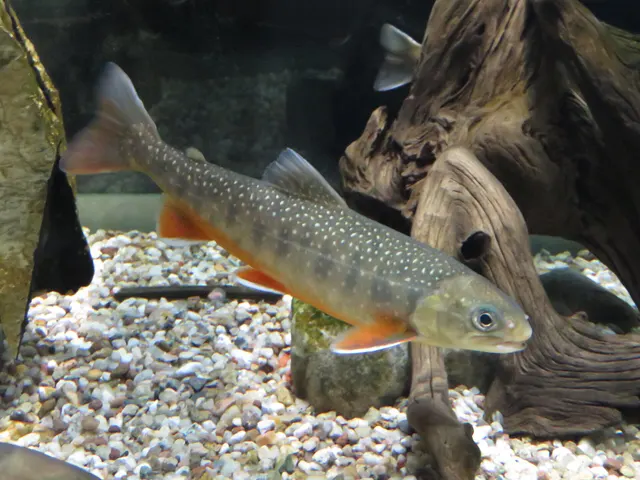 Arctic charThe most northerly freshwater fish in the world, a cold-demanding char with brilliant orange-red spawning bellies and highly distinct landlocked populations.
Xepheid — CC BY-SA 4.0, via Wikimedia Commons
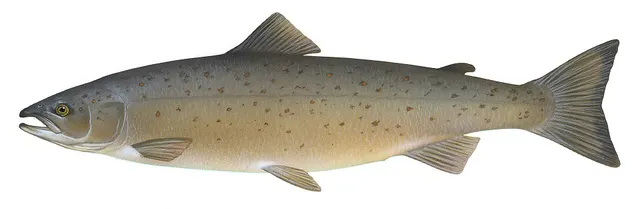 Atlantic salmonAn anadromous salmonid that migrates from its natal river to the North Atlantic and returns to spawn — and a species in serious, well-documented decline.
Knepp, Timothy, Public domain, via Wikimedia Commons
Places within this area
Publicly documented fishing geography. FishingHQ describes what the ground is; it does not say whether you may fish it, and every one of these sends that question to the body that holds the answer. Browse every place in this part of the world.
Who to ask before fishing any of these
FishingHQ does not know the current access position here. Sweden separates the right to BE somewhere from the right to take fish, and the arrangements governing each are different, bounded by water, method and species, and subject to change — so neither settles what may be done at this place today. Check the current position with the Swedish agency for marine and water management, and with the local fishery conservation area, before going. This water is tidal and transitional, so the freshwater regime may also apply above the tidal limit: FishingHQ does not know the current access position here. On the great majority of Swedish inland water the fishing right belongs to a landowner or to a fishery conservation area formed by the owners together, and the document is bought from them. Which waters are treated differently, and the seasons, methods and species measures that apply, all change. Check with the fishery conservation area or the rights-holder before going.
FishingHQ does not know the current access position here. Sweden separates the right to BE somewhere from the right to take fish, and the arrangements governing each are different, bounded by water, method and species, and subject to change — so neither settles what may be done at this place today. Check the current position with the Swedish agency for marine and water management, and with the local fishery conservation area, before going.
FishingHQ does not know the current access position here. On the great majority of Swedish inland water the fishing right belongs to a landowner or to a fishery conservation area formed by the owners together, and the document is bought from them. Which waters are treated differently, and the seasons, methods and species measures that apply, all change. Check with the fishery conservation area or the rights-holder before going.
The Stockholm archipelago
Island · Brackish water
Tens of thousands of granite islands, islets and skerries scattered across a hundred kilometres of coast east of Stockholm, with shallow sheltered bays, weed beds, boulder reefs and deeper channels between, in water brackish enough for freshwater fish to live in.
Almost infinitely variable: the inner archipelago is sheltered whatever the weather, the outer skerries take the open Baltic, and the transition happens over a few kilometres.
Particular to this ground: cold water shock, drowning and immersion.
The Bohuslän coast
Rock mark · Salt water
A coast of bare rounded granite, skerries and narrow sounds running north from Gothenburg to the Norwegian border, with deep water close in, kelp and boulder below the surface and almost no sand anywhere.
Faces the Skagerrak, which is fully marine and considerably rougher than the Baltic side of the country.
Particular to this ground: cliffs and rock platforms, cold water shock.
Severe hazards of Sweden apply here: drowning and immersion.
Particular to this water: Shellfish harvesting areas are classified for food safety and are opened and closed on monitoring results a gatherer cannot see. Neither cooking nor appearance removes a biotoxin. Check the current classification with the responsible authority before taking anything.
The Kalix river
River reach · Fresh water
One of the last large unregulated rivers in Europe, running some 450 kilometres from the mountains to the Gulf of Bothnia without a single hydroelectric dam, over gravel, boulder and rapids, with a very large spring flood from snowmelt.
Sub-Arctic, ice-covered for months, and open for a short and intense summer season.
Particular to this ground: cold water shock.
Severe hazards of Sweden apply here: drowning and immersion.
Safety
Drowning and immersion — Can cause serious injury or death
Ice thickness varies invisibly across a single water — thinner over current, springs, inflows, reed edges and structures — and spring ice can lose strength while keeping its thickness, so a measurement stops meaning what it did. Somebody who goes through alone is in cold water under a lid.
What reduces it: Carry ice picks worn on the person and reachable with either hand, carry a throw line, never go out alone, test as you go rather than only at the edge, and treat local knowledge of that particular water as the primary source rather than a general rule about thickness.
Worse when:
- In early winter and in spring, when the ice looks the same as mid-winter ice and does not behave like it.
- After any period of thaw, however brief.
Cold water shock — Can cause serious injury or death
Swedish coastal and inland water is cold enough for most of the year that the involuntary gasp and loss of swimming ability decide an immersion within the first minute, long before hypothermia is relevant.
What reduces it: Wear a buoyancy aid rather than carry one, carry a means of calling for help on the person, and plan on the assumption that an unplanned entry is survivable only if somebody knows immediately.
Fishing alone — Can cause injury needing treatment
In the archipelagos and across the north, a boat failure or an injury can leave somebody a very long way from help, with patchy communications and long response times, which turns a minor problem into a serious one through geography alone.
What reduces it: Leave a plan with somebody ashore including a return time, carry a means of calling for help on the person, and build a margin into fuel, food and daylight rather than an exact sufficiency.
Further safety reading
- Cold water shock and immersion — Ice thickness varies invisibly across a single water and is at its most treacherous in the shoulder seasons, and open water is cold enough for most of the year that an immersion is decided in the first minute.
- Fishing alone — In the archipelagos and across the north, distance is itself the hazard: a boat failure or an injury a long way from anybody, with patchy communications, turns a minor problem into a serious one.
Check the rules before you fish
Fishing laws, bylaws, access rules, seasons, bait restrictions and permitted methods vary by location and can change. Check the current rules from the relevant authority and the water you intend to fish before fishing.
Check with:
- Current national or regional law for where you are fishing
- Current local bylaws
- The relevant fisheries authority
- The landowner, club or fishery whose water it is
- Any restrictions specific to the species or the method you intend to use
Where to go next
What swims here
- Arctic charIn the mountain lakes and northern rivers above the treeline, where the season is very short and very intense.
- Atlantic salmonIn rivers running to both coasts, with the Baltic population a distinct complex managed separately from the Atlantic stock.
- European perchUbiquitous across the lakes and the brackish coast, and the fish most Swedish anglers start on.
- Northern pikeSweden's defining catch, and unusually it lives and spawns in the brackish Baltic archipelagos as well as in fresh water — large pike caught in salt water is something very little of Europe can offer.
Local knowledge
How this compares
Rules and access
Sources and evidence
- Freshwater Fishes of the British Isles — HarperCollins (New Naturalist 75), 1992 (Reference work)Relied on for: Distribution, ecology, life history and conservation status of European freshwater fishes, including the migratory salmonids and the cyprinid and percid communities named.States this directlyCitation checked — the work exists and is described correctly
- FishBase: a global information system on fishes — Froese, R. and D. Pauly, eds. — FishBase Consortium (Scientific institute)Relied on for: Recorded distribution, habitat association and life history of the freshwater and migratory species named.States this directlyPassage read and verified
- ICES Advice on fishing opportunities, catch and effort — International Council for the Exploration of the Sea (Scientific institute)Relied on for: Ecoregion description, stock distribution and status, nursery function and the hydrography of the European sea areas assessed, including the Baltic, the North Sea, the Celtic Seas and the Iberian and Biscay shelf.States this directlyCitation checked — the work exists and is described correctly
- FAO Species Identification Guides for Fishery Purposes and the FAO Species Catalogues — Food and Agriculture Organization of the United Nations (Scientific institute)Relied on for: Identification, distribution and habitat association of the fishes and invertebrates of the Mediterranean, the Black Sea and the eastern central Atlantic.States this directlyCitation checked — the work exists and is described correctly
- FishBase: a global information system on fishes — Froese, R. and D. Pauly, eds. — FishBase Consortium (Scientific institute)Relied on for: Recorded distribution, depth range, habitat association, size and biology of the species named.States this directlyPassage read and verified
- The IUCN Red List of Threatened Species — International Union for Conservation of Nature (Conservation authority)Relied on for: Current global and regional conservation assessment for the species named, with the assessment date.Background and mechanism onlyCitation checked — the work exists and is described correctly
- Fishers' Craft and Lettered Art: Tracts on Fishing from the End of the Middle Ages — University of Toronto Press, 1997 (Scientific literature)Relied on for: That European fishing traditions develop around the water and fish available to them, and the historical method of reading such traditions.Background and mechanism onlyCitation checked — the work exists and is described correctly
- General angling website restatements of established technique — Various (Credible secondary source)Relied on for: Widely restated descriptions of regional angling practice, recorded as practitioner consensus rather than as scholarship.Background and mechanism onlyCitation checked — the work exists and is described correctly
Why the 11 connections on this page are here, and the sources
What swims here
Backed by research — 4 connections
Supported by peer-reviewed research or fisheries science. The sources are listed and can be checked.
Arctic char
That a species occurs in these waters, drawn from distribution science and stock assessment. It is a statement about where the animal lives and is not a statement that anybody will catch one, still less where.
- Freshwater Fishes of the British Isles — HarperCollins (New Naturalist 75), 1992 (Reference work)Relied on for: Distribution, habitat requirement and life history of European freshwater fishes, including their occurrence across the continental range named.States this directlyCitation checked — the work exists and is described correctly
- FishBase: a global information system on fishes — Froese, R. and D. Pauly, eds. — FishBase Consortium (Scientific institute)Relied on for: Recorded distribution and habitat association of the freshwater and migratory species named.States this directlyPassage read and verified
Atlantic salmon
That a species occurs in these waters, drawn from distribution science and stock assessment. It is a statement about where the animal lives and is not a statement that anybody will catch one, still less where.
- Freshwater Fishes of the British Isles — HarperCollins (New Naturalist 75), 1992 (Reference work)Relied on for: Distribution, habitat requirement and life history of European freshwater fishes, including their occurrence across the continental range named.States this directlyCitation checked — the work exists and is described correctly
- FishBase: a global information system on fishes — Froese, R. and D. Pauly, eds. — FishBase Consortium (Scientific institute)Relied on for: Recorded distribution and habitat association of the freshwater and migratory species named.States this directlyPassage read and verified
European perch
That a species occurs in these waters, drawn from distribution science and stock assessment. It is a statement about where the animal lives and is not a statement that anybody will catch one, still less where.
- Freshwater Fishes of the British Isles — HarperCollins (New Naturalist 75), 1992 (Reference work)Relied on for: Distribution, habitat requirement and life history of European freshwater fishes, including their occurrence across the continental range named.States this directlyCitation checked — the work exists and is described correctly
- FishBase: a global information system on fishes — Froese, R. and D. Pauly, eds. — FishBase Consortium (Scientific institute)Relied on for: Recorded distribution and habitat association of the freshwater and migratory species named.States this directlyPassage read and verified
Northern pike
That a species occurs in these waters, drawn from distribution science and stock assessment. It is a statement about where the animal lives and is not a statement that anybody will catch one, still less where.
- Freshwater Fishes of the British Isles — HarperCollins (New Naturalist 75), 1992 (Reference work)Relied on for: Distribution, habitat requirement and life history of European freshwater fishes, including their occurrence across the continental range named.States this directlyCitation checked — the work exists and is described correctly
- FishBase: a global information system on fishes — Froese, R. and D. Pauly, eds. — FishBase Consortium (Scientific institute)Relied on for: Recorded distribution and habitat association of the freshwater and migratory species named.States this directlyPassage read and verified
How people fish here
What experienced anglers do — 2 connections
Widely and independently recommended by experienced anglers and specialist sources. This is real angling knowledge, not proof: controlled evidence for it is limited, and FishingHQ records it as convention rather than as a demonstrated effect.
Fly fishing
That a discipline is conventionally practised in these waters, drawn from published description of practice rather than from participation data, and labelled as consensus accordingly.
- Sea Angler — Bauer Media (Specialist angling publication)Relied on for: Long-running published description of European sea angling practice by region and destination, including where British anglers travel and what they fish for there.FishingHQ's interpretation of what it saysCitation checked — the work exists and is described correctly
- General angling website restatements of established technique — Various (Credible secondary source)Relied on for: Widely restated descriptions of which disciplines are conventionally practised in the waters named, recorded as practitioner consensus rather than as scholarship.Background and mechanism onlyCitation checked — the work exists and is described correctly
Predator fishing
That a discipline is conventionally practised in these waters, drawn from published description of practice rather than from participation data, and labelled as consensus accordingly.
- Sea Angler — Bauer Media (Specialist angling publication)Relied on for: Long-running published description of European sea angling practice by region and destination, including where British anglers travel and what they fish for there.FishingHQ's interpretation of what it saysCitation checked — the work exists and is described correctly
- General angling website restatements of established technique — Various (Credible secondary source)Relied on for: Widely restated descriptions of which disciplines are conventionally practised in the waters named, recorded as practitioner consensus rather than as scholarship.Background and mechanism onlyCitation checked — the work exists and is described correctly
Local knowledge
What experienced anglers do — 1 connection
Widely and independently recommended by experienced anglers and specialist sources. This is real angling knowledge, not proof: controlled evidence for it is limited, and FishingHQ records it as convention rather than as a demonstrated effect.
The fishing year: what each season changes
A link from a practice, an environment or a geography to the mechanism it rests on. It asserts that the mechanism is load-bearing here rather than merely relevant, which is the test applied throughout this file.
- Angling Times — Bauer Media (Specialist angling publication)Relied on for: Contemporary UK and European coarse, match and predator practice as reported by practitioners, including how conditions are read on the waters named.FishingHQ's interpretation of what it saysCitation checked — the work exists and is described correctly
- General angling website restatements of established technique — Various (Credible secondary source)Relied on for: Widely restated descriptions of how the condition named governs the practice named, recorded as practitioner consensus rather than as scholarship.Background and mechanism onlyCitation checked — the work exists and is described correctly
How this compares
What experienced anglers do — 1 connection
Widely and independently recommended by experienced anglers and specialist sources. This is real angling knowledge, not proof: controlled evidence for it is limited, and FishingHQ records it as convention rather than as a demonstrated effect.
Denmark
A navigational link between two places a reader is genuinely choosing between or reasoning across, offered as orientation rather than as a ranking.
- Sea Angler — Bauer Media (Specialist angling publication)Relied on for: Long-running published description of European sea angling practice by region and destination, including where British anglers travel and what they fish for there.FishingHQ's interpretation of what it saysCitation checked — the work exists and is described correctly
- General angling website restatements of established technique — Various (Credible secondary source)Relied on for: Widely restated descriptions of which disciplines are conventionally practised in the waters named, recorded as practitioner consensus rather than as scholarship.Background and mechanism onlyCitation checked — the work exists and is described correctly
Safety reading
Official guidance — 2 connections
Stated by a fisheries authority, scientific institute or recognised angling body. Authoritative, but summarising rather than demonstrating.
Cold water shock and immersion
A link from the place to the substantial safety topic describing the mechanism that hurts people there, rather than a warning restated in prose on the record itself.
- RNLI water safety guidance: cold water shock and Float to Live — Royal National Lifeboat Institution (Water-safety or diver-training authority)Relied on for: Cold water shock and the immersion response, tidal cut-off, and water-safety guidance for shore anglers and small-craft users.States this directlyPassage read and verified
Fishing alone
A link from the place to the substantial safety topic describing the mechanism that hurts people there, rather than a warning restated in prose on the record itself.
- RNLI water safety guidance: cold water shock and Float to Live — Royal National Lifeboat Institution (Water-safety or diver-training authority)Relied on for: Cold water shock and the immersion response, tidal cut-off, and water-safety guidance for shore anglers and small-craft users.States this directlyPassage read and verified
Rules and access
Official guidance — 1 connection
Stated by a fisheries authority, scientific institute or recognised angling body. Authoritative, but summarising rather than demonstrating.
Licences and permission
This points to the kind of rule that applies rather than to a rule itself. The same question is administered differently in each of these countries, so the page says that the answer is held elsewhere and changes.
- Code of Conduct for Responsible Fisheries — Food and Agriculture Organization of the United Nations, Rome, 1995 (Standards body)Relied on for: The international framework within which national and regional fisheries authorities set, revise and enforce measures, and the principle that the responsible authority rather than a third party holds the current position.Background and mechanism onlyCitation checked — the work exists and is described correctly
- ICES Advice on fishing opportunities, catch and effort — International Council for the Exploration of the Sea (Scientific institute)Relied on for: That the stock advice European measures are set against is produced internationally and revised annually, which is how a national measure changes without the national law changing.States this directlyCitation checked — the work exists and is described correctly
How FishingHQ labels evidence is explained in the evidence policy.