The Mörrum river
River reach · Fresh water · in Sweden
A salmon and sea trout river in Blekinge, in the south of Sweden, let by one operator as five stretches. The main stretch is seven kilometres in thirty-two numbered pools through the village of Mörrum, in oak and beech wood above the visitor centre and farmland below. Upstream are three shorter stretches of rapids, one inside a wildlife reserve, and a stretch at Svängsta that opened in 2022 after a dam was removed.
Safety: moving water and currents — can cause serious injury or death. 2 more points apply here.
FishingHQ describes what this place is, not whether you may fish it. Access, permits and who to ask.
What you can catch here
Documented at this place, grouped by how you would be fishing, with how strongly the sources support each one. This is what has been written down, not a forecast, and being listed is never permission to fish.
From the shore · 5
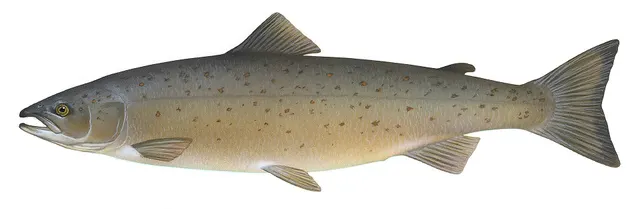 Atlantic salmonRegular local target1 placeThe Mörrum riverOver river reachAround Mar–Sept
Illustration: Knepp, Timothy, via Wikimedia Commons, public domain; resized and trimmed to fit
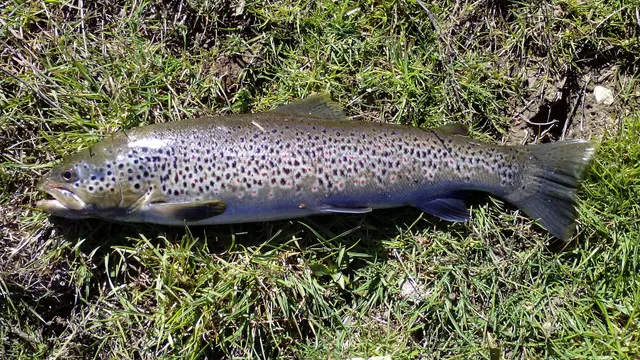 Brown troutRegular local target1 placeThe Mörrum riverOver river reachAround Mar–Sept
Photo: Robermix, via Wikimedia Commons, CC0; resized and trimmed to fit
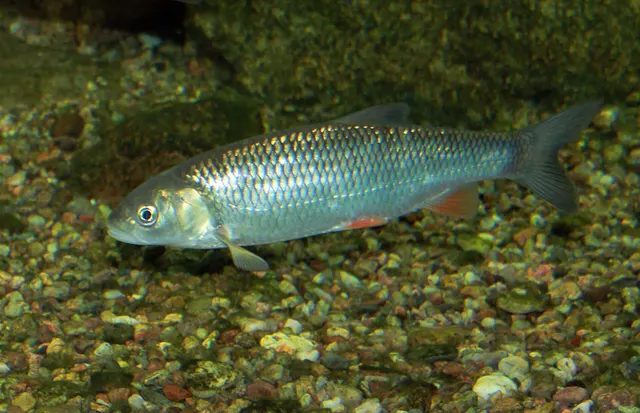 ChubRecorded here1 placeThe Mörrum riverOver river reach
Photo: Karelj, via Wikimedia Commons, public domain; resized and trimmed to fit
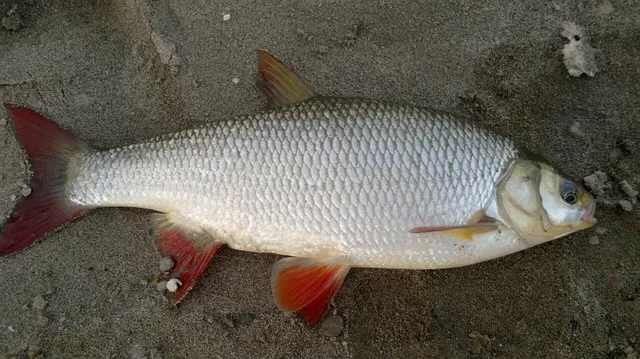 IdeRecorded here1 placeThe Mörrum riverOver river reach
Photo: Kristian Kostov (kriki), via Wikimedia Commons, CC BY-SA 3.0; resized and trimmed to fit
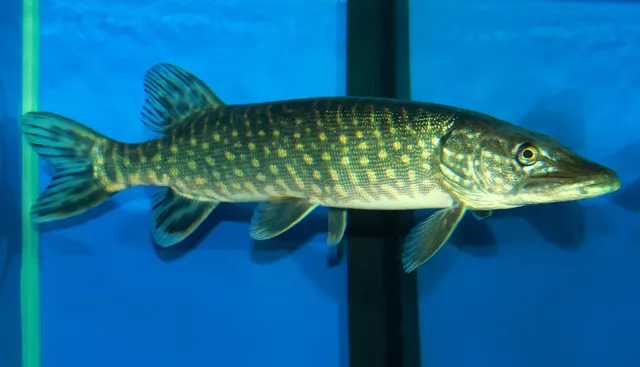 Northern pikeRecorded here1 placeThe Mörrum riverOver river reach
Photo: Karelj, via Wikimedia Commons, public domain; resized and trimmed to fit


Fly fishing · 2
- Atlantic salmonRegular local target1 placeThe Mörrum riverOver river reachAround Mar–Sept
Illustration: Knepp, Timothy, via Wikimedia Commons, public domain; resized and trimmed to fit
- Brown troutRegular local target1 placeThe Mörrum riverOver river reachAround Mar–Sept
Photo: Robermix, via Wikimedia Commons, CC0; resized and trimmed to fit
What these strengths mean
- Regular local target
- Fishing sources describe this as a normal local target here, not merely as caught.
- Recorded here
- At least one credible public account of this species being caught here. That is all it means.
- How breadth is counted
- A fish documented at six marks is shown as six marks: breadth never raises the strength on its own. A fishery account describes the fishing; a recorded catch reports one specific catch. How evidence is weighed.
How people fish it
Practised here: Fly fishing, Lure fishing.
Methods the sources name for this ground. Each one is explained in full on its own page.
- Salmon fly fishing
Swinging a fly across a river on a tight line for a fish that has stopped eating — the method behind almost all Atlantic salmon fishing, and the one where fly speed and depth matter more than what the fly resembles.
- Spinning
Casting an artificial lure and retrieving it so that it moves like something alive — the most direct form of lure fishing.
Baits and lures for these fish
The baits and lures each of the fish above is commonly taken on, from that fish’s own page. This is what works for the fish, not a report of what people use on this particular water — local knowledge and the conditions on the day still decide.
Baits
- Lobworms and worms — for Ide
- Luncheon meat — for Chub
- Sea deadbaits — for Northern pike
Lures
- Spoons — for Atlantic salmon, Northern pike
- Streamers — for Atlantic salmon, Brown trout
- Wet flies — for Atlantic salmon, Brown trout
- Crankbaits — for Northern pike
- Dry flies — for Brown trout
- Jerkbaits — for Northern pike
- Nymphs — for Brown trout
- Soft plastics — for Northern pike
Also: Spinnerbaits and bladed jigs · Spinners · Surface lures · Terrestrial fly patterns
How to catch them: Salmon fishing · Brown trout fishing · Pike fishing
The ground and the water
- The ground
- A salmon and sea trout river in Blekinge, in the south of Sweden, let by one operator as five stretches. The main stretch is seven kilometres in thirty-two numbered pools through the village of Mörrum, in oak and beech wood above the visitor centre and farmland below. Upstream are three shorter stretches of rapids, one inside a wildlife reserve, and a stretch at Svängsta that opened in 2022 after a dam was removed.
- Exposure
- A river in a wooded valley, sheltered from wind. Its level is what changes: the operator says the best places on the main stretch move with the season and the height of the water.
Getting there
What public sources describe, last checked 2026-10-11. Car parks fill, services change and a path existing is not a path anybody may use — none of this is a guarantee of availability and none of it is permission to be anywhere.
- Getting to it
- The main stretch runs through the village of Mörrum, where the operator's visitor centre and reception stand beside the river. The other stretches lie upstream, the furthest about eight kilometres north at Svängsta.
- Public transport
- The operator's map marks a railway station and bus stops in the village of Mörrum, a short walk from the visitor centre.
Parking
Car parks along the main stretch
Harbour or operator parking · Charging not established
The operator's leaflet map marks several car parks beside the river through the village and at the upstream stretches. It does not say whether any is charged.
Where this access information comes from
- Mörrums Kronolaxfiske: the fishery's leaflet and day permit page — Sveaskog (Mörrums Kronolaxfiske), the fishery's operator, 2023 (Angling or fisheries organisation)Relied on for: The operator's leaflet and permit page: the five stretches and their lengths, the fish offered, the season, fishing hours, where permits are bought and the car parks on its map.States this directlyPassage read and verified
Through the year
The operator sells permits from March to the end of September. It says the northern stretch fishes best in early spring and in September, when both salmon and sea trout are running, and offers pike, chub and ide on several stretches for much of the year.
The months the sources attach to each species here. Where a species carries no season it is listed underneath rather than assumed to run through the year. Rows marked open season show the months this water may be fished for that species, which is a rule rather than a statement about when the fish are there.
| Species | J | F | M | A | M | J | J | A | S | O | N | D |
|---|---|---|---|---|---|---|---|---|---|---|---|---|
| Atlantic salmon — regular local target, fishable under the published open season in March, April, May, June, July, August, September. | ||||||||||||
| Brown trout — regular local target, fishable under the published open season in March, April, May, June, July, August, September. |
Recorded here with no season stated: Chub, Ide, Northern pike.
Safety
Moving water and currents — Can cause serious injury or death
The operator describes several of its stretches as rapids, and says the best places on the main stretch move with the season and the water level. An angler who slips from the bank or loses footing in a run of rapids is in fast cold water, in waders.
What reduces it: Ask at the fishery's visitor centre about the water level and the safe places on the stretch before starting. If wading, go no deeper than the knee in fast water, use a staff and a belt on chest waders, and wear a lifejacket.
Worse when:
- High water.
- Fishing into darkness on unfamiliar pools.
Drowning and immersion — Can cause serious injury or death
Ice thickness varies invisibly across a single water — thinner over current, springs, inflows, reed edges and structures — and spring ice can lose strength while keeping its thickness, so a measurement stops meaning what it did. Somebody who goes through alone is in cold water under a lid.
What reduces it: Carry ice picks worn on the person and reachable with either hand, carry a throw line, never go out alone, test as you go rather than only at the edge, and treat local knowledge of that particular water as the primary source rather than a general rule about thickness.
Worse when:
- In early winter and in spring, when the ice looks the same as mid-winter ice and does not behave like it.
- After any period of thaw, however brief.
Cold water shock — Can cause serious injury or death
Swedish coastal and inland water is cold enough for most of the year that the involuntary gasp and loss of swimming ability decide an immersion within the first minute, long before hypothermia is relevant.
What reduces it: Wear a buoyancy aid rather than carry one, carry a means of calling for help on the person, and plan on the assumption that an unplanned entry is survivable only if somebody knows immediately.
Rules and access
Licence
No general state rod licence was described in what was read for Sweden. Fresh water is fished on a permit for that water, the fiskekort.
Permission to fish
The whole question. Lakes and streams belong to the owners of the fishing rights, who sell permits through a fishery or local association. A few large waters are fished with a hand-held rod without one: check which.
FishingHQ does not know the current access position here. On the great majority of Swedish inland water the fishing right belongs to a landowner or to a fishery conservation area formed by the owners together, and the document is bought from them. Which waters are treated differently, and the seasons, methods and species measures that apply, all change. Check with the fishery conservation area or the rights-holder before going.
Particular to this water: All fishing here is by the operator's permit, which is personal and must be shown on request. The Svängsta stretch is limited to ten day permits. The operator's tackle rules are on a page that was not read, so no hook, weight or release rule is given here: read them before fishing. Its leaflet says only spinning and fly rods are used.
Who holds the answer:
- The fishery conservation area or the landowner that holds the fishing right on the water.
- The county administrative board, for seasons, protections and salmonid measures.
- The Swedish Agency for Marine and Water Management, for national fisheries measures, coastal closures and the scope of the free-fishing arrangement.
- The fishery conservation area or the landowner holding the fishing right on the water, which sells the permit for it.
- The county administrative board, for local protections, seasons and salmonid measures.
- The municipality, for access to shore structures and for local rules on them.
- Mörrums Kronolaxfiske (Sveaskog), the fishery's operator: permits, stretches, fishing hours and the fishery's own tackle and catch rules.
- The Swedish Agency for Marine and Water Management (Havs- och vattenmyndigheten): national rules for salmon and sea trout.
Sources for this place
- Mörrums Kronolaxfiske: the fishery's leaflet and day permit page — Sveaskog (Mörrums Kronolaxfiske), the fishery's operator, 2023 (Angling or fisheries organisation)Relied on for: The operator's leaflet and permit page: the five stretches and their lengths, the fish offered, the season, fishing hours, where permits are bought and the car parks on its map.States this directlyPassage read and verified
How FishingHQ labels evidence is explained in the evidence policy. Last reviewed 2026-10-11.