The Moy and Lough Conn
Fishing regions · Last reviewed 2026-08-27
One of the most productive salmon rivers in Europe running through a town, and the large limestone lough that drains into it — a single catchment holding salmon, wild trout and pike.
Safety: boat safety — can cause serious injury or death. 8 more points apply here.
Fishing here at a glance
- Ways to fish
- From a boat · Fly fishing
- Plan a trip
- Baits and lures to bring · Open the trip planner
- Rules and access
- Who sets the rules here — being listed is never permission to fish.
Not documented here yet: tackle shops, charters or guides.
Being listed here is not permission to fish. What that meansClose
Access, fishing rights, seasons, licences, local bylaws and permitted methods vary and can change. Check current access, permission, local regulations, closures and restrictions before you travel or fish. FishingHQ describes what the ground is and names who holds the answer; it does not hold the answer itself.
Find the authority for a jurisdiction · What FishingHQ does and does not cover
The Moy rises in the Ox Mountains, gathers the outflow of Lough Conn and Lough Cullin, and reaches the sea at Ballina through a short tidal reach in the middle of the town. It is one catchment and it holds three distinct fisheries.
THE SALMON FISHERY IS THE REASON THE RIVER IS FAMOUS. The Moy is consistently among the most productive salmon rivers in Europe by rod catch, and the unusual thing about it is where the fishing is: a substantial part of it is within the town, on water reached on foot, rather than on remote beats. That combination — a large run, a short river and public-facing access arrangements — is why the Moy appears in angling literature out of proportion to its length.
LOUGH CONN IS A LIMESTONE LOUGH AND A DIFFERENT SPORT. Large, shallow by the standards of a glacial lake, alkaline and productive, it holds wild brown trout fished in the western tradition — drifting a boat broadside to the wind and working a team of wet flies across the wave — with a mayfly period that concentrates the season, and it holds pike that grow large on the same fertility.
THE CATCHMENT IS ONE SYSTEM AND IT MATTERS. Conn and Cullin drain north through a short river into the Moy, so a fish moving between the lough and the sea passes through the town, and management of one part of the system is management of all of it. Salmon and sea trout here are licensed by the state and the river is assessed annually against a conservation limit, with the consequence that its status can change from open to catch-and-release to closed between seasons.
WHAT THIS PAGE DOES NOT DO is tell anybody which water to fish or what it currently costs. Permission on Irish game water is arranged rather than assumed, it is held by clubs, fisheries, the state and private owners in different stretches, and the terms change. What is durable is the shape of the fishery: a big-run short salmon river with an urban reach, a fertile limestone lough behind it, and one licence system governing the migratory fish in both.
What fishing here is like
A short, rich, heavily-run salmon river with a large limestone lough system behind it, in one catchment reaching the sea through a town. The salmon fishing is unusual for how much of it is urban and reachable on foot rather than remote. The lough fishing is the classic western Irish one: wild brown trout taken from a drifting boat on a team of wet flies, with a mayfly period that dominates the calendar, and large pike on the same fertile water. Coarse fishing is present on the slower water.
Access is arranged rather than assumed and is held by different bodies on different stretches, which is the normal Irish position and is the thing a visitor most needs to understand before arriving.
What you can target here
One entry per fish, grouped by how you would be fishing — because the answer is a different one from the rocks and from a boat. Each entry says how strongly the sources support it and how much evidence sits behind it. These are documented catches, not a forecast, and none of it is a statement that you may fish any particular ground.
From a boat · 4
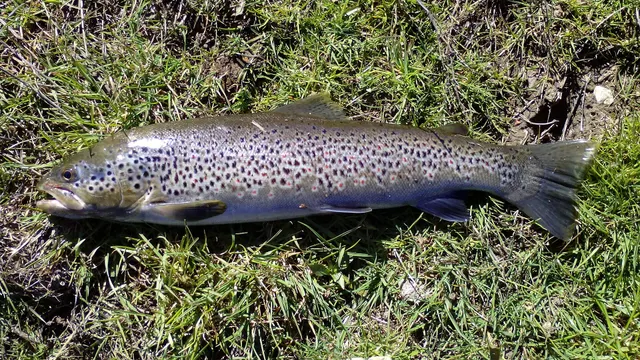 Brown troutCharacteristic of this water1 placeLough ConnOver loughAround Apr–Aug
Photo: Robermix, via Wikimedia Commons, CC0; resized and trimmed to fit
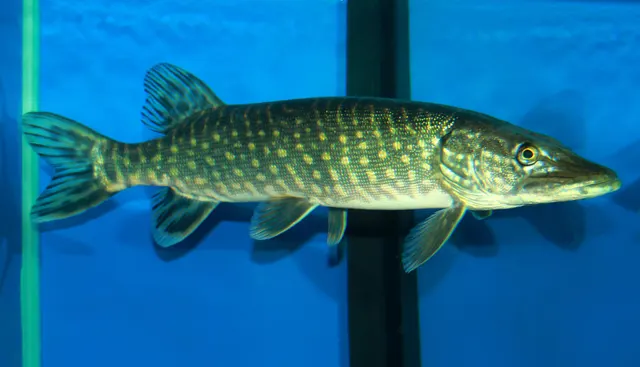 Northern pikeRegular local target1 placeLough ConnOver lough
Photo: Karelj, via Wikimedia Commons, public domain; resized and trimmed to fit
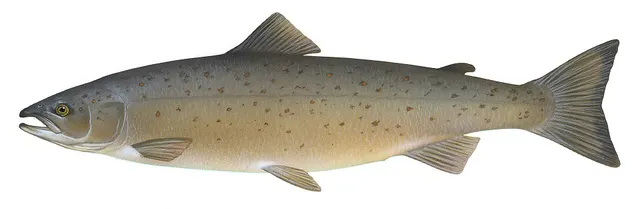 Atlantic salmonSeasonal1 placeLough ConnOver loughAround Mar–Jun
Illustration: Knepp, Timothy, via Wikimedia Commons, public domain; resized and trimmed to fit
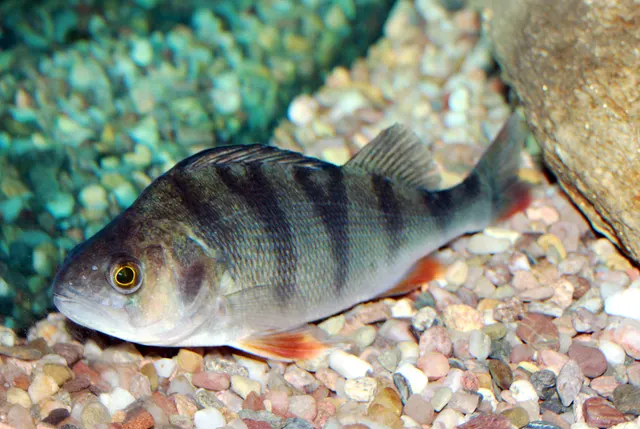 European perchRecorded here1 placeLough ConnOver lough
Photo: Karelj, via Wikimedia Commons, public domain; resized and trimmed to fit


Fly fishing · 2
- Brown troutCharacteristic of this water1 placeLough ConnOver loughAround Apr–Aug
Photo: Robermix, via Wikimedia Commons, CC0; resized and trimmed to fit
- Atlantic salmonSeasonal1 placeLough ConnOver loughAround Mar–Jun
Illustration: Knepp, Timothy, via Wikimedia Commons, public domain; resized and trimmed to fit
What these strengths mean
- Characteristic of this water
- This water is strongly identified with this species by the sources that cover it.
- Regular local target
- Fishing sources describe this as a normal local target here, not merely as caught.
- Seasonal
- Well supported, and concentrated in part of the year rather than spread through it.
- Recorded here
- At least one credible public account of this species being caught here. That is all it means.
- How breadth is counted
- A fish documented at six marks is shown as six marks: breadth never raises the strength on its own. A fishery account describes the fishing; a recorded catch reports one specific catch. How evidence is weighed.
How people fish here
4 methods are recorded on the places documented here, counted from those places themselves rather than from what is practised in the country. Each opens a full guide to the technique.
Dry fly fishing
Recorded at 1 place here, over river reach.
Presenting a floating artificial to a fish feeding at the surface, so that it drifts exactly as a natural insect would.
Spinning
Recorded at 1 place here, over river reach.
Casting an artificial lure and retrieving it so that it moves like something alive — the most direct form of lure fishing.
Stillwater fly fishing
Recorded at 1 place here, over lough.
Fly fishing without current, where the angler supplies every movement and the problem becomes finding fish rather than presenting to them.
Documented on the same ground: Brown trout, Northern pike, Atlantic salmon, European perch.
Trolling
Recorded at 1 place here, over lough.
Towing lures or baits behind a moving boat to cover large volumes of water and locate scattered fish.
Documented on the same ground: Brown trout, Northern pike, Atlantic salmon, European perch.
These are the methods documented at the places FishingHQ holds here. A species listed beside a method is documented on the same ground, which is not the same as being taken that way — where a source establishes the method a fish was caught on, it is stated on that place’s own page. All fishing methods.
Baits and lures for these fish
The methods, baits and lures each of the fish above is commonly taken on, from that fish’s own page. This is what works for the fish, not a report of what people use on this particular water — local knowledge and the conditions on the day still decide.
Methods
- Float-tube fishing — for Brown trout, Northern pike
- Salmon fly fishing — for Brown trout, Atlantic salmon
- Deadbaiting — for Northern pike
- Drop shotting — for European perch
- Kayak fishing — for Northern pike
- Tenkara — for Brown trout
Baits
- Lobworms and worms — for European perch
- Sea deadbaits — for Northern pike
Lures
- Crankbaits — for Northern pike, European perch
- Soft plastics — for Northern pike, European perch
- Spoons — for Northern pike, Atlantic salmon
- Streamers — for Brown trout, Atlantic salmon
- Wet flies — for Brown trout, Atlantic salmon
- Dry flies — for Brown trout
- Jerkbaits — for Northern pike
- Jigs and jig heads — for European perch
Also: Nymphs · Spinnerbaits and bladed jigs · Spinners · Terrestrial fly patterns
What dominates
Salmon fishing, principally by fly and by permitted spinning and worm methods where the fishery allows them, over a short season concentrated by run timing. Wild brown trout fishing from a drifting boat on the lough, working a team of wet flies across the wave — the loch-style tradition — with dapping and mayfly fishing as the characteristic seasonal methods. Pike fishing on the lough and the slower river, on deadbait and lure. Coarse fishing for roach, bream and hybrids on the slower reaches. Sea trout in the tidal water and the lower river.
The water available
A short, fertile, comparatively low-gradient river with a strong salmon run, a tidal reach, and a substantial section running through a town. Two connected limestone loughs — one large and one smaller — that are alkaline, productive and shallow enough to be wind-driven, with rocky shoals, bays and extensive weed. A short connecting river between the loughs and the main stem. Upland spate tributaries off the mountains. Below the town, a tidal estuary opening into a bay on the north Mayo coast.
How the rules are structured
Salmon and sea trout in the Republic require a state licence, and separate share certificate arrangements apply in certain fisheries. Individual rivers — and individual sections of them — are opened, restricted to catch and release, or closed to killing fish entirely on the basis of an annual scientific assessment of whether the system is meeting its conservation limit, with logbook and tagging requirements where retention is permitted. That assessment is redone every year, so a system's status is not a durable fact. There is no general state rod licence for brown trout or coarse fish, but permission for the specific water is still required and is obtained from the club, fishery, state body or landowner that controls it, which differs from stretch to stretch. Close seasons apply and vary. FishingHQ does not state what any current rule is: establish licensing, sizes, bag limits, closed periods and any protected-area constraint with the statutory bodies before fishing.
Who to ask
- Inland Fisheries Ireland, for salmon and sea trout licensing and tagging, for the annual conservation-limit assessment that decides a system's status, and for fisheries protection.
- The club, fishery, state body or landowner controlling the specific stretch or the lough shore, whose permission is required and whose terms are theirs to set.
- The National Parks and Wildlife Service, for protected species and designated sites within the catchment.
- The local authority and the harbour authority for the tidal reach and the estuary below the town.
Words you will meet
- Loch style
- Fishing a team of wet flies from a boat drifting broadside to the wind, working them back through the wave with a long rod. The characteristic method on the big western Irish loughs and quite different from river fly fishing.
- Dapping
- Letting a large fly or a natural insect blow out on a light floss line so it touches the surface without the leader landing. A traditional lough method, and the classic way of fishing the mayfly here.
- Conservation limit
- The number of spawning salmon a river needs to sustain itself. Irish rivers are assessed against theirs annually, and whether the river is open, catch-and-release only, or closed follows from that assessment rather than from a fixed rule.
- Turlough
- A seasonal lake that fills and empties through limestone rather than through a surface outflow. A feature of this limestone country and of very few other places on earth.
Conditions and hazards
The lough is the hazard here and the mechanism is wind. A large, shallow, open limestone lough builds a short steep wave very quickly when the wind gets up, and the traditional way of fishing it is from a small open boat lying broadside to that wind. Rocky shoals sit well out from the shore and are not marked. Boat fishing here is done in buoyancy aids as a matter of course.
The river is cold, and a spate river coming up is faster and heavier than it looks from the bank. Wading a strong salmon river in heavy water is where most river fatalities happen, and the answer is the same as it always is: wade less than you think you can, use a staff, and do not wade alone.
Cold water shock applies year round on both. The mayfly and salmon seasons put more people on the water than at any other time, which is when boat traffic and crowded banks add their own risks.
Some of what lives here
Fish recorded here that FishingHQ holds a reviewed photograph of. It is not a complete list of what The Moy and Lough Conn holds, and it is not a prediction that you will catch any of them — it is a way in to the ones we can show you.
- Atlantic salmonAn anadromous salmonid that migrates from its natal river to the North Atlantic and returns to spawn — and a species in serious, well-documented decline.
Illustration: Knepp, Timothy, via Wikimedia Commons, public domain; resized and trimmed to fit
- Brown troutA single, extraordinarily plastic species that appears as a tiny hill-stream fish, a deep-bodied loch trout and a silver sea-run migrant — all the same animal.
Photo: Robermix, via Wikimedia Commons, CC0; resized and trimmed to fit
- Northern pikeThe dominant freshwater ambush predator of the northern hemisphere: long, cryptic, and built for one violent acceleration rather than pursuit.
Photo: Karelj, via Wikimedia Commons, public domain; resized and trimmed to fit
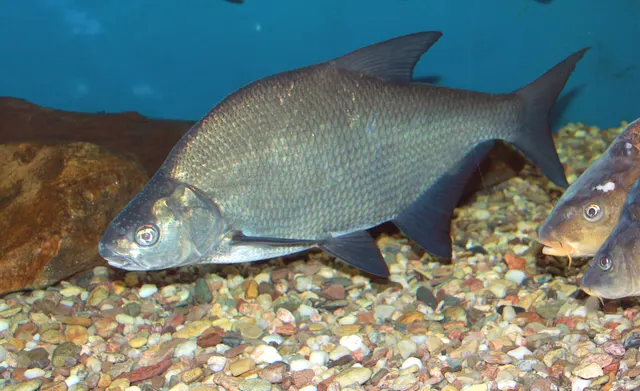 Common breamA deep-bodied, slow-moving shoal fish that feeds in large groups over soft bottoms and can transform a swim when it arrives.
Photo: Karelj, via Wikimedia Commons, public domain; resized and trimmed to fit

Places within this area
Publicly documented fishing geography. FishingHQ describes what the ground is; it does not say whether you may fish it, and every one of these sends that question to the body that holds the answer. Browse every place in this part of the world.
Who to ask before fishing any of these
FishingHQ does not know the current access position here. Irish freshwater angling requires permission from whoever holds the fishing rights, and salmon and sea trout additionally require a state licence and a tagging arrangement. Seasons, permits and conservation measures apply and change. Check with Inland Fisheries Ireland and with the fishery owner or club before going.
Lough Conn
Lough · Fresh water
A large lough in north Mayo with a limestone bed in the northern half and more acid ground to the south, shallow shelving margins, extensive shallow bays and a connection to Lough Cullin at its southern end.
Severe hazards of The Moy and Lough Conn apply here: boat safety, cold water shock, moving water and currents.
The Moy at Ballina
River reach · Fresh water
The lowest reach of the River Moy where it runs through Ballina to the tidal water of Killala Bay: a wide, fast, gravel-bedded river confined between town walls, with a weir and a succession of streamy runs below it.
Severe hazards of The Moy and Lough Conn apply here: boat safety, cold water shock, moving water and currents.
Safety
Boat safety — Can cause serious injury or death
A large shallow open lough builds a short steep wave in minutes when the wind rises, and it is traditionally fished from a small open boat lying broadside to that wind, over unmarked rocky shoals well out from the shore.
What reduces it: Buoyancy aids worn rather than carried, a check of the forecast for the lough rather than the region, an engine that has been started before leaving, and a willingness to come off early. Learn where the shoals are from somebody who knows the water.
Cold water shock — Can cause serious injury or death
The water is cold enough to trigger the involuntary gasp and hyperventilation of cold water shock for most of the year, which incapacitates a swimmer in the first minute regardless of how well they swim, and it does not stop being cold in a warm summer week.
What reduces it: Wear a buoyancy aid so the first minute does not have to be survived by swimming. Fish with somebody. Know where you would get out before you need to.
Moving water and currents — Can cause serious injury or death
A salmon river in spate runs faster, deeper and heavier than it appears from the bank, and wading it is where most river angling fatalities occur. The bottom moves and the depth changes between visits.
What reduces it: Wade less than you think you can and use a staff. Do not wade alone in heavy water. Know where you would get out downstream before you step in.
Weather and lightning — Can cause injury needing treatment
Weather on this coast changes faster than a forecast granularity of a few hours can express, and a wind shift onshore turns a fishable platform into an unfishable one inside a session.
What reduces it: Check the forecast for the coast rather than the county, watch the sky and the sea rather than only the phone, and leave early rather than late.
Precautions that always apply here
- Wear a buoyancy aid or lifejacket. Cold water incapacitates strong swimmers within a minute, long before swimming ability matters.
- Do not wade alone. Judge depth and flow from the bank first, and turn back sooner than feels necessary.
- Tell somebody where you are going and when you expect to be back.
- Carry a charged phone in a waterproof case, or another means of calling for help.
- Check, clean and dry your kit between different waters — the published guidance is 48 hours’ drying, in sunlight where possible, because a number of invasive species survive over two weeks in damp conditions. Nets, boots and wet mats move invasive species and disease more effectively than anything else anglers do.
Further safety reading
- Boat safety for anglers — A large, shallow, open limestone lough builds a short steep wave in minutes when the wind rises, and the traditional way to fish it is from a small open boat lying broadside to that wind, over unmarked rocky shoals well out from the shore.
- Wading safely — A salmon river in spate runs faster, deeper and heavier than it looks from the bank, the bottom moves between visits, and wading heavy water is where most river angling fatalities happen.
Check the rules before you fish
Fishing laws, bylaws, access rules, seasons, bait restrictions and permitted methods vary by location and can change. Check the current rules from the relevant authority and the water you intend to fish before fishing.
Check with:
- Current national or regional law for where you are fishing
- Current local bylaws
- The relevant fisheries authority
- The landowner, club or fishery whose water it is
- Any restrictions specific to the species or the method you intend to use
Where to go next
What swims here
- Atlantic salmonAmong the most productive salmon rivers in Europe by rod catch, and unusual in where the fishing is: a substantial part of it is within the town and reached on foot rather than on remote beats. A large run on a short river is what produces that, and the system's status is reassessed against a conservation limit every year.
- Brown troutThe lough here is alkaline, productive and shallow enough to be wind-driven, which is the combination that makes a wild brown trout fishery of this kind: fished from a drifting boat on a team of wet flies, with a mayfly period that concentrates the season.
- Common breamPresent on the slower and richer water of this catchment, which is the coarse half of a system better known for its game fishing.
- Northern pikeGrow large on the same limestone fertility that produces the trout, in the bays and weed of the lough system and on the slower river below it.
Local knowledge
- Catadromy, anadromy, and crossing the salinity lineThis is one catchment: the loughs drain north through a short river into the main stem and the main stem reaches the sea through the town, so a fish moving between the lake and the salt water passes through all of it. Managing one part of the system is managing every part, which is why the whole river is assessed together each year.
Sources and evidence
- Freshwater Fishes of the British Isles — HarperCollins (New Naturalist 75), 1992 (Reference work)Relied on for: Distribution, habitat requirements and biology of the freshwater fishes of Britain and Ireland named as characteristic of this catchment.Background and mechanism onlyCitation checked — the work exists and is described correctly
- General angling website restatements of established technique — Various (Credible secondary source)Relied on for: Widely restated practice and local fishing character for this catchment, recorded as practitioner consensus rather than as tested fact.Background and mechanism onlyCitation checked — the work exists and is described correctly
Why the 8 connections on this page are here, and the sources
What swims here
Backed by research — 4 connections
Supported by peer-reviewed research or fisheries science. The sources are listed and can be checked.
Atlantic salmon
A claim that a coast contains the ground and conditions the species is associated with. It is a distributional statement about the world, it rests on the regional reference literature, and it deliberately asserts nothing about access, permission or catch.
- The Fishes of the British Isles and North-West Europe — Macmillan, 1969 (Reference work)Relied on for: Distribution and habitat association of the marine and estuarine fishes of the British Isles and north-west Europe, including which coasts and ground types a species occupies.States this directlyCitation checked — the work exists and is described correctly
- FishBase: a global information system on fishes — Froese, R. and D. Pauly, eds. — FishBase Consortium (Scientific institute)Relied on for: Recorded distribution, depth range and habitat association for the species named.States this directlyPassage read and verified
Brown trout
A claim that a coast contains the ground and conditions the species is associated with. It is a distributional statement about the world, it rests on the regional reference literature, and it deliberately asserts nothing about access, permission or catch.
- The Fishes of the British Isles and North-West Europe — Macmillan, 1969 (Reference work)Relied on for: Distribution and habitat association of the marine and estuarine fishes of the British Isles and north-west Europe, including which coasts and ground types a species occupies.States this directlyCitation checked — the work exists and is described correctly
- FishBase: a global information system on fishes — Froese, R. and D. Pauly, eds. — FishBase Consortium (Scientific institute)Relied on for: Recorded distribution, depth range and habitat association for the species named.States this directlyPassage read and verified
Common bream
A claim that a coast contains the ground and conditions the species is associated with. It is a distributional statement about the world, it rests on the regional reference literature, and it deliberately asserts nothing about access, permission or catch.
- The Fishes of the British Isles and North-West Europe — Macmillan, 1969 (Reference work)Relied on for: Distribution and habitat association of the marine and estuarine fishes of the British Isles and north-west Europe, including which coasts and ground types a species occupies.States this directlyCitation checked — the work exists and is described correctly
- FishBase: a global information system on fishes — Froese, R. and D. Pauly, eds. — FishBase Consortium (Scientific institute)Relied on for: Recorded distribution, depth range and habitat association for the species named.States this directlyPassage read and verified
Northern pike
A claim that a coast contains the ground and conditions the species is associated with. It is a distributional statement about the world, it rests on the regional reference literature, and it deliberately asserts nothing about access, permission or catch.
- The Fishes of the British Isles and North-West Europe — Macmillan, 1969 (Reference work)Relied on for: Distribution and habitat association of the marine and estuarine fishes of the British Isles and north-west Europe, including which coasts and ground types a species occupies.States this directlyCitation checked — the work exists and is described correctly
- FishBase: a global information system on fishes — Froese, R. and D. Pauly, eds. — FishBase Consortium (Scientific institute)Relied on for: Recorded distribution, depth range and habitat association for the species named.States this directlyPassage read and verified
How people fish here
What experienced anglers do — 1 connection
Widely and independently recommended by experienced anglers and specialist sources. This is real angling knowledge, not proof: controlled evidence for it is limited, and FishingHQ records it as convention rather than as a demonstrated effect.
Fly fishing
A statement about which branch of angling dominates on a coast. It is consensus about practice rather than a fact about the world, and it is carried at that level.
- Inland Fisheries Ireland regional sea angling guides — Inland Fisheries Ireland, 2013 (Government fisheries body)Relied on for: The Irish statutory fisheries body's own sea angling guides, describing the marks of each coast with the species taken and the state of the tide.Background and mechanism onlyPassage read and verified
- General angling website restatements of established technique — Various (Credible secondary source)Relied on for: Widely restated practice and local fishing character for these coasts, recorded as practitioner consensus rather than as tested fact.Background and mechanism onlyCitation checked — the work exists and is described correctly
Local knowledge
Backed by research — 1 connection
Supported by peer-reviewed research or fisheries science. The sources are listed and can be checked.
Catadromy, anadromy, and crossing the salinity line
A link from a coast to the physical mechanism that governs its fishing, which is a claim about coastal process or hydrography rather than about angling.
- ICES Advice on fishing opportunities, catch and effort — International Council for the Exploration of the Sea (Scientific institute)Relied on for: Ecoregion description, stock distribution and the hydrography of the sea areas named, including seasonal inshore movement.States this directlyCitation checked — the work exists and is described correctly
- Cefas science, advice and data on marine and freshwater environments — Centre for Environment, Fisheries and Aquaculture Science (Government fisheries body)Relied on for: Marine environmental science for north-west European shelf seas, including sediment character, coastal process and inshore monitoring.States this directlyCitation checked — the work exists and is described correctly
Safety reading
Official guidance — 2 connections
Stated by a fisheries authority, scientific institute or recognised angling body. Authoritative, but summarising rather than demonstrating.
Boat safety for anglers
A statement that a coast presents a particular hazard, resting on water-safety guidance issued by bodies with responsibility for it rather than on angling practice.
- RNLI water safety guidance: cold water shock and Float to Live — Royal National Lifeboat Institution (Water-safety or diver-training authority)Relied on for: Cold water shock, immersion response, tidal cut-off and water-safety guidance for shore anglers and small-craft users.States this directlyPassage read and verified
- Rock fishing safety and the declared lifejacket areas of New South Wales — NSW Department of Primary Industries and Surf Life Saving NSW (Water-safety or diver-training authority)Relied on for: Rock-platform hazards, the mechanism by which anglers are swept, and the measures that address it.States this directlyCitation checked — the work exists and is described correctly
Wading safely
A statement that a coast presents a particular hazard, resting on water-safety guidance issued by bodies with responsibility for it rather than on angling practice.
- RNLI water safety guidance: cold water shock and Float to Live — Royal National Lifeboat Institution (Water-safety or diver-training authority)Relied on for: Cold water shock, immersion response, tidal cut-off and water-safety guidance for shore anglers and small-craft users.States this directlyPassage read and verified
- Rock fishing safety and the declared lifejacket areas of New South Wales — NSW Department of Primary Industries and Surf Life Saving NSW (Water-safety or diver-training authority)Relied on for: Rock-platform hazards, the mechanism by which anglers are swept, and the measures that address it.States this directlyCitation checked — the work exists and is described correctly
How FishingHQ labels evidence is explained in the evidence policy.