Lough Conn
Lough · Fresh water · in The Moy and Lough Conn
A large lough in north Mayo with a limestone bed in the northern half and more acid ground to the south, shallow shelving margins, extensive shallow bays and a connection to Lough Cullin at its southern end.
Safety: boat safety — can cause serious injury or death. 2 more points apply here.
FishingHQ describes what this place is, not whether you may fish it. Access, permits and who to ask.
What you can catch here
Documented at this place, grouped by how you would be fishing, with how strongly the sources support each one. This is what has been written down, not a forecast, and being listed is never permission to fish.
From a boat · 4
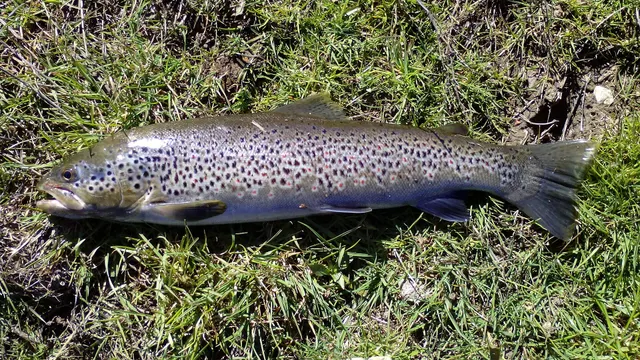 Brown troutCharacteristic of this water1 placeLough ConnOver loughAround Apr–Aug
Photo: Robermix, via Wikimedia Commons, CC0; resized and trimmed to fit
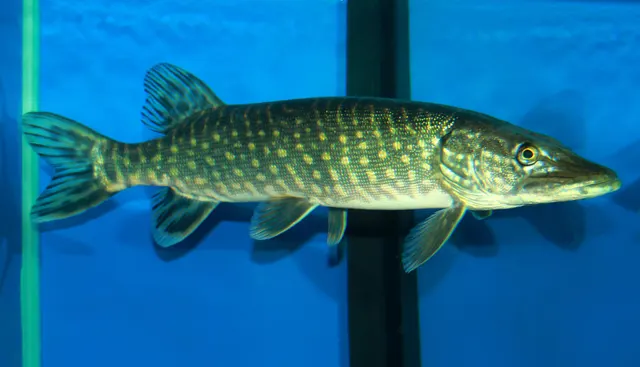 Northern pikeRegular local target1 placeLough ConnOver lough
Photo: Karelj, via Wikimedia Commons, public domain; resized and trimmed to fit
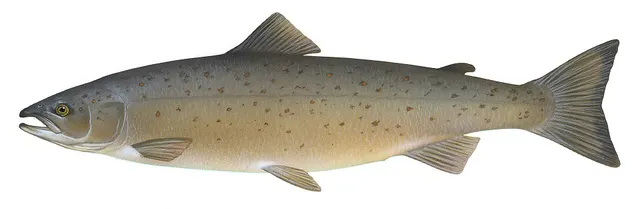 Atlantic salmonSeasonal1 placeLough ConnOver loughAround Mar–Jun
Illustration: Knepp, Timothy, via Wikimedia Commons, public domain; resized and trimmed to fit
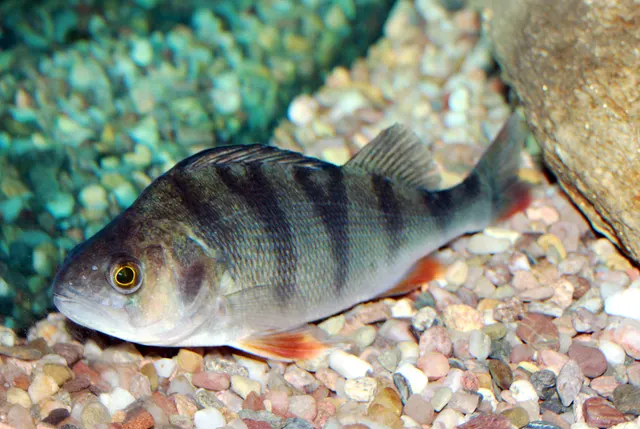 European perchRecorded here1 placeLough ConnOver lough
Photo: Karelj, via Wikimedia Commons, public domain; resized and trimmed to fit


Fly fishing · 2
- Brown troutCharacteristic of this water1 placeLough ConnOver loughAround Apr–Aug
Photo: Robermix, via Wikimedia Commons, CC0; resized and trimmed to fit
- Atlantic salmonSeasonal1 placeLough ConnOver loughAround Mar–Jun
Illustration: Knepp, Timothy, via Wikimedia Commons, public domain; resized and trimmed to fit
What these strengths mean
- Characteristic of this water
- This water is strongly identified with this species by the sources that cover it.
- Regular local target
- Fishing sources describe this as a normal local target here, not merely as caught.
- Seasonal
- Well supported, and concentrated in part of the year rather than spread through it.
- Recorded here
- At least one credible public account of this species being caught here. That is all it means.
- How breadth is counted
- A fish documented at six marks is shown as six marks: breadth never raises the strength on its own. A fishery account describes the fishing; a recorded catch reports one specific catch. How evidence is weighed.
How people fish it
Practised here: Fly fishing, Predator fishing.
Methods the sources name for this ground. Each one is explained in full on its own page.
- Stillwater fly fishing
Fly fishing without current, where the angler supplies every movement and the problem becomes finding fish rather than presenting to them.
- Trolling
Towing lures or baits behind a moving boat to cover large volumes of water and locate scattered fish.
Baits and lures for these fish
The baits and lures each of the fish above is commonly taken on, from that fish’s own page. This is what works for the fish, not a report of what people use on this particular water — local knowledge and the conditions on the day still decide.
Baits
- Lobworms and worms — for European perch
- Sea deadbaits — for Northern pike
Lures
- Crankbaits — for Northern pike, European perch
- Soft plastics — for Northern pike, European perch
- Spoons — for Northern pike, Atlantic salmon
- Streamers — for Brown trout, Atlantic salmon
- Wet flies — for Brown trout, Atlantic salmon
- Dry flies — for Brown trout
- Jerkbaits — for Northern pike
- Jigs and jig heads — for European perch
Also: Nymphs · Spinnerbaits and bladed jigs · Spinners · Terrestrial fly patterns
How to catch them: Brown trout fishing · Pike fishing · Salmon fishing · Perch fishing
The ground and the water
- The ground
- A large lough in north Mayo with a limestone bed in the northern half and more acid ground to the south, shallow shelving margins, extensive shallow bays and a connection to Lough Cullin at its southern end.
Through the year
The months the sources attach to each species here. Where a species carries no season it is listed underneath rather than assumed to run through the year.
| Species | J | F | M | A | M | J | J | A | S | O | N | D |
|---|---|---|---|---|---|---|---|---|---|---|---|---|
| Brown trout — characteristic of this water, recorded in April, May, June, July, August. | ||||||||||||
| Atlantic salmon — seasonal, recorded in March, April, May, June. |
Recorded here with no season stated: Northern pike, European perch.
Safety
Boat safety — Can cause serious injury or death
A large shallow open lough builds a short steep wave in minutes when the wind rises, and it is traditionally fished from a small open boat lying broadside to that wind, over unmarked rocky shoals well out from the shore.
What reduces it: Buoyancy aids worn rather than carried, a check of the forecast for the lough rather than the region, an engine that has been started before leaving, and a willingness to come off early. Learn where the shoals are from somebody who knows the water.
Cold water shock — Can cause serious injury or death
The water is cold enough to trigger the involuntary gasp and hyperventilation of cold water shock for most of the year, which incapacitates a swimmer in the first minute regardless of how well they swim, and it does not stop being cold in a warm summer week.
What reduces it: Wear a buoyancy aid so the first minute does not have to be survived by swimming. Fish with somebody. Know where you would get out before you need to.
Moving water and currents — Can cause serious injury or death
A salmon river in spate runs faster, deeper and heavier than it appears from the bank, and wading it is where most river angling fatalities occur. The bottom moves and the depth changes between visits.
What reduces it: Wade less than you think you can and use a staff. Do not wade alone in heavy water. Know where you would get out downstream before you step in.
Rules and access
Licence
A State licence is required for salmon and sea trout in the Republic of Ireland. None is required for trout, pike or coarse fishing.
Permission to fish
Separate, and frequently required even where no licence is. A local permit from the club, fishery or state fisheries body is normal, and some catchments require one for coarse and pike fishing as well.
FishingHQ does not know the current access position here. Irish freshwater angling requires permission from whoever holds the fishing rights, and salmon and sea trout additionally require a state licence and a tagging arrangement. Seasons, permits and conservation measures apply and change. Check with Inland Fisheries Ireland and with the fishery owner or club before going.
Who holds the answer:
- Inland Fisheries Ireland, for licensing, seasons and fisheries protection.
- The fishery owner, club or association that controls the water.
- Inland Fisheries Ireland, for salmon and sea trout licensing and tagging, for the annual conservation-limit assessment that decides a system's status, and for fisheries protection.
- The club, fishery, state body or landowner controlling the specific stretch or the lough shore, whose permission is required and whose terms are theirs to set.
- The National Parks and Wildlife Service, for protected species and designated sites within the catchment.
- The local authority and the harbour authority for the tidal reach and the estuary below the town.
Nearby fishing
Other publicly documented places within about 40 km, by distance. Positions are approximate public geography and are never exact marks.
- The Moy at Ballina — 10–25 km · River reach
- Bertra Strand — 25–40 km · Beach
- Clew Bay — 25–40 km · Bay
- Mulranny — 25–40 km · Pier
Sources for this place
- Freshwater Fishes of the British Isles — HarperCollins (New Naturalist 75), 1992 (Reference work)Relied on for: Distribution, habitat requirement, ecology and life history of European freshwater fishes, including the species named for this water.States this directlyCitation checked — the work exists and is described correctly
- The European Environment Agency's assessments of Europe's waters, seas and coasts — European Environment Agency, Copenhagen (Conservation authority)Relied on for: Assessment of Europe's surface waters, including hydromorphological modification, barriers to migration and the pressures recorded on the water body.States this directlyCitation checked — the work exists and is described correctly
- Trout & Salmon — Bauer Media (Specialist angling publication)Relied on for: Long-running published description of European game angling practice by river and season, including the continental destinations British anglers fish.FishingHQ's interpretation of what it saysCitation checked — the work exists and is described correctly
- General angling website restatements of established technique — Various (Credible secondary source)Relied on for: Widely restated public descriptions of which continental waters are conventionally fished and how, recorded as practitioner consensus rather than as scholarship, and not relied on for access, permission or any current rule.Background and mechanism onlyCitation checked — the work exists and is described correctly
How FishingHQ labels evidence is explained in the evidence policy. Last reviewed 2026-08-18.