Lough Neagh
Fishing regions · Last reviewed 2026-08-14
The largest lake in Britain and Ireland by area, shallow and rich, carrying one of Europe's last great wild eel fisheries and one of its most severe recent algal bloom crises.
Safety: biosecurity and disease transfer — can cause serious injury or death. One more point applies here.
Being listed here is not permission to fish. What that meansClose
Access, fishing rights, seasons, licences, local bylaws and permitted methods vary and can change. Check current access, permission, local regulations, closures and restrictions before you travel or fish. FishingHQ describes what the ground is and names who holds the answer; it does not hold the answer itself.
Find the authority for a jurisdiction · What FishingHQ does and does not cover
Lough Neagh is the largest freshwater lake in Britain and Ireland by surface area, and it is unusual in almost every respect except its fame, which is far smaller than its size.
IT IS VERY LARGE AND VERY SHALLOW. Unlike the deep glacial lochs of Scotland, Neagh is a broad shallow basin with a mean depth of only around nine metres. That shallowness makes it productive, makes it warm quickly, and makes it vulnerable — a shallow nutrient-rich lake with a large agricultural catchment is a lake at risk of algal blooms, and Neagh has had severe ones.
IT CARRIES ONE OF EUROPE'S LAST GREAT WILD EEL FISHERIES. The Lough Neagh eel fishery is centuries old, commercially significant, cooperatively organised, and internationally protected as a product. Glass eels arriving from the Atlantic enter the Bann, grow in the lough for years, and are taken as yellow and silver eels by long-line and draft net. It is one of the largest wild-caught eel fisheries left anywhere, and it is prosecuted on a species assessed as critically endangered — a tension the fishery itself has had to confront through restocking and management.
IT HOLDS POLLAN, a whitefish found in Ireland and nowhere else in western Europe, a glacial relict like Loch Lomond's powan and comparably significant.
AND IT HAS BEEN IN CRISIS. Severe blue-green algal blooms in recent years, driven by nutrient enrichment and compounded by invasive zebra mussels altering the lough's ecology and clarity, have been visible across enormous areas and have prompted substantial public and political attention. This is current, it is documented, and any account of fishing here has to say so.
What fishing here is like
A very large, very shallow, nutrient-rich lowland lake with a substantial commercial fishery, a modest recreational one, and an environmental problem serious enough to have become a national issue. Its scale is not obvious from any one shore, and its shallowness makes it behave quite unlike the deep Scottish and Irish glacial loughs.
The culture is a working-fishery one first: the eel fishery is cooperatively organised and centuries old, and the lough's identity in Northern Ireland is bound up with it.
How people fish here
3 methods are recorded on the places documented here, counted from the records themselves rather than from what is practised in the country. Each opens a full guide to the technique.
Feeder fishing
Recorded at 1 place here, over river reach.
Legering with a weight that also carries bait, so that free offerings arrive in exactly the same place as the hookbait, cast after cast.
Float fishing
Recorded at 1 place here, over river reach.
Suspending a bait at a controlled depth beneath a buoyant indicator — the most visual, most controllable and most widely applicable method in angling.
Ledgering
Recorded at 1 place here, over river reach.
Fishing a bait on the bottom held by a weight, with no float — the simplest way to fish at distance, in depth, or in wind.
These are the methods documented at the places FishingHQ holds here. A species listed beside a method is documented on the same ground, which is not the same as being taken that way — where a source establishes the method a fish was caught on, it is stated on that place’s own page. All fishing methods.
What dominates
Commercial eel fishing by long-line and draft net, cooperatively organised, which is the lough's defining activity. Coarse fishing for bream, roach, perch and hybrids, historically a substantial match and pleasure fishery. Pike fishing on the shallows and around the river mouths. Trout fishing, including for the dollaghan, a distinctive large lough-run brown trout of the Neagh system that runs the feeder rivers. Fishing on the feeder rivers and the Lower Bann, which carry salmon and dollaghan. Commercial pollan fishing, historically significant and now much reduced.
The water available
A very large shallow open basin with a mean depth of around nine metres and extensive wind-driven wave action. Shallow shorelines, sand and gravel in places, with reed and marsh in others. Several substantial feeder rivers — the Blackwater, Ballinderry, Moyola, Maine and Six Mile Water among them — and a single outflow, the Lower Bann, to the Atlantic. Extensive wetland and bird habitat around the margins, much of it designated. A large agricultural catchment draining to the lough.
How the rules are structured
Northern Ireland has its own fisheries administration, separate from both Great Britain's and the Republic's, and this is a genuine complication for visitors who assume a UK-wide arrangement. A rod licence is required and is issued by the Northern Ireland authority; a separate permit is required for the water, and on much of the Neagh system that comes from the relevant fishery or angling club. The commercial eel fishery is separately regulated and cooperatively managed, and eel fishing is not open to recreational anglers. Eel is a critically endangered species subject to specific management and international trade controls. Pollan is protected. Extensive conservation designations cover the lough and its margins for their bird and habitat interest, adding constraints. Water quality issues have prompted advisory restrictions during bloom periods, and these are public health information rather than fishery rules. FishingHQ does not state what any current rule is: check the Northern Ireland fisheries authority for licence and permit requirements, and check current water quality advice before contact with the water.
Who to ask
- The Northern Ireland fisheries authority, for rod licences, permits, close seasons and species restrictions — a separate system from Great Britain and from the Republic
- The relevant fishery, angling club or landowner for permission on the specific water
- The eel fishery cooperative, which manages the commercial eel fishery under its own arrangements
- The Northern Ireland environment authority, for the conservation designations covering the lough and for water quality advice
- The local council environmental health service, for public health advice during algal bloom periods
Words you will meet
- Dollaghan
- A large lough-run brown trout of the Lough Neagh system that runs the feeder rivers to spawn — a distinctive local form and the system's most prized game fish.
- Pollan
- A whitefish found in Ireland and nowhere else in western Europe, a glacial relict, historically commercially fished here and now much reduced and protected.
- Draft net and long-line
- The two traditional methods of the eel fishery. The long-line carries very large numbers of baited hooks; the draft net is worked at the Bann. Both are centuries old and both are still in use.
- Elver and glass eel
- The juvenile stages arriving from the Atlantic and ascending the Bann. Their arrival in numbers is what the whole fishery ultimately depends on, and it is that arrival that has collapsed across Europe.
Conditions and hazards
Lough Neagh's shallowness is a hazard rather than a comfort. A large, shallow, open basin generates a short steep sea very quickly in wind, far more unpleasant and more dangerous than deep water of the same fetch, and small craft are caught out by it.
The lough is big enough that shores can be a long way apart and out of sight, and the surrounding land is low, which makes navigation harder than it looks.
Water quality is a genuine current consideration. Blue-green algal blooms have been severe, and contact with affected water carries a health risk to people and a serious one to dogs. During bloom periods this is the operative safety information.
Weil's disease is present as in any fresh water.
And the margins include extensive soft marsh and reed where the bank is not where it appears to be.
Very large, very shallow, and why that matters
Lough Neagh's defining physical properties are its area and its depth, and the second is the surprising one.
IT IS THE LARGEST FRESHWATER LAKE IN BRITAIN AND IRELAND by surface area, and its mean depth is only around nine metres. That combination — very wide, very shallow — makes it behave quite unlike the deep glacial loughs and lochs elsewhere in these islands.
SHALLOW AND WIDE MEANS PRODUCTIVE, because light reaches most of the bed and nutrients circulate. It also means WARM, because a shallow basin heats quickly. And it means EXPOSED, because wind acts on the whole surface and a shallow basin builds a short steep sea fast.
THE CATCHMENT IS LARGE AND SUBSTANTIALLY AGRICULTURAL, draining through several substantial feeder rivers, with a single outflow — the Lower Bann — to the Atlantic.
AND THE MARGINS ARE WETLAND, extensively designated for their bird interest, which is part of why the lough carries the protections it does.
Backed by research — why, and the sources (2)
Supported by peer-reviewed research or fisheries science. The sources are listed and can be checked.
- Freshwater Fishes of the British Isles — HarperCollins (New Naturalist 75), 1992 (Reference work)Relied on for: Biology, distribution, life history and conservation status of British and Irish freshwater and diadromous fishes.States this directlyCitation checked — the work exists and is described correctly
- JNCC species and habitat conservation advice — Joint Nature Conservation Committee (Conservation authority)Relied on for: Conservation status, designation and monitoring of species and habitats in the United Kingdom, including protected river and lake systems.States this directlyCitation checked — the work exists and is described correctly
Eels, pollan and the dollaghan
EELS are the lough's defining fish. Glass eels arriving from the Atlantic ascend the Bann, grow in the lough for years as yellow eels, and eventually leave as silver eels — and the fishery takes them at those stages by long-line and draft net. This is one of the largest wild-caught eel fisheries remaining anywhere in Europe.
POLLAN is the natural-history distinction: a whitefish found in Ireland and nowhere else in western Europe, a glacial relict comparable to Loch Lomond's powan, historically commercially fished here and now much reduced and protected.
DOLLAGHAN is the local prize: a large lough-run brown trout of this system that runs the feeder rivers to spawn, and the most sought game fish here.
BREAM, ROACH, PERCH AND HYBRIDS support a coarse fishery that was historically substantial.
PIKE occupy the shallows and river mouths.
THE SEASON is set by the eel fishery's own working year, by the dollaghan running the feeders in the second half of the year, and — increasingly and unhappily — by when the water is in a fit condition to fish at all.
Backed by research — why, and the sources (2)
Supported by peer-reviewed research or fisheries science. The sources are listed and can be checked.
- Freshwater Fishes of the British Isles — HarperCollins (New Naturalist 75), 1992 (Reference work)Relied on for: Biology, distribution, life history and conservation status of British and Irish freshwater and diadromous fishes.States this directlyCitation checked — the work exists and is described correctly
- ICES Advice on fishing opportunities, catch and effort — International Council for the Exploration of the Sea (Scientific institute)Relied on for: Scientific advice on north-east Atlantic stocks including the European eel, recruitment trends and the basis for management advice.States this directlyCitation checked — the work exists and is described correctly
How it is fished, and by whom
THE COMMERCIAL EEL FISHERY is the lough's principal activity and is not open to recreational anglers. It is cooperatively organised, uses long-lines carrying very large numbers of baited hooks and draft nets at the Bann, and is centuries old in method.
COARSE FISHING for bream, roach, perch and hybrids from bank and boat, historically a substantial match and pleasure fishery drawing visiting anglers.
PIKE FISHING on the shallows and around the river mouths.
DOLLAGHAN FISHING on the feeder rivers as the fish run, which is the system's most prized game angling and is river fishing rather than lough fishing.
SALMON on the Lower Bann and the feeders.
AND BOAT FISHING generally, which the lough's size makes necessary for much of it — with the caveat that a shallow open basin this large is a serious piece of water in wind.
What experienced anglers do — why, and the sources (2)
Widely and independently recommended by experienced anglers and specialist sources. This is real angling knowledge, not proof: controlled evidence for it is limited, and FishingHQ records it as convention rather than as a demonstrated effect.
- Angling Times — Bauer Media (Specialist angling publication)Relied on for: Contemporary UK coarse and match angling practice as reported by practitioners, including venue character and method convention.States this directlyCitation checked — the work exists and is described correctly
- Freshwater Fishes of the British Isles — HarperCollins (New Naturalist 75), 1992 (Reference work)Relied on for: Biology, distribution, life history and conservation status of British and Irish freshwater and diadromous fishes.States this directlyCitation checked — the work exists and is described correctly
A centuries-old fishery on a critically endangered species
The Lough Neagh eel fishery is one of the more remarkable working fisheries in Europe and one of the more difficult to write about honestly.
IT IS OLD, COOPERATIVE AND CULTURALLY CENTRAL. Eel fishing here goes back centuries; the modern fishery is run cooperatively by the fishermen themselves; and the product carries international protected designation. The fishery's organisation — collective ownership, managed effort, restocking — is frequently cited as a model of how a wild fishery can be run by the people prosecuting it.
AND THE SPECIES IS ASSESSED AS CRITICALLY ENDANGERED. European eel recruitment collapsed across the continent by orders of magnitude, and eel fisheries have been closed or heavily restricted almost everywhere. Neagh's fishery continues under management including restocking with glass eels, which is itself contested — moving glass eels from where they arrive to where they are wanted is a legitimate management tool to some and a redistribution of a collapsing resource to others.
BOTH THINGS ARE TRUE and the tension is real. FishingHQ's position is to state the facts rather than to adjudicate: this is a genuinely old and well-organised fishery, on a species in genuine trouble, and the people running it are more aware of that than any visitor.
THE ALGAL CRISIS is the other current chapter — severe blue-green blooms driven by nutrient enrichment and compounded by invasive zebra mussels changing the lough's clarity and ecology. It has been visible across enormous areas and has become a national issue.
Official guidance — why, and the sources (2)
Stated by a fisheries authority, scientific institute or recognised angling body. Authoritative, but summarising rather than demonstrating.
- ICES Advice on fishing opportunities, catch and effort — International Council for the Exploration of the Sea (Scientific institute)Relied on for: Scientific advice on north-east Atlantic stocks including the European eel, recruitment trends and the basis for management advice.States this directlyCitation checked — the work exists and is described correctly
- The IUCN Red List of Threatened Species — International Union for Conservation of Nature (Conservation authority)Relied on for: Global extinction-risk assessment, population trend and identified threats for the species concerned.States this directlyCitation checked — the work exists and is described correctly
The vocabulary of the lough
DOLLAGHAN names the large lough-run brown trout of this system — a local form and the system's most prized game fish. The word is used nowhere else.
POLLAN names the whitefish found in Ireland and nowhere else in western Europe.
DRAFT NET and LONG-LINE name the eel fishery's two traditional methods, both centuries old and both still worked.
ELVER and GLASS EEL name the juvenile stages arriving from the Atlantic and ascending the Bann — the arrival on which the whole fishery ultimately depends, and the thing that has collapsed across Europe.
AND LOUGH rather than loch or lake is the Irish usage, carrying the Irish and Northern Irish legal and cultural context — which for a visitor means a fisheries system separate from both Great Britain's and the Republic's.
What experienced anglers do — why, and the sources (2)
Widely and independently recommended by experienced anglers and specialist sources. This is real angling knowledge, not proof: controlled evidence for it is limited, and FishingHQ records it as convention rather than as a demonstrated effect.
- Freshwater Fishes of the British Isles — HarperCollins (New Naturalist 75), 1992 (Reference work)Relied on for: Biology, distribution, life history and conservation status of British and Irish freshwater and diadromous fishes.States this directlyCitation checked — the work exists and is described correctly
- ICES Advice on fishing opportunities, catch and effort — International Council for the Exploration of the Sea (Scientific institute)Relied on for: Scientific advice on north-east Atlantic stocks including the European eel, recruitment trends and the basis for management advice.States this directlyCitation checked — the work exists and is described correctly
A third fisheries system, and a public health question
NORTHERN IRELAND HAS ITS OWN FISHERIES ADMINISTRATION, separate from Great Britain's and from the Republic's. Visitors who assume a UK-wide arrangement are wrong, and it is the commonest administrative error here.
A ROD LICENCE issued by the Northern Ireland authority is required, and a SEPARATE PERMIT is required for the water — on much of this system from the relevant fishery or angling club. Both are needed.
THE EEL FISHERY is separately regulated and cooperatively managed, and is not open to recreational anglers. Eel is critically endangered, subject to specific management and to international trade controls.
POLLAN IS PROTECTED.
CONSERVATION DESIGNATIONS cover the lough and its margins for their bird and habitat interest and add constraints.
AND WATER QUALITY IS CURRENT SAFETY INFORMATION rather than background. During algal bloom periods, advisory restrictions are issued by public health and environment bodies, contact with affected water carries a real risk, and it is dangerous to dogs. Check that before travelling, not on arrival. FishingHQ states no current rule.
Official guidance — why, and the sources (2)
Stated by a fisheries authority, scientific institute or recognised angling body. Authoritative, but summarising rather than demonstrating.
- JNCC species and habitat conservation advice — Joint Nature Conservation Committee (Conservation authority)Relied on for: Conservation status, designation and monitoring of species and habitats in the United Kingdom, including protected river and lake systems.States this directlyCitation checked — the work exists and is described correctly
- ICES Advice on fishing opportunities, catch and effort — International Council for the Exploration of the Sea (Scientific institute)Relied on for: Scientific advice on north-east Atlantic stocks including the European eel, recruitment trends and the basis for management advice.States this directlyCitation checked — the work exists and is described correctly
Some of what lives here
Fish recorded here that FishingHQ holds a reviewed photograph of. It is not a complete list of what Lough Neagh holds, and it is not a prediction that you will catch any of them — it is a way in to the ones we can show you.
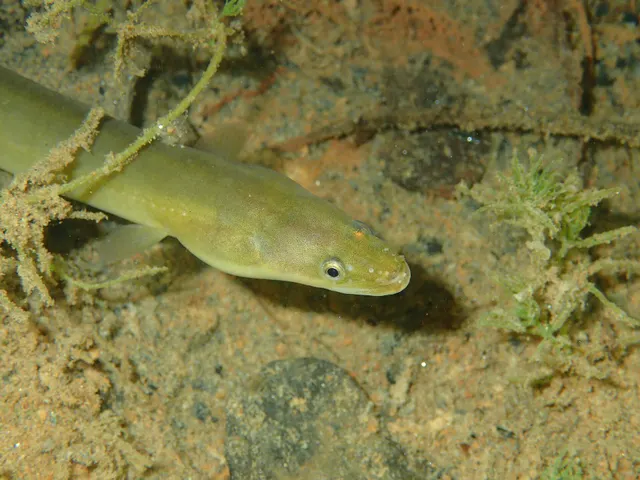 European eelA Critically Endangered fish that breeds in the Sargasso Sea, drifts to Europe as a transparent larva, lives decades in fresh water and returns once to spawn and die.
jujurenoult — CC BY 4.0, via Wikimedia Commons
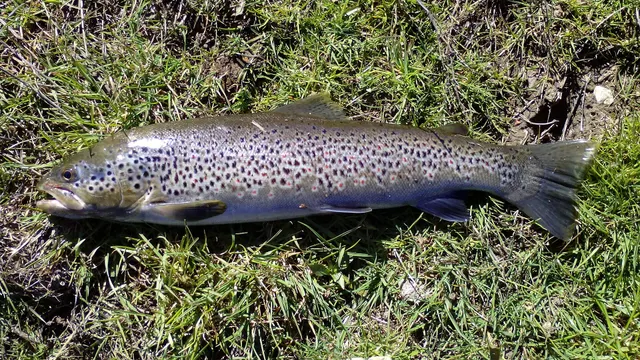 Brown troutA single, extraordinarily plastic species that appears as a tiny hill-stream fish, a deep-bodied loch trout and a silver sea-run migrant — all the same animal.
Robermix, CC0, via Wikimedia Commons
Places within this area
Publicly documented fishing geography. FishingHQ describes what the ground is; it does not say whether you may fish it, and every one of these sends that question to the body that holds the answer. Browse every place in this part of the world.
Who to ask before fishing any of these
FishingHQ does not know the current access position here. Angling in Northern Ireland generally requires both a rod licence from the relevant fisheries body and a separate permit for the water, and the two are issued by different bodies. Rules, seasons and permit arrangements change. Check with the Department of Agriculture, Environment and Rural Affairs, the Loughs Agency where relevant, and the permit issuer before going.
The Maine
River reach · Fresh water
A modest lowland river running south into Lough Neagh through Antrim farmland, heavily modified for drainage, with a dollaghan and salmon run using it to spawn.
Severe hazards of Lough Neagh apply here: biosecurity and disease transfer, drowning and immersion.
Safety
Biosecurity and disease transfer — Can cause serious injury or death
Severe blue-green algal blooms have occurred on Lough Neagh, driven by nutrient enrichment and compounded by invasive zebra mussels altering the lough's ecology. Contact with affected water carries a health risk to people and a serious, sometimes fatal, risk to dogs. Blooms can cover very large areas.
What reduces it: Check current water quality advice from the environment and public health authorities before travelling; avoid contact with visibly discoloured, scummy or foaming water; keep dogs out of it entirely; and wash thoroughly after any contact.
Worse when:
- Warm, calm, settled weather through the summer and early autumn
- Downwind shores, where bloom material accumulates and concentrates
Drowning and immersion — Can cause serious injury or death
A very large, very shallow open basin generates a short steep sea extremely quickly in wind — more dangerous to a small boat than deep water of the same fetch. Shores can be far apart and out of sight, and the surrounding land is low, which makes navigation harder than it appears.
What reduces it: Treat it as open water rather than as a lake: wear a buoyancy aid, watch the wind forecast, carry means of navigation and communication, and come off early rather than late.
Check the rules before you fish
Fishing laws, bylaws, access rules, seasons, bait restrictions and permitted methods vary by location and can change. Check the current rules from the relevant authority and the water you intend to fish before fishing.
Check with:
- Current national or regional law for where you are fishing
- Current local bylaws
- The relevant fisheries authority
- The landowner, club or fishery whose water it is
- Any restrictions specific to the species or the method you intend to use
Where to go next
What swims here
- Brown troutThe dollaghan is a large lough-run brown trout of this system that runs the feeder rivers to spawn, and is the system's most prized game fish.
- European eelThe lough supports one of the largest wild-caught eel fisheries remaining in Europe, on a species whose recruitment has collapsed across the continent.
Local knowledge
How this compares
- Eel and elver fisheriesOne of Europe's last great wild eel fisheries, cooperatively organised and centuries old, prosecuted on a species assessed as critically endangered. The general page carries the argument; this is where it is happening.
- Lough ErneThe two great Northern Irish loughs, and they could hardly be less alike: a sheltered drumlin maze against the largest and one of the shallowest single lakes in these islands. Reading them together separates what area does from what shape does.
Environment and conservation
Sources and evidence
- Freshwater Fishes of the British Isles — HarperCollins (New Naturalist 75), 1992 (Reference work)Relied on for: Biology, distribution, life history and conservation status of British and Irish freshwater and diadromous fishes.States this directlyCitation checked — the work exists and is described correctly
- ICES Advice on fishing opportunities, catch and effort — International Council for the Exploration of the Sea (Scientific institute)Relied on for: Scientific advice on north-east Atlantic stocks including the European eel, recruitment trends and the basis for management advice.States this directlyCitation checked — the work exists and is described correctly
- JNCC species and habitat conservation advice — Joint Nature Conservation Committee (Conservation authority)Relied on for: Conservation status, designation and monitoring of species and habitats in the United Kingdom, including protected river and lake systems.States this directlyCitation checked — the work exists and is described correctly
Why the 7 connections on this page are here, and the sources
What swims here
Backed by research — 2 connections
Supported by peer-reviewed research or fisheries science. The sources are listed and can be checked.
Brown trout
A distributional claim taken from reference works on the fishes of the region rather than from angling report. It states presence and asserts nothing about a fishery.
- FishBase: a global information system on fishes — Froese, R. and D. Pauly, eds. — FishBase Consortium (Scientific institute)Relied on for: Distribution, habitat association, life history and depth range recorded for the species concerned.States this directlyPassage read and verified
- Freshwater Fishes of the British Isles — HarperCollins (New Naturalist 75), 1992 (Reference work)Relied on for: Biology, distribution and conservation status of British and Irish freshwater and diadromous fishes.States this directlyCitation checked — the work exists and is described correctly
- The Fishes of the British Isles and North-West Europe — Macmillan, 1969 (Reference work)Relied on for: Distribution, habitat and biology of the fishes of the British Isles and north-west Europe.States this directlyCitation checked — the work exists and is described correctly
European eel
A distributional claim taken from reference works on the fishes of the region rather than from angling report. It states presence and asserts nothing about a fishery.
- FishBase: a global information system on fishes — Froese, R. and D. Pauly, eds. — FishBase Consortium (Scientific institute)Relied on for: Distribution, habitat association, life history and depth range recorded for the species concerned.States this directlyPassage read and verified
- Freshwater Fishes of the British Isles — HarperCollins (New Naturalist 75), 1992 (Reference work)Relied on for: Biology, distribution and conservation status of British and Irish freshwater and diadromous fishes.States this directlyCitation checked — the work exists and is described correctly
- The Fishes of the British Isles and North-West Europe — Macmillan, 1969 (Reference work)Relied on for: Distribution, habitat and biology of the fishes of the British Isles and north-west Europe.States this directlyCitation checked — the work exists and is described correctly
How people fish here
What experienced anglers do — 1 connection
Widely and independently recommended by experienced anglers and specialist sources. This is real angling knowledge, not proof: controlled evidence for it is limited, and FishingHQ records it as convention rather than as a demonstrated effect.
Traps and pots
Which branch of fishing dominates a water is a statement about practice rather than about the place, and is recorded as convention.
- Coarse Fishing — A. & C. Black, 1912 (Specialist angling publication)Relied on for: Classical British coarse angling practice: river and stillwater reading, baits and seasonal observation.States this directlyCitation checked — the work exists and is described correctly
- Angling Times — Bauer Media (Specialist angling publication)Relied on for: Contemporary UK coarse angling practice as reported by practitioners, including venue character and method convention.States this directlyCitation checked — the work exists and is described correctly
Local knowledge
What experienced anglers do — 1 connection
Widely and independently recommended by experienced anglers and specialist sources. This is real angling knowledge, not proof: controlled evidence for it is limited, and FishingHQ records it as convention rather than as a demonstrated effect.
The eel life cycle
A place joined to the mechanism that explains what is distinctive about fishing there, which is what makes a location page transferable rather than local colour.
- FishBase: a global information system on fishes — Froese, R. and D. Pauly, eds. — FishBase Consortium (Scientific institute)Relied on for: Distribution, habitat association, life history and depth range recorded for the species concerned.States this directlyPassage read and verified
- Freshwater Fishes of the British Isles — HarperCollins (New Naturalist 75), 1992 (Reference work)Relied on for: Biology, distribution and conservation status of British and Irish freshwater and diadromous fishes.States this directlyCitation checked — the work exists and is described correctly
- The Fishes of the British Isles and North-West Europe — Macmillan, 1969 (Reference work)Relied on for: Distribution, habitat and biology of the fishes of the British Isles and north-west Europe.States this directlyCitation checked — the work exists and is described correctly
How this compares
What experienced anglers do — 2 connections
Widely and independently recommended by experienced anglers and specialist sources. This is real angling knowledge, not proof: controlled evidence for it is limited, and FishingHQ records it as convention rather than as a demonstrated effect.
Eel and elver fisheries
Two places or records a reader will hold together, joined where the comparison teaches something neither states alone.
- FishBase: a global information system on fishes — Froese, R. and D. Pauly, eds. — FishBase Consortium (Scientific institute)Relied on for: Distribution, habitat association, life history and depth range recorded for the species concerned.States this directlyPassage read and verified
- Freshwater Fishes of the British Isles — HarperCollins (New Naturalist 75), 1992 (Reference work)Relied on for: Biology, distribution and conservation status of British and Irish freshwater and diadromous fishes.States this directlyCitation checked — the work exists and is described correctly
- The Fishes of the British Isles and North-West Europe — Macmillan, 1969 (Reference work)Relied on for: Distribution, habitat and biology of the fishes of the British Isles and north-west Europe.States this directlyCitation checked — the work exists and is described correctly
Lough Erne
A claim that two places are worth reading against one another, because a reader choosing between them or generalising from one to the other needs to know how the underlying process differs.
- General angling website restatements of established technique — Various (Credible secondary source)Relied on for: Widely restated descriptions of which practices are conventionally used in the waters named, recorded as practitioner consensus rather than as scholarship.Background and mechanism onlyCitation checked — the work exists and is described correctly
- Sea Angler — Bauer Media (Specialist angling publication)Relied on for: Long-running published description of British and Irish sea angling practice by region and by ground type.FishingHQ's interpretation of what it saysCitation checked — the work exists and is described correctly
Environment and conservation
Official guidance — 1 connection
Stated by a fisheries authority, scientific institute or recognised angling body. Authoritative, but summarising rather than demonstrating.
Fish stocks and sustainability
An environmental claim about a named water, limited to what the cited monitoring and conservation bodies set out.
- JNCC species and habitat conservation advice — Joint Nature Conservation Committee (Conservation authority)Relied on for: Conservation status, designation and monitoring of species and habitats in the United Kingdom.States this directlyCitation checked — the work exists and is described correctly
- Environment Agency fisheries management, byelaws and rod licensing information — Environment Agency (Government fisheries body)Relied on for: The structure of freshwater fisheries management in England, including water quality monitoring and fishery regulation.States this directlyCitation checked — the work exists and is described correctly
How FishingHQ labels evidence is explained in the evidence policy.