Lough Corrib
Fishing regions · Last reviewed 2026-08-14
A very large limestone lough in the west of Ireland whose alkaline water, shallow rocky shoals and mayfly hatch produce one of Europe's best wild brown trout fisheries.
Safety: boat safety — can cause serious injury or death. 2 more points apply here.
Being listed here is not permission to fish. What that meansClose
Access, fishing rights, seasons, licences, local bylaws and permitted methods vary and can change. Check current access, permission, local regulations, closures and restrictions before you travel or fish. FishingHQ describes what the ground is and names who holds the answer; it does not hold the answer itself.
Find the authority for a jurisdiction · What FishingHQ does and does not cover
Lough Corrib is the lake FishingHQ explains at this depth, and it earns the place because the water chemistry, the lake's shape and the fishery are one explanation.
IT IS A LIMESTONE LOUGH AND THAT IS THE WHOLE POINT. The lake sits on carboniferous limestone, so the water is alkaline and rich in dissolved calcium. That chemistry supports abundant invertebrate life — particularly the mayflies and the snails and shrimp that a trout population needs — in a way that an acidic upland lough on granite or peat simply cannot. The difference between a limestone lough and a peat-stained one is the difference between a fishery and a scenic water.
IT IS VERY LARGE AND VERY SHALLOW IN PLACES. One of the largest lakes in Ireland by area, with a complex shoreline, hundreds of islands, and extensive shallow rocky shoals. Those shoals are where the food is and where the trout feed.
THE MAYFLY HATCH IS THE EVENT. For a few weeks in late spring the lough produces a hatch of large mayflies in enormous numbers, trout feed on them at the surface, and the fishery is transformed. It is one of the best-known angling events in Europe and it has its own techniques and its own vocabulary.
THE TROUT ARE WILD AND SELF-SUSTAINING, spawning in the feeder rivers, and the fishery has historically operated on that basis rather than on stocking.
AND THE LAKE HAS PROBLEMS. Eutrophication from catchment nutrients, invasive species including zebra mussel and curly-leaved pondweed, and the arrival of roach and other coarse species have all changed the ecosystem within recent decades. The clarity increase caused by zebra mussels in particular has altered the lake in ways that are still being worked out.
What fishing here is like
A very large, shallow, alkaline limestone lough in the west of Ireland with hundreds of islands, extensive rocky shoals and a wild self-sustaining brown trout population. The mayfly hatch in late spring is the fishery's defining event. Fishing is predominantly from boats, drifting the shallows, and the traditional methods — wet fly, dapping and trolling — remain the mainstream. Salmon run the system, pike and coarse species are present and increasing, and the lake's ecology has been substantially changed by nutrient enrichment and invasive species.
What you can target here
One entry per fish, grouped by how you would be fishing — because the answer is a different one from the rocks and from a boat. Each entry says how strongly the sources support it and how much evidence sits behind it. These are documented catches, not a forecast, and none of it is a statement that you may fish any particular ground.
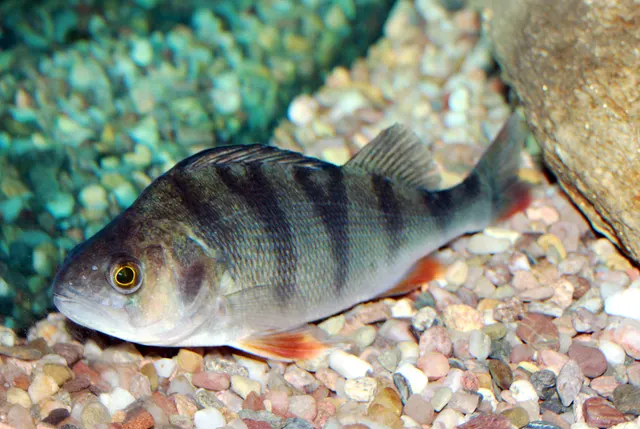
From a boat · 3
What these strengths mean
- Characteristic of this water
- This water is strongly identified with this species by the sources that cover it.
- Regular local target
- Fishing sources describe this as a normal local target here, not merely as caught.
- Repeatedly reported
- Several independent public accounts. Enough to say it happens more than once; not enough to call it a fishery.
- How breadth is counted
- A fish documented at six marks is shown as six marks: breadth never raises the strength on its own. A fishery account describes the fishing; a recorded catch reports one specific catch. How evidence is weighed.
How people fish here
3 methods are recorded on the places documented here, counted from the records themselves rather than from what is practised in the country. Each opens a full guide to the technique.
Float fishing
Recorded at 1 place here, over lough.
Suspending a bait at a controlled depth beneath a buoyant indicator — the most visual, most controllable and most widely applicable method in angling.
Documented on the same ground: Brown trout, Northern pike, European perch.
Stillwater fly fishing
Recorded at 1 place here, over lough.
Fly fishing without current, where the angler supplies every movement and the problem becomes finding fish rather than presenting to them.
Documented on the same ground: Brown trout, Northern pike, European perch.
Trolling
Recorded at 1 place here, over lough.
Towing lures or baits behind a moving boat to cover large volumes of water and locate scattered fish.
Documented on the same ground: Brown trout, Northern pike, European perch.
These are the methods documented at the places FishingHQ holds here. A species listed beside a method is documented on the same ground, which is not the same as being taken that way — where a source establishes the method a fish was caught on, it is stated on that place’s own page. All fishing methods.
What dominates
Boat fishing on the drift with teams of wet flies, which is the traditional and dominant method. Dapping with a natural or artificial mayfly on a long rod and a blow line, a distinctive Irish loch practice. Dry fly fishing to rising trout during the hatch. Trolling with lures and baits for large trout and pike, particularly in the colder months. Pike fishing, both lure and deadbait, which is a substantial fishery in its own right. Salmon fishing where the system's runs permit. Shore fishing is limited by access and by the fact that the productive water is generally out among the shoals.
The water available
A very large lough on carboniferous limestone with alkaline, calcium-rich water; extensive shallow rocky shoals, reefs and gravel that are the productive feeding ground; hundreds of islands and a highly indented shoreline; deeper basins in parts of the lake; a substantial inflow river system draining from the lough above and feeding rivers around the catchment; a short outflow river running to the sea through the city at its foot; and marl and weed beds in the shallower bays.
How the rules are structured
Inland fisheries in Ireland are administered nationally by the state inland fisheries body, which manages the lough, its feeder rivers and the salmon and sea trout stocks of the system. Brown trout fishing on the great western loughs has historically been free of a state licence requirement, unlike salmon and sea trout fishing which requires a state licence and, for salmon, the operation of quota and tagging arrangements; that distinction is a structural feature of Irish angling regulation rather than a local peculiarity. Byelaws set closed seasons, permitted methods and any restrictions on particular waters. Salmon conservation measures apply at the level of individual river stocks and are revised annually on scientific advice. Boat operation on the lough is subject to navigation and safety requirements, and lifejacket rules apply to small craft. The lough and parts of its catchment carry European-level habitat designations, and the water body is subject to water framework directive objectives with nutrient reduction as a live catchment management issue. Biosecurity requirements on equipment apply because of invasive species. FishingHQ does not state what any current rule is.
Who to ask
- The state inland fisheries body, which manages the lough, its feeder rivers, the salmon and sea trout stocks and the byelaws applying to them.
- The national parks and wildlife service and equivalent conservation bodies, for the European habitat designations covering the lough and its catchment.
- The environmental protection agency and local authorities, for water quality, nutrient management and catchment measures.
- The maritime safety authority, for small-craft and lifejacket requirements on the lough.
- The local angling federations and clubs, which have historically played a substantial role in the management and stewardship of the fishery.
Words you will meet
- Dapping
- Fishing a natural or artificial fly on a very long rod and a light blow line, letting the wind carry the fly out and dance it on the surface. A traditional Irish and Scottish loch method, and the classic way of fishing the mayfly on this water.
- The mayfly
- The large upwing fly whose emergence in late spring produces the lough's most famous fishing. Locally it names the event as much as the insect: the mayfly is a period of the year, not just a species.
- Shoal
- A shallow rocky or gravel area rising from deeper water. On a limestone lough these are where the invertebrate production is concentrated and where trout feed, and reading them is the central skill of boat fishing here.
- Wet fly team
- Two or more flies fished together on droppers, worked across the wave on the drift. The standard loch style and the method by which most Corrib trout are caught.
- Gillaroo and ferox
- Traditional Irish names for brown trout of distinctive habit — gillaroo for shallow-water snail-feeding fish, ferox for large, long-lived, fish-eating trout of deep water. Both describe forms of the same species rather than separate ones.
Conditions and hazards
This is a very large lake with a rocky, shallow, island-strewn bed, and boat safety is the dominant hazard. Submerged rocks and shoals are numerous and many are unmarked, so striking one at speed is a genuine risk and has caused fatalities. The lough can raise a steep and dangerous sea quickly in wind because it is large and shallow, and conditions in the open water can be far worse than they appear from a sheltered bay. Sudden weather changes are common in the west of Ireland. Water is cold enough year-round for cold water shock to be the immediate risk after immersion. Distances are considerable and parts of the lough are far from any landing place. Fog and failing light make navigation among islands difficult. Lifejacket requirements exist for good reason on this water and the local record supports them.
Limestone, alkalinity and why the water chemistry is the fishery
The single most important fact about Lough Corrib is chemical, and it explains why this lake produces trout and a superficially similar lake twenty miles west does not.
THE LOUGH SITS ON LIMESTONE. Carboniferous limestone dissolves slowly in water, delivering calcium and bicarbonate, which raises alkalinity and buffers pH. The water is hard and productive as a direct result.
ALKALINITY DRIVES INVERTEBRATE PRODUCTION. Calcium is required for the shells of snails and the exoskeletons of crustaceans, and buffered water supports a far richer invertebrate community than acidic water can. Shrimp, snails, caddis, chironomids and — critically — mayfly nymphs occur in abundance.
INVERTEBRATE PRODUCTION DRIVES TROUT. A wild brown trout population is limited by food and by spawning habitat, and a limestone lough delivers the first in quantity. That is why the great western loughs of Ireland are famous fisheries and why peat-stained acidic loughs on granite, however beautiful, hold small numbers of small fish.
THE SHOALS CONCENTRATE IT. Shallow rocky and gravel areas rising from deeper water receive light to the bottom, support the richest invertebrate communities, and are where trout feed. A very large lake with hundreds of islands has an enormous amount of this productive shallow edge relative to its area.
THE FEEDER RIVERS PROVIDE THE SPAWNING. Trout run the inflowing rivers and streams to spawn on gravel, so the fishery is self-sustaining as long as those tributaries remain accessible and clean. The health of small feeder streams is therefore the limiting factor on a lake fishery, which is not intuitive.
AND THE LAKE IS SHALLOW ENOUGH TO WARM AND MIX READILY, which increases productivity further but also makes it more vulnerable to nutrient enrichment than a deep lake would be.
Backed by research — why, and the sources (2)
Supported by peer-reviewed research or fisheries science. The sources are listed and can be checked.
- Freshwater Fishes of the British Isles — HarperCollins (New Naturalist 75), 1992 (Reference work)Relied on for: Distribution, habitat association, spawning requirements and ecology of British and Irish freshwater fishes.States this directlyCitation checked — the work exists and is described correctly
- FishBase: a global information system on fishes — Froese, R. and D. Pauly, eds. — FishBase Consortium (Scientific institute)Relied on for: Distribution, habitat association, size and life history recorded for the species concerned.Background and mechanism onlyPassage read and verified
Wild trout, running salmon and the species that arrived later
The Corrib's species picture has changed considerably within recent decades, and telling it honestly means separating what belongs there from what has arrived.
WILD BROWN TROUT ARE THE FISHERY. Self-sustaining, spawning in the feeder rivers, feeding on the shoals, and reaching good sizes on the invertebrate production the limestone supports. The population is genuinely wild rather than maintained by stocking, which is increasingly unusual for a fishery of this profile.
THE TROUT TAKE DIFFERENT FORMS AND THE OLD NAMES RECOGNISE IT. Gillaroo describes shallow-water fish specialising on snails, with the thickened stomach walls that diet produces; ferox describes large, long-lived, fish-eating trout of the deeper water. Both are brown trout, and both are real ecological forms rather than separate species.
ATLANTIC SALMON RUN THE SYSTEM, using the lough as a corridor to spawning water above, and salmon fishing is a genuine part of the fishery subject to the national conservation framework.
PIKE ARE ABUNDANT AND SUPPORT A SUBSTANTIAL FISHERY. Their status in Irish waters is a long-running argument — whether they are native or introduced in particular systems, and what management is appropriate on a trout water — and it is a genuine and unresolved dispute rather than a settled question.
EELS ARE PRESENT AND CARRY THE SPECIES' CRITICALLY ENDANGERED STATUS.
ROACH AND OTHER COARSE SPECIES ARRIVED IN THE TWENTIETH CENTURY and have established, changing the invertebrate and zooplankton community and competing with trout at some life stages.
AND THE INVASIVES ARE THE MODERN PROBLEM. Zebra mussel arrived and filter-feeds at enormous aggregate rates, increasing water clarity substantially and redirecting energy from the open water to the bottom; curly-leaved waterweed and other plants have spread. These changes are ongoing, their consequences for the trout fishery are still being assessed, and any account of the lough that described a stable ecosystem would be wrong.
Backed by research — why, and the sources (2)
Supported by peer-reviewed research or fisheries science. The sources are listed and can be checked.
- Freshwater Fishes of the British Isles — HarperCollins (New Naturalist 75), 1992 (Reference work)Relied on for: Distribution, habitat association, spawning requirements and ecology of British and Irish freshwater fishes.States this directlyCitation checked — the work exists and is described correctly
- FishBase: a global information system on fishes — Froese, R. and D. Pauly, eds. — FishBase Consortium (Scientific institute)Relied on for: Distribution, habitat association, size and life history recorded for the species concerned.Background and mechanism onlyPassage read and verified
The drift, the wet fly team and the dap
Corrib fishing is boat fishing, and the methods are the traditional Irish loch methods that were developed on water exactly like this.
DRIFTING IS THE FUNDAMENTAL TECHNIQUE. A boat is positioned upwind of a shoal and allowed to drift across it broadside, with anglers casting a short line ahead and working flies back as the boat closes. It covers water efficiently, presents flies to fish that have not been disturbed, and it is why boat control — a drogue, an oar, an understanding of wind and shoal orientation — matters as much as casting.
THE WET FLY TEAM IS THE STANDARD PRESENTATION. Two or more flies on droppers, worked across the wave with the top dropper occasionally tripped on the surface, imitating emerging and drowned insects. It is a method with two centuries of development behind it on these waters.
DAPPING IS THE DISTINCTIVE IRISH PRACTICE. A very long rod and a light floss blow line let the wind carry a fly — traditionally a live mayfly, now frequently an artificial — out ahead of the boat, where it dances on the surface. It is a method that only works with wind, it is enormously effective during the mayfly, and it has essentially no equivalent outside Ireland and Scotland.
DRY FLY FISHING TO RISING FISH is used during heavy hatches and requires a different discipline from either of the above.
TROLLING TAKES THE LARGE TROUT AND THE PIKE, worked over deeper water with lures and baits, particularly in the colder months when the shallows are unproductive.
PIKE FISHING IS A SUBSTANTIAL SEPARATE FISHERY with lures and deadbaits, and it has its own following and its own arguments with the trout interest.
AND SHORE FISHING IS LIMITED. The productive water is out among the shoals, access to the shoreline is patchy, and the fishery has therefore always been a boat one — which makes boat competence a prerequisite rather than a convenience.
What experienced anglers do — why, and the sources (2)
Widely and independently recommended by experienced anglers and specialist sources. This is real angling knowledge, not proof: controlled evidence for it is limited, and FishingHQ records it as convention rather than as a demonstrated effect.
- Freshwater Fishing — Macdonald & Jane's, 1975 (Specialist angling publication)Relied on for: Established British freshwater angling practice and its history, including the development of technique on particular kinds of water.States this directlyCitation checked — the work exists and is described correctly
- Trout & Salmon — Bauer Media (Specialist angling publication)Relied on for: Established British and Irish game angling practice, run timing conventions and the culture of particular fisheries.States this directlyCitation checked — the work exists and is described correctly
A year built around a fortnight of flies
The Corrib's season has a shape that is unusually sharply defined, and one event dominates it.
EARLY SEASON IS COLD AND DEEP. As the season opens, water is cold, trout are not surface-feeding, and the fishing is trolling or wet fly worked deep. Fish are recovering from spawning and the numbers moving are limited.
THE DUCK FLY AND EARLY HATCHES START THE FLY FISHING. Chironomid emergences in early spring bring trout to the surface in bays and sheltered water and open the fly fishing season proper.
THE MAYFLY IS THE EVENT AND IT LASTS WEEKS RATHER THAN MONTHS. In late spring, large upwing flies emerge in enormous numbers over the shoals. Trout feed on nymphs, emergers, duns and spent spinners in succession, and for a few weeks the entire fishery is organised around it. Anglers travel for it, the boats are out, and the dapping and dry fly fishing are at their best. The exact timing varies with the season by a week or two and cannot be stated as a date.
EARLY SUMMER AFTER THE MAYFLY is a quieter period, with sedge fishing in the evenings and daytime wet fly on the shoals.
LATE SUMMER SEES THE SEDGE AND THE DAPHNIA-DRIVEN FEEDING, and evening fishing becomes the productive window.
AUTUMN BRINGS BIGGER FISH BACK ONTO THE SHALLOWS as water cools, and trolling for large trout is at its most productive.
WINTER IS CLOSED FOR TROUT and the pike fishing takes over.
AND THE WIND IS THE DAILY SEASON. On a large shallow lough, wind decides which shoals are fishable, whether a drift can be held, and whether dapping works at all — and a flat calm is frequently the least useful condition of all, which surprises visitors used to river fishing.
Backed by research — why, and the sources (2)
Supported by peer-reviewed research or fisheries science. The sources are listed and can be checked.
- Freshwater Fishes of the British Isles — HarperCollins (New Naturalist 75), 1992 (Reference work)Relied on for: Distribution, habitat association, spawning requirements and ecology of British and Irish freshwater fishes.States this directlyCitation checked — the work exists and is described correctly
- FishBase: a global information system on fishes — Froese, R. and D. Pauly, eds. — FishBase Consortium (Scientific institute)Relied on for: Distribution, habitat association, size and life history recorded for the species concerned.Background and mechanism onlyPassage read and verified
A national fisheries body, free trout fishing and a nutrient problem
The regulatory framework here has one feature that surprises visiting anglers and several that follow from the lake's ecological pressures.
INLAND FISHERIES ARE ADMINISTERED NATIONALLY. A single state inland fisheries body manages the lough, its feeder rivers and the salmon and sea trout stocks of the system, sets byelaws and enforces them. That is a more centralised arrangement than the British one.
BROWN TROUT FISHING ON THE GREAT WESTERN LOUGHS HAS HISTORICALLY NOT REQUIRED A STATE LICENCE, unlike salmon and sea trout fishing which does. That distinction is a structural feature of Irish angling regulation and it is genuinely unusual by European standards. It does not mean the fishing is unregulated: byelaws on seasons, methods and sizes apply, and permission questions about access and boats are separate again.
SALMON ARE MANAGED STOCK BY STOCK. Irish salmon conservation operates at the level of individual river stocks with annual scientific assessment, quotas and tagging, and rivers open or close to salmon fishing on that basis.
CONSERVATION DESIGNATION COVERS THE LOUGH AND PARTS OF ITS CATCHMENT at European level, and the water body is subject to water framework objectives.
NUTRIENT ENRICHMENT IS THE LIVE CATCHMENT ISSUE. Phosphorus and nitrogen from agriculture and wastewater have driven eutrophication in Irish limestone lakes, and managing that is a catchment-wide question involving environmental and agricultural authorities as much as fisheries ones.
BIOSECURITY REQUIREMENTS APPLY TO EQUIPMENT, because zebra mussel, invasive weed and other species spread on boats, trailers and gear between waters. Check, clean and dry is enforced practice rather than advice.
BOAT SAFETY REQUIREMENTS INCLUDING LIFEJACKETS APPLY on the lough, and given the record on this water they are not a formality.
AND FISHINGHQ DOES NOT STATE WHAT ANY OF THIS CURRENTLY PERMITS.
Official guidance — why, and the sources (2)
Stated by a fisheries authority, scientific institute or recognised angling body. Authoritative, but summarising rather than demonstrating.
- Freshwater Fishes of the British Isles — HarperCollins (New Naturalist 75), 1992 (Reference work)Relied on for: Distribution, habitat association, spawning requirements and ecology of British and Irish freshwater fishes.States this directlyCitation checked — the work exists and is described correctly
- FishBase: a global information system on fishes — Froese, R. and D. Pauly, eds. — FishBase Consortium (Scientific institute)Relied on for: Distribution, habitat association, size and life history recorded for the species concerned.Background and mechanism onlyPassage read and verified
Dap, shoal, gillaroo: the words of the western loughs
The vocabulary here belongs to a tradition of loch fishing that developed on the Irish and Scottish great lakes and is not used much elsewhere.
DAPPING NAMES A METHOD THAT DEPENDS ON WIND. A very long rod, a light floss blow line and a fly carried out by the breeze to dance on the surface. It is not a variant of fly casting; it is a different way of delivering a fly entirely, and it works on these loughs because the wind is reliable and the fish look up.
THE MAYFLY NAMES A SEASON AS MUCH AS AN INSECT. Locally, 'the mayfly' means the period of the year when the hatch runs and the fishery transforms, and a conversation about the mayfly is a conversation about a fortnight rather than about an entomological identification.
SHOAL NAMES THE PRODUCTIVE STRUCTURE. A shallow rocky or gravel rise from deeper water, holding invertebrates and feeding trout. Reading shoals — where they are, which way the wind sets across them, where the drift should start — is the fundamental skill of fishing this water.
WET FLY TEAM NAMES THE STANDARD PRESENTATION: several flies on droppers, worked across the wave. The vocabulary of top dropper, middle dropper and point fly carries a whole theory of presentation with it.
GILLAROO AND FEROX ARE OLD IRISH NAMES for ecological forms of brown trout — the shallow-water snail feeder and the deep-water fish eater. They are worth knowing because they describe real differences in habit and diet within one species, and because they are the kind of local knowledge that predates the biology confirming it.
AND THE DROGUE IS A PIECE OF EQUIPMENT WORTH NAMING because it is what makes the method possible. A sea anchor slowing and orienting the drift is the difference between fishing a shoal properly and being blown across it.
What experienced anglers do — why, and the sources (2)
Widely and independently recommended by experienced anglers and specialist sources. This is real angling knowledge, not proof: controlled evidence for it is limited, and FishingHQ records it as convention rather than as a demonstrated effect.
- Freshwater Fishing — Macdonald & Jane's, 1975 (Specialist angling publication)Relied on for: Established British freshwater angling practice and its history, including the development of technique on particular kinds of water.States this directlyCitation checked — the work exists and is described correctly
- Trout & Salmon — Bauer Media (Specialist angling publication)Relied on for: Established British and Irish game angling practice, run timing conventions and the culture of particular fisheries.States this directlyCitation checked — the work exists and is described correctly
Two centuries of loch fishing, and an ecosystem that changed under it
The Corrib's angling history is long and its ecological history is short and dramatic.
THE LOUGH HAS BEEN A NOTED FISHERY SINCE THE NINETEENTH CENTURY, drawing visiting anglers and generating a body of literature and technique. The methods now considered traditional — the drift, the wet fly team, the dap — were developed and refined on the great western loughs in this period.
THE MAYFLY FISHING BUILT THE REPUTATION. The scale of the hatch and the quality of the fishing during it made the lough internationally known among fly anglers and supported a seasonal visitor economy in the surrounding towns that persists.
THE FISHERY WAS MANAGED LOCALLY FOR MUCH OF ITS HISTORY, with angling clubs and federations playing a substantial role in stewardship, spawning stream protection and enforcement, alongside the state body.
ROACH AND OTHER COARSE SPECIES ARRIVED IN THE TWENTIETH CENTURY, spreading through Irish waters after introduction, and altered the fish community.
EUTROPHICATION BECAME A SERIOUS ISSUE from the later twentieth century, as nutrient loading from agriculture and wastewater increased in the catchment, with algal blooms and water quality decline. Managing it has been a long catchment-scale effort with partial success.
ZEBRA MUSSEL ARRIVED IN THE 1990s AND CHANGED THE LAKE. Filter feeding at enormous aggregate rates increased water clarity substantially, which changed light penetration, plant growth and the distribution of energy in the system. Its consequences for the trout fishery are complex, still being assessed, and not simply good or bad.
OTHER INVASIVES FOLLOWED, including invasive waterweed, and biosecurity became a serious management concern.
AND THE FISHERY HAS PERSISTED THROUGH ALL OF IT, which is worth stating. A wild self-sustaining brown trout fishery of this quality surviving eutrophication, species introductions and invasive invertebrates is a genuine testament to the productivity of limestone water and to the catchment work done on it.
Official guidance — why, and the sources (2)
Stated by a fisheries authority, scientific institute or recognised angling body. Authoritative, but summarising rather than demonstrating.
- Freshwater Fishes of the British Isles — HarperCollins (New Naturalist 75), 1992 (Reference work)Relied on for: Distribution, habitat association, spawning requirements and ecology of British and Irish freshwater fishes.States this directlyCitation checked — the work exists and is described correctly
- FishBase: a global information system on fishes — Froese, R. and D. Pauly, eds. — FishBase Consortium (Scientific institute)Relied on for: Distribution, habitat association, size and life history recorded for the species concerned.Background and mechanism onlyPassage read and verified
Boatmen, clubs and a fishery that belongs to the people who fish it
The angling culture of the western loughs is distinctive and it is notably less hierarchical than the British salmon-river model.
THE FISHERY IS EFFECTIVELY OPEN IN A WAY THE TWEED IS NOT. Brown trout fishing here does not operate on privately let beats, and the historical absence of a state licence requirement for brown trout on these loughs means the practical barrier to fishing is a boat and the competence to use it rather than a letting agent.
THE BOATMAN IS THE EQUIVALENT OF THE GHILLIE and is a genuine specialist. Knowing the shoals, the safe passages between islands and the way to set a drift on a given wind is knowledge that takes years, and hiring a boatman is both a practical necessity for a visitor and the main route by which the knowledge is transmitted.
CLUBS AND FEDERATIONS HAVE REAL STANDING. Local angling organisations have historically done substantial work on spawning stream protection, monitoring and enforcement, and the fishery's stewardship has a genuinely community character.
THE MAYFLY IS A SOCIAL SEASON. The hatch fills the lakeside towns, boats are out in numbers, and the period has an atmosphere that anglers travel for as much as for the fishing.
THE PIKE ARGUMENT IS PART OF THE CULTURE AND IT IS UNRESOLVED. Whether pike should be controlled on a wild trout fishery, and what their status in Irish waters actually is, divides anglers here with real feeling on both sides. FishingHQ records the argument rather than adjudicating it.
BOAT COMPETENCE IS AN EXPECTATION. On a large shallow rocky lough with unmarked hazards, knowing where you can go is a survival skill, and the local seriousness about that is proportionate to the record.
AND THE WILDNESS OF THE FISH IS THE POINT LOCALLY. A self-sustaining wild trout population is valued explicitly as such, and the resistance to stocking on these waters is a considered position rather than an accident of history.
What experienced anglers do — why, and the sources (2)
Widely and independently recommended by experienced anglers and specialist sources. This is real angling knowledge, not proof: controlled evidence for it is limited, and FishingHQ records it as convention rather than as a demonstrated effect.
- Freshwater Fishing — Macdonald & Jane's, 1975 (Specialist angling publication)Relied on for: Established British freshwater angling practice and its history, including the development of technique on particular kinds of water.States this directlyCitation checked — the work exists and is described correctly
- Trout & Salmon — Bauer Media (Specialist angling publication)Relied on for: Established British and Irish game angling practice, run timing conventions and the culture of particular fisheries.States this directlyCitation checked — the work exists and is described correctly
The hazard is the bottom, and a ripple is what hides it
On most large waters the danger is what the wind does to the surface. Here the first danger is what the limestone does to the bed, and the wind's main contribution is to stop anybody seeing it.
THE LAKE IS LARGE, SHALLOW AND FULL OF ROCK. Hundreds of islands, extensive rocky shoals and reefs, and a great deal of it barely covered. The shoals are the fishery — they are where the food is and where the trout are — so the productive water and the dangerous water are the same water, and a boat is out among it by design rather than by mistake.
MANY OF THOSE ROCKS ARE UNMARKED, and this is the part visitors underestimate. There is no buoyed channel across most of this lough. Safe passages exist and are known, and they are known by people rather than published on the water. Striking a shoal at speed can hole or capsize a boat and has caused deaths here.
A RIPPLE IS WHAT MAKES IT LETHAL RATHER THAN MERELY PRESENT. In flat calm, a covered rock shows as a slick or a swirl and can be read. Put a chop on the water — the same chop that makes the trout fishing — and the surface signature disappears entirely. So the conditions anglers come for are the conditions in which the bed cannot be seen, and the two are not separable.
THE SECOND HAZARD IS THAT A SHALLOW LAKE ANSWERS THE WIND FAST. Depth damps waves; a large shallow water with a long fetch does not. Wind rising over open water builds a steep, short, awkward sea in far less time than the same wind would need on a deep lake, and conditions in the middle can be entirely different from what they look like from a sheltered bay, which is where the decision to go out is usually made. Weather in the west of Ireland changes quickly and squalls arrive with little notice.
AND THE DISTANCES ARE REAL. Parts of this lough are a long way from any landing place, navigation among the islands is genuinely difficult in fog or failing light, and cold water is the constant underneath: immersion after a capsize takes swimming ability inside the first minute, a long way from anywhere to swim to.
WHAT ACTUALLY HELPS. Wear a lifejacket rather than carry one — the local requirement exists because of the local record, not in spite of it. Take a boatman who knows the water, or learn the safe passages before travelling at any speed, and keep to known routes. Watch the wind FORECAST rather than the current conditions, because the sheltered bay you are looking at is not the open water you will be in. Turn for shelter early. Carry a means of summoning help and tell somebody the plan and the return time. Fog and failing light are reasons to be already coming in rather than reasons to navigate carefully.
Official guidance — why, and the sources (3)
Stated by a fisheries authority, scientific institute or recognised angling body. Authoritative, but summarising rather than demonstrating.
- RNLI water safety guidance: cold water shock and Float to Live — Royal National Lifeboat Institution (Water-safety or diver-training authority)Relied on for: Cold water shock and the immersion response, tidal cut-off, and water-safety guidance for shore anglers and small-craft users.States this directlyPassage read and verified
- Met Office shipping forecast, inshore waters forecast and marine warnings — Met Office, United Kingdom (Government fisheries body)Relied on for: That inshore waters forecasts, sea state, swell and wind are the operative inputs for shore and small-craft decisions, and the spatial resolution at which those forecasts are issued.States this directlyCitation checked — the work exists and is described correctly
- General angling website restatements of established technique — Various (Credible secondary source)Relied on for: Widely restated descriptions of regional angling practice and of the conditions under which it is undertaken, recorded as practitioner consensus rather than as scholarship.Background and mechanism onlyCitation checked — the work exists and is described correctly
Some of what lives here
Fish recorded here that FishingHQ holds a reviewed photograph of. It is not a complete list of what Lough Corrib holds, and it is not a prediction that you will catch any of them — it is a way in to the ones we can show you.
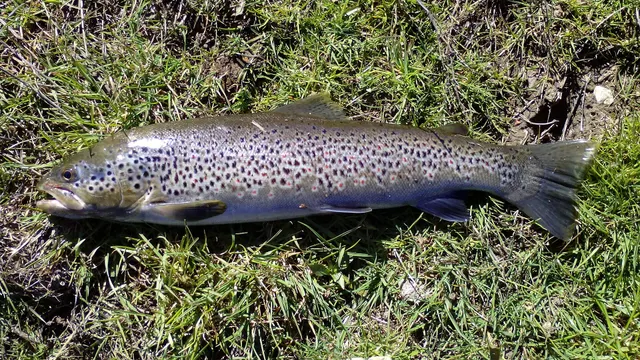 Brown troutA single, extraordinarily plastic species that appears as a tiny hill-stream fish, a deep-bodied loch trout and a silver sea-run migrant — all the same animal.
Robermix, CC0, via Wikimedia Commons
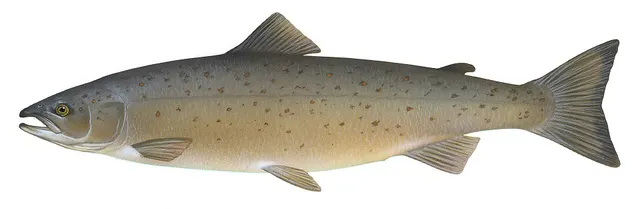 Atlantic salmonAn anadromous salmonid that migrates from its natal river to the North Atlantic and returns to spawn — and a species in serious, well-documented decline.
Knepp, Timothy, Public domain, via Wikimedia Commons
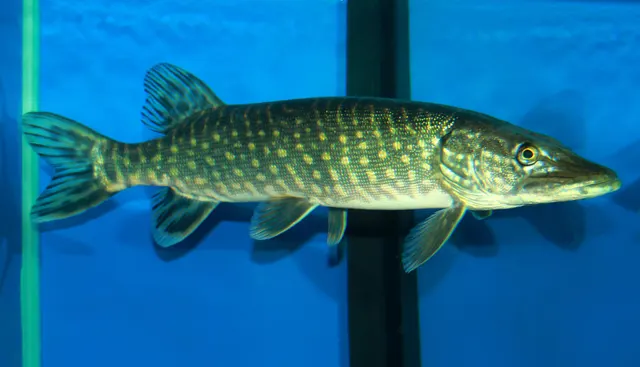 Northern pikeThe dominant freshwater ambush predator of the northern hemisphere: long, cryptic, and built for one violent acceleration rather than pursuit.
Karelj, Public domain, via Wikimedia Commons
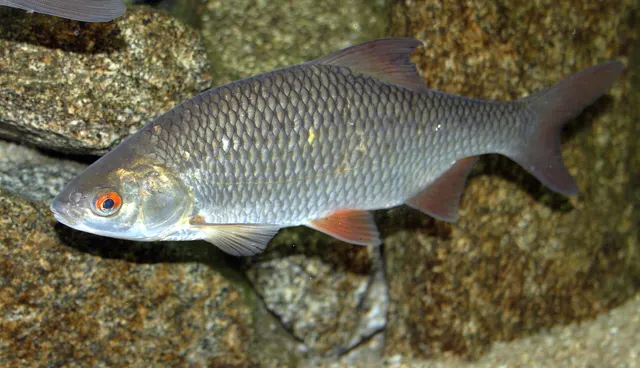 RoachThe most numerous and most frequently caught coarse fish across much of Europe, and the prey species that underpins the whole freshwater predator food web.
Karelj, Public domain, via Wikimedia Commons
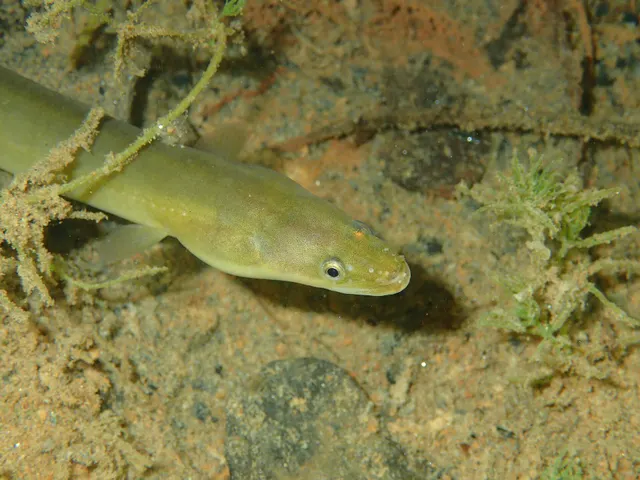 European eelA Critically Endangered fish that breeds in the Sargasso Sea, drifts to Europe as a transparent larva, lives decades in fresh water and returns once to spawn and die.
jujurenoult — CC BY 4.0, via Wikimedia Commons
Places within this area
Publicly documented fishing geography. FishingHQ describes what the ground is; it does not say whether you may fish it, and every one of these sends that question to the body that holds the answer. Browse every place in this part of the world.
Who to ask before fishing any of these
FishingHQ does not know the current access position here. Irish freshwater angling requires permission from whoever holds the fishing rights, and salmon and sea trout additionally require a state licence and a tagging arrangement. Seasons, permits and conservation measures apply and change. Check with Inland Fisheries Ireland and with the fishery owner or club before going.
Lough Mask
Lough · Fresh water
A large limestone lough immediately above Lough Corrib and connected to it underground, with a rocky, shallow, boulder-strewn bed over much of its area, sheer cliffs on the western shore and extensive shallow bays on the east.
Big enough and shallow enough to build a short steep sea very quickly in wind, with very little shelter on the open water.
Particular to this ground: cold water shock.
Severe hazards of Lough Corrib apply here: boat safety.
Safety
Boat safety — Can cause serious injury or death
The lough is large, shallow and strewn with rocks, reefs and islands, many of them unmarked and invisible in a ripple. Striking one at speed can hole or capsize a boat, and this has caused fatalities. The lake also raises a steep dangerous sea quickly in wind, and conditions in open water can be far worse than they look from a sheltered bay.
What reduces it: Wear a lifejacket, take a local boatman or learn the safe passages before travelling at speed, keep to known routes, watch the wind forecast rather than the current conditions, and turn for shelter early. Carry a means of summoning help and tell somebody your plan.
Worse when:
- In a ripple or a chop, when submerged rocks cannot be seen.
- In rising wind on the open water, where fetch is long enough to build a steep sea quickly.
- In failing light or fog, when navigation among islands becomes very difficult.
Cold water shock — Can cause serious injury or death
Water temperatures are low for most of the season. Immersion after a capsize triggers gasping and hyperventilation and the ability to swim is lost within the first minute, which on a large lough far from a landing place is decisive.
What reduces it: Wear a lifejacket rather than carrying one, stay with the boat if it remains afloat, and if immersed, float and control breathing before attempting anything else.
Weather and lightning — Can cause injury needing treatment
Weather in the west of Ireland changes quickly, and a fishable morning can become an unfishable and dangerous afternoon. Squalls arrive with little warning and the lough responds fast because it is shallow.
What reduces it: Check the forecast before going out and again during the day, stay within reach of shelter, and treat an approaching front as a reason to come in rather than a reason to fish harder.
Further safety reading
- Boat safety for anglers — A large shallow lough strewn with unmarked rocks and reefs, which can raise a steep dangerous sea quickly in wind, is a hazardous water for anybody without local knowledge of the passages.
- Buoyancy aids for anglers — Lifejacket requirements exist on this water for good reason, and the local record of losses supports them.
- Cold water shock and immersion — Water temperatures are low for most of the season, and an immersion far from a landing place on a large lough is decided within the first minute.
Check the rules before you fish
Fishing laws, bylaws, access rules, seasons, bait restrictions and permitted methods vary by location and can change. Check the current rules from the relevant authority and the water you intend to fish before fishing.
Check with:
- Current national or regional law for where you are fishing
- Current local bylaws
- The relevant fisheries authority
- The landowner, club or fishery whose water it is
- Any restrictions specific to the species or the method you intend to use
Where to go next
What swims here
- Atlantic salmonRuns the system, using the lough as a corridor to spawning water above, and is fished under the national stock-by-stock conservation framework.
- Brown troutA wild self-sustaining population spawning in the feeder rivers and feeding on the invertebrate production the limestone supports, which is the fishery this lough is known for.
- European eelPresent in the system and carrying the species' critically endangered status, as it does across its European range.
- Northern pikeAbundant in the lough and the basis of a substantial fishery, with a long-running argument attached about management on a wild trout water.
- RoachArrived and established in the twentieth century, altering the zooplankton and invertebrate community and competing with trout at some life stages.
How this compares
- The Republic of IrelandThe largest of the great limestone loughs, and the clearest illustration of what fertile alkaline water does for both trout and coarse fishing.
- The Shannon systemThe two great limestone waters of the west of Ireland, both alkaline and both rock-strewn, and one of them is a wild trout fishery and the other a pike and coarse system. The difference is depth, gradient and the fish that arrived, and the pair shows how much a shared geology does not settle.
Rules and access
- Close seasonsByelaws set closed seasons and permitted methods, and salmon are managed stock by stock with annual scientific assessment deciding whether a river opens at all.
- Licences and permissionBrown trout fishing on the great western loughs has historically not required a state licence while salmon and sea trout fishing does, which is a structural feature of Irish angling regulation.
Environment and conservation
- Fish stocks and sustainabilityNutrient enrichment from catchment agriculture and wastewater has driven eutrophication in Irish limestone lakes, and managing it is a catchment question rather than a fisheries one.
- Invasive species and biosecurityZebra mussel arrived and changed the lake substantially by filtering it clear, and invasive waterweed followed, which is why check-clean-dry is enforced practice on Irish waters.
Sources and evidence
- Freshwater Fishes of the British Isles — HarperCollins (New Naturalist 75), 1992 (Reference work)Relied on for: Distribution, habitat association, spawning requirements and ecology of British and Irish freshwater fishes.States this directlyCitation checked — the work exists and is described correctly
- FishBase: a global information system on fishes — Froese, R. and D. Pauly, eds. — FishBase Consortium (Scientific institute)Relied on for: Distribution, habitat association, size and life history recorded for the species concerned.Background and mechanism onlyPassage read and verified
- Freshwater Fishing — Macdonald & Jane's, 1975 (Specialist angling publication)Relied on for: Established British freshwater angling practice and its history, including the development of technique on particular kinds of water.States this directlyCitation checked — the work exists and is described correctly
- Trout & Salmon — Bauer Media (Specialist angling publication)Relied on for: Established British and Irish game angling practice, run timing conventions and the culture of particular fisheries.States this directlyCitation checked — the work exists and is described correctly
Why the 16 connections on this page are here, and the sources
What swims here
Backed by research — 5 connections
Supported by peer-reviewed research or fisheries science. The sources are listed and can be checked.
Atlantic salmon
A distribution association between an animal and a kind of water, rather than a claim about any named mark.
- Freshwater Fishes of the British Isles — HarperCollins (New Naturalist 75), 1992 (Reference work)Relied on for: Distribution, habitat association and ecology of British and Irish freshwater fishes, including occurrence in the water body concerned.States this directlyCitation checked — the work exists and is described correctly
- FishBase: a global information system on fishes — Froese, R. and D. Pauly, eds. — FishBase Consortium (Scientific institute)Relied on for: Distribution, habitat association and life history recorded for the species.Background and mechanism onlyPassage read and verified
Brown trout
A distribution association between an animal and a kind of water, rather than a claim about any named mark.
- Freshwater Fishes of the British Isles — HarperCollins (New Naturalist 75), 1992 (Reference work)Relied on for: Distribution, habitat association and ecology of British and Irish freshwater fishes, including occurrence in the water body concerned.States this directlyCitation checked — the work exists and is described correctly
- FishBase: a global information system on fishes — Froese, R. and D. Pauly, eds. — FishBase Consortium (Scientific institute)Relied on for: Distribution, habitat association and life history recorded for the species.Background and mechanism onlyPassage read and verified
European eel
A distribution association between an animal and a kind of water, rather than a claim about any named mark.
- Freshwater Fishes of the British Isles — HarperCollins (New Naturalist 75), 1992 (Reference work)Relied on for: Distribution, habitat association and ecology of British and Irish freshwater fishes, including occurrence in the water body concerned.States this directlyCitation checked — the work exists and is described correctly
- FishBase: a global information system on fishes — Froese, R. and D. Pauly, eds. — FishBase Consortium (Scientific institute)Relied on for: Distribution, habitat association and life history recorded for the species.Background and mechanism onlyPassage read and verified
Northern pike
A distribution association between an animal and a kind of water, rather than a claim about any named mark.
- Freshwater Fishes of the British Isles — HarperCollins (New Naturalist 75), 1992 (Reference work)Relied on for: Distribution, habitat association and ecology of British and Irish freshwater fishes, including occurrence in the water body concerned.States this directlyCitation checked — the work exists and is described correctly
- FishBase: a global information system on fishes — Froese, R. and D. Pauly, eds. — FishBase Consortium (Scientific institute)Relied on for: Distribution, habitat association and life history recorded for the species.Background and mechanism onlyPassage read and verified
Roach
A distribution association between an animal and a kind of water, rather than a claim about any named mark.
- Freshwater Fishes of the British Isles — HarperCollins (New Naturalist 75), 1992 (Reference work)Relied on for: Distribution, habitat association and ecology of British and Irish freshwater fishes, including occurrence in the water body concerned.States this directlyCitation checked — the work exists and is described correctly
- FishBase: a global information system on fishes — Froese, R. and D. Pauly, eds. — FishBase Consortium (Scientific institute)Relied on for: Distribution, habitat association and life history recorded for the species.Background and mechanism onlyPassage read and verified
How people fish here
What experienced anglers do — 2 connections
Widely and independently recommended by experienced anglers and specialist sources. This is real angling knowledge, not proof: controlled evidence for it is limited, and FishingHQ records it as convention rather than as a demonstrated effect.
Fly fishing
A discipline that is characteristic of the place rather than merely possible there, joined so a reader can move between the place and the practice.
- General angling website restatements of established technique — Various (Credible secondary source)Relied on for: Widely restated practice associating this discipline with this place, recorded as practitioner consensus rather than as tested fact.Background and mechanism onlyCitation checked — the work exists and is described correctly
- Fishers' Craft and Lettered Art: Tracts on Fishing from the End of the Middle Ages — University of Toronto Press, 1997 (Scientific literature)Relied on for: That fishing traditions develop around the water and fish available to them, and the historical method of reading such traditions.States this directlyCitation checked — the work exists and is described correctly
Predator fishing
A discipline that is characteristic of the place rather than merely possible there, joined so a reader can move between the place and the practice.
- General angling website restatements of established technique — Various (Credible secondary source)Relied on for: Widely restated practice associating this discipline with this place, recorded as practitioner consensus rather than as tested fact.Background and mechanism onlyCitation checked — the work exists and is described correctly
- Fishers' Craft and Lettered Art: Tracts on Fishing from the End of the Middle Ages — University of Toronto Press, 1997 (Scientific literature)Relied on for: That fishing traditions develop around the water and fish available to them, and the historical method of reading such traditions.States this directlyCitation checked — the work exists and is described correctly
How this compares
What experienced anglers do — 2 connections
Widely and independently recommended by experienced anglers and specialist sources. This is real angling knowledge, not proof: controlled evidence for it is limited, and FishingHQ records it as convention rather than as a demonstrated effect.
The Republic of Ireland
Two places a reader would reasonably weigh against one another, joined where the comparison teaches something about both. It is also how the larger geography is linked to what sits inside it.
- General angling website restatements of established technique — Various (Credible secondary source)Relied on for: Widely restated angling practice and belief, recorded as practitioner consensus rather than as tested fact.Background and mechanism onlyCitation checked — the work exists and is described correctly
- Angling Trust guidance for anglers — Angling Trust (Angling or fisheries organisation)Relied on for: Guidance for anglers on participation, licensing structure, access arrangements and getting started.Background and mechanism onlyCitation checked — the work exists and is described correctly
The Shannon system
A claim that two places are worth reading against one another, because a reader choosing between them or generalising from one to the other needs to know how the underlying process differs.
- General angling website restatements of established technique — Various (Credible secondary source)Relied on for: Widely restated descriptions of which practices are conventionally used in the waters named, recorded as practitioner consensus rather than as scholarship.Background and mechanism onlyCitation checked — the work exists and is described correctly
- Sea Angler — Bauer Media (Specialist angling publication)Relied on for: Long-running published description of British and Irish sea angling practice by region and by ground type.FishingHQ's interpretation of what it saysCitation checked — the work exists and is described correctly
Safety reading
Official guidance — 3 connections
Stated by a fisheries authority, scientific institute or recognised angling body. Authoritative, but summarising rather than demonstrating.
Boat safety for anglers
A place is joined to the safety topic that explains a hazard genuinely characteristic of it, so the mechanism is reachable rather than restated as a weak warning.
- RNLI water safety guidance: cold water shock and Float to Live — Royal National Lifeboat Institution (Water-safety or diver-training authority)Relied on for: Cold water shock and the immersion response, shore angling hazards, small-craft guidance and the circumstances in which water users are most often killed.States this directlyPassage read and verified
- RoSPA water safety information and UK accidental drowning statistics — Royal Society for the Prevention of Accidents (Water-safety or diver-training authority)Relied on for: Accidental drowning statistics and the circumstances in which recreational water users are most often killed.Background and mechanism onlyPassage read and verified
Buoyancy aids for anglers
A place is joined to the safety topic that explains a hazard genuinely characteristic of it, so the mechanism is reachable rather than restated as a weak warning.
- RNLI water safety guidance: cold water shock and Float to Live — Royal National Lifeboat Institution (Water-safety or diver-training authority)Relied on for: Cold water shock and the immersion response, shore angling hazards, small-craft guidance and the circumstances in which water users are most often killed.States this directlyPassage read and verified
- RoSPA water safety information and UK accidental drowning statistics — Royal Society for the Prevention of Accidents (Water-safety or diver-training authority)Relied on for: Accidental drowning statistics and the circumstances in which recreational water users are most often killed.Background and mechanism onlyPassage read and verified
Cold water shock and immersion
A place is joined to the safety topic that explains a hazard genuinely characteristic of it, so the mechanism is reachable rather than restated as a weak warning.
- RNLI water safety guidance: cold water shock and Float to Live — Royal National Lifeboat Institution (Water-safety or diver-training authority)Relied on for: Cold water shock and the immersion response, shore angling hazards, small-craft guidance and the circumstances in which water users are most often killed.States this directlyPassage read and verified
- RoSPA water safety information and UK accidental drowning statistics — Royal Society for the Prevention of Accidents (Water-safety or diver-training authority)Relied on for: Accidental drowning statistics and the circumstances in which recreational water users are most often killed.Background and mechanism onlyPassage read and verified
Rules and access
Official guidance — 2 connections
Stated by a fisheries authority, scientific institute or recognised angling body. Authoritative, but summarising rather than demonstrating.
Close seasons
A place joined to the regulatory concept whose structure it illustrates. The edge asserts that the concept applies here, never what any current rule says.
- Code of Conduct for Responsible Fisheries — Food and Agriculture Organization of the United Nations, Rome, 1995 (Standards body)Relied on for: Principles for the management of fisheries, including licensing, closed seasons, size limits and the treatment of small-scale and shared stocks.States this directlyCitation checked — the work exists and is described correctly
- Good Fish Guide — Marine Conservation Society (Conservation authority)Relied on for: Assessment of fisheries and the management measures applied to them, including the instruments used and their purpose.Background and mechanism onlyCitation checked — the work exists and is described correctly
Licences and permission
A place joined to the regulatory concept whose structure it illustrates. The edge asserts that the concept applies here, never what any current rule says.
- Code of Conduct for Responsible Fisheries — Food and Agriculture Organization of the United Nations, Rome, 1995 (Standards body)Relied on for: Principles for the management of fisheries, including licensing, closed seasons, size limits and the treatment of small-scale and shared stocks.States this directlyCitation checked — the work exists and is described correctly
- Good Fish Guide — Marine Conservation Society (Conservation authority)Relied on for: Assessment of fisheries and the management measures applied to them, including the instruments used and their purpose.Background and mechanism onlyCitation checked — the work exists and is described correctly
Environment and conservation
Backed by research — 2 connections
Supported by peer-reviewed research or fisheries science. The sources are listed and can be checked.
Fish stocks and sustainability
An environmental pressure that is specific to this place rather than general to fishing, joined so the issue is anchored to a real example.
- The IUCN Red List of Threatened Species — International Union for Conservation of Nature (Conservation authority)Relied on for: Assessment of the species and habitats affected, and the pressures acting on them, including habitat change and exploitation.States this directlyCitation checked — the work exists and is described correctly
- Code of Conduct for Responsible Fisheries — Food and Agriculture Organization of the United Nations, Rome, 1995 (Standards body)Relied on for: Principles for responsible fisheries management, precaution, gear selectivity and the treatment of shared and small-scale fisheries.Background and mechanism onlyCitation checked — the work exists and is described correctly
Invasive species and biosecurity
An environmental pressure that is specific to this place rather than general to fishing, joined so the issue is anchored to a real example.
- The IUCN Red List of Threatened Species — International Union for Conservation of Nature (Conservation authority)Relied on for: Assessment of the species and habitats affected, and the pressures acting on them, including habitat change and exploitation.States this directlyCitation checked — the work exists and is described correctly
- Code of Conduct for Responsible Fisheries — Food and Agriculture Organization of the United Nations, Rome, 1995 (Standards body)Relied on for: Principles for responsible fisheries management, precaution, gear selectivity and the treatment of shared and small-scale fisheries.Background and mechanism onlyCitation checked — the work exists and is described correctly
How FishingHQ labels evidence is explained in the evidence policy.