The Republic of Ireland
Fishing regions · Last reviewed 2026-08-14
No general coarse or trout rod licence, a separate state licence and share certificate for salmon and sea trout, a naturally sparse native fish fauna, and some of the most accessible pike and coarse fishing in western Europe.
Being listed here is not permission to fish. What that meansClose
Access, fishing rights, seasons, licences, local bylaws and permitted methods vary and can change. Check current access, permission, local regulations, closures and restrictions before you travel or fish. FishingHQ describes what the ground is and names who holds the answer; it does not hold the answer itself.
Find the authority for a jurisdiction · What FishingHQ does and does not cover
The Republic of Ireland is a different state with a different agency and a different instrument, and the practical answer it gives to 'what do I need' is unlike any of its neighbours.
THERE IS NO GENERAL ROD LICENCE FOR COARSE FISH OR BROWN TROUT. That is the headline difference and it is genuinely liberating: for the great majority of freshwater angling, the state does not require a licence at all. What is still required is permission for the water, which is often straightforward and sometimes free, and is never automatic.
SALMON AND SEA TROUT ARE THE EXCEPTION AND THEY ARE STRICTLY MANAGED. A state licence is required for them, and a separate share certificate arrangement applies in some fisheries. Individual rivers are opened or closed to killing fish on the basis of whether they are meeting conservation limits, assessed annually, and logbooks and tagging requirements apply. This is one of the more explicitly science-driven salmon management systems in Europe and it changes every year.
SEA ANGLING IS LARGELY UNLICENSED and correspondingly open, governed by size limits, protected species, closed areas and bag limits rather than by permits. Some species carry specific measures, and those change.
THE FISH FAUNA IS NATURALLY SPARSE, which is a fact about glaciation rather than about management. Ireland was recolonised across a sea barrier after the ice retreated, so its native freshwater list is short and several of the most-fished species are introductions. That history explains why the fishing feels different from an English water holding the same species names.
AND THE COARSE AND PIKE FISHING IS AMONG THE MOST ACCESSIBLE IN WESTERN EUROPE — abundant water, light pressure, and a long tradition of welcoming visiting anglers.
What fishing here is like
An island with an enormous amount of accessible water and comparatively light angling pressure, whose freshwater fishing is dominated by large limestone loughs, slow rich rivers and a very extensive canal and drain network. The native freshwater fauna is naturally sparse because of post-glacial isolation, and several major angling species are introductions. Access is generally easier and cheaper than in Britain, and the culture is strongly oriented towards welcoming visiting anglers. Sea angling around a long and varied coastline is genuinely good and much less publicised than the freshwater fishing.
What you can target here
One entry per fish, grouped by how you would be fishing — because the answer is a different one from the rocks and from a boat. Each entry says how strongly the sources support it and how much evidence sits behind it. These are documented catches, not a forecast, and none of it is a statement that you may fish any particular ground.
From the shore · 49
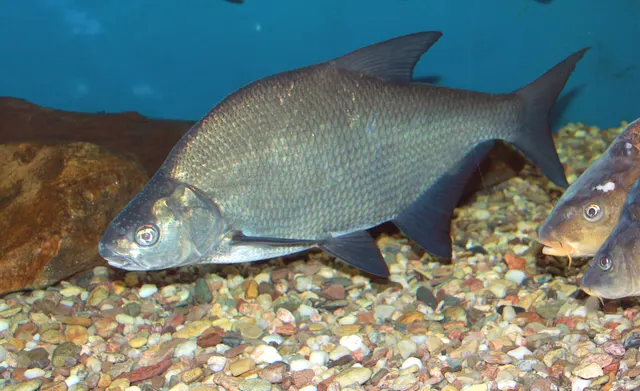 Common breamCharacteristic of this water3 placesLough Derg on the Shannon, The Shannon at Athlone, The Grand Canal, Dublin reachOver canal section, lough, river reachAround May–Sept
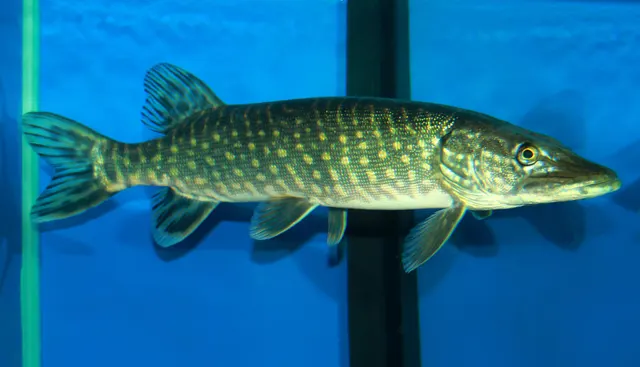 Northern pikeCharacteristic of this water2 placesThe Shannon at Athlone, The Grand Canal, Dublin reachOver canal section, river reach
- Small-spotted catsharkRegular local target71 places · 1 recorded catch · 1 sourceCarne and the Rosslare shore, Fenit Pier, Kerry Head, Barrow Harbour and 67 moreOver bay, beach, beach section, cove, estuary, estuary mark, harbour wall, headland, pier, promenade, rock mark, rock platform, sound or strait, surf beach, tidal channelAround Jun–SeptObserved August 2026
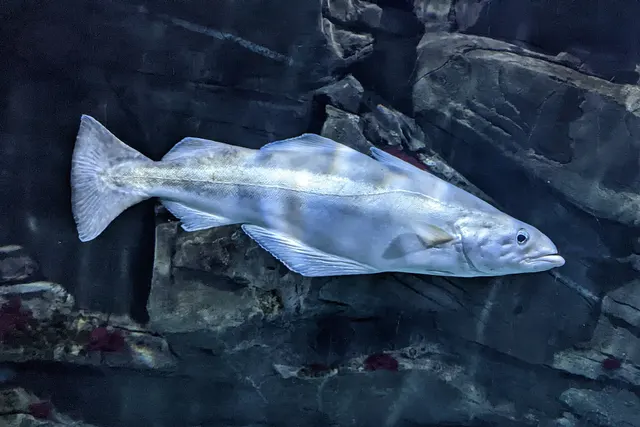 PollackRegular local target55 places · 1 recorded catch · 1 sourceKillary Harbour, Kilkee and the Pollock Holes, Bantry Bay, Baltimore and Sherkin and 51 moreOver bay, beach, beach section, harbour wall, headland, island, ledge, pier, promenade, rock mark, rock platform, sea loch, sound or strait, surf beachAround AugObserved August 2026
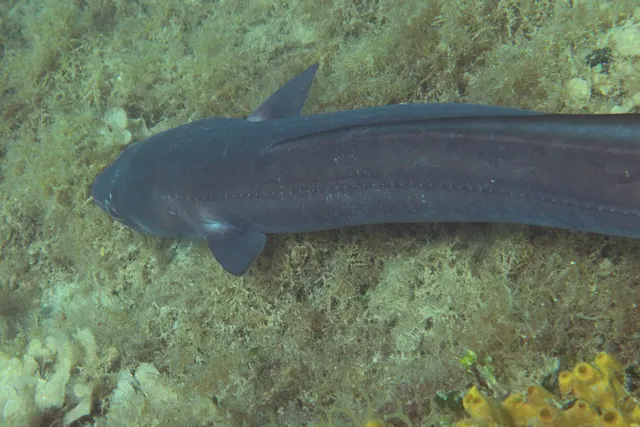 Conger eelRegular local target45 places · 2 recorded catches · 1 sourceBantry Bay, Baltimore and Sherkin, Cork Harbour and Roches Point, Hook Head and 41 moreOver bay, beach, beach section, cove, estuary, estuary mark, harbour wall, headland, island, pier, promenade, rock mark, rock platform, sound or straitAround Jul–AugObserved in 2026
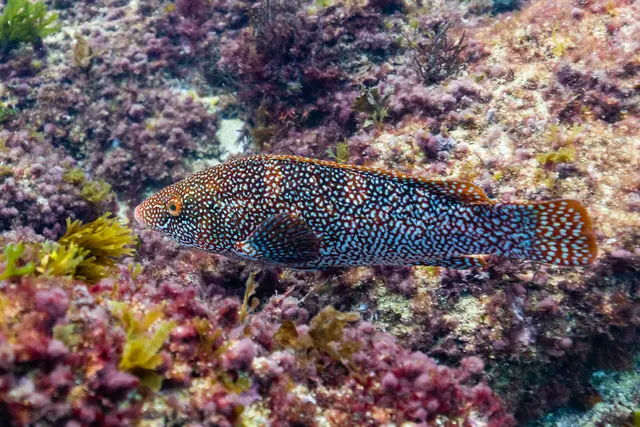 Ballan wrasseRegular local target41 places · 1 recorded catch · 1 sourceKeem Bay, Achill Island, Kilkee and the Pollock Holes, Baltimore and Sherkin, Hook Head and 37 moreOver bay, beach, beach section, harbour wall, headland, island, ledge, pier, promenade, rock mark, rock platform, sound or strait, tidal channelAround Jun–SeptObserved July 2026
Also documented from the shore: Bull huss · European flounder · Atlantic mackerel · European sea bass · Dab · Thornback ray · Thick-lipped grey mullet · Saithe · Atlantic cod · European plaice · Tope · Brown trout · Whiting · Garfish · Common stingray · Turbot · Grey gurnard · Small-eyed ray · Starry smooth-hound · Three-bearded rockling · European perch · Gilthead bream · Roach · Spurdog · European eel · Grey triggerfish · Thin-lipped grey mullet · Atlantic horse mackerel · Black seabream · Blonde ray · Common sole · Corkwing wrasse · Cuckoo wrasse · Edible crab · Lesser sandeel · Lesser weever · Razor clam · Red gurnard · Pouting · Rudd · Atlantic salmon · Flapper skate · Ling
From a boat · 10
- Northern pikeCharacteristic of this water4 placesLough Derg on the Shannon, The Shannon at Athlone, Lough Mask, Lough ConnOver lough, river reach
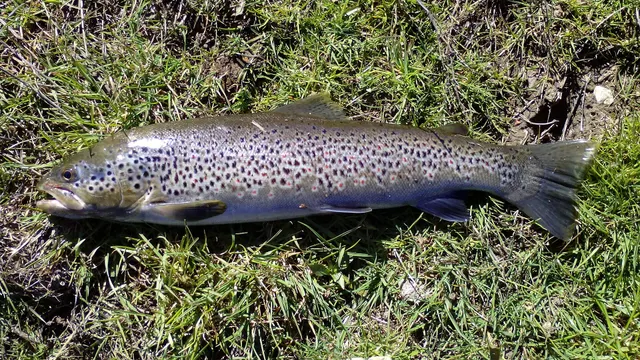 Brown troutCharacteristic of this water3 placesLough Mask, Lough Conn, Lough Derg on the ShannonOver loughAround Apr–Aug
- Common breamCharacteristic of this water2 placesLough Derg on the Shannon, The Shannon at AthloneOver lough, river reachAround May–Sept
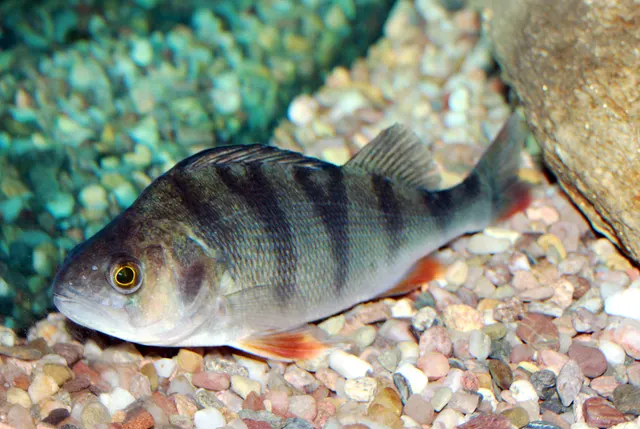 European perchRegular local target3 placesLough Derg on the Shannon, Lough Mask, Lough ConnOver lough
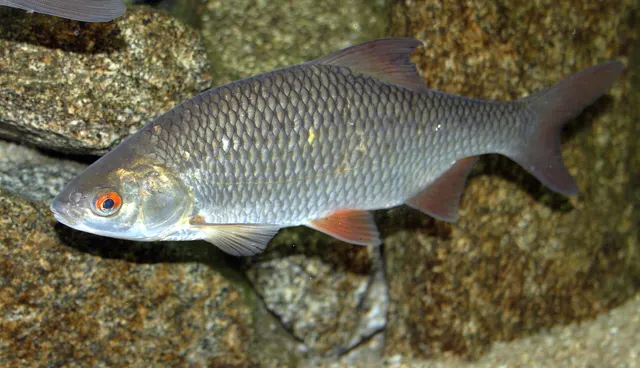 RoachRegular local target1 placeLough Derg on the ShannonOver lough
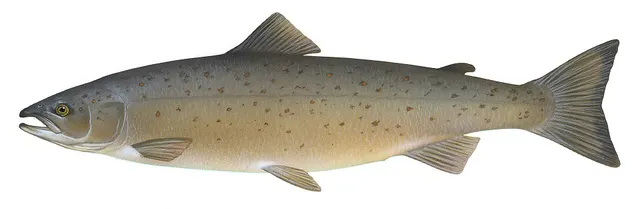 Atlantic salmonSeasonal1 placeLough ConnOver loughAround Mar–Jun
Also documented from a boat: Pollack · Spurdog · Thornback ray · Whiting
On a charter · 6
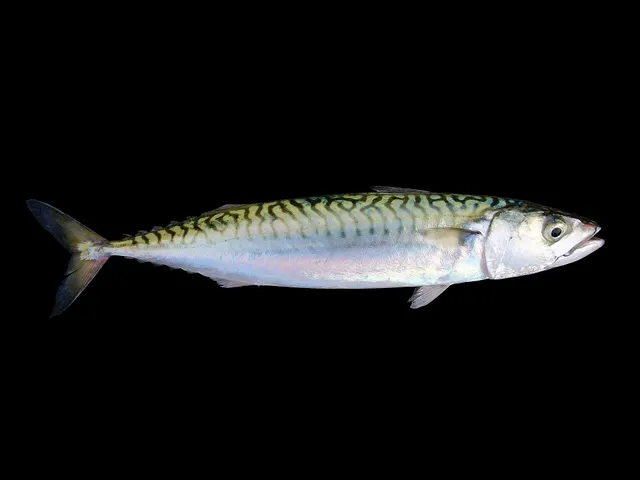 Atlantic mackerelRecorded here1 place · 1 fishery account · 1 sourceLoop HeadOver headlandAround AugObserved August 2026
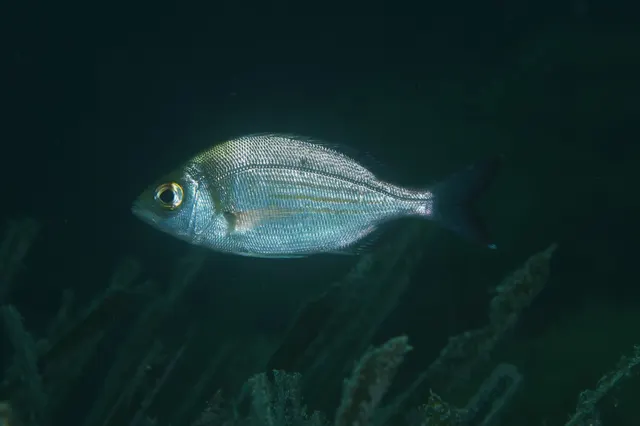 Black seabreamRecorded here1 place · 1 fishery account · 1 sourceWicklow HeadOver headlandAround JulObserved July 2026
- Cuckoo wrasseRecorded here1 place · 1 fishery account · 1 sourceGalway BayOver bayAround JunObserved June 2026
- PollackRecorded here1 place · 1 fishery account · 1 sourceLoop HeadOver headlandAround AugObserved August 2026
- SpurdogRecorded here1 place · 1 fishery account · 1 sourceGalway BayOver bayAround JunObserved June 2026
- TopeRecorded here1 place · 1 fishery account · 1 sourceWicklow HeadOver headlandAround JunObserved June 2026
Fly fishing · 3
- Brown troutCharacteristic of this water3 placesLough Mask, Lough Conn, Lough Derg on the ShannonOver loughAround Apr–Aug
- Atlantic salmonSeasonal1 placeLough ConnOver loughAround Mar–Jun
- PollackRecorded here1 place · 1 fishery account · 1 sourceCork Harbour and Roches PointOver estuarySources name Fly fishingAround MayObserved May 2026
What these strengths mean
- Characteristic of this water
- This water is strongly identified with this species by the sources that cover it.
- Regular local target
- Fishing sources describe this as a normal local target here, not merely as caught.
- Seasonal
- Well supported, and concentrated in part of the year rather than spread through it.
- Recorded here
- At least one credible public account of this species being caught here. That is all it means.
- Occasional
- Caught here, and described as unusual rather than normal. Do not plan a session around it.
- How breadth is counted
- A fish documented at six marks is shown as six marks: breadth never raises the strength on its own. A fishery account describes the fishing; a recorded catch reports one specific catch. How evidence is weighed.
How people fish here
13 methods are recorded on the places documented here, counted from the records themselves rather than from what is practised in the country. Each opens a full guide to the technique.
Ledgering
Recorded at 116 places here, over surf beach, pier, harbour wall, headland.
Fishing a bait on the bottom held by a weight, with no float — the simplest way to fish at distance, in depth, or in wind.
Documented on the same ground: Common bream, Northern pike, Atlantic cod, Atlantic horse mackerel, Atlantic mackerel, Ballan wrasse.
Spinning
Recorded at 79 places here, over headland, pier, estuary, harbour wall.
Casting an artificial lure and retrieving it so that it moves like something alive — the most direct form of lure fishing.
Documented on the same ground: Atlantic cod, Atlantic horse mackerel, Atlantic mackerel, Ballan wrasse, Black seabream, Brown trout.
Float fishing
Recorded at 77 places here, over headland, pier, harbour wall, estuary.
Suspending a bait at a controlled depth beneath a buoyant indicator — the most visual, most controllable and most widely applicable method in angling.
Documented on the same ground: Brown trout, Common bream, Northern pike, Atlantic cod, Atlantic horse mackerel, Atlantic mackerel.
Surfcasting
Recorded at 29 places here, over surf beach, beach, bay, beach section.
Casting heavy baited tackle from a beach into surf — a method defined by distance, by tide, and by reading water that all looks the same.
Documented on the same ground: Atlantic cod, Atlantic mackerel, Ballan wrasse, Brown trout, Bull huss, Common sole.
Kayak fishing
Recorded at 11 places here, over bay, estuary, sea loch, harbour wall.
A platform rather than a technique: quiet, shallow-draught access to water no other craft reaches, bought at the price of exposure, and a discipline where the decision not to launch is part of the skill.
Documented on the same ground: Atlantic mackerel, Ballan wrasse, Conger eel, Edible crab, European eel, European flounder.
Feathering and multi-lure traces
Recorded at 5 places here, over harbour wall, pier.
A string of small lures on droppers, worked in the water column — how most people in Britain and Ireland catch their first sea fish, and the method most likely to catch far more than anybody intended.
Documented on the same ground: Atlantic cod, Atlantic mackerel, Brown trout, Conger eel, Dab, European flounder.
Shore diving
Recorded at 3 places here, over bay, ledge.
Entering and leaving the water from land under your own power — the most accessible spearfishing and the one where the entry and exit are the dangerous part.
Documented on the same ground: Atlantic mackerel, Ballan wrasse, Conger eel, Pollack.
Trolling
Recorded at 3 places here, over lough.
Towing lures or baits behind a moving boat to cover large volumes of water and locate scattered fish.
Documented on the same ground: Brown trout, Common bream, Northern pike, European perch, Roach, Atlantic salmon.
Deadbaiting
Recorded at 2 places here, over lough, river reach.
Presenting a dead fish as bait for predators — a method that works because scavenging is normal predator behaviour, not an exception.
Documented on the same ground: Common bream, Northern pike, European perch, Roach, Brown trout.
4 further methods are recorded at one or two places each: Stillwater fly fishing, Drop shotting, Dry fly fishing, Feeder fishing.
These are the methods documented at the places FishingHQ holds here. A species listed beside a method is documented on the same ground, which is not the same as being taken that way — where a source establishes the method a fish was caught on, it is stated on that place’s own page. All fishing methods.
The fishing year here
The months the records under this area actually name, tightest season first. This is “observed in these months” rather than a season: a species whose months nobody recorded is not listed, because a gap in the evidence is not a year-round fishery.
- Bull hussAugust to August
- Cuckoo wrasseJune to June
- PollackMay and August
- Conger eelJuly to August
- Grey triggerfishAugust to September
- Black seabreamJuly to September
- Small-spotted catsharkJune to September
- Ballan wrasseJune to September
- Thornback rayJune to September
- SaitheSeptember to December
- European plaiceJune to September
- TopeJune to September
Areas within this one
9 coasts, island groups and systems inside this area have fishing guides of their own.
Cork Harbour and the east Cork coast
7 documented places
One of the world's great natural harbours fished as a deep-water shore venue from its quays, with a run of surf beach and estuary east of it that takes an annual autumn codling migration.
Documented here: European flounder, Conger eel, European sea bass, Atlantic cod, Small-spotted catshark
Fished by: ledgering, float fishing, spinning, kayak fishing
Dublin Bay and the Wicklow coast
10 documented places
An urban coast with real fishing on it and heavy pressure, beside a county whose beaches collapsed and whose own guide says so.
Documented here: European flounder, Atlantic mackerel, Pollack, Dab, Saithe
Fished by: ledgering, float fishing, spinning, surfcasting
Lough Corrib
1 documented place
A very large limestone lough in the west of Ireland whose alkaline water, shallow rocky shoals and mayfly hatch produce one of Europe's best wild brown trout fisheries.
Documented here: Brown trout, Northern pike, European perch
Fished by: float fishing, stillwater fly fishing, trolling
The Atlantic coast of Ireland
83 documented places across 7 coasts
Full Atlantic exposure with warm water arriving on it — a cold-latitude coast holding fish that have no business being that far north, in front of some of the biggest swell in Europe.
Documented here: Conger eel, Ballan wrasse, European flounder, Small-spotted catshark, Pollack
Fished by: ledgering, spinning, float fishing, surfcasting
Inside it: Clew Bay and Achill · Connemara and Galway Bay · The Clare coast and the Shannon estuary · The Donegal coast and its sea loughs · The Kerry coast · The Sligo and Leitrim coast · West Cork
The Louth and Meath coast
5 documented places
A shallow, sheltered north-east corner that produces ray and tope every season and gets very little pressure, because anglers from the city drive south instead.
Documented here: European flounder, Small-spotted catshark, Dab, European sea bass, Atlantic cod
Fished by: ledgering, spinning, float fishing, kayak fishing
The Moy and Lough Conn
2 documented places
One of the most productive salmon rivers in Europe running through a town, and the large limestone lough that drains into it — a single catchment holding salmon, wild trout and pike.
Documented here: Brown trout, Northern pike, Atlantic salmon, European perch
Fished by: dry fly fishing, spinning, stillwater fly fishing, trolling
The Shannon system
2 documented places
The longest river in these islands, falling barely a hundred metres in three hundred and sixty kilometres — a chain of great limestone loughs joined by slow river, and the most important pike and coarse fishery in western Europe.
Documented here: Common bream, Northern pike, European perch, Roach, Brown trout
Fished by: deadbaiting, float fishing, ledgering, feeder fishing
The Waterford coast
5 documented places
A bass and surf coast whose best documentation is a list of what is NOT caught there — no whiting in Whiting Bay, painted ray but no thornback, and a back strand that is not bass ground.
Documented here: Atlantic mackerel, European flounder, European sea bass, Saithe, Small-spotted catshark
Fished by: ledgering, float fishing, spinning, surfcasting
The Wexford coast
10 documented places
The county where the discovery of smooth-hound in numbers turned a run of featureless east-coast surf beaches into destinations, and the richest shore documentation in Ireland.
Documented here: Small-spotted catshark, Bull huss, Pollack, Conger eel, European flounder
Fished by: ledgering, surfcasting, spinning, float fishing
What dominates
Pike fishing on the loughs, rivers and canals, which is world-class and lightly pressured. Coarse fishing for bream, roach, hybrids, tench and rudd, particularly on the midland loughs and the Shannon system, historically a major draw for visiting anglers. Wild brown trout fishing on the great limestone loughs, with loch-style boat fishing, dapping and mayfly fishing as the characteristic traditions. Atlantic salmon and sea trout fly fishing on the western and southern rivers. Sea angling from shore and boat around the whole coast, with the south-west and west particularly productive, and shore fishing for bass a specialised and closely regulated pursuit. Shore gathering of shellfish and crustaceans is an ordinary coastal practice with its own rules.
The water available
Great limestone loughs — Corrib, Mask, Derg, Ree and others — which are large, fertile and hold both trout and coarse fish; the Shannon, the longest river in these islands, slow and lake-strung; a very extensive network of canals and drains; western spate rivers running off acidic uplands; blanket bog and mountain lakes; turloughs, which are seasonal lakes that fill and empty through the limestone and exist almost nowhere else; and an extremely long and varied coastline from the sheltered south-east to the fully exposed Atlantic west, with deep water close inshore in many places.
How the rules are structured
There is no general state rod licence for coarse fish or brown trout, which is the principal divergence from the United Kingdom jurisdictions. Permission for the specific water is still required and is obtained from the club, fishery, landowner or state body controlling it, and on many state-managed waters it is inexpensive or free. Salmon and sea trout are the exception: a state licence is required, a share certificate arrangement applies in certain fisheries, and individual rivers are managed on the basis of annual scientific assessment of whether they are meeting conservation limits — with the consequence that a river may be open to catch-and-release only, or closed to angling for these species entirely, and that this is reassessed each year. Logbook and tagging requirements apply to salmon and sea trout where retention is permitted. Close seasons apply and vary by species and by fishery district. At sea, angling is not licensed, and is governed by minimum sizes, bag limits, protected species, closed and restricted areas and gear rules; sea bass in particular is subject to specific and long-standing conservation measures. Marine protected areas and designated sites overlay general rules. FishingHQ does not state what any current rule is. Licences, permits, close seasons, size limits, bag limits, permitted methods and access arrangements all change, and they vary between waters as well as between jurisdictions. Before fishing, check the current position with the authority named above and with whoever controls the water itself.
Who to ask
- The national inland fisheries authority, for freshwater fisheries, salmon and sea trout licensing, conservation assessment and enforcement.
- The cross-border loughs agency, for the Foyle and Carlingford catchments where they fall within the state.
- The government department responsible for the marine, for sea fisheries measures, size limits and protected species.
- The club, fishery, landowner or state body controlling the water, whose permission is required for freshwater angling.
- The national parks and wildlife service, for protected species, designated sites and marine protected areas.
Words you will meet
- Share certificate
- An arrangement applying in certain salmon fisheries, additional to the state salmon licence. Part of the reason 'no licence needed in Ireland' is true for most fishing and misleading for salmon.
- Turlough
- A seasonal lake that fills and empties through underground limestone channels rather than through surface streams. Almost unique to Ireland, and a genuinely distinctive habitat that is water in winter and grassland in summer.
- Fishery district
- The administrative unit by which inland fisheries are organised, and the level at which close seasons and local measures are frequently set. Two rivers in different districts can be governed differently.
- Mayfly time
- The short early-summer period when large mayflies hatch on the limestone loughs and trout feed at the surface. The most anticipated few weeks of the Irish angling year, and the peak of the dapping and dry-fly season.
- Dapping
- Fishing a natural or artificial fly on a long rod and light blow-line, letting the wind carry it to dance on the surface. A traditional Irish lough method with a short, hatch-driven season.
- Conservation limit
- The spawning escapement a salmon river is assessed against annually. Whether a river is open, open for catch-and-release only, or closed follows from that assessment, which is why Irish salmon regulations change every year.
Conditions and hazards
The Atlantic coast is fully exposed and takes swell generated far out in the ocean, arriving independently of local wind — the characteristic hazard on western rock marks and beaches, and the reason people are swept from ground that looked calm. Water is cold year-round and cold water shock is a genuine risk in every month. The great loughs are large enough to build a serious sea in wind and shallow enough in places for it to be steep and short; small boats have been lost on them. Bogland around upland and western waters is soft, deep in places and easy to misjudge, and turloughs flood and drain in ways that change ground between visits. Weather on the west coast changes very fast. Much of the best fishing is remote with poor mobile coverage.
No licence for most of it, and a strict exception that changes yearly
The Irish regulatory answer is genuinely different from its neighbours and the difference runs mostly in the direction of openness.
THERE IS NO GENERAL STATE ROD LICENCE FOR COARSE FISH OR BROWN TROUT. For the large majority of freshwater angling — pike, bream, roach, tench, rudd, wild brown trout — the state does not require an angler to hold a licence at all. Anglers arriving from England, where a licence is the first thing anybody mentions, routinely disbelieve this.
PERMISSION FOR THE WATER IS STILL REQUIRED, and is the whole of the requirement. It comes from the club, fishery, landowner or state body controlling it, and on many state-managed waters it is cheap or free. That is a materially more open model than the English one and it is not the same as open access.
SALMON AND SEA TROUT ARE THE STRICT EXCEPTION. A state licence is required, and a share certificate arrangement applies in certain fisheries. More importantly, individual rivers are assessed annually against a conservation limit — an estimate of whether enough fish are returning to spawn — and the outcome decides whether the river is open for retention, open for catch-and-release only, or closed to salmon angling entirely.
THAT ASSESSMENT MEANS THE RULES CHANGE EVERY YEAR. This is one of the more explicitly science-driven salmon management systems in Europe, and its practical consequence for a reader is absolute: any statement about whether a particular Irish river is open is out of date almost immediately, and must be checked with the authority for the current season.
LOGBOOKS AND TAGS apply where retention is permitted, and they are obligations rather than formalities.
AT SEA there is no angling licence, and the governing measures are minimum sizes, bag limits, protected species, closed areas and gear rules. Sea bass carries specific and long-standing conservation measures that differ from those in neighbouring jurisdictions, and they too are revised.
Official guidance — why, and the sources (3)
Stated by a fisheries authority, scientific institute or recognised angling body. Authoritative, but summarising rather than demonstrating.
- NASCO conservation and management of North Atlantic salmon — North Atlantic Salmon Conservation Organization (Government fisheries body)Relied on for: Conservation and management of North Atlantic salmon, including national regulatory measures, stock status and the international framework states operate within.States this directlyCitation checked — the work exists and is described correctly
- JNCC species and habitat conservation advice — Joint Nature Conservation Committee (Conservation authority)Relied on for: Conservation designation and advice for species and habitats, including protected areas and the statutory framework behind them.Background and mechanism onlyCitation checked — the work exists and is described correctly
- Angling Trust guidance for anglers — Angling Trust (Angling or fisheries organisation)Relied on for: Guidance for anglers on participation, licensing structure, access arrangements and getting started.Background and mechanism onlyCitation checked — the work exists and is described correctly
World-class pike, under-fished coarse, and the mayfly loughs
Ireland's angling strengths are not the ones its tourism material has always emphasised, and the ordering is worth stating plainly.
PIKE FISHING IS GENUINELY WORLD-CLASS. Large, lightly pressured waters, abundant prey fish and a long growing season produce pike fishing that anglers travel from across Europe for, on loughs, rivers and canals alike.
COARSE FISHING IS ABUNDANT AND UNDER-USED. Bream, roach, hybrids, tench and rudd in very large numbers on the midland loughs, the Shannon system and the canal network, with far lighter pressure than comparable English water. This was the backbone of Irish angling tourism for decades.
WILD BROWN TROUT ON THE LIMESTONE LOUGHS is the classic Irish game fishing: Corrib, Mask, Derg and their neighbours, fished from boats, with loch-style wet-fly work, dapping and dry fly at mayfly time.
MAYFLY TIME IS THE FIXED POINT OF THE YEAR on those loughs, a brief period when the fishing transforms completely.
SALMON AND SEA TROUT FLY FISHING on the western and southern rivers carries the traditional reputation and now operates under the annual conservation assessment, which has changed the character of it substantially.
SEA ANGLING IS GOOD AND COMPARATIVELY QUIET. The south-west and west in particular offer deep water close inshore, strong shore fishing and productive boat marks, and the whole sector is less publicised than the freshwater fishing.
BASS FISHING is a specialised shore pursuit with its own dedicated following and its own specific regulatory position.
AND SHORE GATHERING of shellfish and crustaceans is an ordinary part of coastal life rather than a novelty, with its own separate rules.
What experienced anglers do — why, and the sources (3)
Widely and independently recommended by experienced anglers and specialist sources. This is real angling knowledge, not proof: controlled evidence for it is limited, and FishingHQ records it as convention rather than as a demonstrated effect.
- Angling Times — Bauer Media (Specialist angling publication)Relied on for: Contemporary coarse and match angling practice, participation and fishery culture as reported by practitioners.Background and mechanism onlyCitation checked — the work exists and is described correctly
- Trout & Salmon — Bauer Media (Specialist angling publication)Relied on for: Contemporary game angling practice, salmon and sea trout fishing culture and the management debates around them.Background and mechanism onlyCitation checked — the work exists and is described correctly
- Sea Angler — Bauer Media (Specialist angling publication)Relied on for: Contemporary sea angling practice, including shore and boat technique, species and regional fishing culture.Background and mechanism onlyCitation checked — the work exists and is described correctly
Limestone, bog, and a lake that appears in winter
Irish water is shaped by limestone geology, high rainfall and a post-glacial landscape that drains strangely.
THE GREAT LIMESTONE LOUGHS ARE THE DEFINING ENVIRONMENT. Corrib, Mask, Derg, Ree and their neighbours are large, alkaline and fertile, and they grow both trout and coarse fish well. Their fertility comes from the limestone, and it is why the mayfly hatches that define the Irish angling year happen where they do.
THE SHANNON IS THE LONGEST RIVER IN THESE ISLANDS and behaves less like a river than a chain of lakes joined by slow water. That character makes it a coarse and pike fishery of enormous extent.
THE CANAL AND DRAIN NETWORK is extensive and lightly fished, and it is among the most accessible fishing available anywhere — walkable, reachable and rarely crowded.
WESTERN SPATE RIVERS run off acidic bog and mountain, are short and flashy, and carry the salmon and sea trout fishing. Their character is the opposite of the limestone lowlands in every respect.
TURLOUGHS ARE ALMOST UNIQUE TO IRELAND. These are seasonal lakes that fill and empty through underground limestone channels rather than through surface streams — water in winter, grassland in summer. They are a genuine hydrological curiosity and a protected habitat, and they mean that some ground is water for part of the year and not the rest.
BLANKET BOG AND MOUNTAIN LAKES in the west hold small wild trout in acidic, nutrient-poor water, a complete contrast to the limestone loughs a short distance east.
AND THE COASTLINE IS EXTREMELY LONG AND VARIED, from the sheltered south-east through the productive south-west to a fully exposed Atlantic west coast with deep water close in and swell arriving from the open ocean.
Backed by research — why, and the sources (3)
Supported by peer-reviewed research or fisheries science. The sources are listed and can be checked.
- Freshwater Fishes of the British Isles — HarperCollins (New Naturalist 75), 1992 (Reference work)Relied on for: Distribution, biology and status of the freshwater fishes of the British Isles and Ireland, including the differences between catchments.States this directlyCitation checked — the work exists and is described correctly
- Cefas science, advice and data on marine and freshwater environments — Centre for Environment, Fisheries and Aquaculture Science (Government fisheries body)Relied on for: Marine and freshwater environmental science and the evidence base underpinning fisheries management advice.States this directlyCitation checked — the work exists and is described correctly
- The Fishes of the British Isles and North-West Europe — Macmillan, 1969 (Reference work)Relied on for: Distribution, habitat and biology of the fishes of the British Isles and north-west Europe.States this directlyCitation checked — the work exists and is described correctly
A short native list, and why that is a fact about ice
Ireland's freshwater fish fauna is naturally sparse, and understanding why explains a great deal about the fishing.
THE ISLAND WAS RECOLONISED ACROSS A SEA BARRIER. When the ice retreated, Britain remained connected to continental Europe for longer than Ireland did, so freshwater fish that could not tolerate salt water had a much narrower window to reach Ireland. The result is a native freshwater list markedly shorter than Britain's.
SEVERAL MAJOR ANGLING SPECIES ARE INTRODUCTIONS. Roach, dace and several others were brought in historically, and pike's status has been argued over for a long time. This is not a criticism of the fishery — it is why the fishery looks as it does.
WHAT IS NATIVE IS DISTINCTIVE. Atlantic salmon, sea trout, brown trout, Arctic char in deep cold loughs, European eel, and pollan — a whitefish found in a handful of Irish loughs and almost nowhere else in western Europe — make up a genuinely unusual assemblage.
BROWN TROUT SHOW STRONG LOCAL DIFFERENTIATION, with distinct forms in individual loughs, which is what tends to happen when populations are isolated for ten thousand years.
PIKE REACH SERIOUS SIZE in the large fertile loughs, and are the species most visiting anglers come for.
COARSE SPECIES ARE ABUNDANT where they occur — bream and roach in very large shoals, with hybrids common enough to be a routine identification problem.
AT SEA the picture is rich rather than sparse: the whole north-east Atlantic list, with the south-west particularly good for a wide range of species, and deep water close inshore giving shore anglers access to fish that usually need a boat.
AND THE EUROPEAN EEL, critically endangered across its range, is present throughout and subject to strict protection that has changed markedly within living memory.
Backed by research — why, and the sources (3)
Supported by peer-reviewed research or fisheries science. The sources are listed and can be checked.
- Freshwater Fishes of the British Isles — HarperCollins (New Naturalist 75), 1992 (Reference work)Relied on for: Distribution, biology and status of the freshwater fishes of the British Isles and Ireland, including the differences between catchments.States this directlyCitation checked — the work exists and is described correctly
- The Fishes of the British Isles and North-West Europe — Macmillan, 1969 (Reference work)Relied on for: Distribution, habitat and biology of the fishes of the British Isles and north-west Europe.States this directlyCitation checked — the work exists and is described correctly
- JNCC species and habitat conservation advice — Joint Nature Conservation Committee (Conservation authority)Relied on for: Conservation designation and advice for species and habitats, including protected areas and the statutory framework behind them.Background and mechanism onlyCitation checked — the work exists and is described correctly
Mayfly, spate, and a salmon season decided by arithmetic
The Irish fishing year has one famous event, one governing variable and one annual administrative decision.
MAYFLY TIME IS THE EVENT. For a few weeks in early summer, large mayflies hatch on the limestone loughs and trout that are otherwise difficult feed at the surface. Dapping and dry-fly fishing come into their own, boats fill, and the entire trout year on those waters is described in relation to it.
SPRING brings the earliest salmon on the rivers that hold them, and the start of the lough trout fishing as water warms.
SUMMER is the peak of coarse and pike fishing and of visiting-angler activity, and it is also when warm shallow water makes handling and release genuinely consequential. Sea trout fishing at night is a summer pursuit.
AUTUMN carries later salmon runs, excellent pike fishing as water cools, and strong sea angling before winter.
WINTER concentrates pike anglers and shore sea anglers, and is when the turloughs fill.
SPATE GOVERNS THE WESTERN RIVERS ABSOLUTELY. Salmon and sea trout run on rising water and are fished on falling water, so the fishing is organised around rainfall rather than around dates. A dry summer can mean weeks with no fishing worth doing.
AND THE SALMON SEASON IS DECIDED ANNUALLY BY ASSESSMENT. Whether a given river is open for retention, restricted to catch-and-release, or closed follows from a scientific judgement about whether it is meeting its conservation limit, made each year. That is unusual, it is defensible, and it means the single most important thing about the salmon season is that last year's answer is not this year's.
Backed by research — why, and the sources (3)
Supported by peer-reviewed research or fisheries science. The sources are listed and can be checked.
- NASCO conservation and management of North Atlantic salmon — North Atlantic Salmon Conservation Organization (Government fisheries body)Relied on for: Conservation and management of North Atlantic salmon, including national regulatory measures, stock status and the international framework states operate within.States this directlyCitation checked — the work exists and is described correctly
- Freshwater Fishes of the British Isles — HarperCollins (New Naturalist 75), 1992 (Reference work)Relied on for: Distribution, biology and status of the freshwater fishes of the British Isles and Ireland, including the differences between catchments.States this directlyCitation checked — the work exists and is described correctly
- Trout & Salmon — Bauer Media (Specialist angling publication)Relied on for: Contemporary game angling practice, salmon and sea trout fishing culture and the management debates around them.Background and mechanism onlyCitation checked — the work exists and is described correctly
Ten thousand years of isolation, and a fishery built for visitors
Irish angling history has a deep natural chapter and a recent economic one, and both are still visible.
THE NATURAL HISTORY IS THE FIRST CHAPTER. Post-glacial isolation across a sea barrier gave Ireland a short native freshwater fish list, and that single fact shapes the fishing more than any human decision since.
INTRODUCTIONS FILLED SOME OF THE GAP, deliberately and accidentally, over centuries. Roach, dace and others arrived through human agency, and the modern coarse fishery rests substantially on species that were not originally here.
THE LOUGH BOAT TRADITION IS OLD AND CONTINUOUS. Loch-style wet-fly fishing and dapping developed on the great limestone loughs and remain the characteristic methods, passed on through boatmen and clubs rather than through books.
ANGLING TOURISM WAS A DELIBERATE ECONOMIC STRATEGY. From the mid-twentieth century, Ireland actively developed coarse and pike fishing for visiting anglers, particularly from Britain and continental Europe, and the accessibility, the cheap or free permits and the welcoming culture are partly a product of that policy.
SALMON MANAGEMENT CHANGED RADICALLY IN LIVING MEMORY. The ending of commercial drift netting for salmon, and the move to river-by-river assessment against conservation limits, transformed both the fishery and the regulatory landscape within a couple of decades. Older accounts of Irish salmon fishing describe a different world.
THE EEL FISHERY DECLINED ALONGSIDE THE SPECIES, and strict protection now applies to a fish that was a working part of the rural economy.
AND SEA ANGLING DEVELOPED LATER AND MORE QUIETLY, out of coastal communities where the sea was work, and it remains under-publicised relative to its quality.
Official guidance — why, and the sources (3)
Stated by a fisheries authority, scientific institute or recognised angling body. Authoritative, but summarising rather than demonstrating.
- Fishers' Craft and Lettered Art: Tracts on Fishing from the End of the Middle Ages — University of Toronto Press, 1997 (Scientific literature)Relied on for: The medieval and early-modern development of angling in Europe, including the emergence of fishing rights and private fisheries.States this directlyCitation checked — the work exists and is described correctly
- NASCO conservation and management of North Atlantic salmon — North Atlantic Salmon Conservation Organization (Government fisheries body)Relied on for: Conservation and management of North Atlantic salmon, including national regulatory measures, stock status and the international framework states operate within.States this directlyCitation checked — the work exists and is described correctly
- General angling website restatements of established technique — Various (Credible secondary source)Relied on for: Widely restated angling practice and belief, recorded as practitioner consensus rather than as tested fact.Background and mechanism onlyCitation checked — the work exists and is described correctly
Easy access, boat culture, and a serious conservation argument
Irish angling culture is among the most welcoming on FishingHQ, and it sits alongside a genuinely hard conservation debate.
ACCESS IS EASIER AND CHEAPER THAN IN BRITAIN. No general licence for most species, inexpensive or free permits on many waters, and a long habit of welcoming visiting anglers make the practical business of getting fishing considerably simpler.
THAT DOES NOT MEAN PERMISSION IS UNNECESSARY, and the commonest visitor error is to hear 'no licence' and conclude 'no permission'. Water is controlled by somebody, and asking is both required and generally straightforward.
THE BOAT IS CENTRAL ON THE LOUGHS. Lough fishing means a boat, a drift and usually company, and hiring a local boatman on a big water is normal, sensible and the fastest way to learn a lough that would otherwise take years.
MAYFLY TIME IS A SOCIAL EVENT as much as a fishing one, with a particular atmosphere on the lough shores that anglers plan years around.
CONSERVATION IS CONTESTED AND WELL INFORMED. The annual salmon assessments, the closure of rivers, the ending of drift netting and the status of the eel are subjects on which anglers, commercial fishers and scientists have genuinely differing positions, and a visitor will hear them.
CATCH AND RELEASE IS NORMAL for pike and coarse species and increasingly for salmon, with strong local expectations about handling.
THE ATLANTIC COAST COMMANDS RESPECT. Swell arriving on a calm day is understood locally as an ordinary hazard rather than an unusual one, and visitors who treat a windless morning as a safe one are the people who get into trouble.
AND THE FISHING IS UNHURRIED. Light pressure, plenty of water and a culture that does not treat a blank day as a failure make it a notably relaxed place to fish.
What experienced anglers do — why, and the sources (3)
Widely and independently recommended by experienced anglers and specialist sources. This is real angling knowledge, not proof: controlled evidence for it is limited, and FishingHQ records it as convention rather than as a demonstrated effect.
- General angling website restatements of established technique — Various (Credible secondary source)Relied on for: Widely restated angling practice and belief, recorded as practitioner consensus rather than as tested fact.Background and mechanism onlyCitation checked — the work exists and is described correctly
- Angling Times — Bauer Media (Specialist angling publication)Relied on for: Contemporary coarse and match angling practice, participation and fishery culture as reported by practitioners.Background and mechanism onlyCitation checked — the work exists and is described correctly
- RNLI water safety guidance: cold water shock and Float to Live — Royal National Lifeboat Institution (Water-safety or diver-training authority)Relied on for: Water safety guidance including cold water shock, the immersion response and the circumstances in which recreational water users get into difficulty.States this directlyPassage read and verified
Some of what lives here
Fish recorded here that FishingHQ holds a reviewed photograph of. It is not a complete list of what The Republic of Ireland holds, and it is not a prediction that you will catch any of them — it is a way in to the ones we can show you.
- Atlantic salmonAn anadromous salmonid that migrates from its natal river to the North Atlantic and returns to spawn — and a species in serious, well-documented decline.
Knepp, Timothy, Public domain, via Wikimedia Commons
- Brown troutA single, extraordinarily plastic species that appears as a tiny hill-stream fish, a deep-bodied loch trout and a silver sea-run migrant — all the same animal.
Robermix, CC0, via Wikimedia Commons
- Northern pikeThe dominant freshwater ambush predator of the northern hemisphere: long, cryptic, and built for one violent acceleration rather than pursuit.
Karelj, Public domain, via Wikimedia Commons
- Common breamA deep-bodied, slow-moving shoal fish that feeds in large groups over soft bottoms and can transform a swim when it arrives.
Karelj, Public domain, via Wikimedia Commons
Places within this area
Publicly documented fishing geography. FishingHQ describes what the ground is; it does not say whether you may fish it, and every one of these sends that question to the body that holds the answer. Browse every place in this part of the world.
Who to ask before fishing any of these
FishingHQ does not know the current access position here. Irish freshwater angling requires permission from whoever holds the fishing rights, and salmon and sea trout additionally require a state licence and a tagging arrangement. Seasons, permits and conservation measures apply and change. Check with Inland Fisheries Ireland and with the fishery owner or club before going.
The Grand Canal, Dublin reach
Canal section · Fresh water
A late-eighteenth-century navigation running west from Dublin, with stone-lined banks, a controlled level, locks at intervals and dense marginal weed through the summer in the urban reaches.
Severe hazards of The Republic of Ireland apply here: cold water shock.
Check the rules before you fish
Fishing laws, bylaws, access rules, seasons, bait restrictions and permitted methods vary by location and can change. Check the current rules from the relevant authority and the water you intend to fish before fishing.
Check with:
- Current national or regional law for where you are fishing
- Current local bylaws
- The relevant fisheries authority
- The landowner, club or fishery whose water it is
- Any restrictions specific to the species or the method you intend to use
Where to go next
What swims here
- Atlantic salmonManaged against annual conservation-limit assessments that decide whether individual rivers are open, catch-and-release only, or closed.
- Brown troutThe great limestone loughs grow wild trout well, and mayfly time on them is the fixed point of the Irish angling year.
- Common breamAbundant in very large shoals on the midland loughs and the Shannon system, and the backbone of the visiting-angler coarse fishery.
- Northern pikeLarge, lightly pressured waters and a long growing season produce pike fishing that anglers travel across Europe for.
How this compares
- Britain and IrelandA separate state with its own agency, its own instrument and a naturally sparse fish fauna that is a fact about glaciation rather than management.
- England and WalesThe two extremes of the licensing question in these islands: England and Wales require a rod licence for all freshwater angling, and the Republic requires none for coarse fish or brown trout while managing salmon more strictly than either.
- Lough CorribThe largest of the great limestone loughs, and the clearest illustration of what fertile alkaline water does for both trout and coarse fishing.
- Northern IrelandOne island, two states, and shared catchments. The Foyle and Carlingford systems are administered across the frontier by a single cross-border body precisely because the fish do not recognise it.
- ScotlandBoth dispense with a general coarse licence and both manage migratory salmonids separately and seriously, arriving at similar answers through completely different legal histories.
Rules and access
- Close seasonsClose seasons set by fishery district rather than nationally, so two rivers can be governed differently without any difference visible from the bank.
- Licences and permissionWhere the concept applies to one group of species and not to others, and where the salmon exception is assessed and revised annually.
Sources and evidence
- NASCO conservation and management of North Atlantic salmon — North Atlantic Salmon Conservation Organization (Government fisheries body)Relied on for: Conservation and management of North Atlantic salmon, including national regulatory measures, stock status and the international framework states operate within.States this directlyCitation checked — the work exists and is described correctly
- Freshwater Fishes of the British Isles — HarperCollins (New Naturalist 75), 1992 (Reference work)Relied on for: Distribution, biology and status of the freshwater fishes of the British Isles and Ireland, including the differences between catchments.States this directlyCitation checked — the work exists and is described correctly
- JNCC species and habitat conservation advice — Joint Nature Conservation Committee (Conservation authority)Relied on for: Conservation designation and advice for species and habitats, including protected areas and the statutory framework behind them.Background and mechanism onlyCitation checked — the work exists and is described correctly
Why the 11 connections on this page are here, and the sources
What swims here
Backed by research — 4 connections
Supported by peer-reviewed research or fisheries science. The sources are listed and can be checked.
Atlantic salmon
A distribution claim about the world, so it rests on the reference works rather than on angling report. FishingHQ's evidence policy requires it.
- FishBase: a global information system on fishes — Froese, R. and D. Pauly, eds. — FishBase Consortium (Scientific institute)Relied on for: Distribution, habitat association, water-type tolerance and occurrence records for the species, including its presence in the countries concerned.States this directlyPassage read and verified
- The IUCN Red List of Threatened Species — International Union for Conservation of Nature (Conservation authority)Relied on for: Assessment and range account for the species, including the countries and systems it occupies and its population trend within them.States this directlyCitation checked — the work exists and is described correctly
Brown trout
A distribution claim about the world, so it rests on the reference works rather than on angling report. FishingHQ's evidence policy requires it.
- FishBase: a global information system on fishes — Froese, R. and D. Pauly, eds. — FishBase Consortium (Scientific institute)Relied on for: Distribution, habitat association, water-type tolerance and occurrence records for the species, including its presence in the countries concerned.States this directlyPassage read and verified
- The IUCN Red List of Threatened Species — International Union for Conservation of Nature (Conservation authority)Relied on for: Assessment and range account for the species, including the countries and systems it occupies and its population trend within them.States this directlyCitation checked — the work exists and is described correctly
Common bream
A distribution claim about the world, so it rests on the reference works rather than on angling report. FishingHQ's evidence policy requires it.
- FishBase: a global information system on fishes — Froese, R. and D. Pauly, eds. — FishBase Consortium (Scientific institute)Relied on for: Distribution, habitat association, water-type tolerance and occurrence records for the species, including its presence in the countries concerned.States this directlyPassage read and verified
- The IUCN Red List of Threatened Species — International Union for Conservation of Nature (Conservation authority)Relied on for: Assessment and range account for the species, including the countries and systems it occupies and its population trend within them.States this directlyCitation checked — the work exists and is described correctly
Northern pike
A distribution claim about the world, so it rests on the reference works rather than on angling report. FishingHQ's evidence policy requires it.
- FishBase: a global information system on fishes — Froese, R. and D. Pauly, eds. — FishBase Consortium (Scientific institute)Relied on for: Distribution, habitat association, water-type tolerance and occurrence records for the species, including its presence in the countries concerned.States this directlyPassage read and verified
- The IUCN Red List of Threatened Species — International Union for Conservation of Nature (Conservation authority)Relied on for: Assessment and range account for the species, including the countries and systems it occupies and its population trend within them.States this directlyCitation checked — the work exists and is described correctly
How this compares
What experienced anglers do — 5 connections
Widely and independently recommended by experienced anglers and specialist sources. This is real angling knowledge, not proof: controlled evidence for it is limited, and FishingHQ records it as convention rather than as a demonstrated effect.
Britain and Ireland
Two places a reader would reasonably weigh against one another, joined where the comparison teaches something about both. It is also how the larger geography is linked to what sits inside it.
- General angling website restatements of established technique — Various (Credible secondary source)Relied on for: Widely restated angling practice and belief, recorded as practitioner consensus rather than as tested fact.Background and mechanism onlyCitation checked — the work exists and is described correctly
- Angling Trust guidance for anglers — Angling Trust (Angling or fisheries organisation)Relied on for: Guidance for anglers on participation, licensing structure, access arrangements and getting started.Background and mechanism onlyCitation checked — the work exists and is described correctly
England and Wales
Two places a reader would reasonably weigh against one another, joined where the comparison teaches something about both. It is also how the larger geography is linked to what sits inside it.
- General angling website restatements of established technique — Various (Credible secondary source)Relied on for: Widely restated angling practice and belief, recorded as practitioner consensus rather than as tested fact.Background and mechanism onlyCitation checked — the work exists and is described correctly
- Angling Trust guidance for anglers — Angling Trust (Angling or fisheries organisation)Relied on for: Guidance for anglers on participation, licensing structure, access arrangements and getting started.Background and mechanism onlyCitation checked — the work exists and is described correctly
Lough Corrib
Two places a reader would reasonably weigh against one another, joined where the comparison teaches something about both. It is also how the larger geography is linked to what sits inside it.
- General angling website restatements of established technique — Various (Credible secondary source)Relied on for: Widely restated angling practice and belief, recorded as practitioner consensus rather than as tested fact.Background and mechanism onlyCitation checked — the work exists and is described correctly
- Angling Trust guidance for anglers — Angling Trust (Angling or fisheries organisation)Relied on for: Guidance for anglers on participation, licensing structure, access arrangements and getting started.Background and mechanism onlyCitation checked — the work exists and is described correctly
Northern Ireland
Two places a reader would reasonably weigh against one another, joined where the comparison teaches something about both. It is also how the larger geography is linked to what sits inside it.
- General angling website restatements of established technique — Various (Credible secondary source)Relied on for: Widely restated angling practice and belief, recorded as practitioner consensus rather than as tested fact.Background and mechanism onlyCitation checked — the work exists and is described correctly
- Angling Trust guidance for anglers — Angling Trust (Angling or fisheries organisation)Relied on for: Guidance for anglers on participation, licensing structure, access arrangements and getting started.Background and mechanism onlyCitation checked — the work exists and is described correctly
Scotland
Two places a reader would reasonably weigh against one another, joined where the comparison teaches something about both. It is also how the larger geography is linked to what sits inside it.
- General angling website restatements of established technique — Various (Credible secondary source)Relied on for: Widely restated angling practice and belief, recorded as practitioner consensus rather than as tested fact.Background and mechanism onlyCitation checked — the work exists and is described correctly
- Angling Trust guidance for anglers — Angling Trust (Angling or fisheries organisation)Relied on for: Guidance for anglers on participation, licensing structure, access arrangements and getting started.Background and mechanism onlyCitation checked — the work exists and is described correctly
Rules and access
Official guidance — 2 connections
Stated by a fisheries authority, scientific institute or recognised angling body. Authoritative, but summarising rather than demonstrating.
Close seasons
A place joined to the regulatory concept whose structure it illustrates. The edge asserts that the concept applies here, never what any current rule says.
- Environment Agency fisheries management, byelaws and rod licensing information — Environment Agency (Government fisheries body)Relied on for: Fisheries management structure, licensing, byelaws and close seasons in England, and the shape of freshwater fisheries regulation.States this directlyCitation checked — the work exists and is described correctly
- NASCO conservation and management of North Atlantic salmon — North Atlantic Salmon Conservation Organization (Government fisheries body)Relied on for: Conservation and management of North Atlantic salmon, including the national regulatory measures and management structures states operate.States this directlyCitation checked — the work exists and is described correctly
Licences and permission
A place joined to the regulatory concept whose structure it illustrates. The edge asserts that the concept applies here, never what any current rule says.
- Environment Agency fisheries management, byelaws and rod licensing information — Environment Agency (Government fisheries body)Relied on for: Fisheries management structure, licensing, byelaws and close seasons in England, and the shape of freshwater fisheries regulation.States this directlyCitation checked — the work exists and is described correctly
- NASCO conservation and management of North Atlantic salmon — North Atlantic Salmon Conservation Organization (Government fisheries body)Relied on for: Conservation and management of North Atlantic salmon, including the national regulatory measures and management structures states operate.States this directlyCitation checked — the work exists and is described correctly
How FishingHQ labels evidence is explained in the evidence policy.