The Shannon system
Fishing regions · Last reviewed 2026-08-16
The longest river in these islands, falling barely a hundred metres in three hundred and sixty kilometres — a chain of great limestone loughs joined by slow river, and the most important pike and coarse fishery in western Europe.
Safety: boat safety — can cause serious injury or death. 3 more points apply here.
Being listed here is not permission to fish. What that meansClose
Access, fishing rights, seasons, licences, local bylaws and permitted methods vary and can change. Check current access, permission, local regulations, closures and restrictions before you travel or fish. FishingHQ describes what the ground is and names who holds the answer; it does not hold the answer itself.
Find the authority for a jurisdiction · What FishingHQ does and does not cover
The Shannon is a system-tier record because calling it a river understates what it is: a chain of very large limestone lakes connected by slow, wide, weedy river, draining a fifth of the island of Ireland, and falling barely a hundred metres from source to tidal water over three hundred and sixty kilometres.
THE GRADIENT IS THE DEFINING FACT. A river that falls that little over that distance is not a river in the sense a Highland angler means. It is a very long, slow, shallow, weed-rich water with almost no current for much of its length, punctuated by loughs that are effectively wide places in it, and by a handful of short faster stretches where it drops over limestone ledges.
LIMESTONE IS THE SECOND FACT AND IT IS WHY THE FISHING IS WHAT IT IS. The Irish midlands sit on carboniferous limestone, so the water is hard, alkaline and calcium-rich. That supports enormous invertebrate production, dense weed growth and a very high biological carrying capacity. A soft acid water of the same size would hold a fraction of the fish.
WHICH MAKES THIS THE GREAT PIKE AND COARSE SYSTEM OF WESTERN EUROPE. Lough Ree and Lough Derg are the two largest lakes on the river and both have long reputations for very large pike. Bream, roach, tench, rudd, perch and hybrids occur through the system in quantities that made Ireland a coarse-fishing destination for generations of English anglers. Brown trout are present and in places excellent, particularly where limestone springs and faster water occur.
THE SYSTEM IS ALSO ARTIFICIALLY CONNECTED. Navigation works, canals and a restored waterway link the Shannon to the Erne system to the north, which makes the two the largest connected inland navigation in these islands and has ecological consequences as well as recreational ones.
AND IT IS CHANGING IN WAYS THAT MATTER. Roach were introduced to Ireland relatively recently and spread through this system with substantial effects on the existing community. Zebra mussels arrived and altered water clarity and food webs measurably. Eutrophication from agriculture is a live and serious issue in parts of the catchment. This is not a fixed fishery being described; it is one under active change, and any account written twenty years ago is describing something else.
AT THE BOTTOM IT IS A HUGE ESTUARY. The Shannon Estuary is one of the largest in these islands, deep, tidal and industrial in places, and it is the migratory corridor for the whole system.
What fishing here is like
A very long, very low-gradient river on carboniferous limestone, consisting largely of a chain of great shallow alkaline loughs joined by slow, wide, weedy river with almost no perceptible current for much of its length, interrupted by short faster stretches over limestone ledges and by navigation works. Water is hard, calcium-rich and highly productive, weed growth is dense, and the loughs are large enough to raise a genuine sea in wind. The catchment is flat, largely agricultural and extensively drained, with callows — seasonally flooded riverside grassland — along parts of the middle river. At its foot the river opens into one of the largest estuaries in these islands.
What you can target here
One entry per fish, grouped by how you would be fishing — because the answer is a different one from the rocks and from a boat. Each entry says how strongly the sources support it and how much evidence sits behind it. These are documented catches, not a forecast, and none of it is a statement that you may fish any particular ground.
From the shore · 4
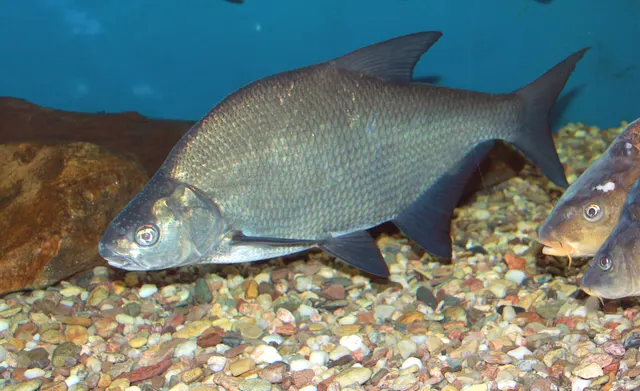 Common breamCharacteristic of this water2 placesLough Derg on the Shannon, The Shannon at AthloneOver lough, river reachAround May–Sept
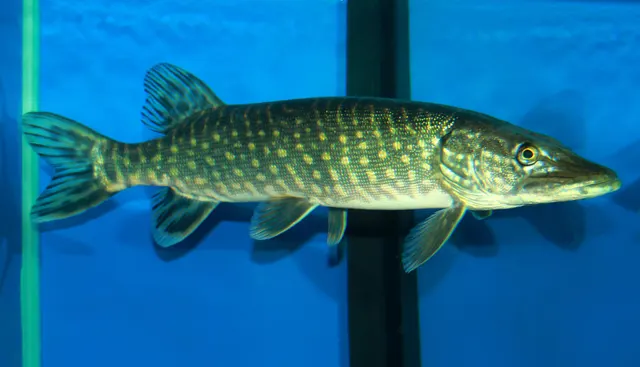 Northern pikeCharacteristic of this water1 placeThe Shannon at AthloneOver river reach
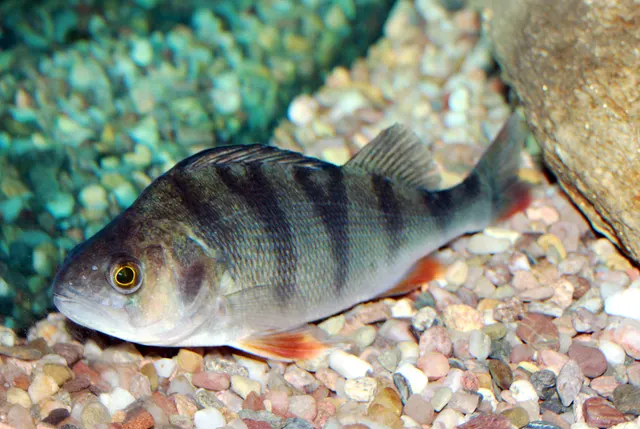 European perchRegular local target2 placesLough Derg on the Shannon, The Shannon at AthloneOver lough, river reach
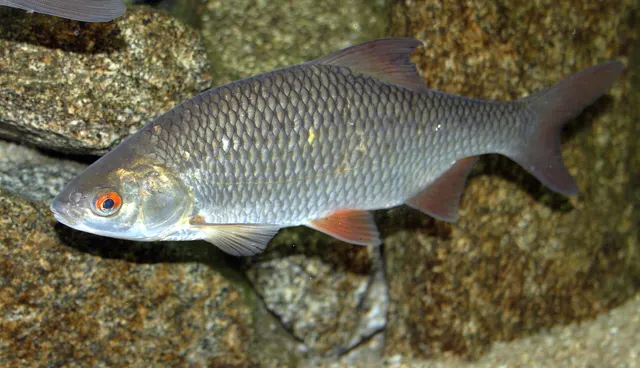 RoachRegular local target2 placesLough Derg on the Shannon, The Shannon at AthloneOver lough, river reach
From a boat · 5
- Common breamCharacteristic of this water2 placesLough Derg on the Shannon, The Shannon at AthloneOver lough, river reachAround May–Sept
- Northern pikeCharacteristic of this water2 placesLough Derg on the Shannon, The Shannon at AthloneOver lough, river reach
- European perchRegular local target1 placeLough Derg on the ShannonOver lough
- RoachRegular local target1 placeLough Derg on the ShannonOver lough
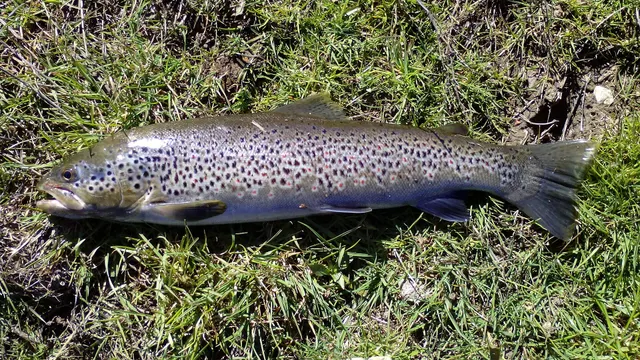 Brown troutRecorded here1 placeLough Derg on the ShannonOver lough
What these strengths mean
- Characteristic of this water
- This water is strongly identified with this species by the sources that cover it.
- Regular local target
- Fishing sources describe this as a normal local target here, not merely as caught.
- Recorded here
- At least one credible public account of this species being caught here. That is all it means.
- How breadth is counted
- A fish documented at six marks is shown as six marks: breadth never raises the strength on its own. A fishery account describes the fishing; a recorded catch reports one specific catch. How evidence is weighed.
How people fish here
5 methods are recorded on the places documented here, counted from the records themselves rather than from what is practised in the country. Each opens a full guide to the technique.
Deadbaiting
Recorded at 2 places here, over lough, river reach.
Presenting a dead fish as bait for predators — a method that works because scavenging is normal predator behaviour, not an exception.
Documented on the same ground: Common bream, Northern pike, European perch, Roach, Brown trout.
Float fishing
Recorded at 2 places here, over lough, river reach.
Suspending a bait at a controlled depth beneath a buoyant indicator — the most visual, most controllable and most widely applicable method in angling.
Documented on the same ground: Common bream, Northern pike, European perch, Roach, Brown trout.
Ledgering
Recorded at 2 places here, over lough, river reach.
Fishing a bait on the bottom held by a weight, with no float — the simplest way to fish at distance, in depth, or in wind.
Documented on the same ground: Common bream, Northern pike, European perch, Roach, Brown trout.
Feeder fishing
Recorded at 1 place here, over river reach.
Legering with a weight that also carries bait, so that free offerings arrive in exactly the same place as the hookbait, cast after cast.
Documented on the same ground: Northern pike, Common bream, Roach, European perch.
Trolling
Recorded at 1 place here, over lough.
Towing lures or baits behind a moving boat to cover large volumes of water and locate scattered fish.
Documented on the same ground: Common bream, Northern pike, European perch, Roach, Brown trout.
These are the methods documented at the places FishingHQ holds here. A species listed beside a method is documented on the same ground, which is not the same as being taken that way — where a source establishes the method a fish was caught on, it is stated on that place’s own page. All fishing methods.
What dominates
Pike fishing, by lure, deadbait and fly, which is what this system is internationally known for and which is practised from bank and boat across the loughs and the slower river. Coarse fishing for bream, roach, tench, rudd and hybrids, historically the reason English anglers travelled here in numbers, using feeder, float and pole methods. Boat fishing on the loughs, which is how most of the productive water is reached. Brown trout fly fishing on the faster stretches and where limestone springs feed the system, including a mayfly fishery on some of the connected loughs. Perch fishing, which is substantial and underrated. Coarse match fishing on the river reaches. Trolling on the big loughs for pike and trout.
The water available
Great shallow alkaline limestone loughs with reef, shoal and island; slow wide weedy lowland river with almost no gradient; short faster stretches over limestone ledge; extensive reedbed and marginal weed; callows — seasonally flooded riverside grassland of international conservation importance; canal and navigation cuts linking the system to the Erne; a network of connected smaller loughs and drains; and a very large deep tidal estuary at the foot of the system.
How the rules are structured
The Republic of Ireland has its own framework and it is not the UK's. There is NO general rod licence for coarse or pike fishing in the Republic — a fact that surprises visiting English anglers — but a state licence IS required for salmon and sea trout, and separate permission or a permit is required for many fisheries. Fisheries are managed nationally by Inland Fisheries Ireland, which sets conservation measures, byelaws and specific rules for pike and for coarse species that have changed over time and have been locally contentious. Salmon rivers are individually assessed and opened or closed accordingly. Substantial parts of the system carry conservation designation, including the callows, which are of international importance for their flooded grassland habitat and its birds. Navigation on the system is separately administered. Biosecurity requirements apply and matter here because of the system's invasive species history. FishingHQ does not state what any current rule is.
Who to ask
- Inland Fisheries Ireland, which manages fisheries, sets conservation measures and byelaws, and administers licensing in the Republic.
- Waterways Ireland, the cross-border body responsible for navigation on the Shannon and the Shannon-Erne Waterway.
- The National Parks and Wildlife Service, where a conservation designation affects the river, the callows or their species.
- The fishery owner, club or angling federation, where permission or a permit is required for a particular water.
- The Environmental Protection Agency, for water quality and the eutrophication status of the catchment.
Words you will meet
- Callows
- The seasonally flooded riverside grasslands along the middle Shannon, which flood in winter and are grazed and cut in summer. They are of international conservation importance, they are the reason the river's floodplain still functions, and they are a fisheries feature as well as a habitat one.
- Lough
- The Irish word for a lake or a sea inlet. On the Shannon the loughs are wide places in the river rather than separate waters, which matters: fish move between river and lough freely and the fishery has to be understood as one thing.
- Cut
- An artificial channel dug to bypass a shallow or an obstruction for navigation. The Shannon's cuts and locks are how it became navigable, and they create slack, deep, structured water that is a fishery in its own right.
Conditions and hazards
The loughs are the principal hazard and the reason is a mismatch between their size and how they look from a sheltered bay. Lough Ree and Lough Derg are large, shallow and open, so wind raises a steep short sea across a long fetch far faster than it would on a deep lake, and conditions in the middle can be entirely different from what they appear at the shore. Both loughs are strewn with rocks, shoals and islands, many unmarked, and striking one at speed is a genuine and recorded cause of fatalities on this system. Navigation among similar-looking islands in poor light or fog is difficult. The water is cold enough for most of the year for cold water shock to decide an immersion, and distances to a landing place are considerable. On the river, banks are frequently soft, low and undercut, the callows flood and the flooded ground is not a bank, and weed growth conceals depth and drop-offs. Winter flooding on this catchment is extensive and slow to recede. The system also carries a serious biosecurity dimension, which is a hazard to the water rather than to the angler.
Limestone, no gradient, and why that combination grows fish
The Shannon is the clearest available demonstration that the productivity of a fishery is decided by chemistry and gradient rather than by size or scenery.
START WITH THE ROCK. The Irish midlands sit on carboniferous limestone, and water passing through limestone dissolves calcium carbonate out of it. That produces hard, alkaline water with a high buffering capacity, and three things follow. Invertebrates that need calcium to build shells and exoskeletons — snails, shrimp, mussels — thrive. Plant growth is vigorous because the water is nutrient-retentive rather than nutrient-poor. And the water resists acidification, which matters in a landscape with a great deal of peat in it.
NOW ADD THE GRADIENT, OR RATHER THE ABSENCE OF ONE. A hundred metres of fall over three hundred and sixty kilometres means almost no current for most of the river's length. Slow water is warm water in summer, it deposits fine sediment rather than scouring it, and it allows dense marginal and submerged weed to establish. Weed is habitat, cover and an invertebrate factory all at once.
PUT THE TWO TOGETHER and the result is a very large volume of shallow, warm, weedy, calcium-rich, invertebrate-dense water — which is close to an optimal specification for cyprinids and for the predators that eat them.
WHICH IS WHY THE PIKE ARE WHAT THEY ARE. A pike population's ceiling is set by prey biomass, and this system produces prey biomass in extraordinary quantity. Lough Ree and Lough Derg have long reputations for very large fish, and the reason is not mystical: it is bream and roach in numbers, in warm productive water, in lakes big enough for a fish to live a long time without meeting many anglers.
THE CALLOWS ARE THE OTHER HALF OF THE PRODUCTIVITY. Seasonally flooded grassland along the middle river floods each winter, and floodplain inundation is one of the most productive events in any river system — it delivers terrestrial nutrients to the water, it gives fish access to warm shallow feeding and spawning ground, and it resets the whole food chain annually. Most European rivers have lost their functioning floodplains to embankment and drainage. The Shannon's still work, which is why they are designated and why the fishing downstream of them is what it is.
AND THE SYSTEM IS CHANGING UNDER ALL OF IT. Roach are a relatively recent arrival in Ireland and spread through this system with real effects on the existing community. Zebra mussels arrived and filtered the water clearer, which changed light penetration, weed growth and food webs measurably. Agricultural nutrient enrichment is a live issue in parts of the catchment. Anybody reading an older account of this fishery is reading about a different set of conditions.
Backed by research — why, and the sources (4)
Supported by peer-reviewed research or fisheries science. The sources are listed and can be checked.
- Freshwater Fishes of the British Isles — HarperCollins (New Naturalist 75), 1992 (Reference work)Relied on for: Distribution, ecology, life history and conservation status of the freshwater fishes of the British Isles named here.States this directlyCitation checked — the work exists and is described correctly
- Environment Agency fisheries management, byelaws and rod licensing information — Environment Agency (Government fisheries body)Relied on for: Freshwater fisheries management, water quality, river and still-water monitoring, and the structure of the licensing framework.States this directlyCitation checked — the work exists and is described correctly
- JNCC species and habitat conservation advice — Joint Nature Conservation Committee (Conservation authority)Relied on for: Designation, habitat description and conservation status of the freshwater and wetland habitats named, and the species characteristically associated with them.States this directlyCitation checked — the work exists and is described correctly
- The Fishes of the British Isles and North-West Europe — Macmillan, 1969 (Reference work)Relied on for: Distribution, habitat association and biology of the freshwater and migratory fishes of the British Isles named here.States this directlyCitation checked — the work exists and is described correctly
The pike system, the coarse tradition, and an argument that never settled
The Shannon carries two great fisheries that have coexisted uneasily for decades, and understanding the tension between them explains a good deal about Irish freshwater fishing.
THE COARSE FISHERY CAME FIRST IN THE MODERN ERA. From the middle of the twentieth century, English anglers travelled to Ireland in large numbers for bream and roach fishing of a quality and quantity that had disappeared at home — big shoals, unpressured water, and a welcome built around the visiting angler. Whole towns on this system carried a tourist economy on it. That fishery is quieter now than it was, for a mixture of reasons including changed travel patterns, changed fish populations and the arrival of the roach itself.
THE PIKE FISHERY IS THE ONE WITH THE INTERNATIONAL REPUTATION. Very large pike in very large productive loughs, fished by lure, deadbait, trolling and increasingly by fly. Lough Ree and Lough Derg are the headline waters and the smaller connected loughs and the river reaches carry the fishery through.
AND THE ARGUMENT BETWEEN THEM IS ABOUT PIKE AND TROUT. For a long period, Irish fisheries policy in some waters treated pike as a problem for trout stocks and permitted or conducted their removal, while a growing pike-angling constituency argued that this was both ecologically unfounded on most waters and destructive of a valuable fishery. The specific measures — pike removal, bag limits, size limits, gill netting of pike waters — have changed over time and have been genuinely contentious. FishingHQ does not state the current position because it is exactly the kind of thing that changes, and because it differs between waters.
WHAT IS WORTH RECORDING IS THE SHAPE OF THE DISPUTE, because it recurs everywhere. One constituency values a species and another treats it as a pressure on the species they value; the science about predator-prey dynamics in large productive lakes is more complicated than either side's headline; and the policy oscillates. The Shannon is one of the clearest and longest-running examples in Europe.
THE PRACTICAL POINT FOR AN ANGLER is that pike here are a managed species with specific rules that differ by water and by year, that handling requirements for large pike are strict and are the difference between a released fish and a delayed mortality, and that a fish of the size these waters produce is a very old animal that took decades to make.
AND THE TROUT FISHERY IS REAL TOO. Where limestone springs and faster water occur, and on several of the connected loughs, brown trout fishing of high quality exists — including a mayfly hatch on some waters that organises the whole season around a fortnight.
What experienced anglers do — why, and the sources (4)
Widely and independently recommended by experienced anglers and specialist sources. This is real angling knowledge, not proof: controlled evidence for it is limited, and FishingHQ records it as convention rather than as a demonstrated effect.
- Coarse Fishing — A. & C. Black, 1912 (Specialist angling publication)Relied on for: Established description of English coarse fishing practice on rivers, canals and still waters.FishingHQ's interpretation of what it saysCitation checked — the work exists and is described correctly
- General angling website restatements of established technique — Various (Credible secondary source)Relied on for: Widely restated descriptions of which practices are conventionally used on the waters named, recorded as practitioner consensus rather than as scholarship.Background and mechanism onlyCitation checked — the work exists and is described correctly
- Fishers' Craft and Lettered Art: Tracts on Fishing from the End of the Middle Ages — University of Toronto Press, 1997 (Scientific literature)Relied on for: That fishing traditions develop around the water and fish available to them, and the historical method of reading such traditions.Background and mechanism onlyCitation checked — the work exists and is described correctly
- General angling website restatements of established technique — Various (Credible secondary source)Relied on for: Widely restated descriptions of regional angling practice, recorded as practitioner consensus rather than as scholarship.Background and mechanism onlyCitation checked — the work exists and is described correctly
A lake that is a wide place in a river, and everything it hides
The Shannon's loughs look like the safest large water in these islands — no tide, no swell, no rock coast, shallow throughout — and they have a fatality record that says otherwise. The reason is that shallow and large is a worse combination than deep and large.
SHALLOW WATER ANSWERS THE WIND FAST. Depth damps waves. A deep lake takes time to build a sea because energy goes downwards as well as along. A large shallow lough with a long fetch does not have that option, so the same wind raises a steep, short, awkward sea here in a fraction of the time it would need on a deep water. And a short steep sea is harder on a small boat than a long one of the same height.
AND THE DECISION TO GO OUT IS MADE IN THE WRONG PLACE. From a sheltered bay with islands around it, the lough looks manageable. The open middle of Lough Ree or Lough Derg on a rising wind is a different water entirely, and the transition happens while a boat is out in it.
THE BOTTOM IS THE SECOND HAZARD AND IT IS THE ONE THAT KILLS. These loughs are strewn with rocks, shoals and islands, a great many of them unmarked, and shallow water means a covered rock is everywhere rather than at the edges. In flat calm it shows as a slick; in the ripple that makes the fishing it does not. Striking one at speed can hole or capsize a boat, and it has caused deaths on this system.
WHICH MAKES LOCAL KNOWLEDGE AND THE MARKED NAVIGATION THE OPERATIVE PROTECTION. The Shannon carries a marked navigation channel for boats and that channel exists precisely because the rest of the water is not safe to travel at speed. Stay in it when moving, learn the safe routes to fishing ground before using them fast, and go slowly on unfamiliar water.
NAVIGATION AMONG SIMILAR ISLANDS IN POOR LIGHT OR FOG is genuinely difficult, and the distances to a landing place on the big loughs are considerable.
THE RIVER AND THE CALLOWS PRESENT A QUIETER SET. Banks are frequently soft, low and undercut. The callows flood in winter and flooded grassland is not a bank — the edge is somewhere under the water and there is no way to see where. Dense weed conceals depth and drop-offs. And winter flooding on this catchment is extensive and recedes slowly.
COLD WATER RUNS UNDER ALL OF IT. Immersion produces the gasp response and loss of breathing control within seconds for most of the year, a long way from any landing place. Wear a lifejacket rather than carry one, tell somebody the plan and the return, and carry a means of summoning help.
AND THERE IS A HAZARD HERE TO THE WATER RATHER THAN TO THE ANGLER. This system has a serious invasive species history — zebra mussels and others — and gear, boats, nets and waders move organisms between waters. Check, clean and dry everything between waters. On a connected navigation of this size that is not a formality; it is the only barrier there is.
Official guidance — why, and the sources (3)
Stated by a fisheries authority, scientific institute or recognised angling body. Authoritative, but summarising rather than demonstrating.
- RNLI water safety guidance: cold water shock and Float to Live — Royal National Lifeboat Institution (Water-safety or diver-training authority)Relied on for: Cold water shock and the immersion response, and water-safety guidance for anglers and small-craft users on inland water.States this directlyPassage read and verified
- RoSPA water safety information and UK accidental drowning statistics — Royal Society for the Prevention of Accidents (Water-safety or diver-training authority)Relied on for: UK accidental drowning statistics and inland water-safety guidance, including the proportion of drownings that begin with no intention of entering the water.States this directlyPassage read and verified
- Check Clean Dry — biosecurity guidance for water users — GB Non-native Species Secretariat (Conservation authority)Relied on for: Check Clean Dry biosecurity guidance for water users and the mechanisms by which invasive non-native species are spread between waters on gear and craft.States this directlyPassage read and verified
Some of what lives here
Fish recorded here that FishingHQ holds a reviewed photograph of. It is not a complete list of what The Shannon system holds, and it is not a prediction that you will catch any of them — it is a way in to the ones we can show you.
- Northern pikeThe dominant freshwater ambush predator of the northern hemisphere: long, cryptic, and built for one violent acceleration rather than pursuit.
Karelj, Public domain, via Wikimedia Commons
- Common breamA deep-bodied, slow-moving shoal fish that feeds in large groups over soft bottoms and can transform a swim when it arrives.
Karelj, Public domain, via Wikimedia Commons
- RoachThe most numerous and most frequently caught coarse fish across much of Europe, and the prey species that underpins the whole freshwater predator food web.
Karelj, Public domain, via Wikimedia Commons
- European perchA small, shoaling, spiny-finned predator that is both the most accessible predator to catch and the one most anglers first learn on.
Karelj, Public domain, via Wikimedia Commons
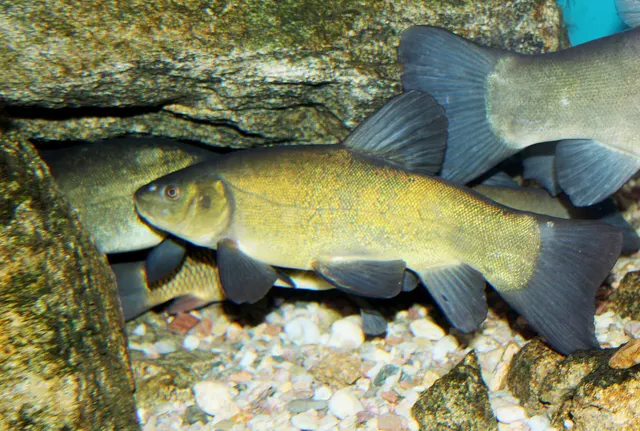 TenchA thick-set, olive-green stillwater fish with tiny scales, a heavy mucus coat, and a strong association with warm, weedy, silty water.
Karelj, Public domain, via Wikimedia Commons
- Brown troutA single, extraordinarily plastic species that appears as a tiny hill-stream fish, a deep-bodied loch trout and a silver sea-run migrant — all the same animal.
Robermix, CC0, via Wikimedia Commons
Places within this area
Publicly documented fishing geography. FishingHQ describes what the ground is; it does not say whether you may fish it, and every one of these sends that question to the body that holds the answer. Browse every place in this part of the world.
Who to ask before fishing any of these
FishingHQ does not know the current access position here. Irish freshwater angling requires permission from whoever holds the fishing rights, and salmon and sea trout additionally require a state licence and a tagging arrangement. Seasons, permits and conservation measures apply and change. Check with Inland Fisheries Ireland and with the fishery owner or club before going.
Lough Derg on the Shannon
Lough · Fresh water
The largest lake on the Shannon: a long limestone lough some forty kilometres from end to end, shallow and reedy in its bays, deeper in the main channel, with a navigation running through it and a hydroelectric barrage at its outflow.
Long enough in a north-easterly to build a substantial sea, with limited shelter in the middle reaches.
Particular to this ground: cold water shock.
Severe hazards of The Shannon system apply here: boat safety.
The Shannon at Athlone
River reach · Fresh water
The Shannon where it leaves Lough Ree and runs through Athlone: a wide slow navigable river with a weir and lock, quay walls through the town, and extensive reed and callow margins above and below it.
Severe hazards of The Shannon system apply here: boat safety, cold water shock.
Safety
Boat safety — Can cause serious injury or death
The great loughs are large and shallow, so wind raises a steep short sea across a long fetch far faster than on a deep lake, and they are strewn with unmarked rocks, shoals and islands invisible in a ripple. Striking one at speed can hole or capsize a boat and has caused deaths here.
What reduces it: Wear a lifejacket rather than carry one, stay in the marked navigation when travelling, learn the safe routes before using them at speed, watch the wind forecast rather than the current conditions, and turn for shelter early.
Worse when:
- In a ripple or chop, when covered rocks cannot be seen.
- On the open middle of the big loughs, where fetch is longest and shelter furthest.
Cold water shock — Can cause serious injury or death
Water temperatures are low for most of the year. Immersion after a capsize produces gasping and loss of breathing control within the first minute, on a lough where the nearest landing place may be a long way off.
What reduces it: Wear a lifejacket rather than carry one, stay with the boat if it remains afloat, and if immersed float and control the breathing before attempting anything else.
Slips, trips and falls — Can cause injury needing treatment
River and lough banks are frequently soft, low and undercut, dense weed conceals depth and drop-offs, and the callows flood so that the edge of the bank is somewhere under water with no way to see it.
What reduces it: Do not fish flooded grassland where the bank edge cannot be seen, test soft ground before committing weight, and carry a light and fish with somebody after dark.
Biosecurity and disease transfer — Can cause injury needing treatment
This is a large connected navigation with a serious invasive species history, and gear, boats, nets and waders move organisms between waters. The harm falls on the water rather than on the angler.
What reduces it: Check, clean and dry all gear, boats and clothing between waters, drain wells and bilges, and treat the requirement as the only barrier that exists on a connected system of this size.
Further safety reading
- Boat safety for anglers — Large shallow loughs raise a steep sea faster than deep ones because depth damps waves, and they are strewn with unmarked rocks and shoals that show as a slick in flat calm and vanish in the ripple that makes the fishing.
Check the rules before you fish
Fishing laws, bylaws, access rules, seasons, bait restrictions and permitted methods vary by location and can change. Check the current rules from the relevant authority and the water you intend to fish before fishing.
Check with:
- Current national or regional law for where you are fishing
- Current local bylaws
- The relevant fisheries authority
- The landowner, club or fishery whose water it is
- Any restrictions specific to the species or the method you intend to use
Where to go next
What swims here
- Brown troutWhere limestone springs and the faster stretches over rock ledges occur, and on several of the connected loughs — including waters whose mayfly hatch organises the whole season around a fortnight.
- Common breamThroughout the loughs and slow river in the quantities that made Ireland a coarse-fishing destination for generations of English anglers, in water whose alkalinity and weed growth support an exceptional invertebrate biomass.
- European perchThroughout the loughs and the slower river, a substantial and consistently underrated fishery in water that produces the small fish and invertebrates it feeds on in quantity.
- Northern pikeThe system's international reputation rests on this species. Lough Ree and Lough Derg have long produced very large fish, and the reason is prey biomass in warm productive limestone water rather than anything mystical.
- RoachWidespread through the system, and a relatively recent arrival in Ireland whose spread had substantial effects on the existing fish community — which is why any account of this fishery written decades ago describes different conditions.
- TenchIn the weedy shallow margins and bays of the loughs and the connected drains, where dense marginal weed and soft bottom suit it.
How this compares
Environment and conservation
Sources and evidence
- Freshwater Fishes of the British Isles — HarperCollins (New Naturalist 75), 1992 (Reference work)Relied on for: Distribution, ecology, life history and conservation status of the freshwater fishes of the British Isles named here.States this directlyCitation checked — the work exists and is described correctly
- Environment Agency fisheries management, byelaws and rod licensing information — Environment Agency (Government fisheries body)Relied on for: Freshwater fisheries management, water quality, river and still-water monitoring, and the structure of the licensing framework.States this directlyCitation checked — the work exists and is described correctly
- JNCC species and habitat conservation advice — Joint Nature Conservation Committee (Conservation authority)Relied on for: Designation, habitat description and conservation status of the freshwater and wetland habitats named, and the species characteristically associated with them.States this directlyCitation checked — the work exists and is described correctly
- The Fishes of the British Isles and North-West Europe — Macmillan, 1969 (Reference work)Relied on for: Distribution, habitat association and biology of the freshwater and migratory fishes of the British Isles named here.States this directlyCitation checked — the work exists and is described correctly
- RNLI water safety guidance: cold water shock and Float to Live — Royal National Lifeboat Institution (Water-safety or diver-training authority)Relied on for: Cold water shock and the immersion response, and water-safety guidance for anglers and small-craft users on inland water.States this directlyPassage read and verified
- RoSPA water safety information and UK accidental drowning statistics — Royal Society for the Prevention of Accidents (Water-safety or diver-training authority)Relied on for: UK accidental drowning statistics and inland water-safety guidance, including the proportion of drownings that begin with no intention of entering the water.States this directlyPassage read and verified
Why the 11 connections on this page are here, and the sources
What swims here
Backed by research — 6 connections
Supported by peer-reviewed research or fisheries science. The sources are listed and can be checked.
Brown trout
A claim that a place contains the ground, water and seasonal conditions the species is associated with. It is a distributional statement about the world, it rests on the regional reference literature, and it deliberately asserts nothing about access, permission or catch.
- Freshwater Fishes of the British Isles — HarperCollins (New Naturalist 75), 1992 (Reference work)Relied on for: Distribution, ecology and conservation status of the freshwater fishes of the British Isles, including in artificial and modified waters.States this directlyCitation checked — the work exists and is described correctly
- Environment Agency fisheries management, byelaws and rod licensing information — Environment Agency (Government fisheries body)Relied on for: Fisheries monitoring, water quality and species distribution in English rivers, canals and still waters.States this directlyCitation checked — the work exists and is described correctly
Common bream
A claim that a place contains the ground, water and seasonal conditions the species is associated with. It is a distributional statement about the world, it rests on the regional reference literature, and it deliberately asserts nothing about access, permission or catch.
- Freshwater Fishes of the British Isles — HarperCollins (New Naturalist 75), 1992 (Reference work)Relied on for: Distribution, ecology and conservation status of the freshwater fishes of the British Isles, including in artificial and modified waters.States this directlyCitation checked — the work exists and is described correctly
- Environment Agency fisheries management, byelaws and rod licensing information — Environment Agency (Government fisheries body)Relied on for: Fisheries monitoring, water quality and species distribution in English rivers, canals and still waters.States this directlyCitation checked — the work exists and is described correctly
European perch
A claim that a place contains the ground, water and seasonal conditions the species is associated with. It is a distributional statement about the world, it rests on the regional reference literature, and it deliberately asserts nothing about access, permission or catch.
- Freshwater Fishes of the British Isles — HarperCollins (New Naturalist 75), 1992 (Reference work)Relied on for: Distribution, ecology and conservation status of the freshwater fishes of the British Isles, including in artificial and modified waters.States this directlyCitation checked — the work exists and is described correctly
- Environment Agency fisheries management, byelaws and rod licensing information — Environment Agency (Government fisheries body)Relied on for: Fisheries monitoring, water quality and species distribution in English rivers, canals and still waters.States this directlyCitation checked — the work exists and is described correctly
Northern pike
A claim that a place contains the ground, water and seasonal conditions the species is associated with. It is a distributional statement about the world, it rests on the regional reference literature, and it deliberately asserts nothing about access, permission or catch.
- Freshwater Fishes of the British Isles — HarperCollins (New Naturalist 75), 1992 (Reference work)Relied on for: Distribution, ecology and conservation status of the freshwater fishes of the British Isles, including in artificial and modified waters.States this directlyCitation checked — the work exists and is described correctly
- Environment Agency fisheries management, byelaws and rod licensing information — Environment Agency (Government fisheries body)Relied on for: Fisheries monitoring, water quality and species distribution in English rivers, canals and still waters.States this directlyCitation checked — the work exists and is described correctly
Roach
A claim that a place contains the ground, water and seasonal conditions the species is associated with. It is a distributional statement about the world, it rests on the regional reference literature, and it deliberately asserts nothing about access, permission or catch.
- Freshwater Fishes of the British Isles — HarperCollins (New Naturalist 75), 1992 (Reference work)Relied on for: Distribution, ecology and conservation status of the freshwater fishes of the British Isles, including in artificial and modified waters.States this directlyCitation checked — the work exists and is described correctly
- Environment Agency fisheries management, byelaws and rod licensing information — Environment Agency (Government fisheries body)Relied on for: Fisheries monitoring, water quality and species distribution in English rivers, canals and still waters.States this directlyCitation checked — the work exists and is described correctly
Tench
A claim that a place contains the ground, water and seasonal conditions the species is associated with. It is a distributional statement about the world, it rests on the regional reference literature, and it deliberately asserts nothing about access, permission or catch.
- Freshwater Fishes of the British Isles — HarperCollins (New Naturalist 75), 1992 (Reference work)Relied on for: Distribution, ecology and conservation status of the freshwater fishes of the British Isles, including in artificial and modified waters.States this directlyCitation checked — the work exists and is described correctly
- Environment Agency fisheries management, byelaws and rod licensing information — Environment Agency (Government fisheries body)Relied on for: Fisheries monitoring, water quality and species distribution in English rivers, canals and still waters.States this directlyCitation checked — the work exists and is described correctly
How people fish here
What experienced anglers do — 2 connections
Widely and independently recommended by experienced anglers and specialist sources. This is real angling knowledge, not proof: controlled evidence for it is limited, and FishingHQ records it as convention rather than as a demonstrated effect.
Coarse fishing
A claim about angling convention rather than about the world: that this place sits within this branch of fishing, which drives the information architecture as well as the page. It rests on independent practitioner description.
- General angling website restatements of established technique — Various (Credible secondary source)Relied on for: Widely restated descriptions of which practices are conventionally used on the waters named, recorded as practitioner consensus rather than as scholarship.Background and mechanism onlyCitation checked — the work exists and is described correctly
- Coarse Fishing — A. & C. Black, 1912 (Specialist angling publication)Relied on for: Established description of English coarse and game fishing practice on rivers, canals and still waters.FishingHQ's interpretation of what it saysCitation checked — the work exists and is described correctly
Predator fishing
A claim about angling convention rather than about the world: that this place sits within this branch of fishing, which drives the information architecture as well as the page. It rests on independent practitioner description.
- General angling website restatements of established technique — Various (Credible secondary source)Relied on for: Widely restated descriptions of which practices are conventionally used on the waters named, recorded as practitioner consensus rather than as scholarship.Background and mechanism onlyCitation checked — the work exists and is described correctly
- Coarse Fishing — A. & C. Black, 1912 (Specialist angling publication)Relied on for: Established description of English coarse and game fishing practice on rivers, canals and still waters.FishingHQ's interpretation of what it saysCitation checked — the work exists and is described correctly
How this compares
What experienced anglers do — 1 connection
Widely and independently recommended by experienced anglers and specialist sources. This is real angling knowledge, not proof: controlled evidence for it is limited, and FishingHQ records it as convention rather than as a demonstrated effect.
Lough Corrib
A claim that two places are worth reading against one another, because a reader choosing between them or generalising from one to the other needs to know how the underlying process differs.
- General angling website restatements of established technique — Various (Credible secondary source)Relied on for: Widely restated descriptions of which practices are conventionally used in the waters named, recorded as practitioner consensus rather than as scholarship.Background and mechanism onlyCitation checked — the work exists and is described correctly
- Sea Angler — Bauer Media (Specialist angling publication)Relied on for: Long-running published description of British and Irish sea angling practice by region and by ground type.FishingHQ's interpretation of what it saysCitation checked — the work exists and is described correctly
Safety reading
Official guidance — 1 connection
Stated by a fisheries authority, scientific institute or recognised angling body. Authoritative, but summarising rather than demonstrating.
Boat safety for anglers
A claim that a place presents a particular hazard strongly enough that the reader should be sent to the page dealing with it in full, rather than left with the short warning on the place itself.
- RNLI water safety guidance: cold water shock and Float to Live — Royal National Lifeboat Institution (Water-safety or diver-training authority)Relied on for: Cold water shock and the immersion response, tidal cut-off, and water-safety guidance for shore anglers and small-craft users.States this directlyPassage read and verified
Environment and conservation
Backed by research — 1 connection
Supported by peer-reviewed research or fisheries science. The sources are listed and can be checked.
Invasive species and biosecurity
A claim that a place raises a particular environmental question, resting on the scientific and conservation literature for the system rather than on angling practice.
- JNCC species and habitat conservation advice — Joint Nature Conservation Committee (Conservation authority)Relied on for: Habitat classification and description for the intertidal, coastal, estuarine and freshwater habitats named, and the species characteristically associated with them.States this directlyCitation checked — the work exists and is described correctly
- Cefas science, advice and data on marine and freshwater environments — Centre for Environment, Fisheries and Aquaculture Science (Government fisheries body)Relied on for: Characterisation of UK inshore sediment, intertidal habitat, estuarine process and the shellfish beds associated with them.States this directlyCitation checked — the work exists and is described correctly
How FishingHQ labels evidence is explained in the evidence policy.