Lesser sandeel
Fish · Last reviewed 2026-08-11
A slender, burrowing shoaling fish of sandy seabeds, and the single most important forage species in the northern North Sea food web.
Background, not a fishing profile
This page is here so FishingHQ can describe a biological relationship accurately — usually because a fish covered elsewhere on the site feeds on this. It covers what it is, where it lives and the evidence behind that relationship, and deliberately nothing about methods, bait or tackle. Its presence here is not a statement that anybody fishes for it.
Catching Lesser sandeel
Everything here on fishing for it. Each entry opens the page behind it.
- Where
- 1 place FishingHQ documents — strongest claim anywhere: regular local target · From the shore
The lesser sandeel is a thin, elongate fish of clean sand, rarely much longer than a finger, that spends a large part of its life buried. It emerges to feed in the water column by day and burrows into coarse sand at night and through much of the winter, which makes it available to predators on a schedule.
It is not a fish anybody catches on rod and line, and it is one of the most consequential animals in the northern European sea. Sandeels convert plankton into a dense, oily package at exactly the size that seabirds, seals and predatory fish can use, and the abundance of sandeels in a given year is a reasonable predictor of how much of everything else there is.
That position makes the species a management issue in its own right. Industrial sandeel fisheries have been restricted or closed in parts of the North Sea because of the effect on seabird breeding success, and stock assessment for sandeels is conducted with an attention normally reserved for far larger fish.
For FishingHQ the species exists so that the diets of cod, bass, pollack, saithe, mackerel, halibut and salmon can be recorded accurately, because in each case sandeel is a named and dominant item rather than an inference.
Where Lesser sandeel is documented
Places where public sources describe this species as fished, with how it is fished and how strongly the evidence supports it. This is not a range map and it is not a recommendation — it is what has been written down about a fishery rather than a record of any individual catch, and being listed is never permission to fish.
What these strengths mean
- Regular local target
- Fishing sources describe this as a normal local target here, not merely as caught.
Identification
No photograph of Lesser sandeel has passed identity review yet, so none is shown. A photograph is published only once somebody has checked the animal in it against the diagnostic features described on this page.
- Scientific name
- Ammodytes marinus
- Family
- Ammodytidae
- Water
- Saltwater
- Conservation status
- Not assessed
- Regions
- Britain & Ireland, Northern Europe, Western Europe, Arctic & Subarctic
- Very slender, almost eel-like body with a pointed snout and a protruding lower jaw.
- Long, low, uniform dorsal fin running most of the length of the back, with no spines.
- Silver flanks and a greenish or bronze back; no lateral line spots or barbels.
- Distinguished from the greater sandeel by size and by the absence of a dark blotch on the snout.
Size
- Typical
- 10–20 cm
- Large
- up to about 25 cm
Lifecycle and reproduction
Sandeels hatch from demersal eggs laid in sand and spend an extended larval period in the plankton before settling onto suitable sandy ground. They mature at one to two years and few live beyond about ten. Recruitment varies enormously between years, which is what makes the whole system so variable.
Spawning occurs in winter, with eggs laid in and on coarse sand rather than released into the water column. The eggs are adhesive and remain on the seabed until hatching. Suitable spawning ground is restricted to sand of a particular grade, which is why sandeel populations are patchy and tied to specific sediment types.
Feeding and senses
Sandeels feed in the water column by day on planktonic crustaceans, principally calanoid copepods, together with euphausiids, fish larvae and other zooplankton. Feeding is seasonal: they build reserves during the plankton bloom and spend much of the winter buried and not feeding at all.
Vision dominates. Sandeels are visual planktivores active in daylight, and their shoaling and burrowing behaviour is tied to light levels — they emerge as light increases and re-enter the sand as it falls.
Through the year
Available to predators in the water column mainly from spring to late summer and buried for much of the rest of the year. That seasonality drives the timing of a great deal of inshore predator behaviour in northern Europe, including the arrival of bass and mackerel on sandy ground.
Distribution
The north-east Atlantic from the Bay of Biscay north to the Barents Sea and around Iceland, on clean sandy seabeds from shallow water to around one hundred metres.
This is a biological range — where the species occurs, not a prediction that you will catch one. To browse the fishing geography FishingHQ holds, start at fishing places.
Why anglers care
Not a rod-and-line species. It matters to anglers in two indirect ways: as the food that concentrates predatory fish over sandy ground, and as the animal that sandeel-imitating lures and preserved sandeel baits are made in the image of. The species page exists for the first of those, not the second.
Handling and returning
Rarely handled by anglers directly. Where sandeels are collected from the shore or bought for bait, local rules on collection methods and on protected sandeel grounds can apply, and they are worth checking with the relevant fisheries authority before digging or netting.
Where to go next
Similar and related fish
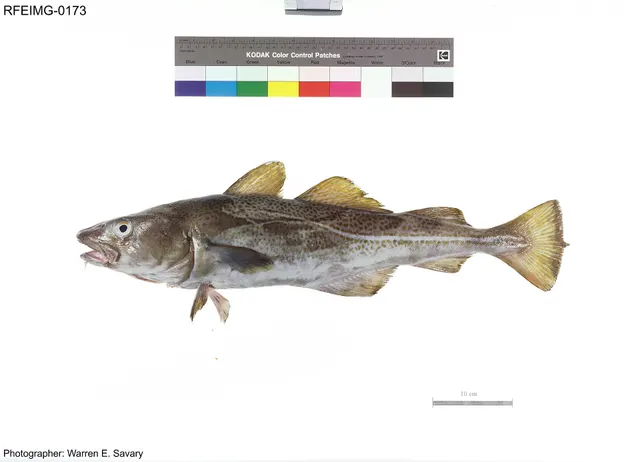 Atlantic codSandeel is a dominant item in North Sea cod diets during the months when the sandeels are out of the sand and in the water column, and cod distribution over sandy ground reflects it.
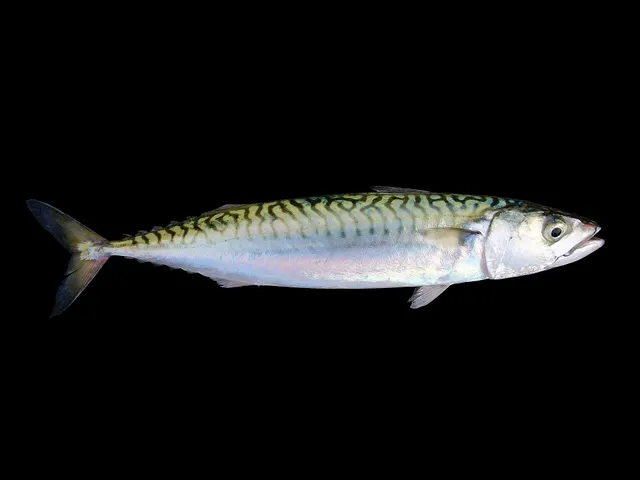 Atlantic mackerelMackerel take sandeel as they grow beyond plankton feeding, which is the transition that brings them into range of shore anglers over sandy ground.
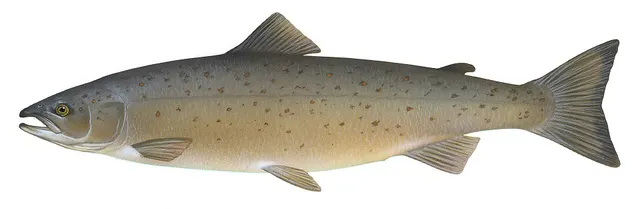 Atlantic salmonAt sea, salmon feed heavily on sandeel, and the growth a salmon achieves during its marine phase is largely a function of forage fish availability rather than anything that happens in fresh water.
- Blonde raySandeels over clean sand are a major part of the diet, and the reason fish baits outperform crab baits for this species.
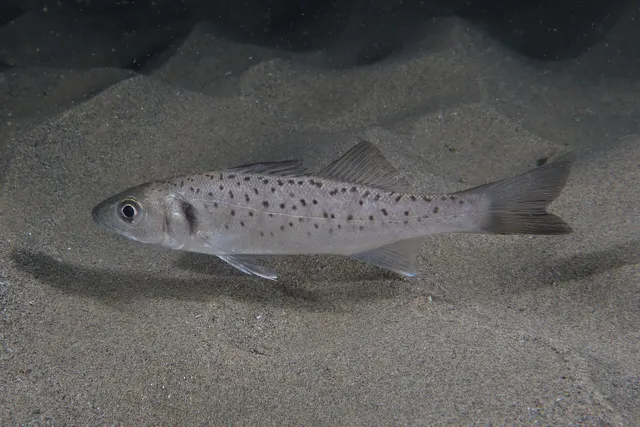 European sea bassSandeel is a principal bass prey over clean sand and around banks, and the timing of bass arrival on many sandy marks tracks sandeel emergence rather than water temperature alone.
- Greater weeverWeevers lie buried in clean sand with only the eyes and the black dorsal tip exposed, taking small fish and crustaceans that pass overhead. Sand eels are the small fish of that ground — which is also why weevers are buried in exactly the sand an angler is casting a worm bait onto.
- John DoryThe dory stalks small shoaling fish head-on, where its plate-thin body is nearly invisible, and fires its protrusible jaws at point-blank range. Sandeels over and around structure are exactly that prey.
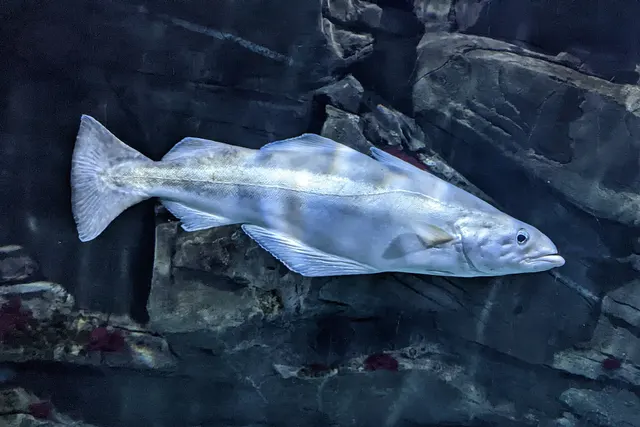 PollackPollack hunting over sandy ground and reef edges take sandeel heavily, which is why they hold in mid water above clean sand rather than on it.
6 more
- Saithe Fish
- Small-eyed ray Fish
- Small-spotted catshark Fish
- Spurdog Fish
- Tope Fish
- Tub gurnard Fish
Where you will find it
- Chesil BeachBuries in the clean sand and shingle offshore of the barrier and is the forage base much of the beach's predatory fishing depends on.
- Portland Bill and the Portland RaceBuries in the cleaner ground around the headland and is one of the forage species the turbulence disorients and concentrates.
- The Norfolk and Suffolk sandbank coastBuries in the clean mobile sand of the offshore banks, which is the habitat the species requires. The banks are a sandeel ground, and that is a large part of why they concentrate predators and seabirds.
Sources and evidence
- FishBase: a global information system on fishes — Froese, R. and D. Pauly, eds. — FishBase Consortium (Scientific institute)Relied on for: Species identity, binomial, family placement, size, distribution and recorded biology for this species.States this directlyPassage read and verified
- FAO Species Identification Guides for Fishery Purposes and the FAO Species Catalogues — Food and Agriculture Organization of the United Nations (Scientific institute)Relied on for: The regional species account describing identity, distribution and the role of this species in the fisheries and food webs it belongs to.States this directlyCitation checked — the work exists and is described correctly
Why the 17 connections on this page are here, and the sources
Similar and related fish
Backed by research — 14 connections
Supported by peer-reviewed research or fisheries science. The sources are listed and can be checked.
Atlantic cod
Recorded diet evidence identifies Ammodytes marinus as a food item of this predator at species level. The edge is written at that granularity and no further.
- FishBase: a global information system on fishes — Froese, R. and D. Pauly, eds. — FishBase Consortium (Scientific institute)Relied on for: Food items recorded for this predator, including Ammodytes marinus.States this directlyPassage read and verified
- FAO Species Identification Guides for Fishery Purposes and the FAO Species Catalogues — Food and Agriculture Organization of the United Nations (Scientific institute)Relied on for: Species account describing the diet of this predator in the region where Ammodytes marinus occurs.Background and mechanism onlyCitation checked — the work exists and is described correctly
Atlantic mackerel
Recorded diet evidence identifies Ammodytes marinus as a food item of this predator at species level. The edge is written at that granularity and no further.
- FishBase: a global information system on fishes — Froese, R. and D. Pauly, eds. — FishBase Consortium (Scientific institute)Relied on for: Food items recorded for this predator, including Ammodytes marinus.States this directlyPassage read and verified
- FAO Species Identification Guides for Fishery Purposes and the FAO Species Catalogues — Food and Agriculture Organization of the United Nations (Scientific institute)Relied on for: Species account describing the diet of this predator in the region where Ammodytes marinus occurs.Background and mechanism onlyCitation checked — the work exists and is described correctly
Atlantic salmon
Recorded diet evidence identifies Ammodytes marinus as a food item of this predator at species level. The edge is written at that granularity and no further.
- FishBase: a global information system on fishes — Froese, R. and D. Pauly, eds. — FishBase Consortium (Scientific institute)Relied on for: Food items recorded for this predator, including Ammodytes marinus.States this directlyPassage read and verified
- FAO Species Identification Guides for Fishery Purposes and the FAO Species Catalogues — Food and Agriculture Organization of the United Nations (Scientific institute)Relied on for: Species account describing the diet of this predator in the region where Ammodytes marinus occurs.Background and mechanism onlyCitation checked — the work exists and is described correctly
Blonde ray
A dietary claim made at SPECIES level because the reference works identify the prey to species: the evidence is about Ammodytes marinus specifically, which is what a preys_on edge against that record asserts.
- The Fishes of the British Isles and North-West Europe — Macmillan, 1969 (Reference work)Relied on for: The diet of the British sharks, skates and rays as set out in the species accounts, in which Ammodytes marinus is identified to species among the recorded prey.States this directlyCitation checked — the work exists and is described correctly
- FAO Species Identification Guides for Fishery Purposes and the FAO Species Catalogues — Food and Agriculture Organization of the United Nations (Scientific institute)Relied on for: Feeding habits and prey composition for the eastern Atlantic elasmobranchs, including the occurrence of Ammodytes marinus in the diet.States this directlyCitation checked — the work exists and is described correctly
European sea bass
Recorded diet evidence identifies Ammodytes marinus as a food item of this predator at species level. The edge is written at that granularity and no further.
- FishBase: a global information system on fishes — Froese, R. and D. Pauly, eds. — FishBase Consortium (Scientific institute)Relied on for: Food items recorded for this predator, including Ammodytes marinus.States this directlyPassage read and verified
- FAO Species Identification Guides for Fishery Purposes and the FAO Species Catalogues — Food and Agriculture Organization of the United Nations (Scientific institute)Relied on for: Species account describing the diet of this predator in the region where Ammodytes marinus occurs.Background and mechanism onlyCitation checked — the work exists and is described correctly
Greater weever
A dietary claim about an ambush predator of clean sandy ground. Ammodytes marinus is named specifically because the edge asserts something about that species and not about small fish in general.
- The Fishes of the British Isles and North-West Europe — Macmillan, 1969 (Reference work)Relied on for: The diet of Trachinus draco, recorded as small fish and crustaceans taken from ambush on clean sandy ground, and the occurrence of Ammodytes marinus as an abundant small fish of exactly that habitat in British and north-west European waters.States this directlyCitation checked — the work exists and is described correctly
- FAO Species Identification Guides for Fishery Purposes and the FAO Species Catalogues — Food and Agriculture Organization of the United Nations (Scientific institute)Relied on for: Habitat, depth range and feeding habit for Trachinus draco and for Ammodytes marinus in the eastern Atlantic, including the shared association with clean sand.States this directlyCitation checked — the work exists and is described correctly
John Dory
A dietary claim naming Ammodytes marinus specifically, as the precision audit requires of any edge asserting something about a species.
- The Fishes of the British Isles and North-West Europe — Macmillan, 1969 (Reference work)Relied on for: The almost entirely piscivorous diet of Zeus faber, and the abundance and distribution of Ammodytes marinus in the same north-east Atlantic waters.States this directlyCitation checked — the work exists and is described correctly
- FAO Species Identification Guides for Fishery Purposes and the FAO Species Catalogues — Food and Agriculture Organization of the United Nations (Scientific institute)Relied on for: Habitat, depth range and feeding habit for Zeus faber and for Ammodytes marinus in the eastern Atlantic.States this directlyCitation checked — the work exists and is described correctly
Pollack
Recorded diet evidence identifies Ammodytes marinus as a food item of this predator at species level. The edge is written at that granularity and no further.
- FishBase: a global information system on fishes — Froese, R. and D. Pauly, eds. — FishBase Consortium (Scientific institute)Relied on for: Food items recorded for this predator, including Ammodytes marinus.States this directlyPassage read and verified
- FAO Species Identification Guides for Fishery Purposes and the FAO Species Catalogues — Food and Agriculture Organization of the United Nations (Scientific institute)Relied on for: Species account describing the diet of this predator in the region where Ammodytes marinus occurs.Background and mechanism onlyCitation checked — the work exists and is described correctly
Saithe
Recorded diet evidence identifies Ammodytes marinus as a food item of this predator at species level. The edge is written at that granularity and no further.
- FishBase: a global information system on fishes — Froese, R. and D. Pauly, eds. — FishBase Consortium (Scientific institute)Relied on for: Food items recorded for this predator, including Ammodytes marinus.States this directlyPassage read and verified
- FAO Species Identification Guides for Fishery Purposes and the FAO Species Catalogues — Food and Agriculture Organization of the United Nations (Scientific institute)Relied on for: Species account describing the diet of this predator in the region where Ammodytes marinus occurs.Background and mechanism onlyCitation checked — the work exists and is described correctly
Small-eyed ray
A dietary claim made at SPECIES level because the reference works identify the prey to species: the evidence is about Ammodytes marinus specifically, which is what a preys_on edge against that record asserts.
- The Fishes of the British Isles and North-West Europe — Macmillan, 1969 (Reference work)Relied on for: The diet of the British sharks, skates and rays as set out in the species accounts, in which Ammodytes marinus is identified to species among the recorded prey.States this directlyCitation checked — the work exists and is described correctly
- FAO Species Identification Guides for Fishery Purposes and the FAO Species Catalogues — Food and Agriculture Organization of the United Nations (Scientific institute)Relied on for: Feeding habits and prey composition for the eastern Atlantic elasmobranchs, including the occurrence of Ammodytes marinus in the diet.States this directlyCitation checked — the work exists and is described correctly
Small-spotted catshark
A dietary claim made at SPECIES level because the reference works identify the prey to species: the evidence is about Ammodytes marinus specifically, which is what a preys_on edge against that record asserts.
- The Fishes of the British Isles and North-West Europe — Macmillan, 1969 (Reference work)Relied on for: The diet of the British sharks, skates and rays as set out in the species accounts, in which Ammodytes marinus is identified to species among the recorded prey.States this directlyCitation checked — the work exists and is described correctly
- FAO Species Identification Guides for Fishery Purposes and the FAO Species Catalogues — Food and Agriculture Organization of the United Nations (Scientific institute)Relied on for: Feeding habits and prey composition for the eastern Atlantic elasmobranchs, including the occurrence of Ammodytes marinus in the diet.States this directlyCitation checked — the work exists and is described correctly
Spurdog
A dietary claim made at SPECIES level because the reference works identify the prey to species: the evidence is about Ammodytes marinus specifically, which is what a preys_on edge against that record asserts.
- The Fishes of the British Isles and North-West Europe — Macmillan, 1969 (Reference work)Relied on for: The diet of the British sharks, skates and rays as set out in the species accounts, in which Ammodytes marinus is identified to species among the recorded prey.States this directlyCitation checked — the work exists and is described correctly
- FAO Species Identification Guides for Fishery Purposes and the FAO Species Catalogues — Food and Agriculture Organization of the United Nations (Scientific institute)Relied on for: Feeding habits and prey composition for the eastern Atlantic elasmobranchs, including the occurrence of Ammodytes marinus in the diet.States this directlyCitation checked — the work exists and is described correctly
Tope
A dietary claim made at SPECIES level because the reference works identify the prey to species: the evidence is about Ammodytes marinus specifically, which is what a preys_on edge against that record asserts.
- The Fishes of the British Isles and North-West Europe — Macmillan, 1969 (Reference work)Relied on for: The diet of the British sharks, skates and rays as set out in the species accounts, in which Ammodytes marinus is identified to species among the recorded prey.States this directlyCitation checked — the work exists and is described correctly
- FAO Species Identification Guides for Fishery Purposes and the FAO Species Catalogues — Food and Agriculture Organization of the United Nations (Scientific institute)Relied on for: Feeding habits and prey composition for the eastern Atlantic elasmobranchs, including the occurrence of Ammodytes marinus in the diet.States this directlyCitation checked — the work exists and is described correctly
Tub gurnard
A dietary claim naming Ammodytes marinus specifically, because the edge asserts something about that species rather than about small fish in general.
- The Fishes of the British Isles and North-West Europe — Macmillan, 1969 (Reference work)Relied on for: The diet of Chelidonichthys lucerna, including a substantial fish component, and the abundance of Ammodytes marinus on the clean sandy ground the two share in British and north-west European waters.States this directlyCitation checked — the work exists and is described correctly
- Cefas science, advice and data on marine and freshwater environments — Centre for Environment, Fisheries and Aquaculture Science (Government fisheries body)Relied on for: UK survey data on the distribution and abundance of Ammodytes marinus on sandy grounds and on the demersal community that feeds on it.States this directlyCitation checked — the work exists and is described correctly
Where you will find it
Backed by research — 3 connections
Supported by peer-reviewed research or fisheries science. The sources are listed and can be checked.
Chesil Beach
A distribution association between an animal and a kind of water, rather than a claim about any named mark.
- The Fishes of the British Isles and North-West Europe — Macmillan, 1969 (Reference work)Relied on for: Distribution, habitat association, depth and ground preference of fishes in British and north-west European waters.States this directlyCitation checked — the work exists and is described correctly
- FishBase: a global information system on fishes — Froese, R. and D. Pauly, eds. — FishBase Consortium (Scientific institute)Relied on for: Distribution, habitat association and depth range recorded for the species.Background and mechanism onlyPassage read and verified
Portland Bill and the Portland Race
A distribution association between an animal and a kind of water, rather than a claim about any named mark.
- The Fishes of the British Isles and North-West Europe — Macmillan, 1969 (Reference work)Relied on for: Distribution, habitat association, depth and ground preference of fishes in British and north-west European waters.States this directlyCitation checked — the work exists and is described correctly
- FishBase: a global information system on fishes — Froese, R. and D. Pauly, eds. — FishBase Consortium (Scientific institute)Relied on for: Distribution, habitat association and depth range recorded for the species.Background and mechanism onlyPassage read and verified
The Norfolk and Suffolk sandbank coast
A claim that a place contains the ground and conditions the species is associated with. It is a distributional statement about the world, it rests on the regional reference literature, and it deliberately asserts nothing about access, permission or catch.
- The Fishes of the British Isles and North-West Europe — Macmillan, 1969 (Reference work)Relied on for: Distribution and habitat association of the marine and estuarine fishes of the British Isles, including which coasts and ground types a species occupies.States this directlyCitation checked — the work exists and is described correctly
- FishBase: a global information system on fishes — Froese, R. and D. Pauly, eds. — FishBase Consortium (Scientific institute)Relied on for: Recorded distribution, depth range and habitat association for the species named.States this directlyPassage read and verified
How FishingHQ labels evidence is explained in the evidence policy.