Inland Wales
Fishing regions · Last reviewed 2026-10-24
The lakes, reservoirs and rivers of Wales away from the sea: one rod licence shared with England, a different regulator, every salmon returned, and permission from whoever owns the water.
Fishing here at a glance
- Ways to fish
- From the shore · From a boat · Fly fishing
- Set up for
Rod to hook from each fish’s guide, and how to build its rigs.
- Tide and weather
- Met Office forecasts (weather) ·
- Natural Resources Wales river and sea levels (river levels)
The official pages for this area’s readings. FishingHQ shows no live reading: check them for the day you go.
- Rules and access
- Who sets the rules here — being listed is never permission to fish.
Not documented here yet: tackle shops, charters or guides.
Being listed here is not permission to fish. What that meansClose
Access, fishing rights, seasons, licences, local bylaws and permitted methods vary and can change. Check current access, permission, local regulations, closures and restrictions before you travel or fish. FishingHQ describes what the ground is and names who holds the answer; it does not hold the answer itself.
Find the authority for a jurisdiction · What FishingHQ does and does not cover
Inland Wales is a guide to the lakes, reservoirs and rivers of Wales away from the sea. Wales shares England's rod licence and is a different country for everything else that governs a day's fishing.
TWO THINGS ARE NEEDED, AS IN ENGLAND. A rod licence, the England and Wales one, bought through GOV.UK, from the age of 13; and permission from whoever controls the fishing. On a reservoir that is usually a ticket from the fishery; on Llyn Tegid it is a permit from the national park authority; on a river it is most often a club or an owner.
THE REGULATOR IS NATURAL RESOURCES WALES. It sets the close seasons and method rules for Welsh waters, river by river. Every salmon caught in Wales is returned, on every river, and salmon and sea trout each have seasons set separately by river and, for salmon, by method.
THE RESERVOIRS ARE MOSTLY DŴR CYMRU'S. The water company owns reservoirs across Wales and opens some to anglers, with the fishing run by the company or by a fishery that sells the tickets. Each reservoir's page here names who sells its ticket and the rules from that ticket page.
WHAT THIS PAGE DOES NOT DO. It restates no fee, season date or bag limit, and it does not say who controls a particular stretch of river. The waters below each carry what their own source says.
What fishing here is like
The fresh water of Wales away from the coast: upland reservoirs and natural lakes, and rivers running off the hills to the sea and across the border into England.
What you can target here
One entry per fish, grouped by how you would be fishing — because the answer is a different one from the rocks and from a boat. Each entry says how strongly the sources support it and how much evidence sits behind it. These are documented catches, not a forecast, and none of it is a statement that you may fish any particular ground.
From the shore · 5
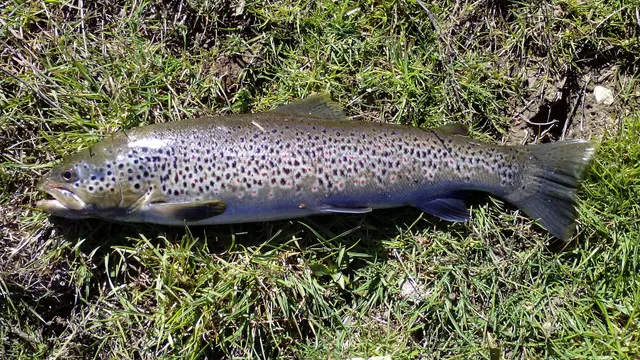 Brown troutCharacteristic of this water6 placesBeacons Reservoir, Talybont Reservoir, Usk Reservoir, Llys-y-Frân and 2 moreOver lake, reservoirAround Mar–Oct
Photo: Robermix, via Wikimedia Commons, CC0; resized and trimmed to fit
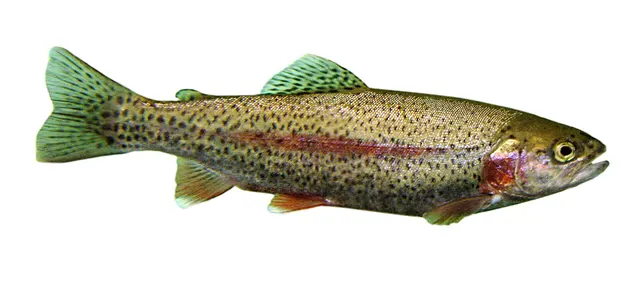 Rainbow troutRegular local target3 placesUsk Reservoir, Llwyn-onn Reservoir, Llys-y-FrânOver reservoir
Photo: Jonathunder, via Wikimedia Commons, CC BY-SA 3.0; resized and trimmed to fit; shared under the same licence
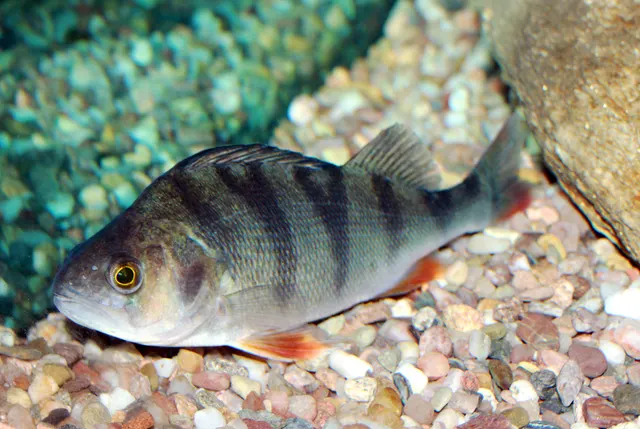 European perchRegular local target2 placesLlyn Tegid, Alwen ReservoirOver lake, reservoir
Photo: Karelj, via Wikimedia Commons, public domain; resized and trimmed to fit
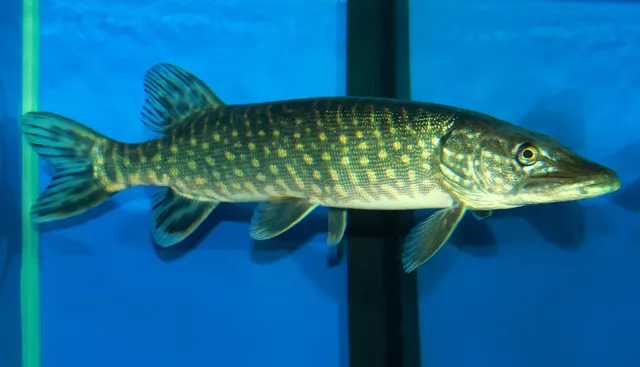 Northern pikeRegular local target1 placeLlyn TegidOver lake
Photo: Karelj, via Wikimedia Commons, public domain; resized and trimmed to fit
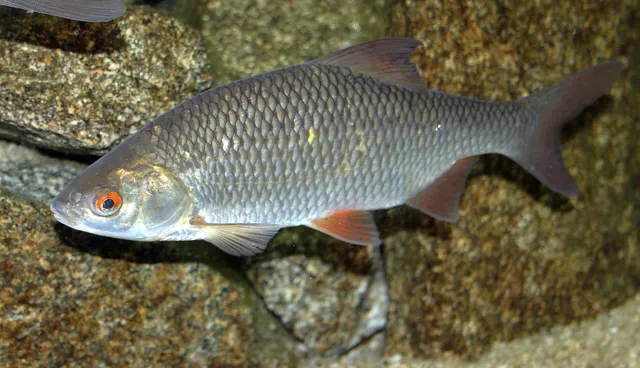 RoachRegular local target1 placeLlyn TegidOver lake
Photo: Karelj, via Wikimedia Commons, public domain; resized and trimmed to fit


From a boat · 3
- Brown troutRegular local target2 placesLlys-y-Frân, Llyn TegidOver lake, reservoirAround Mar–Sept
Photo: Robermix, via Wikimedia Commons, CC0; resized and trimmed to fit
- Northern pikeRegular local target1 placeLlyn TegidOver lake
Photo: Karelj, via Wikimedia Commons, public domain; resized and trimmed to fit
- Rainbow troutRegular local target1 placeLlys-y-FrânOver reservoir
Photo: Jonathunder, via Wikimedia Commons, CC BY-SA 3.0; resized and trimmed to fit; shared under the same licence
Fly fishing · 1
What these strengths mean
- Characteristic of this water
- This water is strongly identified with this species by the sources that cover it.
- Regular local target
- Fishing sources describe this as a normal local target here, not merely as caught.
- Seasonal
- Well supported, and concentrated in part of the year rather than spread through it.
- How breadth is counted
- A fish documented at six marks is shown as six marks: breadth never raises the strength on its own. A fishery account describes the fishing; a recorded catch reports one specific catch. How evidence is weighed.
How people fish here
8 methods are recorded on the places documented here, counted from those places themselves rather than from what is practised in the country. Each opens a full guide to the technique.
Stillwater fly fishing
Recorded at 10 places here, over reservoir, lake.
Fly fishing without current, where the angler supplies every movement and the problem becomes finding fish rather than presenting to them.
Documented on the same ground: Brown trout, European perch, Northern pike, Rainbow trout, Roach.
Dry fly fishing
Recorded at 4 places here, over river reach, reservoir.
Presenting a floating artificial to a fish feeding at the surface, so that it drifts exactly as a natural insect would.
Documented on the same ground: Brown trout.
Float fishing
Recorded at 3 places here, over lake, reservoir, river reach.
Suspending a bait at a controlled depth beneath a buoyant indicator — the most visual, most controllable and most widely applicable method in angling.
Documented on the same ground: European perch, Northern pike, Roach, Brown trout.
Ledgering
Recorded at 2 places here, over reservoir, river reach.
Fishing a bait on the bottom held by a weight, with no float — the simplest way to fish at distance, in depth, or in wind.
Documented on the same ground: Brown trout, Rainbow trout.
Spinning
Recorded at 2 places here, over reservoir.
Casting an artificial lure and retrieving it so that it moves like something alive — the most direct form of lure fishing.
Documented on the same ground: Brown trout, Rainbow trout.
Deadbaiting
Recorded at 1 place here, over lake.
Presenting a dead fish as bait for predators — a method that works because scavenging is normal predator behaviour, not an exception.
Documented on the same ground: European perch, Northern pike, Roach, Brown trout.
Feeder fishing
Recorded at 1 place here, over river reach.
Legering with a weight that also carries bait, so that free offerings arrive in exactly the same place as the hookbait, cast after cast.
Trolling
Recorded at 1 place here, over lake.
Towing lures or baits behind a moving boat to cover large volumes of water and locate scattered fish.
Documented on the same ground: European perch, Northern pike, Roach, Brown trout.
These are the methods documented at the places FishingHQ holds here. A species listed beside a method is documented on the same ground, which is not the same as being taken that way — where a source establishes the method a fish was caught on, it is stated on that place’s own page. All fishing methods.
Baits and lures for these fish
The methods, baits and lures each of the fish above is commonly taken on, from that fish’s own page. This is what works for the fish, not a report of what people use on this particular water — local knowledge and the conditions on the day still decide.
Methods
- Float-tube fishing — for Brown trout, Rainbow trout, Northern pike
- Drop shotting — for European perch
- Kayak fishing — for Northern pike
- Nymphing — for Rainbow trout
- Pole fishing — for Roach
- Salmon fly fishing — for Brown trout
- Tenkara — for Brown trout
- Trotting — for Roach
Baits
- Maggots — for Brown trout, European perch, Roach
- Bread — for Roach
- Casters — for Roach
- Lobworms and worms — for European perch
- Sea deadbaits — for Northern pike
Lures
- Crankbaits — for European perch, Northern pike
- Dry flies — for Brown trout, Rainbow trout
- Nymphs — for Brown trout, Rainbow trout
- Soft plastics — for European perch, Northern pike
- Spinners — for Rainbow trout, European perch
- Streamers — for Brown trout, Rainbow trout
- Jerkbaits — for Northern pike
- Jigs and jig heads — for European perch
Also: Spinnerbaits and bladed jigs · Spoons · Terrestrial fly patterns · Wet flies
What dominates
Fly fishing for trout on the reservoirs and lakes, from the bank and from boats where the fishery allows; game fishing for salmon and sea trout on the rivers; coarse and pike fishing where a water holds them.
The water available
Upland reservoirs behind masonry and earth dams, natural lakes such as Llyn Tegid, and river reaches from fast upland water over gravel and rock to the slower lower rivers.
How the rules are structured
Freshwater rod fishing in Wales needs the England and Wales rod licence, bought through GOV.UK, from the age of 13, and separate permission from whoever controls the fishing. Natural Resources Wales regulates fisheries in Wales and sets the close seasons and method restrictions, river by river; every salmon caught in Wales must be returned, and salmon and sea trout seasons are set by river and, for salmon, by method. Dŵr Cymru Welsh Water owns many reservoirs and opens some to anglers; their tickets and rules are the fishery's. Eryri National Park Authority manages the fishing at Llyn Tegid. FishingHQ does not state what any current rule is: what is said here is what the sources said when read. Check the current position with Natural Resources Wales and the fishery before going.
Who to ask
- Natural Resources Wales, for close seasons, method restrictions and fisheries regulation in Wales.
- GOV.UK, through which the England and Wales rod licence is bought.
- Dŵr Cymru Welsh Water, which owns the reservoirs it opens to anglers, and the fishery that sells each one's ticket.
- The club, association or owner that controls the fishing on a river.
Words you will meet
- Llyn
- Welsh for a lake, and the first word of many lake and reservoir names.
- Afon
- Welsh for a river, as in Afon Conwy or Afon Wysg (the Usk).
- Cronfa
- Welsh for a reservoir (cronfa ddŵr), as in Cronfa Wysg for the Usk Reservoir.
Conditions and hazards
No source read for this page states a hazard for inland Wales as a whole. Each water's page carries the hazards its own source states, and the general cautions for rivers and still water show beneath them.
What you need to fish fresh water in Wales
A ROD LICENCE. The licence is the England and Wales one, bought through GOV.UK, and it is needed from the age of 13. Natural Resources Wales regulates Welsh fisheries; it does not sell the licence.
AND PERMISSION. The licence lets you use a rod; it does not give you the right to fish anywhere. That belongs to whoever controls the water — a reservoir's fishery, the national park authority on Llyn Tegid, a club or an owner on most rivers — and their ticket or permit is a second, separate requirement.
SALMON AND SEA TROUT. Natural Resources Wales sets their seasons river by river, and for salmon by method too: fly, spinning, and shrimp and prawn each have their own. Every salmon caught on every Welsh river is returned. Look up the river you will fish on the regulator's own pages; FishingHQ does not copy the dates.
Official guidance — why, and the sources (3)
Stated by a fisheries authority, scientific institute or recognised angling body. Authoritative, but summarising rather than demonstrating.
- Buy a rod fishing licence — GOV.UK (Environment Agency and Natural Resources Wales) (Government fisheries body)Relied on for: That a rod licence, bought through GOV.UK, is needed to fish in Wales from age 13.States this directlyPassage read and verified
- Natural Resources Wales: salmon open seasons and method restrictions — Natural Resources Wales (Government fisheries body)Relied on for: That all salmon are returned on all Welsh rivers, and that seasons are set by river and by method.States this directlyPassage read and verified
- Natural Resources Wales: sea trout open seasons and method restrictions — Natural Resources Wales (Government fisheries body)Relied on for: That Natural Resources Wales sets sea trout open seasons and method restrictions river by river.States this directlyPassage read and verified
The reservoirs and lakes, and who sells the ticket
Dŵr Cymru Welsh Water owns reservoirs across Wales and opens some of them to anglers. On each, the fishing is sold by a fishery — the water company's own, or another body — and its ticket page is where the current rules are. The reservoir pages here are written from those ticket pages and name the seller; where the water company's own guide is older than the ticket page and disagrees with it, the ticket page is what they say.
Llyn Tegid, the largest natural lake in Wales, is different: Eryri National Park Authority manages its fishing and sells its permits.
The waters FishingHQ describes in inland Wales are listed below, each with what its own source says.
Official guidance — why, and the sources (2)
Stated by a fisheries authority, scientific institute or recognised angling body. Authoritative, but summarising rather than demonstrating.
- Fishing the Reservoirs of Wales: Your Guide — Dŵr Cymru Welsh Water (Local authority, harbour or protected-area body)Relied on for: That Dŵr Cymru Welsh Water owns reservoirs across Wales and opens some of them to anglers.States this directlyPassage read and verified
- Eryri National Park Authority: Fishing at Llyn Tegid — Eryri National Park Authority (Local authority, harbour or protected-area body)Relied on for: That Eryri National Park Authority manages the fishing at Llyn Tegid and sells its permits.States this directlyPassage read and verified
Places within this area
Publicly documented fishing geography. FishingHQ describes what the ground is; it does not say whether you may fish it, and every one of these sends that question to the body that holds the answer. Browse every place in this part of the world.
Who to ask before fishing any of these
FishingHQ does not know the current access position here. Freshwater rod fishing in Wales requires a current rod licence AND separate permission from whoever controls the fishing, which is frequently a club, riparian owner or navigation authority rather than a public body. Close seasons, byelaws and local rules apply and change. Check with Natural Resources Wales and with the controlling club or owner before going.
Llyn Tegid
Lake · Fresh water
The largest natural lake in Wales: a glacial ribbon lake in a fault-guided valley in Snowdonia, six kilometres long, with steep sides, a deep central trough and the River Dee running through it.
The valley funnels wind along the lake axis and Bala is notoriously windy; the fetch is the full length of the lake.
Particular to this ground: cold water shock, boat safety, biosecurity and disease transfer.
Particular to this water: Eryri National Park Authority requires its Llyn Tegid permit as well as a rod licence (Bala and District Angling Association season ticket holders excepted). Its terms, dated January 2020, prohibit removing eels or gwyniad, allow livebait only from the lake itself, five a day, and give trout and salmon seasons with no close season for coarse fish. Check the current terms. This ground carries conservation designations that constrain access, vehicles, bait collection and disturbance independently of any fishing rule.
The Usk at Abergavenny
River reach · Fresh water
A fast, clean, freestone river running over gravel and bedrock ledges through the Brecon Beacons foothills, with a celebrated wild brown trout population and an early salmon run.
Severe hazards of Inland Wales apply here: cold water shock.
The Conwy at Llanrwst
River reach · Fresh water
A fast Snowdonian river running over gravel and bedrock through the Conwy valley to a tidal limit a few miles below, with a substantial sewin run.
Severe hazards of Inland Wales apply here: cold water shock.
The Dee at Llangollen
River reach · Fresh water
A fast, rocky, regulated river running through a narrow valley below Llyn Tegid, with a horseshoe weir feeding the canal and a flow held up by the lake above.
Severe hazards of Inland Wales apply here: cold water shock.
The Clwyd
River reach · Fresh water
A slow, silt-and-gravel lowland river running north through the Vale of Clwyd to a tidal limit at Rhuddlan, with a modest sewin run and coarse fish in its lower reaches.
Severe hazards of Inland Wales apply here: cold water shock.
Llyn Brenig
Reservoir · Fresh water
A large, high, exposed moorland reservoir on the Denbigh moors, with acidic peat-influenced water, a long fetch and cold conditions well into spring.
Severe hazards of Inland Wales apply here: cold water shock.
Particular to this water: The Llyn Brenig site, read on 23 October 2026: trout fishing is fly only; pike may be fished from the bank between 1 October 2026 and 1 March 2027 and from boats between 1 October and 24 November 2026, booked at least a day ahead. Fishing stops for about fifteen days each March for restocking. Fishing along the west shore is temporarily closed because of low water and exposed deep mud. Accessible wheelyboats can be hired, though not for electric wheelchairs.
Llyn Clywedog
Reservoir · Fresh water
A deep, steeply-sided reservoir in a narrow mid-Wales valley behind a very tall concrete dam, built to regulate the Severn, with a level that varies greatly through the year.
Severe hazards of Inland Wales apply here: cold water shock.
Llyn Trawsfynydd
Reservoir · Fresh water
A shallow upland reservoir in Snowdonia built to serve a hydro and later a nuclear station, with a distinctive warmed history and an exposed moorland setting.
Severe hazards of Inland Wales apply here: cold water shock.
6 more places in this area
Usk Reservoir
Reservoir · Fresh water
An upland reservoir in the upper Usk valley in the Brecon Beacons, surrounded by forest and moorland, with wild brown trout and stocked rainbows; the western end is fly only.
Severe hazards of Inland Wales apply here: cold water shock.
Particular to this water: The ticket page, read on 23 October 2026: fly, spinning and worm only, and no Power Bait or anything like it; the western end is fly only. All brown trout must be returned alive. No fishing from the dam face, the overflow, the feeder streams or the conservation area on the north bank. Lead weights from no. 8 shot to 1 oz are prohibited. There is no boat fishing for now because of maintenance works near the dam, expected to finish in late spring 2026. Fishing from 8 am until half an hour after sunset or 9 pm.
Beacons Reservoir
Reservoir · Fresh water
A small wilderness reservoir at the head of the Taff valley in the Brecon Beacons, mainly a wild brown trout water with a few large rainbows left from earlier stocking; bank fishing only.
Severe hazards of Inland Wales apply here: cold water shock.
Particular to this water: The ticket page, read on 23 October 2026: fly fishing only, from the bank only; no boats are available or allowed. No fishing before 8 am. Every brown trout must be returned alive. Opens 20 March 2026.
Llwyn-onn Reservoir
Reservoir · Fresh water
A woodland-bordered reservoir in the Taf Fawr valley north of Merthyr Tydfil, stocked regularly with rainbows from Welsh Water's own rearing unit; the ticket page says its trout are larger than those at Beacons and Cantref.
Severe hazards of Inland Wales apply here: cold water shock.
Particular to this water: The ticket page, read on 23 October 2026: fly, spinning and worm only, and no Power Bait or anything like it. Every brown trout must be returned alive, and the minimum size of a fish taken is 12 inches. Lead weights from no. 8 shot to 1 oz are prohibited. Fishing from 8 am until half an hour after sunset or 9 pm. A child of 13 or under may fish free with an adult on a full ticket, sharing the bag.
Talybont Reservoir
Reservoir · Fresh water
A 318-acre wild brown trout wilderness reservoir in the Brecon Beacons, unstocked since 2014 by the current ticket page's account, fished from the bank with the fly and all fish returned.
Severe hazards of Inland Wales apply here: cold water shock.
Particular to this water: The ticket page, read on 23 October 2026: fly only, from the bank only, one rod per angler, and catch and release for every species. No fishing before 8 am; finish half an hour after sunset or 9 pm. Opens 20 March 2026. Welsh Water's older guide describes annual stocking; the current page says stocking stopped in 2014.
Llys-y-Frân
Reservoir · Fresh water
A reservoir in a country park below the Preseli hills in Pembrokeshire, with a visitor centre, stocked with rainbow trout and holding native brown trout; fly or ledgered worm from the bank, fly only from the electric boats.
Severe hazards of Inland Wales apply here: cold water shock.
Particular to this water: The booking page, read on 23 October 2026: fly fishing or ledgered worm from the bank, fly only from the electric boats, and a two-fish bag on the bank permit. Proof of a rod licence is checked at sign-in. Dogs must be on a lead. In strong winds or lightning the site may close water access or change the fishing zones.
Alwen Reservoir
Reservoir · Fresh water
A moorland reservoir of 1916 on the Denbigh Moors near Llyn Brenig, now un-stocked, with sheltered tree-lined bays; fly and coarse fishing, all catch and release.
Severe hazards of Inland Wales apply here: cold water shock.
Particular to this water: The Llyn Brenig site, read on 23 October 2026: Alwen is un-stocked, fished with the fly and coarse methods, and catch and release only; north of the bridge it is fly fishing only.
Check the rules before you fish
Fishing laws, bylaws, access rules, seasons, bait restrictions and permitted methods vary by location and can change. Check the current rules from the relevant authority and the water you intend to fish before fishing.
Check with:
- Current national or regional law for where you are fishing
- Current local bylaws
- The relevant fisheries authority
- The landowner, club or fishery whose water it is
- Any restrictions specific to the species or the method you intend to use
Where to go next
Rules and access
- Licences and permissionFreshwater fishing in Wales needs the England and Wales rod licence and, separately, permission from whoever controls the water.
More fishing regions
Not related to this page — just the rest of the section. There is little else joined to this subject yet, and a short page should still lead somewhere.
Sources and evidence
5 sources cited on this page
- Buy a rod fishing licence — GOV.UK (Environment Agency and Natural Resources Wales) (Government fisheries body)Relied on for: That a rod licence, bought through GOV.UK, is needed to fish in Wales from age 13.States this directlyPassage read and verified
- Natural Resources Wales: salmon open seasons and method restrictions — Natural Resources Wales (Government fisheries body)Relied on for: That all salmon are returned on all Welsh rivers, and that seasons are set by river and by method.States this directlyPassage read and verified
- Natural Resources Wales: sea trout open seasons and method restrictions — Natural Resources Wales (Government fisheries body)Relied on for: That Natural Resources Wales sets sea trout open seasons and method restrictions river by river.States this directlyPassage read and verified
- Fishing the Reservoirs of Wales: Your Guide — Dŵr Cymru Welsh Water (Local authority, harbour or protected-area body)Relied on for: That Dŵr Cymru Welsh Water owns reservoirs across Wales and opens some of them to anglers.States this directlyPassage read and verified
- Eryri National Park Authority: Fishing at Llyn Tegid — Eryri National Park Authority (Local authority, harbour or protected-area body)Relied on for: That Eryri National Park Authority manages the fishing at Llyn Tegid and sells its permits.States this directlyPassage read and verified
Why the 1 connections on this page are here, and the sources
Rules and access
Official guidance — 1 connection
Stated by a fisheries authority, scientific institute or recognised angling body. Authoritative, but summarising rather than demonstrating.
Licences and permission
The government's own licence page.
- Buy a rod fishing licence — GOV.UK (Environment Agency and Natural Resources Wales) (Government fisheries body)Relied on for: That a rod licence, bought through GOV.UK, is needed to fish in Wales from age 13.States this directlyPassage read and verified
How FishingHQ labels evidence is explained in the evidence policy.