Iceland
Fishing regions · Last reviewed 2026-08-18
A volcanic island in the north Atlantic with internationally significant salmon and char rivers, no public right to fish anywhere, and a biosecurity requirement that has to be dealt with before leaving home.
Safety: moving water and currents — can cause serious injury or death. 3 more points apply here.
Being listed here is not permission to fish. What that meansClose
Access, fishing rights, seasons, licences, local bylaws and permitted methods vary and can change. Check current access, permission, local regulations, closures and restrictions before you travel or fish. FishingHQ describes what the ground is and names who holds the answer; it does not hold the answer itself.
Find the authority for a jurisdiction · What FishingHQ does and does not cover
Iceland is a jurisdiction record because its access model is the clearest counter-example in Europe to everything the model's other records describe.
THERE IS NO STATE ANGLING LICENCE AND NO PUBLIC RIGHT TO FISH. Every fishing right on every river and lake belongs to the landowners along it. They administer it collectively through a fishing association per river, and access is sold as a permit for a named beat, for named dates, for a named number of rods. On the well-known salmon rivers those permits are allocated far in advance and are expensive. This is not a restriction layered on top of a general right; it is the whole structure, and there is no general right underneath it.
WHICH MAKES ICELAND THE PLACE WHERE CHECKING BEFORE GOING IS LEAST OPTIONAL. An angler who arrives without a permit does not have a reduced set of options. They have none.
THE BIOSECURITY REQUIREMENT IS THE SECOND THING TO KNOW AND IT HAS TO BE HANDLED BEFORE TRAVELLING. Equipment used abroad — waders, boots, nets, lines — is subject to a disinfection requirement, or must be certified as disinfected, on entry. The purpose is to keep fish parasites and pathogens away from isolated salmonid stocks that have no resistance to them, and it is enforced. Felt-soled boots are a particular problem because they retain water and are difficult to dry.
THE FISHING ITSELF IS SALMONID AND ALMOST NOTHING ELSE. Atlantic salmon in rivers of international standing; brown trout, including large ferox-type fish in the glacial lakes; and Arctic char in enormous abundance and variety, including landlocked populations that have diverged in individual lakes. There is essentially no coarse fishery, no pike, no perch, and the freshwater fish list is short enough to memorise.
THE RIVERS ARE OF TWO KINDS AND THE DIFFERENCE IS VISIBLE. Spring-fed rivers rising from lava fields run clear, cold and remarkably stable in level and temperature; glacial rivers run milky with rock flour, rise and fall with the melt, and fish quite differently. Anglers choose between them deliberately.
AROUND THE COAST, SEA ANGLING IS OPEN, UNDER-EXPLOITED AND COLD. Cod, haddock, halibut, redfish and wolffish are within reach of a small boat, and shore fishing from harbour and rock is possible and largely unregulated by comparison with the rivers — which is a striking asymmetry in a country whose entire history is a sea fishery.
What fishing here is like
A volcanic island on the mid-Atlantic ridge, sitting where warm Atlantic water meets the Arctic, with an ice cap in the interior and a coastline of fjords, rock and black sand. Rivers are of two distinct kinds: spring-fed rivers rising from porous lava that run clear, cold and unusually stable in flow and temperature, and glacial rivers carrying rock flour that rise and fall with melt and weather. Lakes range from shallow spring-fed waters to deep glacial ones, several holding char populations that have diverged in isolation. The sea is cold, productive and deep close to shore, with a shelf edge and fjord systems within reach of small craft. Weather changes fast and in every season.
How people fish here
6 methods are recorded on the places documented here, counted from the records themselves rather than from what is practised in the country. Each opens a full guide to the technique.
Spinning
Recorded at 2 places here, over lake, rock mark.
Casting an artificial lure and retrieving it so that it moves like something alive — the most direct form of lure fishing.
Dry fly fishing
Recorded at 1 place here, over river reach.
Presenting a floating artificial to a fish feeding at the surface, so that it drifts exactly as a natural insect would.
Jigging
Recorded at 1 place here, over rock mark.
Working a weighted lure with a rising-and-falling motion, usually vertically, so it behaves like a wounded or fleeing baitfish.
Ledgering
Recorded at 1 place here, over rock mark.
Fishing a bait on the bottom held by a weight, with no float — the simplest way to fish at distance, in depth, or in wind.
Nymphing
Recorded at 1 place here, over river reach.
Fishing sunk imitations of immature insects at the fish's depth — the most productive fly method, and the one where take detection is everything.
Stillwater fly fishing
Recorded at 1 place here, over lake.
Fly fishing without current, where the angler supplies every movement and the problem becomes finding fish rather than presenting to them.
These are the methods documented at the places FishingHQ holds here. A species listed beside a method is documented on the same ground, which is not the same as being taken that way — where a source establishes the method a fish was caught on, it is stated on that place’s own page. All fishing methods.
What dominates
Fly fishing for Atlantic salmon on rivers of international standing, under a beat-and-rod permit system. Fly and spinning for brown trout and Arctic char in rivers and lakes, which is far more accessible than the salmon fishing and is the practical option for most visitors. Sea angling from small boat for cod, haddock, halibut, redfish and wolffish, with a substantial charter sector. Shore fishing from harbour, rock and fjord. Ice fishing in some inland waters in winter where conditions and local rules permit.
The water available
Clear, cold, remarkably stable spring-fed rivers rising from lava fields; milky glacial rivers rising and falling with melt; deep glacial lakes with isolated and diverged char populations; shallow spring-fed lakes; fjord systems with deep water close to shore; black sand and boulder coast; and a productive cold-water shelf where Atlantic and Arctic water meet.
How the rules are structured
Iceland has no state angling licence and no public right to fish, and that is the structural fact everything else follows from. The fishing rights on rivers and lakes belong to the landowners, who administer them collectively through a fishing association for each river, and access is bought as a permit for a named beat, on named dates, for a defined number of rods; on the well-known salmon rivers those permits are allocated well in advance. Separately, equipment used abroad is subject to a disinfection or certification requirement on entry, imposed to protect isolated salmonid stocks from parasites and pathogens, and it is enforced rather than advisory — which makes it a rule to satisfy before travelling rather than on arrival. Stock measures, catch limits, release conditions and season lengths are set for individual rivers on scientific advice and vary between them. Sea angling is comparatively open, subject to national fisheries measures. FishingHQ does not state what any current rule is: contact the river's fishing association, and the food and veterinary authority for the equipment requirement.
Who to ask
- The fishing association for the river, which is the landowners acting collectively and is the only body that can sell a permit for it.
- The Icelandic Food and Veterinary Authority, for the disinfection and certification requirement on equipment brought from abroad.
- The Icelandic Marine and Freshwater Research Institute, for stock advice and for the measures set on individual rivers.
- The Icelandic Directorate of Fisheries, for measures in Icelandic marine waters.
- The landowner or harbour authority, for physical access.
Words you will meet
- Veiðifélag
- The fishing association for a river — the landowners along it acting together to administer the fishing, set the number of rods and sell the permits. It is the body that holds every practical answer about an Icelandic river, and there is no state office that substitutes for it.
- Beat
- A defined stretch of river fished by a defined number of rods for a defined period. Icelandic salmon fishing is sold this way rather than as general access, which is why the number of anglers on a river at any time is a managed quantity rather than an outcome.
- Bergvatnsá and jökulsá
- A spring-fed river and a glacial river. The first runs clear, cold and stable because it rises through porous lava; the second runs milky with rock flour and changes with the melt. They fish completely differently and Icelandic anglers choose between them deliberately.
- Bleikja
- Arctic char, which is Iceland's most abundant and most varied freshwater fish. Landlocked populations in individual lakes have diverged in size, shape and feeding, and in one lake several forms coexist — which makes the species a textbook case of adaptive divergence as well as a target.
- Sótthreinsun
- Disinfection. The treatment or certification required for angling equipment used abroad before it enters the country, to keep parasites and pathogens away from isolated salmonid stocks. Felt-soled boots are the standard problem because they hold water and dry slowly.
Conditions and hazards
The hazards here are cold, water volume and isolation, and the weather ties all three together. Icelandic weather changes fast and in every season, and a river valley that was benign in the morning can carry wind, driven rain and a rising river by the afternoon. Glacial rivers rise with melt as well as with rain, which means a warm sunny day is a rising-river day — the opposite of the intuition most anglers bring. Water is cold enough year-round that immersion is decided in the first minute by cold water shock rather than by hypothermia. Wading a glacial river is done without being able to see the bottom, over rounded rock, in fast water. The interior is genuinely remote with poor communications, few people and long response times, and unbridged river crossings are a recognised hazard for vehicles. Around the coast, the sea is cold, the shelf is close and the weather offshore builds quickly. Volcanic ground adds its own considerations — unstable rock, geothermal water hot enough to scald, and areas closed for geological reasons.
A country where nobody has a right to fish, and what that produces
Almost every jurisdiction on FishingHQ starts from some kind of general position and then restricts it. Iceland starts from nothing and sells access, and the consequences are more interesting than they sound.
THE RIGHTS ARE OWNED, ENTIRELY AND WITHOUT EXCEPTION. The fishing on a river belongs to the landowners along its banks. They administer it together through a fishing association for that river, which decides how many rods fish it, when, and on what terms, and sells permits accordingly. There is no state licence to buy instead and no public right underneath.
WHICH MEANS THE NUMBER OF ANGLERS ON A RIVER IS A MANAGED QUANTITY. A beat with four rods has four rods on it. That is a decision rather than an outcome, and it is why Icelandic salmon rivers do not experience the crowding that afflicts open-access fisheries elsewhere — and why the good ones are expensive and booked a long way ahead.
IT ALSO MEANS THE MANAGEMENT INCENTIVES POINT THE RIGHT WAY. Owners whose income depends on the river's run have a direct interest in its stock, and catch limits, release conditions and season lengths are set river by river on scientific advice. That is a stronger alignment than most fisheries manage, and it is worth understanding as the reason for the structure rather than as a side effect.
THE PRACTICAL CONSEQUENCE FOR A VISITOR IS BLUNT. Arriving without an arrangement does not produce a reduced set of options; it produces none. Trout and char fishing is far more accessible and much less expensive than the salmon fishing, and is the realistic route for most visitors — but it is still bought from somebody.
THE BIOSECURITY REQUIREMENT IS THE OTHER THING TO SETTLE BEFORE LEAVING HOME. Equipment used in fresh water abroad must be disinfected or certified as disinfected on entry. The reason is specific: an island's salmonid stocks have been isolated long enough to have no resistance to parasites and pathogens that are routine elsewhere, and a pair of damp waders is a plausible vector. Felt soles are the standard difficulty because they retain water and dry slowly, and some anglers simply travel without them.
THIS IS THE CLEAREST CASE IN EUROPE OF A RULE THAT MUST BE KNOWN IN ADVANCE. Almost every other regulatory point on FishingHQ can be resolved on arrival. This one cannot, and neither can a permit.
WHAT A READER SHOULD DO. Contact the fishing association for the river, well ahead. Contact the food and veterinary authority about equipment. FishingHQ holds neither answer and both change.
Official guidance — why, and the sources (3)
Stated by a fisheries authority, scientific institute or recognised angling body. Authoritative, but summarising rather than demonstrating.
- Code of Conduct for Responsible Fisheries — Food and Agriculture Organization of the United Nations, Rome, 1995 (Standards body)Relied on for: The international framework within which national and regional fisheries authorities set, revise and enforce measures, and the principle that responsible fishing includes the safety of fishers.Background and mechanism onlyCitation checked — the work exists and is described correctly
- ICES Advice on fishing opportunities, catch and effort — International Council for the Exploration of the Sea (Scientific institute)Relied on for: That the stock advice European fisheries measures are set against is produced internationally and revised annually, which is the mechanism by which a national measure changes without the national law changing.States this directlyCitation checked — the work exists and is described correctly
- NASCO conservation and management of North Atlantic salmon — North Atlantic Salmon Conservation Organization (Government fisheries body)Relied on for: The status, conservation and restoration of North Atlantic salmon stocks and the international framework within which national bodies manage them.States this directlyCitation checked — the work exists and is described correctly
Two kinds of river, and a char that became several fish in one lake
Iceland's freshwater fish list is short enough to learn in a minute and the biology behind it is among the most interesting in Europe.
THE RIVERS COME IN TWO KINDS AND AN ANGLER CHOOSES BETWEEN THEM. Spring-fed rivers rise through porous lava, which filters and buffers them: they run clear, cold and remarkably stable in both flow and temperature, and they fish predictably. Glacial rivers carry rock flour from the ice cap, run milky, and rise and fall with melt as much as with rain — so their level tracks temperature, and a bright warm day raises them. Those two behave so differently that the choice between them is a strategic decision rather than a preference.
SALMON ARE THE INTERNATIONAL DRAW. Icelandic Atlantic salmon rivers are among the most closely managed and most sought-after in the world, fished fly-only on most beats, with catch measures set per river.
CHAR ARE THE MORE INTERESTING SCIENCE. Arctic char is Iceland's most abundant and most variable freshwater fish, and isolated populations have diverged repeatedly since the ice retreated. In some lakes several distinct forms coexist — differing in size, head shape, feeding and depth — which is one of the best-documented cases of adaptive divergence in any vertebrate. For an angler that means char from two lakes forty kilometres apart may be genuinely different fish rather than the same fish in different water.
BROWN TROUT REACH REMARKABLE SIZES in some of the glacial lakes, where a piscivorous life history and cold, food-rich water produce fish of a class that the same species does not approach in most of Europe.
AND THERE IS ESSENTIALLY NO COARSE FISHERY. No pike, no perch, no cyprinids of consequence. The freshwater community is salmonid and short, which is a function of an island colonised from the sea after glaciation rather than of anything managers did.
THE SEA IS THE OPPOSITE — PRODUCTIVE, DEEP AND CLOSE. Warm Atlantic water meets Arctic water on this shelf, which drives production, and the shelf edge and the fjords bring cod, haddock, halibut, redfish and wolffish within reach of a small boat. Sea angling here is comparatively under-exploited by recreational anglers, which is a striking asymmetry in a country whose entire economic history is a sea fishery — the sea was work, and the rivers became sport.
Backed by research — why, and the sources (6)
Supported by peer-reviewed research or fisheries science. The sources are listed and can be checked.
- Freshwater Fishes of the British Isles — HarperCollins (New Naturalist 75), 1992 (Reference work)Relied on for: Distribution, ecology, life history and conservation status of European freshwater fishes, including the migratory salmonids and the cyprinid and percid communities named.States this directlyCitation checked — the work exists and is described correctly
- FishBase: a global information system on fishes — Froese, R. and D. Pauly, eds. — FishBase Consortium (Scientific institute)Relied on for: Recorded distribution, habitat association and life history of the freshwater and migratory species named.States this directlyPassage read and verified
- FishBase: a global information system on fishes — Froese, R. and D. Pauly, eds. — FishBase Consortium (Scientific institute)Relied on for: Recorded distribution, depth range, habitat association, size and biology of the species named.States this directlyPassage read and verified
- The IUCN Red List of Threatened Species — International Union for Conservation of Nature (Conservation authority)Relied on for: Current global and regional conservation assessment for the species named, with the assessment date.Background and mechanism onlyCitation checked — the work exists and is described correctly
- ICES Advice on fishing opportunities, catch and effort — International Council for the Exploration of the Sea (Scientific institute)Relied on for: Ecoregion description, stock distribution and status, nursery function and the hydrography of the European sea areas assessed, including the Baltic, the North Sea, the Celtic Seas and the Iberian and Biscay shelf.States this directlyCitation checked — the work exists and is described correctly
- FAO Species Identification Guides for Fishery Purposes and the FAO Species Catalogues — Food and Agriculture Organization of the United Nations (Scientific institute)Relied on for: Identification, distribution and habitat association of the fishes and invertebrates of the Mediterranean, the Black Sea and the eastern central Atlantic.States this directlyCitation checked — the work exists and is described correctly
Weather that changes in an hour, and rivers that rise on a sunny day
Iceland's hazards are cold, volume and distance, and its weather is what connects them.
THE WEATHER CHANGES FASTER THAN VISITORS EXPECT AND IN EVERY SEASON. A calm morning in a river valley can become wind, driven rain and poor visibility within an hour, and the difference between a comfortable day and a serious one is frequently a change of clothing carried rather than a change of plan. Local forecasts are detailed and are consulted seriously by everybody who works outdoors here; a visitor should adopt the same habit.
GLACIAL RIVERS RISE ON WARM DAYS, WHICH INVERTS THE INTUITION. Melt is driven by temperature and sunshine as much as by rain, so a bright still afternoon can put a river up while the sky says nothing is happening. Anybody wading a glacial river should know where the level is and be prepared for it to move against the weather.
WADING IS DONE BLIND IN GLACIAL WATER. Rock flour makes the river opaque, the bottom is rounded rock, and the flow is fast. A wading staff, a belt worn tight, and a deliberate decision to wade less deep than seems necessary are the practical answers, and crossing is a decision rather than a step.
COLD WATER DECIDES AN IMMERSION IN THE FIRST MINUTE. Icelandic water is cold year-round and cold water shock removes breathing control and swimming ability immediately, long before hypothermia becomes the question.
ISOLATION IS THE MULTIPLIER. Away from the ring road there are few people, patchy communications and long response times, and a problem that would be minor at home becomes serious through geography alone. Telling somebody the plan and the return time, carrying a means of calling for help on the person, and building margin into fuel, food, daylight and clothing are the standard mitigations. Unbridged river crossings by vehicle are a recognised local hazard with a real incident record and should not be attempted on unfamiliar ground.
THE COAST ADDS ITS OWN. Cold, productive, deep water close to shore and weather that builds quickly offshore; black sand beaches with heavy surf and undertow in places; and rock that is volcanic, sharp and sometimes unstable.
GEOTHERMAL WATER IS A GENUINE AND UNDERRATED HAZARD. Hot springs and geothermal seeps can be adjacent to cold water, are hot enough to scald severely, and are not always obvious. Ground near them can be thin over hot water.
AND ANYTHING GATHERED FROM THE SHORE CARRIES ITS OWN SEPARATE QUESTION about harvesting area classification, which is a food-safety authority's answer rather than a fisheries one.
Official guidance — why, and the sources (3)
Stated by a fisheries authority, scientific institute or recognised angling body. Authoritative, but summarising rather than demonstrating.
- RNLI water safety guidance: cold water shock and Float to Live — Royal National Lifeboat Institution (Water-safety or diver-training authority)Relied on for: Cold water shock and the immersion response, tidal cut-off, and water-safety guidance for shore anglers and small-craft users.States this directlyPassage read and verified
- Met Office shipping forecast, inshore waters forecast and marine warnings — Met Office, United Kingdom (Government fisheries body)Relied on for: That inshore waters forecasts, sea state and swell are the operative inputs for shore and small-craft decisions in north-west European waters.States this directlyCitation checked — the work exists and is described correctly
- Shellfish classification — Food Standards Agency, 2026 (Government fisheries body)Relied on for: That shellfish harvesting areas are classified for food safety, that the classification governs what may be taken and how it must be treated, and that it is set and revised by the authority on monitoring results rather than fixed.States this directlyCitation checked — the work exists and is described correctly
Some of what lives here
Fish recorded here that FishingHQ holds a reviewed photograph of. It is not a complete list of what Iceland holds, and it is not a prediction that you will catch any of them — it is a way in to the ones we can show you.
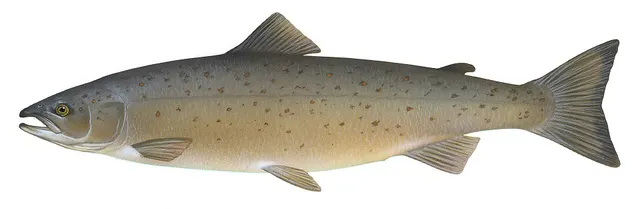 Atlantic salmonAn anadromous salmonid that migrates from its natal river to the North Atlantic and returns to spawn — and a species in serious, well-documented decline.
Knepp, Timothy, Public domain, via Wikimedia Commons
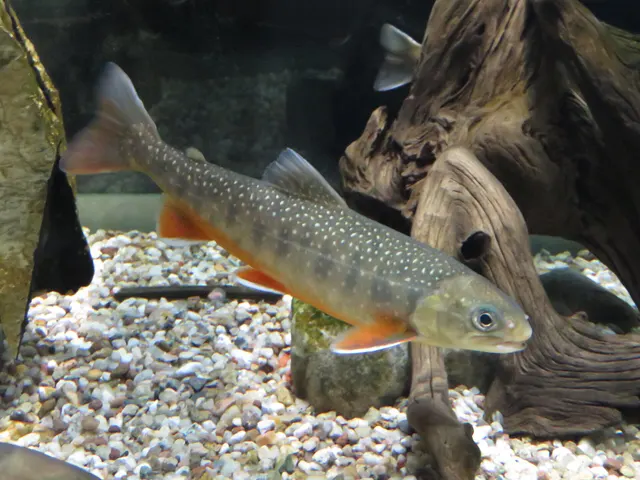 Arctic charThe most northerly freshwater fish in the world, a cold-demanding char with brilliant orange-red spawning bellies and highly distinct landlocked populations.
Xepheid — CC BY-SA 4.0, via Wikimedia Commons
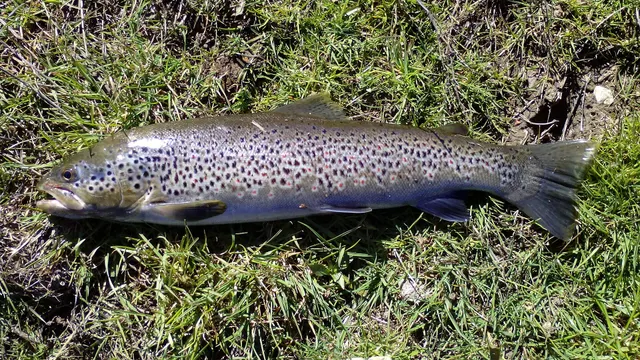 Brown troutA single, extraordinarily plastic species that appears as a tiny hill-stream fish, a deep-bodied loch trout and a silver sea-run migrant — all the same animal.
Robermix, CC0, via Wikimedia Commons
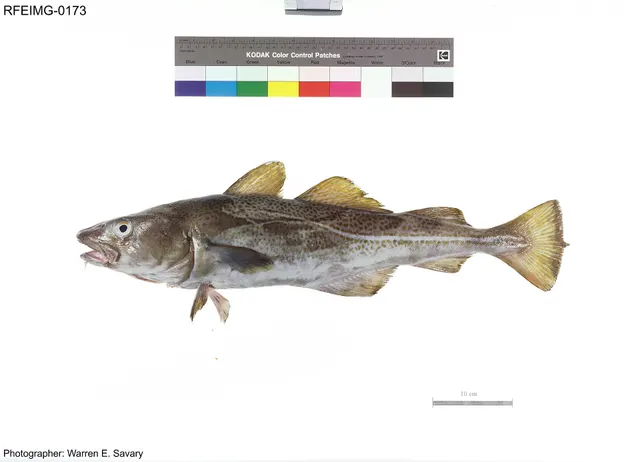 Atlantic codA large, heavily-built demersal predator of the North Atlantic, and the species whose commercial history is the standard example of stock collapse.
The U.S. Food and Drug Administration, Public domain, via Wikimedia Commons
Places within this area
Publicly documented fishing geography. FishingHQ describes what the ground is; it does not say whether you may fish it, and every one of these sends that question to the body that holds the answer. Browse every place in this part of the world.
Who to ask before fishing any of these
FishingHQ does not know the current access position here, and Iceland is the clearest case in Europe of why that sentence matters. There is no state angling licence and no public right to fish: every fishing right on every river and lake belongs to the landowners, who administer it through a fishing association per river, and access is bought as a permit for a named beat on named dates. Salmon rivers are frequently sold years ahead. Disinfection of imported equipment is required. Beats, quotas, seasons and the disinfection arrangements all change. Check with the river's fishing association before travelling.
FishingHQ does not know the current access position here. Recreational sea angling from the Icelandic shore is not generally licensed, but access across land, harbour rules, species measures and conservation designations apply and change — and equipment brought into the country from abroad is subject to a disinfection requirement intended to keep fish disease out of an isolated stock, which is enforced rather than advisory. Check the current position with the Icelandic fisheries directorate and the food and veterinary authority before travelling.
Þingvallavatn
Lake · Fresh water
Iceland's largest natural lake, sitting in the rift where two tectonic plates are pulling apart, fed almost entirely by spring water filtered through lava rather than by surface runoff, with a bed of lava, fissures and clear cold water of exceptional visibility.
Open and exposed to wind funnelling down the rift, which builds a sea quickly on water this large.
Particular to this ground: cold water shock.
Severe hazards of Iceland apply here: moving water and currents, fishing alone.
The Laxá í Aðaldal
River reach · Fresh water
A spring-fed river running north from Lake Mývatn over a bed of lava and weed, clear and unusually stable in both flow and temperature because it rises through porous rock rather than from surface runoff, with an exceptional insect production from the lake above.
Severe hazards of Iceland apply here: moving water and currents, cold water shock, fishing alone.
The Reykjanes coast
Rock mark · Salt water
A young lava peninsula in south-west Iceland with a coast of black basalt, boulder and small black sand bays, geothermal ground behind it and deep cold water a short distance offshore.
Fully exposed to the north Atlantic, on a coast where the swell arrives with nothing to break it and the weather changes within an hour.
Particular to this ground: cliffs and rock platforms, cold water shock, weather and lightning.
Severe hazards of Iceland apply here: moving water and currents, fishing alone.
Safety
Moving water and currents — Can cause serious injury or death
Glacial rivers rise with melt as well as with rain, so a bright warm day puts the level up while the weather gives no warning, and the water is opaque with rock flour so wading is done without seeing the bottom over rounded rock in fast flow.
What reduces it: Know where the level is before starting and expect it to move against the weather, wade with a staff and a belt worn tight, wade shallower than seems necessary, and treat a crossing as a decision rather than a step.
Worse when:
- On warm, sunny days in the melt season, when the river rises in clear weather.
Cold water shock — Can cause serious injury or death
Icelandic fresh and coastal water is cold year-round, and an immersion removes breathing control and swimming ability within the first minute, long before hypothermia is relevant.
What reduces it: Wear flotation rather than carry it, carry a means of calling for help on the person, and plan on the assumption that an unplanned entry is survivable only if somebody knows immediately.
Fishing alone — Can cause serious injury or death
Away from the ring road there are few people, patchy communications and long response times, so an injury or a vehicle failure that would be minor elsewhere becomes serious through distance alone. Unbridged river crossings by vehicle have a real incident record.
What reduces it: Leave a plan and a return time with somebody, carry a means of calling for help on the person, build margin into fuel, food, daylight and clothing, and do not attempt an unbridged crossing on unfamiliar ground.
Weather and lightning — Can cause injury needing treatment
Weather changes within an hour and in every season, and a calm river valley can become wind, driven rain and poor visibility with no warning from the morning's conditions.
What reduces it: Consult the detailed local forecast as a matter of routine rather than of caution, carry clothing for conditions that are not present, and set a turnaround condition before starting.
Further safety reading
- Fishing alone — Away from the ring road there are few people, patchy communications and long response times, so distance converts a manageable problem into a serious one on its own.
- Wading safely — Glacial rivers are waded without seeing the bottom, over rounded rock, in fast water that rises with melt as well as with rain — so a bright warm afternoon is a rising-river afternoon.
Check the rules before you fish
Fishing laws, bylaws, access rules, seasons, bait restrictions and permitted methods vary by location and can change. Check the current rules from the relevant authority and the water you intend to fish before fishing.
Check with:
- Current national or regional law for where you are fishing
- Current local bylaws
- The relevant fisheries authority
- The landowner, club or fishery whose water it is
- Any restrictions specific to the species or the method you intend to use
Where to go next
What swims here
- Arctic charThe country's most abundant and most variable freshwater fish. Isolated populations have diverged since the ice retreated, and in some lakes several distinct forms coexist — one of the best-documented cases of adaptive divergence in any vertebrate.
- Atlantic codThe historic foundation of the Icelandic economy and still within reach of a small boat, on a shelf where warm Atlantic and Arctic water meet.
- Atlantic salmonIceland's salmon rivers are among the most closely managed and most sought-after in the world, fished under a beat-and-rod permit system with measures set river by river.
- Brown troutReaching a size class in some glacial lakes that the same species does not approach across most of its European range, on a piscivorous life history in cold, food-rich water.
Local knowledge
Rules and access
- Biosecurity, and moving equipment between watersDeferred earlier and now written. Equipment used in fresh water abroad is subject to a disinfection or certification requirement on entry, imposed to protect isolated salmonid stocks with no resistance to introduced parasites and pathogens — the clearest case in Europe of a rule that must be satisfied before travelling rather than on arrival.
- Licences and permissionThere is no state angling licence and no public right to fish: every fishing right belongs to the landowners, who sell access as a permit for a named beat on named dates. An angler who arrives without an arrangement has no options rather than fewer.
Environment and conservation
Sources and evidence
- Freshwater Fishes of the British Isles — HarperCollins (New Naturalist 75), 1992 (Reference work)Relied on for: Distribution, ecology, life history and conservation status of European freshwater fishes, including the migratory salmonids and the cyprinid and percid communities named.States this directlyCitation checked — the work exists and is described correctly
- FishBase: a global information system on fishes — Froese, R. and D. Pauly, eds. — FishBase Consortium (Scientific institute)Relied on for: Recorded distribution, habitat association and life history of the freshwater and migratory species named.States this directlyPassage read and verified
- NASCO conservation and management of North Atlantic salmon — North Atlantic Salmon Conservation Organization (Government fisheries body)Relied on for: The status, conservation and restoration of North Atlantic salmon stocks and the international framework within which national bodies manage them.States this directlyCitation checked — the work exists and is described correctly
- FishBase: a global information system on fishes — Froese, R. and D. Pauly, eds. — FishBase Consortium (Scientific institute)Relied on for: Recorded distribution, depth range, habitat association, size and biology of the species named.States this directlyPassage read and verified
- The IUCN Red List of Threatened Species — International Union for Conservation of Nature (Conservation authority)Relied on for: Current global and regional conservation assessment for the species named, with the assessment date.Background and mechanism onlyCitation checked — the work exists and is described correctly
- Fishers' Craft and Lettered Art: Tracts on Fishing from the End of the Middle Ages — University of Toronto Press, 1997 (Scientific literature)Relied on for: That European fishing traditions develop around the water and fish available to them, and the historical method of reading such traditions.Background and mechanism onlyCitation checked — the work exists and is described correctly
- General angling website restatements of established technique — Various (Credible secondary source)Relied on for: Widely restated descriptions of regional angling practice, recorded as practitioner consensus rather than as scholarship.Background and mechanism onlyCitation checked — the work exists and is described correctly
Why the 11 connections on this page are here, and the sources
What swims here
Backed by research — 4 connections
Supported by peer-reviewed research or fisheries science. The sources are listed and can be checked.
Arctic char
That a species occurs in these waters, drawn from distribution science and stock assessment. It is a statement about where the animal lives and is not a statement that anybody will catch one, still less where.
- Freshwater Fishes of the British Isles — HarperCollins (New Naturalist 75), 1992 (Reference work)Relied on for: Distribution, habitat requirement and life history of European freshwater fishes, including their occurrence across the continental range named.States this directlyCitation checked — the work exists and is described correctly
- FishBase: a global information system on fishes — Froese, R. and D. Pauly, eds. — FishBase Consortium (Scientific institute)Relied on for: Recorded distribution and habitat association of the freshwater and migratory species named.States this directlyPassage read and verified
Atlantic cod
That a species occurs in these waters, drawn from distribution science and stock assessment. It is a statement about where the animal lives and is not a statement that anybody will catch one, still less where.
- FishBase: a global information system on fishes — Froese, R. and D. Pauly, eds. — FishBase Consortium (Scientific institute)Relied on for: Recorded distribution, depth range and habitat association of the species named, including its occurrence in the waters of the jurisdiction named.States this directlyPassage read and verified
- ICES Advice on fishing opportunities, catch and effort — International Council for the Exploration of the Sea (Scientific institute)Relied on for: Stock distribution and assessment across the European ecoregions, which is the basis for stating that a species occurs in a given national sea area.States this directlyCitation checked — the work exists and is described correctly
Atlantic salmon
That a species occurs in these waters, drawn from distribution science and stock assessment. It is a statement about where the animal lives and is not a statement that anybody will catch one, still less where.
- Freshwater Fishes of the British Isles — HarperCollins (New Naturalist 75), 1992 (Reference work)Relied on for: Distribution, habitat requirement and life history of European freshwater fishes, including their occurrence across the continental range named.States this directlyCitation checked — the work exists and is described correctly
- FishBase: a global information system on fishes — Froese, R. and D. Pauly, eds. — FishBase Consortium (Scientific institute)Relied on for: Recorded distribution and habitat association of the freshwater and migratory species named.States this directlyPassage read and verified
Brown trout
That a species occurs in these waters, drawn from distribution science and stock assessment. It is a statement about where the animal lives and is not a statement that anybody will catch one, still less where.
- Freshwater Fishes of the British Isles — HarperCollins (New Naturalist 75), 1992 (Reference work)Relied on for: Distribution, habitat requirement and life history of European freshwater fishes, including their occurrence across the continental range named.States this directlyCitation checked — the work exists and is described correctly
- FishBase: a global information system on fishes — Froese, R. and D. Pauly, eds. — FishBase Consortium (Scientific institute)Relied on for: Recorded distribution and habitat association of the freshwater and migratory species named.States this directlyPassage read and verified
How people fish here
What experienced anglers do — 1 connection
Widely and independently recommended by experienced anglers and specialist sources. This is real angling knowledge, not proof: controlled evidence for it is limited, and FishingHQ records it as convention rather than as a demonstrated effect.
Fly fishing
That a discipline is conventionally practised in these waters, drawn from published description of practice rather than from participation data, and labelled as consensus accordingly.
- Sea Angler — Bauer Media (Specialist angling publication)Relied on for: Long-running published description of European sea angling practice by region and destination, including where British anglers travel and what they fish for there.FishingHQ's interpretation of what it saysCitation checked — the work exists and is described correctly
- General angling website restatements of established technique — Various (Credible secondary source)Relied on for: Widely restated descriptions of which disciplines are conventionally practised in the waters named, recorded as practitioner consensus rather than as scholarship.Background and mechanism onlyCitation checked — the work exists and is described correctly
Local knowledge
Backed by research — 1 connection
Supported by peer-reviewed research or fisheries science. The sources are listed and can be checked.
River levels, and what a flood changes
A link from a practice, an environment or a geography to the mechanism it rests on. It asserts that the mechanism is load-bearing here rather than merely relevant, which is the test applied throughout this file.
- Freshwater Fishes of the British Isles — HarperCollins (New Naturalist 75), 1992 (Reference work)Relied on for: Ecology, habitat requirement and behaviour of European freshwater fishes in relation to flow, temperature, level and the modification of their waters.States this directlyCitation checked — the work exists and is described correctly
- The European Environment Agency's assessments of Europe's waters, seas and coasts — European Environment Agency, Copenhagen (Conservation authority)Relied on for: Assessment of Europe's surface waters, including regulation, abstraction, hydromorphological modification and the barriers those produce.States this directlyCitation checked — the work exists and is described correctly
Safety reading
Official guidance — 2 connections
Stated by a fisheries authority, scientific institute or recognised angling body. Authoritative, but summarising rather than demonstrating.
Fishing alone
A link from the place to the substantial safety topic describing the mechanism that hurts people there, rather than a warning restated in prose on the record itself.
- RNLI water safety guidance: cold water shock and Float to Live — Royal National Lifeboat Institution (Water-safety or diver-training authority)Relied on for: Cold water shock and the immersion response, tidal cut-off, and water-safety guidance for shore anglers and small-craft users.States this directlyPassage read and verified
Wading safely
A link from the place to the substantial safety topic describing the mechanism that hurts people there, rather than a warning restated in prose on the record itself.
- RNLI water safety guidance: cold water shock and Float to Live — Royal National Lifeboat Institution (Water-safety or diver-training authority)Relied on for: Cold water shock and the immersion response, tidal cut-off, and water-safety guidance for shore anglers and small-craft users.States this directlyPassage read and verified
Rules and access
Official guidance — 2 connections
Stated by a fisheries authority, scientific institute or recognised angling body. Authoritative, but summarising rather than demonstrating.
Biosecurity, and moving equipment between waters
This points to the kind of rule that applies rather than to a rule itself. FishingHQ says that the class of requirement exists and sends you to the body that holds the current position.
- Check Clean Dry — biosecurity guidance for water users — GB Non-native Species Secretariat (Conservation authority)Relied on for: The pathways by which non-native species and pathogens move between waters on damp equipment, and the check-clean-dry principle developed to interrupt them.States this directlyPassage read and verified
- Environment Agency fisheries management, byelaws and rod licensing information — Environment Agency (Government fisheries body)Relied on for: Fisheries management including fish movement controls, disease and the biosecurity measures applied to equipment.States this directlyCitation checked — the work exists and is described correctly
Licences and permission
This points to the kind of rule that applies rather than to a rule itself. The same question is administered differently in each of these countries, so the page says that the answer is held elsewhere and changes.
- Code of Conduct for Responsible Fisheries — Food and Agriculture Organization of the United Nations, Rome, 1995 (Standards body)Relied on for: The international framework within which national and regional fisheries authorities set, revise and enforce measures, and the principle that the responsible authority rather than a third party holds the current position.Background and mechanism onlyCitation checked — the work exists and is described correctly
- ICES Advice on fishing opportunities, catch and effort — International Council for the Exploration of the Sea (Scientific institute)Relied on for: That the stock advice European measures are set against is produced internationally and revised annually, which is how a national measure changes without the national law changing.States this directlyCitation checked — the work exists and is described correctly
Environment and conservation
Backed by research — 1 connection
Supported by peer-reviewed research or fisheries science. The sources are listed and can be checked.
Biosecurity: check, clean, dry
An environmental claim attached to the geography where it operates, resting on published stock assessment and conservation status rather than on advocacy.
- The IUCN Red List of Threatened Species — International Union for Conservation of Nature (Conservation authority)Relied on for: The conservation assessment of the species and stocks concerned, with the assessment date, which is the basis for treating the pressure on them as established rather than asserted.States this directlyCitation checked — the work exists and is described correctly
- ICES Advice on fishing opportunities, catch and effort — International Council for the Exploration of the Sea (Scientific institute)Relied on for: Stock status and the advice on which management measures for the stocks concerned are set and revised.States this directlyCitation checked — the work exists and is described correctly
How FishingHQ labels evidence is explained in the evidence policy.