Gravel pits
Habitat · Last reviewed 2026-08-13
Water in a hole left by extraction — clear, deep, structurally complex, and the defining big-fish water of southern England and northern Europe.
Safety: drowning and immersion — can cause serious injury or death. 6 more points apply here.
- Water
- Freshwater
A gravel pit is what remains when aggregate is dug out and the hole fills with groundwater. That origin decides everything about it, and it is the reason pits fish so differently from any natural lake.
Extraction does not proceed evenly. It follows the seams of workable gravel and leaves behind what was not worth taking, so a mature pit has a bottom of extraordinary complexity — bars, plateaux, gullies, deep holes, sudden drop-offs and islands, all within a small area and none of it visible from the bank. Finding that structure is the whole of pit fishing, and it is why the marker rod and, latterly, the echo sounder became central to it.
The water is usually clear, because groundwater carries little sediment and the substrate is stone rather than silt. Clear water plus gravel plus low nutrient input produces a low-productivity system with comparatively few fish growing to a very large size — which is precisely the combination that made pits the home of specimen carp, pike, tench and bream fishing in Britain and across northern Europe.
They are also usually young. Most pits are decades old rather than centuries, still developing, and frequently still being worked next door.
What characterises it
Excavated to irregular depth, filled by groundwater, and structurally complex to an extent no natural lake matches. Bars, plateaux, gullies, holes and drop-offs occur within metres of each other, and depth can change by several metres in a rod length. Islands are common, and the substrate is gravel, stone and clay rather than silt.
Water is typically clear and cool, with visibility that can run to several metres. Weed growth is often heavy in the shallower areas because light reaches the bottom, and it dies back seasonally.
What lives there
Low nutrient input and a stony substrate produce a system with less biomass than a comparable natural lake, but with very good conditions for growth: clear water, abundant weed, good invertebrate life on hard substrate, and comparatively low fish density. Fewer fish and plenty of food is the classic specimen-water combination.
Carp, tench, bream, pike, perch and roach are the typical community in Britain, with individual fish reaching sizes that heavily stocked waters rarely produce. Weed beds and gravel bars are the productive features — the bars because they concentrate food and because fish patrol them as routes.
Mature pits develop marginal reed, lily and tree cover and increasingly resemble natural lakes over decades. Young pits are bare, clear and comparatively sterile.
Through the year
Weed growth dominates the year. Pits weed up heavily through spring and summer, which makes some water unfishable and holds fish in specific places; the weed dies back through autumn and winter, opening the water and changing where the fish are entirely.
Clear, cool water means the fish remain catchable in winter more reliably than in shallow coloured waters, and winter pit fishing for carp and pike is a real fishery rather than a token one. Spring brings the pre-spawning feeding period that produces the largest fish of the year, and high summer in clear shallow water makes fish visible, cautious and frequently uncatchable in daylight.
Some of what lives here
Fish recorded here that FishingHQ holds a reviewed photograph of. It is not a complete list of what Gravel pits holds, and it is not a prediction that you will catch any of them — it is a way in to the ones we can show you.
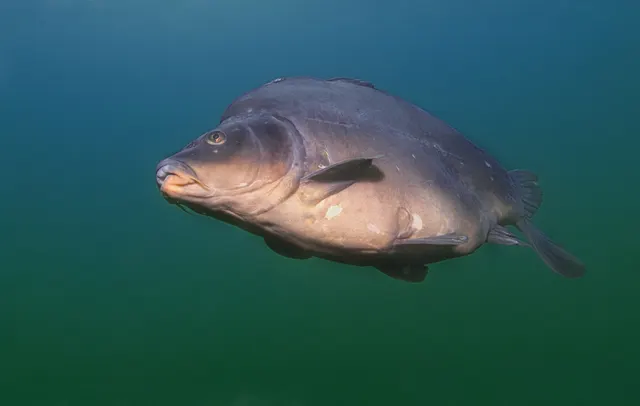 Common carpA large, long-lived, highly adaptable cyprinid whose capacity to learn has shaped more angling technique than any other freshwater fish.
Sven Riewe, CC0, via Wikimedia Commons
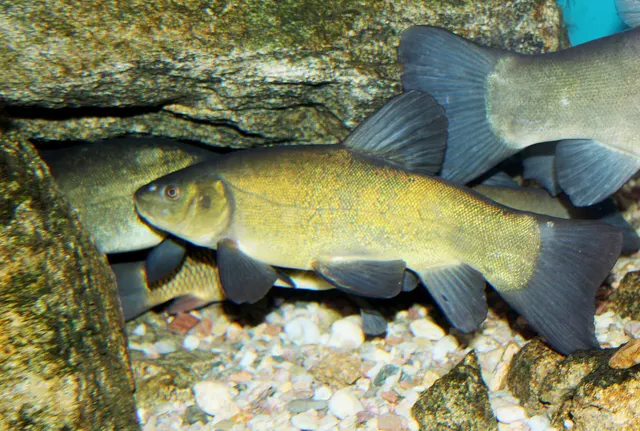 TenchA thick-set, olive-green stillwater fish with tiny scales, a heavy mucus coat, and a strong association with warm, weedy, silty water.
Karelj, Public domain, via Wikimedia Commons
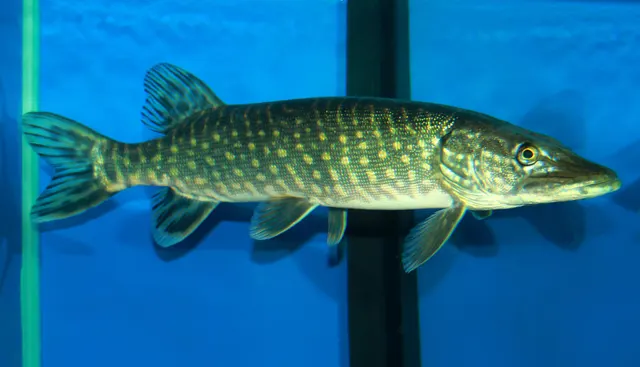 Northern pikeThe dominant freshwater ambush predator of the northern hemisphere: long, cryptic, and built for one violent acceleration rather than pursuit.
Karelj, Public domain, via Wikimedia Commons
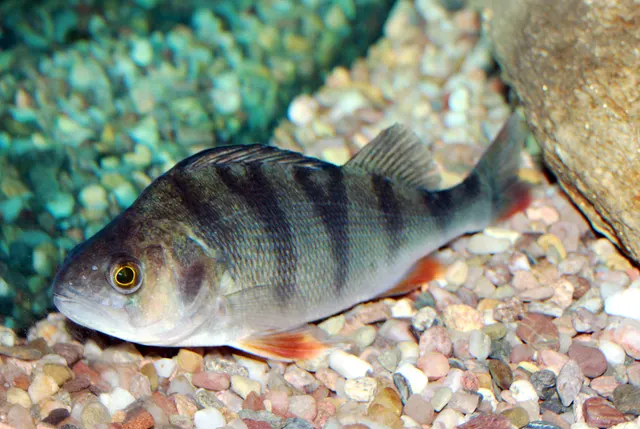 European perchA small, shoaling, spiny-finned predator that is both the most accessible predator to catch and the one most anglers first learn on.
Karelj, Public domain, via Wikimedia Commons
Safety
Drowning and immersion — Can cause serious injury or death
Depth changes suddenly and without warning, because the bottom is a worked excavation rather than a graded shore. A step from ankle depth into several metres is entirely possible, and margins are frequently undercut or unstable.
What reduces it: Do not wade in a pit without knowing the ground. Treat every margin as potentially undercut, keep away from steep banks in the dark, and wear a buoyancy aid if fishing from a boat or an unstable platform.
Cold water shock — Can cause serious injury or death
Groundwater-fed pits are cold year-round below the surface layer, and the combination of sudden depth and cold water is what makes an accidental entry serious rather than merely unpleasant.
What reduces it: Assume the water is cold regardless of the air temperature and regardless of how warm the surface feels. Do not swim to retrieve tackle.
Precautions that always apply here
- Tell somebody where you are going and when you expect to be back.
- Carry a charged phone in a waterproof case, or another means of calling for help.
- Wet your hands before touching a fish. Dry hands strip the protective mucus layer that keeps infection out.
- Unhook fish on a wet mat or in the water, never on gravel, stone or a hard bank.
- Check, clean and dry your kit between different waters — the published guidance is 48 hours’ drying, in sunlight where possible, because a number of invasive species survive over two weeks in damp conditions. Nets, boots and wet mats move invasive species and disease more effectively than anything else anglers do.
Check the rules before you fish
Fishing laws, bylaws, access rules, seasons, bait restrictions and permitted methods vary by location and can change. Check the current rules from the relevant authority and the water you intend to fish before fishing.
Check with:
- Current national or regional law for where you are fishing
- Current local bylaws
- The relevant fisheries authority
- The landowner, club or fishery whose water it is
- Any restrictions specific to the species or the method you intend to use
Where to go next
Fish found here
- Common carpLow density, clear water and abundant natural food over gravel produce the growth rates that made pits the defining specimen carp water.
- European perchBars, plateaux and gravel margins concentrate both prey and perch, and the clarity that makes pits hard for bait anglers suits a visual hunter.
- Northern pikeClear water, complex structure and a prey base of roach and bream produce very large pike, holding on bars and drop-offs rather than in weed.
- TenchGravel bars and weed beds in clear water produce the largest tench in Britain, feeding over hard substrate rather than in silt.
Reading this water
Sources and evidence
- Freshwater Fishes of the British Isles — HarperCollins (New Naturalist 75), 1992 (Reference work)Relied on for: Habitat character, water chemistry and the fish communities associated with the freshwater environments described.States this directlyCitation checked — the work exists and is described correctly
- Environment Agency fisheries management, byelaws and rod licensing information — Environment Agency (Government fisheries body)Relied on for: That freshwater fisheries in England are managed under a licensing framework, that still and running waters are treated differently, and that stocking and biosecurity are regulated activities.Background and mechanism onlyCitation checked — the work exists and is described correctly
Why the 5 connections on this page are here, and the sources
Fish found here
Backed by research — 4 connections
Supported by peer-reviewed research or fisheries science. The sources are listed and can be checked.
Common carp
Habitat association recorded for the species, in an environment FishingHQ describes on its own page.
- Freshwater Fishes of the British Isles — HarperCollins (New Naturalist 75), 1992 (Reference work)Relied on for: Habitat association and distribution of European freshwater fishes, including occurrence in artificial and modified waters.States this directlyCitation checked — the work exists and is described correctly
- FishBase: a global information system on fishes — Froese, R. and D. Pauly, eds. — FishBase Consortium (Scientific institute)Relied on for: Habitat association, depth range and water-type tolerance recorded for the species.States this directlyPassage read and verified
European perch
Habitat association recorded for the species, in an environment FishingHQ describes on its own page.
- Freshwater Fishes of the British Isles — HarperCollins (New Naturalist 75), 1992 (Reference work)Relied on for: Habitat association and distribution of European freshwater fishes, including occurrence in artificial and modified waters.States this directlyCitation checked — the work exists and is described correctly
- FishBase: a global information system on fishes — Froese, R. and D. Pauly, eds. — FishBase Consortium (Scientific institute)Relied on for: Habitat association, depth range and water-type tolerance recorded for the species.States this directlyPassage read and verified
Northern pike
Habitat association recorded for the species, in an environment FishingHQ describes on its own page.
- Freshwater Fishes of the British Isles — HarperCollins (New Naturalist 75), 1992 (Reference work)Relied on for: Habitat association and distribution of European freshwater fishes, including occurrence in artificial and modified waters.States this directlyCitation checked — the work exists and is described correctly
- FishBase: a global information system on fishes — Froese, R. and D. Pauly, eds. — FishBase Consortium (Scientific institute)Relied on for: Habitat association, depth range and water-type tolerance recorded for the species.States this directlyPassage read and verified
Tench
Habitat association recorded for the species, in an environment FishingHQ describes on its own page.
- Freshwater Fishes of the British Isles — HarperCollins (New Naturalist 75), 1992 (Reference work)Relied on for: Habitat association and distribution of European freshwater fishes, including occurrence in artificial and modified waters.States this directlyCitation checked — the work exists and is described correctly
- FishBase: a global information system on fishes — Froese, R. and D. Pauly, eds. — FishBase Consortium (Scientific institute)Relied on for: Habitat association, depth range and water-type tolerance recorded for the species.States this directlyPassage read and verified
Reading this water
What experienced anglers do — 1 connection
Widely and independently recommended by experienced anglers and specialist sources. This is real angling knowledge, not proof: controlled evidence for it is limited, and FishingHQ records it as convention rather than as a demonstrated effect.
Margins, features, and why fish use edges
The physical or biological reason behind a situation. Where that reason is documented science the page for it carries the citation; the association itself is practitioner observation and is labelled as such.
- Freshwater Fishing — Macdonald & Jane's, 1975 (Specialist angling publication)Relied on for: Comprehensive freshwater angling practice including water reading, river conditions, seasonal behaviour and the reasoning behind them.States this directlyCitation checked — the work exists and is described correctly
- Coarse Fishing — A. & C. Black, 1912 (Specialist angling publication)Relied on for: Classical coarse angling practice: swim selection, river and stillwater reading and seasonal observation.States this directlyCitation checked — the work exists and is described correctly
How FishingHQ labels evidence is explained in the evidence policy.