Aquatic insect larvae as prey
Explainer · Last reviewed 2026-08-11
The larval stages of midges, mayflies, caddisflies, stoneflies and their relatives — the foundation of the diet of most freshwater fish for most of their lives.
Background, not a fishing profile
This page is here so FishingHQ can describe a biological relationship accurately — usually because a fish covered elsewhere on the site feeds on this. It covers what it is, where it lives and the evidence behind that relationship, and deliberately nothing about methods, bait or tackle. Its presence here is not a statement that anybody fishes for it.
Almost every freshwater fish on FishingHQ eats aquatic insect larvae, and most of them eat almost nothing else while young.
The important groups are chironomid midge larvae, which are the most abundant animals in the sediment of most stillwaters and the item anglers call bloodworm; mayfly nymphs; caddisfly larvae, many of which build cases from sand or vegetation; stonefly nymphs in cleaner running water; and the larvae of alderflies, damselflies and dragonflies.
In rivers the mechanism that makes them available is drift: larvae dislodged from the bed travel downstream in the current, particularly at dawn and dusk, and fish hold in position and intercept them. That is the basis of an entire discipline of fly fishing, and it is why a trout in a river spends most of its feeding effort well below the surface rather than on it.
The scope is the aquatic larval and nymphal stages of insects. Adult and terrestrial insects that fall onto the water are covered separately, because the fish's behaviour and the angler's response to it are different.
Where to go next
Fish this applies to
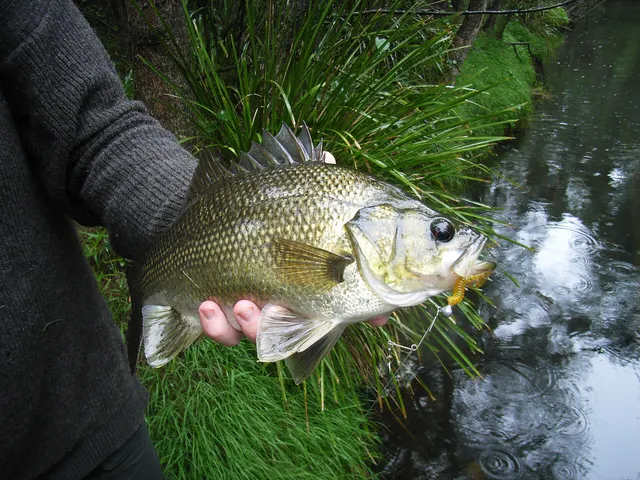 Australian bassInsect larvae and terrestrial insects falling into the water are a substantial part of the diet, which is why surface lure fishing works so well for the species.
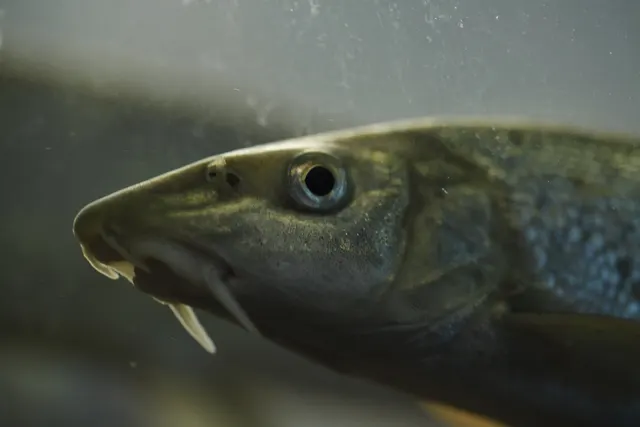 BarbelBarbel feed on the bed of running water, taking insect larvae and other invertebrates located by the barbels in gravel and among stones.
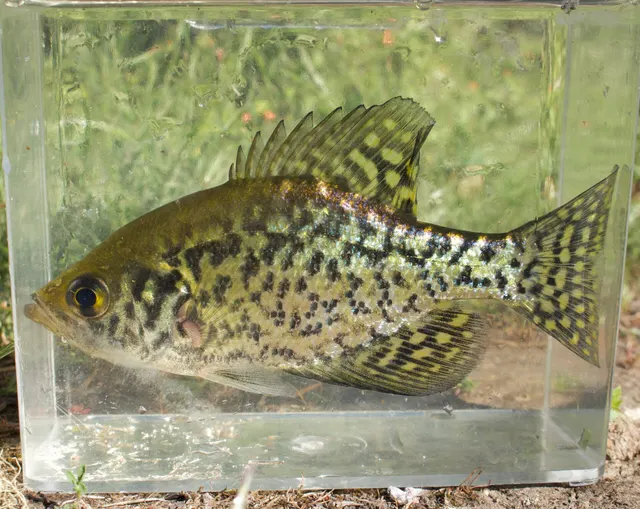 Black crappieInsect larvae and zooplankton dominate the diet of smaller crappie and remain significant in adults through the colder months.
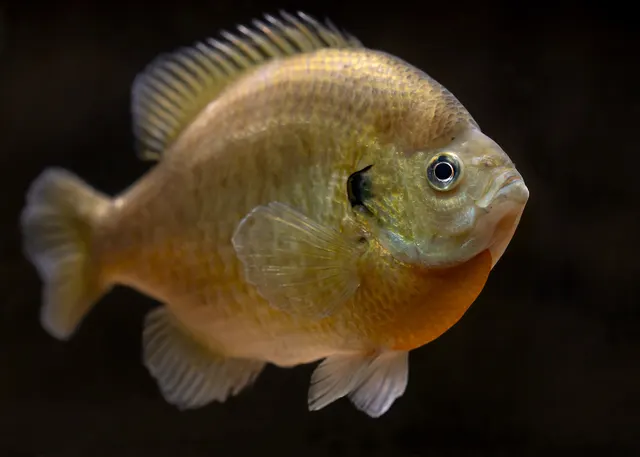 BluegillBluegill feed principally on aquatic insect larvae and small crustaceans taken from weed and sediment, which is the basis of their role as forage and as a panfish.
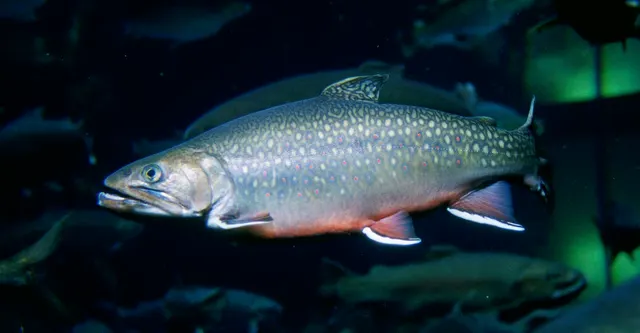 Brook troutIn streams the diet is dominated by aquatic insect larvae taken from the drift, as it is for stream salmonids generally.
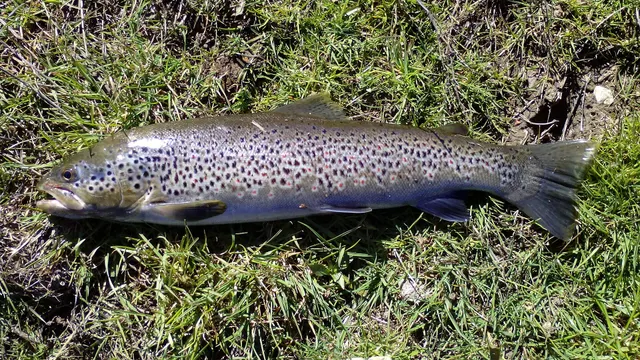 Brown troutAquatic insect larvae are the staple of the brown trout diet in running water for most of its life, and surface feeding on adults is a minority of the total feeding effort.
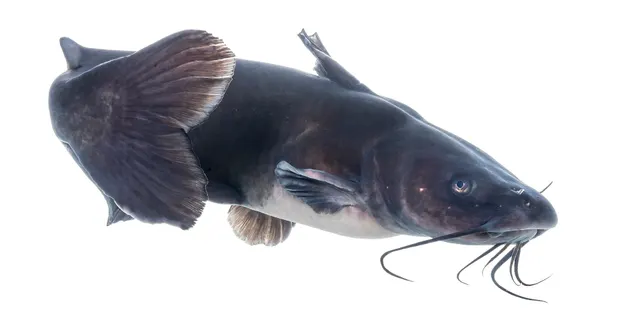 Channel catfishChannel catfish are omnivores with a diet dominated by invertebrates for much of their lives, shifting towards fish as they grow.
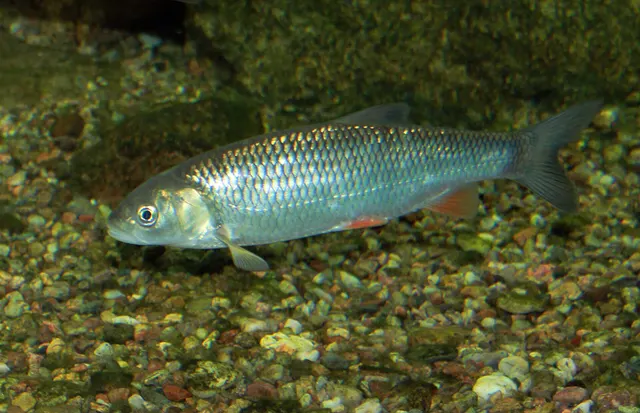 ChubChub are omnivores whose diet is dominated by invertebrates for most of their lives, with fish prey becoming significant only in large individuals.
11 more
- Common bream Fish
- Common carp Fish
- Cutthroat trout Fish
- European eel Fish
- European perch Fish
- Golden mahseer Fish
- Grayling Fish
- Rainbow trout Fish
- Roach Fish
- Tench Fish
- Yellow perch Fish
Sources and evidence
- FishBase: a global information system on fishes — Froese, R. and D. Pauly, eds. — FishBase Consortium (Scientific institute)Relied on for: Recorded food items for the predatory species this taxon is cited as prey for, at the granularity the database records them.States this directlyPassage read and verified
- Freshwater Fishes of the British Isles — HarperCollins (New Naturalist 75), 1992 (Reference work)Relied on for: Feeding accounts for British and Irish freshwater fish, including invertebrate diet composition by species and life stage.States this directlyCitation checked — the work exists and is described correctly
Why the 19 connections on this page are here, and the sources
Fish this applies to
Backed by research — 19 connections
Supported by peer-reviewed research or fisheries science. The sources are listed and can be checked.
Australian bass
Recorded diet evidence identifies aquatic insect larvae as a food item of this predator at group level rather than to species. The edge points at the taxon record for that reason, and encoding it as a species-level claim would assert something the source does not.
- FishBase: a global information system on fishes — Froese, R. and D. Pauly, eds. — FishBase Consortium (Scientific institute)Relied on for: Food items recorded for this predator, given as aquatic insect larvae.States this directlyPassage read and verified
- FAO Species Identification Guides for Fishery Purposes and the FAO Species Catalogues — Food and Agriculture Organization of the United Nations (Scientific institute)Relied on for: Species account describing this predator's diet, recorded at the level of aquatic insect larvae.Background and mechanism onlyCitation checked — the work exists and is described correctly
Barbel
Recorded diet evidence identifies aquatic insect larvae as a food item of this predator at group level rather than to species. The edge points at the taxon record for that reason, and encoding it as a species-level claim would assert something the source does not.
- FishBase: a global information system on fishes — Froese, R. and D. Pauly, eds. — FishBase Consortium (Scientific institute)Relied on for: Food items recorded for this predator, given as aquatic insect larvae.States this directlyPassage read and verified
- FAO Species Identification Guides for Fishery Purposes and the FAO Species Catalogues — Food and Agriculture Organization of the United Nations (Scientific institute)Relied on for: Species account describing this predator's diet, recorded at the level of aquatic insect larvae.Background and mechanism onlyCitation checked — the work exists and is described correctly
Black crappie
Recorded diet evidence identifies aquatic insect larvae as a food item of this predator at group level rather than to species. The edge points at the taxon record for that reason, and encoding it as a species-level claim would assert something the source does not.
- FishBase: a global information system on fishes — Froese, R. and D. Pauly, eds. — FishBase Consortium (Scientific institute)Relied on for: Food items recorded for this predator, given as aquatic insect larvae.States this directlyPassage read and verified
- FAO Species Identification Guides for Fishery Purposes and the FAO Species Catalogues — Food and Agriculture Organization of the United Nations (Scientific institute)Relied on for: Species account describing this predator's diet, recorded at the level of aquatic insect larvae.Background and mechanism onlyCitation checked — the work exists and is described correctly
Bluegill
Recorded diet evidence identifies aquatic insect larvae as a food item of this predator at group level rather than to species. The edge points at the taxon record for that reason, and encoding it as a species-level claim would assert something the source does not.
- FishBase: a global information system on fishes — Froese, R. and D. Pauly, eds. — FishBase Consortium (Scientific institute)Relied on for: Food items recorded for this predator, given as aquatic insect larvae.States this directlyPassage read and verified
- FAO Species Identification Guides for Fishery Purposes and the FAO Species Catalogues — Food and Agriculture Organization of the United Nations (Scientific institute)Relied on for: Species account describing this predator's diet, recorded at the level of aquatic insect larvae.Background and mechanism onlyCitation checked — the work exists and is described correctly
Brook trout
Recorded diet evidence identifies mayfly, caddis and stonefly larvae as a food item of this predator at group level rather than to species. The edge points at the taxon record for that reason, and encoding it as a species-level claim would assert something the source does not.
- FishBase: a global information system on fishes — Froese, R. and D. Pauly, eds. — FishBase Consortium (Scientific institute)Relied on for: Food items recorded for this predator, given as mayfly, caddis and stonefly larvae.States this directlyPassage read and verified
- FAO Species Identification Guides for Fishery Purposes and the FAO Species Catalogues — Food and Agriculture Organization of the United Nations (Scientific institute)Relied on for: Species account describing this predator's diet, recorded at the level of mayfly, caddis and stonefly larvae.Background and mechanism onlyCitation checked — the work exists and is described correctly
Brown trout
Recorded diet evidence identifies mayfly, caddis, stonefly and chironomid larvae as a food item of this predator at group level rather than to species. The edge points at the taxon record for that reason, and encoding it as a species-level claim would assert something the source does not.
- FishBase: a global information system on fishes — Froese, R. and D. Pauly, eds. — FishBase Consortium (Scientific institute)Relied on for: Food items recorded for this predator, given as mayfly, caddis, stonefly and chironomid larvae.States this directlyPassage read and verified
- FAO Species Identification Guides for Fishery Purposes and the FAO Species Catalogues — Food and Agriculture Organization of the United Nations (Scientific institute)Relied on for: Species account describing this predator's diet, recorded at the level of mayfly, caddis, stonefly and chironomid larvae.Background and mechanism onlyCitation checked — the work exists and is described correctly
Channel catfish
Recorded diet evidence identifies aquatic insect larvae as a food item of this predator at group level rather than to species. The edge points at the taxon record for that reason, and encoding it as a species-level claim would assert something the source does not.
- FishBase: a global information system on fishes — Froese, R. and D. Pauly, eds. — FishBase Consortium (Scientific institute)Relied on for: Food items recorded for this predator, given as aquatic insect larvae.States this directlyPassage read and verified
- FAO Species Identification Guides for Fishery Purposes and the FAO Species Catalogues — Food and Agriculture Organization of the United Nations (Scientific institute)Relied on for: Species account describing this predator's diet, recorded at the level of aquatic insect larvae.Background and mechanism onlyCitation checked — the work exists and is described correctly
Chub
Recorded diet evidence identifies aquatic insect larvae as a food item of this predator at group level rather than to species. The edge points at the taxon record for that reason, and encoding it as a species-level claim would assert something the source does not.
- FishBase: a global information system on fishes — Froese, R. and D. Pauly, eds. — FishBase Consortium (Scientific institute)Relied on for: Food items recorded for this predator, given as aquatic insect larvae.States this directlyPassage read and verified
- FAO Species Identification Guides for Fishery Purposes and the FAO Species Catalogues — Food and Agriculture Organization of the United Nations (Scientific institute)Relied on for: Species account describing this predator's diet, recorded at the level of aquatic insect larvae.Background and mechanism onlyCitation checked — the work exists and is described correctly
Common bream
Recorded diet evidence identifies chironomid larvae and other aquatic insect larvae as a food item of this predator at group level rather than to species. The edge points at the taxon record for that reason, and encoding it as a species-level claim would assert something the source does not.
- FishBase: a global information system on fishes — Froese, R. and D. Pauly, eds. — FishBase Consortium (Scientific institute)Relied on for: Food items recorded for this predator, given as chironomid larvae and other aquatic insect larvae.States this directlyPassage read and verified
- FAO Species Identification Guides for Fishery Purposes and the FAO Species Catalogues — Food and Agriculture Organization of the United Nations (Scientific institute)Relied on for: Species account describing this predator's diet, recorded at the level of chironomid larvae and other aquatic insect larvae.Background and mechanism onlyCitation checked — the work exists and is described correctly
Common carp
Recorded diet evidence identifies chironomid larvae and other aquatic insect larvae as a food item of this predator at group level rather than to species. The edge points at the taxon record for that reason, and encoding it as a species-level claim would assert something the source does not.
- FishBase: a global information system on fishes — Froese, R. and D. Pauly, eds. — FishBase Consortium (Scientific institute)Relied on for: Food items recorded for this predator, given as chironomid larvae and other aquatic insect larvae.States this directlyPassage read and verified
- FAO Species Identification Guides for Fishery Purposes and the FAO Species Catalogues — Food and Agriculture Organization of the United Nations (Scientific institute)Relied on for: Species account describing this predator's diet, recorded at the level of chironomid larvae and other aquatic insect larvae.Background and mechanism onlyCitation checked — the work exists and is described correctly
Cutthroat trout
Recorded diet evidence identifies mayfly, caddis and stonefly larvae as a food item of this predator at group level rather than to species. The edge points at the taxon record for that reason, and encoding it as a species-level claim would assert something the source does not.
- FishBase: a global information system on fishes — Froese, R. and D. Pauly, eds. — FishBase Consortium (Scientific institute)Relied on for: Food items recorded for this predator, given as mayfly, caddis and stonefly larvae.States this directlyPassage read and verified
- FAO Species Identification Guides for Fishery Purposes and the FAO Species Catalogues — Food and Agriculture Organization of the United Nations (Scientific institute)Relied on for: Species account describing this predator's diet, recorded at the level of mayfly, caddis and stonefly larvae.Background and mechanism onlyCitation checked — the work exists and is described correctly
European eel
Recorded diet evidence identifies aquatic insect larvae as a food item of this predator at group level rather than to species. The edge points at the taxon record for that reason, and encoding it as a species-level claim would assert something the source does not.
- FishBase: a global information system on fishes — Froese, R. and D. Pauly, eds. — FishBase Consortium (Scientific institute)Relied on for: Food items recorded for this predator, given as aquatic insect larvae.States this directlyPassage read and verified
- FAO Species Identification Guides for Fishery Purposes and the FAO Species Catalogues — Food and Agriculture Organization of the United Nations (Scientific institute)Relied on for: Species account describing this predator's diet, recorded at the level of aquatic insect larvae.Background and mechanism onlyCitation checked — the work exists and is described correctly
European perch
Recorded diet evidence identifies aquatic insect larvae as a food item of this predator at group level rather than to species. The edge points at the taxon record for that reason, and encoding it as a species-level claim would assert something the source does not.
- FishBase: a global information system on fishes — Froese, R. and D. Pauly, eds. — FishBase Consortium (Scientific institute)Relied on for: Food items recorded for this predator, given as aquatic insect larvae.States this directlyPassage read and verified
- FAO Species Identification Guides for Fishery Purposes and the FAO Species Catalogues — Food and Agriculture Organization of the United Nations (Scientific institute)Relied on for: Species account describing this predator's diet, recorded at the level of aquatic insect larvae.Background and mechanism onlyCitation checked — the work exists and is described correctly
Golden mahseer
Recorded diet evidence identifies aquatic insect larvae as a food item of this predator at group level rather than to species. The edge points at the taxon record for that reason, and encoding it as a species-level claim would assert something the source does not.
- FishBase: a global information system on fishes — Froese, R. and D. Pauly, eds. — FishBase Consortium (Scientific institute)Relied on for: Food items recorded for this predator, given as aquatic insect larvae.States this directlyPassage read and verified
- FAO Species Identification Guides for Fishery Purposes and the FAO Species Catalogues — Food and Agriculture Organization of the United Nations (Scientific institute)Relied on for: Species account describing this predator's diet, recorded at the level of aquatic insect larvae.Background and mechanism onlyCitation checked — the work exists and is described correctly
Grayling
Recorded diet evidence identifies mayfly, caddis and chironomid larvae as a food item of this predator at group level rather than to species. The edge points at the taxon record for that reason, and encoding it as a species-level claim would assert something the source does not.
- FishBase: a global information system on fishes — Froese, R. and D. Pauly, eds. — FishBase Consortium (Scientific institute)Relied on for: Food items recorded for this predator, given as mayfly, caddis and chironomid larvae.States this directlyPassage read and verified
- FAO Species Identification Guides for Fishery Purposes and the FAO Species Catalogues — Food and Agriculture Organization of the United Nations (Scientific institute)Relied on for: Species account describing this predator's diet, recorded at the level of mayfly, caddis and chironomid larvae.Background and mechanism onlyCitation checked — the work exists and is described correctly
Rainbow trout
Recorded diet evidence identifies mayfly, caddis, stonefly and chironomid larvae as a food item of this predator at group level rather than to species. The edge points at the taxon record for that reason, and encoding it as a species-level claim would assert something the source does not.
- FishBase: a global information system on fishes — Froese, R. and D. Pauly, eds. — FishBase Consortium (Scientific institute)Relied on for: Food items recorded for this predator, given as mayfly, caddis, stonefly and chironomid larvae.States this directlyPassage read and verified
- FAO Species Identification Guides for Fishery Purposes and the FAO Species Catalogues — Food and Agriculture Organization of the United Nations (Scientific institute)Relied on for: Species account describing this predator's diet, recorded at the level of mayfly, caddis, stonefly and chironomid larvae.Background and mechanism onlyCitation checked — the work exists and is described correctly
Roach
Recorded diet evidence identifies aquatic insect larvae as a food item of this predator at group level rather than to species. The edge points at the taxon record for that reason, and encoding it as a species-level claim would assert something the source does not.
- FishBase: a global information system on fishes — Froese, R. and D. Pauly, eds. — FishBase Consortium (Scientific institute)Relied on for: Food items recorded for this predator, given as aquatic insect larvae.States this directlyPassage read and verified
- FAO Species Identification Guides for Fishery Purposes and the FAO Species Catalogues — Food and Agriculture Organization of the United Nations (Scientific institute)Relied on for: Species account describing this predator's diet, recorded at the level of aquatic insect larvae.Background and mechanism onlyCitation checked — the work exists and is described correctly
Tench
Recorded diet evidence identifies chironomid larvae and other aquatic insect larvae as a food item of this predator at group level rather than to species. The edge points at the taxon record for that reason, and encoding it as a species-level claim would assert something the source does not.
- FishBase: a global information system on fishes — Froese, R. and D. Pauly, eds. — FishBase Consortium (Scientific institute)Relied on for: Food items recorded for this predator, given as chironomid larvae and other aquatic insect larvae.States this directlyPassage read and verified
- FAO Species Identification Guides for Fishery Purposes and the FAO Species Catalogues — Food and Agriculture Organization of the United Nations (Scientific institute)Relied on for: Species account describing this predator's diet, recorded at the level of chironomid larvae and other aquatic insect larvae.Background and mechanism onlyCitation checked — the work exists and is described correctly
Yellow perch
Recorded diet evidence identifies aquatic insect larvae as a food item of this predator at group level rather than to species. The edge points at the taxon record for that reason, and encoding it as a species-level claim would assert something the source does not.
- FishBase: a global information system on fishes — Froese, R. and D. Pauly, eds. — FishBase Consortium (Scientific institute)Relied on for: Food items recorded for this predator, given as aquatic insect larvae.States this directlyPassage read and verified
- FAO Species Identification Guides for Fishery Purposes and the FAO Species Catalogues — Food and Agriculture Organization of the United Nations (Scientific institute)Relied on for: Species account describing this predator's diet, recorded at the level of aquatic insect larvae.Background and mechanism onlyCitation checked — the work exists and is described correctly
How FishingHQ labels evidence is explained in the evidence policy.