Pole rig
Rig · Last reviewed 2026-08-18
A short fixed length of line below a pole tip, with the shock absorption provided by elastic inside the pole rather than by a reel drag.
Safety: overhead power lines — can cause serious injury or death. One more point applies here.
Overhead power lines — Can cause serious injury or death
A pole is a long continuous conductor held horizontally and shipped back and forth, and carbon conducts electricity. Contact with an overhead line, or approach close enough for the current to arc, is very frequently fatal and does not require touching the cable.
What reduces it: Look up before setting up and choose a peg with no line overhead at any pole length you might ship to. Treat the full extended length as the hazard radius rather than the length currently in use, and never ship a pole back or forward without knowing what is above it.
Worse when:
- On drains, canals and commercial fisheries, where distribution lines commonly cross the water.
- In the dark, and when moving pegs after arriving in daylight.
What it is for
To place a very light, very sensitive bait presentation on an exact spot repeatedly, at a fixed range, with the fish's runs absorbed by elastic inside the pole instead of by a reel drag. It exists for precision and delicacy rather than for range or power.
Components, from rod to hook
- Pole elastic threaded through the top sections, anchored internally and rated to the fish expected.
- A connector at the pole tip joining the elastic to the rig.
- A short length of main line — typically only a little longer than the depth being fished.
- A pole float, usually carrying a very small load, attached through a side eye and a bristle stem.
- Fine shot or an olivette bulk, with one or two droppers below it.
- A fine hooklength and a small hook, both finer than a rod-and-reel equivalent would be.
What it does in the water
The rig is lowered rather than cast, so it enters the water without disturbance and settles almost vertically beneath the pole tip. Because the line from tip to float is short and nearly vertical, wind and drift act on very little of it and the float sits still on a spot instead of drifting off one. Bites register almost instantly — there is no slack to take up and no stretch of a long line to absorb them, which is why a pole shows takes that a rod and reel never sees. When a fish runs, the elastic comes out of the pole tip and continues stretching until the run stops; the angler ships back sections of pole to bring the fish within reach rather than winding it in.
When to use it
Stillwaters, canals, commercial fisheries and slow river margins where the fish are within pole range, where bites are delicate, and where placing the bait on the same spot repeatedly matters more than covering water. It is the wrong tool in strong wind, in fast flow, at range, over ground that snags, or where a fish may run further than the elastic can absorb.
Common mistakes
- Elastic too heavy for the hooklength, so the line parts before the elastic gives at all — the two must be matched as a system.
- Elastic too light for the fish, so a good fish is played far longer than it should be, which is a welfare problem rather than a sporting one.
- Shipping back through the sections too slowly with a fish on, letting it reach a snag the rig cannot be pulled from.
- Fishing a pole at a length that cannot be held steady, so the tip moves and the presentation the rig exists for is lost.
- Treating the short line as unbreakable and lifting a fish rather than shipping back, which is how hooklengths and top kits are broken.
How this rig behaves, and where it goes wrong
Every other arrangement on FishingHQ assumes a reel. A pole rig does not, and almost everything unusual about it follows from that single fact.
There is no drag, so a fish that runs has to be absorbed by something else — a length of elastic threaded down the pole's top sections, anchored at one end and connected to the line at the other. The elastic IS the drag. Choosing its grade is the same decision as setting a clutch, and getting it wrong has the same two failure modes: too heavy and the hook pulls or the line parts, too light and a fish cannot be controlled and is played to exhaustion.
There is also no casting. The rig is lowered onto a spot rather than thrown at one, which means it can be extremely light, extremely sensitive, and placed with a precision no cast can match — repeatedly, in the same handspan, all day. That precision is the reason the pole dominates competitive coarse fishing.
The cost is reach and mobility. The rig is only fishable at the length of pole being held, the pole must be shipped back in sections to land a fish, and wind acts on the whole length of it.
Safety
Overhead power lines is set out at the top of this page, where it cannot be missed.
Fish welfare — Can cause injury needing treatment
Elastic rated too light for the fish hooked cannot bring it under control, and the fish is played to exhaustion over a long period, which sharply reduces its chances of recovering after release.
What reduces it: Match the elastic to the largest fish realistically present rather than to the average one, and step up the whole system — elastic, line and hook together — when bigger fish are showing.
Further safety reading
- Overhead power lines and carbon rods — A pole is a long continuous carbon conductor held horizontally and shipped back and forth, and the hazard radius is the full extended length rather than the length in use. This is the arrangement in FishingHQ most associated with electrocution.
Where to go next
Fish it is built for
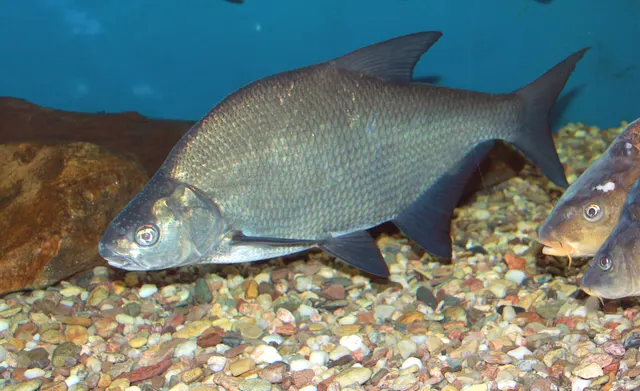 Common breamBream shoals feeding on a baited spot are held and fished far more precisely on a pole than on a cast rig, which is why match anglers reach for it.
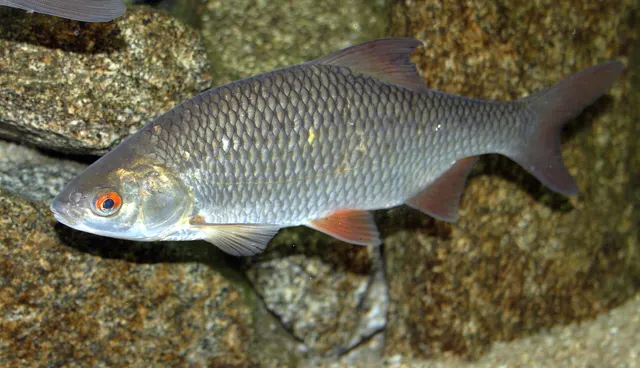 RoachSmall shoal fish at close range on a fixed spot is the case the pole exists for, and roach are the archetype of it.
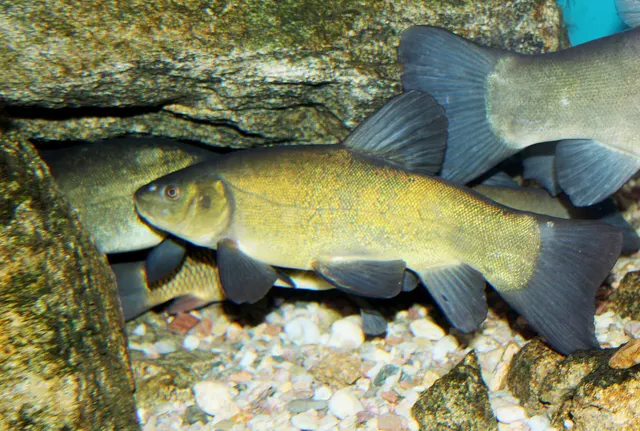 TenchA margin fish taken close in on a delicate presentation, where a pole places the bait without the disturbance a cast makes.
How it is fished
Worth understanding first
- Choosing a rig for the conditionsShort range, an exact spot, very light presentation and no reel — where shock absorption is elastic inside the pole rather than a clutch, and the elastic and hooklength have to be matched as one system.
- How a reel drag worksWorth reading against this rig precisely because there is no reel. The elastic performs the drag's function, and the two failure modes — too tight and something parts, too loose and the fish is never controlled — are identical.
- Line strength, diameter and knotsElastic grade and hooklength have to be matched as one system. An elastic heavier than the hooklength means the line parts before the elastic gives at all, which is the commonest error in setting a pole up.
- What a rig isThe arrangement that most clearly separates a rig from the tackle carrying it — the elastic doing the work of a clutch sits inside the pole rather than in the rig, so the rig itself can be finer than any rod-and-reel equivalent.
Sources and evidence
Why the 9 connections on this page are here, and the sources
Fish it is built for
What experienced anglers do — 3 connections
Widely and independently recommended by experienced anglers and specialist sources. This is real angling knowledge, not proof: controlled evidence for it is limited, and FishingHQ records it as convention rather than as a demonstrated effect.
Common bream
That anglers conventionally choose this arrangement when targeting this fish. It is a claim about practice rather than about the fish, and it does not assert that the arrangement is necessary or that it will succeed.
- Coarse Fishing — A. & C. Black, 1912 (Specialist angling publication)Relied on for: Classical coarse angling practice: terminal arrangements, shotting, float attachment and bite registration in still and running water.States this directlyCitation checked — the work exists and is described correctly
- Angling Times — Bauer Media (Specialist angling publication)Relied on for: Contemporary UK coarse and match angling practice as reported by practitioners, including pole, float and surface rig convention.States this directlyCitation checked — the work exists and is described correctly
Roach
That anglers conventionally choose this arrangement when targeting this fish. It is a claim about practice rather than about the fish, and it does not assert that the arrangement is necessary or that it will succeed.
- Coarse Fishing — A. & C. Black, 1912 (Specialist angling publication)Relied on for: Classical coarse angling practice: terminal arrangements, shotting, float attachment and bite registration in still and running water.States this directlyCitation checked — the work exists and is described correctly
- Angling Times — Bauer Media (Specialist angling publication)Relied on for: Contemporary UK coarse and match angling practice as reported by practitioners, including pole, float and surface rig convention.States this directlyCitation checked — the work exists and is described correctly
Tench
That anglers conventionally choose this arrangement when targeting this fish. It is a claim about practice rather than about the fish, and it does not assert that the arrangement is necessary or that it will succeed.
- Coarse Fishing — A. & C. Black, 1912 (Specialist angling publication)Relied on for: Classical coarse angling practice: terminal arrangements, shotting, float attachment and bite registration in still and running water.States this directlyCitation checked — the work exists and is described correctly
- Angling Times — Bauer Media (Specialist angling publication)Relied on for: Contemporary UK coarse and match angling practice as reported by practitioners, including pole, float and surface rig convention.States this directlyCitation checked — the work exists and is described correctly
How it is fished
What experienced anglers do — 1 connection
Widely and independently recommended by experienced anglers and specialist sources. This is real angling knowledge, not proof: controlled evidence for it is limited, and FishingHQ records it as convention rather than as a demonstrated effect.
Pole fishing
That a method conventionally uses this terminal arrangement, drawn from published description of practice rather than from any claim that it must.
- Coarse Fishing — A. & C. Black, 1912 (Specialist angling publication)Relied on for: Classical coarse angling practice: terminal arrangements, shotting, float attachment and bite registration in still and running water.States this directlyCitation checked — the work exists and is described correctly
- Angling Times — Bauer Media (Specialist angling publication)Relied on for: Contemporary UK coarse and match angling practice as reported by practitioners, including pole, float and surface rig convention.States this directlyCitation checked — the work exists and is described correctly
Worth understanding first
What experienced anglers do — 4 connections
Widely and independently recommended by experienced anglers and specialist sources. This is real angling knowledge, not proof: controlled evidence for it is limited, and FishingHQ records it as convention rather than as a demonstrated effect.
Choosing a rig for the conditions
An arrangement joined to the guidance that selects it. That guidance names eleven rigs against four questions and pointed at none of them, so a reader following the procedure to its conclusion could not reach the answer.
- Sea Angler — Bauer Media (Specialist angling publication)Relied on for: British sea angling practice: how tide, wind, swell and water clarity change where and how a mark is fished.FishingHQ's interpretation of what it saysCitation checked — the work exists and is described correctly
- Freshwater Fishing — Macdonald & Jane's, 1975 (Specialist angling publication)Relied on for: Comprehensive angling practice across disciplines, including water reading, seasonal condition and the tackle each demands.States this directlyCitation checked — the work exists and is described correctly
How a reel drag works
A link from an arrangement to the concept that explains why it is built the way it is, so this page carries the mechanism rather than restating it.
- Coarse Fishing — A. & C. Black, 1912 (Specialist angling publication)Relied on for: Classical coarse angling practice: terminal arrangements, shotting, float attachment and bite registration in still and running water.States this directlyCitation checked — the work exists and is described correctly
- Angling Times — Bauer Media (Specialist angling publication)Relied on for: Contemporary UK coarse and match angling practice as reported by practitioners, including pole, float and surface rig convention.States this directlyCitation checked — the work exists and is described correctly
Line strength, diameter and knots
A link from an arrangement to the concept that explains why it is built the way it is, so this page carries the mechanism rather than restating it.
- Coarse Fishing — A. & C. Black, 1912 (Specialist angling publication)Relied on for: Classical coarse angling practice: terminal arrangements, shotting, float attachment and bite registration in still and running water.States this directlyCitation checked — the work exists and is described correctly
- Angling Times — Bauer Media (Specialist angling publication)Relied on for: Contemporary UK coarse and match angling practice as reported by practitioners, including pole, float and surface rig convention.States this directlyCitation checked — the work exists and is described correctly
What a rig is
A link from an arrangement to the concept that explains why it is built the way it is, so this page carries the mechanism rather than restating it.
- Coarse Fishing — A. & C. Black, 1912 (Specialist angling publication)Relied on for: Classical coarse angling practice: terminal arrangements, shotting, float attachment and bite registration in still and running water.States this directlyCitation checked — the work exists and is described correctly
- Angling Times — Bauer Media (Specialist angling publication)Relied on for: Contemporary UK coarse and match angling practice as reported by practitioners, including pole, float and surface rig convention.States this directlyCitation checked — the work exists and is described correctly
Safety reading
Official guidance — 1 connection
Stated by a fisheries authority, scientific institute or recognised angling body. Authoritative, but summarising rather than demonstrating.
Overhead power lines and carbon rods
A link from the arrangement to the safety topic holding the mechanism, rather than a warning restated in the rig's own prose.
- RNLI water safety guidance: cold water shock and Float to Live — Royal National Lifeboat Institution (Water-safety or diver-training authority)Relied on for: Water-safety guidance for shore anglers and small-craft users, including the mechanisms by which anglers are injured or drowned.States this directlyPassage read and verified
How FishingHQ labels evidence is explained in the evidence policy.