Floodplains, backwaters and oxbows
Habitat · Last reviewed 2026-08-17
The water beside the river rather than in it. Seasonally connected, enormously productive, and — in most large tropical rivers — where the fishery actually comes from.
Safety: moving water and currents — can cause serious injury or death. 2 more points apply here.
- Water
- Freshwater, Brackish
A river map shows a channel. The fish are frequently not in it.
WHAT A FLOODPLAIN IS. The low ground beside a river that the river occupies when it rises: forest, grassland, swamp, permanent lakes and lagoons, and cut-off former channels. In a large unregulated river the flooded area at high water can be many times the area of the channel.
THE FLOOD PULSE IS THE MECHANISM. As water rises it moves sideways out of the channel and inundates that ground. Terrestrial material — leaf litter, fruit, seeds, insects, the whole of a dry-season accumulation — becomes available at once, and productivity goes up sharply. Fish move laterally onto the floodplain to feed and breed, and move back to the channel as the water falls. It is not an inconvenience to the river's ecology; it is the engine of it.
SO THE FISHERY FOLLOWS WATER LEVEL RATHER THAN THE CALENDAR. In the Amazon, the Zambezi, the Mekong, the Orinoco and northern Australia alike, when to fish is a question about the hydrograph. Rising water disperses fish into inaccessible forest; falling water concentrates them back into channels and lagoons and is the productive window.
AND IT MATTERS IN TEMPERATE RIVERS TOO. Backwaters, oxbows, side channels and slack water off a European or North American river are the same structure at a smaller amplitude: refuge from current, warmer water, nursery habitat, and the first place fish go when the main river is in flood. A great deal of coarse fishing in high water is the search for exactly this.
What characterises it
Low ground adjacent to a river channel that is inundated seasonally or during floods. It ranges from permanently wet lagoons and cut-off oxbows through swamp and seasonal grassland to forest that is dry for most of the year and underwater for months of it.
The physical character during inundation is shallow, warm, slow-moving, structurally complex water: standing trees, submerged grass, leaf litter, fallen timber. Light penetration varies enormously with the river's sediment load — a white-water river carries suspended sediment and stains the floodplain turbid, a black-water river is tannin-stained and clear, and the two support noticeably different communities.
Oxygen is the recurring constraint. Shallow, warm, still water full of decomposing organic material is a poor oxygen environment, and floodplain fish are frequently adapted to it: air-breathing organs in arapaima and several catfishes, tolerance of low dissolved oxygen in others. It is also why floodplain fish kills happen naturally as water falls and pools shrink.
As the flood recedes the ground reverts to isolated pools, lagoons and dry land, and everything that cannot leave in time is concentrated, exposed to predators and birds, or lost.
What lives there
The most productive part of most large river systems, and productive because of what the flood makes available. Terrestrial input dominates: leaf litter, fruit and seeds from flooded forest, insects, and the decomposition of a dry season's accumulated organic material. Fish move laterally onto the floodplain to exploit it.
The adaptations are striking and specific. Tambaqui and its relatives take fruit and seeds from flooded forest and are significant seed dispersers — a fish doing a job usually done by a bird or a mammal. Arapaima breathes air, which is what lets it occupy oxygen-poor floodplain lagoons and is also what makes it catchable and vulnerable. Many species time spawning to the rising water so that fry develop on the inundated plain.
The predators follow: peacock bass and payara in the Neotropics, barramundi and saratoga in northern Australia, tigerfish and Nile perch in Africa, snakeheads and giant catfishes in Asia. In temperate systems the equivalents are pike, zander, perch and catfish using backwaters as ambush and nursery ground.
And the whole structure depends on connection. A floodplain cut off from its river by a levee, a road or a barrage stops functioning: it neither receives the flood nor returns the fish, and both the productivity and the fishery downstream fall.
Through the year
Governed by the hydrograph and not by the calendar, which is the single most important practical point.
RISING — fish move laterally out of the channel onto the newly inundated plain, spawning is triggered in many species, and the fishing in the channel falls away as everything disperses into flooded forest a boat cannot enter.
HIGH — maximum dispersal, maximum growth, minimum catchability. Much of the water is unreachable and the fish that are reachable have unlimited food.
FALLING — the productive window. Water drains back to the channel, fish are forced to follow, and predators concentrate at the outflows and in the shrinking lagoons. This is the equivalent of the tropical estuary's run-off and it is the same mechanic.
LOW — fish concentrated into the channel and permanent lagoons. Findable, catchable and, in a poor year, vulnerable to being fished out or to natural mortality as pools shrink and warm.
In temperate rivers the same sequence happens on a shorter and less predictable schedule with every winter flood, and the same rule applies: rising water disperses, falling water concentrates.
Falling water is the window, and it is the same mechanic everywhere
The flood-pulse pattern is the most transferable piece of fishing knowledge on FishingHQ, and almost nobody is taught it as a single idea.
RISING WATER DISPERSES. Fish spread laterally into newly available habitat that is full of food and mostly unreachable. Catch rates in the channel collapse and this is often read as the fish having 'gone off', which is the wrong conclusion — they have gone sideways.
FALLING WATER CONCENTRATES. The habitat shrinks, the fish are forced back towards the channel through a limited number of routes, and the predators know it. This is the productive window and it is short.
THE SAME SENTENCE DESCRIBES: the Amazon's falling water, northern Australia's run-off, the Zambezi's recession, the Mekong's drawdown, a European river dropping after a winter flood, and a British lowland river fining down after rain. The amplitude differs by orders of magnitude; the mechanic does not.
WHICH MEANS THE PRACTICAL RULE IS THE SAME. When water is rising, fish the edges of the new water and the places prey is being pushed into. When it is falling, fish the drains, the outflows, the channel mouths and the shrinking connections — anywhere the water leaving has to funnel through.
AND IT EXPLAINS A COMMON DISAPPOINTMENT. A trip planned around a month rather than a water level, to a system driven by a flood, can land squarely in the high-water period and catch very little in water that is at its most productive. That is not bad luck and it is not the fishery being overrated; it is arriving during dispersal.
FISHINGHQ DOES NOT PUBLISH WATER-LEVEL PREDICTIONS OR FORECASTS. River gauges, hydrological services and local authorities do, they do it properly, and the numbers change daily.
Backed by research — why, and the sources (3)
Supported by peer-reviewed research or fisheries science. The sources are listed and can be checked.
- The Flood Pulse Concept in River-Floodplain Systems — Canadian Special Publication of Fisheries and Aquatic Sciences 106, Department of Fisheries and Oceans, Ottawa, 1989 (Scientific literature)Relied on for: That the seasonal flood pulse rather than the river channel drives productivity in large river-floodplain systems, and that many fish move laterally onto the inundated floodplain to feed and breed and return as water falls.States this directlyCitation checked — the work exists and is described correctly
- Code of Conduct for Responsible Fisheries — Food and Agriculture Organization of the United Nations, Rome, 1995 (Standards body)Relied on for: International principles for responsible fisheries, including the protection of critical habitat and nursery areas and the management of small-scale fisheries.Background and mechanism onlyCitation checked — the work exists and is described correctly
- General angling website restatements of established technique — Various (Credible secondary source)Relied on for: Widely restated descriptions of technique, fish behaviour and regional practice, recorded as consensus rather than as scholarship.Background and mechanism onlyCitation checked — the work exists and is described correctly
Flooded forest, air-breathing fish and fish that eat fruit
Floodplain systems produce adaptations that look implausible until the habitat is understood.
FISH THAT EAT FRUIT AND SEEDS. Tambaqui and its relatives feed heavily on fruit and seeds falling from flooded forest, with dentition built for crushing them, and they pass seeds intact — which makes them genuine seed dispersers for the forest they feed in. A fish doing a job that elsewhere belongs to birds and mammals is a consequence of a forest being underwater for months.
FISH THAT BREATHE AIR. Arapaima has a modified swim bladder functioning as a lung and must surface to breathe. That is what allows it to occupy oxygen-poor floodplain lagoons where few large predators can live — and it is also exactly what makes it findable and vulnerable, because an animal that must surface on a schedule can be waited for. The community-managed arapaima fisheries of the Amazon are built on that: counting surfacing fish gives a stock assessment a village can perform itself.
AND A GREAT MANY FISH TIME BREEDING TO THE RISE. Spawning cued to rising water puts fry onto a floodplain that is warm, shallow, structurally complex and full of food at precisely the moment they need it. It also means a failed or curtailed flood is a failed year class, which is the mechanism behind the fisheries consequences of river regulation.
THE TEMPERATE VERSION IS QUIETER AND REAL. Northern pike spawn in flooded marginal vegetation; backwaters and oxbows are nursery habitat for a long list of coarse species; and a river with its floodplain cut off by embankment loses recruitment in ways that are only visible years later.
WHICH IS WHY THIS PAGE EXISTS AT ALL. Without it, FishingHQ could describe arapaima, tambaqui, peacock bass and barramundi individually and could not say the thing that connects them: they are all animals of water that moves sideways.
Backed by research — why, and the sources (4)
Supported by peer-reviewed research or fisheries science. The sources are listed and can be checked.
- The Flood Pulse Concept in River-Floodplain Systems — Canadian Special Publication of Fisheries and Aquatic Sciences 106, Department of Fisheries and Oceans, Ottawa, 1989 (Scientific literature)Relied on for: That the seasonal flood pulse rather than the river channel drives productivity in large river-floodplain systems, and that many fish move laterally onto the inundated floodplain to feed and breed and return as water falls.States this directlyCitation checked — the work exists and is described correctly
- FAO Species Identification Guides for Fishery Purposes and the FAO Species Catalogues — Food and Agriculture Organization of the United Nations (Scientific institute)Relied on for: Habitat association, depth range and distribution of the species concerned, as set out in the FAO species identification sheets for the region.States this directlyCitation checked — the work exists and is described correctly
- The IUCN Red List of Threatened Species — International Union for Conservation of Nature (Conservation authority)Relied on for: Global assessments and habitat associations for the species and habitats concerned, including the status of seagrass-dependent and mangrove-dependent taxa.States this directlyCitation checked — the work exists and is described correctly
- Code of Conduct for Responsible Fisheries — Food and Agriculture Organization of the United Nations, Rome, 1995 (Standards body)Relied on for: International principles for responsible fisheries, including the protection of critical habitat and nursery areas and the management of small-scale fisheries.Background and mechanism onlyCitation checked — the work exists and is described correctly
Some of what lives here
Fish recorded here that FishingHQ holds a reviewed photograph of. It is not a complete list of what Floodplains, backwaters and oxbows holds, and it is not a prediction that you will catch any of them — it is a way in to the ones we can show you.
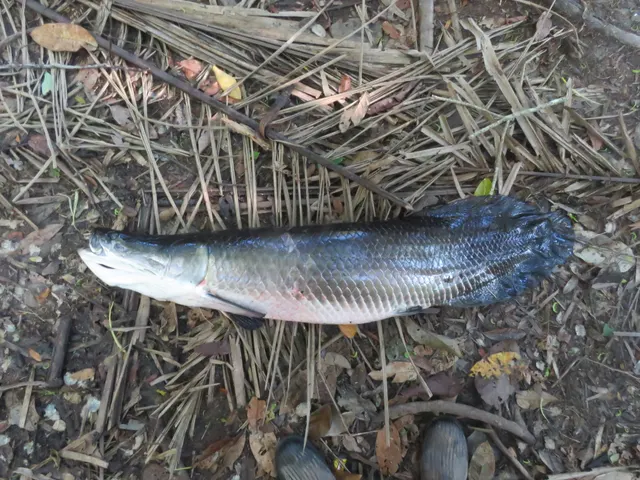 ArapaimaOne of the largest freshwater fish in the world, an air-breathing Amazonian giant that must surface regularly and is managed through community quota systems.
Vincent A. Vos — CC BY, via iNaturalist
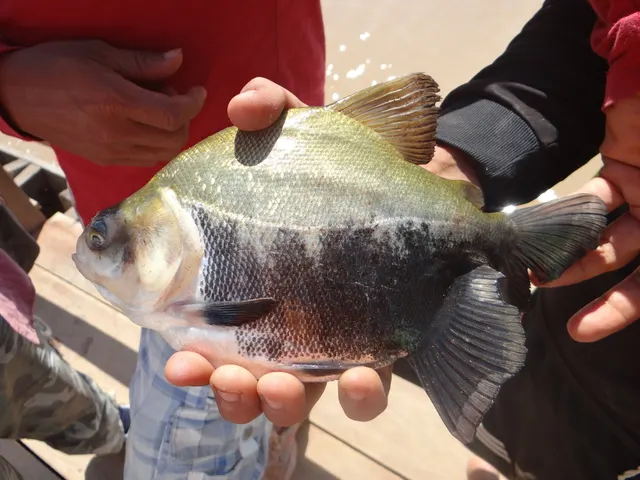 TambaquiA very large Amazonian characin with molar-like teeth for crushing fruit and seeds, feeding in flooded forest and dispersing seeds as it goes.
Vincent A. Vos — CC BY, via iNaturalist
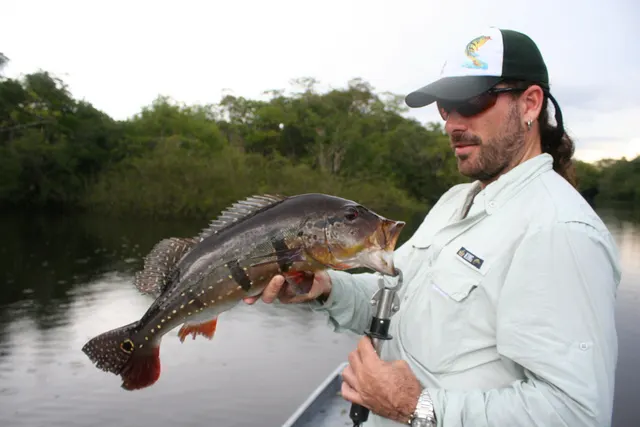 Speckled peacock bassA large Amazonian cichlid — not a bass at all — that hunts small characins in blackwater rivers and strikes surface lures with more violence than almost anything in fresh water.
Wellerson Santana — CC BY-SA 4.0, via Wikimedia Commons
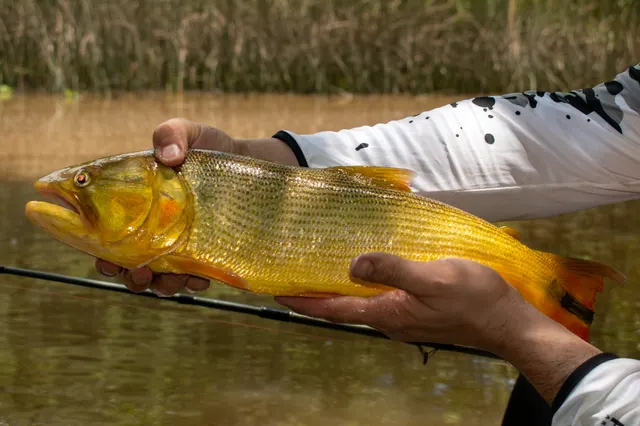 Golden doradoA brilliant gold, heavily toothed river predator of the Paraná and Paraguay systems — a characin built like a salmon and fighting like a tarpon.
Ezequiel Racker — CC BY, via iNaturalist
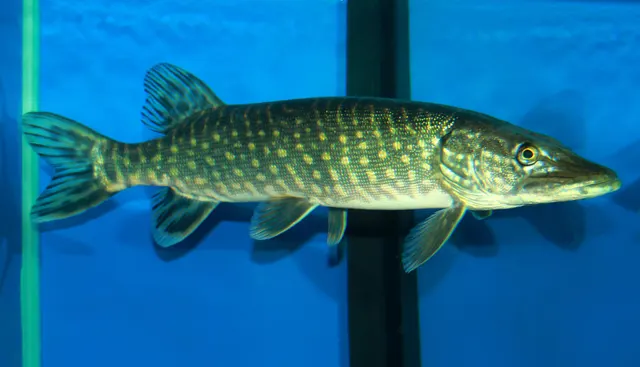 Northern pikeThe dominant freshwater ambush predator of the northern hemisphere: long, cryptic, and built for one violent acceleration rather than pursuit.
Karelj, Public domain, via Wikimedia Commons
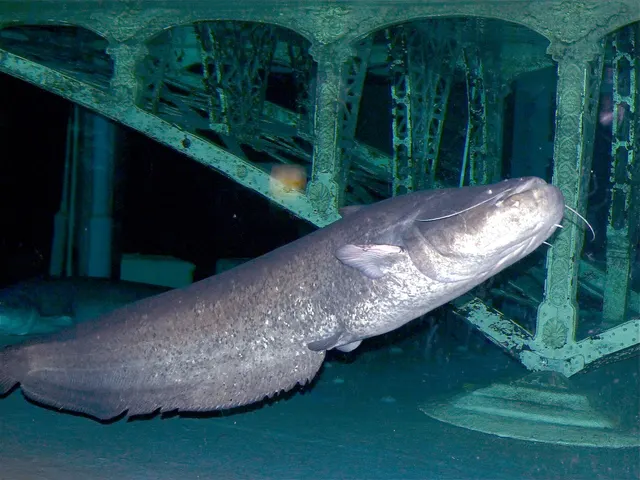 Wels catfishEurope's largest freshwater fish, reaching well over two metres, and an expanding introduced range that has made it one of the continent's most contested species.
Bernard DUPONT from FRANCE — CC BY-SA 2.0, via Wikimedia Commons
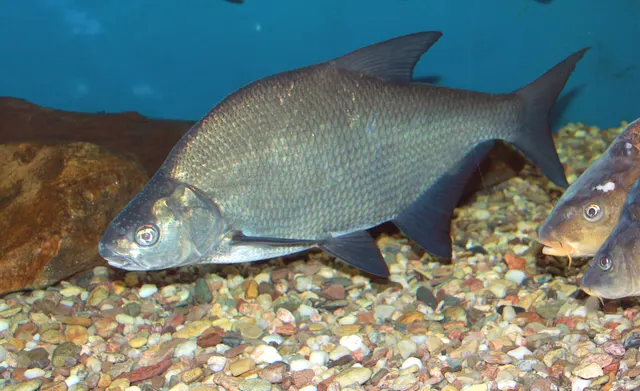 Common breamA deep-bodied, slow-moving shoal fish that feeds in large groups over soft bottoms and can transform a swim when it arrives.
Karelj, Public domain, via Wikimedia Commons
Safety
Moving water and currents — Can cause serious injury or death
A floodplain in flood is moving water with no defined channel, full of submerged obstacles, fences, timber and holes, and the direction of flow is not where the map says the river is. Boats are holed and people are swept into standing timber.
What reduces it: Do not navigate flooded ground you do not know. Treat a river in flood as closed. Where local craft are working flooded forest, they are being handled by people who know where the obstacles are, which is not knowledge a visitor has.
Worse when:
- Peak flood
- After dark
- In an unfamiliar system
Encounters with marine life — Can cause serious injury or death
Floodplain systems across the tropics hold crocodilians, and in parts of Africa hippopotamus, which kills more people than any of them. Elsewhere the relevant risks are venomous snakes and, in some systems, disease vectors in slow warm water.
What reduces it: Follow local advice absolutely; it is system-specific and FishingHQ will not summarise it. Do not wade, do not swim, and do not camp at the water's edge. Where the local practice is to avoid a stretch, that is information rather than superstition.
Worse when:
- Dawn, dusk and darkness
- Shrinking dry-season pools, which concentrate everything
Tides and being cut off — Can cause injury needing treatment
Falling water strands boats and people in lagoons and side channels that had a route out a day earlier. The window closes on a schedule set by the hydrograph rather than by a tide table, and it does not reopen for months.
What reduces it: Know whether the water is rising or falling before entering a side system, and how fast. Local knowledge is the only reliable guide to which connections close first.
Worse when:
- Late in the recession
- Systems with a single narrow connection to the main channel
Further safety reading
- Dangerous animals where you fish — Crocodilians across the tropics and, in parts of Africa, hippopotamus — which kills more people than any of them.
Check the rules before you fish
Fishing laws, bylaws, access rules, seasons, bait restrictions and permitted methods vary by location and can change. Check the current rules from the relevant authority and the water you intend to fish before fishing.
Check with:
- Current national or regional law for where you are fishing
- Current local bylaws
- The relevant fisheries authority
- The landowner, club or fishery whose water it is
- Any restrictions specific to the species or the method you intend to use
Where to go next
Fish found here
- ArapaimaA floodplain animal whose air-breathing lung is what allows it to occupy oxygen-poor lagoons and flooded forest that few large fish can tolerate — and what makes it countable, because it must surface.
- Butterfly peacock bassThe same pattern in the smaller of the peacock basses: floodplain lagoons and slack water off the main channel.
- Common breamSlack water, backwaters and flooded margins are where bream shoals move when a lowland river rises, which is a practical fact British river anglers use constantly.
- Golden doradoA Paraná-system predator whose fishing follows water level, hunting baitfish concentrated at the mouths of draining side channels and lagoons.
- Northern pikeThe temperate case, and the reason this page is not only about the tropics: pike spawn in flooded marginal vegetation and use backwaters and slack water as refuge when a river is in flood.
- PayaraHunts the fast water at channel mouths and rapids, taking fish moving between the channel and the floodplain as levels change.
- Speckled peacock bassLagoons, cut-off channels and floodplain lakes hold peacock bass, and the fishing is organised around falling water concentrating them into reachable systems.
- TambaquiMoves into flooded forest on the rise and feeds on fruit and seeds falling from it, dispersing intact seeds as it goes. The clearest illustration in FishingHQ of a fish depending on a terrestrial food web.
1 more
- Wels catfish Fish
Reading this water
How this compares
- Lowland riversThe channel and the ground beside it. A lowland river page describes the water on the map; this describes where the fish go when it rises, which in most large systems is where the production actually happens.
- Tropical estuary and tidal creekThe estuary is where the floodplain drains to. The run-off in one is the recession in the other, and they are the same water on the same schedule.
Environment and conservation
Sources and evidence
- The Flood Pulse Concept in River-Floodplain Systems — Canadian Special Publication of Fisheries and Aquatic Sciences 106, Department of Fisheries and Oceans, Ottawa, 1989 (Scientific literature)Relied on for: That the seasonal flood pulse rather than the river channel drives productivity in large river-floodplain systems, and that many fish move laterally onto the inundated floodplain to feed and breed and return as water falls.States this directlyCitation checked — the work exists and is described correctly
- Code of Conduct for Responsible Fisheries — Food and Agriculture Organization of the United Nations, Rome, 1995 (Standards body)Relied on for: International principles for responsible fisheries, including the protection of critical habitat and nursery areas and the management of small-scale fisheries.Background and mechanism onlyCitation checked — the work exists and is described correctly
- FAO Species Identification Guides for Fishery Purposes and the FAO Species Catalogues — Food and Agriculture Organization of the United Nations (Scientific institute)Relied on for: Habitat association, depth range and distribution of the species concerned, as set out in the FAO species identification sheets for the region.States this directlyCitation checked — the work exists and is described correctly
- The IUCN Red List of Threatened Species — International Union for Conservation of Nature (Conservation authority)Relied on for: Global assessments and habitat associations for the species and habitats concerned, including the status of seagrass-dependent and mangrove-dependent taxa.States this directlyCitation checked — the work exists and is described correctly
Why the 14 connections on this page are here, and the sources
Fish found here
Backed by research — 9 connections
Supported by peer-reviewed research or fisheries science. The sources are listed and can be checked.
Arapaima
A habitat association resting on the regional identification and fisheries literature rather than on angling report.
- The Flood Pulse Concept in River-Floodplain Systems — Canadian Special Publication of Fisheries and Aquatic Sciences 106, Department of Fisheries and Oceans, Ottawa, 1989 (Scientific literature)Relied on for: That fish move laterally onto the inundated floodplain to feed and breed and return to the channel as water falls, and that floodplain inundation drives production in large river systems.States this directlyCitation checked — the work exists and is described correctly
- FAO Species Identification Guides for Fishery Purposes and the FAO Species Catalogues — Food and Agriculture Organization of the United Nations (Scientific institute)Relied on for: Habitat association and distribution of the species concerned.States this directlyCitation checked — the work exists and is described correctly
Butterfly peacock bass
A habitat association resting on the regional identification and fisheries literature rather than on angling report.
- The Flood Pulse Concept in River-Floodplain Systems — Canadian Special Publication of Fisheries and Aquatic Sciences 106, Department of Fisheries and Oceans, Ottawa, 1989 (Scientific literature)Relied on for: That fish move laterally onto the inundated floodplain to feed and breed and return to the channel as water falls, and that floodplain inundation drives production in large river systems.States this directlyCitation checked — the work exists and is described correctly
- FAO Species Identification Guides for Fishery Purposes and the FAO Species Catalogues — Food and Agriculture Organization of the United Nations (Scientific institute)Relied on for: Habitat association and distribution of the species concerned.States this directlyCitation checked — the work exists and is described correctly
Common bream
A habitat association resting on the regional identification and fisheries literature rather than on angling report.
- The Flood Pulse Concept in River-Floodplain Systems — Canadian Special Publication of Fisheries and Aquatic Sciences 106, Department of Fisheries and Oceans, Ottawa, 1989 (Scientific literature)Relied on for: That fish move laterally onto the inundated floodplain to feed and breed and return to the channel as water falls, and that floodplain inundation drives production in large river systems.States this directlyCitation checked — the work exists and is described correctly
- FAO Species Identification Guides for Fishery Purposes and the FAO Species Catalogues — Food and Agriculture Organization of the United Nations (Scientific institute)Relied on for: Habitat association and distribution of the species concerned.States this directlyCitation checked — the work exists and is described correctly
Golden dorado
A habitat association resting on the regional identification and fisheries literature rather than on angling report.
- The Flood Pulse Concept in River-Floodplain Systems — Canadian Special Publication of Fisheries and Aquatic Sciences 106, Department of Fisheries and Oceans, Ottawa, 1989 (Scientific literature)Relied on for: That fish move laterally onto the inundated floodplain to feed and breed and return to the channel as water falls, and that floodplain inundation drives production in large river systems.States this directlyCitation checked — the work exists and is described correctly
- FAO Species Identification Guides for Fishery Purposes and the FAO Species Catalogues — Food and Agriculture Organization of the United Nations (Scientific institute)Relied on for: Habitat association and distribution of the species concerned.States this directlyCitation checked — the work exists and is described correctly
Northern pike
A habitat association resting on the regional identification and fisheries literature rather than on angling report.
- The Flood Pulse Concept in River-Floodplain Systems — Canadian Special Publication of Fisheries and Aquatic Sciences 106, Department of Fisheries and Oceans, Ottawa, 1989 (Scientific literature)Relied on for: That fish move laterally onto the inundated floodplain to feed and breed and return to the channel as water falls, and that floodplain inundation drives production in large river systems.States this directlyCitation checked — the work exists and is described correctly
- FAO Species Identification Guides for Fishery Purposes and the FAO Species Catalogues — Food and Agriculture Organization of the United Nations (Scientific institute)Relied on for: Habitat association and distribution of the species concerned.States this directlyCitation checked — the work exists and is described correctly
Payara
A habitat association resting on the regional identification and fisheries literature rather than on angling report.
- The Flood Pulse Concept in River-Floodplain Systems — Canadian Special Publication of Fisheries and Aquatic Sciences 106, Department of Fisheries and Oceans, Ottawa, 1989 (Scientific literature)Relied on for: That fish move laterally onto the inundated floodplain to feed and breed and return to the channel as water falls, and that floodplain inundation drives production in large river systems.States this directlyCitation checked — the work exists and is described correctly
- FAO Species Identification Guides for Fishery Purposes and the FAO Species Catalogues — Food and Agriculture Organization of the United Nations (Scientific institute)Relied on for: Habitat association and distribution of the species concerned.States this directlyCitation checked — the work exists and is described correctly
Speckled peacock bass
A habitat association resting on the regional identification and fisheries literature rather than on angling report.
- The Flood Pulse Concept in River-Floodplain Systems — Canadian Special Publication of Fisheries and Aquatic Sciences 106, Department of Fisheries and Oceans, Ottawa, 1989 (Scientific literature)Relied on for: That fish move laterally onto the inundated floodplain to feed and breed and return to the channel as water falls, and that floodplain inundation drives production in large river systems.States this directlyCitation checked — the work exists and is described correctly
- FAO Species Identification Guides for Fishery Purposes and the FAO Species Catalogues — Food and Agriculture Organization of the United Nations (Scientific institute)Relied on for: Habitat association and distribution of the species concerned.States this directlyCitation checked — the work exists and is described correctly
Tambaqui
A habitat association resting on the regional identification and fisheries literature rather than on angling report.
- The Flood Pulse Concept in River-Floodplain Systems — Canadian Special Publication of Fisheries and Aquatic Sciences 106, Department of Fisheries and Oceans, Ottawa, 1989 (Scientific literature)Relied on for: That fish move laterally onto the inundated floodplain to feed and breed and return to the channel as water falls, and that floodplain inundation drives production in large river systems.States this directlyCitation checked — the work exists and is described correctly
- FAO Species Identification Guides for Fishery Purposes and the FAO Species Catalogues — Food and Agriculture Organization of the United Nations (Scientific institute)Relied on for: Habitat association and distribution of the species concerned.States this directlyCitation checked — the work exists and is described correctly
Wels catfish
A habitat association resting on the regional identification and fisheries literature rather than on angling report.
- The Flood Pulse Concept in River-Floodplain Systems — Canadian Special Publication of Fisheries and Aquatic Sciences 106, Department of Fisheries and Oceans, Ottawa, 1989 (Scientific literature)Relied on for: That fish move laterally onto the inundated floodplain to feed and breed and return to the channel as water falls, and that floodplain inundation drives production in large river systems.States this directlyCitation checked — the work exists and is described correctly
- FAO Species Identification Guides for Fishery Purposes and the FAO Species Catalogues — Food and Agriculture Organization of the United Nations (Scientific institute)Relied on for: Habitat association and distribution of the species concerned.States this directlyCitation checked — the work exists and is described correctly
Reading this water
What experienced anglers do — 1 connection
Widely and independently recommended by experienced anglers and specialist sources. This is real angling knowledge, not proof: controlled evidence for it is limited, and FishingHQ records it as convention rather than as a demonstrated effect.
Reading a river for fish
An explainer that carries a mechanism the subject record depends on.
- General angling website restatements of established technique — Various (Credible secondary source)Relied on for: Widely restated descriptions of technique, ground and fish behaviour, recorded as consensus rather than as scholarship.Background and mechanism onlyCitation checked — the work exists and is described correctly
- Sea Angler — Bauer Media (Specialist angling publication)Relied on for: Contemporary angling practice as reported by practitioners: ground, tackle, presentation and seasonal timing.States this directlyCitation checked — the work exists and is described correctly
How this compares
What experienced anglers do — 2 connections
Widely and independently recommended by experienced anglers and specialist sources. This is real angling knowledge, not proof: controlled evidence for it is limited, and FishingHQ records it as convention rather than as a demonstrated effect.
Lowland rivers
A comparison a reader trying to understand one of these systems genuinely needs, joining two records that resolve one another.
- The Flood Pulse Concept in River-Floodplain Systems — Canadian Special Publication of Fisheries and Aquatic Sciences 106, Department of Fisheries and Oceans, Ottawa, 1989 (Scientific literature)Relied on for: That fish move laterally onto the inundated floodplain to feed and breed and return to the channel as water falls, and that floodplain inundation drives production in large river systems.States this directlyCitation checked — the work exists and is described correctly
- FAO Species Identification Guides for Fishery Purposes and the FAO Species Catalogues — Food and Agriculture Organization of the United Nations (Scientific institute)Relied on for: Habitat association and distribution of the species concerned.States this directlyCitation checked — the work exists and is described correctly
Tropical estuary and tidal creek
A comparison a reader trying to understand one of these systems genuinely needs, joining two records that resolve one another.
- The Flood Pulse Concept in River-Floodplain Systems — Canadian Special Publication of Fisheries and Aquatic Sciences 106, Department of Fisheries and Oceans, Ottawa, 1989 (Scientific literature)Relied on for: That fish move laterally onto the inundated floodplain to feed and breed and return to the channel as water falls, and that floodplain inundation drives production in large river systems.States this directlyCitation checked — the work exists and is described correctly
- FAO Species Identification Guides for Fishery Purposes and the FAO Species Catalogues — Food and Agriculture Organization of the United Nations (Scientific institute)Relied on for: Habitat association and distribution of the species concerned.States this directlyCitation checked — the work exists and is described correctly
Safety reading
Official guidance — 1 connection
Stated by a fisheries authority, scientific institute or recognised angling body. Authoritative, but summarising rather than demonstrating.
Dangerous animals where you fish
A link to a safety topic substantial enough to be read in full.
- RNLI water safety guidance: cold water shock and Float to Live — Royal National Lifeboat Institution (Water-safety or diver-training authority)Relied on for: Water safety guidance for coastal and inland users.States this directlyPassage read and verified
Environment and conservation
Backed by research — 1 connection
Supported by peer-reviewed research or fisheries science. The sources are listed and can be checked.
Fish stocks and sustainability
An environmental effect attached to the habitat it happens to, resting on an authoritative source rather than on advocacy.
- The World's Mangroves and their Fisheries — FAO Forestry and Fisheries assessments — Food and Agriculture Organization of the United Nations, Rome (Standards body)Relied on for: The direction and principal causes of mangrove loss, and the dependence of coastal fisheries on the habitat being lost.States this directlyCitation checked — the work exists and is described correctly
- Code of Conduct for Responsible Fisheries — Food and Agriculture Organization of the United Nations, Rome, 1995 (Standards body)Relied on for: International principles on the protection of critical habitat and nursery areas within responsible fisheries management.Background and mechanism onlyCitation checked — the work exists and is described correctly
How FishingHQ labels evidence is explained in the evidence policy.