Romania
Fishing regions · Last reviewed 2026-08-18
Europe's largest and best-preserved river delta, six hundred kilometres of lower Danube, a short Black Sea coast — and the continent's most severe fish conservation problem swimming through all three.
Safety: fishing alone — can cause serious injury or death. 3 more points apply here.
Being listed here is not permission to fish. What that meansClose
Access, fishing rights, seasons, licences, local bylaws and permitted methods vary and can change. Check current access, permission, local regulations, closures and restrictions before you travel or fish. FishingHQ describes what the ground is and names who holds the answer; it does not hold the answer itself.
Find the authority for a jurisdiction · What FishingHQ does and does not cover
Romania holds more of the Danube than any other country and it is the country where the river ends.
THE DELTA IS THE HEADLINE AND IT IS NOT A NORMAL FISHERY. Some four and a half thousand square kilometres of channels, lakes, reed islands and floodplain, the largest and best-preserved river delta in Europe, a World Heritage property and a biosphere reserve. It is administered by its own reserve authority rather than by the general fisheries administration, and access to parts of it is constrained for conservation rather than for fisheries reasons. A visitor who resolves their position for a Romanian reservoir has resolved nothing about the Delta.
THE LOWER DANUBE IS THE SECOND FISHERY. Wide, slow, powerful, holding wels catfish at very large size, along with zander, asp, carp, barbel and pike — and, on the reaches below the Iron Gates, a sturgeon situation of a severity that has no parallel elsewhere in European fresh water.
THE COAST IS SHORT AND ATYPICAL. Romania's Black Sea frontage is sandy, shallow, and strongly influenced by the Danube's freshwater discharge, which makes it one of the least marine stretches of coast in Europe — brackish, turbid, productive and species-poor. It is a genuinely different sea and it is described in its own record.
ADMINISTRATION IS NATIONAL WITH A LARGE EXCEPTION. A national recreational fishing permit sits above a landscape in which very many waters are held under a management contract or fishing right by an association or company that sets its own terms. The Delta's reserve authority is the exception, and it is a large one.
AND THE STURGEONS ARE THE THING TO UNDERSTAND BEFORE ANYTHING ELSE. Six species used to run this river from the sea. They are late-maturing, extremely long-lived, and migratory through dams that now block most of their route. Their collective position is among the worst of any group of large animals anywhere.
What fishing here is like
A country arranged around the Carpathian arc and the lower Danube. The mountains through the centre and north carry cold, fast, clear salmonid and grayling rivers of Alpine character. Outside them the land falls to broad plains — the Wallachian plain in the south and the Moldavian in the east — drained by large, slow, silty tributaries into the Danube, which forms most of the southern border before turning north and east to its delta. The Danube Delta is the dominant water: an enormous mosaic of distributary channels, shallow lakes, reed islands, canals and seasonally flooded land, one of the largest reedbeds on earth and a system whose productivity depends on the annual flood. The Black Sea coast is short, sandy, shallow, and heavily diluted by Danube discharge. Reservoirs are numerous, several very large, including the Iron Gates impoundment on the Danube itself.
What dominates
Wels catfish fishing on the Danube and the larger reservoirs, at a scale that draws specialists internationally. Predator fishing for zander, pike and perch across the rivers, reservoirs and Delta lakes. Carp fishing on the reservoirs and the Delta. Fly fishing for brown trout and grayling in the Carpathian rivers, which are Alpine in character and quite unlike the lowlands. Feeder and float fishing on the slow rivers. In the Delta, boat-based fishing dominates simply because there is very little bank, and much of it is done from small local craft with local guides. On the coast, shore and boat fishing for the Black Sea's limited but distinctive species list, including turbot, which is the region's most valued sea fish and the one under the tightest international management.
The water available
An enormous river delta of distributary channels, shallow lakes, reed islands, canals and seasonally flooded floodplain, whose whole ecology is organised around the flood pulse. Wide, slow, powerful lower-Danube reaches with side arms and islands. Large impoundments including the Iron Gates. Slow, silty lowland tributaries with high clay banks. Cold, fast, boulder-bedded Carpathian rivers holding trout and grayling. Mountain lakes and reservoirs at altitude. A short, sandy, shallow Black Sea coast with lagoons and river-mouth influence, strongly diluted and turbid where the Danube discharges.
How the rules are structured
Romania's structure is national with one very large exception, and the exception is the water most visitors come for.
A NATIONAL RECREATIONAL FISHING PERMIT is the general entry document, issued by the national fisheries administration.
MOST WATERS ALSO HAVE A MANAGER. Fishing rights and management contracts on rivers, lakes and reservoirs are held by associations and companies which set their own terms, sell their own permits and run their own rules. So the ordinary arrangement, as across this region, is two permissions rather than one.
THE DANUBE DELTA IS ADMINISTERED BY ITS OWN BIOSPHERE RESERVE AUTHORITY. That is the structural fact to hold: the Delta is not covered by the general framework, its zoning determines what may happen where, parts of it are strictly protected for conservation rather than fisheries reasons, and its arrangements are established with the reserve authority. A visitor booking a Delta trip through a local operator is generally being taken through that process by the operator, which is a good reason to use one and not a reason to assume it has been done.
THE STURGEONS ARE SUBJECT TO PROTECTION MEASURES OF EXCEPTIONAL SEVERITY throughout the lower Danube and the adjoining sea. FishingHQ does not state what those measures are, and it does state that this is the group of fish in Europe where an angler is most likely to encounter a species whose population cannot absorb the loss of a single adult.
BLACK SEA MEASURES for shared stocks — turbot above all — are set internationally and revised, which is the mechanism by which what is permitted changes without Romanian law changing.
FishingHQ does not state what any current rule is: no season, no size and no quantity. Establish whether the water is Delta or not, identify the manager, and ask.
Who to ask
- The national fisheries administration, for the recreational fishing permit, for coastal measures and for protected species including the sturgeons.
- The Danube Delta Biosphere Reserve Authority, which administers the Delta separately, sets its zoning and determines access.
- The association, company or manager holding the fishing right or management contract for the water.
- The national park or protected-area administration, where the water lies inside one.
- The port or municipal authority, for access to coastal structures.
Words you will meet
- Gârlă
- A natural channel connecting a Delta lake to a distributary or to another lake. The Delta's water moves through a network of these, and which ones are open and flowing determines where fish are — a fact local boatmen know and a chart does not show.
- Ghiol
- A Delta lake — a shallow, reed-fringed basin within the floodplain, connected to the channel system by gârle. These are the Delta's principal fishing waters and they differ enormously from one another.
- Plaur
- Floating reed island — a mat of reed rhizome and organic matter thick enough to walk on in places and entirely capable of moving. Plaur forms and shifts, closes channels, and is one of the reasons the Delta's map is not stable.
- Somn
- Wels catfish. The Danube's heavyweight catch and the fish much of the specialist travel to Romania is built around.
- Cegă / nisetru / morun
- Sterlet, Russian sturgeon and beluga — three of the Danube's sturgeons. The names are worth recognising because these are the fish an angler most needs to identify correctly and least wants to mishandle.
Conditions and hazards
Romania's hazards divide cleanly between the mountains and the Delta, and the Delta's are the ones visitors are least prepared for.
THE DELTA IS REMOTE IN A WAY THAT IS EASY TO UNDERESTIMATE. Distances are large, the channels are a maze, phone coverage is patchy over much of it, and there are stretches where the nearest help is hours away by boat. A small-craft problem there is a serious problem, not an inconvenience.
THE CHANNELS ARE NOT A FIXED MAP. Reed islands move, channels silt and open, and a route that existed last season may not exist now. This is precisely why local boatmen are used, and it is a genuine safety reason as well as a fishing one.
SUMMER HEAT, SUN AND MOSQUITOES are constant on the Delta. The heat is severe on open water without shade, and the insect pressure is heavy enough to be a real problem rather than a nuisance.
THE LOWER DANUBE CARRIES HEAVY COMMERCIAL NAVIGATION and is wide, powerful and deep. Wash from large vessels is substantial, the current is stronger than a flat surface suggests, and the banks in many places are steep, soft and unclimbable.
THE CARPATHIAN RIVERS ARE A DIFFERENT PROBLEM ENTIRELY: cold, fast, boulder-bedded, rising quickly on rain and snowmelt, with wading and foot entrapment the standard mechanism of harm.
AND THE COAST IS SHALLOW, SANDY AND RIP-PRONE, with the ordinary hazards of a long sandbar shore applying to anglers exactly as they do to swimmers.
A delta that works on a flood, and why that decides the fishing
The Danube Delta rewards being understood as a machine rather than as a landscape, because everything an angler notices there follows from one process.
THE FLOOD PULSE IS THE ENGINE. A large floodplain river rises seasonally, spills into its floodplain, and inundates land that has been dry. That inundation releases nutrients from the dry ground, triggers an enormous production of plankton and invertebrates, and gives fish access to feeding and spawning habitat that does not exist at low water. As the flood recedes, fish and nutrients return to the permanent channels and lakes. The productivity of the whole system is a function of the size, timing and duration of that pulse — which is why floodplain rivers worldwide are far more productive than their permanent water area suggests, and why disconnecting a floodplain destroys a fishery even when the river is untouched.
SO THE FISHING FOLLOWS THE WATER LEVEL, NOT THE CALENDAR. Where fish are, and whether the shallow lakes are connected to the channels at all, depends on the state of the flood. Local knowledge here is not colour; it is the operative information, and it is the honest reason Delta fishing is done with local boatmen.
THE PHYSICAL SYSTEM IS NOT STABLE. Reed islands — mats of rhizome and organic matter, some thick enough to walk on — form, break away and drift. Channels silt up and new ones open. The Delta is actively building itself, at a rate that makes a decade-old chart unreliable.
THE FISH COMMUNITY IS A FLOODPLAIN COMMUNITY. Wels catfish, carp, pike, zander, perch, bream, tench, crucian carp, asp and, in the connected lakes, very large populations of small prey fish. It is species-rich by European standards precisely because the habitat mosaic is so varied.
AND THE STURGEONS ARE THE SYSTEM'S GREAT LOSS. Six species historically migrated from the Black Sea up the Danube to spawn — including beluga, which reaches a size and age unmatched by any other European freshwater fish. Their life history is the problem: they mature very late, spawn intermittently rather than annually, and depend on completing a long migration to specific gravel spawning grounds. Dams on the middle Danube — the Iron Gates above all — severed most of that route, and the remainder met a fishery for their roe. A population of very long-lived, late-maturing animals cannot replace adults quickly, so removing adults faster than they mature collapses it and keeps it collapsed long after the removal stops. That is the mechanism, it is not disputed, and it is why the group's conservation position is among the most severe of any large animals on earth.
THE CARPATHIAN RIVERS ARE A DIFFERENT COUNTRY. Cold, fast, clear, boulder-bedded, holding brown trout and grayling, with the character of Alpine water and none of the Delta's about them.
Backed by research — why, and the sources (4)
Supported by peer-reviewed research or fisheries science. The sources are listed and can be checked.
- Freshwater Fishes of the British Isles — HarperCollins (New Naturalist 75), 1992 (Reference work)Relied on for: Distribution, ecology, life history and conservation status of European freshwater fishes, including the migratory salmonids and the cyprinid and percid communities named.States this directlyCitation checked — the work exists and is described correctly
- FishBase: a global information system on fishes — Froese, R. and D. Pauly, eds. — FishBase Consortium (Scientific institute)Relied on for: Recorded distribution, habitat association and life history of the freshwater and migratory species named.States this directlyPassage read and verified
- FishBase: a global information system on fishes — Froese, R. and D. Pauly, eds. — FishBase Consortium (Scientific institute)Relied on for: Recorded distribution, depth range, habitat association, size and biology of the species named.States this directlyPassage read and verified
- The IUCN Red List of Threatened Species — International Union for Conservation of Nature (Conservation authority)Relied on for: Current global and regional conservation assessment for the species named, with the assessment date.Background and mechanism onlyCitation checked — the work exists and is described correctly
Remote water, a maze that moves, and a river that carries ships
The Delta's hazards are the hazards of remoteness, and they are systematically underestimated because the water is shallow and warm.
HELP IS A LONG WAY AWAY AND THE DISTANCE IS MEASURED IN BOAT HOURS. Much of the Delta is far from any road, phone coverage is patchy, and a broken engine, a swamped boat or an injury converts immediately into a serious situation. The measures are unglamorous and they work: go with somebody who knows the water, tell somebody the plan, carry water and means of communication and shelter, and treat the boat's reliability as a safety matter rather than a convenience one.
THE CHANNEL NETWORK IS NOT A STABLE MAP. Reed islands drift and close channels, silt blocks routes, and a track that was open last year may not be. Navigating on an old chart or a phone map in a reed maze is how people become lost in a landscape with no landmarks and no high ground.
SUN, HEAT AND INSECTS ARE CONSTANT AND CUMULATIVE. Open water, no shade, long days and heavy mosquito pressure degrade judgement over hours rather than dramatically. Carry far more water than seems necessary, create shade, and treat insect protection as equipment rather than comfort.
THE LOWER DANUBE IS A COMMERCIAL WATERWAY. It is wide, deep and powerful, its surface understates its current, and it carries substantial vessels whose wash arrives suddenly after they have passed. Banks are frequently steep, soft and impossible to climb. Small craft must understand the navigation channel and stay clear of it.
THE CARPATHIAN RIVERS BEHAVE LIKE ALPINE RIVERS ANYWHERE: cold in every season, rising quickly on rain and snowmelt from ground the angler cannot see, and killing waders by foot entrapment in boulder beds rather than by depth.
AND THE COAST IS A SANDBAR COAST with the rip and trough hazards that go with one, in a sea that is nearly tideless — which removes the habit of checking a tide table without removing the danger.
Official guidance — why, and the sources (4)
Stated by a fisheries authority, scientific institute or recognised angling body. Authoritative, but summarising rather than demonstrating.
- RNLI water safety guidance: cold water shock and Float to Live — Royal National Lifeboat Institution (Water-safety or diver-training authority)Relied on for: Cold water shock and the immersion response, tidal cut-off, and water-safety guidance for shore anglers and small-craft users.States this directlyPassage read and verified
- Met Office shipping forecast, inshore waters forecast and marine warnings — Met Office, United Kingdom (Government fisheries body)Relied on for: That inshore waters forecasts, sea state and swell are the operative inputs for shore and small-craft decisions in north-west European waters.States this directlyCitation checked — the work exists and is described correctly
- Code of Conduct for Responsible Fisheries — Food and Agriculture Organization of the United Nations, Rome, 1995 (Standards body)Relied on for: The international framework within which national and regional fisheries authorities set, revise and enforce measures, and the principle that responsible fishing includes the safety of fishers.Background and mechanism onlyCitation checked — the work exists and is described correctly
- ICES Advice on fishing opportunities, catch and effort — International Council for the Exploration of the Sea (Scientific institute)Relied on for: That the stock advice European fisheries measures are set against is produced internationally and revised annually, which is the mechanism by which a national measure changes without the national law changing.States this directlyCitation checked — the work exists and is described correctly
Some of what lives here
Fish recorded here that FishingHQ holds a reviewed photograph of. It is not a complete list of what Romania holds, and it is not a prediction that you will catch any of them — it is a way in to the ones we can show you.
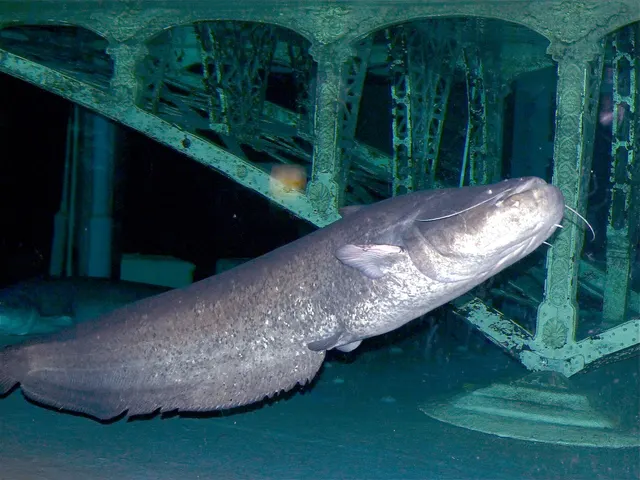 Wels catfishEurope's largest freshwater fish, reaching well over two metres, and an expanding introduced range that has made it one of the continent's most contested species.
Bernard DUPONT from FRANCE — CC BY-SA 2.0, via Wikimedia Commons
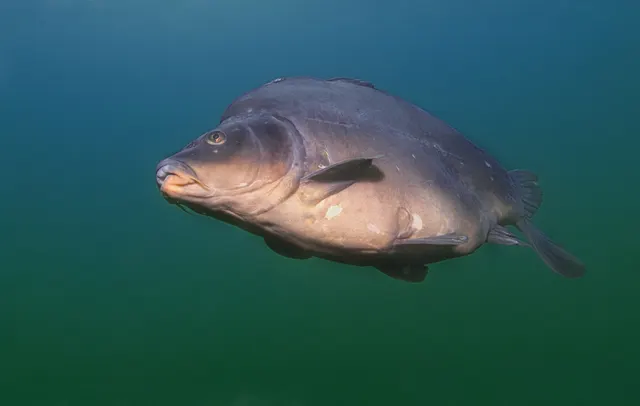 Common carpA large, long-lived, highly adaptable cyprinid whose capacity to learn has shaped more angling technique than any other freshwater fish.
Sven Riewe, CC0, via Wikimedia Commons
Safety
Fishing alone — Can cause serious injury or death
Much of the Danube Delta is hours from a road by boat, with patchy phone coverage and no landmarks in a reed maze, so an engine failure, a swamping or an injury becomes a serious incident rather than an inconvenience.
What reduces it: Go with somebody who knows the channels, leave a plan and a return time with somebody ashore, carry water, shelter and a means of calling for help, and treat the boat's reliability and fuel margin as safety equipment.
Worse when:
- In the strictly protected and less-travelled zones, where nobody else is passing.
- In summer heat, when a delay becomes a heat exposure as well as a navigation problem.
Boat safety — Can cause serious injury or death
Reed islands drift, channels silt and open, and the Delta's navigable network changes between seasons, so an old chart or a general map can lead a small craft into a dead end or leave it lost in terrain with no landmarks.
What reduces it: Use local boatmen who know which routes are currently open, do not rely on stored maps for route-finding in the reed, and carry the means to wait safely if the route has to be re-found.
Sun, dehydration and fatigue — Can cause injury needing treatment
Open water with no shade, long summer days and heavy mosquito pressure combine to degrade judgement and stamina over hours, well before anything obvious happens.
What reduces it: Carry far more water than the day appears to need, bring shade rather than expecting to find it, and treat insect protection as equipment rather than as comfort.
Boat traffic and being seen — Can cause injury needing treatment
The lower Danube is a commercial waterway carrying large vessels whose wash arrives suddenly after they pass, in a river whose flat surface understates a powerful current, between banks that are frequently steep, soft and unclimbable.
What reduces it: Keep small craft well clear of the navigation channel, move back from the edge when a vessel passes, and choose bank positions that have a usable exit rather than only a usable swim.
Further safety reading
- Boat safety for anglers — Delta fishing is small-boat fishing in a reed maze where channels look alike, help is distant and a navigational error is a safety problem rather than an inconvenience.
Check the rules before you fish
Fishing laws, bylaws, access rules, seasons, bait restrictions and permitted methods vary by location and can change. Check the current rules from the relevant authority and the water you intend to fish before fishing.
Check with:
- Current national or regional law for where you are fishing
- Current local bylaws
- The relevant fisheries authority
- The landowner, club or fishery whose water it is
- Any restrictions specific to the species or the method you intend to use
Where to go next
What swims here
- Common carpNative to the lower Danube basin, which makes the delta one of the few places in Europe the fish is met in genuinely wild rather than managed populations.
- Wels catfishAbundant through the lower Danube and the delta channels, and the large predator a delta angler is most likely to actually encounter.
How people fish here
How this compares
- BulgariaTwo Black Sea coasts and two lower-Danube countries administered in almost opposite ways, which is the comparison that makes each of them legible.
- The Black SeaThat page says of its coast: "It is a genuinely different sea and it is described in its own record." This is that record. Romania's frontage is short, sandy, shallow and so strongly diluted by the Danube's discharge that it is one of the least marine stretches of coast in Europe — which only makes sense read against the basin's stratification and its salinity.
Rules and access
- Licences and permissionThe Danube Delta is administered by a biosphere reserve authority rather than by the fisheries administration, so the body holding the answer is not the one a reader would think to ask.
- Protected species, and why some fish may not be takenThe lower-Danube sturgeons are among the most endangered large animals in the world, and the governing fact for a visiting angler is that encountering one is a handling question long before it is a catch.
Environment and conservation
Sources and evidence
- Freshwater Fishes of the British Isles — HarperCollins (New Naturalist 75), 1992 (Reference work)Relied on for: Distribution, ecology, life history and conservation status of European freshwater fishes, including the migratory salmonids and the cyprinid and percid communities named.States this directlyCitation checked — the work exists and is described correctly
- FishBase: a global information system on fishes — Froese, R. and D. Pauly, eds. — FishBase Consortium (Scientific institute)Relied on for: Recorded distribution, habitat association and life history of the freshwater and migratory species named.States this directlyPassage read and verified
- FishBase: a global information system on fishes — Froese, R. and D. Pauly, eds. — FishBase Consortium (Scientific institute)Relied on for: Recorded distribution, depth range, habitat association, size and biology of the species named.States this directlyPassage read and verified
- The IUCN Red List of Threatened Species — International Union for Conservation of Nature (Conservation authority)Relied on for: Current global and regional conservation assessment for the species named, with the assessment date.Background and mechanism onlyCitation checked — the work exists and is described correctly
- ICES Advice on fishing opportunities, catch and effort — International Council for the Exploration of the Sea (Scientific institute)Relied on for: Ecoregion description, stock distribution and status, nursery function and the hydrography of the European sea areas assessed, including the Baltic, the North Sea, the Celtic Seas and the Iberian and Biscay shelf.States this directlyCitation checked — the work exists and is described correctly
- FAO Species Identification Guides for Fishery Purposes and the FAO Species Catalogues — Food and Agriculture Organization of the United Nations (Scientific institute)Relied on for: Identification, distribution and habitat association of the fishes and invertebrates of the Mediterranean, the Black Sea and the eastern central Atlantic.States this directlyCitation checked — the work exists and is described correctly
- Fishers' Craft and Lettered Art: Tracts on Fishing from the End of the Middle Ages — University of Toronto Press, 1997 (Scientific literature)Relied on for: That European fishing traditions develop around the water and fish available to them, and the historical method of reading such traditions.Background and mechanism onlyCitation checked — the work exists and is described correctly
- General angling website restatements of established technique — Various (Credible secondary source)Relied on for: Widely restated descriptions of regional angling practice, recorded as practitioner consensus rather than as scholarship.Background and mechanism onlyCitation checked — the work exists and is described correctly
Why the 9 connections on this page are here, and the sources
What swims here
Backed by research — 2 connections
Supported by peer-reviewed research or fisheries science. The sources are listed and can be checked.
Common carp
That a species occurs in these waters, drawn from distribution science and stock assessment. It is a statement about where the animal lives and is not a statement that anybody will catch one, still less where.
- Freshwater Fishes of the British Isles — HarperCollins (New Naturalist 75), 1992 (Reference work)Relied on for: Distribution, habitat requirement and life history of European freshwater fishes, including their occurrence across the continental range named.States this directlyCitation checked — the work exists and is described correctly
- FishBase: a global information system on fishes — Froese, R. and D. Pauly, eds. — FishBase Consortium (Scientific institute)Relied on for: Recorded distribution and habitat association of the freshwater and migratory species named.States this directlyPassage read and verified
Wels catfish
That a species occurs in these waters, drawn from distribution science and stock assessment. It is a statement about where the animal lives and is not a statement that anybody will catch one, still less where.
- Freshwater Fishes of the British Isles — HarperCollins (New Naturalist 75), 1992 (Reference work)Relied on for: Distribution, habitat requirement and life history of European freshwater fishes, including their occurrence across the continental range named.States this directlyCitation checked — the work exists and is described correctly
- FishBase: a global information system on fishes — Froese, R. and D. Pauly, eds. — FishBase Consortium (Scientific institute)Relied on for: Recorded distribution and habitat association of the freshwater and migratory species named.States this directlyPassage read and verified
How people fish here
What experienced anglers do — 1 connection
Widely and independently recommended by experienced anglers and specialist sources. This is real angling knowledge, not proof: controlled evidence for it is limited, and FishingHQ records it as convention rather than as a demonstrated effect.
Predator fishing
That a discipline is conventionally practised in these waters, drawn from published description of practice rather than from participation data, and labelled as consensus accordingly.
- Sea Angler — Bauer Media (Specialist angling publication)Relied on for: Long-running published description of European sea angling practice by region and destination, including where British anglers travel and what they fish for there.FishingHQ's interpretation of what it saysCitation checked — the work exists and is described correctly
- General angling website restatements of established technique — Various (Credible secondary source)Relied on for: Widely restated descriptions of which disciplines are conventionally practised in the waters named, recorded as practitioner consensus rather than as scholarship.Background and mechanism onlyCitation checked — the work exists and is described correctly
How this compares
What experienced anglers do — 1 connection
Widely and independently recommended by experienced anglers and specialist sources. This is real angling knowledge, not proof: controlled evidence for it is limited, and FishingHQ records it as convention rather than as a demonstrated effect.
Bulgaria
A navigational link between two places a reader is genuinely choosing between or reasoning across, offered as orientation rather than as a ranking.
- Sea Angler — Bauer Media (Specialist angling publication)Relied on for: Long-running published description of European sea angling practice by region and destination, including where British anglers travel and what they fish for there.FishingHQ's interpretation of what it saysCitation checked — the work exists and is described correctly
- General angling website restatements of established technique — Various (Credible secondary source)Relied on for: Widely restated descriptions of which disciplines are conventionally practised in the waters named, recorded as practitioner consensus rather than as scholarship.Background and mechanism onlyCitation checked — the work exists and is described correctly
Backed by research — 1 connection
Supported by peer-reviewed research or fisheries science. The sources are listed and can be checked.
The Black Sea
A comparison written where a reader genuinely needs the two set side by side — either because they confuse them, or because the difference between them is the thing worth knowing.
- EMODnet — the European Marine Observation and Data Network — The European Commission, assembled from the national hydrographic offices, geological surveys and marine institutes of the member states (Scientific institute)Relied on for: Bathymetry, salinity and physical oceanography of European sea basins including the Black Sea.States this directlyCitation checked — the work exists and is described correctly
- The European Environment Agency's assessments of Europe's waters, seas and coasts — European Environment Agency, Copenhagen (Conservation authority)Relied on for: State-of-the-environment assessment of Europe's seas and surface waters, including eutrophication, nutrient loading and river continuity in the Danube and Black Sea catchment.States this directlyCitation checked — the work exists and is described correctly
Safety reading
Official guidance — 1 connection
Stated by a fisheries authority, scientific institute or recognised angling body. Authoritative, but summarising rather than demonstrating.
Boat safety for anglers
A link from the place to the substantial safety topic describing the mechanism that hurts people there, rather than a warning restated in prose on the record itself.
- RNLI water safety guidance: cold water shock and Float to Live — Royal National Lifeboat Institution (Water-safety or diver-training authority)Relied on for: Cold water shock and the immersion response, tidal cut-off, and water-safety guidance for shore anglers and small-craft users.States this directlyPassage read and verified
Rules and access
Official guidance — 2 connections
Stated by a fisheries authority, scientific institute or recognised angling body. Authoritative, but summarising rather than demonstrating.
Licences and permission
This points to the kind of rule that applies rather than to a rule itself. The same question is administered differently in each of these countries, so the page says that the answer is held elsewhere and changes.
- Code of Conduct for Responsible Fisheries — Food and Agriculture Organization of the United Nations, Rome, 1995 (Standards body)Relied on for: The international framework within which national and regional fisheries authorities set, revise and enforce measures, and the principle that the responsible authority rather than a third party holds the current position.Background and mechanism onlyCitation checked — the work exists and is described correctly
- ICES Advice on fishing opportunities, catch and effort — International Council for the Exploration of the Sea (Scientific institute)Relied on for: That the stock advice European measures are set against is produced internationally and revised annually, which is how a national measure changes without the national law changing.States this directlyCitation checked — the work exists and is described correctly
Protected species, and why some fish may not be taken
This points to the kind of rule that applies rather than to a rule itself. The same question is administered differently in each of these countries, so the page says that the answer is held elsewhere and changes.
- Code of Conduct for Responsible Fisheries — Food and Agriculture Organization of the United Nations, Rome, 1995 (Standards body)Relied on for: The international framework within which national and regional fisheries authorities set, revise and enforce measures, and the principle that the responsible authority rather than a third party holds the current position.Background and mechanism onlyCitation checked — the work exists and is described correctly
- ICES Advice on fishing opportunities, catch and effort — International Council for the Exploration of the Sea (Scientific institute)Relied on for: That the stock advice European measures are set against is produced internationally and revised annually, which is how a national measure changes without the national law changing.States this directlyCitation checked — the work exists and is described correctly
Environment and conservation
Backed by research — 1 connection
Supported by peer-reviewed research or fisheries science. The sources are listed and can be checked.
Fish stocks and sustainability
An environmental claim attached to the geography where it operates, resting on published stock assessment and conservation status rather than on advocacy.
- The IUCN Red List of Threatened Species — International Union for Conservation of Nature (Conservation authority)Relied on for: The conservation assessment of the species and stocks concerned, with the assessment date, which is the basis for treating the pressure on them as established rather than asserted.States this directlyCitation checked — the work exists and is described correctly
- ICES Advice on fishing opportunities, catch and effort — International Council for the Exploration of the Sea (Scientific institute)Relied on for: Stock status and the advice on which management measures for the stocks concerned are set and revised.States this directlyCitation checked — the work exists and is described correctly
How FishingHQ labels evidence is explained in the evidence policy.