Poland
Fishing regions · Last reviewed 2026-08-18
Five hundred kilometres of Baltic shore, two of Europe's great rivers, the largest lake district in the region and a fishing culture where the first document is an examination rather than a payment.
Safety: cold water shock — can cause serious injury or death. 4 more points apply here.
Being listed here is not permission to fish. What that meansClose
Access, fishing rights, seasons, licences, local bylaws and permitted methods vary and can change. Check current access, permission, local regulations, closures and restrictions before you travel or fish. FishingHQ describes what the ground is and names who holds the answer; it does not hold the answer itself.
Find the authority for a jurisdiction · What FishingHQ does and does not cover
Poland is the largest fishing country in central Europe and the one whose administration surprises visitors most.
THE FIRST DOCUMENT IS A QUALIFICATION. Inland angling requires a state angling card, and the card is issued on passing an examination covering fish identification, close seasons, protected species, permitted methods and handling. It is not a formality and it is not a payment. Only after it exists can somebody hold a permit for actual water. Visitors are the standard exception to this and the arrangements for them are made by the bodies that administer the fishing rather than by any rule FishingHQ could state — which is precisely why the visiting angler has to ask before travelling rather than on arrival.
THE WATER IS ADMINISTERED COLLECTIVELY. The national angling association's regional districts hold or manage the fishing on a very large proportion of Polish inland water and issue the permits that are the operative permission. The rest is held by the state fisheries service, by private owners and by commercial fisheries. So the ordinary Polish arrangement is two documents — the card and the district permit — and neither substitutes for the other.
THE COAST IS A DIFFERENT ADMINISTRATION AGAIN. Recreational sea angling on the Baltic shore is a maritime matter rather than an inland one, salmon and sea trout carry their own measures, and boat angling and some methods need their own permission. A reader who has resolved their inland position has resolved nothing about the coast.
AND THE WATER ITSELF IS UNFAMILIAR TO ATLANTIC ANGLERS. The Baltic is brackish, nearly tideless, cold and stratified, with a fish community that is neither marine nor freshwater in the way a North Sea angler expects. Inland, the Vistula and the Oder are large, slow, engineered lowland rivers, and the Masurian lake district in the north-east is the largest concentration of lakes in central Europe.
WINTER IS A FISHING SEASON HERE RATHER THAN AN INTERRUPTION. Ice fishing on the lakes is ordinary practice, and the hazards of it are ordinary hazards rather than exotic ones.
What fishing here is like
A large lowland country with a brackish, nearly tideless Baltic coast at one end and the Carpathian and Sudeten uplands at the other, and two great slow rivers running the length of it. The coast is sand — long dune-backed beaches, spits enclosing shallow brackish lagoons, and a small number of harbour and breakwater structures — with rock essentially absent. The Vistula and the Oder are wide, slow, engineered lowland rivers with side channels, groynes and long reservoir reaches. The north-east holds the Masurian lakes, the largest lake district in central Europe, connected by channels and canals into a navigable system. The southern uplands carry cold, fast, clear salmonid and grayling water of a completely different character. Winters are continental and hard enough that lake ice is an ordinary seasonal condition rather than an unusual one.
What dominates
Inland predator fishing for zander, pike and perch, which is the country's central angling discipline and is highly developed on both the rivers and the lakes. Wels catfish fishing on the larger rivers and reservoirs. Feeder and match fishing on the big slow rivers and the canal network, supported by one of Europe's stronger competitive traditions. Carp fishing on lakes and commercial waters. Fly fishing for grayling and trout in the southern uplands, where the water is entirely unlike the lowland picture. Ice fishing on the lakes through the winter, including for perch, pike and burbot. On the coast, shore and pier angling for flatfish, cod, garfish and — the headline fishery — sea trout, along with boat and charter angling out of the Baltic ports and a specialised trolling fishery for salmonids.
The water available
Brackish, nearly tideless Baltic shore: long sand beaches backed by dunes, sandbars and troughs, harbour moles and breakwaters, and two enormous shallow lagoons enclosed behind sand spits. Large, slow, engineered lowland rivers with groyne fields, cut-off side channels and oxbows. Long impounded reservoir reaches on the main rivers. The Masurian lake district — hundreds of connected lakes of varying depth, several deep enough to stratify strongly in summer. An extensive navigable canal network. Cold, fast, clear upland rivers in the Carpathians and Sudetes holding grayling, trout and, in places, huchen. Historic managed carp pond systems dating from the medieval period and still in production.
How the rules are structured
Poland's inland arrangement has two layers and a visitor needs to understand both before either makes sense.
THE STATE ANGLING CARD is the qualification layer. It is issued by the county authority on the strength of an examination covering identification, protected species, close seasons, methods and handling, and it is a precondition of fishing inland rather than a permission to fish anywhere in particular. Arrangements for visitors and for young anglers exist and are set by the administration rather than by FishingHQ.
THE WATER PERMIT is the permission layer. Most Polish inland water is administered by the regional districts of the national angling association, which issue permits of various durations and scopes; the remainder is held by the state fisheries service, by private owners or by commercial fisheries, each issuing its own. The permit is what makes a specific water legal to fish and it is bought from whoever administers that water.
THE COAST IS ADMINISTERED SEPARATELY, as a maritime rather than an inland matter, with its own measures for the salmonids in particular and its own arrangements for boat angling and for particular methods.
ABOVE ALL OF IT sit national measures, European measures for the Baltic, protected-species rules and protected-area rules, all revised against scientific advice on a cycle nobody's national law controls.
FishingHQ does not state what any current rule is: no season, no size and no quantity. Establish which body administers the water, and ask it.
Who to ask
- The county authority, which issues the state angling card and administers the examination behind it.
- The regional district of the national angling association, which manages a large proportion of Polish inland water and issues the operative permit.
- The state fisheries service, private owner or commercial fishery, where the water is not association-administered.
- The regional maritime authority and the national fisheries administration, for the Baltic coast, for salmonid measures and for boat angling arrangements.
- The national park or protected-area administration, where the water lies inside one.
Words you will meet
- Karta wędkarska
- The state angling card — the qualification document issued after an examination on identification, close seasons, protected species and methods. It is the first of the two things an inland angler needs and it is not a permit for any particular water.
- Zezwolenie
- The permit for a specific water or district, issued by whoever administers the fishing there. This is the operative permission, and holding a card without one permits nothing.
- Zalew
- A lagoon or impoundment. Applied both to the two enormous shallow brackish lagoons behind the Baltic sand spits and to reservoir reaches on the rivers, which are quite different waters sharing a word.
- Sandacz
- Zander. Poland's premier predator target, fished on the rivers, the reservoirs and the lakes, and the fish most of the country's lure and vertical technique is built around.
- Troć
- Sea trout. The Baltic coast's headline sport fishery, run both from the shore in the colder months and by trolling from boats, with its own measures and its own strong following.
Conditions and hazards
Poland's hazards are continental rather than oceanic and a visitor calibrated to an Atlantic coast will be watching for the wrong things.
THE BALTIC IS NOT A TIDAL SEA and the reflex to check a tide table finds almost nothing to read. What it does instead is respond very quickly to wind: a fetch across a shallow, nearly enclosed sea builds a short, steep, disorganised sea within hours, which is worse for a small boat than a longer Atlantic swell of the same height and gives far less warning. Water level on this coast is driven by wind and pressure rather than by the moon, which means a surge can arrive on a calm-looking forecast.
THE WATER IS COLD FOR MOST OF THE YEAR and cold water shock decides an immersion in the first minute — before hypothermia is relevant at all, and regardless of how well somebody swims.
BEACH TROUGHS AND RIP CURRENTS on a long sandbar coast are the ordinary bathing hazard and they apply to anglers wading in exactly the same way.
INLAND, THE LARGE RIVERS CARRY COMMERCIAL NAVIGATION and the wash from a passing vessel is substantial, sudden and quite capable of putting somebody in the water off an engineered bank. Groyne fields produce strong, confused local flow and undercut margins.
REGULATED FLOW CAN CHANGE WITHOUT WEATHER. Hydropower and dam releases alter level and current on impounded reaches with no visible warning upstream, which is a specific hazard on several systems and one that local knowledge of release patterns addresses and a forecast does not.
AND ICE IS AN ORDINARY WINTER CONDITION HERE, which is the problem: an activity that is normal is an activity people stop assessing. Ice thickness varies across a single lake with depth, inflow, wind and springs, it is weakest exactly where the fishing is often best, and nothing about the surface appearance reports it.
A brackish sea, two engineered rivers and the largest lake district in the region
Poland holds four quite separate fisheries and the mistake a visitor makes is treating them as one country's fishing.
THE BALTIC IS A BRACKISH SEA AND THAT IS THE FACT EVERYTHING ELSE FOLLOWS FROM. It is nearly enclosed, fed by an enormous freshwater catchment, and exchanges water with the North Sea only through the narrow Danish straits. Salinity is a fraction of ocean salinity and falls further towards the east and north. The consequence is a fish community that is neither properly marine nor properly freshwater: marine species reach their physiological limit here and are smaller and slower-growing than their Atlantic populations, freshwater species live in the shallow bays and lagoons, and the community as a whole is species-poor by Atlantic standards. It also stratifies strongly, with a permanent salinity boundary below which oxygen is chronically low, and that boundary is why the deep basins are effectively uninhabitable for much of the time.
WHICH MAKES SEA TROUT THE COAST'S DEFINING FISH. Anadromous trout thrive in exactly this arrangement — feeding in a cold, productive, low-salinity sea and running rivers along its length — and the Polish coastal fishery for them, from the shore in the colder months and by trolling offshore, is the one most visiting anglers come for. Flatfish, cod, garfish and herring make up the rest of the shore catch, with the cod fishery's status a matter of international assessment rather than local opinion.
THE TWO GREAT RIVERS ARE LOWLAND, SLOW AND HEAVILY WORKED. The Vistula runs nearly the length of the country and the Oder forms much of its western boundary; both have been groyned, dyked, straightened and impounded over centuries for navigation and flood control. What that does to a fishery is specific rather than general: groyne fields create slack water and current seams that concentrate fish, cut-off side channels and oxbows hold a different community from the main stem, and impounded reaches behave like lakes with a current. Zander, wels catfish, asp, barbel, chub, bream and pike are the working list, and asp in particular — a large cyprinid that hunts small fish at the surface — is a fishery with no British equivalent at all.
THE MASURIAN LAKES ARE THE THIRD FISHERY. Hundreds of lakes in the north-east, connected by channels into a navigable system, varying from shallow and weedy to deep and strongly stratified. Pike, zander, perch, bream, tench and eel dominate, and the deeper lakes hold whitefish and vendace of the cold-water group that a shallow lake cannot support.
AND THE SOUTHERN UPLANDS ARE THE FOURTH, and belong to a different Europe entirely: fast, cold, clear Carpathian and Sudeten water holding grayling, brown trout and, in a small number of rivers, huchen — the Danube salmon, a large wholly freshwater salmonid that is critically reduced across its range and protected accordingly.
Backed by research — why, and the sources (4)
Supported by peer-reviewed research or fisheries science. The sources are listed and can be checked.
- ICES Advice on fishing opportunities, catch and effort — International Council for the Exploration of the Sea (Scientific institute)Relied on for: Ecoregion description, stock distribution and status, nursery function and the hydrography of the European sea areas assessed, including the Baltic, the North Sea, the Celtic Seas and the Iberian and Biscay shelf.States this directlyCitation checked — the work exists and is described correctly
- FAO Species Identification Guides for Fishery Purposes and the FAO Species Catalogues — Food and Agriculture Organization of the United Nations (Scientific institute)Relied on for: Identification, distribution and habitat association of the fishes and invertebrates of the Mediterranean, the Black Sea and the eastern central Atlantic.States this directlyCitation checked — the work exists and is described correctly
- Freshwater Fishes of the British Isles — HarperCollins (New Naturalist 75), 1992 (Reference work)Relied on for: Distribution, ecology, life history and conservation status of European freshwater fishes, including the migratory salmonids and the cyprinid and percid communities named.States this directlyCitation checked — the work exists and is described correctly
- FishBase: a global information system on fishes — Froese, R. and D. Pauly, eds. — FishBase Consortium (Scientific institute)Relied on for: Recorded distribution, habitat association and life history of the freshwater and migratory species named.States this directlyPassage read and verified
The examination, the permit, and why one without the other is nothing
The Polish arrangement is not complicated once its shape is clear, and it is baffling until then, because it does not resemble either the British or the American model.
THERE IS A QUALIFICATION LAYER AND A PERMISSION LAYER, AND THEY ARE ISSUED BY DIFFERENT BODIES. The state angling card is the qualification: it is obtained from the county authority on the strength of an examination covering fish identification, close seasons, protected species, permitted methods and handling. The permit is the permission: it is obtained from whoever administers the specific water. Holding the first without the second permits nothing at all, and this is the point at which visitors most often go wrong, because in most of the anglophone world one document does both jobs.
THE EXAMINATION IS THE STRUCTURALLY INTERESTING PART. A country that examines anglers before licensing them has made a decision about what fishing is — that it is an activity with consequences for a shared resource and that competence is therefore a public matter. The syllabus tells you what that country thinks matters: the ability to identify what you have caught, to know when it may not be taken, and to handle it correctly. Whatever one thinks of the policy, an angler who has passed it knows things a licence-by-payment angler may not.
MOST OF THE WATER IS ADMINISTERED COLLECTIVELY. The regional districts of the national angling association hold or manage the fishing on a large proportion of Polish inland water, issue permits of various scopes and durations, and do much of the stocking, warden work and habitat management. The rest is state fisheries service, private, or commercial. So the practical question inland is always the same: who administers THIS water, and what does that body require?
VISITORS ARE HANDLED AS AN EXCEPTION AND THE EXCEPTION IS NOT FISHINGHQ'S TO STATE. Arrangements for anglers who are not resident, and for young anglers, exist and are set by the administration. They change. They are exactly the kind of thing that must be established with the issuing body before travelling, because the answer determines whether a trip is possible at all.
THE COAST IS A SEPARATE QUESTION WITH A SEPARATE ANSWER. Recreational sea angling on the Baltic is administered as a maritime matter, the salmonids carry their own measures, and boat angling and particular methods have their own arrangements. Resolving the inland position tells a reader nothing about the coast, and assuming otherwise is the second commonest visitor error here.
AND ABOVE ALL OF IT SIT MEASURES NOBODY IN POLAND SETS ALONE. Baltic stocks are assessed internationally and measures are revised against that advice, which is the mechanism by which what is permitted changes without any Polish law changing. FishingHQ holds none of these answers. Establish who administers the water and ask them.
Official guidance — why, and the sources (2)
Stated by a fisheries authority, scientific institute or recognised angling body. Authoritative, but summarising rather than demonstrating.
- Code of Conduct for Responsible Fisheries — Food and Agriculture Organization of the United Nations, Rome, 1995 (Standards body)Relied on for: The international framework within which national and regional fisheries authorities set, revise and enforce measures, and the principle that responsible fishing includes the safety of fishers.Background and mechanism onlyCitation checked — the work exists and is described correctly
- ICES Advice on fishing opportunities, catch and effort — International Council for the Exploration of the Sea (Scientific institute)Relied on for: That the stock advice European fisheries measures are set against is produced internationally and revised annually, which is the mechanism by which a national measure changes without the national law changing.States this directlyCitation checked — the work exists and is described correctly
A tideless sea that surges, a river that rises without rain, and ice that is normal
Three of Poland's hazards are ones an Atlantic-coast angler has no habit for, and habits are what keep people alive when attention lapses.
THE BALTIC HAS ALMOST NO TIDE AND THAT IS NOT REASSURING. A visitor who checks a tide table finds a range of centimetres and concludes the sea is benign. What actually moves water here is wind and atmospheric pressure, which means level changes arrive with weather systems rather than on a schedule, and a surge can push well above the expected line during a storm that is still offshore. Meanwhile the sea itself, being shallow and nearly enclosed, builds a short steep chop very quickly on a fetch — worse for a small boat than a longer ocean swell of the same height, and with far less warning that it is coming.
THE WATER IS COLD ENOUGH TO INCAPACITATE FOR MOST OF THE YEAR. Cold water shock is the mechanism that matters in an unexpected immersion: an involuntary gasp, loss of breathing control and loss of swimming ability inside the first minute, none of which is affected by how strong a swimmer somebody is. Flotation worn rather than carried is the measure that works, because the first minute is not a minute in which anybody puts a lifejacket on.
BEACH TROUGHS AND RIPS OPERATE ON THIS COAST exactly as they do on any long sandbar shore. An angler wading a trough between bars is standing in the same water a swimmer is warned about.
INLAND, THE COMMERCIAL NAVIGATION IS THE HAZARD PEOPLE UNDERESTIMATE. A loaded barge on the Vistula or the Oder displaces a great deal of water; the wash arrives after the vessel has passed, it arrives suddenly, and it arrives at somebody standing on a stone-armoured bank that offers no grip and no way out. Stand back from the edge when a vessel passes, and treat groyne fields — which produce strong, confused, undercutting flow — as moving water rather than as convenient platforms.
AND REGULATED FLOW CHANGES WITHOUT WEATHER. On impounded and hydropower-influenced reaches, level and current can change substantially with a release nobody standing downstream can see coming. There is no forecast for it. Local knowledge of the release pattern is the only thing that addresses it, which is a reason to ask locally rather than to read a river as though it were natural.
ICE FISHING IS ORDINARY HERE AND THAT IS EXACTLY THE RISK. Familiarity suppresses assessment. Ice thickness varies across a single lake with depth, inflow, outflow, wind and springs, it is routinely weakest over the structure that holds the fish, and the surface gives no reliable account of what is under it. Nobody should be reading a general article for a specific day's ice: the measure is local, current information from people who are on that water, plus not going alone, plus carrying the means of self-rescue and knowing how to use it before it is needed.
Official guidance — why, and the sources (4)
Stated by a fisheries authority, scientific institute or recognised angling body. Authoritative, but summarising rather than demonstrating.
- RNLI water safety guidance: cold water shock and Float to Live — Royal National Lifeboat Institution (Water-safety or diver-training authority)Relied on for: Cold water shock and the immersion response, tidal cut-off, and water-safety guidance for shore anglers and small-craft users.States this directlyPassage read and verified
- Met Office shipping forecast, inshore waters forecast and marine warnings — Met Office, United Kingdom (Government fisheries body)Relied on for: That inshore waters forecasts, sea state and swell are the operative inputs for shore and small-craft decisions in north-west European waters.States this directlyCitation checked — the work exists and is described correctly
- Code of Conduct for Responsible Fisheries — Food and Agriculture Organization of the United Nations, Rome, 1995 (Standards body)Relied on for: The international framework within which national and regional fisheries authorities set, revise and enforce measures, and the principle that responsible fishing includes the safety of fishers.Background and mechanism onlyCitation checked — the work exists and is described correctly
- ICES Advice on fishing opportunities, catch and effort — International Council for the Exploration of the Sea (Scientific institute)Relied on for: That the stock advice European fisheries measures are set against is produced internationally and revised annually, which is the mechanism by which a national measure changes without the national law changing.States this directlyCitation checked — the work exists and is described correctly
Zander, asp, and a competition tradition that shaped the tackle
Polish angling has a technical centre of gravity and it is not where a British reader would expect.
ZANDER IS THE NATIONAL FISH IN PRACTICE IF NOT IN LAW. A cool-water percid that hunts in low light and in coloured water, holding close to structure and to the bed, it rewards a style of fishing — vertical presentation from a boat, soft plastics worked slowly on the bottom, sensitive braid-and-jig arrangements — that Poland and its neighbours developed well ahead of the anglophone world. A reader who wants to understand modern lure fishing for zander is reading a body of technique that came out of this region.
ASP IS THE FISHERY WITH NO BRITISH EQUIVALENT. A large cyprinid that hunts small fish at the surface, visibly and violently, in fast water below weirs and in the current seams of a big river. It is fished the way a saltwater angler fishes a feeding frenzy — spotted, cast to and stripped — and having no word for it in British angling is a reasonable proxy for having no fish like it.
WELS CATFISH ARE THE HEAVY END. The big rivers and reservoirs hold them at genuinely large size, and the fishery around them is a specialist one with its own tackle, its own boat work and, in this region, its own traditional method: clonking, in which a shaped implement is struck on the water to produce a sound that draws fish. It is old, it is still in use, and it is one of very few genuinely distinctive angling methods surviving in Europe.
MATCH AND FEEDER FISHING IS A NATIONAL SPORT RATHER THAN A NICHE. Poland's competitive record in international match fishing is strong and sustained, and the consequence is a domestic tackle and bait culture built around precision feeding on big slow rivers and canals. A great deal of feeder technique that reached Britain in the last two decades has central European fingerprints on it.
AND THE CARP PONDS ARE OLDER THAN THE COUNTRY'S BORDERS. The managed pond systems of this region date to the medieval period, were built to supply fish for a calendar that required them, and are the origin of European carp husbandry — which means the domesticated carp a British angler fishes for is a product of this landscape. Some of those systems are still in production.
WINTER DOES NOT STOP ANY OF IT. Ice fishing on the lakes is a season rather than a stunt, with its own tackle, its own catch — perch, pike, burbot — and its own strong social character.
What experienced anglers do — why, and the sources (4)
Widely and independently recommended by experienced anglers and specialist sources. This is real angling knowledge, not proof: controlled evidence for it is limited, and FishingHQ records it as convention rather than as a demonstrated effect.
- Sea Angler — Bauer Media (Specialist angling publication)Relied on for: Long-running published description of European sea angling practice by region and by ground type, including the destinations British anglers travel to.FishingHQ's interpretation of what it saysCitation checked — the work exists and is described correctly
- General angling website restatements of established technique — Various (Credible secondary source)Relied on for: Widely restated descriptions of which practices are conventionally used in the waters named, recorded as practitioner consensus rather than as scholarship.Background and mechanism onlyCitation checked — the work exists and is described correctly
- Fishers' Craft and Lettered Art: Tracts on Fishing from the End of the Middle Ages — University of Toronto Press, 1997 (Scientific literature)Relied on for: That European fishing traditions develop around the water and fish available to them, and the historical method of reading such traditions.Background and mechanism onlyCitation checked — the work exists and is described correctly
- General angling website restatements of established technique — Various (Credible secondary source)Relied on for: Widely restated descriptions of regional angling practice, recorded as practitioner consensus rather than as scholarship.Background and mechanism onlyCitation checked — the work exists and is described correctly
Some of what lives here
Fish recorded here that FishingHQ holds a reviewed photograph of. It is not a complete list of what Poland holds, and it is not a prediction that you will catch any of them — it is a way in to the ones we can show you.
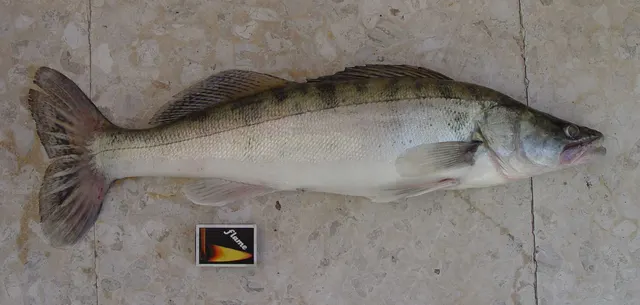 ZanderA shoaling freshwater predator built for hunting in low light and coloured water, and the fish that made a virtue of the conditions pike find difficult.
eLNuko — Public domain, via Wikimedia Commons
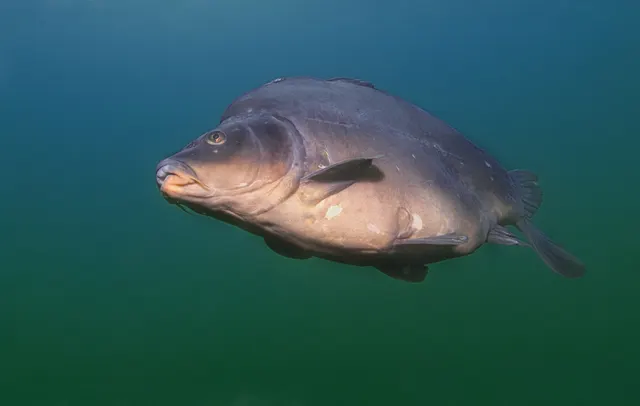 Common carpA large, long-lived, highly adaptable cyprinid whose capacity to learn has shaped more angling technique than any other freshwater fish.
Sven Riewe, CC0, via Wikimedia Commons
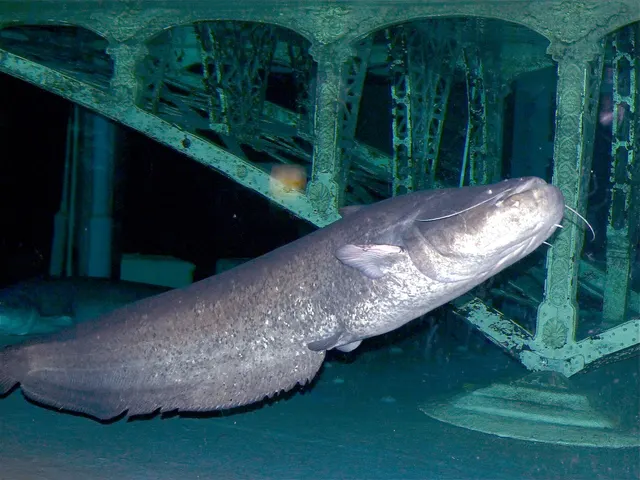 Wels catfishEurope's largest freshwater fish, reaching well over two metres, and an expanding introduced range that has made it one of the continent's most contested species.
Bernard DUPONT from FRANCE — CC BY-SA 2.0, via Wikimedia Commons
Safety
Cold water shock — Can cause serious injury or death
Baltic and inland water in Poland is cold enough for most of the year that an unexpected immersion produces an involuntary gasp, loss of breathing control and loss of swimming ability inside the first minute, regardless of swimming ability or fitness.
What reduces it: Wear a flotation aid rather than carry one, because the first minute is not a minute in which anybody puts one on. Carry a means of calling for help on the person, and treat a bank, a boat and a wading position as places an immersion can begin.
Worse when:
- Outside high summer, when water temperature is low enough for the response to be immediate.
- When fishing alone, where nobody is present to act inside the window in which action helps.
Drowning and immersion — Can cause serious injury or death
Lake ice is an ordinary winter fishing surface here, and its thickness varies across a single water with depth, inflow, wind and springs — frequently thinnest over exactly the structure that holds fish. The surface appearance does not report what is underneath it.
What reduces it: Take current local information about that specific water rather than any general rule, never go alone, carry ice picks and a throwline and know how to use them before they are needed, and treat familiarity as the thing that suppresses assessment rather than as evidence of safety.
Worse when:
- Early and late in the ice season, and after any mild spell.
- Over inflows, outflows and springs, where the ice is thinnest and gives no surface sign.
Moving water and currents — Can cause serious injury or death
Flow on impounded and hydropower-influenced reaches changes with releases that give no upstream warning and are unrelated to weather, so level and current can rise substantially around somebody standing in or beside the river.
What reduces it: Ask locally about release patterns on any regulated reach, treat an unexplained change in level or clarity as a reason to leave the water immediately, and do not wade a regulated river on the assumption that it behaves like a natural one.
Boat traffic and being seen — Can cause injury needing treatment
The Vistula and the Oder carry commercial navigation, and the wash from a loaded vessel arrives suddenly and after it has passed, onto engineered banks of stone armour and steep revetment that offer no grip and no exit.
What reduces it: Move back from the edge when a vessel passes, choose bank positions with a usable exit rather than only a usable swim, and keep small craft well clear of the navigation channel.
Weather and lightning — Can cause injury needing treatment
The Baltic is shallow and nearly enclosed, so a wind fetch builds a short, steep, disorganised sea within hours — harder on a small boat than an ocean swell of the same height — while water level responds to wind and pressure rather than to tide, so a surge can arrive during weather that is still offshore.
What reduces it: Read the inshore forecast for wind and fetch rather than for tide, treat a rising wind as the operative warning on this coast, and give a small craft a much larger margin than a tidal-coast habit suggests.
Further safety reading
- Cold water shock and immersion — A long cold season on large lakes and a Baltic coast that is cold for most of the year, fished from bank and small craft, which is the combination cold water shock is most lethal in.
Check the rules before you fish
Fishing laws, bylaws, access rules, seasons, bait restrictions and permitted methods vary by location and can change. Check the current rules from the relevant authority and the water you intend to fish before fishing.
Check with:
- Current national or regional law for where you are fishing
- Current local bylaws
- The relevant fisheries authority
- The landowner, club or fishery whose water it is
- Any restrictions specific to the species or the method you intend to use
Where to go next
What swims here
- Common carpFarmed in Polish ponds since the Middle Ages and still the fish of a living midwinter tradition, which makes carp here a cultural fact about the country rather than a note about European freshwater generally.
- Wels catfishNative to the great lowland rivers and their reservoirs, reaching sizes that make it the largest fish an angler is likely to encounter in Polish freshwater.
- ZanderNative to the Vistula and Oder systems and to the Baltic lagoons, where it moves between fresh and brackish water — one of the few places a reader can meet the fish in the range it spread from rather than where it was introduced.
How people fish here
- Coarse fishingA deep pond and lowland-river coarse tradition sits alongside the predator fishing, and the two share the same club and permit structure.
- Predator fishingPike, zander and perch across a very large lake district and two great rivers make predator fishing the discipline Polish freshwater is organised around.
How this compares
Rules and access
Environment and conservation
Sources and evidence
- Freshwater Fishes of the British Isles — HarperCollins (New Naturalist 75), 1992 (Reference work)Relied on for: Distribution, ecology, life history and conservation status of European freshwater fishes, including the migratory salmonids and the cyprinid and percid communities named.States this directlyCitation checked — the work exists and is described correctly
- FishBase: a global information system on fishes — Froese, R. and D. Pauly, eds. — FishBase Consortium (Scientific institute)Relied on for: Recorded distribution, habitat association and life history of the freshwater and migratory species named.States this directlyPassage read and verified
- ICES Advice on fishing opportunities, catch and effort — International Council for the Exploration of the Sea (Scientific institute)Relied on for: Ecoregion description, stock distribution and status, nursery function and the hydrography of the European sea areas assessed, including the Baltic, the North Sea, the Celtic Seas and the Iberian and Biscay shelf.States this directlyCitation checked — the work exists and is described correctly
- FAO Species Identification Guides for Fishery Purposes and the FAO Species Catalogues — Food and Agriculture Organization of the United Nations (Scientific institute)Relied on for: Identification, distribution and habitat association of the fishes and invertebrates of the Mediterranean, the Black Sea and the eastern central Atlantic.States this directlyCitation checked — the work exists and is described correctly
- FishBase: a global information system on fishes — Froese, R. and D. Pauly, eds. — FishBase Consortium (Scientific institute)Relied on for: Recorded distribution, depth range, habitat association, size and biology of the species named.States this directlyPassage read and verified
- The IUCN Red List of Threatened Species — International Union for Conservation of Nature (Conservation authority)Relied on for: Current global and regional conservation assessment for the species named, with the assessment date.Background and mechanism onlyCitation checked — the work exists and is described correctly
- Fishers' Craft and Lettered Art: Tracts on Fishing from the End of the Middle Ages — University of Toronto Press, 1997 (Scientific literature)Relied on for: That European fishing traditions develop around the water and fish available to them, and the historical method of reading such traditions.Background and mechanism onlyCitation checked — the work exists and is described correctly
- General angling website restatements of established technique — Various (Credible secondary source)Relied on for: Widely restated descriptions of regional angling practice, recorded as practitioner consensus rather than as scholarship.Background and mechanism onlyCitation checked — the work exists and is described correctly
Why the 9 connections on this page are here, and the sources
What swims here
Backed by research — 3 connections
Supported by peer-reviewed research or fisheries science. The sources are listed and can be checked.
Common carp
That a species occurs in these waters, drawn from distribution science and stock assessment. It is a statement about where the animal lives and is not a statement that anybody will catch one, still less where.
- Freshwater Fishes of the British Isles — HarperCollins (New Naturalist 75), 1992 (Reference work)Relied on for: Distribution, habitat requirement and life history of European freshwater fishes, including their occurrence across the continental range named.States this directlyCitation checked — the work exists and is described correctly
- FishBase: a global information system on fishes — Froese, R. and D. Pauly, eds. — FishBase Consortium (Scientific institute)Relied on for: Recorded distribution and habitat association of the freshwater and migratory species named.States this directlyPassage read and verified
Wels catfish
That a species occurs in these waters, drawn from distribution science and stock assessment. It is a statement about where the animal lives and is not a statement that anybody will catch one, still less where.
- Freshwater Fishes of the British Isles — HarperCollins (New Naturalist 75), 1992 (Reference work)Relied on for: Distribution, habitat requirement and life history of European freshwater fishes, including their occurrence across the continental range named.States this directlyCitation checked — the work exists and is described correctly
- FishBase: a global information system on fishes — Froese, R. and D. Pauly, eds. — FishBase Consortium (Scientific institute)Relied on for: Recorded distribution and habitat association of the freshwater and migratory species named.States this directlyPassage read and verified
Zander
That a species occurs in these waters, drawn from distribution science and stock assessment. It is a statement about where the animal lives and is not a statement that anybody will catch one, still less where.
- Freshwater Fishes of the British Isles — HarperCollins (New Naturalist 75), 1992 (Reference work)Relied on for: Distribution, habitat requirement and life history of European freshwater fishes, including their occurrence across the continental range named.States this directlyCitation checked — the work exists and is described correctly
- FishBase: a global information system on fishes — Froese, R. and D. Pauly, eds. — FishBase Consortium (Scientific institute)Relied on for: Recorded distribution and habitat association of the freshwater and migratory species named.States this directlyPassage read and verified
How people fish here
What experienced anglers do — 2 connections
Widely and independently recommended by experienced anglers and specialist sources. This is real angling knowledge, not proof: controlled evidence for it is limited, and FishingHQ records it as convention rather than as a demonstrated effect.
Coarse fishing
That a discipline is conventionally practised in these waters, drawn from published description of practice rather than from participation data, and labelled as consensus accordingly.
- Sea Angler — Bauer Media (Specialist angling publication)Relied on for: Long-running published description of European sea angling practice by region and destination, including where British anglers travel and what they fish for there.FishingHQ's interpretation of what it saysCitation checked — the work exists and is described correctly
- General angling website restatements of established technique — Various (Credible secondary source)Relied on for: Widely restated descriptions of which disciplines are conventionally practised in the waters named, recorded as practitioner consensus rather than as scholarship.Background and mechanism onlyCitation checked — the work exists and is described correctly
Predator fishing
That a discipline is conventionally practised in these waters, drawn from published description of practice rather than from participation data, and labelled as consensus accordingly.
- Sea Angler — Bauer Media (Specialist angling publication)Relied on for: Long-running published description of European sea angling practice by region and destination, including where British anglers travel and what they fish for there.FishingHQ's interpretation of what it saysCitation checked — the work exists and is described correctly
- General angling website restatements of established technique — Various (Credible secondary source)Relied on for: Widely restated descriptions of which disciplines are conventionally practised in the waters named, recorded as practitioner consensus rather than as scholarship.Background and mechanism onlyCitation checked — the work exists and is described correctly
How this compares
What experienced anglers do — 1 connection
Widely and independently recommended by experienced anglers and specialist sources. This is real angling knowledge, not proof: controlled evidence for it is limited, and FishingHQ records it as convention rather than as a demonstrated effect.
Germany
A navigational link between two places a reader is genuinely choosing between or reasoning across, offered as orientation rather than as a ranking.
- Sea Angler — Bauer Media (Specialist angling publication)Relied on for: Long-running published description of European sea angling practice by region and destination, including where British anglers travel and what they fish for there.FishingHQ's interpretation of what it saysCitation checked — the work exists and is described correctly
- General angling website restatements of established technique — Various (Credible secondary source)Relied on for: Widely restated descriptions of which disciplines are conventionally practised in the waters named, recorded as practitioner consensus rather than as scholarship.Background and mechanism onlyCitation checked — the work exists and is described correctly
Safety reading
Official guidance — 1 connection
Stated by a fisheries authority, scientific institute or recognised angling body. Authoritative, but summarising rather than demonstrating.
Cold water shock and immersion
A link from the place to the substantial safety topic describing the mechanism that hurts people there, rather than a warning restated in prose on the record itself.
- RNLI water safety guidance: cold water shock and Float to Live — Royal National Lifeboat Institution (Water-safety or diver-training authority)Relied on for: Cold water shock and the immersion response, tidal cut-off, and water-safety guidance for shore anglers and small-craft users.States this directlyPassage read and verified
Rules and access
Official guidance — 1 connection
Stated by a fisheries authority, scientific institute or recognised angling body. Authoritative, but summarising rather than demonstrating.
Licences and permission
This points to the kind of rule that applies rather than to a rule itself. The same question is administered differently in each of these countries, so the page says that the answer is held elsewhere and changes.
- Code of Conduct for Responsible Fisheries — Food and Agriculture Organization of the United Nations, Rome, 1995 (Standards body)Relied on for: The international framework within which national and regional fisheries authorities set, revise and enforce measures, and the principle that the responsible authority rather than a third party holds the current position.Background and mechanism onlyCitation checked — the work exists and is described correctly
- ICES Advice on fishing opportunities, catch and effort — International Council for the Exploration of the Sea (Scientific institute)Relied on for: That the stock advice European measures are set against is produced internationally and revised annually, which is how a national measure changes without the national law changing.States this directlyCitation checked — the work exists and is described correctly
Environment and conservation
Backed by research — 1 connection
Supported by peer-reviewed research or fisheries science. The sources are listed and can be checked.
Stocking: what it does to a fishery
An environmental claim attached to the geography where it operates, resting on published stock assessment and conservation status rather than on advocacy.
- The IUCN Red List of Threatened Species — International Union for Conservation of Nature (Conservation authority)Relied on for: The conservation assessment of the species and stocks concerned, with the assessment date, which is the basis for treating the pressure on them as established rather than asserted.States this directlyCitation checked — the work exists and is described correctly
- ICES Advice on fishing opportunities, catch and effort — International Council for the Exploration of the Sea (Scientific institute)Relied on for: Stock status and the advice on which management measures for the stocks concerned are set and revised.States this directlyCitation checked — the work exists and is described correctly
How FishingHQ labels evidence is explained in the evidence policy.