Swimbaits
Lure · Last reviewed 2026-08-10
Large, realistic lures that imitate a whole fish rather than suggesting one — a low-catch, high-quality approach built on the idea that big predators want one substantial meal.
Safety: hooks and barbs — can cause injury needing treatment. One more point applies here.
A swimbait is a lure that imitates an entire fish, at something close to full size, and moves like one. That is a different design philosophy from almost everything else in a tackle box, where lures suggest prey through flash, vibration or erratic movement rather than resembling it.
The family divides by construction. SOFT swimbaits are a single moulded body, usually with a paddle tail that produces a swimming action on a steady retrieve, fished on a jig head or a weighted hook. HARD or SEGMENTED swimbaits are jointed multi-section lures that produce a genuine side-to-side swimming motion. And GLIDE BAITS are single-jointed lures that swing wide left and right on a twitched retrieve, covering ground in a wide S — a motion that is spectacularly effective at drawing large predators and takes practice to work properly.
The honest thing to say about swimbaits is that they produce fewer takes and better fish. A large realistic lure is not a numbers approach; it is a way of selecting for the fish that wants a substantial meal, and a session may produce one fish or none. Anglers who fish them accept that trade deliberately.
They are also, in the larger sizes, genuinely heavy to cast for a day, which is a real physical limitation rather than a footnote.
At a glance
- Depth range
- Surface to around 10 m depending on the model and the retrieve, with sinking and weighted versions extending deeper. Most are worked in the upper few metres.
What it does in the water
Varies sharply by construction. Paddle-tail soft swimbaits produce a steady tail kick and body roll on a constant retrieve, which is the most forgiving action in the family. Segmented hard swimbaits produce a genuine anguilliform swimming motion, each joint contributing. Glide baits swing wide to alternate sides on each twitch, tracing a broad S and covering considerable width — an action that draws fish from a distance and that requires a deliberate cadence to produce at all.
How it is worked
Soft paddle tails work on a slow steady retrieve, with pauses to let the lure fall. Segmented swimbaits work on a slow to moderate steady retrieve where the joints do the work. Glide baits require a rhythmic twitch-and-pause with slack given at the right moment, and this is a technique that has to be learned rather than picked up — a badly worked glide bait simply tracks straight and catches nothing.
Fish it catches
- BowfinBowfin take a large slow-moving soft bait in the shallow, weedy, low-oxygen backwaters they dominate, and they are increasingly fished for deliberately rather than caught by accident.
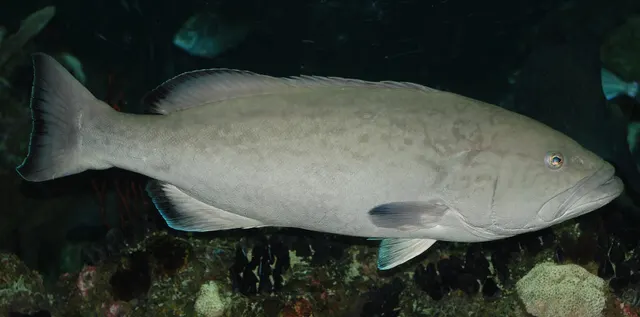 Gag grouperLarge swimbaits fished over hard bottom and wreck take gag grouper, and the whole tackle choice is dictated by the need to move the fish away from structure immediately.
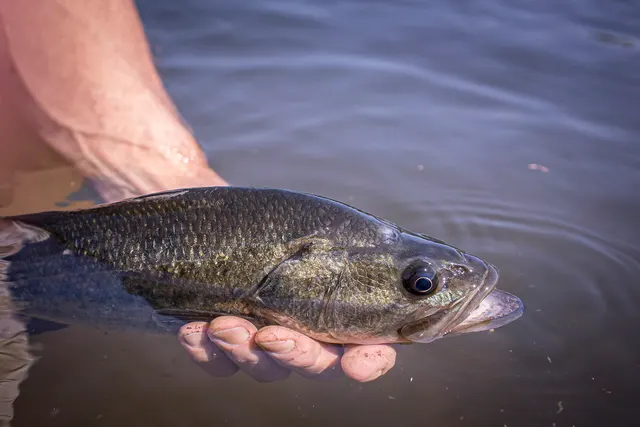 Largemouth bassThe lure family that trades numbers for size, developed largely in American bass fishing and now used worldwide wherever a big predator wants one substantial meal.
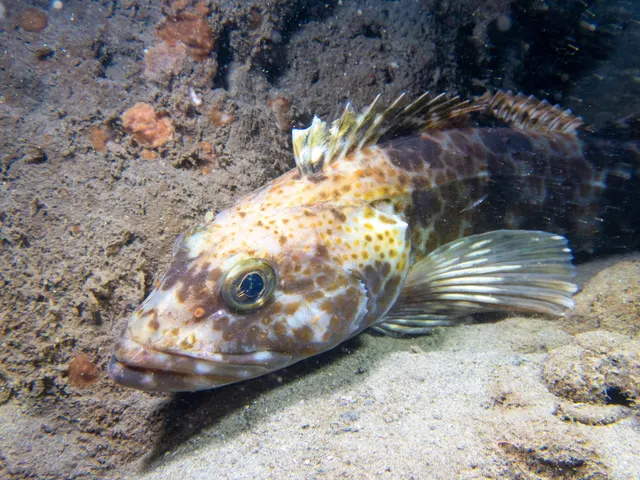 LingcodLarge swimbaits worked hard on rocky reef where the fish ambushes.
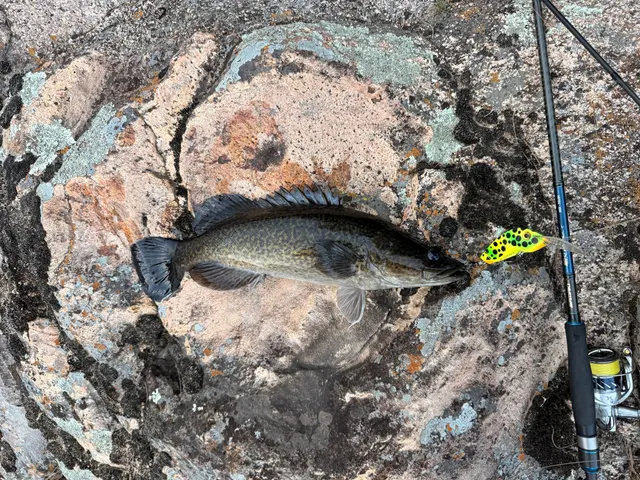 Murray codVery large jointed swimbaits answer a fish that will take prey items a substantial fraction of its own length, and the size is a deliberate selection for larger fish.
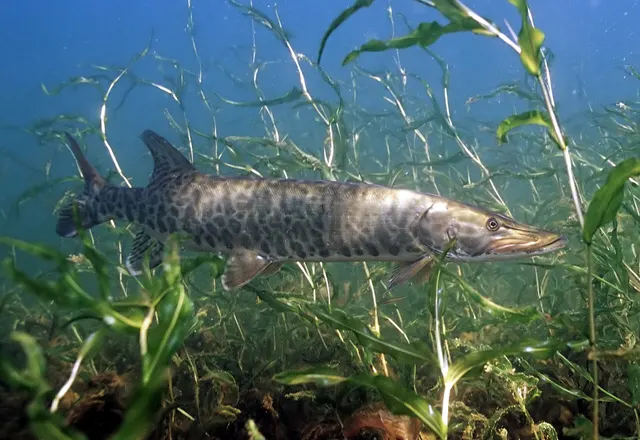 MuskellungeA fish that attacks prey up to a third of its own length is a fish that will take a lure the size of a small pike, which is why muskellunge swimbaits look absurd and work.
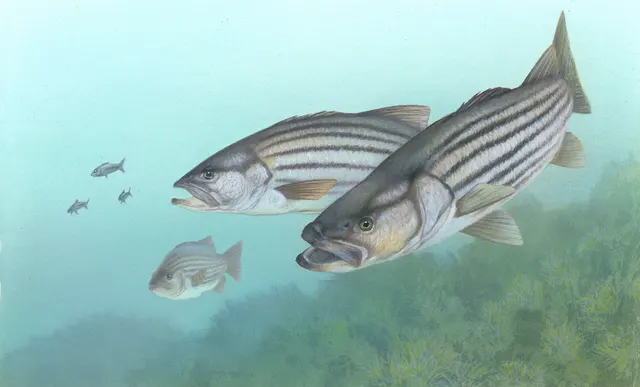 Striped bassLarge swimbaits answer stripers keyed on big single prey items — herring, menhaden, mackerel — where a small lure in a shoal of large bait is simply not seen.
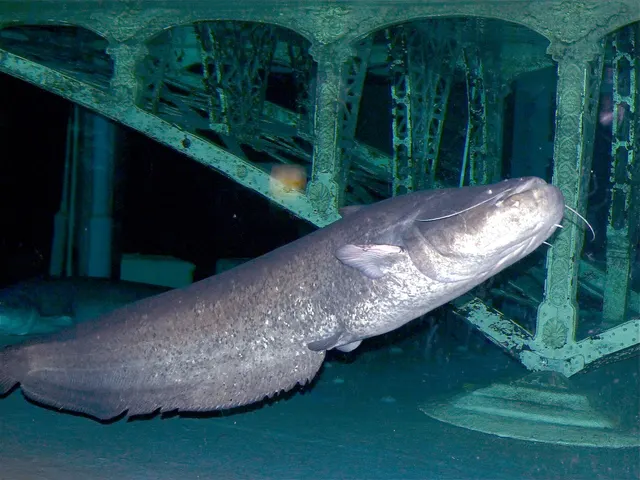 Wels catfishLarge jointed swimbaits work on wels because the fish hunts by lateral line in poor visibility and responds to the displacement a big-bodied lure makes, not to its detail.
What it imitates
A whole prey fish, at realistic size and moving realistically. Where most lures suggest prey through a trigger — flash, vibration, erratic distress — a swimbait attempts actual resemblance, on the reasoning that a large predator that has seen many lures may still take something that simply looks like what it eats. That reasoning is practitioner consensus rather than tested science, and it is presented as such.
Where it stops working
- Low catch rates by design. This is a method that trades numbers for size, and a blank session is a normal outcome rather than a failure.
- Large models are heavy and tiring to cast for a full day, which is a genuine limitation rather than a minor one.
- Expensive, and losses to snags and to fish hurt accordingly.
- Glide baits require a learned cadence; worked badly they do not produce the action at all.
- Hook-up rates can be poor on short-striking fish, which is a known trade-off of large lure profiles.
Safety
Hooks and barbs — Can cause injury needing treatment
Large lures carrying multiple treble hooks, on heavy tackle, cast repeatedly and often close to structure and to other people.
What reduces it: Look behind and beside you before every cast. Control the fish before unhooking and use a de-hooking tool. Consider single hooks where they are permitted and adequate.
Precautions that always apply here
- If a hook goes past the barb into a person, cut the line, leave the hook where it is, and get medical help. Pulling it back out does far more damage than pushing it through under proper care.
Where to go next
Understanding it
- Lure size, and what it is selectingSwimbaits are where the size argument is most extreme, and where the gap between what a predator will attack and what it can swallow does the most damage to hook-up rates.
- What lure action meansA swimbait's tail beat is a flexible section responding to flow speed, which is a different mechanism from a lipped lure's wobble and is often described in the same words.
More lures
Not related to this page — just the rest of the section. There is little else joined to this subject yet, and a short page should still lead somewhere.
Sources and evidence
- Angling Times — Bauer Media (Specialist angling publication)Relied on for: Contemporary practitioner treatment of swimbait types, glide bait technique and the size-over-numbers trade-off.FishingHQ's interpretation of what it saysCitation checked — the work exists and is described correctly
- General angling website restatements of established technique — Various (Credible secondary source)Relied on for: The widely restated practitioner position that large realistic swimbaits produce fewer takes from larger fish.FishingHQ's interpretation of what it saysCitation checked — the work exists and is described correctly
Why the 11 connections on this page are here, and the sources
Fish it catches
What experienced anglers do — 8 connections
Widely and independently recommended by experienced anglers and specialist sources. This is real angling knowledge, not proof: controlled evidence for it is limited, and FishingHQ records it as convention rather than as a demonstrated effect.
Bowfin
A practitioner claim about which lure family answers this species' feeding or holding behaviour.
- General angling website restatements of established technique — Various (Credible secondary source)Relied on for: Widely restated North American lure practice for this species.Background and mechanism onlyCitation checked — the work exists and is described correctly
- IGFA International Angling Rules and World Record Requirements — International Game Fish Association (Angling or fisheries organisation)Relied on for: Recognition of the species as an established sport fish taken on artificial lures, and the tackle conventions used for it.States this directlyPassage read and verified
Gag grouper
A practitioner claim about which lure family answers this species' feeding or holding behaviour.
- General angling website restatements of established technique — Various (Credible secondary source)Relied on for: Widely restated North American lure practice for this species.Background and mechanism onlyCitation checked — the work exists and is described correctly
- IGFA International Angling Rules and World Record Requirements — International Game Fish Association (Angling or fisheries organisation)Relied on for: Recognition of the species as an established sport fish taken on artificial lures, and the tackle conventions used for it.States this directlyPassage read and verified
Largemouth bass
A practitioner claim about a lure-species pairing and its origin.
- Angling Times — Bauer Media (Specialist angling publication)Relied on for: Contemporary practitioner treatment of swimbait styles and the size-over-numbers trade-off.Citation checked — the work exists and is described correctly
- General angling website restatements of established technique — Various (Credible secondary source)Relied on for: Widely restated practitioner accounts of swimbait fishing for bass.Citation checked — the work exists and is described correctly
Lingcod
A practitioner claim about tackle commonly used for Ophiodon elongatus.
- General angling website restatements of established technique — Various (Credible secondary source)Relied on for: Widely restated practitioner accounts of this presentation for lingcod.Citation checked — the work exists and is described correctly
- Angling Times — Bauer Media (Specialist angling publication)Relied on for: Practitioner treatment of comparable presentations for the species group.Citation checked — the work exists and is described correctly
Murray cod
A practitioner claim about which lure family answers this species' feeding or holding behaviour.
- IGFA International Angling Rules and World Record Requirements — International Game Fish Association (Angling or fisheries organisation)Relied on for: Recognition of the species as an established sport fish taken on artificial lures, and the line and tackle classes used for it.States this directlyPassage read and verified
- General angling website restatements of established technique — Various (Credible secondary source)Relied on for: Widely restated lure practice for this species.Background and mechanism onlyCitation checked — the work exists and is described correctly
Muskellunge
A practitioner claim following from the species' verified prey size selection.
- Angling Times — Bauer Media (Specialist angling publication)Relied on for: Contemporary practitioner treatment of large swimbaits and glide baits for big predators.Citation checked — the work exists and is described correctly
- General angling website restatements of established technique — Various (Credible secondary source)Relied on for: Widely restated practitioner accounts of large lure use for muskellunge.Citation checked — the work exists and is described correctly
Striped bass
A practitioner claim about which lure family answers this species' feeding or holding behaviour.
- General angling website restatements of established technique — Various (Credible secondary source)Relied on for: Widely restated North American lure practice for this species.Background and mechanism onlyCitation checked — the work exists and is described correctly
- IGFA International Angling Rules and World Record Requirements — International Game Fish Association (Angling or fisheries organisation)Relied on for: Recognition of the species as an established sport fish taken on artificial lures, and the tackle conventions used for it.States this directlyPassage read and verified
Wels catfish
A practitioner claim about which lure family answers this species' feeding or holding behaviour.
- Freshwater Fishing — Macdonald & Jane's, 1975 (Specialist angling publication)Relied on for: Lure and spinning practice for freshwater predators in Britain and northern Europe.States this directlyCitation checked — the work exists and is described correctly
- Angling Times — Bauer Media (Specialist angling publication)Relied on for: Contemporary British and European lure practice for this species in the weekly angling press.Background and mechanism onlyCitation checked — the work exists and is described correctly
How it is worked
What experienced anglers do — 1 connection
Widely and independently recommended by experienced anglers and specialist sources. This is real angling knowledge, not proof: controlled evidence for it is limited, and FishingHQ records it as convention rather than as a demonstrated effect.
Trolling
The swimbait page describes a low-catch, high-quality approach built on a single substantial meal. Trolling covers the water that approach requires without the casting fatigue a lure of that size otherwise imposes.
- Pike and the Pike Angler — Stanley Paul, 1981 (Specialist angling publication)Relied on for: Specialist treatment of which bait or lure family this technique is fished with.States this directlyCitation checked — the work exists and is described correctly
- Angling Times — Bauer Media (Specialist angling publication)Relied on for: The independently restated practitioner pairing of this technique with this family.Background and mechanism onlyCitation checked — the work exists and is described correctly
Understanding it
What experienced anglers do — 2 connections
Widely and independently recommended by experienced anglers and specialist sources. This is real angling knowledge, not proof: controlled evidence for it is limited, and FishingHQ records it as convention rather than as a demonstrated effect.
Lure size, and what it is selecting
Why it works, resting on practice reported consistently across independent angling traditions rather than on experiment.
- Angling Times — Bauer Media (Specialist angling publication)Relied on for: Contemporary UK coarse, match and lure angling practice as reported by practitioners, including bait and lure convention.States this directlyCitation checked — the work exists and is described correctly
- Sea Angler — Bauer Media (Specialist angling publication)Relied on for: Contemporary UK sea angling practice as reported by practitioners, including lure and bait convention.States this directlyCitation checked — the work exists and is described correctly
What lure action means
Tail-beat and wobble are distinct movements that lure descriptions routinely conflate.
- Angling Times — Bauer Media (Specialist angling publication)Relied on for: Contemporary lure angling practice with modern materials and lure types.States this directlyCitation checked — the work exists and is described correctly
- Sea Angler — Bauer Media (Specialist angling publication)Relied on for: Saltwater lure angling practice with the same materials and lure types.States this directlyCitation checked — the work exists and is described correctly
How FishingHQ labels evidence is explained in the evidence policy.