Osmoregulation and diadromous fish
Explainer · Last reviewed 2026-08-10
Freshwater fish continuously take on water and must excrete it; marine fish continuously lose it and must drink — and species that cross between them rebuild that machinery during the transition.
A fish's body fluids sit at a salt concentration between fresh water and sea water, which creates opposite problems in the two environments.
In fresh water, the fish is saltier than its surroundings, so water flows in across the gills and skin by osmosis. It must excrete large volumes of very dilute urine and actively take up salt at the gills.
In sea water the situation reverses: the fish is less salty than its surroundings, loses water continuously, and compensates by drinking sea water and actively excreting the excess salt through specialised chloride cells in the gills.
A diadromous fish does both at different life stages, and the transition is a physiological rebuild rather than an adjustment. Smolting in salmon is the visible version — the silvering, the behavioural change and the gill remodelling all happen together over weeks.
Why the transition zone matters
Estuaries are where this machinery is under most strain, and they are correspondingly important. Juvenile fish use them as nurseries partly because larger predators tolerate the variable salinity less well.
The transition is not instant. A smolt moving to sea, or an eel entering fresh water, needs time in intermediate salinity, which is why estuarine habitat and passage matter to species that only pass through.
That has direct conservation consequences: barriers, poor water quality and lost habitat in estuaries affect species whose adult and juvenile ranges are both elsewhere. It is a recurring theme in FishingHQ's diadromous records — European eel, Atlantic salmon, jungle perch, estuary perch — and it is the same mechanism each time.
Backed by research — why, and the sources (2)
Supported by peer-reviewed research or fisheries science. The sources are listed and can be checked.
- FishBase: a global information system on fishes — Froese, R. and D. Pauly, eds. — FishBase Consortium (Scientific institute)Relied on for: FishBase species records of water type, diadromy and life-stage habitat use.States this directlyPassage read and verified
- Freshwater Fishes of the British Isles — HarperCollins (New Naturalist 75), 1992 (Reference work)Relied on for: Descriptions of osmoregulation and smolting in diadromous fishes.States this directlyCitation checked — the work exists and is described correctly
What it means for handling and for bait
The immediate practical consequence is for live bait: a marine organism placed in fresh water, or a freshwater one in salt, dies from osmotic failure rather than from lack of oxygen. That is why ragworm, sand eel and prawn cannot be kept in tap water, and it is a mechanism rather than a rule of thumb.
For fish handling, salinity change is one of the stressors on a fish caught in an estuary and moved even a short distance.
And it explains why some species tolerate a wide salinity range while others do not: a bull shark, a barramundi or a mullet has physiological flexibility that a wholly marine or wholly freshwater species lacks, and that flexibility is what puts them in estuaries in the first place.
Backed by research — why, and the sources (1)
Supported by peer-reviewed research or fisheries science. The sources are listed and can be checked.
- FishBase: a global information system on fishes — Froese, R. and D. Pauly, eds. — FishBase Consortium (Scientific institute)Relied on for: Records of salinity tolerance and euryhaline habit across species.States this directlyPassage read and verified
Where to go next
Fish this applies to
- Bull sharkThe mechanism that makes the whole species distinctive: adjusting urea and salt retention as salinity changes, rather than tolerating fresh water briefly.
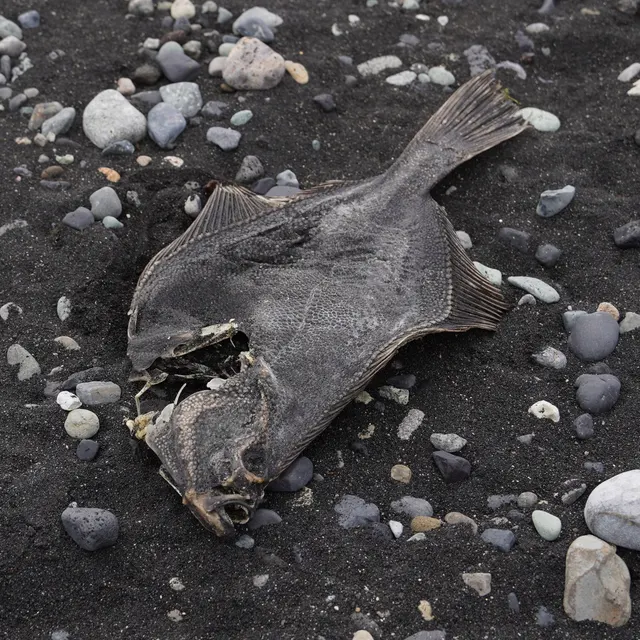 European flounderThe flounder's whole distribution rests on an ability to move between full salt water and fresh, which is a physiological problem most marine fish cannot solve.
Where it matters
Water and ground
Related reading
- Catadromy, anadromy, and crossing the salinity lineThe two environments pose opposite problems and require opposite machinery, and a fish crossing the line rebuilds one into the other rather than adjusting it.
- Estuary fishing: tide, salinity and the moving frontWhich fish can be where in an estuary is set by their capacity to regulate against a changing salinity, which is physiology rather than preference.
- Smoltification, and the change that makes the sea possibleThe substantial part of the change is the gill's cell populations reversing the direction of salt handling, which is the osmoregulation record's subject applied at one moment in one life.
Sources and evidence
- FishBase: a global information system on fishes — Froese, R. and D. Pauly, eds. — FishBase Consortium (Scientific institute)Relied on for: FishBase species records of water type, diadromy and life-stage habitat use.States this directlyPassage read and verified
Why the 8 connections on this page are here, and the sources
Fish this applies to
What experienced anglers do — 2 connections
Widely and independently recommended by experienced anglers and specialist sources. This is real angling knowledge, not proof: controlled evidence for it is limited, and FishingHQ records it as convention rather than as a demonstrated effect.
Bull shark
A record pointing at the practice or mechanism that explains it, so the explanation lives once rather than being restated on every species page.
- BlueWater Hunting and Freediving — BlueWater Freedivers, Ventura, California, 1995 (Practitioner report)Relied on for: Reef and blue-water breath-hold hunting practice, including fish behaviour, approach, catch handling and the judgement involved in taking a shot.States this directlyCitation checked — the work exists and is described correctly
- General angling website restatements of established technique — Various (Credible secondary source)Relied on for: Widely restated descriptions of fish behaviour and regional fishing practice, recorded as consensus rather than as scholarship.Background and mechanism onlyCitation checked — the work exists and is described correctly
European flounder
A record joined to the mechanism that explains it, which is what makes a species page transferable rather than a list of facts.
- Sea Angler — Bauer Media (Specialist angling publication)Relied on for: Contemporary UK and European sea angling practice as reported by practitioners, including ground, seasonal timing, bait and method convention.States this directlyCitation checked — the work exists and is described correctly
- General angling website restatements of established technique — Various (Credible secondary source)Relied on for: Widely restated descriptions of species behaviour and regional angling practice, recorded as consensus rather than as scholarship.Background and mechanism onlyCitation checked — the work exists and is described correctly
Where it matters
Backed by research — 2 connections
Supported by peer-reviewed research or fisheries science. The sources are listed and can be checked.
Livebaiting
Marine live baits die in fresh water from osmotic failure, not suffocation.
- FishBase: a global information system on fishes — Froese, R. and D. Pauly, eds. — FishBase Consortium (Scientific institute)Relied on for: Species and habitat data underlying this connection. Marine live baits die in fresh water from osmotic failure, not suffocation.States this directlyPassage read and verified
Sea fishing
Salinity tolerance explains which species use estuaries at all.
- FishBase: a global information system on fishes — Froese, R. and D. Pauly, eds. — FishBase Consortium (Scientific institute)Relied on for: Species and habitat data underlying this connection. Salinity tolerance explains which species use estuaries at all.States this directlyPassage read and verified
Water and ground
Backed by research — 1 connection
Supported by peer-reviewed research or fisheries science. The sources are listed and can be checked.
Estuary
Estuaries are where the machinery is under most strain.
- FishBase: a global information system on fishes — Froese, R. and D. Pauly, eds. — FishBase Consortium (Scientific institute)Relied on for: Species and habitat data underlying this connection. Estuaries are where the machinery is under most strain.States this directlyPassage read and verified
Related reading
Backed by research — 3 connections
Supported by peer-reviewed research or fisheries science. The sources are listed and can be checked.
Catadromy, anadromy, and crossing the salinity line
Why it works, and what that rests on. The underlying claims are documented in the fisheries science and reference literature cited rather than restated from practice.
- FishBase: a global information system on fishes — Froese, R. and D. Pauly, eds. — FishBase Consortium (Scientific institute)Relied on for: Life history, diet, migration pattern, habitat association and depth range recorded for the species concerned.States this directlyPassage read and verified
- Freshwater Fishes of the British Isles — HarperCollins (New Naturalist 75), 1992 (Reference work)Relied on for: Biology, life history, distribution and conservation status of British and Irish freshwater and diadromous fishes.States this directlyCitation checked — the work exists and is described correctly
Estuary fishing: tide, salinity and the moving front
Osmoregulatory capacity determines the salinity range a species can occupy.
- FishBase: a global information system on fishes — Froese, R. and D. Pauly, eds. — FishBase Consortium (Scientific institute)Relied on for: Species salinity tolerance and the fresh, brackish and marine classifications derived from it.States this directlyPassage read and verified
Smoltification, and the change that makes the sea possible
Why it works, and what that rests on. The underlying claims are documented in the fisheries science and reference literature cited rather than restated from practice.
- FishBase: a global information system on fishes — Froese, R. and D. Pauly, eds. — FishBase Consortium (Scientific institute)Relied on for: Life history, diet, migration pattern, habitat association and depth range recorded for the species concerned.States this directlyPassage read and verified
- Freshwater Fishes of the British Isles — HarperCollins (New Naturalist 75), 1992 (Reference work)Relied on for: Biology, life history, distribution and conservation status of British and Irish freshwater and diadromous fishes.States this directlyCitation checked — the work exists and is described correctly
How FishingHQ labels evidence is explained in the evidence policy.