Trout, char and salmon: what the words actually mean
Explainer · Last reviewed 2026-08-15
Three words covering one family and three genera, applied so inconsistently that two of the most familiar trout in the world are not trout at all.
All of these fish are Salmonidae. Within that family the angling names cut across the genera rather than along them.
SALMO holds Atlantic salmon and brown trout. A sea trout is a brown trout — the same species in a different life history — which is why no identification page can separate them.
ONCORHYNCHUS holds the Pacific salmon and, awkwardly for the vocabulary, rainbow trout and cutthroat trout. A rainbow trout is more closely related to a chinook salmon than to a brown trout, despite sharing a word with the second and not the first. A steelhead is a rainbow trout that went to sea.
SALVELINUS is char, and this is where the names break down completely. Brook trout and lake trout are both char. Arctic char is the only member of the genus most people call by its right name.
The practical consequences are real. Char generally spawn later in the year than the Salmo trout and are separated in the field by pale spots on a dark ground rather than dark spots on a pale one — the reverse pattern, and a genuinely reliable character. A reader who believes brook trout is a kind of trout will look for the wrong marking.
The one character that separates char from trout in the hand
TONAL POLARITY, and it holds regardless of the actual colours. Char carry PALE spots on a DARKER ground: cream, pink or red dots over olive or brown. Salmo and Oncorhynchus trout carry DARK spots on a PALER ground.
The distinction survives the enormous colour variation both groups show, because it is about which is the figure and which is the background rather than about hue. It is the reason FishingHQ's identification rule permits tonal polarity as diagnostic while refusing hue.
Brook trout add white leading edges to the lower fins, which is the quickest confirmation once the polarity has placed the fish in Salvelinus.
Why the names never got corrected
The vocabulary predates the classification by centuries, and by the time the relationships were understood the names were in every book, licence and menu in the English-speaking world.
Renaming would also fail. Common names exist to be used by people who are not reading a key, and a name that has been stable for two hundred years is more useful than a correct one that nobody recognises — which is precisely why FishingHQ records both the common name and the binomial on every species page rather than choosing.
What is worth resisting is the assumption that the words carry information they do not. Trout is a body plan and a habit, not a lineage.
Where to go next
Fish this applies to
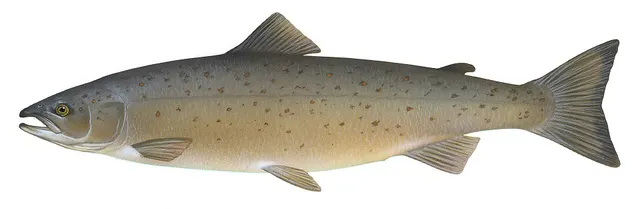 Atlantic salmonA Salmo, sharing its genus with brown trout and not with the Pacific salmon.
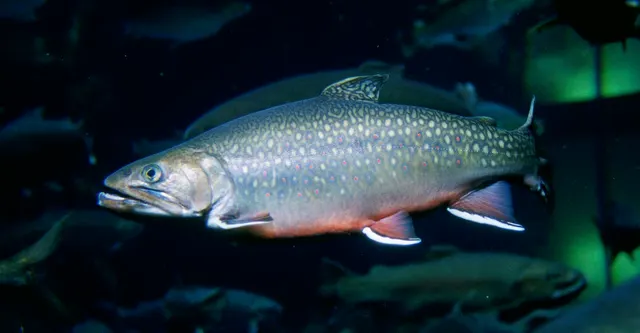 Brook troutA char rather than a trout, which is why it carries pale spots on a dark ground rather than the reverse.
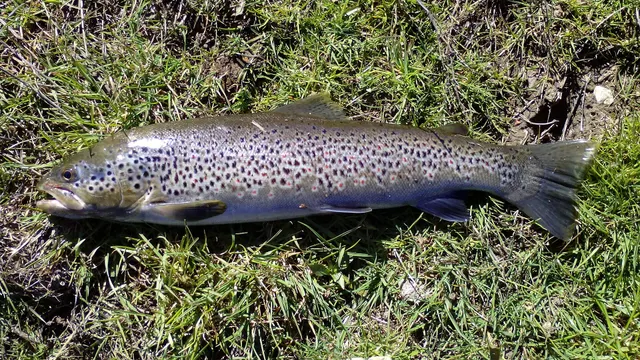 Brown troutA Salmo, and more closely related to Atlantic salmon than to a rainbow trout.
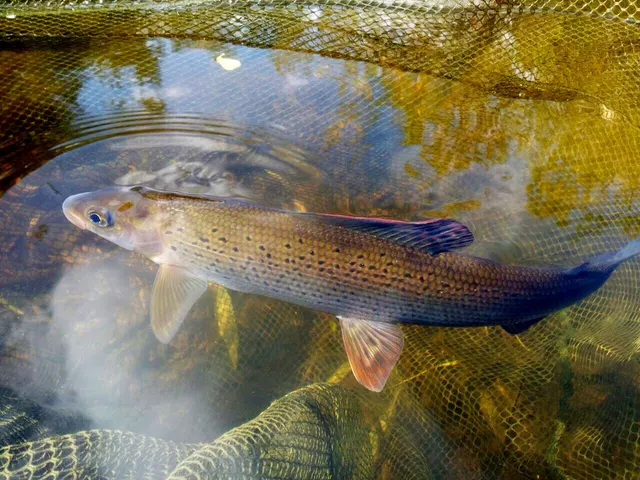 GraylingA salmonid that is neither trout, char nor salmon, and which British tradition assigns to whichever category suits.
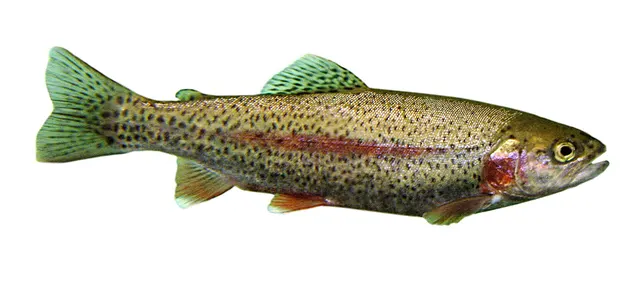 Rainbow troutAn Oncorhynchus, and more closely related to chinook salmon than to a brown trout.
Sources and evidence
- FishBase: a global information system on fishes — Froese, R. and D. Pauly, eds. — FishBase Consortium (Scientific institute)Relied on for: Genus placement within Salmonidae for Salmo, Oncorhynchus and Salvelinus, and the species assigned to each.States this directlyPassage read and verified
- Freshwater Fishes of the British Isles — HarperCollins (New Naturalist 75), 1992 (Reference work)Relied on for: British and Irish salmonid taxonomy, life histories and the relationship between resident and migratory forms.States this directlyCitation checked — the work exists and is described correctly
Why the 5 connections on this page are here, and the sources
Fish this applies to
Backed by research — 5 connections
Supported by peer-reviewed research or fisheries science. The sources are listed and can be checked.
Atlantic salmon
Salmon spans two genera in the same way trout does.
- FishBase: a global information system on fishes — Froese, R. and D. Pauly, eds. — FishBase Consortium (Scientific institute)Relied on for: Genus placement within Salmonidae for Salmo, Oncorhynchus and Salvelinus, and the species assigned to each.States this directlyPassage read and verified
Brook trout
The clearest case where the common name predicts the wrong field character.
- FishBase: a global information system on fishes — Froese, R. and D. Pauly, eds. — FishBase Consortium (Scientific institute)Relied on for: Genus placement within Salmonidae for Salmo, Oncorhynchus and Salvelinus, and the species assigned to each.States this directlyPassage read and verified
Brown trout
The word trout spans two genera and this is one of them.
- FishBase: a global information system on fishes — Froese, R. and D. Pauly, eds. — FishBase Consortium (Scientific institute)Relied on for: Genus placement within Salmonidae for Salmo, Oncorhynchus and Salvelinus, and the species assigned to each.States this directlyPassage read and verified
Grayling
The species that most clearly exposes the categories as social rather than biological.
- FishBase: a global information system on fishes — Froese, R. and D. Pauly, eds. — FishBase Consortium (Scientific institute)Relied on for: Genus placement within Salmonidae for Salmo, Oncorhynchus and Salvelinus, and the species assigned to each.States this directlyPassage read and verified
Rainbow trout
The other genus the word trout spans, and the counter-intuitive half.
- FishBase: a global information system on fishes — Froese, R. and D. Pauly, eds. — FishBase Consortium (Scientific institute)Relied on for: Genus placement within Salmonidae for Salmo, Oncorhynchus and Salvelinus, and the species assigned to each.States this directlyPassage read and verified
How FishingHQ labels evidence is explained in the evidence policy.