Floating, suspending and sinking lures
Explainer · Last reviewed 2026-08-11
Whether a lure rises, hangs or sinks when you stop reeling decides what happens during every pause — and the pause is when a large share of takes occur.
A lure's buoyancy is its density relative to the water it is in, and it decides one thing: what the lure does when nothing is pulling it.
A FLOATING lure rises when the retrieve stops. A floating diver is pulled down by its lip while moving and climbs back towards the surface at rest, so the retrieve traces a series of dives and rises. It can be backed out of snags by pausing, and it can be worked over shallow structure without fouling.
A SUSPENDING lure is built to sit at close to neutral buoyancy so that it hangs at depth when the retrieve stops. That hang is the whole point: a lure that stops dead and stays there in front of a following fish presents a stationary target, and a fish that has followed without committing frequently takes at that moment.
A SINKING lure descends at rest. That allows depth to be reached by counting the lure down before retrieving, and it allows the fall itself to be fished.
The complication that catches people out is that neutral buoyancy is not a fixed property of the lure. It is a property of the lure, the hooks, the split rings, the clip, the leader hanging from it, and the density of the water. The same lure that suspends in fresh water sinks in salt; the same lure with heavier trebles sinks in both. Temperature shifts water density enough to matter at the margin. A lure sold as suspending is suspending in whatever the maker tested it in.
Depth is not the same question as buoyancy
Two properties are frequently confused. Buoyancy is what the lure does at rest. Running depth is where it sits while being retrieved, and for a diving lure that is set by the lip — its size, angle and the point at which the line attaches — rather than by density.
So a floating lure can be a deep diver, and a sinking lure can run shallow if retrieved fast enough. The two properties combine rather than substitute.
Several things move running depth in practice: line diameter, because a thicker line has more drag and lifts the lure; the length of line out, because a longer line has more drag and a shallower angle; retrieve speed, up to the point where the lure blows out; and rod tip position, which changes the angle of pull.
The manufacturer's stated diving depth is measured under one set of those conditions and should be read as an indication rather than a specification.
Tuning buoyancy, and the point at which it becomes guesswork
Anglers adjust buoyancy deliberately — changing hook sizes, adding small adhesive weights, or changing split rings — and the practice is well established, particularly in predator fishing where a lure that hangs rather than rises is worth a good deal.
The reasoning is straightforward and the execution is empirical: the only reliable way to know what a lure does after modification is to watch it in clear water beside the boat or the bank.
What is not supportable is a general rule about which buoyancy suits which conditions. The common working rules — suspending lures in cold water, floating lures over weed, sinking lures in current — are widely repeated across independent traditions and rest on plausible reasoning about fish activity and snagging rather than on controlled comparison. FishingHQ records them as convention and does not present them as findings.
What experienced anglers do — why, and the sources (2)
Widely and independently recommended by experienced anglers and specialist sources. This is real angling knowledge, not proof: controlled evidence for it is limited, and FishingHQ records it as convention rather than as a demonstrated effect.
- Pike and the Pike Angler — Stanley Paul, 1981 (Specialist angling publication)Relied on for: Predator angling practice on lure buoyancy, pauses and working over weed.States this directlyCitation checked — the work exists and is described correctly
- Angling Times — Bauer Media (Specialist angling publication)Relied on for: Contemporary lure angling practice on suspending and floating lure use in fresh water.States this directlyCitation checked — the work exists and is described correctly
Where to go next
Fish this applies to
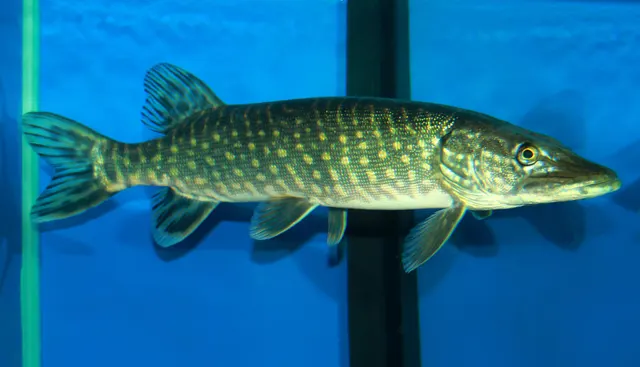 Northern pikeThe fish where buoyancy is most often the whole difference. A pike holding tight to weed or over a shallow bar will take a suspending or slow-rising lure worked in pauses above it, and will ignore the same lure fished as a sinker because it drops into the cover before the fish has decided. The pause is the presentation, and buoyancy is what makes a pause possible.
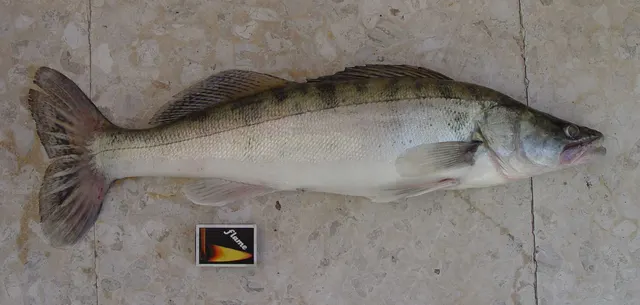 ZanderThe opposite requirement in the same water. Zander hold hard on the bottom in low light and turbid water, so a lure that hangs mid-water is fishing above them — which is why the same lake fished for pike and for zander wants opposite buoyancy on the same day.
Where it matters
Gear this affects
- CrankbaitsWhether a crankbait rises, hangs or sinks on the pause changes the presentation completely while leaving the retrieve identical.
- JerkbaitsA suspending jerkbait's hang is the point of the lure, and it is a property of the hooks, rings and water as much as of the body.
- Surface luresA surface lure is the limiting case of buoyancy: it works only because it will not sink, and a heavy clip or a sinking leader defeats it.
Related reading
- How deep a lure runs, and what controls itBuoyancy decides what happens when the retrieve stops; depth control decides where the lure was when it stopped. The two together describe the whole of where a lure has been.
- The kinds of lure, and what each imitatesWhat a lure does when the retrieve stops is a property of its buoyancy, and a great many takes happen exactly there.
How this compares
Sources and evidence
- FishBase: a global information system on fishes — Froese, R. and D. Pauly, eds. — FishBase Consortium (Scientific institute)Relied on for: Species depth ranges and habitat associations, against which lure depth choices are made.Background and mechanism onlyPassage read and verified
Why the 9 connections on this page are here, and the sources
Fish this applies to
What experienced anglers do — 2 connections
Widely and independently recommended by experienced anglers and specialist sources. This is real angling knowledge, not proof: controlled evidence for it is limited, and FishingHQ records it as convention rather than as a demonstrated effect.
Northern pike
A fish or a record joined to the comparison it is a worked example of, written only where the subject's own behaviour is what makes the comparison concrete rather than where the comparison could apply to it.
- Freshwater Fishes of the British Isles — HarperCollins (New Naturalist 75), 1992 (Reference work)Relied on for: Feeding biology, behaviour and life history of the freshwater fishes of the British Isles.States this directlyCitation checked — the work exists and is described correctly
- FishBase: a global information system on fishes — Froese, R. and D. Pauly, eds. — FishBase Consortium (Scientific institute)Relied on for: Recorded feeding biology, environment and behaviour of the species named.States this directlyPassage read and verified
Zander
A fish or a record joined to the comparison it is a worked example of, written only where the subject's own behaviour is what makes the comparison concrete rather than where the comparison could apply to it.
- Freshwater Fishes of the British Isles — HarperCollins (New Naturalist 75), 1992 (Reference work)Relied on for: Feeding biology, behaviour and life history of the freshwater fishes of the British Isles.States this directlyCitation checked — the work exists and is described correctly
- FishBase: a global information system on fishes — Froese, R. and D. Pauly, eds. — FishBase Consortium (Scientific institute)Relied on for: Recorded feeding biology, environment and behaviour of the species named.States this directlyPassage read and verified
Where it matters
What experienced anglers do — 1 connection
Widely and independently recommended by experienced anglers and specialist sources. This is real angling knowledge, not proof: controlled evidence for it is limited, and FishingHQ records it as convention rather than as a demonstrated effect.
Spinning
A fish or a record joined to the comparison it is a worked example of, written only where the subject's own behaviour is what makes the comparison concrete rather than where the comparison could apply to it.
- Sea Angler — Bauer Media (Specialist angling publication)Relied on for: British sea angling practice including tackle convention, terminology and the units the sport is described in.FishingHQ's interpretation of what it saysCitation checked — the work exists and is described correctly
- Angling Times — Bauer Media (Specialist angling publication)Relied on for: Contemporary UK angling practice as reported by practitioners, including tackle comparison and the faults anglers meet.FishingHQ's interpretation of what it saysCitation checked — the work exists and is described correctly
Gear this affects
What experienced anglers do — 3 connections
Widely and independently recommended by experienced anglers and specialist sources. This is real angling knowledge, not proof: controlled evidence for it is limited, and FishingHQ records it as convention rather than as a demonstrated effect.
Crankbaits
Buoyancy variants of the same lure are treated as different tools in lure angling practice.
- Pike and the Pike Angler — Stanley Paul, 1981 (Specialist angling publication)Relied on for: Predator angling practice on lure choice, retrieve and terminal tackle.States this directlyCitation checked — the work exists and is described correctly
- Angling Times — Bauer Media (Specialist angling publication)Relied on for: Contemporary coarse and predator angling practice.States this directlyCitation checked — the work exists and is described correctly
Jerkbaits
Tuning a jerkbait to suspend by changing hooks and rings is established practice.
- Angling Times — Bauer Media (Specialist angling publication)Relied on for: Contemporary lure angling practice with modern materials and lure types.States this directlyCitation checked — the work exists and is described correctly
- Sea Angler — Bauer Media (Specialist angling publication)Relied on for: Saltwater lure angling practice with the same materials and lure types.States this directlyCitation checked — the work exists and is described correctly
Surface lures
Surface lure behaviour is described in terms of what keeps the lure in the film.
- Angling Times — Bauer Media (Specialist angling publication)Relied on for: Contemporary lure angling practice with modern materials and lure types.States this directlyCitation checked — the work exists and is described correctly
- Sea Angler — Bauer Media (Specialist angling publication)Relied on for: Saltwater lure angling practice with the same materials and lure types.States this directlyCitation checked — the work exists and is described correctly
Related reading
What experienced anglers do — 2 connections
Widely and independently recommended by experienced anglers and specialist sources. This is real angling knowledge, not proof: controlled evidence for it is limited, and FishingHQ records it as convention rather than as a demonstrated effect.
How deep a lure runs, and what controls it
Why it works, resting on practice reported consistently across independent angling traditions rather than on experiment.
- Angling Times — Bauer Media (Specialist angling publication)Relied on for: Contemporary UK coarse, match and lure angling practice as reported by practitioners, including bait and lure convention.States this directlyCitation checked — the work exists and is described correctly
- Sea Angler — Bauer Media (Specialist angling publication)Relied on for: Contemporary UK sea angling practice as reported by practitioners, including lure and bait convention.States this directlyCitation checked — the work exists and is described correctly
The kinds of lure, and what each imitates
Why it works, and what that rests on. How tackle behaves is established practitioner knowledge reported consistently across independent traditions, and it is described that way rather than as a test that was never run.
- Angling Times — Bauer Media (Specialist angling publication)Relied on for: Contemporary UK coarse and match angling practice as reported by practitioners, including tackle and rig convention.States this directlyCitation checked — the work exists and is described correctly
- Sea Angler — Bauer Media (Specialist angling publication)Relied on for: Contemporary UK sea angling practice as reported by practitioners, including line, leader and lure convention.States this directlyCitation checked — the work exists and is described correctly
How this compares
What experienced anglers do — 1 connection
Widely and independently recommended by experienced anglers and specialist sources. This is real angling knowledge, not proof: controlled evidence for it is limited, and FishingHQ records it as convention rather than as a demonstrated effect.
Jig weight and fall rate
The two properties are chosen together whenever the fall is being fished deliberately.
- Angling Times — Bauer Media (Specialist angling publication)Relied on for: Contemporary lure angling practice with modern materials and lure types.States this directlyCitation checked — the work exists and is described correctly
- Sea Angler — Bauer Media (Specialist angling publication)Relied on for: Saltwater lure angling practice with the same materials and lure types.States this directlyCitation checked — the work exists and is described correctly
How FishingHQ labels evidence is explained in the evidence policy.