Canals
Habitat · Last reviewed 2026-08-13
Man-made, shallow, narrow and almost uniformly featureless — and the most accessible freshwater in Britain for anybody without a car.
Safety: overhead power lines — can cause serious injury or death. 6 more points apply here.
Overhead power lines — Can cause serious injury or death
Towpaths run through industrial and urban corridors carrying overhead power lines, and a carbon pole or a long rod raised on a narrow towpath brings the tip much closer to them than it looks from below.
What reduces it: Look up before setting up, every time. Never ship a pole or raise a rod where lines cross the water. Poles and lines are the specific combination that kills people in this environment.
- Water
- Freshwater
A canal is an artificial channel built to move boats, and every characteristic that matters to an angler follows from that purpose. It is narrow, shallow, flat-bottomed, and dredged to a consistent depth with a deeper boat channel down the middle and shallower shelves either side. It has almost no natural features and it runs through the middle of towns.
That last fact is why it matters. Thousands of miles of canal run through urban Britain, much of it free or very cheap to fish, reachable on foot from places where nobody has a car and no natural water exists. For a great many people the canal is not a lesser option; it is the only option, and a guide with lowland rivers and chalk streams and no canal has quietly described a fishery you need transport to reach.
What makes canal fishing distinctive is the featurelessness and the boats. With a uniform cross-section, fish are held by what little structure exists — bridges, moored boats, marina entrances, lock approaches, far-bank cover, changes in the boat channel — and by where food goes. And boat traffic stirs the whole channel several times a day, which colours the water, moves fish about and turns the fishing on and off in a way nothing else does.
The traditional canal fishery is small: roach, perch, gudgeon, skimmer bream, small ruffe. The modern one increasingly is not, because zander, large perch, pike and in places carp have made canals a serious predator and specimen fishery.
What characterises it
Artificial, narrow — frequently under twenty metres — and shallow, with a dredged boat channel down the centre and shallower shelves to each bank. Depth is typically one to two metres over the shelves and a little more in the channel. Flow is negligible except at locks, where water movement is intermittent and can be substantial.
The cross-section is the single most useful thing to understand. Almost every canal has the same shape, and the productive fishing is nearly always on the near shelf, the far shelf, or the slope between the shelf and the channel. Boat traffic keeps the centre stirred and the margins comparatively settled.
What lives there
Historically a small-fish fishery: roach, perch, gudgeon, ruffe, skimmer bream and bleak, with pike as the principal predator. Marginal reed and lily where boat traffic allows it, and a generally poor invertebrate community by comparison with a river of the same size.
That has changed substantially in parts of Britain and Europe. Zander have spread widely through connected canal systems and are now a major predator; perch have grown large where prey is abundant; and carp are present in numbers on some navigations. A canal is now as likely to be fished for specimen predators as for a net of roach.
Water quality is variable and frequently improving. Urban canals that were effectively dead within living memory now hold substantial fisheries, which is one of the better recovery stories in British freshwater and is worth knowing before dismissing a stretch on appearance.
Through the year
Fishable year-round, and winter is genuinely good — a canal is shallow enough to warm quickly on a mild day and clear enough in winter for predator fishing, which is when the zander and perch fishing is at its best.
The day matters more than the season on a working navigation. Boat traffic starts in the morning, colours the water and disturbs the channel, and there are two distinct fisheries: the settled early water before boats move, and the coloured stirred water afterwards. Neither is better; they suit different methods and different species, and an angler who understands which one they are fishing has most of the local knowledge there is.
Some of what lives here
Fish recorded here that FishingHQ holds a reviewed photograph of. It is not a complete list of what Canals holds, and it is not a prediction that you will catch any of them — it is a way in to the ones we can show you.
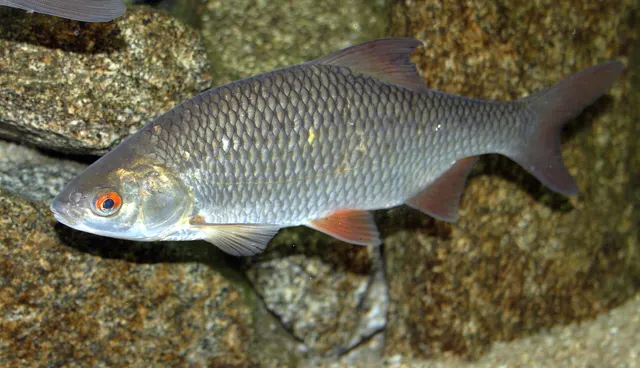 RoachThe most numerous and most frequently caught coarse fish across much of Europe, and the prey species that underpins the whole freshwater predator food web.
Karelj, Public domain, via Wikimedia Commons
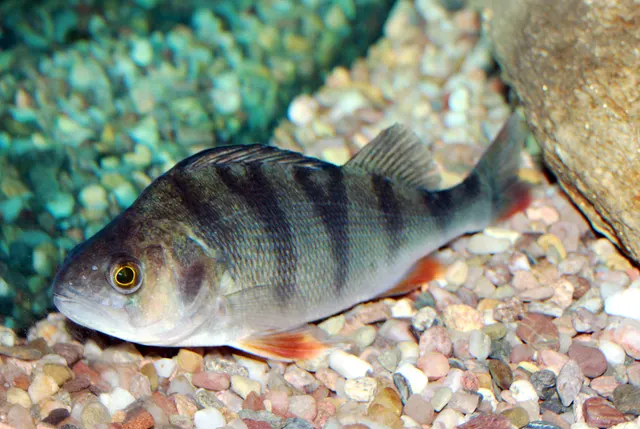 European perchA small, shoaling, spiny-finned predator that is both the most accessible predator to catch and the one most anglers first learn on.
Karelj, Public domain, via Wikimedia Commons
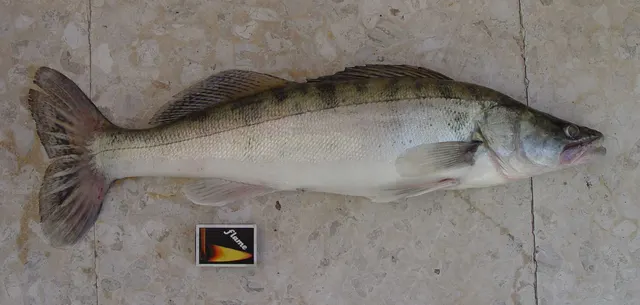 ZanderA shoaling freshwater predator built for hunting in low light and coloured water, and the fish that made a virtue of the conditions pike find difficult.
eLNuko — Public domain, via Wikimedia Commons
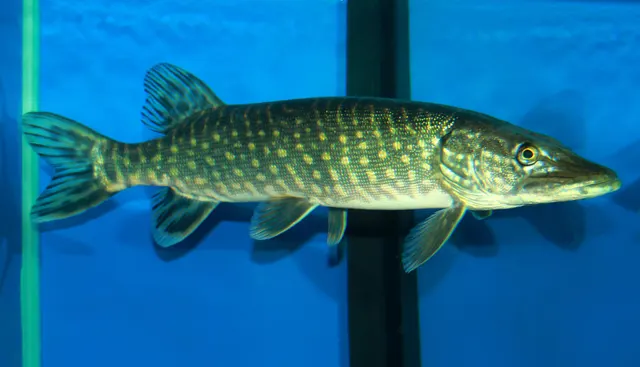 Northern pikeThe dominant freshwater ambush predator of the northern hemisphere: long, cryptic, and built for one violent acceleration rather than pursuit.
Karelj, Public domain, via Wikimedia Commons
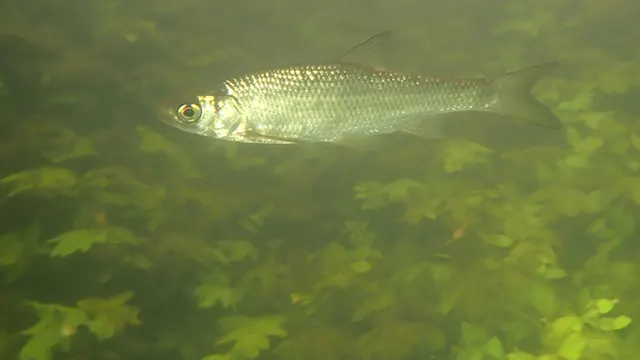 DaceA small, quick, silver river cyprinid separated from chub by the shape of one fin — the anal fin is concave in a dace and convex in a chub, and nothing else settles it as reliably.
Nicola Crockford — CC BY, via iNaturalist
Safety
Overhead power lines is set out at the top of this page, where it cannot be missed.
Drowning and immersion — Can cause injury needing treatment
Steep, hard, often vertical edges with no shallow margin, frequently piled or brick. A person entering the water may have no easy exit for a considerable distance, and canal banks are commonly wet, worn and slippery.
What reduces it: Stay back from the edge, particularly on piled or vertical sections. Know where the nearest ladder, slipway or shallow exit is before you settle. Do not fish alone at night on unlit towpath, and tell somebody where you are.
Biosecurity and disease transfer — Can cause injury needing treatment
Connected navigations are among the most effective corridors for spreading invasive species and disease that exist, because water bodies that would never naturally connect are joined by lock systems.
What reduces it: Clean, drain and dry everything between waters. Never move fish, water or live bait between systems — the spread of several invasive species through European canal networks happened exactly this way.
Precautions that always apply here
- Look up before you cast. Carbon rods conduct, and contact with overhead lines is regularly fatal.
- Tell somebody where you are going and when you expect to be back.
- Check, clean and dry your kit between different waters — the published guidance is 48 hours’ drying, in sunlight where possible, because a number of invasive species survive over two weeks in damp conditions. Nets, boots and wet mats move invasive species and disease more effectively than anything else anglers do.
- Never move live fish, live bait or water from one water to another.
Check the rules before you fish
Fishing laws, bylaws, access rules, seasons, bait restrictions and permitted methods vary by location and can change. Check the current rules from the relevant authority and the water you intend to fish before fishing.
Check with:
- Current national or regional law for where you are fishing
- Current local bylaws
- The relevant fisheries authority
- The landowner, club or fishery whose water it is
- Any restrictions specific to the species or the method you intend to use
Where to go next
Fish found here
- DacePresent in canals connected to river systems and in the faster canalised reaches, though far less characteristic of still canal water than roach.
- European perchAbundant on canals and increasingly a specimen fishery where prey and structure allow, holding around bridges, moored boats and lock approaches.
- GudgeonAbundant in canals with a firm bottom, where a gudgeon shoal over a clean patch is often the most reliable fishing available.
- Northern pikePresent throughout, holding against what little structure a uniform channel offers — bridges, moorings, marina entrances and far-bank cover.
- RoachThe traditional canal fish and still the numerical backbone of most navigations, holding on the shelves and along far-bank cover.
- ZanderSpread widely through connected navigations and now a principal predator on many, favouring the coloured water and low light that canals provide.
Reading this water
Sources and evidence
- Freshwater Fishes of the British Isles — HarperCollins (New Naturalist 75), 1992 (Reference work)Relied on for: Habitat character, water chemistry and the fish communities associated with the freshwater environments described.States this directlyCitation checked — the work exists and is described correctly
- Environment Agency fisheries management, byelaws and rod licensing information — Environment Agency (Government fisheries body)Relied on for: That freshwater fisheries in England are managed under a licensing framework, that still and running waters are treated differently, and that stocking and biosecurity are regulated activities.Background and mechanism onlyCitation checked — the work exists and is described correctly
Why the 7 connections on this page are here, and the sources
Fish found here
Backed by research — 6 connections
Supported by peer-reviewed research or fisheries science. The sources are listed and can be checked.
Dace
A distributional claim about where a species is found, which is a claim about the world and rests on regional reference works rather than on angling report.
- Freshwater Fishes of the British Isles — HarperCollins (New Naturalist 75), 1992 (Reference work)Relied on for: Distribution, habitat association, identification and life history of the freshwater fishes of the British Isles.States this directlyCitation checked — the work exists and is described correctly
- FishBase: a global information system on fishes — Froese, R. and D. Pauly, eds. — FishBase Consortium (Scientific institute)Relied on for: Distribution, habitat association, depth range, diet and reproductive parameters recorded for the species.States this directlyPassage read and verified
European perch
Habitat association recorded for the species, in an environment FishingHQ describes on its own page.
- Freshwater Fishes of the British Isles — HarperCollins (New Naturalist 75), 1992 (Reference work)Relied on for: Habitat association and distribution of European freshwater fishes, including occurrence in artificial and modified waters.States this directlyCitation checked — the work exists and is described correctly
- FishBase: a global information system on fishes — Froese, R. and D. Pauly, eds. — FishBase Consortium (Scientific institute)Relied on for: Habitat association, depth range and water-type tolerance recorded for the species.States this directlyPassage read and verified
Gudgeon
A distributional claim about where a species is found, which is a claim about the world and rests on regional reference works rather than on angling report.
- Freshwater Fishes of the British Isles — HarperCollins (New Naturalist 75), 1992 (Reference work)Relied on for: Distribution, habitat association, identification and life history of the freshwater fishes of the British Isles.States this directlyCitation checked — the work exists and is described correctly
- FishBase: a global information system on fishes — Froese, R. and D. Pauly, eds. — FishBase Consortium (Scientific institute)Relied on for: Distribution, habitat association, depth range, diet and reproductive parameters recorded for the species.States this directlyPassage read and verified
Northern pike
Habitat association recorded for the species, in an environment FishingHQ describes on its own page.
- Freshwater Fishes of the British Isles — HarperCollins (New Naturalist 75), 1992 (Reference work)Relied on for: Habitat association and distribution of European freshwater fishes, including occurrence in artificial and modified waters.States this directlyCitation checked — the work exists and is described correctly
- FishBase: a global information system on fishes — Froese, R. and D. Pauly, eds. — FishBase Consortium (Scientific institute)Relied on for: Habitat association, depth range and water-type tolerance recorded for the species.States this directlyPassage read and verified
Roach
Habitat association recorded for the species, in an environment FishingHQ describes on its own page.
- Freshwater Fishes of the British Isles — HarperCollins (New Naturalist 75), 1992 (Reference work)Relied on for: Habitat association and distribution of European freshwater fishes, including occurrence in artificial and modified waters.States this directlyCitation checked — the work exists and is described correctly
- FishBase: a global information system on fishes — Froese, R. and D. Pauly, eds. — FishBase Consortium (Scientific institute)Relied on for: Habitat association, depth range and water-type tolerance recorded for the species.States this directlyPassage read and verified
Zander
Habitat association recorded for the species, in an environment FishingHQ describes on its own page.
- Freshwater Fishes of the British Isles — HarperCollins (New Naturalist 75), 1992 (Reference work)Relied on for: Habitat association and distribution of European freshwater fishes, including occurrence in artificial and modified waters.States this directlyCitation checked — the work exists and is described correctly
- FishBase: a global information system on fishes — Froese, R. and D. Pauly, eds. — FishBase Consortium (Scientific institute)Relied on for: Habitat association, depth range and water-type tolerance recorded for the species.States this directlyPassage read and verified
Reading this water
What experienced anglers do — 1 connection
Widely and independently recommended by experienced anglers and specialist sources. This is real angling knowledge, not proof: controlled evidence for it is limited, and FishingHQ records it as convention rather than as a demonstrated effect.
Fenland drains and lowland waterways
The physical or biological reason behind a situation. Where that reason is documented science the page for it carries the citation; the association itself is practitioner observation and is labelled as such.
- Freshwater Fishing — Macdonald & Jane's, 1975 (Specialist angling publication)Relied on for: Comprehensive freshwater angling practice including water reading, river conditions, seasonal behaviour and the reasoning behind them.States this directlyCitation checked — the work exists and is described correctly
- Coarse Fishing — A. & C. Black, 1912 (Specialist angling publication)Relied on for: Classical coarse angling practice: swim selection, river and stillwater reading and seasonal observation.States this directlyCitation checked — the work exists and is described correctly
How FishingHQ labels evidence is explained in the evidence policy.