The IJsselmeer
Fishing regions · Last reviewed 2026-08-15
An arm of the North Sea closed off by a dam in 1932 and turned fresh — now the largest lake in western Europe by area, where every feature of the habitat, from the depth to the fish community, is an engineering consequence.
Safety: boat safety — can cause serious injury or death. 2 more points apply here.
Being listed here is not permission to fish. What that meansClose
Access, fishing rights, seasons, licences, local bylaws and permitted methods vary and can change. Check current access, permission, local regulations, closures and restrictions before you travel or fish. FishingHQ describes what the ground is and names who holds the answer; it does not hold the answer itself.
Find the authority for a jurisdiction · What FishingHQ does and does not cover
The IJsselmeer was the Zuiderzee, a shallow arm of the North Sea reaching deep into the Netherlands. In 1932 the Afsluitdijk closed it off, and over the following years the water freshened as the IJssel river flushed the salt out.
THE RESULT IS A HABITAT MADE BY DECISION. A large, shallow, wind-swept freshwater lake of a few metres' average depth, with a hard engineered shoreline over much of its length, sluices at the dam, and a further division created when the Houtribdijk split off the Markermeer. Nothing about the water body is natural, and that is the point of the record.
THE ECOLOGICAL TRANSITION WAS COMPLETE AND FAST. A marine and estuarine fish community — herring, flatfish, the Zuiderzee's famous anchovy fishery — was replaced within a few decades by a freshwater one. The fishing towns around the shore lost the fishery that had defined them and became something else.
WHAT REPLACED IT IS ONE OF EUROPE'S GREAT PREDATOR FISHERIES. Zander, in particular, thrive in the shallow wind-stirred coloured water, which suits their low-light vision precisely. Pike, perch, bream and roach are abundant. European eel are present and are the subject of serious conservation concern across their whole range.
AND THE PERMISSION STRUCTURE IS UNLIKE ANY OTHER IN THIS SET. The principal Dutch angling document is issued through the national anglers' federation and its affiliated clubs rather than directly by the state — a delegated model that a visitor expecting a government licence counter will not recognise.
What fishing here is like
A large, shallow, wind-driven freshwater lake made from an arm of the sea, with an engineered shoreline, sluices, dykes and a divided basin. Water is coloured and frequently stirred, average depth is only a few metres, and there is almost no shelter from wind anywhere on it.
The angling culture is strongly predator-focused and boat-based, with a large and skilled Dutch zander and pike tradition, alongside a substantial bank and match culture on the surrounding canal and polder water.
How people fish here
3 methods are recorded on the places documented here, counted from the records themselves rather than from what is practised in the country. Each opens a full guide to the technique.
Drop shotting
Recorded at 1 place here, over lake.
A finesse rig with the weight below the hook, letting a small soft plastic be worked in place, off the bottom, without moving anywhere.
Jigging
Recorded at 1 place here, over lake.
Working a weighted lure with a rising-and-falling motion, usually vertically, so it behaves like a wounded or fleeing baitfish.
Trolling
Recorded at 1 place here, over lake.
Towing lures or baits behind a moving boat to cover large volumes of water and locate scattered fish.
These are the methods documented at the places FishingHQ holds here. A species listed beside a method is documented on the same ground, which is not the same as being taken that way — where a source establishes the method a fish was caught on, it is stated on that place’s own page. All fishing methods.
What dominates
Zander fishing, which is the water's signature — vertical jigging from a drifting boat, trolling, and light lure work along structure, with a highly developed Dutch method culture behind it. Pike fishing on lures and dead baits, both boat and bank. Perch fishing on structure and around harbour works. Bream and roach fishing on feeder and pole tackle, which is a major organised discipline in the Netherlands. Bank fishing along the dykes and harbour walls, which is how much of the accessible fishing is done. Fishing the connected polder canals and the Markermeer as separate waters with their own character.
The water available
A large shallow open basin of a few metres' average depth, wind-stirred and coloured. Hard engineered shoreline — dykes, revetment, rock armour — over much of the perimeter, which is itself the principal structure. The Afsluitdijk and its sluices at the northern end, where fresh meets salt. The Houtribdijk dividing the IJsselmeer from the Markermeer. Harbours and marinas providing shelter and structure. The IJssel river inflow. Connected polder canals and ditches surrounding the whole system.
How the rules are structured
The Netherlands runs a delegated model: the principal angling document is issued through the national anglers' federation and its affiliated clubs rather than over a government counter, and it is accompanied by a list specifying which waters it covers and under what conditions. That is unfamiliar to visitors from countries with a state licence and is the first thing to establish. Beyond it, specific waters, methods and species carry their own conditions, and rules on night fishing, on the number of rods, on live bait, on boat use and on retention are subject to both national rules and water-specific ones. The European eel is under conservation measures across its range and the Netherlands applies specific restrictions concerning it. Commercial fishing operates on the IJsselmeer alongside angling under separate arrangements, and its gear is in the water. Parts of the system carry nature designations with access and disturbance constraints, particularly for birds. FishingHQ does not state what any current rule is: obtain the correct current documents through the Dutch angling federation route, check the accompanying water list for the specific water, and confirm species and method conditions before fishing.
Who to ask
- The Dutch national anglers' federation and its affiliated local clubs, which is the route through which the principal angling documents are issued
- The national water authority responsible for the IJsselmeer system, for water level, sluice operation and navigation
- The provincial authority for the province concerned, for regional fisheries and nature matters
- The nature-site management body, where a part of the system carries a designation with access or disturbance constraints
- The harbour or marina operator, for launching, mooring and local navigation arrangements
Words you will meet
- Afsluitdijk
- The barrier dam completed in 1932 that closed the Zuiderzee off from the sea and created the IJsselmeer. Its sluices still control the exchange between fresh and salt, and it is the single structure that made this water what it is.
- Snoekbaars
- Zander in Dutch — literally 'pike-perch'. The word appears on every local report and shop shelf, and Dutch zander fishing is among the most methodically developed anywhere.
- VISpas
- The principal Dutch angling document, issued through the anglers' federation and affiliated clubs and accompanied by a list of the waters it covers. Not a state licence, and the distinction matters when looking for where to get one.
- Polder
- Land reclaimed from water and held below sea level by dykes and pumping. The canals and ditches draining polders are fisheries in their own right and surround the whole IJsselmeer system.
Conditions and hazards
The IJsselmeer is shallow and open, which is a dangerous combination rather than a reassuring one. Shallow water builds a short, steep, breaking sea very quickly in wind, and there is almost no natural shelter anywhere on it. Small boats get caught out here regularly.
Wind is the governing factor in every decision. Conditions can become unmanageable within a short period, and the distance to a sheltering harbour is often substantial.
The engineered shoreline is hard: rock armour and revetment are slippery when wet, uneven, and unforgiving to fall on, and getting back out of the water against a steep dyke face is extremely difficult.
Sluice operation at the dam creates strong local flows.
Commercial fishing gear is set in the water and is a hazard to boats.
The water is cold for most of the year and cold-water shock is a genuine risk.
And shipping and recreational traffic are heavy in season on a water with defined navigation channels.
A sea closed off, and what the closing did
The Zuiderzee was a shallow arm of the North Sea reaching into the Netherlands. In 1932 the Afsluitdijk closed it, and the IJssel river flushed the salt out over the following years.
THE PHYSICAL RESULT is a large, shallow, wind-driven freshwater lake averaging only a few metres deep, with an engineered shoreline over most of its perimeter and sluices at the dam controlling the exchange with the sea. The Houtribdijk later divided it again, creating the Markermeer as a separate body with its own character.
SHALLOW AND OPEN IS THE KEY COMBINATION. There is very little depth to absorb wind energy and almost no natural shelter, so the water stirs easily, colours readily and builds a short steep sea fast. That turbidity is not a defect — it is the habitat, and it is why the predator fishing is what it is.
THE HARD SHORELINE IS THE STRUCTURE. In a basin with little natural feature, dykes, revetment, rock armour, harbour walls and the dam itself are where fish hold. The engineering that made the lake also furnished it.
AND THE SURROUNDING POLDER SYSTEM — canals and ditches draining land held below sea level — is a connected freshwater network and a fishery in its own right.
Backed by research — why, and the sources (2)
Supported by peer-reviewed research or fisheries science. The sources are listed and can be checked.
- The Fishes of the British Isles and North-West Europe — Macmillan, 1969 (Reference work)Relied on for: Distribution, habitat and biology of the fishes of the British Isles and north-west Europe.States this directlyCitation checked — the work exists and is described correctly
- FishBase: a global information system on fishes — Froese, R. and D. Pauly, eds. — FishBase Consortium (Scientific institute)Relied on for: Distribution, habitat association, life history, size and feeding behaviour recorded for the species concerned.States this directlyPassage read and verified
A fish community that replaced another one within living memory
THE OLD COMMUNITY WAS MARINE. The Zuiderzee supported herring, anchovy, flatfish and shellfish fisheries that sustained the towns around its shore for centuries. The closure ended all of it within a few decades.
ZANDER ARE THE MODERN SIGNATURE. Shallow, coloured, wind-stirred water suits a predator whose eyes are built for low light, and the IJsselmeer system is among the best zander water in Europe. Dutch zander fishing is correspondingly among the most methodically developed anywhere.
PIKE are abundant in the shallower and weedier areas and around structure, and reach good sizes.
PERCH work the harbour works, rock armour and structure in numbers, and are a mainstay of both local and visiting fishing.
BREAM AND ROACH are present in very large quantities and support a major organised match and feeder culture.
EUROPEAN EEL are present and are the serious conservation matter here. The species is assessed at high extinction risk across its whole range, recruitment has fallen dramatically, and management measures apply. An eel encountered on the IJsselmeer is not an incidental catch to be treated casually.
AND SMELT and other forage species drive the predator fishing, as they do on the Nordic great lakes.
Backed by research — why, and the sources (2)
Supported by peer-reviewed research or fisheries science. The sources are listed and can be checked.
- FishBase: a global information system on fishes — Froese, R. and D. Pauly, eds. — FishBase Consortium (Scientific institute)Relied on for: Distribution, habitat association, life history, size and feeding behaviour recorded for the species concerned.States this directlyPassage read and verified
- The IUCN Red List of Threatened Species — International Union for Conservation of Nature (Conservation authority)Relied on for: Global extinction-risk assessment, population trend and identified threats for the species concerned.States this directlyCitation checked — the work exists and is described correctly
Vertical jigging, and a method culture worth learning from
VERTICAL FISHING FOR ZANDER is the discipline the Dutch have developed furthest. A boat drifting with the wind over marked fish, a soft plastic worked directly beneath it, a sounder showing both the fish and the lure, and an approach that treats the boat's drift as the presentation. It is precise, it is technical, and it is genuinely different from British lure fishing.
TROLLING covers water for zander and pike where drifting will not, and works the deeper channels and the dam.
BANK LURE FISHING along the dykes, rock armour and harbour walls is how much of the accessible fishing is done, and the hard shoreline is the feature that makes it viable.
DEAD-BAIT PIKE FISHING works the shallower and weedier areas and the harbours, and is recognisable to a British angler.
FEEDER AND POLE FISHING for bream and roach is a large, organised and highly skilled discipline in the Netherlands, and the polder canals are as much its home as the big water.
AND THE WIND SETS THE DAY. On a shallow open basin the wind decides where the coloured water is, where the drift can run, and whether a small boat goes out at all — which makes it the first thing checked and the last thing argued with.
What experienced anglers do — why, and the sources (2)
Widely and independently recommended by experienced anglers and specialist sources. This is real angling knowledge, not proof: controlled evidence for it is limited, and FishingHQ records it as convention rather than as a demonstrated effect.
- General angling website restatements of established technique — Various (Credible secondary source)Relied on for: Widely restated descriptions of European venue character and method convention, recorded as practitioner consensus rather than as scholarship.Background and mechanism onlyCitation checked — the work exists and is described correctly
- Pike: Biology and Exploitation — Chapman & Hall (Fish and Fisheries Series 19), 1996 (Scientific literature)Relied on for: The biology, growth, feeding ecology and population dynamics of pike across its Holarctic range.States this directlyCitation checked — the work exists and is described correctly
A year on shallow water
SPRING warms a shallow basin quickly, and the predator fishing responds early. Pike are in the shallows and zander begin to move as water temperature climbs.
EARLY SUMMER brings the most comfortable conditions and active perch and bream fishing, though bright still weather can make clear-water zander difficult in a system that fishes best when it is stirred.
HIGH SUMMER can be hard on a shallow lake: warm water, weed in the sheltered areas, and predator fishing that concentrates into low light at dawn and dusk.
AUTUMN is widely regarded as the strongest period. Cooling water, wind stirring colour back into the system, and predators feeding hard produce the best zander and pike fishing of the year.
WINTER concentrates fish into deeper channels and harbours and makes location the whole problem, with cold and exposure the limiting factors rather than the fish.
CLOSED SEASONS AND SPECIES MEASURES are regulatory, they change, and they are not stated here.
What experienced anglers do — why, and the sources (2)
Widely and independently recommended by experienced anglers and specialist sources. This is real angling knowledge, not proof: controlled evidence for it is limited, and FishingHQ records it as convention rather than as a demonstrated effect.
- General angling website restatements of established technique — Various (Credible secondary source)Relied on for: Widely restated descriptions of European venue character and method convention, recorded as practitioner consensus rather than as scholarship.Background and mechanism onlyCitation checked — the work exists and is described correctly
- FishBase: a global information system on fishes — Froese, R. and D. Pauly, eds. — FishBase Consortium (Scientific institute)Relied on for: Distribution, habitat association, life history, size and feeding behaviour recorded for the species concerned.States this directlyPassage read and verified
Four Dutch words that explain the whole system
AFSLUITDIJK is the barrier dam that closed the Zuiderzee in 1932 and made this water fresh. Its sluices still control what passes between the lake and the sea, and every other fact on this page follows from it.
SNOEKBAARS is zander — literally 'pike-perch'. It is the word in every local report, forecast and tackle shop, and Dutch zander practice is worth reading in its own language.
VISPAS is the principal Dutch angling document, issued through the anglers' federation and affiliated clubs rather than over a government counter, and accompanied by a list of the waters it covers. A visitor looking for a state licence office is looking in the wrong place, which is why the word matters more than most.
POLDER is reclaimed land held below sea level by dykes and pumping. The canals and ditches that drain polders are extensive, connected and fishable, and they surround the whole IJsselmeer system.
AND MARKERMEER names the basin split off by the Houtribdijk. It is administratively and physically part of the same story and it fishes differently, so treating the two as one water is a mistake both practically and in looking up what applies.
What experienced anglers do — why, and the sources (2)
Widely and independently recommended by experienced anglers and specialist sources. This is real angling knowledge, not proof: controlled evidence for it is limited, and FishingHQ records it as convention rather than as a demonstrated effect.
- General angling website restatements of established technique — Various (Credible secondary source)Relied on for: Widely restated descriptions of European venue character and method convention, recorded as practitioner consensus rather than as scholarship.Background and mechanism onlyCitation checked — the work exists and is described correctly
- FishBase: a global information system on fishes — Froese, R. and D. Pauly, eds. — FishBase Consortium (Scientific institute)Relied on for: Distribution, habitat association, life history, size and feeding behaviour recorded for the species concerned.States this directlyPassage read and verified
A licence that does not come from the government
THE DUTCH MODEL IS DELEGATED, and that is the practical point for a visitor. The principal angling document is issued through the national anglers' federation and its affiliated local clubs rather than by a state licensing counter, and it comes with a list specifying which waters it covers and on what conditions. Someone searching for a government fishing licence website will struggle, not because the information is hidden but because the structure is different from what they expect.
WATER-SPECIFIC CONDITIONS SIT ON TOP. Methods, rod numbers, night fishing, boat use, live bait and retention are governed by a combination of national rules and conditions attaching to the particular water, and the accompanying list is where those are found.
EUROPEAN EEL IS THE SPECIES TO ASK ABOUT FIRST. The species is under conservation measures across its range, the Netherlands applies specific restrictions, and this is not an area for assumption.
COMMERCIAL FISHING operates on the IJsselmeer alongside angling under separate arrangements, and its gear is in the water anglers fish over.
NATURE DESIGNATIONS cover parts of the system, particularly for birds, and carry access and disturbance constraints that apply regardless of any fishing document.
FISHINGHQ STATES NO CURRENT RULE AND ASSERTS NO PERMISSION. Obtain the current documents through the Dutch angling federation route, read the water list for the specific water, and confirm species and method conditions before fishing.
Official guidance — why, and the sources (2)
Stated by a fisheries authority, scientific institute or recognised angling body. Authoritative, but summarising rather than demonstrating.
- Code of Conduct for Responsible Fisheries — Food and Agriculture Organization of the United Nations, Rome, 1995 (Standards body)Relied on for: International principles for responsible fisheries, including the layering of national and regional authority and the management of shared and transboundary waters.States this directlyCitation checked — the work exists and is described correctly
- The IUCN Red List of Threatened Species — International Union for Conservation of Nature (Conservation authority)Relied on for: Global extinction-risk assessment, population trend and identified threats for the species concerned.States this directlyCitation checked — the work exists and is described correctly
The towns that lost their sea
The IJsselmeer's history is unusually short and unusually documented, because the thing that made it happened within living memory of the generation before last.
THE ZUIDERZEE FISHERY WAS SUBSTANTIAL AND OLD. Herring, anchovy and flatfish supported a ring of fishing towns — Volendam, Urk, Enkhuizen among the names — with their own fleets, gear, dress and identity. Dutch inland and coastal fisheries had been organised, tenured and regulated for centuries before that, in the same European pattern of fishery as property and as managed food supply.
THE AFSLUITDIJK ENDED IT IN 1932. The closure was undertaken for flood protection and land reclamation, and the fishery was a known cost of it. Compensation arrangements were made; the fishery still ended.
THE TOWNS ADAPTED, some into freshwater fishing, some into other trades and tourism, and the maritime identity became heritage rather than occupation. Urk retained a fishing industry by reorienting to the sea beyond the dam.
THE MODERN ANGLING CULTURE that grew on the fresh water is Dutch predator fishing at a high level of development — organised, methodical, technically inventive, and exported through European lure fishing generally.
AND THE WHOLE THING IS A CASE STUDY. A country decided to convert a sea into a lake, and it worked: the flood protection was achieved, the land was made, and an entire ecosystem and the economy resting on it were replaced. Both halves of that belong in the record.
What experienced anglers do — why, and the sources (2)
Widely and independently recommended by experienced anglers and specialist sources. This is real angling knowledge, not proof: controlled evidence for it is limited, and FishingHQ records it as convention rather than as a demonstrated effect.
- Fishers' Craft and Lettered Art: Tracts on Fishing from the End of the Middle Ages — University of Toronto Press, 1997 (Scientific literature)Relied on for: Medieval and early-modern European fishing practice, fishery organisation, and the legal and tenurial arrangements governing rivers, lakes and ponds.States this directlyCitation checked — the work exists and is described correctly
- General angling website restatements of established technique — Various (Credible secondary source)Relied on for: Widely restated descriptions of European venue character and method convention, recorded as practitioner consensus rather than as scholarship.Background and mechanism onlyCitation checked — the work exists and is described correctly
Shallow water makes a worse sea than deep water, and there is no lee
The IJsselmeer was the Zuiderzee until 1932 and it still behaves like a sea rather than like a lake, but with one difference that catches out people who know both: it is shallow, and shallow water makes the sea state worse rather than better.
THE MECHANISM IS WORTH UNDERSTANDING BECAUSE IT IS COUNTER-INTUITIVE. In deep water, wind-driven waves are long and comparatively gentle for their height — a swell lifts a boat and puts it down. In shallow water the wave cannot develop its full form, so the same energy is expressed as a shorter, steeper, closer-spaced sea that breaks. The IJsselmeer averages only a few metres deep over an area of roughly a thousand square kilometres. A wind that would produce an uncomfortable chop on a deep lake produces a genuinely dangerous short breaking sea here, and it does it fast because a shallow basin has almost no thermal or mechanical inertia.
THE FETCH IS THE OTHER HALF. This is an unobstructed body of water tens of kilometres across in every direction, with dead-flat reclaimed land around it. There is no hill to break the wind, no headland to hide behind and, critically, NO NATURAL LEE SHORE ANYWHERE. On a coast with topography there is always a side that is sheltered. Here the shelter is whichever dyke happens to be upwind, and a dyke is not a harbour.
AND THE DYKE IS WHY THE BANK IS THE OTHER HAZARD. The margins are hard engineered revetment — basalt block, concrete, rock armour, frequently sloping and frequently below water at the toe. It is a poor place to stand and a very poor place to be washed against: it is slippery when wet or weeded, it offers nothing to hold, and a person in the water beside it has no beach to be carried onto and no ladder except where one was built. Falling in from a dyke is not the same event as falling in from a bank.
WHAT FOLLOWS PRACTICALLY. Treat the wind forecast for the whole intended session as the deciding input rather than the conditions at launch, because the sea here builds in under an hour. Wear a buoyancy aid rather than carry one, because the water is cold enough for most of the year for cold water shock to decide the outcome in the first minute. And identify where you can actually get out of the water before you need to, because on a revetted shore that is a much shorter list than it looks.
Official guidance — why, and the sources (3)
Stated by a fisheries authority, scientific institute or recognised angling body. Authoritative, but summarising rather than demonstrating.
- Met Office shipping forecast, inshore waters forecast and marine warnings — Met Office, United Kingdom (Government fisheries body)Relied on for: That marine and inshore forecasts, sea state, swell and wind are the operative inputs for shore and small-craft decisions, and the spatial and temporal resolution at which such forecasts are issued.States this directlyCitation checked — the work exists and is described correctly
- NOAA National Weather Service marine forecasts and marine weather services — National Oceanic and Atmospheric Administration, United States (Government fisheries body)Relied on for: Marine forecasting practice, the interpretation of sea state and swell products, and the limits of forecast resolution in coastal and enclosed waters.States this directlyCitation checked — the work exists and is described correctly
- RNLI water safety guidance: cold water shock and Float to Live — Royal National Lifeboat Institution (Water-safety or diver-training authority)Relied on for: Cold water shock and the immersion response, tidal cut-off, and water-safety guidance for shore anglers and small-craft users.States this directlyPassage read and verified
Some of what lives here
Fish recorded here that FishingHQ holds a reviewed photograph of. It is not a complete list of what The IJsselmeer holds, and it is not a prediction that you will catch any of them — it is a way in to the ones we can show you.
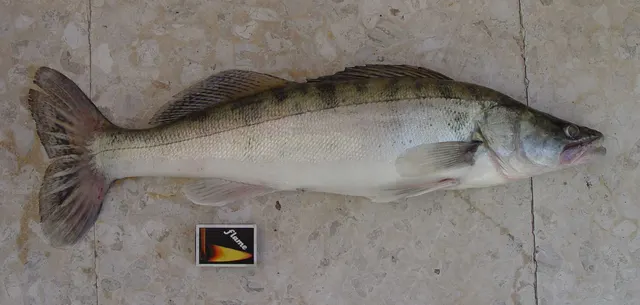 ZanderA shoaling freshwater predator built for hunting in low light and coloured water, and the fish that made a virtue of the conditions pike find difficult.
eLNuko — Public domain, via Wikimedia Commons
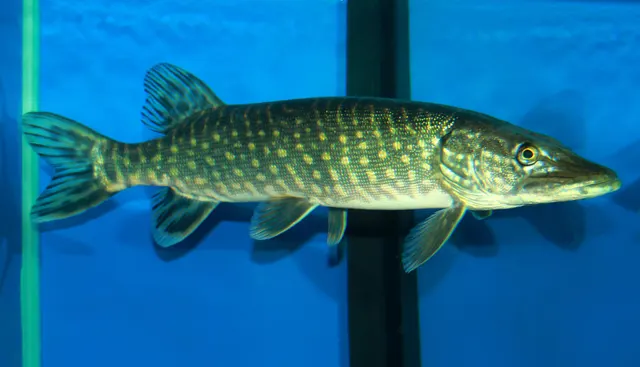 Northern pikeThe dominant freshwater ambush predator of the northern hemisphere: long, cryptic, and built for one violent acceleration rather than pursuit.
Karelj, Public domain, via Wikimedia Commons
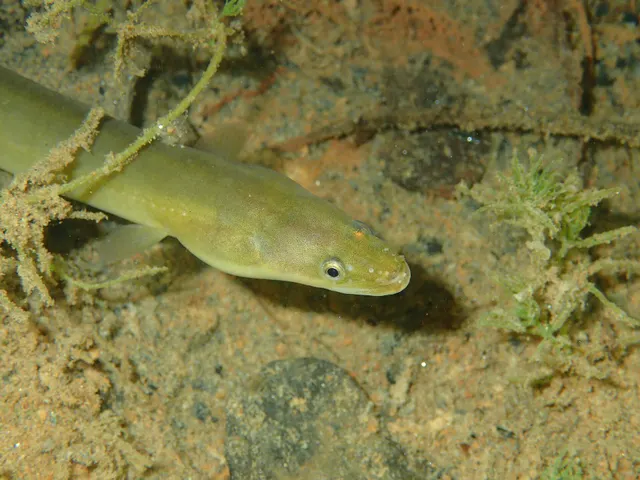 European eelA Critically Endangered fish that breeds in the Sargasso Sea, drifts to Europe as a transparent larva, lives decades in fresh water and returns once to spawn and die.
jujurenoult — CC BY 4.0, via Wikimedia Commons
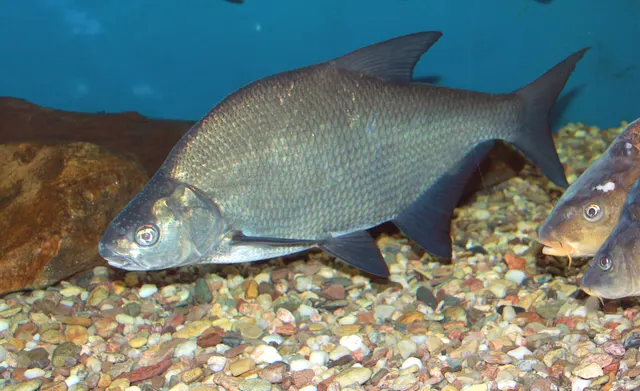 Common breamA deep-bodied, slow-moving shoal fish that feeds in large groups over soft bottoms and can transform a swim when it arrives.
Karelj, Public domain, via Wikimedia Commons
Places within this area
Publicly documented fishing geography. FishingHQ describes what the ground is; it does not say whether you may fish it, and every one of these sends that question to the body that holds the answer. Browse every place in this part of the world.
Who to ask before fishing any of these
FishingHQ does not know the current access position here. Dutch inland angling runs through a single document issued by the angling federation and its member associations, which functions as both the licence and the permission for the waters listed with it — and a water not on that list needs its own arrangement. Methods, seasons and the night-fishing and third-rod permissions are separate again, and all of them change. Check with the national angling federation and the local association before going.
The Markermeer
Lake · Fresh water
The southern basin of the former Zuiderzee, cut off from the IJsselmeer by a dike and from the sea by another: a very large, very shallow, wind-stirred freshwater lake with a soft silt bed and stone-revetted dikes around most of its edge.
Extremely exposed. A long fetch over water only a few metres deep builds a short, steep, breaking sea within a short time of the wind getting up, and there is very little shelter.
Particular to this ground: cold water shock, weather and lightning.
Severe hazards of The IJsselmeer apply here: boat safety.
Particular to this water: This is working water-management or navigation infrastructure, operated to a schedule set by its authority rather than by anything happening in the fishing, and access to it is that authority's decision.
Safety
Boat safety — Can cause serious injury or death
Shallow open water builds a short, steep, breaking sea extremely quickly in wind, and there is almost no natural shelter anywhere on the IJsselmeer. Conditions can become unmanageable for a small boat within a short period, often with a substantial distance to the nearest sheltering harbour.
What reduces it: Treat wind as the governing decision rather than one factor among several, check the forecast for the whole session rather than the start of it, plan a route with harbours you can reach before conditions build, wear buoyancy, and go in early rather than at the last reasonable moment.
Slips, trips and falls — Can cause injury needing treatment
Much of the shoreline is engineered — rock armour, revetment and steep dyke faces — which is slippery when wet, uneven underfoot, and unforgiving in a fall. Getting back out of the water against a steep armoured face is extremely difficult even for a strong swimmer.
What reduces it: Wear footwear with genuine grip on wet rock, do not fish alone on armoured shoreline, identify a realistic exit point before you start rather than after you need one, and carry buoyancy on hard shoreline as you would on a boat.
Cold water shock — Can cause injury needing treatment
The water is cold for most of the year, and immersion produces the involuntary gasp and rapid loss of coordination that drowns competent swimmers — compounded here by a shoreline that offers few places to climb out.
What reduces it: Dress for the water rather than the air, wear a buoyancy aid on boats and on steep hard shoreline, and treat a fall in as a situation requiring immediate help rather than one to swim out of.
Further safety reading
- Boat safety for anglers — Shallow open water builds a short steep breaking sea extremely quickly in wind, with almost no natural shelter anywhere on it and often a substantial distance to the nearest sheltering harbour.
Check the rules before you fish
Fishing laws, bylaws, access rules, seasons, bait restrictions and permitted methods vary by location and can change. Check the current rules from the relevant authority and the water you intend to fish before fishing.
Check with:
- Current national or regional law for where you are fishing
- Current local bylaws
- The relevant fisheries authority
- The landowner, club or fishery whose water it is
- Any restrictions specific to the species or the method you intend to use
Where to go next
What swims here
- Common breamPresent in very large quantities and supporting a major organised match and feeder culture across the connected polder waters as well as the open lake.
- European eelPresent in a system that was an arm of the sea until 1932, on a species assessed at high extinction risk across its whole range and subject to specific conservation measures.
- Northern pikeAbundant in the shallower and weedier areas and around the engineered structure that furnishes an otherwise featureless basin.
- ZanderThe water's signature fish. Shallow wind-stirred coloured water suits a predator whose eyes are built for low light, and the system is among the best zander water in Europe.
Local knowledge
- Lure colour, water clarity and depthShallow, stirred and coloured water is precisely what a zander's low-light vision is built for, and it is why the IJsselmeer became a predator fishery rather than something else when the salt went out of it.
- Wind, and where it puts the foodOn a basin averaging a few metres deep with no shelter anywhere, the wind decides where the coloured water is, where the drift can run and where the fish feed. It is the first thing checked and the last thing argued with.
How this compares
Rules and access
Environment and conservation
Sources and evidence
- FishBase: a global information system on fishes — Froese, R. and D. Pauly, eds. — FishBase Consortium (Scientific institute)Relied on for: Distribution, habitat association, life history, size and feeding behaviour recorded for the species concerned.States this directlyPassage read and verified
- The IUCN Red List of Threatened Species — International Union for Conservation of Nature (Conservation authority)Relied on for: Global extinction-risk assessment, population trend and identified threats for the species concerned.States this directlyCitation checked — the work exists and is described correctly
- Code of Conduct for Responsible Fisheries — Food and Agriculture Organization of the United Nations, Rome, 1995 (Standards body)Relied on for: International principles for responsible fisheries, including the layering of national and regional authority and the management of shared and transboundary waters.States this directlyCitation checked — the work exists and is described correctly
Why the 11 connections on this page are here, and the sources
What swims here
Backed by research — 4 connections
Supported by peer-reviewed research or fisheries science. The sources are listed and can be checked.
Common bream
A distributional claim taken from reference works and databases on the fishes of the region rather than from angling report. It states presence and asserts nothing about a fishery.
- FishBase: a global information system on fishes — Froese, R. and D. Pauly, eds. — FishBase Consortium (Scientific institute)Relied on for: Distribution, habitat association, life history and size recorded for the species concerned.States this directlyPassage read and verified
- Freshwater Fishes of the British Isles — HarperCollins (New Naturalist 75), 1992 (Reference work)Relied on for: Biology, distribution, life history and conservation status of northern European freshwater and diadromous fishes.States this directlyCitation checked — the work exists and is described correctly
European eel
A distributional claim taken from reference works and databases on the fishes of the region rather than from angling report. It states presence and asserts nothing about a fishery.
- The IUCN Red List of Threatened Species — International Union for Conservation of Nature (Conservation authority)Relied on for: Global extinction-risk assessment, population trend and identified threats for the species concerned.States this directlyCitation checked — the work exists and is described correctly
- FishBase: a global information system on fishes — Froese, R. and D. Pauly, eds. — FishBase Consortium (Scientific institute)Relied on for: Distribution, habitat association and life history recorded for the species concerned.States this directlyPassage read and verified
Northern pike
A distributional claim taken from reference works and databases on the fishes of the region rather than from angling report. It states presence and asserts nothing about a fishery.
- Pike and the Pike Angler — Stanley Paul, 1981 (Specialist angling publication)Relied on for: Predator angling practice on large waters, including deep-water location, trolling and the handling of very large fish.States this directlyCitation checked — the work exists and is described correctly
- Pike: Biology and Exploitation — Chapman & Hall (Fish and Fisheries Series 19), 1996 (Scientific literature)Relied on for: The biology, growth, feeding ecology and habitat use of pike across its Holarctic range.States this directlyCitation checked — the work exists and is described correctly
Zander
A distributional claim taken from reference works and databases on the fishes of the region rather than from angling report. It states presence and asserts nothing about a fishery.
- FishBase: a global information system on fishes — Froese, R. and D. Pauly, eds. — FishBase Consortium (Scientific institute)Relied on for: Distribution, habitat association, life history and size recorded for the species concerned.States this directlyPassage read and verified
- Freshwater Fishes of the British Isles — HarperCollins (New Naturalist 75), 1992 (Reference work)Relied on for: Biology, distribution, life history and conservation status of northern European freshwater and diadromous fishes.States this directlyCitation checked — the work exists and is described correctly
How people fish here
What experienced anglers do — 1 connection
Widely and independently recommended by experienced anglers and specialist sources. This is real angling knowledge, not proof: controlled evidence for it is limited, and FishingHQ records it as convention rather than as a demonstrated effect.
Lure fishing
Which branch of fishing dominates a water is a statement about practice rather than about the place, and is recorded as convention.
- General angling website restatements of established technique — Various (Credible secondary source)Relied on for: Widely restated descriptions of European venue character and method convention, recorded as consensus rather than as scholarship.Background and mechanism onlyCitation checked — the work exists and is described correctly
- Angling Times — Bauer Media (Specialist angling publication)Relied on for: Contemporary angling practice as reported by practitioners, including continental destination fishing undertaken from the UK.States this directlyCitation checked — the work exists and is described correctly
Local knowledge
What experienced anglers do — 2 connections
Widely and independently recommended by experienced anglers and specialist sources. This is real angling knowledge, not proof: controlled evidence for it is limited, and FishingHQ records it as convention rather than as a demonstrated effect.
Lure colour, water clarity and depth
A place joined to the mechanism that explains what is distinctive about fishing there, which is what makes a location page transferable rather than local colour.
- General angling website restatements of established technique — Various (Credible secondary source)Relied on for: Widely restated descriptions of European venue character and method convention, recorded as consensus rather than as scholarship.Background and mechanism onlyCitation checked — the work exists and is described correctly
- Angling Times — Bauer Media (Specialist angling publication)Relied on for: Contemporary angling practice as reported by practitioners, including continental destination fishing undertaken from the UK.States this directlyCitation checked — the work exists and is described correctly
Wind, and where it puts the food
A place joined to the mechanism that explains what is distinctive about fishing there, which is what makes a location page transferable rather than local colour.
- General angling website restatements of established technique — Various (Credible secondary source)Relied on for: Widely restated descriptions of European venue character and method convention, recorded as consensus rather than as scholarship.Background and mechanism onlyCitation checked — the work exists and is described correctly
- Angling Times — Bauer Media (Specialist angling publication)Relied on for: Contemporary angling practice as reported by practitioners, including continental destination fishing undertaken from the UK.States this directlyCitation checked — the work exists and is described correctly
How this compares
What experienced anglers do — 1 connection
Widely and independently recommended by experienced anglers and specialist sources. This is real angling knowledge, not proof: controlled evidence for it is limited, and FishingHQ records it as convention rather than as a demonstrated effect.
The Norfolk Broads
Two records a reader will hold together, joined where the comparison teaches something neither states alone.
- General angling website restatements of established technique — Various (Credible secondary source)Relied on for: Widely restated descriptions of European venue character and method convention, recorded as consensus rather than as scholarship.Background and mechanism onlyCitation checked — the work exists and is described correctly
- Angling Times — Bauer Media (Specialist angling publication)Relied on for: Contemporary angling practice as reported by practitioners, including continental destination fishing undertaken from the UK.States this directlyCitation checked — the work exists and is described correctly
Safety reading
Official guidance — 1 connection
Stated by a fisheries authority, scientific institute or recognised angling body. Authoritative, but summarising rather than demonstrating.
Boat safety for anglers
A hazard characteristic of the water, joined to the topic that treats it in full, on guidance published by water safety bodies.
- RNLI water safety guidance: cold water shock and Float to Live — Royal National Lifeboat Institution (Water-safety or diver-training authority)Relied on for: Water safety guidance including immersion, cold water shock and the circumstances in which water users get into difficulty.States this directlyPassage read and verified
- RoSPA water safety information and UK accidental drowning statistics — Royal Society for the Prevention of Accidents (Water-safety or diver-training authority)Relied on for: Accident-prevention guidance on inland and open water, including small craft, banks, exposure and lone working.States this directlyPassage read and verified
Rules and access
Official guidance — 1 connection
Stated by a fisheries authority, scientific institute or recognised angling body. Authoritative, but summarising rather than demonstrating.
Who regulates fishing, and how to find your rules
This points to the kind of rule that applies rather than to a rule itself. The structure is described from published sources; what any current rule requires is a matter for the competent authority and is not stated here.
- Code of Conduct for Responsible Fisheries — Food and Agriculture Organization of the United Nations, Rome, 1995 (Standards body)Relied on for: International principles for responsible fisheries including the role, layering and co-ordination of national and regional authorities over shared waters.States this directlyCitation checked — the work exists and is described correctly
- Good Fish Guide — Marine Conservation Society (Conservation authority)Relied on for: Synthesis of stock and management information across jurisdictions, including how measures are set and revised.Background and mechanism onlyCitation checked — the work exists and is described correctly
Environment and conservation
Official guidance — 1 connection
Stated by a fisheries authority, scientific institute or recognised angling body. Authoritative, but summarising rather than demonstrating.
Fish stocks and sustainability
An environmental claim about a named water, limited to what the cited assessment and international guidance set out.
- The IUCN Red List of Threatened Species — International Union for Conservation of Nature (Conservation authority)Relied on for: Extinction-risk assessment, population trend and the threats identified for freshwater and diadromous species, including barriers to migration and exploitation.States this directlyCitation checked — the work exists and is described correctly
- Code of Conduct for Responsible Fisheries — Food and Agriculture Organization of the United Nations, Rome, 1995 (Standards body)Relied on for: International principles for responsible fisheries, including the management of shared and transboundary waters and of introduced species.States this directlyCitation checked — the work exists and is described correctly
How FishingHQ labels evidence is explained in the evidence policy.