The Grand Union Canal
Canal section · Fresh water · in The English canal network
The principal canal of the English system, running from London to Birmingham with branches: a uniform artificial channel of clay puddle and silt, typically narrow, with a defined boat channel down the middle, shallow shelves at each side and a towpath one bank.
Safety: cold water shock — can cause serious injury or death. 3 more points apply here.
FishingHQ describes what this place is, not whether you may fish it. Access, permits and who to ask.
What you can catch here
Documented at this place, grouped by how you would be fishing, with how strongly the sources support each one. This is what has been written down, not a forecast, and being listed is never permission to fish.
From the shore · 6
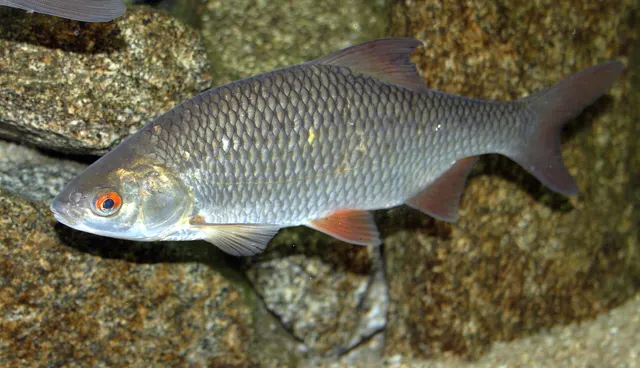 RoachCharacteristic of this water1 placeThe Grand Union CanalOver canal section
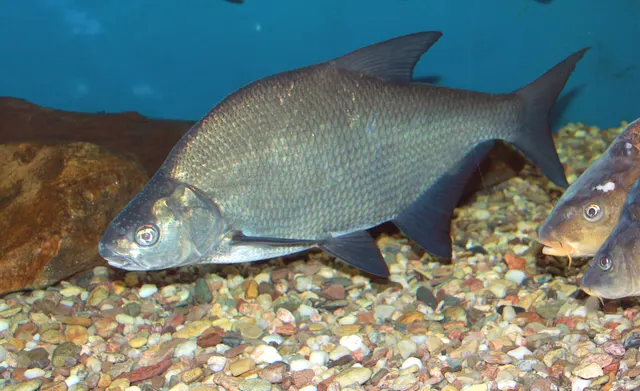 Common breamRegular local target1 placeThe Grand Union CanalOver canal section
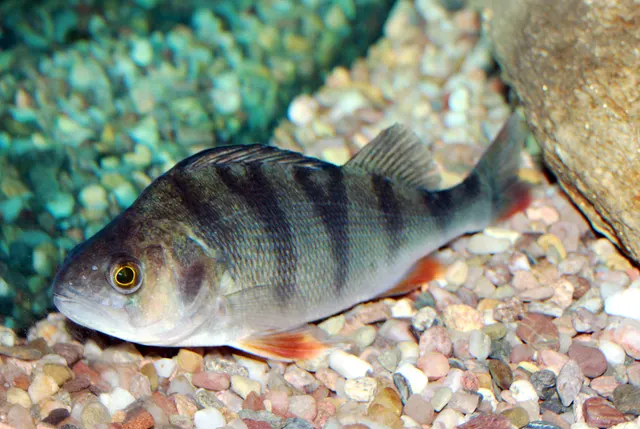 European perchRegular local target1 placeThe Grand Union CanalOver canal section
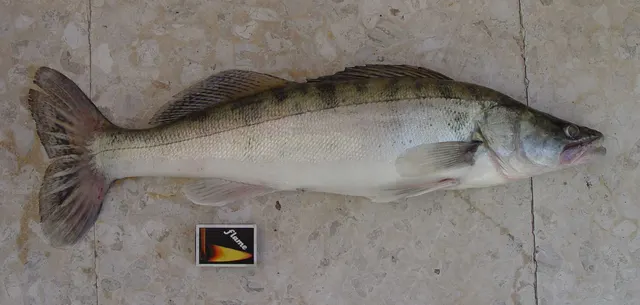 ZanderRegular local target1 placeThe Grand Union CanalOver canal section
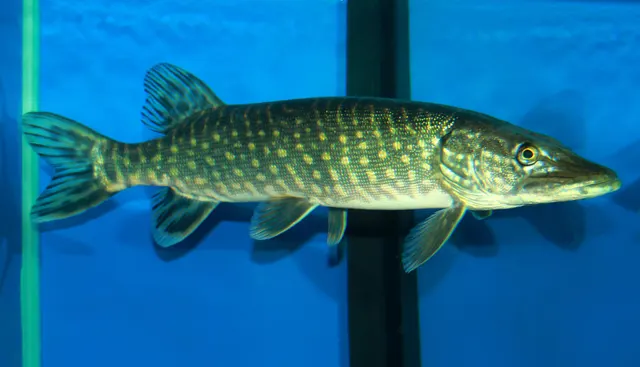 Northern pikeRepeatedly reported1 placeThe Grand Union CanalOver canal section
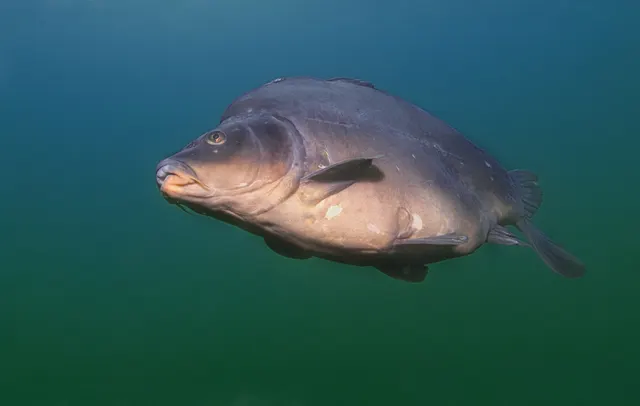 Common carpRecorded here1 placeThe Grand Union CanalOver canal section
What these strengths mean
- Characteristic of this water
- This water is strongly identified with this species by the sources that cover it.
- Regular local target
- Fishing sources describe this as a normal local target here, not merely as caught.
- Repeatedly reported
- Several independent public accounts. Enough to say it happens more than once; not enough to call it a fishery.
- Recorded here
- At least one credible public account of this species being caught here. That is all it means.
- How breadth is counted
- A fish documented at six marks is shown as six marks: breadth never raises the strength on its own. A fishery account describes the fishing; a recorded catch reports one specific catch. How evidence is weighed.
Also associated with this ground
Recorded as present here without a documented method or strength behind them.
Fish documented nearby, not here
Nothing below has been documented at The Grand Union Canal itself. Each one has been documented at a named place on the same ground, and the places are listed with it. Treat this as what the water around here holds rather than as a catch list for this mark.
Also documented at neighbouring places
One or two accounts each, on the ground around here. Enough to know the fish is caught in these waters; not enough to say anything about this place.
From the shore
- Tench — documented at The Oxford Canal
How people fish it
Practised here: Coarse fishing.
Methods the sources name for this ground. Each one is explained in full on its own page.
- Pole fishing
Fishing with a long jointed pole and a short fixed line, giving bait placement precision no rod and reel can match.
- Float fishing
Suspending a bait at a controlled depth beneath a buoyant indicator — the most visual, most controllable and most widely applicable method in angling.
- Ledgering
Fishing a bait on the bottom held by a weight, with no float — the simplest way to fish at distance, in depth, or in wind.
- Spinning
Casting an artificial lure and retrieving it so that it moves like something alive — the most direct form of lure fishing.
The ground and the water
- The ground
- The principal canal of the English system, running from London to Birmingham with branches: a uniform artificial channel of clay puddle and silt, typically narrow, with a defined boat channel down the middle, shallow shelves at each side and a towpath one bank.
- Exposure
- Variable along its length and generally sheltered — cuttings, hedges and buildings — which is one of the reasons canals fish when rivers are unfishable.
- Depth
- Shallow and highly uniform: a metre or so on the shelves and a little more in the boat channel. The uniformity is the defining fact and is what makes small differences — a bridge, a moored boat, a lock approach — matter so much.
- Tide and flow
- None. Levels are held by locks and are near-constant, which makes a canal the most predictable water in Britain and is why match fishing developed on them.
Through the year
A year-round coarse fishery whose character is set by boat traffic rather than by season — busy and coloured in summer, quiet and clear in winter, with the predator fishing best when the boats stop.
Safety
Cold water shock — Can cause serious injury or death
UK coastal and inland water is cold enough for most of the year to trigger the involuntary gasp and the loss of swimming ability that decides most immersion deaths, and it does so within the first minute, long before hypothermia is relevant.
What reduces it: Wear a buoyancy aid rather than carry one, carry a means of calling for help on the person rather than in a bag, and plan on the assumption that an unplanned entry into the water is survivable only if somebody knows immediately.
Overhead power lines — Can cause serious injury or death
Canals run alongside and beneath overhead power lines and electrified railways for long distances, and a carbon pole or a long rod raised near a conductor does not need to touch it for current to arc.
What reduces it: Look up before setting up, never ship a pole or raise a rod near overhead lines, and treat the published safe distances as minimums rather than targets.
Drowning and immersion — Can cause serious injury or death
Canal margins are frequently vertical stone or steel piling with no shallow shelf. A person who goes in cannot wade out and cannot climb a smooth vertical face, and cold water shock removes the ability to try within seconds for most of the year — in water they could otherwise stand up in.
What reduces it: Note the nearest exit points in both directions when setting up, do not fish alone at night on piled stretches, keep the bank clear of tackle you can trip on, and carry a means of calling for help on the person.
Biosecurity and disease transfer — Can cause injury needing treatment
The canal network is hydrologically connected across most of England, so an invasive species introduced anywhere on it can reach almost all of it.
What reduces it: Check, clean and dry all gear between waters.
Rules and access
Licence
A rod licence is required for freshwater rod fishing in England, issued by the Environment Agency.
Permission to fish
Separate. Almost all fishing rights are held by a club, association, riparian owner or navigation authority, and the licence does not grant access to any of them.
FishingHQ does not know the current access position here. Freshwater rod fishing in England requires a current rod licence AND separate permission from whoever controls the fishing, which is frequently a club, riparian owner or navigation authority rather than a public body. Close seasons, byelaws and local rules apply and change. Check with the Environment Agency and with the controlling club or owner before going.
Who holds the answer:
- The Environment Agency, for rod licensing, close seasons and fisheries byelaws in England.
- The club, association, riparian owner or navigation authority that controls the fishing.
- The Environment Agency, for rod licensing in England, close season provisions and fisheries enforcement.
- The navigation authority for the waterway — most commonly the Canal and River Trust — for towpath access, mooring and waterway rules.
- The angling club or association holding the fishing rights on the stretch, which is normally where the right to fish it actually comes from.
- Natural England, where a canal or its margins carry a conservation designation.
- The local authority, for towpath byelaws and access in urban areas.
- The Canal and River Trust as navigation authority, and the club or association holding the fishing rights on the section.
Nearby fishing
Other publicly documented places within about 40 km, by distance. Positions are approximate public geography and are never exact marks.
- Pitsford Water — 10–25 km · Reservoir
- The Great Ouse at Bedford — 25–40 km · River reach
- Draycote Water — 25–40 km · Reservoir
- The Oxford Canal — 25–40 km · Canal section
Sources for this place
- Environment Agency fisheries management, byelaws and rod licensing information — Environment Agency (Government fisheries body)Relied on for: Freshwater and transitional-water fisheries management in England, the structure of rod licensing, close seasons and byelaws, and the monitoring of rivers and stillwaters.States this directlyCitation checked — the work exists and is described correctly
- Angling Times — Bauer Media (Specialist angling publication)Relied on for: Long-running published description of British coarse and match angling practice by water and by named reach.FishingHQ's interpretation of what it saysCitation checked — the work exists and is described correctly
- General angling website restatements of established technique — Various (Credible secondary source)Relied on for: Widely restated public descriptions of which waters are conventionally fished and how, recorded as practitioner consensus rather than as scholarship, and not relied on for access, permission or any current rule.Background and mechanism onlyCitation checked — the work exists and is described correctly
How FishingHQ labels evidence is explained in the evidence policy. Last reviewed 2026-08-16.