Fly fishing for predators: pike, bass and beyond
Explainer · Last reviewed 2026-08-14
Large flies, heavy lines, short strong leaders and a bite trace where teeth demand one. The presentation problem is movement rather than drift.
Predator fly fishing is the clearest demonstration that fly fishing is a casting system rather than a delicate one, and it makes demands a trout outfit cannot meet.
THE FLY IS LARGE, AIR-RESISTANT AND OFTEN BUOYANT. A pike fly may be twenty centimetres of bucktail and synthetic fibre. It is not heavy, but it has enormous air resistance, and that — not weight — is what a fly line has to overcome.
SO THE LINE IS HEAVY AND AGGRESSIVELY FRONT-LOADED. A short, steep taper carrying most of its mass in the first few metres is what turns a big fly over. The same line would be unusable for a dry fly, which is the point: this is a different tool for a different job.
THE LEADER IS SHORT AND STRONG, often little more than a couple of metres, because turnover matters and finesse does not. Where the fish has teeth — pike, zander, barracuda, mackerel — a bite trace is not optional, and the choice of material is a genuine trade-off between abrasion resistance and how the fly swims.
THE PRESENTATION IS MOVEMENT, NOT DRIFT. A trout fly is usually trying to behave like something drifting helplessly. A predator fly is trying to behave like something fleeing, faltering and fleeing again. The strip-pause rhythm is where the take almost always comes, and it usually comes on the pause.
THE TAKE IS ANSWERED BY STRIPPING, not by lifting. A predator's mouth is bony and a large hook needs to be driven, which a raised rod tip cannot do.
AND THE FISH CARE MATTERS MORE HERE THAN ALMOST ANYWHERE. A large pike is a heavy, air-breathing-intolerant animal with a jaw structure that is easy to damage, and predator fly fishing puts big hooks in it. Long forceps, a proper unhooking mat or cradle, wet hands and support under the body are the difference between a released fish and a dead one, and the equipment is assembled before the first cast rather than looked for afterwards.
The trace question, which is a welfare decision rather than a tackle preference
Fly anglers coming to pike from trout fishing routinely fish without a trace, for a reason that sounds sensible and is not: a pike fly is large, it is taken confidently, and it seems to sit well forward in the mouth. The reasoning fails because a pike's teeth are not only at the front.
WHAT A BITE-OFF ACTUALLY COSTS. A pike that cuts through a nylon leader swims away with a large fly, a hook and a length of leader in its mouth. Unlike a lost bait hook, a fly is bulky and the leader trails, which is what makes it more likely to interfere with feeding. This is the reason the trace is a welfare condition and not a performance choice, and it is the same argument FishingHQ makes about `wire-trace-deadbait-rig`.
THE OPTIONS, AND WHAT EACH COSTS THE PRESENTATION. Single-strand wire is thin, cheap and utterly reliable, and it kinks — see `haywire-twist` for why a kink is a break waiting to happen and for how it is terminated. Multi-strand and coated wire are supple and quieter in the water and are crimped or, for some coated products, knotted. Heavy fluorocarbon is the compromise most fly anglers actually make: it casts and turns over a large fly far better than wire and it is NOT bite-proof, only bite-resistant, and it must be checked after every fish and after every follow.
BASS ARE A DIFFERENT QUESTION AND THE ANSWER IS USUALLY NO WIRE. Bass do not cut leaders; their gill plates and the rough ground they live over are the abrasion problem, so the answer is a heavier fluorocarbon shock tippet chosen for abrasion rather than for teeth. Applying pike logic to bass produces a stiff wire trace that ruins the fly's movement for no benefit.
AND THE FLY ITSELF CARRIES A WELFARE DECISION. A very large fly with several hooks is harder to remove and more likely to find a gill. Single large hooks, barbless or crushed, and long forceps in the bag are the difference between a thirty-second unhooking and a bad one — and a pike out of water is on a clock the whole time.
WHICH MAKES THE PREPARATION PART OF THE TACKLE. Unhooking a pike needs a gag-free technique, long forceps, a wet mat or a cradle, and a plan made before the fish is on the bank rather than during.
Official guidance — why, and the sources (4)
Stated by a fisheries authority, scientific institute or recognised angling body. Authoritative, but summarising rather than demonstrating.
- Pike Anglers' Club of Great Britain guidance on pike care and handling — Pike Anglers' Club of Great Britain, 1977 (Angling or fisheries organisation)Relied on for: Pike handling and rig guidance, including the case for a bite-resistant trace and what a bite-off means for the fish.States this directlyPassage read and verified
- Pike and the Pike Angler — Stanley Paul, 1981 (Specialist angling publication)Relied on for: Pike angling practice including trace construction and why a pike rig is built as it is.States this directlyCitation checked — the work exists and is described correctly
- Freshwater Fishes of the British Isles — HarperCollins (New Naturalist 75), 1992 (Reference work)Relied on for: Life history, feeding biology and seasonal behaviour of the freshwater fishes of the British Isles.States this directlyCitation checked — the work exists and is described correctly
- FishBase: a global information system on fishes — Froese, R. and D. Pauly, eds. — FishBase Consortium (Scientific institute)Relied on for: Recorded environment, depth range, feeding biology and distribution of the species named.States this directlyPassage read and verified
Check the rules before you fish
Fishing laws, bylaws, access rules, seasons, bait restrictions and permitted methods vary by location and can change. Check the current rules from the relevant authority and the water you intend to fish before fishing.
Check with:
- Current national or regional law for where you are fishing
- Current local bylaws
- The relevant fisheries authority
- The landowner, club or fishery whose water it is
- Any restrictions specific to the species or the method you intend to use
Where to go next
Fish this applies to
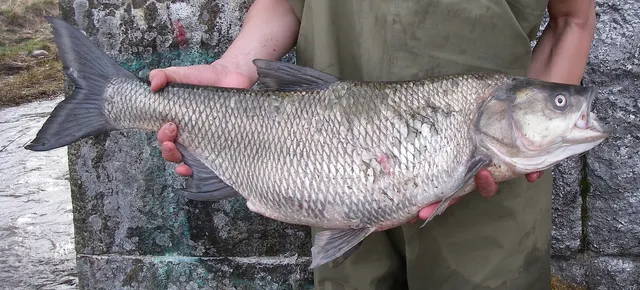 AspThe most fly-suited predator in European fresh water and the least known in Britain. Asp hunt small fish at the surface in fast open water, feeding visibly and violently, which is a sight-fishing proposition with a floating line rather than a deep-water one.
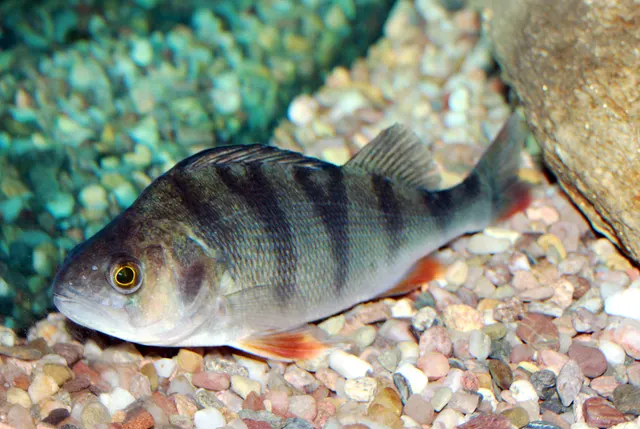 European perchThe accessible case, and the one that shows the approach is not a novelty. Perch shoal, hunt small fish in open water and around structure, and take a small streamer readily on tackle a trout angler already owns.
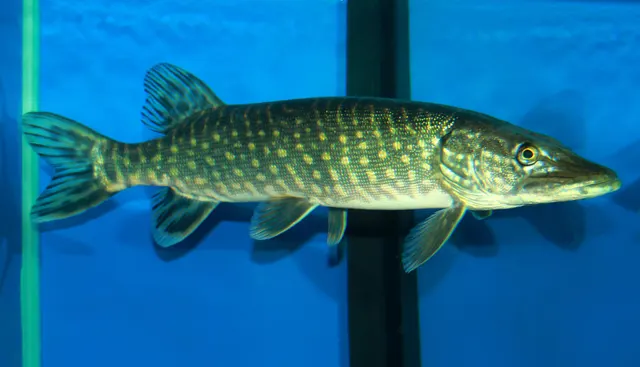 Northern pikePike are the species this branch of fly fishing is built around in Europe, and the handling requirements it describes are pike-specific.
Where it matters
How this compares
- The four fly types, and what each imitatesPredator fly fishing is streamer fishing scaled up, and the fly-type record is where the category is defined.
- Where fly fishing goes beyond troutThe freshwater half of the same argument. Fly fishing does not stop at salmonids any more than it stops at the tideline.
Rules and access
Sources and evidence
- Freshwater Fishing — Macdonald & Jane's, 1975 (Specialist angling publication)Relied on for: Comprehensive freshwater angling practice including fly fishing tackle, casting, presentation and the reasoning behind terminal tackle choices.States this directlyCitation checked — the work exists and is described correctly
- Trout & Salmon — Bauer Media (Specialist angling publication)Relied on for: Contemporary game and fly angling practice as reported and restated by practitioners, including tackle convention and technique.Background and mechanism onlyCitation checked — the work exists and is described correctly
- General angling website restatements of established technique — Various (Credible secondary source)Relied on for: Widely restated angling practice and belief, recorded as practitioner consensus rather than as tested fact.Background and mechanism onlyCitation checked — the work exists and is described correctly
Why the 7 connections on this page are here, and the sources
Fish this applies to
What experienced anglers do — 3 connections
Widely and independently recommended by experienced anglers and specialist sources. This is real angling knowledge, not proof: controlled evidence for it is limited, and FishingHQ records it as convention rather than as a demonstrated effect.
Asp
A fish or a water joined to the fly-fishing mechanism it is a worked example of, written only where the subject's own behaviour or physical character is what this page explains. The direction is the one FishingHQ writes this kind of connection in, and the one it already uses 176 times, and it is also the semantically correct one: the mechanism explains the fish, not the reverse.
- Freshwater Fishes of the British Isles — HarperCollins (New Naturalist 75), 1992 (Reference work)Relied on for: Life history, feeding biology, habitat requirement and seasonal behaviour of the freshwater fishes of the British Isles.States this directlyCitation checked — the work exists and is described correctly
- FishBase: a global information system on fishes — Froese, R. and D. Pauly, eds. — FishBase Consortium (Scientific institute)Relied on for: Recorded environment, depth range, feeding biology and distribution of the species named.States this directlyPassage read and verified
- Still Water Fly-Fishing — Andre Deutsch, 1952 (Specialist angling publication)Relied on for: Stillwater fly practice: line density and depth, leader construction, fly selection against the food present, and the behaviour of stocked and wild trout in still water.States this directlyCitation checked — the work exists and is described correctly
- Trout & Salmon — Bauer Media (Specialist angling publication)Relied on for: Long-running published description of British game angling practice: river and stillwater trout, grayling and salmon fishing, and the presentation each demands.States this directlyCitation checked — the work exists and is described correctly
European perch
A fish or a water joined to the fly-fishing mechanism it is a worked example of, written only where the subject's own behaviour or physical character is what this page explains. The direction is the one FishingHQ writes this kind of connection in, and the one it already uses 176 times, and it is also the semantically correct one: the mechanism explains the fish, not the reverse.
- Freshwater Fishes of the British Isles — HarperCollins (New Naturalist 75), 1992 (Reference work)Relied on for: Life history, feeding biology, habitat requirement and seasonal behaviour of the freshwater fishes of the British Isles.States this directlyCitation checked — the work exists and is described correctly
- FishBase: a global information system on fishes — Froese, R. and D. Pauly, eds. — FishBase Consortium (Scientific institute)Relied on for: Recorded environment, depth range, feeding biology and distribution of the species named.States this directlyPassage read and verified
- Still Water Fly-Fishing — Andre Deutsch, 1952 (Specialist angling publication)Relied on for: Stillwater fly practice: line density and depth, leader construction, fly selection against the food present, and the behaviour of stocked and wild trout in still water.States this directlyCitation checked — the work exists and is described correctly
- Trout & Salmon — Bauer Media (Specialist angling publication)Relied on for: Long-running published description of British game angling practice: river and stillwater trout, grayling and salmon fishing, and the presentation each demands.States this directlyCitation checked — the work exists and is described correctly
Northern pike
Why it works, and what that rests on. Fly tackle and technique rest on established practitioner craft rather than on experiment, and the strength shown says so rather than borrowing an authority the subject does not have.
- Trout & Salmon — Bauer Media (Specialist angling publication)Relied on for: Contemporary game and fly angling practice as reported and restated by practitioners, including tackle convention and technique.Background and mechanism onlyCitation checked — the work exists and is described correctly
- General angling website restatements of established technique — Various (Credible secondary source)Relied on for: Widely restated angling practice and belief, recorded as practitioner consensus rather than as tested fact.Background and mechanism onlyCitation checked — the work exists and is described correctly
Where it matters
What experienced anglers do — 1 connection
Widely and independently recommended by experienced anglers and specialist sources. This is real angling knowledge, not proof: controlled evidence for it is limited, and FishingHQ records it as convention rather than as a demonstrated effect.
Predator fishing
Why it works, and what that rests on. Fly tackle and technique rest on established practitioner craft rather than on experiment, and the strength shown says so rather than borrowing an authority the subject does not have.
- Trout & Salmon — Bauer Media (Specialist angling publication)Relied on for: Contemporary game and fly angling practice as reported and restated by practitioners, including tackle convention and technique.Background and mechanism onlyCitation checked — the work exists and is described correctly
- General angling website restatements of established technique — Various (Credible secondary source)Relied on for: Widely restated angling practice and belief, recorded as practitioner consensus rather than as tested fact.Background and mechanism onlyCitation checked — the work exists and is described correctly
How this compares
What experienced anglers do — 2 connections
Widely and independently recommended by experienced anglers and specialist sources. This is real angling knowledge, not proof: controlled evidence for it is limited, and FishingHQ records it as convention rather than as a demonstrated effect.
The four fly types, and what each imitates
Two records a reader would reasonably weigh against one another, joined where the comparison teaches something about both. A navigation claim rather than a claim about the world.
- Trout & Salmon — Bauer Media (Specialist angling publication)Relied on for: Contemporary game and fly angling practice as reported and restated by practitioners, including tackle convention and technique.Background and mechanism onlyCitation checked — the work exists and is described correctly
- General angling website restatements of established technique — Various (Credible secondary source)Relied on for: Widely restated angling practice and belief, recorded as practitioner consensus rather than as tested fact.Background and mechanism onlyCitation checked — the work exists and is described correctly
Where fly fishing goes beyond trout
Two records a reader would reasonably weigh against one another, joined where the comparison teaches something about both. A navigation claim rather than a claim about the world.
- Trout & Salmon — Bauer Media (Specialist angling publication)Relied on for: Contemporary game and fly angling practice as reported and restated by practitioners, including tackle convention and technique.Background and mechanism onlyCitation checked — the work exists and is described correctly
- General angling website restatements of established technique — Various (Credible secondary source)Relied on for: Widely restated angling practice and belief, recorded as practitioner consensus rather than as tested fact.Background and mechanism onlyCitation checked — the work exists and is described correctly
Rules and access
Official guidance — 1 connection
Stated by a fisheries authority, scientific institute or recognised angling body. Authoritative, but summarising rather than demonstrating.
Close seasons
Written for the five fly records where a genuine regulatory dimension exists — fly-only water as a method restriction, salmon and pike close seasons, bass retention — and refused for the twenty-four where it does not. The edge names the CLASS of rule and never its content, which is the product's standing position on regulation.
- Environment Agency fisheries management, byelaws and rod licensing information — Environment Agency (Government fisheries body)Relied on for: Rod licensing, close seasons, byelaws and method restrictions for freshwater and migratory fish in England.States this directlyCitation checked — the work exists and is described correctly
- Angling Trust guidance for anglers — Angling Trust (Angling or fisheries organisation)Relied on for: Guidance to anglers on the rules applying to game, coarse and sea angling and on where to check them.States this directlyCitation checked — the work exists and is described correctly
How FishingHQ labels evidence is explained in the evidence policy.