The Soča and Slovenia's Adriatic rivers
Fishing regions · Last reviewed 2026-08-15
An isolated Adriatic drainage in the Julian Alps holding a salmonid that exists almost nowhere else — the marble trout — reduced to a handful of pure populations and rebuilt from them.
Safety: moving water and currents — can cause serious injury or death. 6 more points apply here.
Being listed here is not permission to fish. What that meansClose
Access, fishing rights, seasons, licences, local bylaws and permitted methods vary and can change. Check current access, permission, local regulations, closures and restrictions before you travel or fish. FishingHQ describes what the ground is and names who holds the answer; it does not hold the answer itself.
Find the authority for a jurisdiction · What FishingHQ does and does not cover
The Soča is the clearest case in Europe of a fishery that is a conservation programme first.
THE RIVER IS FAMOUS FOR ITS COLOUR and it earns it: a striking emerald-turquoise produced by fine glacial and limestone particles suspended in exceptionally clear water. That colour is a geological fact — the Julian Alps are limestone, the water is hard and calcium-rich — and it makes the river one of the most photographed in Europe.
WHAT MATTERS MORE IS WHAT LIVES IN IT. The Soča and its neighbouring Slovenian rivers drain south to the Adriatic rather than north to the Danube, which isolated them, and that isolation produced the MARBLE TROUT — Salmo marmoratus — a large salmonid with a distinctive marbled vermiculation quite unlike a brown trout's spotting, native to this drainage and almost nowhere else.
IT WAS ALMOST LOST. Brown trout were stocked into the system through the twentieth century and hybridised with marble trout comprehensively. By the time the problem was recognised, genetically pure marble trout survived in only a handful of small isolated headwater populations above natural barriers. The recovery programme that followed — identifying the pure remnants, breeding from them, and re-establishing populations — is one of the more remarkable salmonid conservation efforts anywhere, and it is why the fishery is managed the way it is.
SO THE FISHING IS TIGHTLY CONTROLLED AND EXPLICITLY CONSERVATION-LED. Slovenian fishing is organised through fishing clubs and districts that manage their own waters and sell day permits, with rules that differ by stretch — fly-only water, release-only water, restricted seasons, and specific measures around marble trout.
AND THE RIVERS AROUND IT SHARE THE CHARACTER. The Idrijca, the Bača, the Tolminka and others in the same drainage are steep, clear, limestone rivers with the same species and the same management.
What fishing here is like
A steep limestone river system in the Julian Alps of western Slovenia draining south to the Adriatic, physically isolated from the Danube basin and biologically distinct because of it. Exceptionally clear, hard, calcium-rich water with a characteristic emerald colour from suspended fine sediment; a bed of limestone bedrock, boulder and gravel; deep pools, gorges and fast pocket water. The defining biological fact is the marble trout, a large native salmonid reduced almost to extinction by hybridisation with stocked brown trout and recovered from a handful of pure headwater remnants. Fishing is managed by fishing clubs on a district basis, permit-based, and explicitly conservation-led.
What you can target here
One entry per fish, grouped by how you would be fishing — because the answer is a different one from the rocks and from a boat. Each entry says how strongly the sources support it and how much evidence sits behind it. These are documented catches, not a forecast, and none of it is a statement that you may fish any particular ground.
From the shore · 4
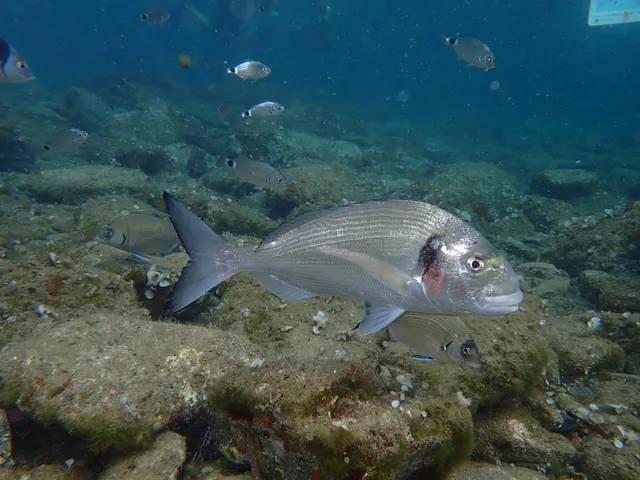 Gilthead breamCharacteristic of this water1 placeThe Slovenian coast at PiranOver headland
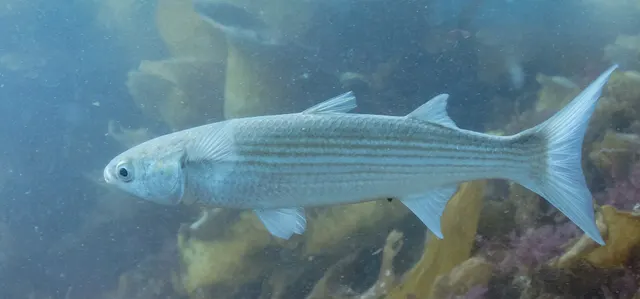 Flathead grey mulletRegular local target1 placeThe Slovenian coast at PiranOver headland
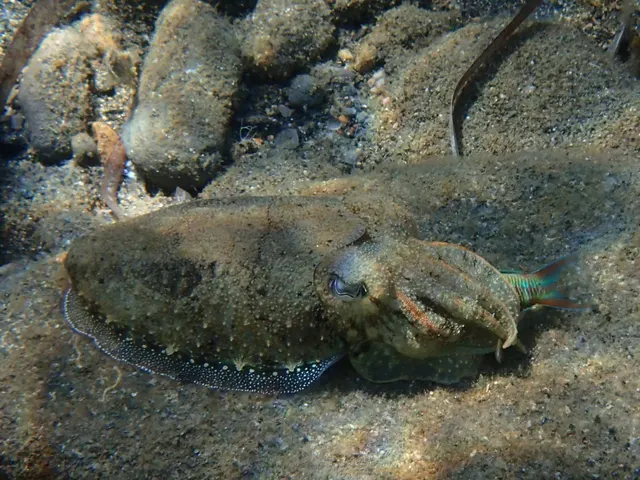 Common cuttlefishSeasonal1 placeThe Slovenian coast at PiranOver headlandAround Mar–May, Oct–Nov
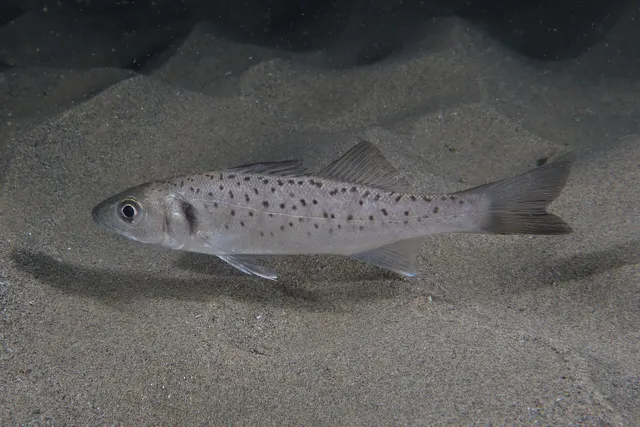 European sea bassSeasonal1 placeThe Slovenian coast at PiranOver headlandAround Jan–Mar, Nov–Dec
What these strengths mean
- Characteristic of this water
- This water is strongly identified with this species by the sources that cover it.
- Regular local target
- Fishing sources describe this as a normal local target here, not merely as caught.
- Seasonal
- Well supported, and concentrated in part of the year rather than spread through it.
- How breadth is counted
- A fish documented at six marks is shown as six marks: breadth never raises the strength on its own. A fishery account describes the fishing; a recorded catch reports one specific catch. How evidence is weighed.
How people fish here
5 methods are recorded on the places documented here, counted from the records themselves rather than from what is practised in the country. Each opens a full guide to the technique.
Dry fly fishing
Recorded at 1 place here, over confluence.
Presenting a floating artificial to a fish feeding at the surface, so that it drifts exactly as a natural insect would.
Eging
Recorded at 1 place here, over headland.
Jigging for squid and cuttlefish with a barbed, weighted lure worked in lifts and pauses — a Japanese discipline with its own tackle, vocabulary and competitive scene.
Documented on the same ground: Gilthead bream, Flathead grey mullet, Common cuttlefish, European sea bass.
Float fishing
Recorded at 1 place here, over headland.
Suspending a bait at a controlled depth beneath a buoyant indicator — the most visual, most controllable and most widely applicable method in angling.
Documented on the same ground: Gilthead bream, Flathead grey mullet, Common cuttlefish, European sea bass.
Ledgering
Recorded at 1 place here, over headland.
Fishing a bait on the bottom held by a weight, with no float — the simplest way to fish at distance, in depth, or in wind.
Documented on the same ground: Gilthead bream, Flathead grey mullet, Common cuttlefish, European sea bass.
Nymphing
Recorded at 1 place here, over confluence.
Fishing sunk imitations of immature insects at the fish's depth — the most productive fly method, and the one where take detection is everything.
These are the methods documented at the places FishingHQ holds here. A species listed beside a method is documented on the same ground, which is not the same as being taken that way — where a source establishes the method a fish was caught on, it is stated on that place’s own page. All fishing methods.
What dominates
Fly fishing, which dominates and is required outright on many stretches — dry fly, nymphing including the Central European short-line styles, and streamer fishing for the larger marble trout. Sight fishing in exceptionally clear water, which is a genuine skill here and is what most visitors come for. Spinning where permitted, which is restricted on many waters. Wading, which the gradient and the bedrock make demanding.
The water available
Steep alpine headwaters and gorges cut into limestone; fast pocket water and boulder runs; deep clear pools with visible fish; a hard, calcium-rich, exceptionally transparent water column; several tributary rivers of similar character in the same drainage; isolated headwater streams above natural barriers, which are where the pure marble trout remnants survived; and a lower river running out towards the Adriatic across the Friulian plain, where it becomes the Isonzo.
How the rules are structured
Fishing in Slovenia is organised through fishing families or clubs that manage defined districts under national fisheries legislation, and permits are issued by the managing club for the specific water. Rules differ by stretch and are set by the manager: fly-only sections, artificial-lure-only sections, catch-and-release water, size limits, bag limits, closed seasons and specific measures for marble trout all exist and vary. Marble trout is a species of conservation concern and its management is a central part of the framework. Some waters and periods are closed entirely. Biosecurity and equipment-cleaning requirements apply, and the movement of fish between waters is controlled. A permit is required and is checked. FishingHQ does not state what any current rule is, nor any price, season or district boundary.
Who to ask
- The Slovenian fishing family or club managing the specific district, which issues permits and sets the rules for its water.
- The national Slovenian fisheries authority and the fisheries research institute, for legislation, stock management and the marble trout recovery programme.
- The national park and nature conservation authorities, for the protected areas covering much of the upper catchment.
- The national angling association, which coordinates the club system.
Words you will meet
- Marble trout
- Salmo marmoratus, the native large salmonid of the Adriatic drainages, distinguished by a marbled vermiculated pattern rather than the discrete spots of a brown trout. Reduced almost to extinction by hybridisation and the subject of a long recovery programme.
- Ribiška družina
- The Slovenian fishing family or club — the body that manages a defined district of water, issues permits and sets the rules on it. The organising unit of Slovenian fishing, and the answer to almost every practical question about a specific stretch.
- Soča / Isonzo
- The same river, in Slovenian and Italian. It rises in Slovenia and reaches the Adriatic through Italy, and the name changes at the border.
- Hybrid
- A marble × brown trout cross. Widespread through the system as a result of twentieth-century stocking, intermediate in appearance, and central to why the recovery programme had to start from isolated headwater populations rather than from the main river.
Conditions and hazards
The rivers are steep, fast and floored with smooth limestone bedrock that is exceptionally slippery — studded boots or a wading staff are not optional on this kind of substrate. Gorges and deep pools have no easy exit. Water levels respond very quickly to rainfall and to snowmelt in an alpine catchment, and a river can rise dangerously with rain falling some distance upstream. The water is cold year-round because it is largely snow and spring fed. Access to some stretches involves steep descents into gorges, where the difficulty is getting out rather than in. Mountain weather changes fast and the upper catchment is genuinely remote.
Limestone, glacial flour and water you can see the bottom of
The Soča's physical character is limestone geology expressed as a river.
THE COLOUR IS THE FIRST THING and it has a mechanical explanation. Extremely fine particles of limestone and glacial rock flour stay suspended in the water column and scatter light, producing the emerald-turquoise the river is famous for. It is not algae, it is not pollution and it is not a trick of photography.
THE WATER IS HARD, ALKALINE AND EXCEPTIONALLY CLEAR. Limestone catchments produce calcium-rich water with high visibility, which has two consequences for fishing: invertebrate production is good, and the fish can see you from a very long way off.
THE GRADIENT IS STEEP AND THE STRUCTURE IS ROCK. Bedrock slabs, boulder fields, gorges, fast pocket water and deep clear pools, rather than the riffle-and-gravel-run structure of a lowland salmonid river. Fish hold in identifiable places and are frequently visible in them.
THE HEADWATERS ARE ISOLATED, and that isolation is the whole conservation story. Small streams above natural waterfalls and barriers were never reached by stocked brown trout, which is why pure marble trout survived in them when they had been hybridised out of everything downstream.
THE TRIBUTARIES SHARE THE CHARACTER. The Idrijca, Bača, Tolminka and others in the same drainage are the same kind of river at a different scale.
AND THE SYSTEM DRAINS SOUTH TO THE ADRIATIC rather than north to the Danube, which is the geographical fact underlying everything biological about it.
Backed by research — why, and the sources (3)
Supported by peer-reviewed research or fisheries science. The sources are listed and can be checked.
- FishBase: a global information system on fishes — Froese, R. and D. Pauly, eds. — FishBase Consortium (Scientific institute)Relied on for: Distribution, habitat association and life history recorded for the species concerned.States this directlyPassage read and verified
- The IUCN Red List of Threatened Species — International Union for Conservation of Nature (Conservation authority)Relied on for: Global conservation assessment, range and recorded threats for the species.States this directlyCitation checked — the work exists and is described correctly
- Freshwater Fishes of the British Isles — HarperCollins (New Naturalist 75), 1992 (Reference work)Relied on for: Distribution, habitat association, spawning requirements and ecology of British and Irish freshwater fishes.States this directlyCitation checked — the work exists and is described correctly
The marble trout, and the fish that nearly replaced it
One species defines this system and its story is worth telling properly.
MARBLE TROUT — Salmo marmoratus — is a large salmonid native to the Adriatic drainages of Slovenia, Italy, and neighbouring countries. It is marked with a marbled, vermiculated pattern quite unlike the discrete round spots of a brown trout, it grows large, and it is a predator of other fish to a degree brown trout generally are not.
STOCKING NEARLY ENDED IT. Brown trout were introduced through the twentieth century and hybridised with marble trout across the accessible parts of the system. Hybrids are fertile and intermediate, and within decades genetically pure marble trout survived only in a small number of isolated headwater populations sitting above natural barriers that stocked fish had never crossed.
THE RECOVERY PROGRAMME STARTED FROM THOSE REMNANTS. Identifying the pure populations, breeding from them, and re-establishing marble trout in suitable water is a long-running effort involving Slovenian fisheries science and the fishing clubs, and it is the reason the fishery is managed as tightly as it is.
HYBRIDS ARE STILL WIDESPREAD, and telling a marble trout from a hybrid is a genuine identification problem — the marbling grades into spotting and intermediate fish are common. This is a place where an angler's identification has consequences for what they are supposed to do with the fish.
GRAYLING are present and significant, and the Soča grayling fishery has its own following.
RAINBOW TROUT and brown trout are present from stocking, and their status differs by stretch.
AND THE ADRIATIC DRAINAGE HOLDS OTHER ENDEMICS besides the marble trout, which is the general consequence of a river system isolated from the continent's main basin.
Backed by research — why, and the sources (3)
Supported by peer-reviewed research or fisheries science. The sources are listed and can be checked.
- FishBase: a global information system on fishes — Froese, R. and D. Pauly, eds. — FishBase Consortium (Scientific institute)Relied on for: Distribution, habitat association and life history recorded for the species concerned.States this directlyPassage read and verified
- The IUCN Red List of Threatened Species — International Union for Conservation of Nature (Conservation authority)Relied on for: Global conservation assessment, range and recorded threats for the species.States this directlyCitation checked — the work exists and is described correctly
- Freshwater Fishes of the British Isles — HarperCollins (New Naturalist 75), 1992 (Reference work)Relied on for: Distribution, habitat association, spawning requirements and ecology of British and Irish freshwater fishes.States this directlyCitation checked — the work exists and is described correctly
Sight fishing in water that shows you everything, including you
Fishing the Soča is dominated by one condition: the water is clear enough to see fish in, which means the fish can see you.
FLY FISHING DOMINATES and is mandatory on many stretches. Dry fly to visible risers, nymphing including the short-line Central European styles that were developed on rivers of exactly this character, and streamer fishing for the larger marble trout are the three modes.
SIGHT FISHING IS THE SPECIALITY. Spotting a fish, judging its behaviour and presenting to it is the skill most visitors come here to practise, and it is a genuinely different discipline from fishing water blind. It rewards patience, polarised glasses and a slow approach.
WHICH MAKES APPROACH AND CONCEALMENT DECISIVE. In water this transparent an angler who walks up to a pool has already ended the fishing in it. Low profile, slow movement, long leaders and fine tippet are not refinements here.
STREAMER FISHING FOR LARGE MARBLE TROUT is a different game again — big fish in deep pools and gorge water, fished with weighted flies and heavier tackle, and closer in character to predator fishing than to trout fishing.
SPINNING IS PERMITTED IN PLACES AND RESTRICTED IN OTHERS, and which applies is a matter for the club managing that stretch.
WADING IS DEMANDING. Smooth limestone bedrock is among the most slippery substrate a river can have, and the gradient means the current is strong. Studded soles and a staff are ordinary equipment.
AND CATCH-AND-RELEASE IS THE NORM on much of the system and a requirement on some of it, for reasons the species section explains.
What experienced anglers do — why, and the sources (2)
Widely and independently recommended by experienced anglers and specialist sources. This is real angling knowledge, not proof: controlled evidence for it is limited, and FishingHQ records it as convention rather than as a demonstrated effect.
- Trout & Salmon — Bauer Media (Specialist angling publication)Relied on for: Contemporary British game angling practice, including river technique, seasonal timing and fishery convention.States this directlyCitation checked — the work exists and is described correctly
- General angling website restatements of established technique — Various (Credible secondary source)Relied on for: Widely restated descriptions of regional angling practice, recorded as consensus rather than as scholarship.Background and mechanism onlyCitation checked — the work exists and is described correctly
Snowmelt, summer clarity and a season set by the club
The Soča's year is an alpine year with a management calendar laid over it.
SPRING IS SNOWMELT and it dominates the early season. An alpine catchment delivers meltwater through spring, raising and colouring the river and making much of it unfishable or dangerous. The timing varies with the winter's snowpack and with temperature rather than with the date.
EARLY SUMMER, as the melt finishes and levels drop, is when the river comes into its own: clear, stable, and full of visible fish.
HIGH SUMMER brings the best clarity and the most difficult fishing, because the fish can see everything. Low water concentrates fish into known holding places and makes them extremely wary. Early and late in the day become disproportionately productive.
AUTUMN is often the best of the year for the large marble trout, feeding hard before winter, and the visiting pressure has dropped.
WINTER CLOSES MOST OF IT. Seasons are set by the managing clubs and vary by water and by species; some stretches are closed entirely for parts of the year, and marble trout carry their own arrangements.
RAINFALL IS THE SHORT-TERM VARIABLE and it acts fast. A steep limestone catchment responds to rain within hours, and a river can rise a long way with rain falling some distance upstream in the mountains. Checking upstream weather rather than local weather is the habit that matters.
AND THE SEASON DATES ARE A CLUB MATTER, published by the district manager and revised. They are not stated here.
What experienced anglers do — why, and the sources (2)
Widely and independently recommended by experienced anglers and specialist sources. This is real angling knowledge, not proof: controlled evidence for it is limited, and FishingHQ records it as convention rather than as a demonstrated effect.
- Trout & Salmon — Bauer Media (Specialist angling publication)Relied on for: Contemporary British game angling practice, including river technique, seasonal timing and fishery convention.States this directlyCitation checked — the work exists and is described correctly
- General angling website restatements of established technique — Various (Credible secondary source)Relied on for: Widely restated descriptions of regional angling practice, recorded as consensus rather than as scholarship.Background and mechanism onlyCitation checked — the work exists and is described correctly
The fishing family: permits, districts and rules that change by stretch
Slovenian fishing is organised in a way that has no British equivalent and it is worth understanding before arriving.
WATER IS MANAGED BY FISHING FAMILIES — ribiške družine — which are clubs holding management rights over defined districts under national fisheries legislation. The club, not a national body and not a landowner, is the practical authority for a given stretch.
THE CLUB ISSUES THE PERMIT and sets the rules for its water. Permits are typically daily and are bought for a specific district. They are checked.
RULES DIFFER BY STRETCH, sometimes substantially. Fly-only water, artificial-lure-only water, catch-and-release-only water, size limits, bag limits, closed periods and specific measures for marble trout all exist and are not uniform. A rule learned on one beat does not transfer to the next.
MARBLE TROUT MANAGEMENT IS CENTRAL to the framework and reflects the species' conservation position and the recovery programme. What may be done with a marble trout, or with a fish that might be one, is a matter for the specific water's rules.
NATIONAL LEGISLATION AND FISHERIES SCIENCE sit above the club system, and the national park and conservation designations covering the upper catchment add another layer.
BIOSECURITY AND FISH MOVEMENT are controlled, which matters more than usual in a system where introduced fish caused the central problem.
AND FISHINGHQ STATES NO RULE, NO PRICE, NO SEASON AND NO BOUNDARY. What it states is that the club managing the water is the body to ask, which is the useful fact.
Official guidance — why, and the sources (2)
Stated by a fisheries authority, scientific institute or recognised angling body. Authoritative, but summarising rather than demonstrating.
- The IUCN Red List of Threatened Species — International Union for Conservation of Nature (Conservation authority)Relied on for: Global conservation assessment, range and recorded threats for the species.States this directlyCitation checked — the work exists and is described correctly
- FishBase: a global information system on fishes — Froese, R. and D. Pauly, eds. — FishBase Consortium (Scientific institute)Relied on for: Distribution, habitat association and life history recorded for the species concerned.States this directlyPassage read and verified
Marmorata, ribiška družina, and the border where the name changes
The working vocabulary here is Slovenian and a few words carry real information.
MARBLE TROUT, or marmorata, is Salmo marmoratus — the native large salmonid of the Adriatic drainage, marked with a marbled vermiculation rather than discrete spots. The name describes the marking and the marking is the identification.
RIBIŠKA DRUŽINA translates as fishing family and means the club that manages a district of water, issues its permits and sets its rules. It is the single most useful word to know, because it is the answer to almost every practical question about a specific stretch.
HYBRID is used constantly and specifically here, meaning a marble × brown trout cross. Hybrids are widespread, intermediate in appearance, fertile, and central to the conservation problem. In most fisheries the word is an oddity; here it is a management category.
SOČA AND ISONZO ARE THE SAME RIVER in Slovenian and Italian. The name changes at the border, and so does the jurisdiction, the language and the fishing framework.
JULIAN ALPS is the range the system drains, and the name matters because it identifies the limestone geology that produces the water's hardness, clarity and colour.
AND THE ADRIATIC DRAINAGE is the phrase that explains the biology: rivers running south to the Adriatic rather than north to the Danube, isolated from the continental system, and therefore holding species that exist nowhere else.
What experienced anglers do — why, and the sources (2)
Widely and independently recommended by experienced anglers and specialist sources. This is real angling knowledge, not proof: controlled evidence for it is limited, and FishingHQ records it as convention rather than as a demonstrated effect.
- FishBase: a global information system on fishes — Froese, R. and D. Pauly, eds. — FishBase Consortium (Scientific institute)Relied on for: Distribution, habitat association and life history recorded for the species concerned.States this directlyPassage read and verified
- General angling website restatements of established technique — Various (Credible secondary source)Relied on for: Widely restated descriptions of regional angling practice, recorded as consensus rather than as scholarship.Background and mechanism onlyCitation checked — the work exists and is described correctly
A front line, a stocking programme, and a recovery from a handful of fish
The Soča's history has two chapters and both left marks on the fishing.
THE FIRST IS THE WAR. The Isonzo Front of the First World War ran along this river through twelve battles and some of the most costly fighting of the war. The valley is full of its remains — fortifications, cemeteries, museums, and a landscape that was fought over for years. It is impossible to fish this river without encountering it, and it is part of why the valley is visited.
THE SECOND IS THE STOCKING, and it is the one that shaped the fishery. Brown trout were introduced through the twentieth century for the usual reasons — to improve the fishing — and hybridised with the native marble trout across the accessible system. It is a textbook case of a well-intentioned intervention destroying the thing it was meant to enhance, and FishingHQ's record on stocking exists partly to explain how that happens.
BY THE TIME THE PROBLEM WAS RECOGNISED, pure marble trout survived in only a handful of isolated headwater populations above natural barriers — a very small number of fish carrying the genetics of a species.
THE RECOVERY PROGRAMME BUILT FROM THOSE REMNANTS, identifying pure populations, breeding from them and re-establishing marble trout in suitable water across the system. It is a long, technical, ongoing effort and it is one of the more remarkable salmonid conservation stories in Europe.
AND THE CONTEMPORARY HISTORY IS TOURISM. The Soča is now a major destination for fly fishing, kayaking, rafting and hiking, and the fishery is managed inside a valley whose economy depends on visitors — which brings its own pressures and its own funding.
What experienced anglers do — why, and the sources (3)
Widely and independently recommended by experienced anglers and specialist sources. This is real angling knowledge, not proof: controlled evidence for it is limited, and FishingHQ records it as convention rather than as a demonstrated effect.
- The IUCN Red List of Threatened Species — International Union for Conservation of Nature (Conservation authority)Relied on for: Global conservation assessment, range and recorded threats for the species.States this directlyCitation checked — the work exists and is described correctly
- General angling website restatements of established technique — Various (Credible secondary source)Relied on for: Widely restated descriptions of regional angling practice, recorded as consensus rather than as scholarship.Background and mechanism onlyCitation checked — the work exists and is described correctly
- FishBase: a global information system on fishes — Froese, R. and D. Pauly, eds. — FishBase Consortium (Scientific institute)Relied on for: Distribution, habitat association and life history recorded for the species concerned.States this directlyPassage read and verified
A fishery where conservation came first and the anglers built it
The culture of Soča fishing is unusual because the conservation programme and the angling community are the same people.
THE CLUBS RUN THE RECOVERY. Slovenian fishing families manage the water, and marble trout restoration has been carried out substantially through them, working with fisheries scientists. That is different from the usual arrangement where a conservation body acts on a fishery from outside, and it produces a culture in which anglers regard the species as theirs to look after.
SO THE RULES ARE ACCEPTED RATHER THAN RESENTED, on the whole. Fly-only water, release-only water and tight seasons are the normal condition of fishing here rather than an imposition, and visitors who treat them as obstacles are misreading the place.
IT IS A DESTINATION FISHERY and has been for decades, drawing fly anglers from across Europe and beyond. The valley has guides, lodges and an infrastructure built around fishing, and English is widely spoken in it.
THE SIGHT-FISHING CULTURE IS PATIENT AND TECHNICAL. This is not a place for covering water fast; the local approach is to watch, identify a fish, and then work out how to present to it.
IDENTIFICATION IS A CULTURAL SKILL HERE, not just a personal one. Distinguishing marble trout from hybrids matters to the programme, and anglers are part of the reporting.
AND THE RIVER IS SHARED. Kayakers, rafters and swimmers use the Soča heavily in summer, and the fishing culture has had to accommodate them — which is a familiar problem on popular water and is handled here better than in most places.
What experienced anglers do — why, and the sources (2)
Widely and independently recommended by experienced anglers and specialist sources. This is real angling knowledge, not proof: controlled evidence for it is limited, and FishingHQ records it as convention rather than as a demonstrated effect.
- General angling website restatements of established technique — Various (Credible secondary source)Relied on for: Widely restated descriptions of regional angling practice, recorded as consensus rather than as scholarship.Background and mechanism onlyCitation checked — the work exists and is described correctly
- Trout & Salmon — Bauer Media (Specialist angling publication)Relied on for: Contemporary British game angling practice, including river technique, seasonal timing and fishery convention.States this directlyCitation checked — the work exists and is described correctly
Some of what lives here
Fish recorded here that FishingHQ holds a reviewed photograph of. It is not a complete list of what The Soča and Slovenia's Adriatic rivers holds, and it is not a prediction that you will catch any of them — it is a way in to the ones we can show you.
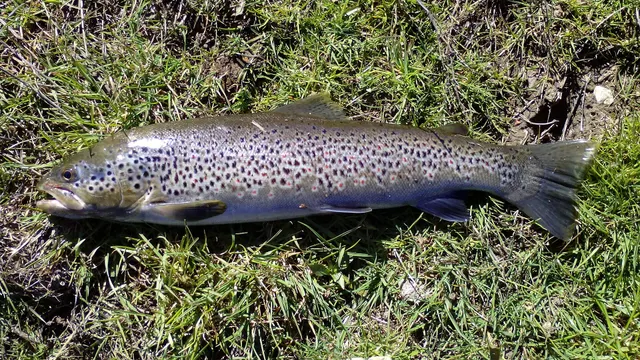 Brown troutA single, extraordinarily plastic species that appears as a tiny hill-stream fish, a deep-bodied loch trout and a silver sea-run migrant — all the same animal.
Robermix, CC0, via Wikimedia Commons
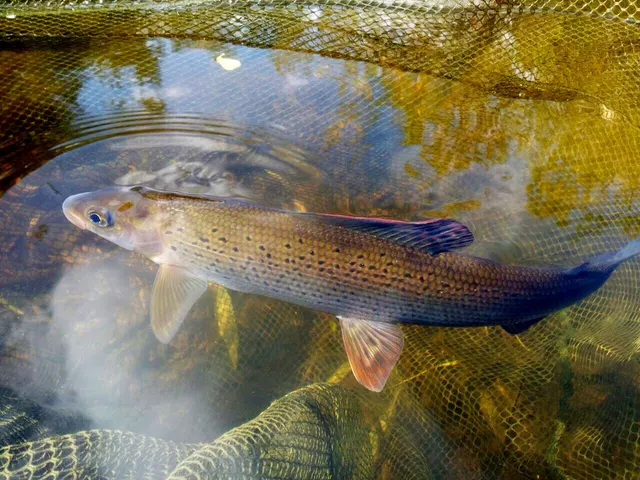 GraylingA salmonid with a sail for a dorsal fin that feeds hard through the winter — which makes it the game angler's season when the trout season has closed.
High Plains Grifter — CC BY-SA 4.0, via Wikimedia Commons
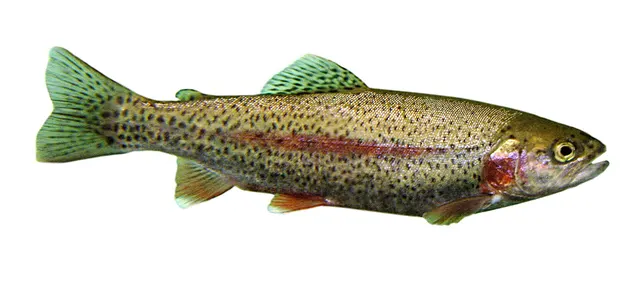 Rainbow troutThe most widely introduced sport fish on Earth — a Pacific salmonid now stocked on every continent except Antarctica, and the same species as the steelhead.
Jonathunder — CC BY-SA 3.0, via Wikimedia Commons
Places within this area
Publicly documented fishing geography. FishingHQ describes what the ground is; it does not say whether you may fish it, and every one of these sends that question to the body that holds the answer. Browse every place in this part of the world.
Who to ask before fishing any of these
FishingHQ does not know the current access position here, and Slovenia's inland arrangement is unusual enough to be worth stating plainly: the fishing on each stretch of river is managed by a fishing family — a local association holding the concession — which sells a permit for that water for a day at a time, sets the methods, and on the marble trout waters runs catch-and-release and barbless conditions as a term of the permit. Beats, quotas and seasons change. Check with the fishing family managing the water before going.
FishingHQ does not know the current access position here. Slovenia's coast is short and its recreational sea fishing is licensed by the state, with species and gear measures and with a protected landscape covering part of it. Check the current position with the ministry responsible for agriculture, forestry and food before going.
The Soča at Most na Soči
Confluence · Fresh water
The meeting of the Soča and the Idrijca in western Slovenia, where two clear alpine rivers of the same extraordinary blue-green colour join above an impounded reach, over a bed of white limestone gravel and boulder.
An alpine valley, sheltered from weather and exposed to what the mountains do to water: the river rises fast on rain and on melt.
Particular to this ground: moving water and currents.
The Slovenian coast at Piran
Headland · Salt water
A short flysch and sandstone coast at the head of the Adriatic, with a walled headland at Piran, shallow shelving rock and mud offshore, and salt pans and a protected cliff coast either side of it.
At the very head of a long shallow gulf, so the water is shallow, warm in summer, cold in winter and turbid by Adriatic standards.
Severe hazards of The Soča and Slovenia's Adriatic rivers apply here: moving water and currents.
Particular to this water: This ground lies in or beside a marine protected area whose zoning constrains fishing, diving, anchoring and collection independently of any licence, with rules that differ between zones and boundaries that are not visible from the water. This is an owned and operated structure. Whether angling is allowed on it, when, from where and on what terms is the operator's decision, is frequently seasonal, and changes without notice.
Safety
Moving water and currents — Can cause serious injury or death
The rivers are steep and fast over smooth limestone bedrock, which is among the most slippery substrate a river can have. Gorges and deep pools frequently have no easy exit. Levels respond within hours to rain and to snowmelt in the alpine catchment, and a river can rise dangerously from rainfall a long way upstream in weather that is fine locally.
What reduces it: Wade with studded soles and a staff on bedrock. Know the exit from any gorge section before descending into it. Check the weather over the whole upper catchment rather than locally, and leave the water when it starts to rise or colour.
Worse when:
- Spring snowmelt
- Thunderstorms in the mountains during otherwise settled weather
- Gorge sections with steep sides and no bank
Hypothermia — Can cause injury needing treatment
The water is snow- and spring-fed and stays cold year-round. Immersion in fast cold water in a remote alpine valley, potentially some distance from a road, escalates quickly.
What reduces it: Carry dry layers and a means of calling for help. Do not fish remote gorge sections alone. Recognise that mountain weather changes faster than a valley forecast suggests.
Worse when:
- Remote upper-catchment water
- Early and late season
- Fishing alone in a gorge
Precautions that always apply here
- Do not wade alone. Judge depth and flow from the bank first, and turn back sooner than feels necessary.
- Tell somebody where you are going and when you expect to be back.
- Carry a charged phone in a waterproof case, or another means of calling for help.
- Check, clean and dry your kit between different waters — the published guidance is 48 hours’ drying, in sunlight where possible, because a number of invasive species survive over two weeks in damp conditions. Nets, boots and wet mats move invasive species and disease more effectively than anything else anglers do.
- Wet your hands before touching a fish. Dry hands strip the protective mucus layer that keeps infection out.
Further safety reading
- Wading safely — Steep fast water over smooth limestone bedrock, among the most slippery substrate a river can have, with gorge sections that have no easy exit.
Check the rules before you fish
Fishing laws, bylaws, access rules, seasons, bait restrictions and permitted methods vary by location and can change. Check the current rules from the relevant authority and the water you intend to fish before fishing.
Check with:
- Current national or regional law for where you are fishing
- Current local bylaws
- The relevant fisheries authority
- The landowner, club or fishery whose water it is
- Any restrictions specific to the species or the method you intend to use
Where to go next
What swims here
- Brown troutIntroduced through the twentieth century, hybridised comprehensively with the native marble trout, and the direct cause of the conservation problem that now defines the fishery.
- GraylingPresent and significant, with the Soča grayling fishery having its own following alongside the marble trout.
- Rainbow troutPresent from stocking, with a status that differs by stretch and by managing club.
How this compares
Environment and conservation
Sources and evidence
- FishBase: a global information system on fishes — Froese, R. and D. Pauly, eds. — FishBase Consortium (Scientific institute)Relied on for: Distribution, habitat association and life history recorded for the species concerned.States this directlyPassage read and verified
- The IUCN Red List of Threatened Species — International Union for Conservation of Nature (Conservation authority)Relied on for: Global conservation assessment, range and recorded threats for the species.States this directlyCitation checked — the work exists and is described correctly
- Freshwater Fishes of the British Isles — HarperCollins (New Naturalist 75), 1992 (Reference work)Relied on for: Distribution, habitat association, spawning requirements and ecology of British and Irish freshwater fishes.States this directlyCitation checked — the work exists and is described correctly
- Trout & Salmon — Bauer Media (Specialist angling publication)Relied on for: Contemporary British game angling practice, including river technique, seasonal timing and fishery convention.States this directlyCitation checked — the work exists and is described correctly
- General angling website restatements of established technique — Various (Credible secondary source)Relied on for: Widely restated descriptions of regional angling practice, recorded as consensus rather than as scholarship.Background and mechanism onlyCitation checked — the work exists and is described correctly
Why the 7 connections on this page are here, and the sources
What swims here
Backed by research — 3 connections
Supported by peer-reviewed research or fisheries science. The sources are listed and can be checked.
Brown trout
A distributional claim about where a species occurs, which is a claim about the world and rests on the reference literature rather than on angling report.
- FishBase: a global information system on fishes — Froese, R. and D. Pauly, eds. — FishBase Consortium (Scientific institute)Relied on for: Distribution, habitat association and life history recorded for the species.States this directlyPassage read and verified
- The IUCN Red List of Threatened Species — International Union for Conservation of Nature (Conservation authority)Relied on for: Global conservation assessment, range and recorded threats for the species.States this directlyCitation checked — the work exists and is described correctly
Grayling
A distributional claim about where a species occurs, which is a claim about the world and rests on the reference literature rather than on angling report.
- FishBase: a global information system on fishes — Froese, R. and D. Pauly, eds. — FishBase Consortium (Scientific institute)Relied on for: Distribution, habitat association and life history recorded for the species.States this directlyPassage read and verified
- The IUCN Red List of Threatened Species — International Union for Conservation of Nature (Conservation authority)Relied on for: Global conservation assessment, range and recorded threats for the species.States this directlyCitation checked — the work exists and is described correctly
Rainbow trout
A distributional claim about where a species occurs, which is a claim about the world and rests on the reference literature rather than on angling report.
- FishBase: a global information system on fishes — Froese, R. and D. Pauly, eds. — FishBase Consortium (Scientific institute)Relied on for: Distribution, habitat association and life history recorded for the species.States this directlyPassage read and verified
- The IUCN Red List of Threatened Species — International Union for Conservation of Nature (Conservation authority)Relied on for: Global conservation assessment, range and recorded threats for the species.States this directlyCitation checked — the work exists and is described correctly
How people fish here
What experienced anglers do — 1 connection
Widely and independently recommended by experienced anglers and specialist sources. This is real angling knowledge, not proof: controlled evidence for it is limited, and FishingHQ records it as convention rather than as a demonstrated effect.
Fly fishing
A statement about which disciplines are actually practised in a place, which is angling convention rather than a fact about the world.
- Trout & Salmon — Bauer Media (Specialist angling publication)Relied on for: Contemporary British game angling practice, including river technique and fishery convention.States this directlyCitation checked — the work exists and is described correctly
- General angling website restatements of established technique — Various (Credible secondary source)Relied on for: Widely restated regional angling practice, recorded as consensus.Background and mechanism onlyCitation checked — the work exists and is described correctly
How this compares
What experienced anglers do — 1 connection
Widely and independently recommended by experienced anglers and specialist sources. This is real angling knowledge, not proof: controlled evidence for it is limited, and FishingHQ records it as convention rather than as a demonstrated effect.
The Danube
A navigational claim that two places pose the same problem differently and that a reader on one is likely to want the other.
- Angling Times — Bauer Media (Specialist angling publication)Relied on for: Contemporary British angling practice as reported week by week, across coarse, game and sea fishing, including which waters are fished for what.States this directlyCitation checked — the work exists and is described correctly
- General angling website restatements of established technique — Various (Credible secondary source)Relied on for: Widely restated descriptions of regional angling practice, recorded as consensus rather than as scholarship.Background and mechanism onlyCitation checked — the work exists and is described correctly
Safety reading
Official guidance — 1 connection
Stated by a fisheries authority, scientific institute or recognised angling body. Authoritative, but summarising rather than demonstrating.
Wading safely
A link from a place to the safety record covering the hazard its character creates.
- RNLI water safety guidance: cold water shock and Float to Live — Royal National Lifeboat Institution (Water-safety or diver-training authority)Relied on for: Water safety guidance including cold water shock and coastal risk.States this directlyPassage read and verified
Environment and conservation
Backed by research — 1 connection
Supported by peer-reviewed research or fisheries science. The sources are listed and can be checked.
Stocking: what it does to a fishery
A claim that a specific environmental issue is live in a specific place, resting on the conservation assessment of the species affected rather than on angling report.
- FishBase: a global information system on fishes — Froese, R. and D. Pauly, eds. — FishBase Consortium (Scientific institute)Relied on for: Distribution, habitat association and life history recorded for the species.States this directlyPassage read and verified
- The IUCN Red List of Threatened Species — International Union for Conservation of Nature (Conservation authority)Relied on for: Global conservation assessment, range and recorded threats for the species.States this directlyCitation checked — the work exists and is described correctly
How FishingHQ labels evidence is explained in the evidence policy.