Lake Victoria and the Rift Valley lakes
Fishing regions · Last reviewed 2026-08-14
The largest tropical lakes on earth, holding more freshwater fish species than anywhere else — and the site of the most consequential fish introduction ever made.
Safety: drowning and immersion — can cause serious injury or death. 2 more points apply here.
Being listed here is not permission to fish. What that meansClose
Access, fishing rights, seasons, licences, local bylaws and permitted methods vary and can change. Check current access, permission, local regulations, closures and restrictions before you travel or fish. FishingHQ describes what the ground is and names who holds the answer; it does not hold the answer itself.
Find the authority for a jurisdiction · What FishingHQ does and does not cover
The African great lakes qualify as a system record because their fisheries are explained by one geological and evolutionary story that no country around them contains.
THE RIFT MADE THE LAKES. The East African Rift is a continental plate boundary pulling apart, and the deep lakes — Tanganyika, Malawi and others — sit in the resulting troughs. They are extremely deep, extremely old, and permanently stratified, which is the single most important fact about them biologically.
LAKE VICTORIA IS DIFFERENT AND IT MATTERS. It sits in a shallow basin between the rift arms rather than in a rift trough: very large in area, shallow by comparison, geologically young, and repeatedly dried and refilled. Its fauna is correspondingly young and was, until recently, spectacularly diverse.
THE CICHLID RADIATIONS ARE THE BIOLOGICAL EVENT. Each of the great lakes independently generated hundreds of endemic cichlid species from a small number of ancestors, occupying every conceivable feeding niche. It is among the fastest and most studied adaptive radiations known, and it is the reason these lakes hold more freshwater fish species than any comparable waters on earth.
THE NILE PERCH INTRODUCTION IS THE MOST CONSEQUENTIAL SINGLE FISHERIES DECISION EVER TAKEN. A large predatory fish was introduced to Lake Victoria in the mid-twentieth century. It created an enormous export fishery and it contributed to the loss or severe reduction of a very large number of endemic cichlid species — an extinction event of a scale rarely attributable to one action. FishingHQ already holds Nile perch as a target record; this is where the rest of that story lives.
AND THE DEEP LAKES ARE STRATIFIED AND MOSTLY DEAD BELOW. Permanent stratification means the deep water of Tanganyika and Malawi is anoxic, so the entire fishery is confined to a comparatively thin surface layer.
What fishing here is like
Very large tropical lakes of two kinds: deep, ancient, permanently stratified rift lakes with fisheries confined to a thin oxygenated surface layer, and the shallower, younger, enormous basin of Lake Victoria. Both types generated hundreds of endemic cichlid species. The fisheries are overwhelmingly artisanal and enormously important to food security, dominated by small pelagic fish taken at night under lights and, on Victoria, by an introduced predator that built an export industry and cost a great many endemic species. Recreational angling is small and concentrated on Nile perch, tigerfish and the tilapias.
What dominates
Small-scale gillnetting, beach seining and lift-net fishing from canoes and small boats, which is the bulk of the effort. Night fishing for small pelagic fish under lights, the dominant method by volume on the deep lakes. Longlining and handlining for Nile perch. Trap and basket fishing in shallow and inshore water. Recreational trolling and lure fishing for Nile perch and tigerfish, largely from a small number of established lodges and operators. Ornamental fish collection for the aquarium trade on the deep lakes, a genuine and regulated fishery in its own right. Aquaculture in cages, now a significant and growing part of production.
The water available
Deep rift troughs with steep rocky shores and permanent stratification, so oxygenated water is limited to a surface layer of the order of a couple of hundred metres and everything below is dead water; open pelagic zones supporting small schooling fish; rocky littoral zones which are where the cichlid radiations are most concentrated and most localised; sandy and vegetated shallows; extensive papyrus swamp and wetland fringes on Lake Victoria; river inflows and satellite lakes, several of which retain species lost from the main lake; and shallow, turbid, nutrient-enriched inshore water on Victoria where eutrophication is most advanced.
How the rules are structured
Each lake is shared between countries and each riparian state regulates its own waters through a national fisheries authority, generally with provincial or district implementation and, increasingly, with beach management units or community bodies given a defined role at landing sites. Regional bodies exist for the shared lakes to coordinate management, research and harmonisation of measures between the riparian states, but they coordinate rather than regulate. Common instruments include minimum mesh sizes, prohibitions on beach seining and other destructive gear, minimum landing sizes for the main commercial species, closed seasons and closed areas, and licensing of vessels and gear. Enforcement capacity varies and illegal gear is a persistent problem. National parks and protected areas cover parts of some lakes, notably where the endemic rocky-shore cichlid communities are concentrated, and the ornamental fish trade is separately licensed. FishingHQ does not state what any current rule is.
Who to ask
- The national fisheries authority of the riparian country whose waters the fishing takes place in.
- The district or provincial fisheries office, which usually implements gear rules, licensing and landing controls.
- The beach management unit or community fisheries body at the landing site, which in several countries has a defined co-management role.
- The regional lake organisation for the shared lake concerned, for coordination, research and harmonisation between the riparian states.
- The national park or wildlife authority where the water lies inside a protected area, including the reserves protecting endemic cichlid communities.
Words you will meet
- Dagaa / kapenta / usipa
- Regional names for the small pelagic fish taken at night under lights that dominate the catch by weight across the great lakes. Sun-dried and traded far inland, they are among the most important protein sources in the region.
- Mbuna
- The rock-dwelling cichlids of Lake Malawi. Highly localised, frequently confined to a single stretch of rocky shore, and the group that made these lakes famous in evolutionary biology and in the aquarium trade.
- Beach management unit
- A community-level body at a landing site with a defined role in fisheries co-management, including registration, gear compliance and landing records. The institution through which much lake fisheries management is actually attempted.
- Mwanza Gulf
- A large southern arm of Lake Victoria, heavily studied because it is where the ecological consequences of the Nile perch introduction and of eutrophication were most closely documented.
- Satellite lake
- A smaller lake connected or formerly connected to a great lake, several of which retain endemic species that have been lost from the main lake. They function as refuges and are disproportionately important to conservation.
Conditions and hazards
These lakes are large enough to generate genuine sea conditions and the small craft used on them are frequently unsuited to it: sudden violent squalls, particularly in the afternoon and at night, capsize canoes and open boats, and drowning is a major cause of death among lake fishers. Few wear buoyancy aids and few can swim. Crocodiles and hippopotamus are present in many shore and shallow areas and are a serious and frequent cause of death and injury, hippopotamus more so than crocodiles in some areas because they overturn boats. Bilharzia is endemic in the shallows of several lakes and is contracted through skin contact with water. Malaria is widespread. On the deep lakes, deep water is anoxic and offers no refuge; falling overboard far from shore in a large lake with no rescue infrastructure is effectively unsurvivable without flotation. Storms build quickly and there is frequently no shelter within reach.
A rift, a basin, and two completely different kinds of lake
Grouping these lakes together is useful only if the difference between them is stated first, because their physical structures are not alike.
THE RIFT LAKES SIT IN TECTONIC TROUGHS. Tanganyika and Malawi occupy deep, narrow depressions formed as the African plate pulls apart. They are very deep, very old, and steep-sided, with rocky shores dropping quickly into deep water.
THEY ARE PERMANENTLY STRATIFIED, AND THIS IS THE CENTRAL FACT. In a temperate lake, seasonal cooling mixes the water column each year. In a deep tropical lake, surface water never cools enough to sink, so the column never fully turns over. The result is that oxygen is confined to an upper layer and everything below it is permanently anoxic. Lake Tanganyika is enormously deep and only a fraction of that depth is habitable. The fishery is therefore a surface-layer fishery no matter how deep the lake is.
LAKE VICTORIA IS NOT A RIFT LAKE. It sits in a shallow downwarped basin between the two rift arms, is very large in area but comparatively shallow, and is geologically young — it has dried out and refilled within the recent geological past. That youth is why its cichlid radiation, which was still spectacular, was also evolutionarily very fast.
THE ROCKY LITTORAL IS WHERE THE DIVERSITY LIVES. On the deep lakes, rocky shores hold cichlid communities so localised that a species may occupy one headland and not the next. Sandy stretches between rocky outcrops act as barriers to species that will not cross open sand, which is precisely the mechanism that generated so many species.
AND VICTORIA'S SHALLOWS HAVE CHANGED CHEMICALLY. Nutrient enrichment from catchment agriculture and population has driven eutrophication, algal blooms and periodic deoxygenation of deeper water, which reduced the available habitat independently of anything to do with fishing.
Backed by research — why, and the sources (2)
Supported by peer-reviewed research or fisheries science. The sources are listed and can be checked.
- The IUCN Red List of Threatened Species — International Union for Conservation of Nature (Conservation authority)Relied on for: Assessment and habitat accounts for the endemic and introduced fishes of the great African lakes, including extinction risk following the Nile perch introduction.States this directlyCitation checked — the work exists and is described correctly
- FishBase: a global information system on fishes — Froese, R. and D. Pauly, eds. — FishBase Consortium (Scientific institute)Relied on for: Distribution, habitat association, feeding ecology and life history recorded for the species of the lakes.States this directlyPassage read and verified
Hundreds of cichlids, one introduced predator, and what happened next
The species story of these lakes is the most dramatic on FishingHQ, and it has to be told in the right order.
THE CICHLID RADIATIONS CAME FIRST. Each great lake independently generated a very large number of endemic cichlid species from a small ancestral stock — several hundred in each of the major lakes. They occupy specialised niches: scale-eaters, algae-scrapers, snail-crushers, paedophages that take young from other fishes' mouths, and every ordinary trophic role besides. Many are confined to tiny areas of rocky shore. This is among the fastest known adaptive radiations in vertebrates and it is why these lakes matter to biology as much as to fisheries.
THE HAPLOCHROMINES OF VICTORIA WERE THE MOST EXTREME CASE, with several hundred species in a young lake, and they supported a diverse traditional fishery.
NILE PERCH WAS INTRODUCED TO LAKE VICTORIA IN THE MID-TWENTIETH CENTURY. A large piscivore from other African waters, it was introduced with the aim of creating a more productive fishery from what was seen as an under-used biomass of small fish. It succeeded at that aim on a scale nobody planned for.
THE CONSEQUENCES WERE ENORMOUS IN BOTH DIRECTIONS. An export industry grew rapidly around Nile perch, employing very large numbers of people and generating substantial foreign earnings. At the same time a very large number of endemic haplochromine cichlid species declined severely or disappeared from the open lake — one of the largest vertebrate extinction events attributable to a single human action. Eutrophication acted alongside predation, and disentangling the two remains an active scientific question, but the introduction is central to any honest account.
SOME SPECIES SURVIVED IN REFUGES. Satellite lakes, rocky margins and wetland fringes retained populations of species lost from the main lake, and some have partially recovered as Nile perch abundance itself declined under fishing pressure.
DAGAA AND THE SMALL PELAGICS NOW DOMINATE THE CATCH BY WEIGHT across the great lakes. Small schooling fish taken at night under lights, sun-dried and traded inland, are the actual protein base of the region's lake fisheries.
AND TILAPIA AND TIGERFISH COMPLETE THE PICTURE — Nile tilapia widely introduced and now central to both fisheries and aquaculture, and African tigerfish as the principal sporting predator of the river-connected waters.
Backed by research — why, and the sources (2)
Supported by peer-reviewed research or fisheries science. The sources are listed and can be checked.
- The IUCN Red List of Threatened Species — International Union for Conservation of Nature (Conservation authority)Relied on for: Assessment and habitat accounts for the endemic and introduced fishes of the great African lakes, including extinction risk following the Nile perch introduction.States this directlyCitation checked — the work exists and is described correctly
- FishBase: a global information system on fishes — Froese, R. and D. Pauly, eds. — FishBase Consortium (Scientific institute)Relied on for: Distribution, habitat association, feeding ecology and life history recorded for the species of the lakes.States this directlyPassage read and verified
Night lights, gillnets and a very small sport fishery
Fishing on these lakes is overwhelmingly a food fishery worked at household and small-enterprise scale, and the disciplines reflect that.
THE NIGHT LIGHT FISHERY IS THE LARGEST BY VOLUME. Small pelagic fish are attracted to lamps suspended over the water at night and taken with lift nets or small seines from canoes and small boats. On a dark night the lakes carry constellations of lights, and the dried product travels hundreds of kilometres inland. This is the single most important fishery in the system by tonnage and by the number of people fed.
GILLNETTING IS THE UNIVERSAL GEAR for larger fish, worked from canoes and small boats, with mesh size the principal regulated variable and undersized mesh the principal compliance problem.
BEACH SEINING IS WIDELY PROHIBITED AND WIDELY USED. Dragging a net onto a beach takes juveniles and damages inshore nursery habitat, which is why it is banned in most of the region and why it persists is an enforcement and poverty question rather than an ignorance one.
LONGLINING AND HANDLINING TAKE NILE PERCH, worked from small boats on Lake Victoria, supplying both local markets and the export processing sector.
TRAPS, BASKETS AND WEIRS work the shallows and the river connections, using long-established designs.
THE ORNAMENTAL FISHERY IS A GENUINE AND SEPARATE DISCIPLINE. Collecting rock-dwelling cichlids for the aquarium trade on the deep lakes is a licensed activity with its own techniques, its own export chain and its own conservation questions, given how localised many of the species are.
RECREATIONAL ANGLING IS SMALL AND CONCENTRATED. Trolling and lure fishing for Nile perch, and tigerfish angling on connected river systems, operate from a limited number of lodges and licensed operators. It is a genuine fishery with international visitors and it is a rounding error beside the food fishery it shares the water with.
AND CAGE AQUACULTURE HAS GROWN QUICKLY, particularly for tilapia, and now represents a substantial share of fish production with its own environmental interactions.
What experienced anglers do — why, and the sources (2)
Widely and independently recommended by experienced anglers and specialist sources. This is real angling knowledge, not proof: controlled evidence for it is limited, and FishingHQ records it as convention rather than as a demonstrated effect.
- FAO fishing gear types and fishing technology information — Food and Agriculture Organization of the United Nations (Scientific institute)Relied on for: Descriptions of fishing gear types and their operation, including the small-scale gears used by artisanal fisheries in the region.States this directlyCitation checked — the work exists and is described correctly
- IGFA International Angling Rules and World Record Requirements — International Game Fish Association (Angling or fisheries organisation)Relied on for: International recreational angling practice, tackle categories and the conventions applied to recognised catches.Background and mechanism onlyPassage read and verified
Tropical lakes have seasons, and they are not temperature seasons
A reader used to temperate stillwaters will look for a thermal cycle here and find something else entirely.
THERE IS NO SEASONAL TURNOVER ON THE DEEP LAKES, and that absence is the defining seasonal fact. Surface water never cools enough to sink through the column, so the annual mixing that renews nutrients in a temperate lake does not happen. What limited mixing occurs is wind-driven and partial, and it is what sets the productivity of the surface layer.
THE WIND SEASON IS THEREFORE THE PRODUCTIVITY SEASON. On the deep rift lakes, a windier period tilts the thermocline and brings nutrient-rich water closer to the surface at one end of the lake, driving a seasonal pulse of production and a corresponding pulse in the pelagic fishery.
THE RAINS DRIVE THE INSHORE AND RIVER-CONNECTED FISHERIES. Wet-season inflows raise water levels, flood shoreline vegetation, and cue the movement of river-associated species. Tigerfish and other riverine species respond to rising water in the way FishingHQ's Mekong page describes for a much larger system.
BREEDING IS BROADLY CONTINUOUS BUT PEAKS WITH THE RAINS for many species. Mouthbrooding cichlids breed through much of the year, which is one reason their populations can respond quickly, and it is also why a fixed closed season is a blunter tool here than in a temperate fishery.
THE LUNAR CYCLE GOVERNS THE NIGHT FISHERY. Light fishing for small pelagics works poorly when the moon is bright, so effort concentrates on dark nights. The fishing calendar for the largest fishery on these lakes is therefore lunar, and landing statistics show it.
AND THE STORM SEASON IS THE SAFETY SEASON. Squalls are more frequent and more violent in some months than others, and the loss of small craft follows that pattern. On a lake large enough to generate a real sea, the fishing calendar is partly a weather-survival calendar.
Backed by research — why, and the sources (2)
Supported by peer-reviewed research or fisheries science. The sources are listed and can be checked.
- The IUCN Red List of Threatened Species — International Union for Conservation of Nature (Conservation authority)Relied on for: Assessment and habitat accounts for the endemic and introduced fishes of the great African lakes, including extinction risk following the Nile perch introduction.States this directlyCitation checked — the work exists and is described correctly
- FishBase: a global information system on fishes — Froese, R. and D. Pauly, eds. — FishBase Consortium (Scientific institute)Relied on for: Distribution, habitat association, feeding ecology and life history recorded for the species of the lakes.States this directlyPassage read and verified
Dagaa, mbuna and the words the aquarium trade exported
The vocabulary of these lakes has travelled unusually far, because the aquarium trade carried some of it worldwide.
DAGAA, KAPENTA AND USIPA ARE REGIONAL NAMES FOR THE SAME KIND OF FISHERY: small pelagic fish taken at night under lights and sun-dried. They are different species in different lakes and the words are not interchangeable, but the practice and the economic role are the same. If a reader learns one word about these lakes' fisheries, it should be one of these, because this is what the fishery actually is.
MBUNA NAMES THE ROCK-DWELLING CICHLIDS OF LAKE MALAWI and it is a local word that entered global aquarium usage intact. It carries an ecological meaning — rock-associated, territorial, algae-grazing, highly localised — rather than being a taxonomic label.
HAPLOCHROMINE IS THE SCIENTIFIC TERM a reader will meet for the enormous species flock of Lake Victoria. It is worth knowing because most accounts of the Nile perch story use it, and because the group is the subject of the extinction event.
BEACH MANAGEMENT UNIT IS AN INSTITUTIONAL TERM WORTH LEARNING because it names the body that actually attempts management at the point where fish are landed, and because it is the level at which most practical questions about a fishery here are answered.
SATELLITE LAKE NAMES A CONSERVATION CATEGORY. Smaller lakes connected or formerly connected to a great lake hold species lost from the main water, and the term flags a refuge rather than merely a small lake.
AND STRATIFICATION AND ANOXIA ARE THE TWO PHYSICAL WORDS THAT EXPLAIN THE DEEP LAKES. A reader who understands that only the top layer is alive has understood why an enormously deep lake can have a surprisingly limited fishery, which is the least intuitive thing about this system.
What experienced anglers do — why, and the sources (2)
Widely and independently recommended by experienced anglers and specialist sources. This is real angling knowledge, not proof: controlled evidence for it is limited, and FishingHQ records it as convention rather than as a demonstrated effect.
- The IUCN Red List of Threatened Species — International Union for Conservation of Nature (Conservation authority)Relied on for: Assessment and habitat accounts for the endemic and introduced fishes of the great African lakes, including extinction risk following the Nile perch introduction.States this directlyCitation checked — the work exists and is described correctly
- FishBase: a global information system on fishes — Froese, R. and D. Pauly, eds. — FishBase Consortium (Scientific institute)Relied on for: Distribution, habitat association, feeding ecology and life history recorded for the species of the lakes.States this directlyPassage read and verified
An introduction, an industry and an extinction, in one lifetime
The modern history of these lakes is compressed into a few decades and it is worth setting out as a sequence rather than as a verdict.
THE TRADITIONAL FISHERY WAS DIVERSE AND LOCAL. Before the mid-twentieth century, the Lake Victoria fishery took a wide range of native species, including many haplochromine cichlids and the native tilapias, using traps, baskets, seines and lines, supplying local markets.
THE INTRODUCTION WAS MADE WITH STATED INTENTIONS. Nile perch was introduced to Lake Victoria in the mid-twentieth century, with the reasoning that a large predator would convert an abundant biomass of small, commercially unattractive fish into a valuable large fish. The decision was contested at the time by some scientists.
THE FISHERY EXPLODED AND SO DID THE INDUSTRY AROUND IT. Nile perch catches rose enormously from the 1980s, filleting and freezing plants were built, and an export trade to Europe and elsewhere developed rapidly, employing very large numbers of people and reshaping the economies of the lakeshore.
THE ENDEMIC FAUNA COLLAPSED IN THE SAME PERIOD. A very large number of haplochromine species declined severely or disappeared from the open lake. Predation by Nile perch and eutrophication driven by catchment change acted together, and the relative contribution of each is still argued, but the scale of the loss is not in dispute. It is among the largest vertebrate extinction events attributable to a single deliberate act.
THE SOCIAL CONSEQUENCES WERE MIXED AND ARE STILL DEBATED. Export earnings and employment rose; local access to cheap fish protein changed, because the valuable fish went to export while the by-product supplied local markets. This is documented and contested, and honest accounts do not resolve neatly in either direction.
THEN NILE PERCH ITSELF DECLINED under fishing pressure, and some haplochromine populations partially recovered — a further illustration that the lake is a dynamic system rather than a settled one.
AND THE DEEP LAKES HAVE THEIR OWN HISTORY: long-established artisanal fisheries, twentieth-century commercial pelagic fisheries for the small schooling species, and a scientific record that made them foundational to evolutionary biology. Warming has begun to strengthen stratification, which reduces the mixing these lakes' productivity depends on.
Official guidance — why, and the sources (2)
Stated by a fisheries authority, scientific institute or recognised angling body. Authoritative, but summarising rather than demonstrating.
- Good Fish Guide — Marine Conservation Society (Conservation authority)Relied on for: Assessment of fisheries and the management measures applied to them, including gear selectivity and spatial protection.Background and mechanism onlyCitation checked — the work exists and is described correctly
- Code of Conduct for Responsible Fisheries — Food and Agriculture Organization of the United Nations, Rome, 1995 (Standards body)Relied on for: Principles for responsible fisheries management, precaution, and the treatment of small-scale, shared and inland fisheries.States this directlyCitation checked — the work exists and is described correctly
Food, livelihoods and a fishery that carries a region
The social weight of these fisheries is the context for every other statement in this page.
FISH FROM THESE LAKES FEEDS AN ENORMOUS NUMBER OF PEOPLE. Dried small pelagic fish is traded far inland and is one of the cheapest sources of animal protein available across a wide region. A change in the lake fishery is a nutrition question for people who have never seen the lake.
THE FISHERY EMPLOYS AT EVERY STAGE. Fishing, landing, drying, smoking, transport and trading involve very large numbers of people, and the post-harvest sector — much of it women's work — employs more than the catching sector does. Describing the fishery as the people in the boats describes a minority of it.
THE LANDING SITE IS THE SOCIAL UNIT. Beaches with landing, processing, trading and living all in one place are the organising centres of the lakeshore economy, and the beach management unit institution exists because that is where fisheries governance can realistically reach.
THE EXPORT SECTOR CREATED A DIFFERENT ECONOMY on Lake Victoria, with processing plants, quality standards driven by importing markets, and a value chain that reaches out of the region. Its arrival changed who benefits from the lake and how, and the fairness of that distribution has been argued about for decades.
SAFETY IS A CULTURAL PROBLEM AS WELL AS AN EQUIPMENT ONE. Drowning is a leading cause of death among lake fishers, buoyancy aids are rare, swimming ability is not universal, and squalls arrive fast on water big enough to raise a sea. This is a well-documented and largely unaddressed toll.
RECREATIONAL ANGLING IS A VISITOR ACTIVITY IN THE MAIN, operating from a small number of lodges, and it sits beside a food fishery of overwhelming scale. The etiquette that follows is obvious and is worth stating: this is somebody's livelihood water.
AND FISHINGHQ DOES NOT SPEAK FOR THE COMMUNITIES OF THESE LAKES. What is recorded here is what the public and scientific record supports about how these fisheries work and what has happened to them.
Official guidance — why, and the sources (2)
Stated by a fisheries authority, scientific institute or recognised angling body. Authoritative, but summarising rather than demonstrating.
- Good Fish Guide — Marine Conservation Society (Conservation authority)Relied on for: Assessment of fisheries and the management measures applied to them, including gear selectivity and spatial protection.Background and mechanism onlyCitation checked — the work exists and is described correctly
- Code of Conduct for Responsible Fisheries — Food and Agriculture Organization of the United Nations, Rome, 1995 (Standards body)Relied on for: Principles for responsible fisheries management, precaution, and the treatment of small-scale, shared and inland fisheries.States this directlyCitation checked — the work exists and is described correctly
Inland seas, small boats, and a drowning record that dwarfs the animals
The dangers here are frequently described in the wrong order. Visitors arrive worrying about crocodiles and hippopotamus, which are real. The thing that actually kills the most people on these lakes is the water itself, and the reason is a mismatch between the size of the lake and the size of the boat.
THESE ARE INLAND SEAS RATHER THAN LAKES. They are large enough to have a horizon, large enough for a long fetch, and therefore large enough to raise a genuine sea. Squalls build quickly with very little warning, particularly in the afternoon and at night, and there is frequently no shelter within reach when one arrives.
AND THE CRAFT ARE NOT BUILT FOR THAT SEA. Small canoes and open boats are swamped or capsized far from any shore. Buoyancy aids are rarely worn. Swimming ability cannot be assumed among the people who fish these waters professionally, and a person in the water in the middle of a large lake with no flotation and no rescue infrastructure is in a situation with essentially one outcome. Drowning is a leading cause of death among lake fishers here, and that is a fishing-safety fact rather than a general development statistic.
WHICH IS WHY THE SINGLE HIGHEST-VALUE INTERVENTION HERE IS FLOTATION: a buoyancy aid worn changes the arithmetic of a capsize far from shore more than anything else available.
THE DEEP LAKES ADD SOMETHING UNUSUAL UNDERNEATH. Below a certain depth these waters are permanently anoxic — no oxygen, no life, no mixing — which is why the fish are concentrated in a thin upper layer and why a lake this size holds so much life in so little of its volume.
THE ANIMALS ARE SERIOUS AND SPECIFIC. Hippopotamus cause a substantial number of deaths and the mechanism is boats: they overturn them, being territorial in shallow water rather than predatory. Crocodiles take people wading, washing or working nets at the edge. Both are hazards of the SHORE AND THE SHALLOWS rather than open water, which inverts the intuition that safety lies close to land.
DISEASE IS ORDINARY HERE RATHER THAN EXOTIC. Bilharzia is endemic in the shallows of several of these lakes and is contracted through skin contact with fresh water containing the intermediate snail host — so wading and swimming, not drinking, are the exposure. Malaria is widespread throughout the region. Both are ordinary risks for anybody spending time on or beside the water, and both are managed by preparation before travelling rather than by anything done at the waterside.
WHAT ACTUALLY HELPS. Wear flotation. Watch for building cloud in the afternoon and start back early rather than late. Take local advice about hippopotamus stretches and honour it. Stay out of the shallows where you have been told not to be, and do not wash or wade casually. Prepare for the disease risk before arriving. And treat a decision to stay ashore as an ordinary one on a lake that can raise a sea in twenty minutes.
Official guidance — why, and the sources (3)
Stated by a fisheries authority, scientific institute or recognised angling body. Authoritative, but summarising rather than demonstrating.
- RNLI water safety guidance: cold water shock and Float to Live — Royal National Lifeboat Institution (Water-safety or diver-training authority)Relied on for: Cold water shock and the immersion response, and water-safety guidance for shore anglers and small-craft users.States this directlyPassage read and verified
- Code of Conduct for Responsible Fisheries — Food and Agriculture Organization of the United Nations, Rome, 1995 (Standards body)Relied on for: That responsible fishing includes the safety of fishers, and the international framework within which national fisheries authorities set and revise measures.Background and mechanism onlyCitation checked — the work exists and is described correctly
- General angling website restatements of established technique — Various (Credible secondary source)Relied on for: Widely restated descriptions of regional angling practice and of the conditions under which it is undertaken, recorded as practitioner consensus rather than as scholarship.Background and mechanism onlyCitation checked — the work exists and is described correctly
Some of what lives here
Fish recorded here that FishingHQ holds a reviewed photograph of. It is not a complete list of what Lake Victoria and the Rift Valley lakes holds, and it is not a prediction that you will catch any of them — it is a way in to the ones we can show you.
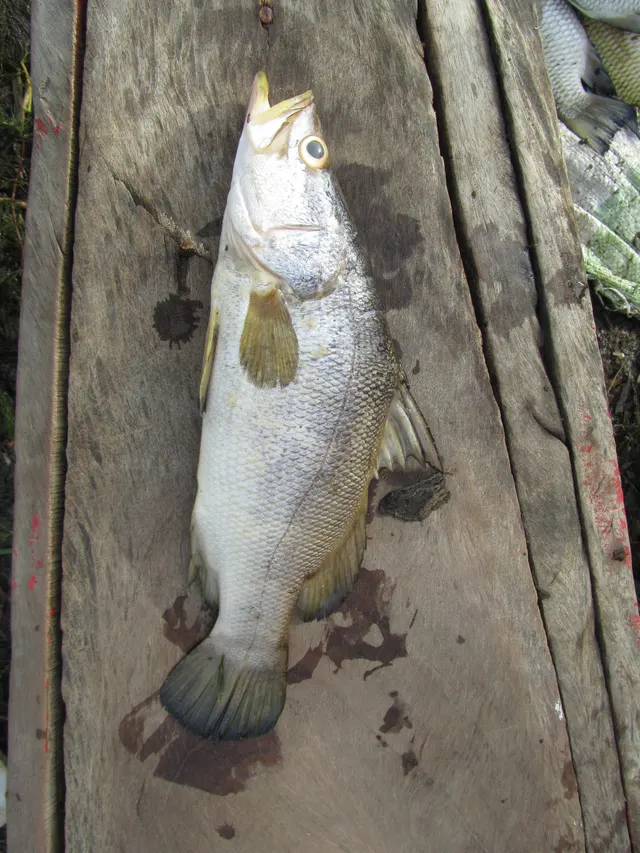 Nile perchA huge African predator that is a major food fishery, a sport fish, and the cause of one of the worst extinction events on record.
Lucy Keith-Diagne — CC BY, via iNaturalist
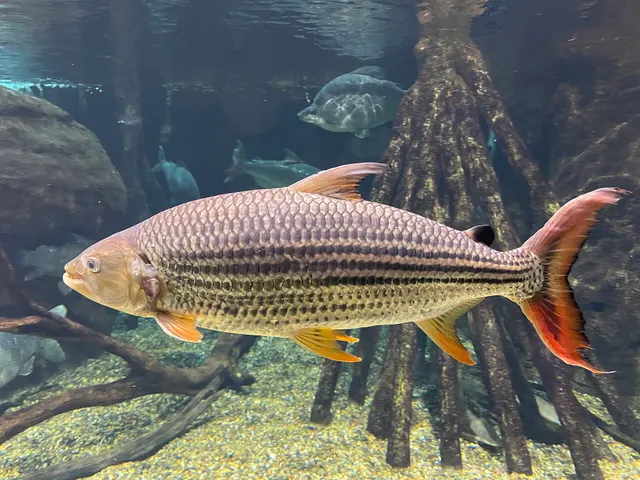 African tigerfishA fast, silver, heavily toothed river predator of tropical Africa whose interlocking fangs are visible with its mouth shut — and one of the hardest fish in fresh water to hook.
Totti — CC BY-SA 4.0, via Wikimedia Commons
Safety
Drowning and immersion — Can cause serious injury or death
These lakes are large enough to raise a genuine sea, and squalls build quickly with little warning. Small canoes and open boats are swamped or capsized far from shore, buoyancy aids are rarely worn, and swimming ability cannot be assumed. Drowning is a leading cause of death among people who fish these waters.
What reduces it: Wear a buoyancy aid, treat an afternoon or night squall as the expected event rather than the unlikely one, stay within reach of shelter on a large lake, and do not rely on being able to swim in open water far from land.
Worse when:
- Afternoon and night, when squalls are most frequent.
- On the open lake, where there is no shelter within reach and no rescue infrastructure.
- In an overloaded or unstable small craft, which is the ordinary working boat here.
Species that bite — Can cause serious injury or death
Crocodiles and hippopotamus occupy shore and shallow areas of many of these lakes and their connected rivers. Hippopotamus overturn boats and are responsible for a substantial number of deaths; crocodiles take people wading, washing or working nets at the water's edge.
What reduces it: Do not enter the water where either animal is present, keep away from hippopotamus and never between one and deep water or between a cow and a calf, avoid the water's edge at dawn and dusk, and treat local knowledge about which stretches are avoided as accurate.
Biosecurity and disease transfer — Can cause injury needing treatment
Bilharzia is endemic in the shallows of several of these lakes and is contracted through skin contact with fresh water containing the intermediate snail host. Malaria is widespread throughout the region. Both are ordinary rather than exotic risks for anyone spending time on or beside the water.
What reduces it: Avoid skin contact with shallow vegetated water where bilharzia is present, seek testing and treatment after exposure rather than waiting for symptoms, and take malaria precautions seriously including nets and prophylaxis where advised.
Further safety reading
- Boat safety for anglers — These lakes are large enough to raise a genuine sea, squalls build quickly, and small canoes and open boats are swamped far from any shore.
- Buoyancy aids for anglers — Buoyancy aids are rarely worn by people who fish these lakes and swimming ability cannot be assumed, which is why drowning is a leading cause of death among them.
- Dangerous animals where you fish — Hippopotamus and Nile crocodile occupy the same margins and access points anglers use, and hippopotamus account for more human deaths in Africa than crocodiles do.
- Weather, lightning and open water — Afternoon and night squalls on water this large arrive with little warning and there is frequently no shelter within reach.
Check the rules before you fish
Fishing laws, bylaws, access rules, seasons, bait restrictions and permitted methods vary by location and can change. Check the current rules from the relevant authority and the water you intend to fish before fishing.
Check with:
- Current national or regional law for where you are fishing
- Current local bylaws
- The relevant fisheries authority
- The landowner, club or fishery whose water it is
- Any restrictions specific to the species or the method you intend to use
Where to go next
What swims here
- African sharptooth catfishA widespread air-breathing catfish of the lakes and their inflows, tolerant of the low-oxygen shallows that other species cannot use.
- African tigerfishOccurs in the river-connected waters of the rift system, where it is the principal sporting predator.
- DagaaThe small pelagic fish taken at night under lights that dominates the catch by weight across the great lakes and is dried and traded far inland.
- Nile perchIntroduced to Lake Victoria in the mid-twentieth century, where it created an enormous export fishery and contributed to the loss of a very large number of endemic cichlid species.
- Nile tilapiaWidely introduced across the lakes and now central to both the capture fishery and the region's cage aquaculture.
How people fish here
- HandliningLonglining and handlining for Nile perch is a substantial fishery on Lake Victoria supplying both local markets and the export processing sector.
- Lure fishingTrolling and lure fishing for Nile perch and tigerfish is the small recreational fishery, operating from a limited number of lodges.
- Traditional net fishingGillnets, beach seines and lift nets worked from canoes and small boats account for the bulk of effort, with beach seining widely prohibited and widely used.
- Traps and potsTraps, baskets and weirs work the shallows and the river connections using long-established designs.
How this compares
Rules and access
- Method and bait restrictionsMinimum mesh sizes and prohibitions on beach seining and other destructive gear are the near-universal instruments across the shared lakes.
- Size limits and retentionMinimum landing sizes for the principal commercial species are applied by each riparian state, and fish and fishers cross the boundaries the rules do not.
Environment and conservation
- Fish stocks and sustainabilityUndersized mesh, beach seining and the export processing sector's demand act together on stocks that feed an enormous number of people, and compliance is an economic problem rather than an informational one.
- Invasive species and biosecurityThe Nile perch introduction to Lake Victoria is among the largest vertebrate extinction events attributable to a single deliberate act, and it is the reference case for what an introduced predator can do.
History and culture
Sources and evidence
- The IUCN Red List of Threatened Species — International Union for Conservation of Nature (Conservation authority)Relied on for: Assessment and habitat accounts for the endemic and introduced fishes of the great African lakes, including extinction risk following the Nile perch introduction.States this directlyCitation checked — the work exists and is described correctly
- FishBase: a global information system on fishes — Froese, R. and D. Pauly, eds. — FishBase Consortium (Scientific institute)Relied on for: Distribution, habitat association, feeding ecology and life history recorded for the species of the lakes.States this directlyPassage read and verified
- Good Fish Guide — Marine Conservation Society (Conservation authority)Relied on for: Assessment of fisheries and the management measures applied to them, including gear selectivity and spatial protection.Background and mechanism onlyCitation checked — the work exists and is described correctly
- Code of Conduct for Responsible Fisheries — Food and Agriculture Organization of the United Nations, Rome, 1995 (Standards body)Relied on for: Principles for responsible fisheries management, precaution, and the treatment of small-scale, shared and inland fisheries.States this directlyCitation checked — the work exists and is described correctly
Why the 19 connections on this page are here, and the sources
What swims here
Backed by research — 5 connections
Supported by peer-reviewed research or fisheries science. The sources are listed and can be checked.
African sharptooth catfish
A distribution association between an animal and a kind of water, rather than a claim about any named mark.
- The IUCN Red List of Threatened Species — International Union for Conservation of Nature (Conservation authority)Relied on for: Assessment and habitat account for the species, including the river or lake system it occupies and the pressures acting on it.States this directlyCitation checked — the work exists and is described correctly
- FishBase: a global information system on fishes — Froese, R. and D. Pauly, eds. — FishBase Consortium (Scientific institute)Relied on for: Distribution, habitat association, size and life history recorded for the species in the system concerned.States this directlyPassage read and verified
African tigerfish
A distribution association between an animal and a kind of water, rather than a claim about any named mark.
- The IUCN Red List of Threatened Species — International Union for Conservation of Nature (Conservation authority)Relied on for: Assessment and habitat account for the species, including the river or lake system it occupies and the pressures acting on it.States this directlyCitation checked — the work exists and is described correctly
- FishBase: a global information system on fishes — Froese, R. and D. Pauly, eds. — FishBase Consortium (Scientific institute)Relied on for: Distribution, habitat association, size and life history recorded for the species in the system concerned.States this directlyPassage read and verified
Dagaa
A distribution association between an animal and a kind of water, rather than a claim about any named mark.
- The IUCN Red List of Threatened Species — International Union for Conservation of Nature (Conservation authority)Relied on for: Assessment and habitat account for the species, including the river or lake system it occupies and the pressures acting on it.States this directlyCitation checked — the work exists and is described correctly
- FishBase: a global information system on fishes — Froese, R. and D. Pauly, eds. — FishBase Consortium (Scientific institute)Relied on for: Distribution, habitat association, size and life history recorded for the species in the system concerned.States this directlyPassage read and verified
Nile perch
A distribution association between an animal and a kind of water, rather than a claim about any named mark.
- The IUCN Red List of Threatened Species — International Union for Conservation of Nature (Conservation authority)Relied on for: Assessment and habitat account for the species, including the river or lake system it occupies and the pressures acting on it.States this directlyCitation checked — the work exists and is described correctly
- FishBase: a global information system on fishes — Froese, R. and D. Pauly, eds. — FishBase Consortium (Scientific institute)Relied on for: Distribution, habitat association, size and life history recorded for the species in the system concerned.States this directlyPassage read and verified
Nile tilapia
A distribution association between an animal and a kind of water, rather than a claim about any named mark.
- The IUCN Red List of Threatened Species — International Union for Conservation of Nature (Conservation authority)Relied on for: Assessment and habitat account for the species, including the river or lake system it occupies and the pressures acting on it.States this directlyCitation checked — the work exists and is described correctly
- FishBase: a global information system on fishes — Froese, R. and D. Pauly, eds. — FishBase Consortium (Scientific institute)Relied on for: Distribution, habitat association, size and life history recorded for the species in the system concerned.States this directlyPassage read and verified
How people fish here
What experienced anglers do — 4 connections
Widely and independently recommended by experienced anglers and specialist sources. This is real angling knowledge, not proof: controlled evidence for it is limited, and FishingHQ records it as convention rather than as a demonstrated effect.
Handlining
A discipline that is characteristic of the place rather than merely possible there, joined so a reader can move between the place and the practice.
- General angling website restatements of established technique — Various (Credible secondary source)Relied on for: Widely restated practice associating this discipline with this place, recorded as practitioner consensus rather than as tested fact.Background and mechanism onlyCitation checked — the work exists and is described correctly
- Fishers' Craft and Lettered Art: Tracts on Fishing from the End of the Middle Ages — University of Toronto Press, 1997 (Scientific literature)Relied on for: That fishing traditions develop around the water and fish available to them, and the historical method of reading such traditions.States this directlyCitation checked — the work exists and is described correctly
Lure fishing
A discipline that is characteristic of the place rather than merely possible there, joined so a reader can move between the place and the practice.
- General angling website restatements of established technique — Various (Credible secondary source)Relied on for: Widely restated practice associating this discipline with this place, recorded as practitioner consensus rather than as tested fact.Background and mechanism onlyCitation checked — the work exists and is described correctly
- Fishers' Craft and Lettered Art: Tracts on Fishing from the End of the Middle Ages — University of Toronto Press, 1997 (Scientific literature)Relied on for: That fishing traditions develop around the water and fish available to them, and the historical method of reading such traditions.States this directlyCitation checked — the work exists and is described correctly
Traditional net fishing
A discipline that is characteristic of the place rather than merely possible there, joined so a reader can move between the place and the practice.
- General angling website restatements of established technique — Various (Credible secondary source)Relied on for: Widely restated practice associating this discipline with this place, recorded as practitioner consensus rather than as tested fact.Background and mechanism onlyCitation checked — the work exists and is described correctly
- Fishers' Craft and Lettered Art: Tracts on Fishing from the End of the Middle Ages — University of Toronto Press, 1997 (Scientific literature)Relied on for: That fishing traditions develop around the water and fish available to them, and the historical method of reading such traditions.States this directlyCitation checked — the work exists and is described correctly
Traps and pots
A discipline that is characteristic of the place rather than merely possible there, joined so a reader can move between the place and the practice.
- General angling website restatements of established technique — Various (Credible secondary source)Relied on for: Widely restated practice associating this discipline with this place, recorded as practitioner consensus rather than as tested fact.Background and mechanism onlyCitation checked — the work exists and is described correctly
- Fishers' Craft and Lettered Art: Tracts on Fishing from the End of the Middle Ages — University of Toronto Press, 1997 (Scientific literature)Relied on for: That fishing traditions develop around the water and fish available to them, and the historical method of reading such traditions.States this directlyCitation checked — the work exists and is described correctly
How this compares
What experienced anglers do — 1 connection
Widely and independently recommended by experienced anglers and specialist sources. This is real angling knowledge, not proof: controlled evidence for it is limited, and FishingHQ records it as convention rather than as a demonstrated effect.
East and West African fishing
A continental overview joined to a record it sits above, so that the synthesis and the detail are reachable from one another rather than duplicating each other.
- FAO fishing gear types and fishing technology information — Food and Agriculture Organization of the United Nations (Scientific institute)Relied on for: Classification and description of world fishing gears and the regions in which each is used.States this directlyCitation checked — the work exists and is described correctly
- General angling website restatements of established technique — Various (Credible secondary source)Relied on for: Widely restated descriptions of regional angling practice, recorded as consensus rather than as scholarship.Background and mechanism onlyCitation checked — the work exists and is described correctly
Safety reading
Official guidance — 4 connections
Stated by a fisheries authority, scientific institute or recognised angling body. Authoritative, but summarising rather than demonstrating.
Boat safety for anglers
A place is joined to the safety topic that explains a hazard genuinely characteristic of it, so the mechanism is reachable rather than restated as a weak warning.
- RNLI water safety guidance: cold water shock and Float to Live — Royal National Lifeboat Institution (Water-safety or diver-training authority)Relied on for: Cold water shock and the immersion response, shore angling hazards, small-craft guidance and the circumstances in which water users are most often killed.States this directlyPassage read and verified
- RoSPA water safety information and UK accidental drowning statistics — Royal Society for the Prevention of Accidents (Water-safety or diver-training authority)Relied on for: Accidental drowning statistics and the circumstances in which recreational water users are most often killed.Background and mechanism onlyPassage read and verified
Buoyancy aids for anglers
A place is joined to the safety topic that explains a hazard genuinely characteristic of it, so the mechanism is reachable rather than restated as a weak warning.
- RNLI water safety guidance: cold water shock and Float to Live — Royal National Lifeboat Institution (Water-safety or diver-training authority)Relied on for: Cold water shock and the immersion response, shore angling hazards, small-craft guidance and the circumstances in which water users are most often killed.States this directlyPassage read and verified
- RoSPA water safety information and UK accidental drowning statistics — Royal Society for the Prevention of Accidents (Water-safety or diver-training authority)Relied on for: Accidental drowning statistics and the circumstances in which recreational water users are most often killed.Background and mechanism onlyPassage read and verified
Dangerous animals where you fish
A place or practice joined to the hazard that is characteristic of it, so the hazard has real settings and the place cannot describe the fishing without the risk.
- The IUCN Red List of Threatened Species — International Union for Conservation of Nature (Conservation authority)Relied on for: Assessment, range and habitat account for the species concerned, including large predators and their distribution.States this directlyCitation checked — the work exists and is described correctly
- FishBase: a global information system on fishes — Froese, R. and D. Pauly, eds. — FishBase Consortium (Scientific institute)Relied on for: Habitat association, distribution and, where recorded, venom and injury risk for the species concerned.States this directlyPassage read and verified
Weather, lightning and open water
A place is joined to the safety topic that explains a hazard genuinely characteristic of it, so the mechanism is reachable rather than restated as a weak warning.
- RNLI water safety guidance: cold water shock and Float to Live — Royal National Lifeboat Institution (Water-safety or diver-training authority)Relied on for: Cold water shock and the immersion response, shore angling hazards, small-craft guidance and the circumstances in which water users are most often killed.States this directlyPassage read and verified
- RoSPA water safety information and UK accidental drowning statistics — Royal Society for the Prevention of Accidents (Water-safety or diver-training authority)Relied on for: Accidental drowning statistics and the circumstances in which recreational water users are most often killed.Background and mechanism onlyPassage read and verified
Rules and access
Official guidance — 2 connections
Stated by a fisheries authority, scientific institute or recognised angling body. Authoritative, but summarising rather than demonstrating.
Method and bait restrictions
A place joined to the regulatory concept whose structure it illustrates. The edge asserts that the concept applies here, never what any current rule says.
- Code of Conduct for Responsible Fisheries — Food and Agriculture Organization of the United Nations, Rome, 1995 (Standards body)Relied on for: Principles for the management of fisheries, including licensing, closed seasons, size limits and the treatment of small-scale and shared stocks.States this directlyCitation checked — the work exists and is described correctly
- Good Fish Guide — Marine Conservation Society (Conservation authority)Relied on for: Assessment of fisheries and the management measures applied to them, including the instruments used and their purpose.Background and mechanism onlyCitation checked — the work exists and is described correctly
Size limits and retention
A place joined to the regulatory concept whose structure it illustrates. The edge asserts that the concept applies here, never what any current rule says.
- Code of Conduct for Responsible Fisheries — Food and Agriculture Organization of the United Nations, Rome, 1995 (Standards body)Relied on for: Principles for the management of fisheries, including licensing, closed seasons, size limits and the treatment of small-scale and shared stocks.States this directlyCitation checked — the work exists and is described correctly
- Good Fish Guide — Marine Conservation Society (Conservation authority)Relied on for: Assessment of fisheries and the management measures applied to them, including the instruments used and their purpose.Background and mechanism onlyCitation checked — the work exists and is described correctly
Environment and conservation
Backed by research — 2 connections
Supported by peer-reviewed research or fisheries science. The sources are listed and can be checked.
Fish stocks and sustainability
An environmental pressure that is specific to this place rather than general to fishing, joined so the issue is anchored to a real example.
- The IUCN Red List of Threatened Species — International Union for Conservation of Nature (Conservation authority)Relied on for: Assessment of the species and habitats affected, and the pressures acting on them, including habitat change and exploitation.States this directlyCitation checked — the work exists and is described correctly
- Code of Conduct for Responsible Fisheries — Food and Agriculture Organization of the United Nations, Rome, 1995 (Standards body)Relied on for: Principles for responsible fisheries management, precaution, gear selectivity and the treatment of shared and small-scale fisheries.Background and mechanism onlyCitation checked — the work exists and is described correctly
Invasive species and biosecurity
An environmental pressure that is specific to this place rather than general to fishing, joined so the issue is anchored to a real example.
- The IUCN Red List of Threatened Species — International Union for Conservation of Nature (Conservation authority)Relied on for: Assessment of the species and habitats affected, and the pressures acting on them, including habitat change and exploitation.States this directlyCitation checked — the work exists and is described correctly
- Code of Conduct for Responsible Fisheries — Food and Agriculture Organization of the United Nations, Rome, 1995 (Standards body)Relied on for: Principles for responsible fisheries management, precaution, gear selectivity and the treatment of shared and small-scale fisheries.Background and mechanism onlyCitation checked — the work exists and is described correctly
History and culture
Official guidance — 1 connection
Stated by a fisheries authority, scientific institute or recognised angling body. Authoritative, but summarising rather than demonstrating.
Fishing, communities and economies
A place joined to the documented fishing tradition it belongs to, so the history has a real setting and the place has a real past.
- Fishers' Craft and Lettered Art: Tracts on Fishing from the End of the Middle Ages — University of Toronto Press, 1997 (Scientific literature)Relied on for: The historical development of fishing practice and its transmission, and the method of reading a fishing tradition from its documentary record.States this directlyCitation checked — the work exists and is described correctly
- Words of the Lagoon: Fishing and Marine Lore in the Palau District of Micronesia — University of California Press, Berkeley, 1981 (Reference work)Relied on for: Documented traditional marine knowledge and fishing practice, and the social organisation of fishing rights and closures.Background and mechanism onlyCitation checked — the work exists and is described correctly
How FishingHQ labels evidence is explained in the evidence policy.