East and West African fishing
Fishing regions · Last reviewed 2026-08-14
Two coasts and the greatest lakes on earth — an artisanal fishery feeding tens of millions, a Rift Valley fish fauna found nowhere else, and a set of pressures that make this the continent where fisheries governance matters most.
Safety: drowning and immersion — can cause serious injury or death. One more point applies here.
Being listed here is not permission to fish. What that meansClose
Access, fishing rights, seasons, licences, local bylaws and permitted methods vary and can change. Check current access, permission, local regulations, closures and restrictions before you travel or fish. FishingHQ describes what the ground is and names who holds the answer; it does not hold the answer itself.
Find the authority for a jurisdiction · What FishingHQ does and does not cover
Africa either side of the equator carries two very different coasts and, between them, the most remarkable freshwater fish fauna on the planet.
THE WEST AFRICAN COAST runs from Morocco to Angola, with the Canary and Guinea current systems producing productive upwelling in places. Long surf beaches, lagoons, the enormous Niger delta, and a fishery dominated by artisanal canoe operations that have worked this coast for centuries. Tarpon, jacks, threadfin, barracuda, snapper and captain fish; and an offshore fishery that has been the subject of substantial and contested foreign fleet activity.
THE EAST AFRICAN COAST runs down the Indian Ocean from Somalia to Mozambique, with coral reef, mangrove, seagrass and the influence of the monsoon. Dhow fisheries, reef fisheries, and a game fishery for sailfish, marlin and giant trevally that is internationally known.
AND THE GREAT LAKES ARE THE HEADLINE. Lake Victoria, Tanganyika and Malawi hold — or held — one of the most extraordinary bursts of evolution known: hundreds of cichlid species in each, most found nowhere else, evolved in a geologically short time. Tanganyika and Malawi remain among the richest freshwater ecosystems on earth. Victoria's story is different and sobering, and it has its own record.
WHAT UNITES THE REGION for a visiting angler is that fishing is overwhelmingly artisanal and food-driven, that governance capacity varies enormously, and that the fisheries which are well managed are frequently those managed locally.
What fishing here is like
Two coasts with different oceans, different monsoon and current systems and different fisheries, joined by a continental interior holding the greatest lakes on earth. Fishing is overwhelmingly artisanal and food-driven — canoe and dhow fisheries, nets, traps and lines — with a smaller sport and tourism sector concentrated on particular species and particular places.
The defining governance fact is that capacity varies enormously and that community-managed fisheries frequently outperform distant regulation.
What dominates
Artisanal canoe and dhow fishing with nets, traps, longlines and handlines, which is the region's overwhelming activity. Beach seining on the West African surf coasts, a large-scale shore method with significant bycatch questions. Sport fishing for tarpon and threadfin on the West African coast and its lagoons. Offshore game fishing for sailfish, marlin and giant trevally on the East African coast, which is internationally established. Fly and lure fishing for Nile perch and tigerfish in the lakes and rivers. Reef fishing and gleaning throughout. Small-scale lake fisheries using nets, traps and lights, which feed very large populations.
The water available
West: long surf beaches, extensive coastal lagoons, the Niger and Volta deltas, mangrove systems, and upwelling zones under the Canary and Guinea currents. East: coral reef, seagrass, mangrove and the monsoon-driven Indian Ocean coast, with dhow fisheries and deep water offshore. Interior: the Rift Valley lakes — Victoria, Tanganyika, Malawi and many smaller — plus the Nile, Niger, Congo and Zambezi systems and their floodplains.
How the rules are structured
Regulation is national and the region contains a very large number of countries with very different arrangements and very different enforcement capacity. Some have well-developed recreational licensing; many do not, because recreational angling is a minor activity beside the artisanal fishery. Access is frequently controlled by the community, the landing site, the lodge or the protected-area authority rather than by a licence. Lake fisheries frequently sit under national fisheries departments with community beach management units or equivalent local structures, and those local structures are often where the operative rules are. Protected areas and national parks cover significant water. Several countries have entered fishing agreements with foreign fleets, which is a live political question with direct consequences for local fishers. Species protection applies variously and several high-profile species are threatened. FishingHQ does not state what any current rule is: establish the position with the national fisheries authority and with the local community or landing-site structure, and in practice through a licensed local operator or lodge.
Who to ask
- The national fisheries department of the country concerned, of which the region contains many with substantially different arrangements
- The local beach management unit, landing-site committee or equivalent community structure, which frequently holds the operative rules on lake and coastal fisheries
- The national park or protected-area authority, which governs significant areas of water
- The licensed lodge, operator or guide, who in practice holds current knowledge of access and permission
- The relevant regional fisheries body, for shared stocks and shared waters such as the great lakes
Words you will meet
- Pirogue and dhow
- The characteristic small craft of the West African and East African coasts respectively. A dhow is a lateen-rigged sailing vessel with a very long history in the Indian Ocean; a pirogue is a canoe, frequently large and motorised on the Atlantic coast.
- Beach seine
- A large net set from the shore and hauled in by a team from the beach. A major West African method, socially organised, and the subject of substantial bycatch and juvenile-catch concern.
- Haplochromine
- The great group of cichlid fishes that radiated into hundreds of species in the Rift Valley lakes. The word appears constantly in any serious account of these lakes.
- Dagaa, kapenta and omena
- Local names for the small pelagic fish of the great lakes, dried and traded in enormous quantity. They are the protein backbone of the lake fisheries and are far more important economically than the large species visitors come for.
Conditions and hazards
Travel health is the first consideration and is settled before departure: malaria is present across most of the region, and vaccination requirements vary by country.
Medical facilities and evacuation vary enormously and are frequently distant from good fishing.
On the water: small craft safety standards vary, buoyancy aids are not universally provided, and sudden severe squalls on the great lakes are a well-documented cause of drowning — Lake Victoria in particular has a serious record.
Crocodiles and hippopotamus are present in most of the freshwater systems and are a serious hazard, requiring local guidance rather than general caution.
Bilharzia is present in many freshwater bodies and is a reason to take local advice before any contact with the water.
Heat, sun and dehydration are constant.
And political and security conditions vary and change; that is a travel-advice matter rather than a fishing one, but it is real and should be checked rather than assumed.
Two coasts, and the lakes between them
THE WEST AFRICAN COAST runs from the Sahara to Angola, with long surf beaches, extensive lagoon systems, the Niger and Volta deltas, and mangrove. The Canary and Guinea currents produce productive upwelling in places, and the shelf supports a substantial fishery.
THE EAST AFRICAN COAST runs down the Indian Ocean with coral reef, seagrass, mangrove and monsoon-driven seasonality. Deep water lies close inshore in places, and the offshore game fishery is well established.
THE GREAT LAKES are the region's outstanding feature. Tanganyika is among the deepest and oldest lakes on earth; Malawi and Victoria are vast; and all three hold cichlid faunas that evolved in place and exist nowhere else.
AND THE RIVER SYSTEMS — Nile, Niger, Congo, Zambezi — carry floodplain fisheries of their own, timed by the flood rather than by temperature.
Backed by research — why, and the sources (2)
Supported by peer-reviewed research or fisheries science. The sources are listed and can be checked.
- FishBase: a global information system on fishes — Froese, R. and D. Pauly, eds. — FishBase Consortium (Scientific institute)Relied on for: Distribution, habitat association, life history and diet recorded for the species concerned.States this directlyPassage read and verified
- The IUCN Red List of Threatened Species — International Union for Conservation of Nature (Conservation authority)Relied on for: Global extinction-risk assessment, population trend and identified threats for the species concerned.States this directlyCitation checked — the work exists and is described correctly
What lives here, and an evolutionary story with a hard ending
WEST COAST: tarpon, threadfin, jacks, barracuda, snapper, grouper, and a substantial small pelagic fishery.
EAST COAST: sailfish, marlin, giant trevally, king mackerel, dogtooth tuna and a diverse reef community.
THE LAKES hold the headline story. The haplochromine cichlids of the Rift Valley lakes represent one of the fastest and largest vertebrate radiations known — hundreds of species per lake, most endemic, differing in diet, habitat and behaviour, evolved in a geologically short period. Tanganyika and Malawi remain extraordinarily rich.
LAKE VICTORIA IS THE CAUTIONARY CASE. The introduction of Nile perch in the twentieth century, combined with eutrophication and fishing pressure, coincided with the loss of a very large number of endemic cichlid species — one of the most severe documented vertebrate extinction events of modern times. The lake now supports a major Nile perch fishery and a very large dried-fish trade, and the ecosystem that preceded it is substantially gone. Both facts are true and neither cancels the other.
AND THE SEASONS are monsoon-driven on the east coast and flood-driven in the river systems.
Backed by research — why, and the sources (2)
Supported by peer-reviewed research or fisheries science. The sources are listed and can be checked.
- FishBase: a global information system on fishes — Froese, R. and D. Pauly, eds. — FishBase Consortium (Scientific institute)Relied on for: Distribution, habitat association, life history and diet recorded for the species concerned.States this directlyPassage read and verified
- The IUCN Red List of Threatened Species — International Union for Conservation of Nature (Conservation authority)Relied on for: Global extinction-risk assessment, population trend and identified threats for the species concerned.States this directlyCitation checked — the work exists and is described correctly
How it is fished, and what dominates by a very long way
ARTISANAL FISHING dominates completely: canoes and pirogues on the Atlantic coast, dhows on the Indian Ocean, and small craft with nets, traps, longlines and handlines everywhere. This is the fishery, and everything else is a small activity beside it.
BEACH SEINING on the West African surf coasts is a large-scale shore method organised around teams hauling a net from the beach — socially significant, and the subject of substantial concern about juvenile catch and bycatch.
LAKE FISHERIES use nets, traps and lights, and the small pelagic species they take, dried and traded, are the protein backbone of the region's inland economy.
THE SPORT FISHERY is concentrated: tarpon and threadfin on the West African coast and lagoons; sailfish, marlin and giant trevally offshore on the East; Nile perch and tigerfish in the lakes and rivers.
AND ALMOST ALL VISITOR FISHING IS THROUGH A LODGE OR OPERATOR, for reasons of access, permission, navigation and safety.
What experienced anglers do — why, and the sources (2)
Widely and independently recommended by experienced anglers and specialist sources. This is real angling knowledge, not proof: controlled evidence for it is limited, and FishingHQ records it as convention rather than as a demonstrated effect.
- FAO fishing gear types and fishing technology information — Food and Agriculture Organization of the United Nations (Scientific institute)Relied on for: Classification and description of world fishing gears and the regions in which each is used.States this directlyCitation checked — the work exists and is described correctly
- Code of Conduct for Responsible Fisheries — Food and Agriculture Organization of the United Nations, Rome, 1995 (Standards body)Relied on for: International principles for responsible fisheries, including small-scale and artisanal fisheries, and the role of national authorities.States this directlyCitation checked — the work exists and is described correctly
Whose fish, and who is taking them
The defining political question in this region's fisheries is allocation between local fishers and distant fleets.
SEVERAL WEST AFRICAN COUNTRIES have entered fishing agreements permitting foreign industrial fleets to work their waters, and illegal, unreported and unregulated fishing is a substantial documented problem across the region. The consequence falls on artisanal fishers who see catches decline and who have no capacity to follow the fish. This is not a marginal grievance; it is one of the more consequential fisheries justice issues in the world, and it is actively contested.
COMMUNITY MANAGEMENT is the encouraging counterweight. Beach management units, landing-site committees and equivalent local structures around the great lakes and along both coasts have in places produced better outcomes than distant regulation, for the same reason customary systems work elsewhere: the people enforcing the rule are the people who lose if it fails.
AND THE HISTORY IS LONG. West African canoe fishing traditions are centuries deep and have their own technology, social organisation and knowledge; the Indian Ocean dhow trade connected this coast to Arabia and India for more than a millennium. A visitor is looking at working traditions rather than survivals.
Official guidance — why, and the sources (2)
Stated by a fisheries authority, scientific institute or recognised angling body. Authoritative, but summarising rather than demonstrating.
- Code of Conduct for Responsible Fisheries — Food and Agriculture Organization of the United Nations, Rome, 1995 (Standards body)Relied on for: International principles for responsible fisheries, including small-scale and artisanal fisheries, and the role of national authorities.States this directlyCitation checked — the work exists and is described correctly
- Good Fish Guide — Marine Conservation Society (Conservation authority)Relied on for: Synthesis of stock and gear information relating fishing methods to their effects on stocks and habitats.Background and mechanism onlyCitation checked — the work exists and is described correctly
The words worth knowing
PIROGUE and DHOW name the characteristic craft of the two coasts — a canoe, frequently large and motorised, on the Atlantic; a lateen-rigged sailing vessel with a very long Indian Ocean history on the east.
BEACH SEINE names the shore-hauled net fishery of the West African coast.
HAPLOCHROMINE names the great cichlid group of the Rift Valley lakes and appears in every serious account of them.
DAGAA, KAPENTA and OMENA are local names for the small pelagic lake fish that are dried and traded in enormous quantity — economically far more important than the large species visitors travel for, and almost invisible in sport-fishing accounts.
AND CAPTAIN FISH is the West African name for threadfin, a prized food and sport species, and one of many names that do not appear in European references at all.
What experienced anglers do — why, and the sources (2)
Widely and independently recommended by experienced anglers and specialist sources. This is real angling knowledge, not proof: controlled evidence for it is limited, and FishingHQ records it as convention rather than as a demonstrated effect.
- FishBase: a global information system on fishes — Froese, R. and D. Pauly, eds. — FishBase Consortium (Scientific institute)Relied on for: Distribution, habitat association, life history and diet recorded for the species concerned.States this directlyPassage read and verified
- General angling website restatements of established technique — Various (Credible secondary source)Relied on for: Widely restated descriptions of regional angling practice, recorded as consensus rather than as scholarship.Background and mechanism onlyCitation checked — the work exists and is described correctly
Who governs it, and why the landing site may matter more than the ministry
The region contains a very large number of countries with substantially different fisheries administrations and very different enforcement capacity.
RECREATIONAL LICENSING in the European sense frequently does not exist, because recreational angling is a minor activity beside the artisanal fishery. That absence is not an absence of rules: access is commonly controlled by the community, the landing site, the lodge or the protected-area authority.
BEACH MANAGEMENT UNITS and equivalent community structures around the great lakes and along both coasts frequently hold the operative rules, and are often the most effective governance layer present.
PROTECTED AREAS AND NATIONAL PARKS cover significant water with their own rules.
SHARED WATERS — the great lakes especially — involve more than one country and regional bodies.
SPECIES PROTECTION applies variously, and several high-profile species are threatened.
IN PRACTICE a visiting angler fishes through a licensed lodge or operator, which is the practical route to permission, to safety and to not causing offence. FishingHQ states no current rule anywhere.
Official guidance — why, and the sources (2)
Stated by a fisheries authority, scientific institute or recognised angling body. Authoritative, but summarising rather than demonstrating.
- Code of Conduct for Responsible Fisheries — Food and Agriculture Organization of the United Nations, Rome, 1995 (Standards body)Relied on for: International principles for responsible fisheries, including small-scale and artisanal fisheries, and the role of national authorities.States this directlyCitation checked — the work exists and is described correctly
- The IUCN Red List of Threatened Species — International Union for Conservation of Nature (Conservation authority)Relied on for: Global extinction-risk assessment, population trend and identified threats for the species concerned.States this directlyCitation checked — the work exists and is described correctly
Some of what lives here
Fish recorded here that FishingHQ holds a reviewed photograph of. It is not a complete list of what East and West African fishing holds, and it is not a prediction that you will catch any of them — it is a way in to the ones we can show you.
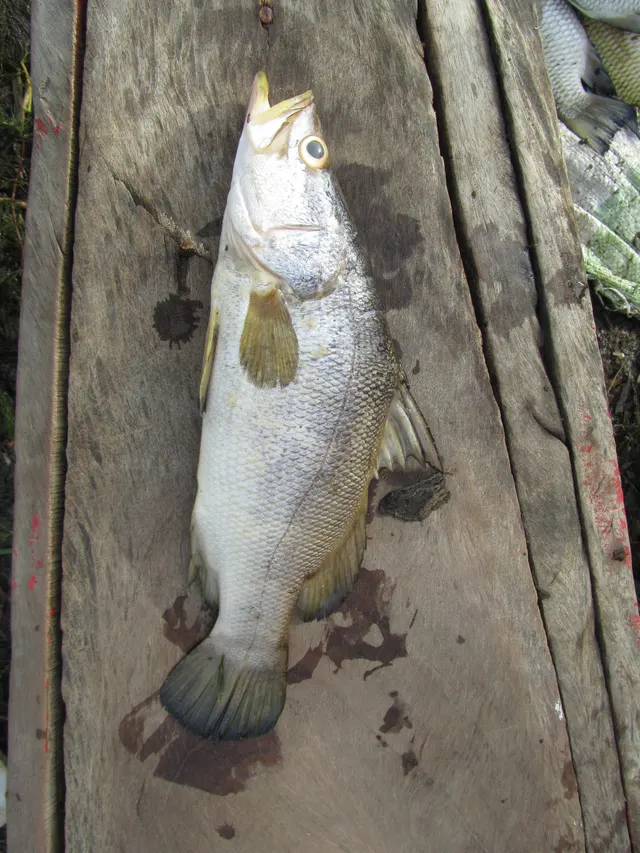 Nile perchA huge African predator that is a major food fishery, a sport fish, and the cause of one of the worst extinction events on record.
Lucy Keith-Diagne — CC BY, via iNaturalist
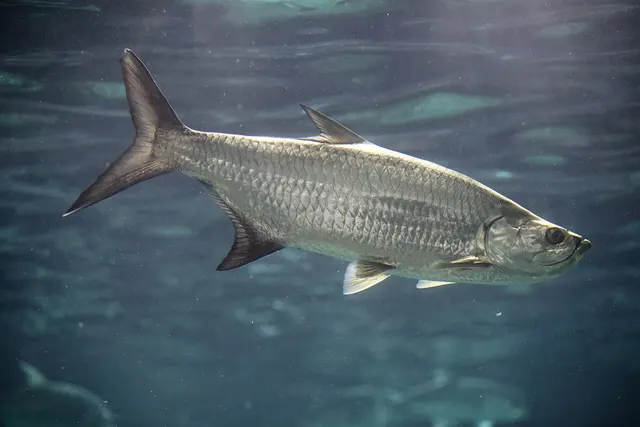 Atlantic tarponA huge, ancient, air-breathing fish of tropical Atlantic coasts that jumps repeatedly when hooked and is almost never eaten — fished purely for the encounter.
Daiju Azuma — CC BY-SA 4.0, via Wikimedia Commons
Safety
Drowning and immersion — Can cause serious injury or death
Sudden severe squalls on the great lakes develop very rapidly and generate steep dangerous water. Lake Victoria in particular has a serious drowning record, and small craft frequently carry no buoyancy aids.
What reduces it: Treat the great lakes as inland seas, watch for building cloud rather than for wind, insist on buoyancy aids and take your own if necessary, and do not go out in a craft or with an operator you have doubts about.
Worse when:
- Afternoons, when convective storms build
- Small unpowered or underpowered craft far from shore
Biosecurity and disease transfer — Can cause injury needing treatment
Bilharzia is present in many freshwater bodies across the region and is contracted through contact with infested water, including brief wading. It frequently produces no immediate symptoms.
What reduces it: Take local advice before any contact with fresh water, avoid wading and swimming where the risk is known, dry off promptly, and seek medical advice on return if exposure occurred.
Check the rules before you fish
Fishing laws, bylaws, access rules, seasons, bait restrictions and permitted methods vary by location and can change. Check the current rules from the relevant authority and the water you intend to fish before fishing.
Check with:
- Current national or regional law for where you are fishing
- Current local bylaws
- The relevant fisheries authority
- The landowner, club or fishery whose water it is
- Any restrictions specific to the species or the method you intend to use
Where to go next
What swims here
- Atlantic tarponThe West African coast and its lagoons hold tarpon at substantial size, which is the region's best-known sport fishery and one very few anglers associate with Africa.
- Nile perchA very large predator native to the Nile and West African systems, and — introduced to Lake Victoria — the central figure in one of the most consequential ecological changes of the last century.
How people fish here
How this compares
- Lake Victoria and the Rift Valley lakesThe Rift Valley lakes hold the most remarkable freshwater fish fauna on earth and, in Victoria, one of the most severe documented extinction events. The overview is where that sits beside the coasts.
- The West African coastThe West African coast in detail — the canoe fishery, the lagoons and the deltas — sits beneath an overview that also has to carry the Indian Ocean side and the great lakes.
Sources and evidence
- FishBase: a global information system on fishes — Froese, R. and D. Pauly, eds. — FishBase Consortium (Scientific institute)Relied on for: Distribution, habitat association, life history and diet recorded for the species concerned.States this directlyPassage read and verified
- The IUCN Red List of Threatened Species — International Union for Conservation of Nature (Conservation authority)Relied on for: Global extinction-risk assessment, population trend and identified threats for the species concerned.States this directlyCitation checked — the work exists and is described correctly
- Code of Conduct for Responsible Fisheries — Food and Agriculture Organization of the United Nations, Rome, 1995 (Standards body)Relied on for: International principles for responsible fisheries, including small-scale and artisanal fisheries, and the role of national authorities.States this directlyCitation checked — the work exists and is described correctly
Why the 5 connections on this page are here, and the sources
What swims here
Backed by research — 2 connections
Supported by peer-reviewed research or fisheries science. The sources are listed and can be checked.
Atlantic tarpon
A distributional claim taken from reference sources on the species rather than from angling report. It states presence and asserts nothing about a fishery.
- FishBase: a global information system on fishes — Froese, R. and D. Pauly, eds. — FishBase Consortium (Scientific institute)Relied on for: Distribution, habitat association, depth range and life history recorded for the species concerned.States this directlyPassage read and verified
- The IUCN Red List of Threatened Species — International Union for Conservation of Nature (Conservation authority)Relied on for: Global distribution, population trend and extinction-risk assessment for the species concerned.States this directlyCitation checked — the work exists and is described correctly
Nile perch
A distributional claim taken from reference sources on the species rather than from angling report. It states presence and asserts nothing about a fishery.
- FishBase: a global information system on fishes — Froese, R. and D. Pauly, eds. — FishBase Consortium (Scientific institute)Relied on for: Distribution, habitat association, depth range and life history recorded for the species concerned.States this directlyPassage read and verified
- The IUCN Red List of Threatened Species — International Union for Conservation of Nature (Conservation authority)Relied on for: Global distribution, population trend and extinction-risk assessment for the species concerned.States this directlyCitation checked — the work exists and is described correctly
How people fish here
What experienced anglers do — 1 connection
Widely and independently recommended by experienced anglers and specialist sources. This is real angling knowledge, not proof: controlled evidence for it is limited, and FishingHQ records it as convention rather than as a demonstrated effect.
Handlining
Which branch of fishing dominates a region is a statement about practice rather than about the place, and is recorded as convention.
- FAO fishing gear types and fishing technology information — Food and Agriculture Organization of the United Nations (Scientific institute)Relied on for: Classification and description of world fishing gears and the regions in which each is used.States this directlyCitation checked — the work exists and is described correctly
- General angling website restatements of established technique — Various (Credible secondary source)Relied on for: Widely restated descriptions of regional angling practice, recorded as consensus rather than as scholarship.Background and mechanism onlyCitation checked — the work exists and is described correctly
How this compares
What experienced anglers do — 2 connections
Widely and independently recommended by experienced anglers and specialist sources. This is real angling knowledge, not proof: controlled evidence for it is limited, and FishingHQ records it as convention rather than as a demonstrated effect.
Lake Victoria and the Rift Valley lakes
A continental overview joined to a record it sits above, so that the synthesis and the detail are reachable from one another rather than duplicating each other.
- FAO fishing gear types and fishing technology information — Food and Agriculture Organization of the United Nations (Scientific institute)Relied on for: Classification and description of world fishing gears and the regions in which each is used.States this directlyCitation checked — the work exists and is described correctly
- General angling website restatements of established technique — Various (Credible secondary source)Relied on for: Widely restated descriptions of regional angling practice, recorded as consensus rather than as scholarship.Background and mechanism onlyCitation checked — the work exists and is described correctly
The West African coast
A continental overview joined to a record it sits above, so that the synthesis and the detail are reachable from one another rather than duplicating each other.
- FAO fishing gear types and fishing technology information — Food and Agriculture Organization of the United Nations (Scientific institute)Relied on for: Classification and description of world fishing gears and the regions in which each is used.States this directlyCitation checked — the work exists and is described correctly
- General angling website restatements of established technique — Various (Credible secondary source)Relied on for: Widely restated descriptions of regional angling practice, recorded as consensus rather than as scholarship.Background and mechanism onlyCitation checked — the work exists and is described correctly
How FishingHQ labels evidence is explained in the evidence policy.