The West African coast
Fishing regions · Last reviewed 2026-08-14
A coast of surf beaches, lagoons and river deltas where one of the world's great canoe fisheries works water that upwelling makes extraordinarily productive — and where distant fleets have been fishing it for decades.
Safety: moving water and currents — can cause serious injury or death. 3 more points apply here.
Being listed here is not permission to fish. What that meansClose
Access, fishing rights, seasons, licences, local bylaws and permitted methods vary and can change. Check current access, permission, local regulations, closures and restrictions before you travel or fish. FishingHQ describes what the ground is and names who holds the answer; it does not hold the answer itself.
Find the authority for a jurisdiction · What FishingHQ does and does not cover
The West African coast qualifies as a coast record because the physical system and the fishery are shared along it, and the countries it crosses could not each explain either.
THE UPWELLING IS THE ENGINE IN THE NORTH. The Canary Current runs south along the north-west African coast, and coastal winds drive one of the world's four great eastern boundary upwelling systems. Cold, nutrient-rich water rises to the surface and drives enormous production of small pelagic fish — sardinella, anchovy, horse mackerel — which is why this coast can support the fishing effort it does.
THE GULF OF GUINEA IS WARMER AND WORKS DIFFERENTLY. Further south and east the coast turns, the upwelling becomes seasonal and weaker, and river discharge from the Niger and other systems dominates. Mangrove, lagoon and delta take over from open beach in places, and the fauna shifts.
THE CANOE FISHERY IS THE DEFINING HUMAN FACT. Large planked canoes, many of them motorised, crewed by a dozen or more, launched off open surf beaches and worked with ring nets, purse seines and gillnets, land a very large share of the region's fish. FishingHQ already holds the West African artisanal canoe fishery as a tradition record, and this is the coast it belongs to.
THE SHORE IS MOSTLY SURF AND SAND. Long, straight, exposed beaches with heavy surf and strong longshore drift, few natural harbours, and a swell that arrives from the South Atlantic.
AND THE PRESSURE IS THE MODERN STORY. Distant-water fleets, industrial trawling, and competition with the canoe fishery over the same small pelagic stocks have made this one of the most contested fishing regions in the world, with documented consequences for local food security.
What fishing here is like
A long, surf-dominated tropical coast with few natural harbours, backed by lagoons and deltas in places and fringed by mangrove where rivers reach the sea. Extraordinarily productive in the north where coastal upwelling operates, warmer and river-influenced in the Gulf of Guinea. The fishery is dominated by a very large artisanal canoe sector working from open beaches, alongside industrial and distant-water fleets fishing the same stocks. Recreational angling is small, concentrated on tarpon, threadfin, barracuda and jacks around river mouths and lagoons.
What dominates
Artisanal canoe fishing with ring nets, purse seines, gillnets and lines, launched and recovered through surf from open beaches. Beach seining worked by teams from the sand. Lagoon and creek fishing with traps, nets and lines, including brush-park systems in some lagoons. Industrial purse seining and trawling offshore, largely by national and foreign fleets. Shore angling from beaches, groynes and river mouths for tarpon, threadfin, barracuda and croaker. Small-boat sport fishing for tarpon and jacks around estuaries and lagoons. Shellfish and crab gathering from mangrove and lagoon systems.
The water available
Long straight surf beaches with heavy Atlantic swell, strong longshore drift and few harbours; extensive coastal lagoon systems behind sandbars, some connected to the sea only seasonally; mangrove forest and delta where the major rivers reach the sea; a productive upwelling-influenced shelf in the north with cold nutrient-rich water; warmer, river-influenced, more stratified water in the Gulf of Guinea; rocky and reef ground in a limited number of places; and offshore, a shelf that varies from broad to narrow along the coast.
How the rules are structured
Each coastal state administers its own fisheries through a national ministry, with artisanal and industrial sectors typically regulated separately and with the artisanal sector historically lightly licensed. Regional bodies exist to coordinate fisheries management and to address shared small pelagic stocks and the licensing of foreign fleets, and they coordinate rather than regulate. Common national instruments include closed seasons for particular fisheries, gear and mesh restrictions, zoning that reserves an inshore band for artisanal canoes and excludes industrial trawlers from it, licensing of foreign vessels, and protected species lists covering turtles and marine mammals. Enforcement at sea is a widely acknowledged constraint, and illegal, unreported and unregulated fishing by foreign and domestic vessels is a documented and serious regional problem. Marine protected areas cover parts of the coast, including significant coastal wetland and delta sites protected under international wetland conventions. FishingHQ does not state what any current rule is.
Who to ask
- The national fisheries ministry of the coastal state concerned, for licensing, closed seasons, gear rules and the zoning between artisanal and industrial fishing.
- The regional fisheries body for the sub-region, for coordination on shared stocks and on foreign fleet access.
- The maritime authority or navy responsible for fisheries enforcement in national waters.
- The protected area or wetland authority where the fishing takes place in a designated coastal wetland, delta or marine protected area.
- The local landing beach or canoe fishery association, which in many places administers access, order and dispute resolution at the beach itself.
Words you will meet
- Pirogue / canoe
- The large planked fishing canoe of the region, in several national forms, frequently motorised and crewed by a dozen or more. Launched and recovered through surf from open beaches, and the vessel on which the region's fishery is built.
- Sardinella
- The small pelagic fish that dominates the region's catch by weight and is the principal source of animal protein for a very large number of people. Its stocks are shared between countries and are heavily fished.
- Fishmeal plant
- A processing facility converting small pelagic fish into meal and oil for export, largely for aquaculture feed. Their expansion on this coast has diverted food fish away from local consumption and is one of the region's most contested fisheries issues.
- Brush park
- A traditional lagoon fishing structure of branches placed in shallow water to attract fish, which are then enclosed and harvested. An old and locally important technology in some West African lagoon systems.
- Inshore exclusion zone
- A band of water along the coast reserved for artisanal canoes and closed to industrial trawlers. The principal spatial instrument protecting the small-scale sector, and the one most commonly breached.
Conditions and hazards
Surf is the dominant hazard and it governs the fishery: launching and recovering a heavy canoe through breaking water is where most incidents happen, and long-period South Atlantic swell arrives on straight beaches with no shelter. Rip currents on these beaches are strong and persistent and are a major cause of drowning. Few working fishers wear buoyancy aids. Canoes work far offshore in craft with limited freeboard and limited navigation equipment, and losses at sea are a documented and substantial toll. Water quality near the larger cities and river mouths is frequently poor. Malaria is endemic along the whole coast. Crocodiles occur in some lagoon and delta systems. Heat, humidity and sun exposure are severe year-round. In some parts of the region, piracy and armed robbery at sea have been a genuine hazard to vessels, which is a security condition rather than a fishing one but affects who goes where.
Upwelling in the north, rivers in the south, surf along all of it
This coast has two physical halves and one constant, and all three shape the fishery.
THE NORTHERN COAST IS AN UPWELLING SYSTEM. The Canary Current flows south along north-west Africa, and coastal winds drive surface water offshore, allowing cold nutrient-rich water to rise in its place. This is one of the four great eastern boundary upwelling systems in the world, alongside the Benguela, Humboldt and California systems, and it is why a tropical coast is cold and extraordinarily productive.
THE PRODUCTION GOES INTO SMALL PELAGIC FISH. Sardinella, anchovy and horse mackerel occur in enormous quantity, and everything else in the system — the fishery, the predators, the seabirds — rests on them. A fishery on this coast is, at bottom, a fishery on small pelagic fish.
THE GULF OF GUINEA IS WARMER AND STRATIFIED. As the coast turns east, upwelling becomes seasonal and weaker, sea temperature rises, and discharge from the Niger and other river systems dominates the nearshore. Production is lower and the fauna shifts towards a warm-water assemblage.
THE SHORE IS SURF ALONG NEARLY ALL OF IT. Long, straight beaches face the open Atlantic, receive long-period swell generated far to the south, and have strong longshore drift and very few natural harbours. Everything about the canoe fishery — the hull form, the crew size, the launching technique — follows from having to cross that surf twice a day.
LAGOONS AND DELTAS ARE THE OTHER HABITAT. Behind the beaches, extensive lagoon systems sit behind sandbars, some permanently connected to the sea and some only seasonally, and where major rivers reach the coast there are mangrove deltas of substantial size. These are nursery systems and fisheries in their own right.
AND THE SHELF VARIES ALONG THE COAST from broad to narrow, which changes how far a canoe has to go and what it finds when it gets there.
Backed by research — why, and the sources (2)
Supported by peer-reviewed research or fisheries science. The sources are listed and can be checked.
- FAO Species Identification Guides for Fishery Purposes and the FAO Species Catalogues — Food and Agriculture Organization of the United Nations (Scientific institute)Relied on for: Distribution, habitat, depth and fishery accounts for the species of the eastern central Atlantic and western Indian Ocean in the FAO regional identification guides.States this directlyCitation checked — the work exists and is described correctly
- FishBase: a global information system on fishes — Froese, R. and D. Pauly, eds. — FishBase Consortium (Scientific institute)Relied on for: Distribution, habitat association and depth range recorded for the species.States this directlyPassage read and verified
Sardinella first, then tarpon, threadfin and everything a delta holds
The species picture divides sharply between what supports the region and what interests an angler.
SARDINELLA IS THE REGION'S FISH. Small pelagic fish dominate the catch by weight along this coast and are the principal source of animal protein for a very large number of people. The stocks are shared between countries, are heavily fished by both artisanal and industrial fleets, and their status is the single most consequential fisheries question in the region.
HORSE MACKEREL, ANCHOVY AND MACKEREL fill the rest of the pelagic picture, and Atlantic bonito and other small tunas work the same water.
TARPON IS THE COAST'S GREAT SPORT FISH. Atlantic tarpon occur along this coast in quantity, using estuaries, lagoons and river mouths, and the region holds some of the largest recorded. A tarpon fishery here is a genuine international-standard fishery on a coast that has very little sport fishing infrastructure.
THREADFIN ARE THE OTHER SPECIALITY. Giant African threadfin and related species work the surf and river mouths, feeding on the invertebrates and small fish that the wash turns over, and they are one of the characteristic species of surf angling on this coast.
BARRACUDA, JACKS, CROAKER AND CAPTAIN FISH occupy the surf and inshore ground, and the meagre and other sciaenids of the eastern Atlantic reach this coast.
GROUPERS AND SNAPPERS HOLD WHAT ROCK AND REEF THERE IS, including goliath grouper in the tropical part of the range.
BILLFISH AND TUNA WORK OFFSHORE, and the region's waters have supported both artisanal and industrial tuna fishing.
AND THE MANGROVE AND LAGOON SYSTEMS HOLD THEIR OWN FISHERY: catfish, tilapia, mullet, shrimp, oysters and crabs, all of which are locally important and none of which appear in an account written from the offshore fishery outward. West African oyster harvesting from mangrove roots, largely done by women, is a substantial and distinctive fishery in several countries.
Backed by research — why, and the sources (2)
Supported by peer-reviewed research or fisheries science. The sources are listed and can be checked.
- FAO Species Identification Guides for Fishery Purposes and the FAO Species Catalogues — Food and Agriculture Organization of the United Nations (Scientific institute)Relied on for: Distribution, habitat, depth and fishery accounts for the species of the eastern central Atlantic and western Indian Ocean in the FAO regional identification guides.States this directlyCitation checked — the work exists and is described correctly
- FishBase: a global information system on fishes — Froese, R. and D. Pauly, eds. — FishBase Consortium (Scientific institute)Relied on for: Distribution, habitat association and depth range recorded for the species.States this directlyPassage read and verified
The canoe fishery, and why a boat with no harbour needs fifteen people
The artisanal canoe fishery of this coast is one of the largest small-scale fisheries in the world and it deserves describing properly rather than being called traditional.
THE CANOE IS LARGE, PLANKED AND USUALLY MOTORISED. These are not dugouts in the ordinary sense: they are substantial built vessels, frequently over ten metres, carrying outboard engines, ice and a crew of a dozen or more, capable of working well offshore and staying out for extended trips.
THE CREW SIZE IS A FUNCTION OF THE SURF AND THE NET. Launching and recovering a heavy canoe through breaking water requires people, and so does hauling a ring net or purse seine by hand. The labour organisation of the fishery follows from the physical requirements of the beach.
RING NETS AND PURSE SEINES TAKE THE SMALL PELAGICS, encircling a shoal located by sight or by experience and closing it. Gillnets and lines take larger fish. Beach seines are worked from the sand by teams.
THE BEACH IS THE PORT. With few natural harbours, landing beaches serve as the entire infrastructure: landing, sorting, smoking, drying, trading and repair all happen on the sand, and the landing beach association frequently administers order and access there.
SMOKING AND DRYING ARE THE PRESERVATION TECHNOLOGY and they are a major economic activity in their own right, largely conducted by women, who in much of the region control the trade in processed fish and often finance the fishing itself.
INDUSTRIAL FISHING WORKS THE SAME STOCKS. Trawlers and purse seiners, national and foreign, fish offshore and — where the inshore exclusion zone is not enforced — inside it. The conflict between the two sectors is direct and is over the same fish.
AND SPORT FISHING IS A SMALL LAYER, largely for tarpon and threadfin around estuaries and lagoons, operating from a limited number of bases.
What experienced anglers do — why, and the sources (2)
Widely and independently recommended by experienced anglers and specialist sources. This is real angling knowledge, not proof: controlled evidence for it is limited, and FishingHQ records it as convention rather than as a demonstrated effect.
- FAO fishing gear types and fishing technology information — Food and Agriculture Organization of the United Nations (Scientific institute)Relied on for: Descriptions of fishing gear types and their operation, including the small-scale gears used by artisanal fisheries in the region.States this directlyCitation checked — the work exists and is described correctly
- IGFA International Angling Rules and World Record Requirements — International Game Fish Association (Angling or fisheries organisation)Relied on for: International recreational angling practice, tackle categories and the conventions applied to recognised catches.Background and mechanism onlyPassage read and verified
Upwelling seasons, rainy seasons and a swell that never stops
The seasonal structure of this coast comes from three separate cycles and they do not line up.
THE UPWELLING SEASON DRIVES PRODUCTION IN THE NORTH. Coastal winds strengthen seasonally and drive the upwelling that supports the small pelagic fishery. When they are strong, production is high and the fishery is good; when they are weak, it is not. Sardinella abundance and distribution track this closely.
THE RAINY SEASON CHANGES THE COAST'S CHEMISTRY. River discharge rises, lagoons flush or breach their bars, salinity falls at river mouths, and estuarine and lagoon fisheries change character. In the Gulf of Guinea the rains are the dominant seasonal signal.
THE SWELL IS CONTINUOUS. Long-period swell generated by South Atlantic storms reaches this coast throughout the year, so the surf that constrains launching is a constant rather than a season. What varies is its size, and periods of heavy swell shut the beach fishery down.
THE HARMATTAN AFFECTS THE NORTHERN COAST in the dry season, bringing dust and haze offshore and reducing visibility.
CLOSED SEASONS ARE APPLIED IN SEVERAL COUNTRIES, usually aimed at the small pelagic spawning period or at particular gears, and their dates differ nationally. They are also the subject of considerable dispute between sectors.
TARPON MOVEMENTS ARE SEASONAL AND TIED TO THE RIVERS. Fish concentrate around river mouths and lagoon entrances at particular times of year, and the fishing follows those movements rather than a fixed calendar.
AND THE HEMISPHERE STRADDLES THE EQUATOR ALONG THIS COAST, so a single seasonal statement covering the whole range would be wrong at one end of it. This is one of the reasons FishingHQ models seasons as biological and physical states rather than as months.
Backed by research — why, and the sources (2)
Supported by peer-reviewed research or fisheries science. The sources are listed and can be checked.
- FAO Species Identification Guides for Fishery Purposes and the FAO Species Catalogues — Food and Agriculture Organization of the United Nations (Scientific institute)Relied on for: Distribution, habitat, depth and fishery accounts for the species of the eastern central Atlantic and western Indian Ocean in the FAO regional identification guides.States this directlyCitation checked — the work exists and is described correctly
- FishBase: a global information system on fishes — Froese, R. and D. Pauly, eds. — FishBase Consortium (Scientific institute)Relied on for: Distribution, habitat association and depth range recorded for the species.States this directlyPassage read and verified
Zoning, foreign fleets and the enforcement problem
Fisheries governance on this coast is dominated by a single structural question: who gets to fish the shared small pelagic stocks, and who can stop them.
EACH COUNTRY REGULATES ITS OWN WATERS, with separate treatment of artisanal and industrial sectors. The artisanal sector has historically been lightly licensed and is now increasingly registered, partly because the number of canoes and their capacity have grown substantially.
THE INSHORE EXCLUSION ZONE IS THE KEY SPATIAL INSTRUMENT. A band of water along the coast is reserved for artisanal canoes and closed to industrial trawlers, protecting both the small-scale fishery and the nursery ground. Incursion by trawlers into that zone is a persistent and documented problem, and it destroys canoe gear as well as taking fish.
FOREIGN FLEET ACCESS IS THE CENTRAL POLITICAL QUESTION. Distant-water fleets fish these waters under access agreements, joint ventures and flags of convenience. Whether the revenue from that access compensates for the fish removed, and whether the terms are transparent, is contested and has been examined repeatedly by regional and international bodies.
ILLEGAL, UNREPORTED AND UNREGULATED FISHING IS A MAJOR REGIONAL PROBLEM, acknowledged as such by the states concerned. Enforcement at sea requires patrol capacity that is expensive, and the coastline is long.
FISHMEAL PLANTS ARE A NEWER AND SHARPLY CONTESTED ISSUE. Facilities converting small pelagic fish into meal and oil for export, largely for aquaculture feed elsewhere, divert food fish away from local consumption on a coast where those fish are the principal protein source. Several countries have restricted or reviewed them.
REGIONAL BODIES COORDINATE ON SHARED STOCKS and on foreign access, and they coordinate rather than regulate.
PROTECTED AREAS AND WETLAND DESIGNATIONS cover significant delta and lagoon habitat, some under international wetland conventions, and they carry their own rules.
AND FISHINGHQ DOES NOT STATE WHAT ANY OF THIS CURRENTLY PERMITS.
Official guidance — why, and the sources (2)
Stated by a fisheries authority, scientific institute or recognised angling body. Authoritative, but summarising rather than demonstrating.
- Good Fish Guide — Marine Conservation Society (Conservation authority)Relied on for: Assessment of fisheries and the management measures applied to them, including gear selectivity and spatial protection.Background and mechanism onlyCitation checked — the work exists and is described correctly
- Code of Conduct for Responsible Fisheries — Food and Agriculture Organization of the United Nations, Rome, 1995 (Standards body)Relied on for: Principles for responsible fisheries management, precaution, and the treatment of small-scale, shared and inland fisheries.States this directlyCitation checked — the work exists and is described correctly
Pirogue, sardinella, fishmeal: three words that explain the coast
A small vocabulary carries most of what a reader needs to follow the fisheries debate on this coast.
PIROGUE OR CANOE NAMES THE VESSEL AND UNDERSELLS IT. The English and French words both suggest something small; the reality is a substantial planked boat, frequently over ten metres, motorised, crewed by a dozen or more and capable of working far offshore. Reading the word as 'dugout' misunderstands the entire fishery.
SARDINELLA IS THE FISH THE REGION RUNS ON. It is worth knowing by name because almost every serious fisheries argument on this coast — foreign fleets, fishmeal, closed seasons, food security — is an argument about this fish.
FISHMEAL PLANT NAMES THE MOST CONTESTED INSTITUTION ON THE COAST. Converting food fish into animal feed for export, from a coast where those fish are the main protein source, is a genuine policy conflict rather than a rhetorical one, and the term flags it.
INSHORE EXCLUSION ZONE NAMES THE SPATIAL RULE that separates the two fishing sectors. Understanding that it exists, and that it is frequently breached, explains most of the conflict reported from this coast.
BRUSH PARK NAMES A TRADITIONAL LAGOON TECHNOLOGY: branches placed in shallow water to attract fish, later enclosed and harvested. It is a genuine and locally important technique and it is the kind of gear that disappears from accounts written from an offshore perspective.
AND THE FISH TRADERS ARE FREQUENTLY CALLED BY A LOCAL TERM IN EACH COUNTRY, because the women who buy, process and finance the catch are an institution rather than a step in a supply chain. Their role in the economics of this fishery is central and is easy for an outsider to miss entirely.
What experienced anglers do — why, and the sources (2)
Widely and independently recommended by experienced anglers and specialist sources. This is real angling knowledge, not proof: controlled evidence for it is limited, and FishingHQ records it as convention rather than as a demonstrated effect.
- FAO fishing gear types and fishing technology information — Food and Agriculture Organization of the United Nations (Scientific institute)Relied on for: Descriptions of fishing gear types and their operation, including the small-scale gears used by artisanal fisheries in the region.States this directlyCitation checked — the work exists and is described correctly
- IGFA International Angling Rules and World Record Requirements — International Game Fish Association (Angling or fisheries organisation)Relied on for: International recreational angling practice, tackle categories and the conventions applied to recognised catches.Background and mechanism onlyPassage read and verified
A canoe fishery that industrialised on its own terms
The history of this coast's fishery is not the usual story of a traditional sector replaced by a modern one, and the difference is interesting.
THE CANOE FISHERY IS OLD AND CONTINUOUS. Beach-launched canoe fishing along this coast predates any colonial or modern fisheries administration, and the social organisation around landing beaches, crew shares and fish trading is long-established.
IT MOTORISED RATHER THAN BEING REPLACED. From the mid-twentieth century, outboard engines, synthetic netting and ice transformed the canoe fishery's range and capacity without changing its basic form. That is an unusual outcome: the artisanal sector modernised and grew rather than being displaced by an industrial one, and it is why it remains the dominant fishery today.
INDUSTRIAL AND DISTANT-WATER FLEETS ARRIVED ALONGSIDE IT. From the second half of the twentieth century, foreign fleets fished these waters heavily, and access agreements became a significant source of state revenue and a significant source of dispute.
THE SMALL PELAGIC STOCKS CAME UNDER PRESSURE FROM BOTH SECTORS at once, and the shared nature of those stocks — they move between national waters — made unilateral management ineffective.
THE FISHMEAL EXPANSION IS RECENT AND CONSEQUENTIAL. The growth of processing capacity converting food fish into export feed within the last two decades has been documented as reducing local availability of the region's principal protein source, and it has provoked national restrictions and considerable public argument.
MIGRATION AND FISHERY DECLINE ARE CONNECTED IN THE PUBLIC RECORD. The relationship between declining catches, loss of livelihood in fishing communities and onward migration has been examined repeatedly, and it is part of why this coast's fisheries have international political attention.
AND THE TARPON FISHERY'S HISTORY IS A SMALLER STORY: a sport fishery of genuine international quality, developed at a handful of locations, repeatedly interrupted by instability, and never built into the industry it might have been elsewhere.
Official guidance — why, and the sources (2)
Stated by a fisheries authority, scientific institute or recognised angling body. Authoritative, but summarising rather than demonstrating.
- Good Fish Guide — Marine Conservation Society (Conservation authority)Relied on for: Assessment of fisheries and the management measures applied to them, including gear selectivity and spatial protection.Background and mechanism onlyCitation checked — the work exists and is described correctly
- Code of Conduct for Responsible Fisheries — Food and Agriculture Organization of the United Nations, Rome, 1995 (Standards body)Relied on for: Principles for responsible fisheries management, precaution, and the treatment of small-scale, shared and inland fisheries.States this directlyCitation checked — the work exists and is described correctly
The landing beach, the fish traders and who actually controls the fishery
The social organisation of this fishery is genuinely distinctive and it is not what an outsider expects.
THE LANDING BEACH IS THE INSTITUTION. Landing, sorting, processing, trading, boat repair and dispute resolution all happen on the same stretch of sand, frequently under a beach association or chief fisherman with real authority over order and access. It is the functional unit of the fishery.
WOMEN CONTROL THE PROCESSING AND THE TRADE, and in many places the finance. Buying the catch, smoking and drying it, and moving it inland is a female-dominated sector across much of the region, and the traders frequently advance credit to the crews — which means the person who decides whether a canoe goes out may be the person who bought the last catch.
CREW SHARES RATHER THAN WAGES are the normal arrangement, dividing catch value between the boat owner, the gear owner and the crew under locally established proportions.
SMOKED FISH IS THE PRODUCT THAT REACHES INLAND, and the smoking technology, fuelwood demand and the trade routes that carry it are as much part of the fishery as the netting.
MOBILITY IS A LONG-STANDING FEATURE. Fishing communities on this coast have migrated seasonally along it for generations, following stocks across national boundaries, and that mobility complicates every attempt at nationally-bounded management.
RECREATIONAL ANGLING IS ALMOST ABSENT AS A LOCAL PRACTICE and present as a visiting one. A visiting angler on this coast is fishing beside a working fishery of enormous scale and comparatively little tourism infrastructure, and the etiquette that follows is straightforward.
AND FISHINGHQ DOES NOT SPEAK FOR THESE COMMUNITIES. The canoe fishery, its trade networks and its social arrangements are documented in the public and academic record, and what is written here rests on that.
Official guidance — why, and the sources (2)
Stated by a fisheries authority, scientific institute or recognised angling body. Authoritative, but summarising rather than demonstrating.
- Good Fish Guide — Marine Conservation Society (Conservation authority)Relied on for: Assessment of fisheries and the management measures applied to them, including gear selectivity and spatial protection.Background and mechanism onlyCitation checked — the work exists and is described correctly
- Code of Conduct for Responsible Fisheries — Food and Agriculture Organization of the United Nations, Rome, 1995 (Standards body)Relied on for: Principles for responsible fisheries management, precaution, and the treatment of small-scale, shared and inland fisheries.States this directlyCitation checked — the work exists and is described correctly
The bar is the hazard, and the fleet crosses it every day
The West African coast is, for most of its length, a long, shelving, sand shore facing an Atlantic that has crossed an ocean to reach it, and almost every serious hazard here follows from that single arrangement.
THE SURF IS THE FIRST FACT AND IT IS BIGGER THAN IT LOOKS FROM THE BEACH. Long-period swell running onto a shallow sand gradient breaks well out and reforms, so what a person standing at the waterline can see is the inner break rather than the outer one, and the sea is consistently heavier than the view from the dry sand suggests. That misperception is not a novice error — it is a property of the geometry.
RIPS FOLLOW AUTOMATICALLY. Water pushed shorewards over the bars has to return seaward, and it does so through the deeper channels between them, in a concentrated fast flow. On a coast like this rips are permanent features rather than occasional ones, they are strongest when the surf is biggest, and they are frequently the calmest-looking water on the beach — which is exactly why people walk into them. Deeper, flatter, less foamy water between two breaking sections is the signature. If taken, go across the current rather than back against it, and understand that a rip carries you out and stops, rather than pulling you under.
THE BAR AT A RIVER MOUTH OR LAGOON ENTRANCE IS THE SERIOUS ONE. Where a river meets this coast the sediment forms a shifting bar across the entrance, and when an outgoing flow meets an incoming swell over shallow ground, the sea on the bar stands up and breaks in a way that the water either side of it does not. That is the single most dangerous piece of water on this coast, it moves between seasons, and it is directly in the way of every craft entering or leaving.
AND THE POINT ABOUT THE FLEET IS THE PRACTICAL ONE. Pirogue and canoe fishing across the surf and over these bars is an enormous, skilled, everyday working tradition here, conducted by people with generational knowledge of a specific entrance. That expertise is real and is not transferable by watching. A visitor should read the fleet's behaviour as information — when they go, when they wait, which line they take — rather than as evidence that it is straightforward.
THE SUN AND THE HEAT ARE CONSTANT AND UNDERRATED. Tropical sun, reflected off water and pale sand, on somebody standing still for hours, produces heat illness and serious burn on a timescale shorter than people plan for. Fluid, shade and covering are equipment rather than comfort. And gear moved between waters carries biosecurity consequences in river systems where introduced species and disease have documented effects — check, clean and dry.
Official guidance — why, and the sources (4)
Stated by a fisheries authority, scientific institute or recognised angling body. Authoritative, but summarising rather than demonstrating.
- United States Lifesaving Association public education on rip currents and the surf zone — United States Lifesaving Association (Water-safety or diver-training authority)Relied on for: Surf-zone hazards, the formation and behaviour of rip currents, and the guidance issued to people entering or working in surf.States this directlyCitation checked — the work exists and is described correctly
- Met Office shipping forecast, inshore waters forecast and marine warnings — Met Office, United Kingdom (Government fisheries body)Relied on for: That marine and inshore forecasts, sea state, swell and wind are the operative inputs for shore and small-craft decisions, and the spatial and temporal resolution at which such forecasts are issued.States this directlyCitation checked — the work exists and is described correctly
- NOAA National Weather Service marine forecasts and marine weather services — National Oceanic and Atmospheric Administration, United States (Government fisheries body)Relied on for: Marine forecasting practice, the interpretation of sea state and swell products, and the limits of forecast resolution in coastal and enclosed waters.States this directlyCitation checked — the work exists and is described correctly
- RNLI water safety guidance: cold water shock and Float to Live — Royal National Lifeboat Institution (Water-safety or diver-training authority)Relied on for: Cold water shock and the immersion response, tidal cut-off, and water-safety guidance for shore anglers and small-craft users.States this directlyPassage read and verified
Some of what lives here
Fish recorded here that FishingHQ holds a reviewed photograph of. It is not a complete list of what The West African coast holds, and it is not a prediction that you will catch any of them — it is a way in to the ones we can show you.
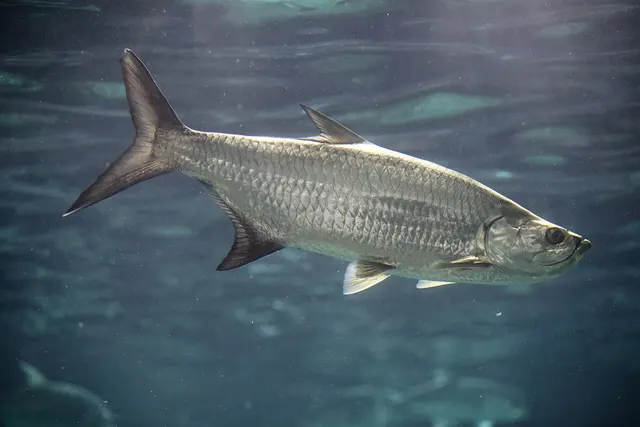 Atlantic tarponA huge, ancient, air-breathing fish of tropical Atlantic coasts that jumps repeatedly when hooked and is almost never eaten — fished purely for the encounter.
Daiju Azuma — CC BY-SA 4.0, via Wikimedia Commons
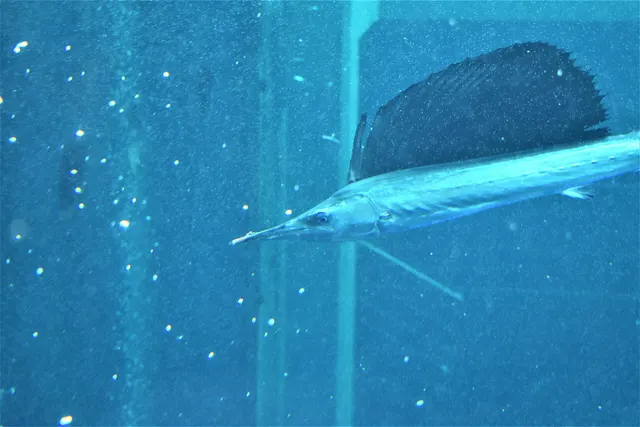 SailfishThe billfish with a sail — a dorsal fin taller than the fish is deep, raised when hunting, and probably the fastest accelerator in the ocean.
出羽雀台 — CC BY-SA 4.0, via Wikimedia Commons
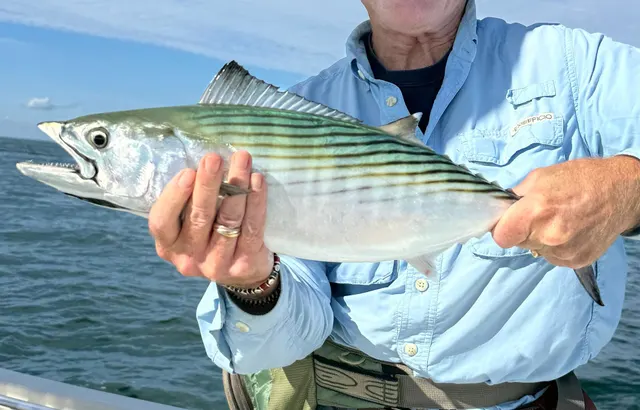 Atlantic bonitoA small, fast, striped tuna relative that arrives on temperate coasts in shoals each year and is the most accessible member of the family to a shore angler.
ricofish — CC0, via Wikimedia Commons
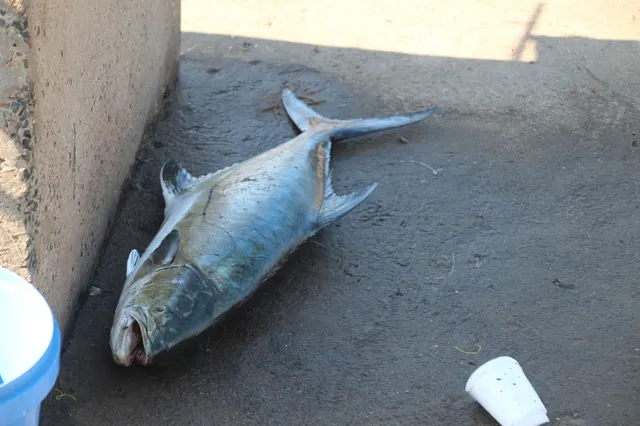 LeerfishA large, fast, laterally compressed jack of Mediterranean and African coasts, known as garrick in South Africa, and a prime surf and lure target.
Erwin Sieben — CC0, via iNaturalist
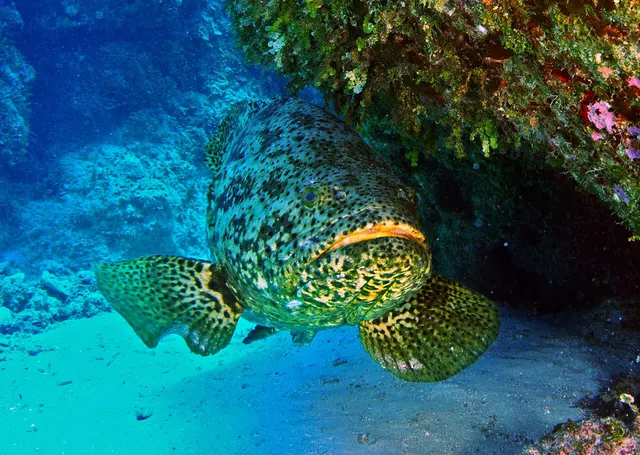 Atlantic goliath grouperAn enormous, slow-growing reef grouper that was fished to collapse, is now protected across much of its range, and must be released without being lifted.
Albert kok — CC BY-SA 3.0, via Wikimedia Commons
Safety
Moving water and currents — Can cause serious injury or death
Long-period South Atlantic swell breaks on straight open beaches with no shelter, and launching or recovering a boat through it is where most fishing incidents on this coast happen. Rip currents on these beaches are strong and persistent and are a major cause of drowning among people who are not fishing at all.
What reduces it: Do not attempt a surf launch without a competent crew who know the beach, recognise rips as darker calmer water running seaward between breaking waves and stay out of them, and treat a heavy swell day as a day the beach is closed regardless of the wind.
Worse when:
- Periods of heavy long-period swell, which arrive without local weather warning.
- Recovery rather than launch, at the end of a long day with a loaded boat.
- At river mouths and bar entrances, where outflow and surf combine.
Boat safety — Can cause serious injury or death
Canoes work far offshore in craft with limited freeboard, limited navigation equipment and frequently no radio. Buoyancy aids are rarely worn. Engine failure or a change in conditions far from shore is a serious situation, and losses at sea on this coast are a substantial and documented toll.
What reduces it: Carry flotation and a means of signalling that does not depend on a phone network, do not go beyond a range you could be recovered from, tell somebody ashore your plan, and treat fuel and engine reliability as safety equipment rather than logistics.
Biosecurity and disease transfer — Can cause injury needing treatment
Malaria is endemic along the whole coast. Water quality near larger cities and river mouths is frequently poor, so cuts and abrasions acquired in it infect readily. Crocodiles occur in some lagoon and delta systems.
What reduces it: Take malaria precautions seriously including nets, repellent and prophylaxis where advised, clean and dress any wound acquired in turbid coastal or lagoon water promptly, and take local advice on which creeks and lagoon margins hold crocodiles.
Sun, dehydration and fatigue — Can cause injury needing treatment
Heat and humidity are severe year-round on an unshaded coast, and long days on open water without shade produce heat exhaustion and dehydration that degrade judgement before obvious symptoms appear.
What reduces it: Cover up rather than relying on sunscreen alone, carry substantially more water than seems necessary, take the middle of the day off the water where possible, and treat fatigue on a small boat as a safety condition.
Further safety reading
- Boat safety for anglers — Canoes work far offshore with limited freeboard, limited navigation equipment and rarely any flotation, and losses at sea are a substantial documented toll.
- Shore entry and exit for divers — Launching and recovering a heavy canoe through breaking surf from an open beach is where most fishing incidents on this coast happen.
- Sun, dehydration and fatigue — Heat and humidity are severe year-round on an unshaded coast and long days on open water produce heat exhaustion before obvious symptoms appear.
Check the rules before you fish
Fishing laws, bylaws, access rules, seasons, bait restrictions and permitted methods vary by location and can change. Check the current rules from the relevant authority and the water you intend to fish before fishing.
Check with:
- Current national or regional law for where you are fishing
- Current local bylaws
- The relevant fisheries authority
- The landowner, club or fishery whose water it is
- Any restrictions specific to the species or the method you intend to use
Where to go next
What swims here
- African sharptooth catfishWidespread in the lagoon, delta and lower river systems of the coast, tolerant of the low-oxygen conditions they can produce.
- Atlantic bonitoWorks the productive upwelling-influenced water of the northern part of the coast, following the small pelagic shoals.
- Atlantic goliath grouperOccurs on the structure and reef ground of the tropical part of the range, where it is a large, long-lived and highly vulnerable resident.
- Atlantic horse mackerelOne of the small pelagic species the coastal upwelling supports in enormous quantity, and a mainstay of the region's catch.
- Atlantic tarponOccurs along this coast in quantity, using estuaries, lagoons and river mouths, and the region holds some of the largest recorded fish.
- European anchovyOne of the small pelagic species supported by the coastal upwelling at the northern end of the coast, and part of the forage base the whole fishery rests on.
- Giant African threadfinWorks the surf and river mouths of the coast, feeding on what the wash turns over, and is one of its characteristic shore species.
- Great barracudaAbundant on the inshore and reef ground along the coast.
4 more
- Leerfish Fish
- Meagre Fish
- Nile tilapia Fish
- Sailfish Fish
How people fish here
- HandliningHook-and-line fishing from canoes for larger fish sits alongside the netting and supplies fresh local markets.
- Purse seiningIndustrial purse seining works the same small pelagic stocks as the canoe fleet, which is the direct source of the region's central fisheries conflict.
- Traditional net fishingRing nets, purse seines, gillnets and beach seines worked from large planked canoes launched through surf are the region's dominant fishing practice.
- TrawlingIndustrial trawling operates offshore and, where the inshore exclusion zone is not enforced, inside it, destroying canoe gear as well as taking fish.
Local knowledge
How this compares
- Cape VerdeSix hundred kilometres of ocean separate them and it changes the fauna less than it changes the fishing. The mainland coast has a productive continental shelf, river input and turbid nutrient-rich water; the islands have none of that and have oceanic water at the rock instead. Species overlap substantially and the way they are caught does not.
- East and West African fishingThe West African coast in detail — the canoe fishery, the lagoons and the deltas — sits beneath an overview that also has to carry the Indian Ocean side and the great lakes.
Rules and access
Environment and conservation
- Bycatch and discardsIndustrial trawling incursions into the inshore band take juveniles from nursery ground and destroy artisanal gear, which is a documented and recurring conflict.
- Fish stocks and sustainabilityShared small pelagic stocks fished by artisanal, industrial and distant-water fleets at once, with fishmeal plants diverting food fish to export feed, is the region's defining fisheries problem.
History and culture
Sources and evidence
- FAO Species Identification Guides for Fishery Purposes and the FAO Species Catalogues — Food and Agriculture Organization of the United Nations (Scientific institute)Relied on for: Distribution, habitat, depth and fishery accounts for the species of the eastern central Atlantic and western Indian Ocean in the FAO regional identification guides.States this directlyCitation checked — the work exists and is described correctly
- FishBase: a global information system on fishes — Froese, R. and D. Pauly, eds. — FishBase Consortium (Scientific institute)Relied on for: Distribution, habitat association and depth range recorded for the species.States this directlyPassage read and verified
- Good Fish Guide — Marine Conservation Society (Conservation authority)Relied on for: Assessment of fisheries and the management measures applied to them, including gear selectivity and spatial protection.Background and mechanism onlyCitation checked — the work exists and is described correctly
- Code of Conduct for Responsible Fisheries — Food and Agriculture Organization of the United Nations, Rome, 1995 (Standards body)Relied on for: Principles for responsible fisheries management, precaution, and the treatment of small-scale, shared and inland fisheries.States this directlyCitation checked — the work exists and is described correctly
- United States Lifesaving Association public education on rip currents and the surf zone — United States Lifesaving Association (Water-safety or diver-training authority)Relied on for: Surf zone hazards, rip current formation and behaviour, and the circumstances in which people are carried offshore.States this directlyCitation checked — the work exists and is described correctly
- Rock fishing safety and the declared lifejacket areas of New South Wales — NSW Department of Primary Industries and Surf Life Saving NSW (Water-safety or diver-training authority)Relied on for: Rock and ledge fishing hazards, the mechanism by which anglers are swept from exposed platforms, and the measures that reduce it.States this directlyCitation checked — the work exists and is described correctly
Why the 26 connections on this page are here, and the sources
What swims here
Backed by research — 12 connections
Supported by peer-reviewed research or fisheries science. The sources are listed and can be checked.
African sharptooth catfish
A distribution association between an animal and a kind of water, rather than a claim about any named mark.
- The IUCN Red List of Threatened Species — International Union for Conservation of Nature (Conservation authority)Relied on for: Assessment and habitat account for the species, including the river or lake system it occupies and the pressures acting on it.States this directlyCitation checked — the work exists and is described correctly
- FishBase: a global information system on fishes — Froese, R. and D. Pauly, eds. — FishBase Consortium (Scientific institute)Relied on for: Distribution, habitat association, size and life history recorded for the species in the system concerned.States this directlyPassage read and verified
Atlantic bonito
A distribution association between an animal and a kind of water, rather than a claim about any named mark.
- FishBase: a global information system on fishes — Froese, R. and D. Pauly, eds. — FishBase Consortium (Scientific institute)Relied on for: Distribution, habitat association and depth range recorded for the species, including its occurrence in the water body concerned.States this directlyPassage read and verified
- The IUCN Red List of Threatened Species — International Union for Conservation of Nature (Conservation authority)Relied on for: Assessment and range account for the species, including the systems and coasts it occupies.Background and mechanism onlyCitation checked — the work exists and is described correctly
Atlantic goliath grouper
A distribution association between an animal and a kind of water, rather than a claim about any named mark.
- FAO Species Identification Guides for Fishery Purposes and the FAO Species Catalogues — Food and Agriculture Organization of the United Nations (Scientific institute)Relied on for: Distribution, habitat, depth and fishery accounts for the species in the FAO regional identification guides for the ocean area concerned.States this directlyCitation checked — the work exists and is described correctly
- FishBase: a global information system on fishes — Froese, R. and D. Pauly, eds. — FishBase Consortium (Scientific institute)Relied on for: Distribution, habitat association and depth range recorded for the species.States this directlyPassage read and verified
Atlantic horse mackerel
A distribution association between an animal and a kind of water, rather than a claim about any named mark.
- FishBase: a global information system on fishes — Froese, R. and D. Pauly, eds. — FishBase Consortium (Scientific institute)Relied on for: Distribution, habitat association and depth range recorded for the species, including its occurrence in the water body concerned.States this directlyPassage read and verified
- The IUCN Red List of Threatened Species — International Union for Conservation of Nature (Conservation authority)Relied on for: Assessment and range account for the species, including the systems and coasts it occupies.Background and mechanism onlyCitation checked — the work exists and is described correctly
Atlantic tarpon
A distribution association between an animal and a kind of water, rather than a claim about any named mark.
- FAO Species Identification Guides for Fishery Purposes and the FAO Species Catalogues — Food and Agriculture Organization of the United Nations (Scientific institute)Relied on for: Distribution, habitat, depth and fishery accounts for the species in the FAO regional identification guides for the ocean area concerned.States this directlyCitation checked — the work exists and is described correctly
- FishBase: a global information system on fishes — Froese, R. and D. Pauly, eds. — FishBase Consortium (Scientific institute)Relied on for: Distribution, habitat association and depth range recorded for the species.States this directlyPassage read and verified
European anchovy
A distribution association between an animal and a kind of water, rather than a claim about any named mark.
- FishBase: a global information system on fishes — Froese, R. and D. Pauly, eds. — FishBase Consortium (Scientific institute)Relied on for: Distribution, habitat association and depth range recorded for the species, including its occurrence in the water body concerned.States this directlyPassage read and verified
- The IUCN Red List of Threatened Species — International Union for Conservation of Nature (Conservation authority)Relied on for: Assessment and range account for the species, including the systems and coasts it occupies.Background and mechanism onlyCitation checked — the work exists and is described correctly
Giant African threadfin
A distribution association between an animal and a kind of water, rather than a claim about any named mark.
- FAO Species Identification Guides for Fishery Purposes and the FAO Species Catalogues — Food and Agriculture Organization of the United Nations (Scientific institute)Relied on for: Distribution, habitat, depth and fishery accounts for the species in the FAO regional identification guides for the ocean area concerned.States this directlyCitation checked — the work exists and is described correctly
- FishBase: a global information system on fishes — Froese, R. and D. Pauly, eds. — FishBase Consortium (Scientific institute)Relied on for: Distribution, habitat association and depth range recorded for the species.States this directlyPassage read and verified
Great barracuda
A distribution association between an animal and a kind of water, rather than a claim about any named mark.
- FAO Species Identification Guides for Fishery Purposes and the FAO Species Catalogues — Food and Agriculture Organization of the United Nations (Scientific institute)Relied on for: Distribution, habitat, depth and fishery accounts for the species in the FAO regional identification guides for the ocean area concerned.States this directlyCitation checked — the work exists and is described correctly
- FishBase: a global information system on fishes — Froese, R. and D. Pauly, eds. — FishBase Consortium (Scientific institute)Relied on for: Distribution, habitat association and depth range recorded for the species.States this directlyPassage read and verified
Leerfish
A distribution association between an animal and a kind of water, rather than a claim about any named mark.
- FishBase: a global information system on fishes — Froese, R. and D. Pauly, eds. — FishBase Consortium (Scientific institute)Relied on for: Distribution, habitat association and depth range recorded for the species, including its occurrence in the water body concerned.States this directlyPassage read and verified
- The IUCN Red List of Threatened Species — International Union for Conservation of Nature (Conservation authority)Relied on for: Assessment and range account for the species, including the systems and coasts it occupies.Background and mechanism onlyCitation checked — the work exists and is described correctly
Meagre
A distribution association between an animal and a kind of water, rather than a claim about any named mark.
- FishBase: a global information system on fishes — Froese, R. and D. Pauly, eds. — FishBase Consortium (Scientific institute)Relied on for: Distribution, habitat association and depth range recorded for the species, including its occurrence in the water body concerned.States this directlyPassage read and verified
- The IUCN Red List of Threatened Species — International Union for Conservation of Nature (Conservation authority)Relied on for: Assessment and range account for the species, including the systems and coasts it occupies.Background and mechanism onlyCitation checked — the work exists and is described correctly
Nile tilapia
A distribution association between an animal and a kind of water, rather than a claim about any named mark.
- The IUCN Red List of Threatened Species — International Union for Conservation of Nature (Conservation authority)Relied on for: Assessment and habitat account for the species, including the river or lake system it occupies and the pressures acting on it.States this directlyCitation checked — the work exists and is described correctly
- FishBase: a global information system on fishes — Froese, R. and D. Pauly, eds. — FishBase Consortium (Scientific institute)Relied on for: Distribution, habitat association, size and life history recorded for the species in the system concerned.States this directlyPassage read and verified
Sailfish
A distribution association between an animal and a kind of water, rather than a claim about any named mark.
- FAO Species Identification Guides for Fishery Purposes and the FAO Species Catalogues — Food and Agriculture Organization of the United Nations (Scientific institute)Relied on for: Distribution, habitat, depth and fishery accounts for the species in the FAO regional identification guides for the ocean area concerned.States this directlyCitation checked — the work exists and is described correctly
- FishBase: a global information system on fishes — Froese, R. and D. Pauly, eds. — FishBase Consortium (Scientific institute)Relied on for: Distribution, habitat association and depth range recorded for the species.States this directlyPassage read and verified
How people fish here
What experienced anglers do — 4 connections
Widely and independently recommended by experienced anglers and specialist sources. This is real angling knowledge, not proof: controlled evidence for it is limited, and FishingHQ records it as convention rather than as a demonstrated effect.
Handlining
A discipline that is characteristic of the place rather than merely possible there, joined so a reader can move between the place and the practice.
- General angling website restatements of established technique — Various (Credible secondary source)Relied on for: Widely restated practice associating this discipline with this place, recorded as practitioner consensus rather than as tested fact.Background and mechanism onlyCitation checked — the work exists and is described correctly
- Fishers' Craft and Lettered Art: Tracts on Fishing from the End of the Middle Ages — University of Toronto Press, 1997 (Scientific literature)Relied on for: That fishing traditions develop around the water and fish available to them, and the historical method of reading such traditions.States this directlyCitation checked — the work exists and is described correctly
Purse seining
A discipline that is characteristic of the place rather than merely possible there, joined so a reader can move between the place and the practice.
- General angling website restatements of established technique — Various (Credible secondary source)Relied on for: Widely restated practice associating this discipline with this place, recorded as practitioner consensus rather than as tested fact.Background and mechanism onlyCitation checked — the work exists and is described correctly
- Fishers' Craft and Lettered Art: Tracts on Fishing from the End of the Middle Ages — University of Toronto Press, 1997 (Scientific literature)Relied on for: That fishing traditions develop around the water and fish available to them, and the historical method of reading such traditions.States this directlyCitation checked — the work exists and is described correctly
Traditional net fishing
A discipline that is characteristic of the place rather than merely possible there, joined so a reader can move between the place and the practice.
- General angling website restatements of established technique — Various (Credible secondary source)Relied on for: Widely restated practice associating this discipline with this place, recorded as practitioner consensus rather than as tested fact.Background and mechanism onlyCitation checked — the work exists and is described correctly
- Fishers' Craft and Lettered Art: Tracts on Fishing from the End of the Middle Ages — University of Toronto Press, 1997 (Scientific literature)Relied on for: That fishing traditions develop around the water and fish available to them, and the historical method of reading such traditions.States this directlyCitation checked — the work exists and is described correctly
Trawling
A discipline that is characteristic of the place rather than merely possible there, joined so a reader can move between the place and the practice.
- General angling website restatements of established technique — Various (Credible secondary source)Relied on for: Widely restated practice associating this discipline with this place, recorded as practitioner consensus rather than as tested fact.Background and mechanism onlyCitation checked — the work exists and is described correctly
- Fishers' Craft and Lettered Art: Tracts on Fishing from the End of the Middle Ages — University of Toronto Press, 1997 (Scientific literature)Relied on for: That fishing traditions develop around the water and fish available to them, and the historical method of reading such traditions.States this directlyCitation checked — the work exists and is described correctly
Local knowledge
Backed by research — 1 connection
Supported by peer-reviewed research or fisheries science. The sources are listed and can be checked.
Upwelling, and the coasts it makes
A place that describes a physical process in prose and cannot point at it is restating something FishingHQ should explain once. This is the link that turns the restatement into a reference.
- ICES Advice on fishing opportunities, catch and effort — International Council for the Exploration of the Sea (Scientific institute)Relied on for: Stock assessment and advice for north-east Atlantic stocks, including the environmental drivers of small pelagic productivity and recruitment.States this directlyCitation checked — the work exists and is described correctly
- Cefas science, advice and data on marine and freshwater environments — Centre for Environment, Fisheries and Aquaculture Science (Government fisheries body)Relied on for: Marine environmental science including coastal physical processes, productivity and the monitoring behind them.States this directlyCitation checked — the work exists and is described correctly
How this compares
What experienced anglers do — 2 connections
Widely and independently recommended by experienced anglers and specialist sources. This is real angling knowledge, not proof: controlled evidence for it is limited, and FishingHQ records it as convention rather than as a demonstrated effect.
Cape Verde
A comparison written where a traveller will reach one record having read the other and would otherwise carry an assumption across that does not hold.
- FAO Species Identification Guides for Fishery Purposes and the FAO Species Catalogues — Food and Agriculture Organization of the United Nations (Scientific institute)Relied on for: Distribution, habitat association and biology of the fishes of the eastern central Atlantic and the Mediterranean, from the regional identification guides prepared for fishery purposes.States this directlyCitation checked — the work exists and is described correctly
- FishBase: a global information system on fishes — Froese, R. and D. Pauly, eds. — FishBase Consortium (Scientific institute)Relied on for: Recorded environment, depth range, distribution and biology of the species named.States this directlyPassage read and verified
East and West African fishing
A continental overview joined to a record it sits above, so that the synthesis and the detail are reachable from one another rather than duplicating each other.
- FAO fishing gear types and fishing technology information — Food and Agriculture Organization of the United Nations (Scientific institute)Relied on for: Classification and description of world fishing gears and the regions in which each is used.States this directlyCitation checked — the work exists and is described correctly
- General angling website restatements of established technique — Various (Credible secondary source)Relied on for: Widely restated descriptions of regional angling practice, recorded as consensus rather than as scholarship.Background and mechanism onlyCitation checked — the work exists and is described correctly
Safety reading
Official guidance — 3 connections
Stated by a fisheries authority, scientific institute or recognised angling body. Authoritative, but summarising rather than demonstrating.
Boat safety for anglers
A place is joined to the safety topic that explains a hazard genuinely characteristic of it, so the mechanism is reachable rather than restated as a weak warning.
- RNLI water safety guidance: cold water shock and Float to Live — Royal National Lifeboat Institution (Water-safety or diver-training authority)Relied on for: Cold water shock and the immersion response, shore angling hazards, small-craft guidance and the circumstances in which water users are most often killed.States this directlyPassage read and verified
- RoSPA water safety information and UK accidental drowning statistics — Royal Society for the Prevention of Accidents (Water-safety or diver-training authority)Relied on for: Accidental drowning statistics and the circumstances in which recreational water users are most often killed.Background and mechanism onlyPassage read and verified
Shore entry and exit for divers
A place is joined to the safety topic that explains a hazard genuinely characteristic of it, so the mechanism is reachable rather than restated as a weak warning.
- Rock fishing safety and the declared lifejacket areas of New South Wales — NSW Department of Primary Industries and Surf Life Saving NSW (Water-safety or diver-training authority)Relied on for: Rock and ledge fishing hazards, the mechanism by which anglers are swept from exposed platforms, and the measures that reduce it.States this directlyCitation checked — the work exists and is described correctly
- United States Lifesaving Association public education on rip currents and the surf zone — United States Lifesaving Association (Water-safety or diver-training authority)Relied on for: Surf zone hazards, rip current formation and behaviour, and the circumstances in which people are carried offshore.States this directlyCitation checked — the work exists and is described correctly
Sun, dehydration and fatigue
A place is joined to the safety topic that explains a hazard genuinely characteristic of it, so the mechanism is reachable rather than restated as a weak warning.
- NOAA National Weather Service marine forecasts and marine weather services — National Oceanic and Atmospheric Administration, United States (Government fisheries body)Relied on for: Marine forecasting, tropical cyclone warning practice and the products issued for coastal and offshore waters.States this directlyCitation checked — the work exists and is described correctly
- NOAA Diving Manual: Diving for Science and Technology — National Oceanic and Atmospheric Administration, US Department of Commerce (Scientific institute)Relied on for: Diving and in-water hazards, including hazardous marine life, currents and the management of operations in remote locations.Background and mechanism onlyCitation checked — the work exists and is described correctly
Rules and access
Official guidance — 1 connection
Stated by a fisheries authority, scientific institute or recognised angling body. Authoritative, but summarising rather than demonstrating.
Licences and permission
A place joined to the regulatory concept whose structure it illustrates. The edge asserts that the concept applies here, never what any current rule says.
- Code of Conduct for Responsible Fisheries — Food and Agriculture Organization of the United Nations, Rome, 1995 (Standards body)Relied on for: Principles for the management of fisheries, including licensing, closed seasons, size limits and the treatment of small-scale and shared stocks.States this directlyCitation checked — the work exists and is described correctly
- Good Fish Guide — Marine Conservation Society (Conservation authority)Relied on for: Assessment of fisheries and the management measures applied to them, including the instruments used and their purpose.Background and mechanism onlyCitation checked — the work exists and is described correctly
Environment and conservation
Backed by research — 2 connections
Supported by peer-reviewed research or fisheries science. The sources are listed and can be checked.
Bycatch and discards
An environmental pressure that is specific to this place rather than general to fishing, joined so the issue is anchored to a real example.
- The IUCN Red List of Threatened Species — International Union for Conservation of Nature (Conservation authority)Relied on for: Assessment of the species and habitats affected, and the pressures acting on them, including habitat change and exploitation.States this directlyCitation checked — the work exists and is described correctly
- Code of Conduct for Responsible Fisheries — Food and Agriculture Organization of the United Nations, Rome, 1995 (Standards body)Relied on for: Principles for responsible fisheries management, precaution, gear selectivity and the treatment of shared and small-scale fisheries.Background and mechanism onlyCitation checked — the work exists and is described correctly
Fish stocks and sustainability
An environmental pressure that is specific to this place rather than general to fishing, joined so the issue is anchored to a real example.
- The IUCN Red List of Threatened Species — International Union for Conservation of Nature (Conservation authority)Relied on for: Assessment of the species and habitats affected, and the pressures acting on them, including habitat change and exploitation.States this directlyCitation checked — the work exists and is described correctly
- Code of Conduct for Responsible Fisheries — Food and Agriculture Organization of the United Nations, Rome, 1995 (Standards body)Relied on for: Principles for responsible fisheries management, precaution, gear selectivity and the treatment of shared and small-scale fisheries.Background and mechanism onlyCitation checked — the work exists and is described correctly
History and culture
Official guidance — 1 connection
Stated by a fisheries authority, scientific institute or recognised angling body. Authoritative, but summarising rather than demonstrating.
West African artisanal canoe fishing
A place joined to the documented fishing tradition it belongs to, so the history has a real setting and the place has a real past.
- Fishers' Craft and Lettered Art: Tracts on Fishing from the End of the Middle Ages — University of Toronto Press, 1997 (Scientific literature)Relied on for: The historical development of fishing practice and its transmission, and the method of reading a fishing tradition from its documentary record.States this directlyCitation checked — the work exists and is described correctly
- Words of the Lagoon: Fishing and Marine Lore in the Palau District of Micronesia — University of California Press, Berkeley, 1981 (Reference work)Relied on for: Documented traditional marine knowledge and fishing practice, and the social organisation of fishing rights and closures.Background and mechanism onlyCitation checked — the work exists and is described correctly
How FishingHQ labels evidence is explained in the evidence policy.