Thailand
Fishing regions · Last reviewed 2026-08-18
Two coasts on two different seas, a river system draining into both, and a freshwater fishery organised in a way that exists almost nowhere else — commercial lakes stocked with the largest fish on earth.
Safety: sun, dehydration and fatigue — can cause serious injury or death. 3 more points apply here.
Contamination and toxins in the catch — Can cause injury needing treatment
Ciguatera is present in the region and is associated with large reef predators, and cooking does not remove it. Scombroid poisoning from tuna and mackerel that were not chilled quickly is the commonest seafood illness in a hot country and is entirely a handling failure.
What reduces it: Take local advice on which reef species are eaten locally and which are avoided, and treat that advice as the primary source. Ice tuna and mackerel immediately and keep them cold; the window in tropical heat is very short.
Being listed here is not permission to fish. What that meansClose
Access, fishing rights, seasons, licences, local bylaws and permitted methods vary and can change. Check current access, permission, local regulations, closures and restrictions before you travel or fish. FishingHQ describes what the ground is and names who holds the answer; it does not hold the answer itself.
Find the authority for a jurisdiction · What FishingHQ does and does not cover
Thailand ranks first on FishingHQ's destination priority and the reason is not that the fishing is the best available. It is that an enormous number of British and European visitors go there, a great deal can be done without a boat or a guide, and almost nothing about how to fish it is written in English in a form a visitor can use.
THE COUNTRY HAS TWO SEAS AND THEY ARE NOT ALIKE. The Andaman coast on the west faces the Indian Ocean: deeper, clearer, with limestone karst islands rising sheer out of the water, coral reef and a genuine monsoon season that closes it. The Gulf of Thailand on the east is shallow, warmer, more turbid and far more enclosed, with sand, mud and patchy reef and a different weather pattern. A visitor who fished one has not fished the other.
THE FRESHWATER FISHERY IS THE UNUSUAL PART AND IT NEEDS EXPLAINING HONESTLY. Alongside the natural rivers and reservoirs, Thailand has a large sector of commercially managed lakes stocked with very large fish, many of them non-native — arapaima, redtail catfish, Mekong giant catfish, alligator gar and Amazonian species among them. These are genuine fisheries and they are also artificial in a specific way: the fish are stocked, fed and managed, and a capture there is not a capture from a wild population. FishingHQ describes them as what they are rather than as either a scandal or an achievement, because a visitor who does not understand the distinction will misread the photographs.
THE NATIVE FRESHWATER FISHERY IS A DIFFERENT AND OLDER THING. Snakeheads, hampala barb, featherbacks and catfish in rivers, reservoirs and irrigation systems, fished by local people for food and increasingly by visitors with lures. The Mekong system on the eastern border is one of the great river fisheries of the world and is under serious pressure from damming.
THE INSHORE SEA FISHERY IS BARRAMUNDI, TREVALLY, SNAPPER, GROUPER, MANGROVE JACK AND MACKEREL, with mangrove and estuary systems on both coasts that behave as tropical estuaries everywhere do: nursery ground, tidal, and productive out of proportion to their appearance.
AND THE ARTISANAL FISHERY IS EVERYWHERE AND IS THE CONTEXT. Small boats, static gear, cast nets and traps are worked from almost every beach and river mouth, and a visitor fishing is fishing alongside people for whom it is a livelihood.
What fishing here is like
A tropical country with two coasts on two different seas and a large river-and-reservoir interior between them. The Andaman coast faces the Indian Ocean with deep clear water, limestone karst islands rising vertically from the sea, coral reef and a monsoon that closes it for part of the year. The Gulf coast is shallow, warm, turbid and enclosed, with sand and mud, patchy reef and a different weather pattern. Inland, the Chao Phraya and Mekong systems, extensive reservoirs and irrigation canals, and a large sector of commercially managed stocked lakes. Mangrove and estuary systems fringe both coasts and are the nursery for a great deal of what is caught offshore.
What dominates
Lure and popping fishing for barramundi, trevally, snapper, grouper and mangrove jack in estuaries, around structure and over inshore reef. Boat and charter fishing offshore for mackerel, tuna, sailfish and reef species. Shore fishing from beaches, rock and piers, which is where most independent visitors fish. A very large commercial stocked-lake sector, fished with heavy tackle for very large introduced species. Native freshwater lure fishing for snakehead, hampala barb and catfish in rivers, reservoirs and irrigation systems. Snorkelling and diving on both coasts, and breath-hold spearfishing where it is permitted. Traditional artisanal fishing with nets, traps and static gear, which is the visible fishing of most of the coast.
The water available
Andaman coral reef, limestone karst islands and deep clear water; the shallow, warm, turbid enclosed Gulf; extensive mangrove forest and tidal creek on both coasts; large tropical rivers with a seasonal flood pulse; reservoirs and irrigation canals; and a sector of commercially managed stocked stillwaters holding very large introduced species.
How the rules are structured
Recreational fishing in Thailand is administered by the national fisheries department, with provincial and local arrangements beneath it, and the practical position differs sharply between contexts. Marine national parks and protected areas cover substantial parts of both coasts and carry their own prohibitions on fishing, anchoring and collection, with boundaries that are not visible from the water. Commercially managed lakes are private waters operating under their own conditions, which are a matter of contract rather than of fisheries law. Some species carry national protection, spearfishing is restricted or prohibited in a number of areas, and the rules on taking, keeping and exporting fish and shellfish differ from what a European visitor will assume. FishingHQ does not state what any current rule is. Check with the Department of Fisheries and with the protected-area authority for the specific water before going.
Who to ask
- The Thai Department of Fisheries, which administers fisheries and recreational fishing nationally.
- The Department of National Parks, Wildlife and Plant Conservation, for marine and terrestrial protected areas and the prohibitions within them.
- The provincial fisheries office, for local measures and for inland waters.
- The operator of a commercially managed lake, whose conditions are contractual and are the only rules that apply on that water.
Words you will meet
- Fishing park
- A commercially managed stillwater stocked with large, frequently non-native fish, fished on a day rate with supplied heavy tackle and usually with a guide. A genuine fishery and an artificial one: the fish are stocked, fed and managed, and a capture there is not a capture from a wild population.
- Andaman and Gulf
- Thailand's two coasts, on the Indian Ocean and on a shallow enclosed arm of the South China Sea respectively. They differ in depth, clarity, species and season, and their monsoons arrive at different times — which is why the country has fishable coast most of the year and never both at once.
- Pla buek
- The Mekong giant catfish, one of the largest freshwater fish in the world, critically endangered in the wild and stocked in a number of commercial lakes. A fish caught in a lake and a fish caught in the Mekong are the same species in completely different circumstances.
- Klong
- A canal. Thailand's lowlands are cut by an enormous network of irrigation and drainage canals which hold fish, are fished by local people and are largely invisible to visitors looking for a river.
Conditions and hazards
The hazards here are tropical and they arrive faster than a temperate visitor expects. Heat and sun cause more incidents than anything in the water: dehydration and heat exhaustion degrade judgement within hours on an open boat or a shadeless bank. Monsoon weather builds quickly and squalls are violent, and small boats on both coasts operate to standards a visitor cannot assess from the beach. Rip currents on the Andaman beaches are a recognised and repeated cause of drowning, and the warning flags are not universally understood or universally posted. In the water, venomous and spined species are numerous — stonefish, lionfish, scorpionfish, rays, sea urchins and cone snails — and several are camouflaged and stood on rather than encountered. Boxjellyfish occur seasonally in some areas and are a genuine danger. On the catch side, ciguatera is present in the region and is a real consideration for large reef predators, and scombroid poisoning from inadequately chilled tuna and mackerel in high ambient temperatures is the commonest seafood illness in a hot country.
The stocked lakes, described as what they are
Thailand's commercial fishing lakes are the single most photographed thing about fishing in the country and the least honestly described, so it is worth being plain about all of it.
WHAT THEY ARE. Enclosed, privately operated stillwaters, stocked with very large fish, fed heavily, and fished on a day rate with supplied tackle and usually a guide who baits, nets and handles. Many hold Amazonian and other non-native species — arapaima, redtail catfish, pacu, alligator gar — alongside Asian giants including Mekong giant catfish and Siamese carp.
THEY ARE GENUINE FISHERIES. The fish are real, they are large, they fight, and catching one is not nothing. Anybody suggesting otherwise has generally not tried to land a hundred-kilogram catfish on a hot afternoon.
AND THEY ARE ARTIFICIAL IN A SPECIFIC WAY THAT MATTERS. The fish are stocked rather than resident, fed rather than foraging, confined rather than free-ranging, and repeatedly caught. That is closer to a managed collection than to a wild fishery, and the distinction is not a moral one — it is a factual one that changes what a photograph means. A visitor who returns believing they have caught a wild Mekong giant catfish has misunderstood something the operator had no incentive to explain.
THE CONSERVATION POSITION IS GENUINELY MIXED AND WORTH STATING BOTH WAYS. Several of the species stocked are critically endangered in the wild, and captive holdings have a role in keeping them in existence. At the same time, non-native fish in tropical waters escape into river systems during floods, and introductions of exactly these species have established elsewhere in South-East Asia and South America with consequences that are not reversible.
THE WELFARE POSITION IS ALSO WORTH STATING. A fish caught repeatedly, held for photographs and returned in high water temperatures is under a load that a wild fish caught once is not, and standards between operators vary very widely. FishingHQ's handling and temperature material applies with more force here than almost anywhere.
WHAT THIS MEANS FOR SOMEBODY DECIDING. It is a legitimate day out, it is not wild fishing, the two are frequently sold as one, and knowing which you are buying is the whole of the useful advice.
What experienced anglers do — why, and the sources (4)
Widely and independently recommended by experienced anglers and specialist sources. This is real angling knowledge, not proof: controlled evidence for it is limited, and FishingHQ records it as convention rather than as a demonstrated effect.
- Sea Angler — Bauer Media (Specialist angling publication)Relied on for: Long-running published description of the destinations British anglers travel to, the fishing available at each and the way it is organised.FishingHQ's interpretation of what it saysCitation checked — the work exists and is described correctly
- General angling website restatements of established technique — Various (Credible secondary source)Relied on for: Widely restated descriptions of what is conventionally fished at the destinations named and how, recorded as practitioner consensus rather than as scholarship.Background and mechanism onlyCitation checked — the work exists and is described correctly
- Words of the Lagoon: Fishing and Marine Lore in the Palau District of Micronesia — University of California Press, Berkeley, 1981 (Reference work)Relied on for: Traditional tropical inshore fishing knowledge, its transmission, and the relationship between local practice and the resource it works.Background and mechanism onlyCitation checked — the work exists and is described correctly
- Code of Conduct for Responsible Fisheries — Food and Agriculture Organization of the United Nations, Rome, 1995 (Standards body)Relied on for: The international framework within which national fisheries authorities set and revise measures, and the place of small-scale and artisanal fisheries within it.Background and mechanism onlyCitation checked — the work exists and is described correctly
Two coasts, two monsoons, and why the country is fishable all year
The single most useful planning fact about Thailand is that its two coasts have their weather at different times, and it follows directly from the geography.
THE ANDAMAN COAST FACES THE INDIAN OCEAN and takes the south-west monsoon: rough, wet and largely unfishable from small craft through the middle of the year, and clear, calm and at its best through the northern-hemisphere winter — which is exactly when a European visitor wants it.
THE GULF COAST IS ENCLOSED and takes its weather from the north-east later in the year, so it is at its most settled through the middle months when the Andaman side is closed.
SO THERE IS ALWAYS A FISHABLE COAST, and choosing the wrong one is the commonest planning error a visitor makes. It is a three-hour drive between them in places, which makes it a correctable error rather than a ruined trip.
THE PHYSICAL DIFFERENCE IS AS LARGE AS THE WEATHER DIFFERENCE. The Andaman side has deep water close inshore against limestone that rises vertically from the sea, coral reef, and visibility that makes it a serious diving destination. The Gulf is shallow, warm, turbid and muddier, with a fish community that reflects it — more estuarine, less reef-dependent, and better for barramundi and threadfin than for pelagic species.
THE MANGROVES ARE THE ENGINE ON BOTH SIDES. Extensive mangrove forest and tidal creek fringe both coasts, and they function as tropical estuarine nurseries everywhere do: sheltered, warm, food-rich, turbid and inaccessible to large predators. A very large share of what is caught offshore grew up in them, which is why mangrove loss is a fisheries problem rather than only a conservation one.
AND INLAND THE YEAR IS A FLOOD RATHER THAN A SEASON. The rivers and floodplains work on a flood pulse: fish move laterally onto inundated ground to feed and breed as the water rises and return to the channel as it falls, and the fishing follows that movement rather than a temperature cycle. On the Mekong, damming upstream has altered that pulse, which is the largest single change to the fishery in living memory.
Backed by research — why, and the sources (4)
Supported by peer-reviewed research or fisheries science. The sources are listed and can be checked.
- FAO Species Identification Guides for Fishery Purposes and the FAO Species Catalogues — Food and Agriculture Organization of the United Nations (Scientific institute)Relied on for: Identification, distribution and habitat association of the fishes and invertebrates of the tropical regions named, and the fisheries they support.States this directlyCitation checked — the work exists and is described correctly
- FishBase: a global information system on fishes — Froese, R. and D. Pauly, eds. — FishBase Consortium (Scientific institute)Relied on for: Recorded distribution, depth range, habitat association and biology of the species named.States this directlyPassage read and verified
- The World's Mangroves and their Fisheries — FAO Forestry and Fisheries assessments — Food and Agriculture Organization of the United Nations, Rome (Standards body)Relied on for: The nursery function of mangrove systems for tropical coastal fisheries, the species dependent on them, and the extent and causes of their loss.States this directlyCitation checked — the work exists and is described correctly
- The Flood Pulse Concept in River-Floodplain Systems — Canadian Special Publication of Fisheries and Aquatic Sciences 106, Department of Fisheries and Oceans, Ottawa, 1989 (Scientific literature)Relied on for: That in river-floodplain systems the seasonal flood pulse rather than the channel drives biological productivity and organises fish movement.Background and mechanism onlyCitation checked — the work exists and is described correctly
Some of what lives here
Fish recorded here that FishingHQ holds a reviewed photograph of. It is not a complete list of what Thailand holds, and it is not a prediction that you will catch any of them — it is a way in to the ones we can show you.
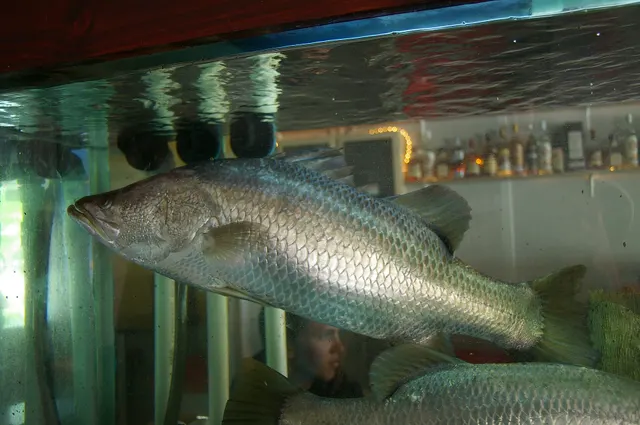 BarramundiAn estuarine ambush predator that begins life as a male and changes sex to female, so the largest fish are all breeding hens.
John Robert McPherson — CC0 1.0 Public Domain Dedication, via Wikimedia Commons
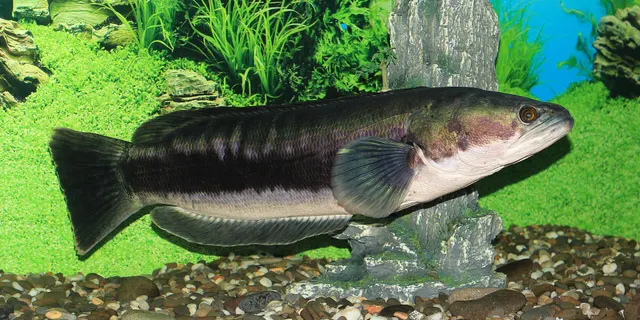 Giant snakeheadAn air-breathing Southeast Asian predator that guards its young in a shoal and defends them aggressively — the fish that made topwater lure fishing a South-East Asian sport.
George Chernilevsky — Public domain, via Wikimedia Commons
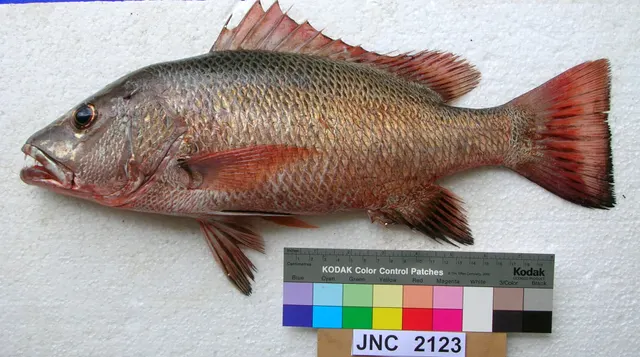 Mangrove jackA powerful red snapper of mangrove creeks and estuaries that moves to offshore reef as it matures, notorious for reaching structure the instant it is hooked.
Jean-Lou Justine — CC BY-SA 4.0, via Wikimedia Commons
Safety
Contamination and toxins in the catch is set out at the top of this page, where it cannot be missed.
Sun, dehydration and fatigue — Can cause serious injury or death
Tropical heat and humidity produce dehydration and heat exhaustion within hours on an open boat or a shadeless bank, and both degrade judgement and coordination well before they produce collapse.
What reduces it: Carry far more water than the session appears to need, cover up rather than relying on sunscreen alone, fish the ends of the day, and treat shade and a stopping time as part of the plan rather than as a concession.
Venomous and spined species — Can cause serious injury or death
Stonefish, scorpionfish, lionfish, rays, sea urchins and cone snails are all present and several are camouflaged well enough that they are stood on rather than encountered. Stonefish envenomation in particular is a medical emergency.
What reduces it: Wear footwear in the water, shuffle rather than step, do not handle an unfamiliar fish or shell, unhook with tools, and know before entering the water where the nearest medical facility is.
Moving water and currents — Can cause serious injury or death
Rip currents on the Andaman beaches are a recognised and repeated cause of drowning, and the flag warning system is not universally posted or universally understood by visitors.
What reduces it: Read the beach for where water is returning seaward before entering it, do not swim or wade where the surface is flat and discoloured between breaking waves, and treat an absent flag as absent information rather than as an all-clear.
Further safety reading
- Sun, dehydration and fatigue — Tropical heat and humidity degrade judgement within hours on an open boat or a shadeless bank, and they do it before they produce anything a person notices as illness.
- Venomous and spined fish — Stonefish, scorpionfish, lionfish, rays and urchins are all present and several are camouflaged well enough to be stood on rather than encountered.
Check the rules before you fish
Fishing laws, bylaws, access rules, seasons, bait restrictions and permitted methods vary by location and can change. Check the current rules from the relevant authority and the water you intend to fish before fishing.
Check with:
- Current national or regional law for where you are fishing
- Current local bylaws
- The relevant fisheries authority
- The landowner, club or fishery whose water it is
- Any restrictions specific to the species or the method you intend to use
Where to go next
What swims here
- BarramundiThe inshore and estuarine predator that most visiting lure anglers are actually fishing for, in mangrove creek, river mouth and coastal lagoon on both coasts.
- Giant snakeheadA native freshwater predator of rivers, reservoirs and irrigation systems, and the fish that makes Thai freshwater lure fishing a wild fishery rather than a stocked one.
- Mangrove jackA structure-holding predator of mangrove creek and snag on both coasts, and one of the reasons estuary fishing here is fished heavy rather than light.
- Mud crabThe mangrove system's most valuable harvest and a significant part of the artisanal fishery a visitor will see worked from every creek mouth.
How people fish here
- Lure fishingLure fishing in estuaries, over inshore reef and in fresh water is what most independent visiting anglers actually do here, and it is the discipline the country's guiding sector has grown around.
- Sea fishingShore fishing from beaches, rock and piers on two very different coasts, plus a substantial charter sector working reef and blue water.
Local knowledge
Rules and access
Environment and conservation
Sources and evidence
- FAO Species Identification Guides for Fishery Purposes and the FAO Species Catalogues — Food and Agriculture Organization of the United Nations (Scientific institute)Relied on for: Identification, distribution and habitat association of the fishes and invertebrates of the tropical regions named, and the fisheries they support.States this directlyCitation checked — the work exists and is described correctly
- FishBase: a global information system on fishes — Froese, R. and D. Pauly, eds. — FishBase Consortium (Scientific institute)Relied on for: Recorded distribution, depth range, habitat association and biology of the species named.States this directlyPassage read and verified
- The World's Mangroves and their Fisheries — FAO Forestry and Fisheries assessments — Food and Agriculture Organization of the United Nations, Rome (Standards body)Relied on for: The nursery function of mangrove systems for tropical coastal fisheries, the species dependent on them, and the extent and causes of their loss.States this directlyCitation checked — the work exists and is described correctly
- The Flood Pulse Concept in River-Floodplain Systems — Canadian Special Publication of Fisheries and Aquatic Sciences 106, Department of Fisheries and Oceans, Ottawa, 1989 (Scientific literature)Relied on for: That in river-floodplain systems the seasonal flood pulse rather than the channel drives biological productivity and organises fish movement.Background and mechanism onlyCitation checked — the work exists and is described correctly
- Sea Angler — Bauer Media (Specialist angling publication)Relied on for: Long-running published description of the destinations British anglers travel to, the fishing available at each and the way it is organised.FishingHQ's interpretation of what it saysCitation checked — the work exists and is described correctly
- General angling website restatements of established technique — Various (Credible secondary source)Relied on for: Widely restated descriptions of what is conventionally fished at the destinations named and how, recorded as practitioner consensus rather than as scholarship.Background and mechanism onlyCitation checked — the work exists and is described correctly
Why the 11 connections on this page are here, and the sources
What swims here
Backed by research — 4 connections
Supported by peer-reviewed research or fisheries science. The sources are listed and can be checked.
Barramundi
That a species occurs in these waters, drawn from distribution science. It is a statement about where the animal lives and is not a statement that anybody will catch one, still less where.
- FAO Species Identification Guides for Fishery Purposes and the FAO Species Catalogues — Food and Agriculture Organization of the United Nations (Scientific institute)Relied on for: Identification, distribution and habitat association of the fishes and invertebrates of the tropical region named.States this directlyCitation checked — the work exists and is described correctly
- FishBase: a global information system on fishes — Froese, R. and D. Pauly, eds. — FishBase Consortium (Scientific institute)Relied on for: Recorded distribution, depth range and habitat association of the species named, including its occurrence in the waters concerned.States this directlyPassage read and verified
Giant snakehead
That a species occurs in these waters, drawn from distribution science. It is a statement about where the animal lives and is not a statement that anybody will catch one, still less where.
- FishBase: a global information system on fishes — Froese, R. and D. Pauly, eds. — FishBase Consortium (Scientific institute)Relied on for: Recorded distribution, habitat association and life history of the freshwater species named, including introduced populations where those are recorded.States this directlyPassage read and verified
- The Flood Pulse Concept in River-Floodplain Systems — Canadian Special Publication of Fisheries and Aquatic Sciences 106, Department of Fisheries and Oceans, Ottawa, 1989 (Scientific literature)Relied on for: That in tropical river-floodplain systems the seasonal flood pulse organises fish movement and production, which is the basis for stating where and when a species is available.Background and mechanism onlyCitation checked — the work exists and is described correctly
Mangrove jack
That a species occurs in these waters, drawn from distribution science. It is a statement about where the animal lives and is not a statement that anybody will catch one, still less where.
- FAO Species Identification Guides for Fishery Purposes and the FAO Species Catalogues — Food and Agriculture Organization of the United Nations (Scientific institute)Relied on for: Identification, distribution and habitat association of the fishes and invertebrates of the tropical region named.States this directlyCitation checked — the work exists and is described correctly
- FishBase: a global information system on fishes — Froese, R. and D. Pauly, eds. — FishBase Consortium (Scientific institute)Relied on for: Recorded distribution, depth range and habitat association of the species named, including its occurrence in the waters concerned.States this directlyPassage read and verified
Mud crab
That a species occurs in these waters, drawn from distribution science. It is a statement about where the animal lives and is not a statement that anybody will catch one, still less where.
- FAO Species Identification Guides for Fishery Purposes and the FAO Species Catalogues — Food and Agriculture Organization of the United Nations (Scientific institute)Relied on for: Identification, distribution and habitat association of the fishes and invertebrates of the tropical region named.States this directlyCitation checked — the work exists and is described correctly
- FishBase: a global information system on fishes — Froese, R. and D. Pauly, eds. — FishBase Consortium (Scientific institute)Relied on for: Recorded distribution, depth range and habitat association of the species named, including its occurrence in the waters concerned.States this directlyPassage read and verified
How people fish here
What experienced anglers do — 2 connections
Widely and independently recommended by experienced anglers and specialist sources. This is real angling knowledge, not proof: controlled evidence for it is limited, and FishingHQ records it as convention rather than as a demonstrated effect.
Lure fishing
That a discipline is conventionally practised in these waters, drawn from published description of practice rather than from participation data.
- Sea Angler — Bauer Media (Specialist angling publication)Relied on for: Long-running published description of the destinations British anglers travel to and the fishing available at each.FishingHQ's interpretation of what it saysCitation checked — the work exists and is described correctly
- General angling website restatements of established technique — Various (Credible secondary source)Relied on for: Widely restated descriptions of what is conventionally fished at the destinations named and how, recorded as practitioner consensus rather than as scholarship.Background and mechanism onlyCitation checked — the work exists and is described correctly
Sea fishing
That a discipline is conventionally practised in these waters, drawn from published description of practice rather than from participation data.
- Sea Angler — Bauer Media (Specialist angling publication)Relied on for: Long-running published description of the destinations British anglers travel to and the fishing available at each.FishingHQ's interpretation of what it saysCitation checked — the work exists and is described correctly
- General angling website restatements of established technique — Various (Credible secondary source)Relied on for: Widely restated descriptions of what is conventionally fished at the destinations named and how, recorded as practitioner consensus rather than as scholarship.Background and mechanism onlyCitation checked — the work exists and is described correctly
Local knowledge
Backed by research — 1 connection
Supported by peer-reviewed research or fisheries science. The sources are listed and can be checked.
Ciguatera and reef fish poisoning
A link from a species or a place to the accumulation mechanism that decides whether what is caught there should be eaten, resting on published seafood-hazard guidance and on the species' recorded diet and trophic position.
- Fish and Fishery Products Hazards and Controls Guidance — US Food and Drug Administration, Center for Food Safety and Applied Nutrition, 2022 (Standards body)Relied on for: Seafood hazards and controls, including ciguatera and methylmercury: the species and regions each is associated with, and why cooking addresses neither.States this directlyPassage read and verified
Safety reading
Official guidance — 2 connections
Stated by a fisheries authority, scientific institute or recognised angling body. Authoritative, but summarising rather than demonstrating.
Sun, dehydration and fatigue
A link from the place to the substantial safety topic describing the mechanism that hurts people there.
- United States Lifesaving Association public education on rip currents and the surf zone — United States Lifesaving Association (Water-safety or diver-training authority)Relied on for: Surf zone hazards, rip current formation and behaviour, and the guidance issued to people entering the water from a beach.States this directlyCitation checked — the work exists and is described correctly
- NOAA National Weather Service marine forecasts and marine weather services — National Oceanic and Atmospheric Administration, United States (Government fisheries body)Relied on for: That marine forecasts and sea state are the operative inputs for small-craft and shore decisions in tropical waters.States this directlyCitation checked — the work exists and is described correctly
Venomous and spined fish
A link from the place to the substantial safety topic describing the mechanism that hurts people there.
- United States Lifesaving Association public education on rip currents and the surf zone — United States Lifesaving Association (Water-safety or diver-training authority)Relied on for: Surf zone hazards, rip current formation and behaviour, and the guidance issued to people entering the water from a beach.States this directlyCitation checked — the work exists and is described correctly
- NOAA National Weather Service marine forecasts and marine weather services — National Oceanic and Atmospheric Administration, United States (Government fisheries body)Relied on for: That marine forecasts and sea state are the operative inputs for small-craft and shore decisions in tropical waters.States this directlyCitation checked — the work exists and is described correctly
Rules and access
Official guidance — 1 connection
Stated by a fisheries authority, scientific institute or recognised angling body. Authoritative, but summarising rather than demonstrating.
Licences and permission
This points to the kind of rule that applies rather than to a rule itself. The whole reason this destination is described separately is that permission is administered differently here, so the page says the answer is held elsewhere and changes.
- Code of Conduct for Responsible Fisheries — Food and Agriculture Organization of the United Nations, Rome, 1995 (Standards body)Relied on for: The international framework within which national fisheries authorities set, revise and enforce measures, and the principle that the responsible authority holds the current position.Background and mechanism onlyCitation checked — the work exists and is described correctly
- Reef Fish Spawning Aggregations: Biology, Research and Management — Springer, Fish & Fisheries Series vol. 35, 2012 (Scientific literature)Relied on for: The vulnerability of aggregating and site-attached reef and flats species to concentrated fishing, and the management responses adopted.States this directlyCitation checked — the work exists and is described correctly
Environment and conservation
Backed by research — 1 connection
Supported by peer-reviewed research or fisheries science. The sources are listed and can be checked.
Invasive species and biosecurity
An environmental claim attached to the geography where it operates, resting on published assessment rather than on advocacy.
- The IUCN Red List of Threatened Species — International Union for Conservation of Nature (Conservation authority)Relied on for: Current conservation assessment of the species and systems concerned, with the assessment date.States this directlyCitation checked — the work exists and is described correctly
- Reef Fish Spawning Aggregations: Biology, Research and Management — Springer, Fish & Fisheries Series vol. 35, 2012 (Scientific literature)Relied on for: The exploitation and management of aggregating reef species, and the evidence on which protection is argued.States this directlyCitation checked — the work exists and is described correctly
How FishingHQ labels evidence is explained in the evidence policy.