Ciguatera and reef fish poisoning
Explainer · Last reviewed 2026-08-18
A toxin that starts in a single-celled alga on a reef, accumulates upward through the food web, cannot be tasted, smelled, seen or cooked out — and for which the only reliable guide is local knowledge of which fish from which reef are eaten.
Safety: contamination and toxins in the catch — can cause serious injury or death.
Contamination and toxins in the catch — Can cause serious injury or death
Ciguatoxin accumulates up tropical reef food webs into large predatory fish. It cannot be tasted, smelled or seen, and it survives cooking, freezing, drying, salting and smoking. Symptoms begin within hours and include a characteristic reversal of hot and cold sensation; they can persist for months and recur, and there is no antidote.
What reduces it: Take local advice on which species from which ground are eaten locally and treat it as the primary source — its absence is information. Avoid very large individuals of the implicated predators, and avoid liver, roe and viscera of reef fish in affected regions. Check the current position with the territory's food-safety authority.
Worse when:
- With large, old individuals of high-trophic reef predators, in which the toxin has accumulated longest.
- After reef disturbance, which can change which ground is implicated over a period of years.
Ciguatera is the most consequential catch-to-table hazard in the tropics and the one a visiting angler is least equipped to assess, because every instinct a person has about whether food is safe fails against it.
WHERE IT COMES FROM. Certain single-celled dinoflagellate algae living on tropical and subtropical reefs produce ciguatoxins. Herbivorous fish eat the algae along with the surfaces they grow on; larger fish eat the herbivores; larger fish again eat those. The toxin is fat-soluble and is not broken down or excreted efficiently, so it accumulates and concentrates at each step.
WHICH IS WHY IT IS A PROBLEM OF LARGE PREDATORS ON REEFS. The risk rises with the fish's trophic position, its age and its size, and it is associated with barracuda, large groupers, snappers, amberjack, moray and a number of others depending on the region. A small fish of the same species from the same reef may carry a fraction of the load of a large one.
AND IT IS INTENSELY LOCAL, WHICH IS THE PART THAT DEFEATS GENERAL ADVICE. The alga is patchy. One reef may be implicated and a reef a few kilometres away may not, and the pattern can change over years, particularly after disturbance to a reef. This is why local knowledge — which species from which ground are eaten and which are not — outperforms any species list a website can publish.
NOTHING AN ANGLER CAN DO TO THE FISH HELPS. The toxin is heat-stable, so cooking does not destroy it. It is not affected by freezing, drying, salting or smoking. It has no taste, no smell and no appearance. Gutting and bleeding do not remove it, though the liver, roe and other organs carry higher concentrations than the flesh and are avoided in affected regions for that reason. Every folk test — silver coins, flies, cats, ants — has been tested and does not work.
WHAT IT DOES. Gastrointestinal symptoms within hours, followed by neurological ones that are the distinctive feature: tingling and numbness, and in many cases a reversal of hot and cold sensation. It is rarely fatal and it can be genuinely long-lasting, with symptoms persisting for months and recurring after alcohol or after eating fish again. There is no antidote; treatment is supportive.
SO THE ONLY CONTROL IS THE DECISION NOT TO EAT IT. Take local advice about which species from which ground are eaten locally and treat it as the primary source. Avoid very large individuals of the implicated predators. Avoid liver, roe and viscera of reef fish in affected regions. And where nobody local will eat it, do not eat it — that is information rather than superstition.
Why every instinct about spoiled food fails here
Almost everything a person knows about whether food is safe is a heuristic about SPOILAGE, and ciguatera is not spoilage. Setting the two side by side is the fastest way to understand why the usual judgement is worthless.
SPOILAGE IS BACTERIAL, PROGRESSIVE AND DETECTABLE. A fish going off smells, looks and feels different, the change gets worse with time and temperature, and cooking kills the organisms responsible. Every sense a person has is tuned to it and it works.
CIGUATOXIN IS NONE OF THOSE THINGS. It was in the fish before it was caught. It does not increase after death, it does not smell, it does not change the flesh, and it survives every process a kitchen can apply. A perfectly fresh fish, iced within minutes, filleted immaculately and cooked properly, is exactly as toxic as it was on the reef.
WHICH MEANS THE CATCH-CARE MATERIAL DOES NOT APPLY TO IT. Everything FishingHQ says about icing, bleeding, gutting and chilling is about spoilage and about histamine, and all of it is correct and none of it touches this. That distinction is worth holding onto, because an angler who has learned good catch care can reasonably assume they have covered the food-safety question and they have not.
THE ONE PIECE OF INFORMATION THAT DOES WORK IS SOCIAL. In regions where ciguatera occurs, people have worked out over generations which species from which ground are eaten and which are left, and that knowledge is specific, local and genuinely predictive in a way no general rule is. A visitor who asks and then follows the answer is using the best available instrument.
AND ITS ABSENCE IS INFORMATION TOO. If a species is common, easy to catch, good-looking on the plate and nobody local eats it, the reason is usually this. Concluding that local people are being superstitious and eating it anyway is the standard route to a case.
THE OTHER PLACE TO ASK is the national food-safety authority for the territory, which issues advice on species and areas where the hazard is established and revises it. FishingHQ names no species list and no threshold, because both differ by region, both are revised, and a stale one here would be read as permission.
Official guidance — why, and the sources (3)
Stated by a fisheries authority, scientific institute or recognised angling body. Authoritative, but summarising rather than demonstrating.
- Fish and Fishery Products Hazards and Controls Guidance — US Food and Drug Administration, Center for Food Safety and Applied Nutrition, 2022 (Standards body)Relied on for: Seafood hazards and controls, including ciguatera and methylmercury: the species and regions each is associated with, why cooking does not address either, and the control approach recommended.States this directlyPassage read and verified
- FAO Species Identification Guides for Fishery Purposes and the FAO Species Catalogues — Food and Agriculture Organization of the United Nations (Scientific institute)Relied on for: Identification, distribution and trophic position of tropical reef fishes, including the large predatory species associated with ciguatera.States this directlyCitation checked — the work exists and is described correctly
- Reef Fish Spawning Aggregations: Biology, Research and Management — Springer, Fish & Fisheries Series vol. 35, 2012 (Scientific literature)Relied on for: The biology and exploitation of large, long-lived, site-attached reef predators, which are the species in which reef toxin accumulates.Background and mechanism onlyCitation checked — the work exists and is described correctly
Safety
Contamination and toxins in the catch is set out at the top of this page, where it cannot be missed.
Check the rules before you fish
Fishing laws, bylaws, access rules, seasons, bait restrictions and permitted methods vary by location and can change. Check the current rules from the relevant authority and the water you intend to fish before fishing.
Check with:
- Current national or regional law for where you are fishing
- Current local bylaws
- The relevant fisheries authority
- The landowner, club or fishery whose water it is
- Any restrictions specific to the species or the method you intend to use
Where to go next
Fish this applies to
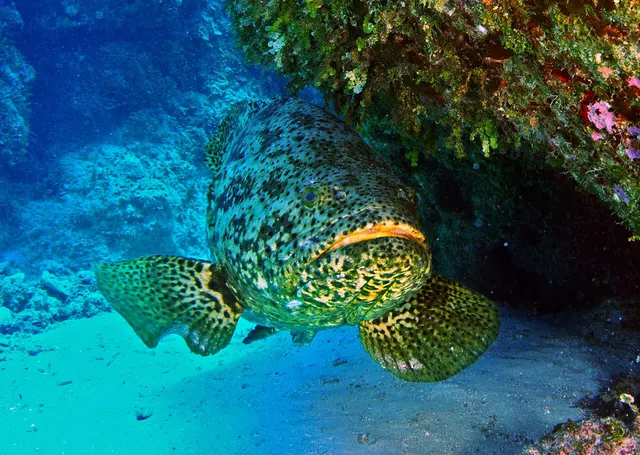 Atlantic goliath grouperA very large, very long-lived, high-trophic reef predator — the exact profile in which reef toxin accumulates to the highest concentrations.
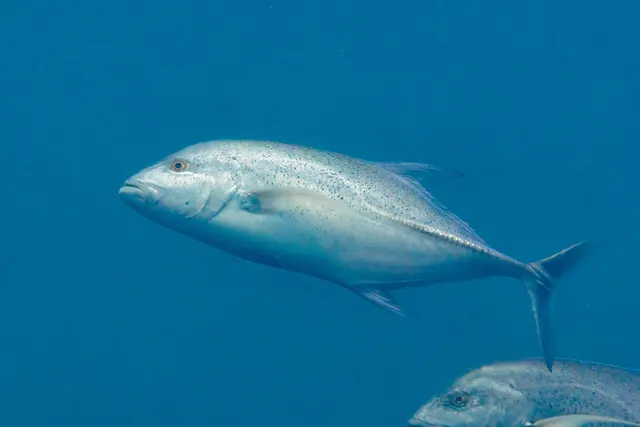 Bluefin trevallyA reef-associated predatory jack through the tropical Indo-Pacific, in the family the page names and on exactly the ground the toxin concentrates on.
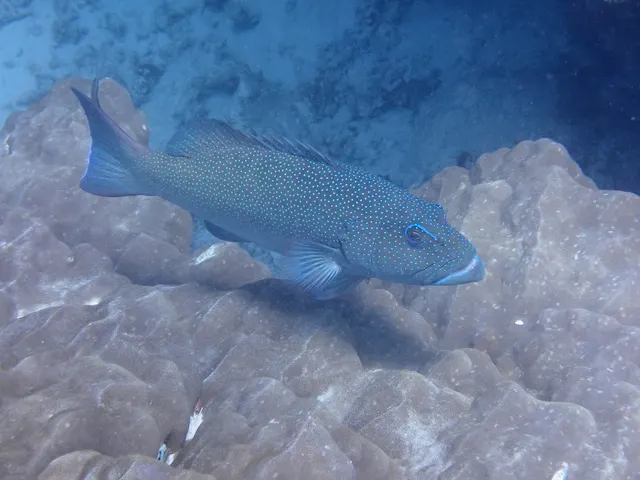 Coral troutA reef grouper of exactly the kind local advice distinguishes ground by ground, which is why the answer here is a question for local knowledge rather than for a species list.
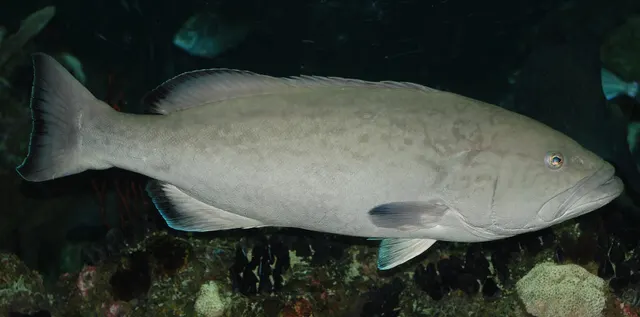 Gag grouperA large, long-lived grouper of the western Atlantic and Caribbean — the family and the trophic position the page names first.
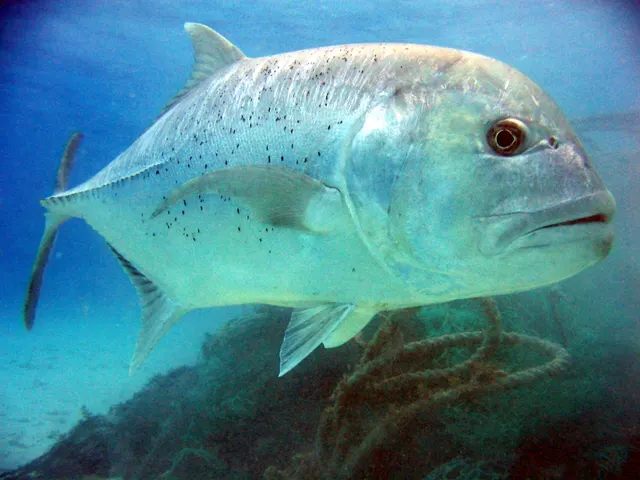 Giant trevallyA large, long-lived apex reef predator across the tropical Indo-Pacific, and among the fish most frequently implicated where ciguatera occurs. The species is also very largely released by the anglers who travel for it, which makes the question one of local advice rather than of the angler's own catch.
- Great barracudaThe species most consistently implicated across affected regions, and the one most often caught by visiting anglers who then have to decide what to do with it.
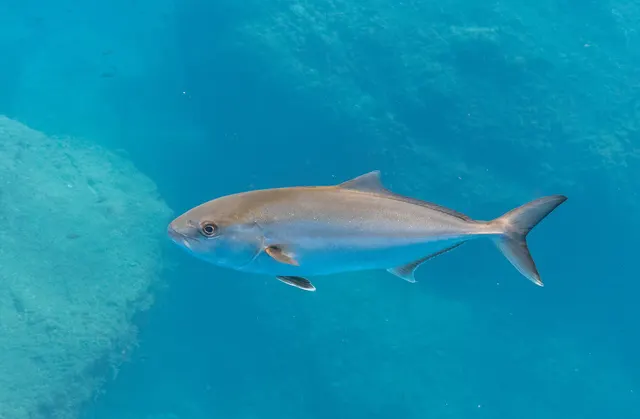 Greater amberjackImplicated in several affected regions, and a fish whose reputation as good eating in temperate waters travels with visitors into waters where the question is different.
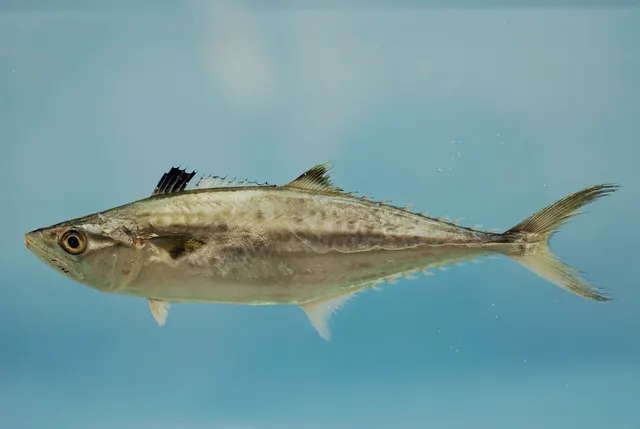 King mackerelA large predatory mackerel of the western Atlantic and Caribbean, carrying both of FishingHQ's accumulation hazards at once, and one where the size of the individual matters more than the species does.
4 more
Where it matters
- Reef spearfishingThe discipline that selects for the risk. Ciguatoxin accumulates up a reef food chain, so the large predatory reef fish a spearo can select individually are exactly the fish most likely to carry it — and the toxin is undetectable by appearance, smell or taste and survives cooking. Local knowledge about which species and which reefs is the only usable control and it does not travel between islands.
- SpearfishingReached from the discipline as well as the method, because a travelling spearo arriving in the tropics is the specific person this page exists for and may never open the reef-specific page.
Where this applies
- CaribbeanThe region where the hazard is most familiar to visitors and least understood, because every instinct about spoiled food fails against a toxin that was in the fish before it was caught.
- CubaThe same Caribbean hazard on a reef system with a great deal less fishing pressure and therefore a great many more large old predators.
- Mauritius and RéunionOccurs in Indian Ocean reef predators, which is why local advice about which species are eaten outperforms any general rule a visitor brings with them.
- ThailandNamed in this page's own safety context with nothing to point at until now, and the reason local advice about which reef species are eaten is the primary source there.
- The Yucatán and Mexican Caribbean coastPresent in Caribbean reef predators and associated with particular species and particular reefs rather than with the region as a whole.
Sources and evidence
- Fish and Fishery Products Hazards and Controls Guidance — US Food and Drug Administration, Center for Food Safety and Applied Nutrition, 2022 (Standards body)Relied on for: Seafood hazards and controls, including ciguatera and methylmercury: the species and regions each is associated with, why cooking does not address either, and the control approach recommended.States this directlyPassage read and verified
- FAO Species Identification Guides for Fishery Purposes and the FAO Species Catalogues — Food and Agriculture Organization of the United Nations (Scientific institute)Relied on for: Identification, distribution and trophic position of tropical reef fishes, including the large predatory species associated with ciguatera.States this directlyCitation checked — the work exists and is described correctly
- Reef Fish Spawning Aggregations: Biology, Research and Management — Springer, Fish & Fisheries Series vol. 35, 2012 (Scientific literature)Relied on for: The biology and exploitation of large, long-lived, site-attached reef predators, which are the species in which reef toxin accumulates.Background and mechanism onlyCitation checked — the work exists and is described correctly
Why the 19 connections on this page are here, and the sources
Fish this applies to
Backed by research — 12 connections
Supported by peer-reviewed research or fisheries science. The sources are listed and can be checked.
Atlantic goliath grouper
A link from a species or a place to the accumulation mechanism that decides whether what is caught there should be eaten, resting on published seafood-hazard guidance and on the species' recorded diet and trophic position.
- FAO Species Identification Guides for Fishery Purposes and the FAO Species Catalogues — Food and Agriculture Organization of the United Nations (Scientific institute)Relied on for: Identification, distribution and trophic position of tropical reef fishes, including the large predatory species associated with reef toxin.States this directlyCitation checked — the work exists and is described correctly
- FishBase: a global information system on fishes — Froese, R. and D. Pauly, eds. — FishBase Consortium (Scientific institute)Relied on for: Recorded distribution, diet, size and trophic level of the species named, which is the basis for its position in a reef food web.States this directlyPassage read and verified
Bluefin trevally
That the ciguatera mechanism is relevant to this species, because it occupies the trophic position and habitat the toxin concentrates through. It is not a statement that any individual fish is toxic, and the record it points at says plainly that the risk is intensely local and that local knowledge outperforms any species list.
- Fish and Fishery Products Hazards and Controls Guidance — US Food and Drug Administration, Center for Food Safety and Applied Nutrition, 2022 (Standards body)Relied on for: Natural toxins in fishery products including ciguatera, the fish groups and regions associated with it, and that the toxin is not removed by cooking, freezing or any other domestic process.States this directlyPassage read and verified
- FishBase: a global information system on fishes — Froese, R. and D. Pauly, eds. — FishBase Consortium (Scientific institute)Relied on for: Trophic level, maximum size, longevity, reef association and recorded distribution of the species named, which is the basis for treating it as one the mechanism applies to.States this directlyPassage read and verified
Coral trout
A link from a species or a place to the accumulation mechanism that decides whether what is caught there should be eaten, resting on published seafood-hazard guidance and on the species' recorded diet and trophic position.
- FAO Species Identification Guides for Fishery Purposes and the FAO Species Catalogues — Food and Agriculture Organization of the United Nations (Scientific institute)Relied on for: Identification, distribution and trophic position of tropical reef fishes, including the large predatory species associated with reef toxin.States this directlyCitation checked — the work exists and is described correctly
- FishBase: a global information system on fishes — Froese, R. and D. Pauly, eds. — FishBase Consortium (Scientific institute)Relied on for: Recorded distribution, diet, size and trophic level of the species named, which is the basis for its position in a reef food web.States this directlyPassage read and verified
Gag grouper
That the ciguatera mechanism is relevant to this species, because it occupies the trophic position and habitat the toxin concentrates through. It is not a statement that any individual fish is toxic, and the record it points at says plainly that the risk is intensely local and that local knowledge outperforms any species list.
- Fish and Fishery Products Hazards and Controls Guidance — US Food and Drug Administration, Center for Food Safety and Applied Nutrition, 2022 (Standards body)Relied on for: Natural toxins in fishery products including ciguatera, the fish groups and regions associated with it, and that the toxin is not removed by cooking, freezing or any other domestic process.States this directlyPassage read and verified
- FishBase: a global information system on fishes — Froese, R. and D. Pauly, eds. — FishBase Consortium (Scientific institute)Relied on for: Trophic level, maximum size, longevity, reef association and recorded distribution of the species named, which is the basis for treating it as one the mechanism applies to.States this directlyPassage read and verified
Giant trevally
That the ciguatera mechanism is relevant to this species, because it occupies the trophic position and habitat the toxin concentrates through. It is not a statement that any individual fish is toxic, and the record it points at says plainly that the risk is intensely local and that local knowledge outperforms any species list.
- Fish and Fishery Products Hazards and Controls Guidance — US Food and Drug Administration, Center for Food Safety and Applied Nutrition, 2022 (Standards body)Relied on for: Natural toxins in fishery products including ciguatera, the fish groups and regions associated with it, and that the toxin is not removed by cooking, freezing or any other domestic process.States this directlyPassage read and verified
- FishBase: a global information system on fishes — Froese, R. and D. Pauly, eds. — FishBase Consortium (Scientific institute)Relied on for: Trophic level, maximum size, longevity, reef association and recorded distribution of the species named, which is the basis for treating it as one the mechanism applies to.States this directlyPassage read and verified
Great barracuda
A link from a species or a place to the accumulation mechanism that decides whether what is caught there should be eaten, resting on published seafood-hazard guidance and on the species' recorded diet and trophic position.
- FAO Species Identification Guides for Fishery Purposes and the FAO Species Catalogues — Food and Agriculture Organization of the United Nations (Scientific institute)Relied on for: Identification, distribution and trophic position of tropical reef fishes, including the large predatory species associated with reef toxin.States this directlyCitation checked — the work exists and is described correctly
- FishBase: a global information system on fishes — Froese, R. and D. Pauly, eds. — FishBase Consortium (Scientific institute)Relied on for: Recorded distribution, diet, size and trophic level of the species named, which is the basis for its position in a reef food web.States this directlyPassage read and verified
Greater amberjack
A link from a species or a place to the accumulation mechanism that decides whether what is caught there should be eaten, resting on published seafood-hazard guidance and on the species' recorded diet and trophic position.
- FAO Species Identification Guides for Fishery Purposes and the FAO Species Catalogues — Food and Agriculture Organization of the United Nations (Scientific institute)Relied on for: Identification, distribution and trophic position of tropical reef fishes, including the large predatory species associated with reef toxin.States this directlyCitation checked — the work exists and is described correctly
- FishBase: a global information system on fishes — Froese, R. and D. Pauly, eds. — FishBase Consortium (Scientific institute)Relied on for: Recorded distribution, diet, size and trophic level of the species named, which is the basis for its position in a reef food web.States this directlyPassage read and verified
King mackerel
That the ciguatera mechanism is relevant to this species, because it occupies the trophic position and habitat the toxin concentrates through. It is not a statement that any individual fish is toxic, and the record it points at says plainly that the risk is intensely local and that local knowledge outperforms any species list.
- Fish and Fishery Products Hazards and Controls Guidance — US Food and Drug Administration, Center for Food Safety and Applied Nutrition, 2022 (Standards body)Relied on for: Natural toxins in fishery products including ciguatera, the fish groups and regions associated with it, and that the toxin is not removed by cooking, freezing or any other domestic process.States this directlyPassage read and verified
- FishBase: a global information system on fishes — Froese, R. and D. Pauly, eds. — FishBase Consortium (Scientific institute)Relied on for: Trophic level, maximum size, longevity, reef association and recorded distribution of the species named, which is the basis for treating it as one the mechanism applies to.States this directlyPassage read and verified
Mangrove jack
That the ciguatera mechanism is relevant to this species, because it occupies the trophic position and habitat the toxin concentrates through. It is not a statement that any individual fish is toxic, and the record it points at says plainly that the risk is intensely local and that local knowledge outperforms any species list.
- Fish and Fishery Products Hazards and Controls Guidance — US Food and Drug Administration, Center for Food Safety and Applied Nutrition, 2022 (Standards body)Relied on for: Natural toxins in fishery products including ciguatera, the fish groups and regions associated with it, and that the toxin is not removed by cooking, freezing or any other domestic process.States this directlyPassage read and verified
- FishBase: a global information system on fishes — Froese, R. and D. Pauly, eds. — FishBase Consortium (Scientific institute)Relied on for: Trophic level, maximum size, longevity, reef association and recorded distribution of the species named, which is the basis for treating it as one the mechanism applies to.States this directlyPassage read and verified
Narrow-barred Spanish mackerel
That the ciguatera mechanism is relevant to this species, because it occupies the trophic position and habitat the toxin concentrates through. It is not a statement that any individual fish is toxic, and the record it points at says plainly that the risk is intensely local and that local knowledge outperforms any species list.
- Fish and Fishery Products Hazards and Controls Guidance — US Food and Drug Administration, Center for Food Safety and Applied Nutrition, 2022 (Standards body)Relied on for: Natural toxins in fishery products including ciguatera, the fish groups and regions associated with it, and that the toxin is not removed by cooking, freezing or any other domestic process.States this directlyPassage read and verified
- FishBase: a global information system on fishes — Froese, R. and D. Pauly, eds. — FishBase Consortium (Scientific institute)Relied on for: Trophic level, maximum size, longevity, reef association and recorded distribution of the species named, which is the basis for treating it as one the mechanism applies to.States this directlyPassage read and verified
Northern red snapper
A link from a species or a place to the accumulation mechanism that decides whether what is caught there should be eaten, resting on published seafood-hazard guidance and on the species' recorded diet and trophic position.
- FAO Species Identification Guides for Fishery Purposes and the FAO Species Catalogues — Food and Agriculture Organization of the United Nations (Scientific institute)Relied on for: Identification, distribution and trophic position of tropical reef fishes, including the large predatory species associated with reef toxin.States this directlyCitation checked — the work exists and is described correctly
- FishBase: a global information system on fishes — Froese, R. and D. Pauly, eds. — FishBase Consortium (Scientific institute)Relied on for: Recorded distribution, diet, size and trophic level of the species named, which is the basis for its position in a reef food web.States this directlyPassage read and verified
Yellowtail snapper
That the ciguatera mechanism is relevant to this species, because it occupies the trophic position and habitat the toxin concentrates through. It is not a statement that any individual fish is toxic, and the record it points at says plainly that the risk is intensely local and that local knowledge outperforms any species list.
- Fish and Fishery Products Hazards and Controls Guidance — US Food and Drug Administration, Center for Food Safety and Applied Nutrition, 2022 (Standards body)Relied on for: Natural toxins in fishery products including ciguatera, the fish groups and regions associated with it, and that the toxin is not removed by cooking, freezing or any other domestic process.States this directlyPassage read and verified
- FishBase: a global information system on fishes — Froese, R. and D. Pauly, eds. — FishBase Consortium (Scientific institute)Relied on for: Trophic level, maximum size, longevity, reef association and recorded distribution of the species named, which is the basis for treating it as one the mechanism applies to.States this directlyPassage read and verified
Where it matters
Backed by research — 2 connections
Supported by peer-reviewed research or fisheries science. The sources are listed and can be checked.
Reef spearfishing
A method or discipline joined to the mechanism that changes how it is conducted. Written where the method's own practice differs because of the mechanism — a different bait, a different season, a different handling routine, a decision not to eat something — and refused where the mechanism is merely true of the fish being caught.
- Fish and Fishery Products Hazards and Controls Guidance — US Food and Drug Administration, Center for Food Safety and Applied Nutrition, 2022 (Standards body)Relied on for: Hazard analysis for fish and fishery products, including scombrotoxin formation with time and temperature, ciguatera, and marine biotoxins in molluscan shellfish.States this directlyPassage read and verified
- Biotoxin and phytoplankton monitoring — Food Standards Agency, 2026 (Government fisheries body)Relied on for: Biotoxin and phytoplankton monitoring in shellfish harvesting areas and the basis on which areas are classified and closed.States this directlyPassage read and verified
Spearfishing
A method or discipline joined to the mechanism that changes how it is conducted. Written where the method's own practice differs because of the mechanism — a different bait, a different season, a different handling routine, a decision not to eat something — and refused where the mechanism is merely true of the fish being caught.
- Fish and Fishery Products Hazards and Controls Guidance — US Food and Drug Administration, Center for Food Safety and Applied Nutrition, 2022 (Standards body)Relied on for: Hazard analysis for fish and fishery products, including scombrotoxin formation with time and temperature, ciguatera, and marine biotoxins in molluscan shellfish.States this directlyPassage read and verified
- Biotoxin and phytoplankton monitoring — Food Standards Agency, 2026 (Government fisheries body)Relied on for: Biotoxin and phytoplankton monitoring in shellfish harvesting areas and the basis on which areas are classified and closed.States this directlyPassage read and verified
Where this applies
Backed by research — 5 connections
Supported by peer-reviewed research or fisheries science. The sources are listed and can be checked.
Caribbean
A link from a species or a place to the accumulation mechanism that decides whether what is caught there should be eaten, resting on published seafood-hazard guidance and on the species' recorded diet and trophic position.
- Fish and Fishery Products Hazards and Controls Guidance — US Food and Drug Administration, Center for Food Safety and Applied Nutrition, 2022 (Standards body)Relied on for: Seafood hazards and controls, including ciguatera and methylmercury: the species and regions each is associated with, and why cooking addresses neither.States this directlyPassage read and verified
Cuba
A link from a species or a place to the accumulation mechanism that decides whether what is caught there should be eaten, resting on published seafood-hazard guidance and on the species' recorded diet and trophic position.
- Fish and Fishery Products Hazards and Controls Guidance — US Food and Drug Administration, Center for Food Safety and Applied Nutrition, 2022 (Standards body)Relied on for: Seafood hazards and controls, including ciguatera and methylmercury: the species and regions each is associated with, and why cooking addresses neither.States this directlyPassage read and verified
Mauritius and Réunion
A link from a species or a place to the accumulation mechanism that decides whether what is caught there should be eaten, resting on published seafood-hazard guidance and on the species' recorded diet and trophic position.
- Fish and Fishery Products Hazards and Controls Guidance — US Food and Drug Administration, Center for Food Safety and Applied Nutrition, 2022 (Standards body)Relied on for: Seafood hazards and controls, including ciguatera and methylmercury: the species and regions each is associated with, and why cooking addresses neither.States this directlyPassage read and verified
Thailand
A link from a species or a place to the accumulation mechanism that decides whether what is caught there should be eaten, resting on published seafood-hazard guidance and on the species' recorded diet and trophic position.
- Fish and Fishery Products Hazards and Controls Guidance — US Food and Drug Administration, Center for Food Safety and Applied Nutrition, 2022 (Standards body)Relied on for: Seafood hazards and controls, including ciguatera and methylmercury: the species and regions each is associated with, and why cooking addresses neither.States this directlyPassage read and verified
The Yucatán and Mexican Caribbean coast
A link from a species or a place to the accumulation mechanism that decides whether what is caught there should be eaten, resting on published seafood-hazard guidance and on the species' recorded diet and trophic position.
- Fish and Fishery Products Hazards and Controls Guidance — US Food and Drug Administration, Center for Food Safety and Applied Nutrition, 2022 (Standards body)Relied on for: Seafood hazards and controls, including ciguatera and methylmercury: the species and regions each is associated with, and why cooking addresses neither.States this directlyPassage read and verified
How FishingHQ labels evidence is explained in the evidence policy.