The Yucatán and Mexican Caribbean coast
Fishing regions · Last reviewed 2026-08-18
A flat limestone shelf with no rivers on it, a barrier reef along its edge, and shallow lagoons behind — which together produce one of the few places on earth where a bonefish, a tarpon, a permit and a snook can be caught in one day.
Safety: sun, dehydration and fatigue — can cause serious injury or death. 3 more points apply here.
Contamination and toxins in the catch — Can cause injury needing treatment
Ciguatera is present in Caribbean reef predators, is not removed by cooking, and is associated with particular species and particular reefs rather than with the region as a whole.
What reduces it: Take local advice on which species are eaten locally and which are avoided, and treat that advice as the primary source rather than a general rule about size or species.
Being listed here is not permission to fish. What that meansClose
Access, fishing rights, seasons, licences, local bylaws and permitted methods vary and can change. Check current access, permission, local regulations, closures and restrictions before you travel or fish. FishingHQ describes what the ground is and names who holds the answer; it does not hold the answer itself.
Find the authority for a jurisdiction · What FishingHQ does and does not cover
The eastern Yucatán ranks fourth on FishingHQ's destination priority, and the reasons are that an enormous number of European visitors already go there for other reasons, a great deal of the fishing is reachable on foot or from a small boat, and the flats fishery is of genuine international standing.
THE GEOLOGY EXPLAINS EVERYTHING ELSE. The Yucatán is a low limestone platform with almost no surface rivers: rain drains straight down through porous rock into an enormous underground system, emerging in sinkholes inland and as freshwater seeps along the coast. That has three consequences that matter. The sea is exceptionally clear, because nothing is washing sediment into it. The shallows are white carbonate sand, which is what makes sight fishing possible. And the freshwater influence arrives at the coast as diffuse seepage rather than as an estuary, which produces brackish lagoons of unusual character.
THE MESOAMERICAN BARRIER REEF RUNS ALONG THE EDGE OF IT, the second-longest in the world, sheltering a strip of shallow water inside and dropping into very deep water immediately outside. A visitor can be fishing knee-deep flats and, twenty minutes later, be over water a kilometre deep.
THE FLATS FISHERY IS WHAT THE REGION IS KNOWN FOR. Bonefish in numbers on the sand, permit over turtle grass and coral rubble, tarpon in the lagoons and mangrove channels, and snook in the same brackish water. The combination is rare enough that catching all four in a day has a name in the local guiding culture.
AND THE MANGROVE AND LAGOON SYSTEMS BEHIND THE COAST ARE THE OTHER HALF. Extensive protected wetland, tidal creeks, and lagoons that are partly fresh and partly salt, holding tarpon and snook year-round and functioning as nursery ground for a great deal of what lives on the reef.
OFFSHORE, THE CURRENT DOES THE WORK. The Yucatán Current runs north along the coast and concentrates pelagic life along the drop-off, which puts sailfish, dorado, wahoo, tuna and kingfish within a short run of shore.
What fishing here is like
A low, flat limestone platform with essentially no surface rivers, draining through porous rock into an underground system that emerges as sinkholes inland and as freshwater seepage along the coast. The sea is exceptionally clear because nothing is washing sediment into it; the shallows are white carbonate sand and turtle grass; and a barrier reef runs the length of the coast, sheltering shallow water inside and dropping into very deep water immediately outside. Behind the coast lie extensive mangrove forest and brackish lagoons, much of it protected. The Yucatán Current runs north along the shelf edge and concentrates pelagic life along it.
What dominates
Saltwater fly fishing on the flats for bonefish, permit, tarpon and snook, which is what the region is internationally known for and which is done wading and from shallow-draught skiffs. Light lure and bait fishing in the lagoons and mangrove channels. Offshore trolling along the drop-off for sailfish, dorado, wahoo, tuna and kingfish, reachable within a short run. Reef fishing and spearfishing where permitted, with an extensive diving sector. Traditional small-scale fishing from beach-launched craft, which is the visible fishery of most of the coast and includes a long-established spiny lobster fishery.
The water available
White carbonate sand flats and turtle grass; the Mesoamerican barrier reef and the drop-off outside it; extensive mangrove forest and tidal creek; brackish coastal lagoons fed by freshwater seepage rather than by rivers; inland sinkholes and the underground river system that produces them; and a shelf edge with a strong northward current running along it.
How the rules are structured
Recreational fishing in Mexican waters requires a licence issued by the federal fisheries authority, and it is a federal rather than a state matter. Above that, very large parts of this coast lie inside biosphere reserves and marine protected areas, which set their own zoning, their own permitted activities and their own access arrangements — and in several of them fishing is restricted to particular zones, particular methods or particular operators. Species measures apply, several species are protected outright, and the take of spiny lobster and conch is separately and tightly controlled with closed seasons. Spearfishing is restricted in many areas and prohibited in some. FishingHQ does not state what any current rule is. Check with the federal fisheries authority and with the administration of the protected area before going.
Who to ask
- The Mexican federal fisheries authority, which issues recreational fishing licences and sets national measures.
- The national protected areas commission, which administers the biosphere reserves and marine parks covering much of this coast and sets zoning and permitted activities within them.
- The environment ministry, for protected species and for the closed seasons on lobster and conch.
- The local port authority, for launching and for small-craft requirements.
Words you will meet
- Cenote
- A sinkhole where the limestone roof over the underground river system has collapsed, exposing fresh water. They are the Yucatán's only substantial fresh water, they are culturally and archaeologically significant, and most are protected — which is why they are a diving subject rather than a fishing one.
- Flat
- Shallow water over sand or turtle grass, clear enough and shallow enough to see fish in and wade. The entire flats discipline exists because this coast has hundreds of square kilometres of it.
- Grand slam
- Bonefish, permit and tarpon in one day; with a snook added it acquires another name. It is a guiding-culture achievement rather than a formal record, and the reason it means anything here is that this is one of very few coasts where all four overlap.
- Panga
- The open outboard-powered skiff that is the working boat of the Mexican and wider Latin American coast, used for artisanal fishing and for most charter work outside the specialist flats sector.
Conditions and hazards
Heat and sun are the dominant hazard and they are worse than they feel because the wind on a flat is constant: a full day wading in shallow water under a tropical sun produces severe burn and dehydration in people who did not notice either happening. The water is warm, which removes the cold-water mechanism entirely and replaces it with a false sense of safety — the reef edge drops into deep water abruptly and the current along it runs harder than it looks. Rip currents form in the gaps in the reef. In the water, stingrays lie buried on the flats and are stood on rather than met, which is why wading is done with a shuffling step; fire coral, sea urchins, scorpionfish and lionfish are all present; and lionfish in particular are an invasive species here, are actively fished, and are venomous. Hurricane season is a real planning constraint. On the catch side, ciguatera is present in Caribbean reef predators and is the reason local advice about which species are eaten is worth more than any general rule.
Why a coast with no rivers produces the clearest flats in the Atlantic
The Yucatán's fishing is a direct consequence of its geology, and the chain from one to the other is short enough to follow completely.
THE PLATFORM IS POROUS LIMESTONE. Rain falling on the peninsula does not run off; it drains vertically through the rock into an underground river system. There are essentially no surface rivers on the eastern Yucatán at all.
SO NOTHING CARRIES SEDIMENT TO THE SEA. Turbidity in coastal water is mostly river-borne sediment and river-borne nutrients driving plankton. With neither arriving, the water is exceptionally clear and the light reaches the bottom in a way it does not on a continental coast.
WHICH MAKES SIGHT FISHING POSSIBLE OVER ENORMOUS AREAS. Clear water over white carbonate sand at wading depth is the specification for a flat, and the eastern Yucatán has hundreds of square kilometres of it. Every technique the flats discipline uses — spotting, stalking, leading a moving fish, a fly that lands quietly — exists because of that clarity.
IT ALSO MEANS THE SYSTEM IS NUTRIENT-POOR, which is the other side of the same fact. Clear tropical water supports less biomass per unit area than a turbid temperate shelf, and the flats fishery is a fishery of relatively few, relatively wary fish that have to be found rather than a fishery of abundance.
THE MANGROVES AND LAGOONS SUPPLY WHAT THE OPEN FLATS CANNOT. Sheltered, warm, food-rich and turbid, they are the nursery for tarpon, snook and a great deal of the reef community, and the freshwater seepage that feeds them is the underground system emerging at the coast. That is why the lagoons hold juvenile tarpon year-round while the flats hold adults seasonally.
AND THE REEF EDGE IS WHERE THE PELAGIC FISHERY LIVES. A barrier reef with deep water immediately outside it and a current running along that edge concentrates bait and the things that eat bait into a narrow band, which is why offshore fishing here is a short run rather than a long one.
THE CONSERVATION CONSEQUENCE FOLLOWS TOO. A system this dependent on clarity and on mangrove is unusually vulnerable to coastal development, and a large share of this coast is inside biosphere reserves for exactly that reason.
Backed by research — why, and the sources (4)
Supported by peer-reviewed research or fisheries science. The sources are listed and can be checked.
- FAO Species Identification Guides for Fishery Purposes and the FAO Species Catalogues — Food and Agriculture Organization of the United Nations (Scientific institute)Relied on for: Identification, distribution and habitat association of the fishes and invertebrates of the tropical regions named, and the fisheries they support.States this directlyCitation checked — the work exists and is described correctly
- FishBase: a global information system on fishes — Froese, R. and D. Pauly, eds. — FishBase Consortium (Scientific institute)Relied on for: Recorded distribution, depth range, habitat association and biology of the species named.States this directlyPassage read and verified
- The World's Mangroves and their Fisheries — FAO Forestry and Fisheries assessments — Food and Agriculture Organization of the United Nations, Rome (Standards body)Relied on for: The nursery function of mangrove systems for tropical coastal fisheries, the species dependent on them, and the extent and causes of their loss.States this directlyCitation checked — the work exists and is described correctly
- The Flood Pulse Concept in River-Floodplain Systems — Canadian Special Publication of Fisheries and Aquatic Sciences 106, Department of Fisheries and Oceans, Ottawa, 1989 (Scientific literature)Relied on for: That in river-floodplain systems the seasonal flood pulse rather than the channel drives biological productivity and organises fish movement.Background and mechanism onlyCitation checked — the work exists and is described correctly
Reserves, permits and a coast where the fishing is administered
A visitor arriving on this coast from a European sea fishery meets a structure that has no British equivalent, and getting it wrong is the commonest way a planned trip does not happen.
THE LICENCE IS FEDERAL. Recreational fishing in Mexican waters is licensed nationally rather than by the state, which means the document is the same in Quintana Roo as anywhere else and is obtained from the federal fisheries authority rather than locally.
AND THE LICENCE IS NOT PERMISSION FOR A PLACE. Very large parts of this coast lie inside biosphere reserves and marine protected areas, and those set their own zoning: areas where nothing is permitted, areas where particular methods are, areas reachable only with a designated operator, and boundaries invisible from the water. A licence establishes that a person may fish; the reserve establishes where and how.
WHICH IS WHY THE GUIDING SECTOR IS STRUCTURED THE WAY IT IS. In several of the best-known flats areas, access is administered through a limited number of permitted operators, and the number is a management decision rather than a market outcome. That is the mechanism behind the fishery's condition as much as the geology is.
SPECIES MEASURES SIT ABOVE BOTH. Several species are protected outright, catch-and-release is mandatory on some of the flats species in some areas, and the take of spiny lobster and conch is separately and tightly controlled with closed seasons that are enforced.
SPEARFISHING IS RESTRICTED IN MANY AREAS AND PROHIBITED IN SOME, and — as everywhere on FishingHQ — it is regulated separately from rod fishing rather than as a variation of it.
WHAT A READER SHOULD DO. Get the federal licence, then establish separately whether the water is inside a protected area and what that area permits. Those are two different offices answering two different questions, and FishingHQ holds neither answer.
Official guidance — why, and the sources (4)
Stated by a fisheries authority, scientific institute or recognised angling body. Authoritative, but summarising rather than demonstrating.
- Words of the Lagoon: Fishing and Marine Lore in the Palau District of Micronesia — University of California Press, Berkeley, 1981 (Reference work)Relied on for: Traditional tropical inshore fishing knowledge, its transmission, and the relationship between local practice and the resource it works.Background and mechanism onlyCitation checked — the work exists and is described correctly
- Code of Conduct for Responsible Fisheries — Food and Agriculture Organization of the United Nations, Rome, 1995 (Standards body)Relied on for: The international framework within which national fisheries authorities set and revise measures, and the place of small-scale and artisanal fisheries within it.Background and mechanism onlyCitation checked — the work exists and is described correctly
- Reef Fish Spawning Aggregations: Biology, Research and Management — Springer, Fish & Fisheries Series vol. 35, 2012 (Scientific literature)Relied on for: Reef fish spawning aggregations, their predictability, their vulnerability to exploitation and the management response to both.States this directlyCitation checked — the work exists and is described correctly
- The IUCN Red List of Threatened Species — International Union for Conservation of Nature (Conservation authority)Relied on for: Current conservation assessment of the reef and pelagic species named, with the assessment date.Background and mechanism onlyCitation checked — the work exists and is described correctly
Some of what lives here
Fish recorded here that FishingHQ holds a reviewed photograph of. It is not a complete list of what The Yucatán and Mexican Caribbean coast holds, and it is not a prediction that you will catch any of them — it is a way in to the ones we can show you.
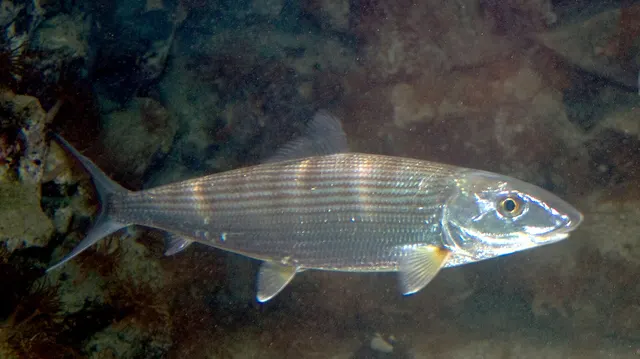 BonefishA silver bottom-feeder of tropical shallows, hunted on sight in knee-deep water, that runs further than anything of its size.
Brian Gratwicke — CC BY 2.0, via Wikimedia Commons
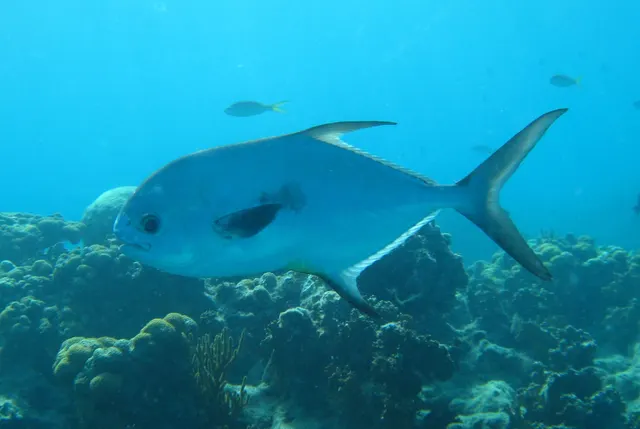 PermitA large, deep-bodied jack of tropical flats and wrecks, famously difficult on fly and the third fish of the flats grand slam.
Robert Webster — CC BY-SA, via iNaturalist
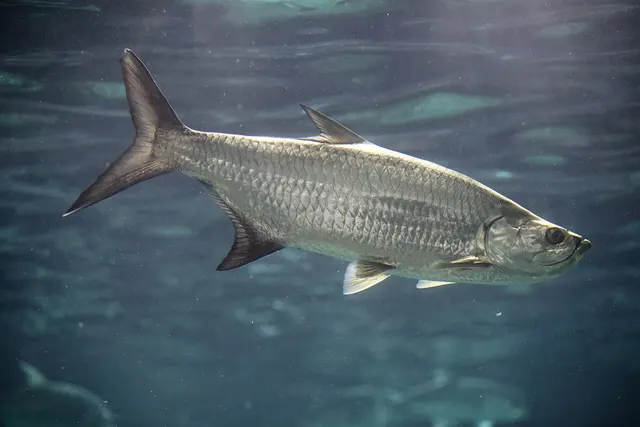 Atlantic tarponA huge, ancient, air-breathing fish of tropical Atlantic coasts that jumps repeatedly when hooked and is almost never eaten — fished purely for the encounter.
Daiju Azuma — CC BY-SA 4.0, via Wikimedia Commons
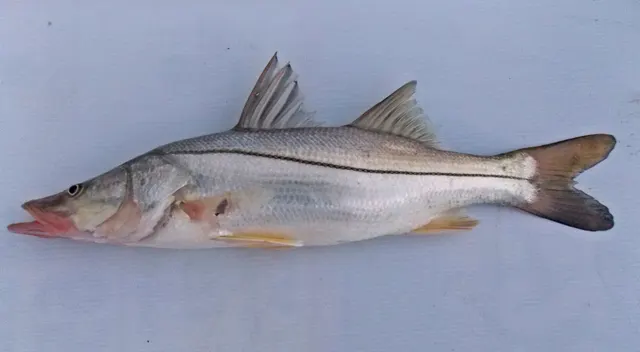 Common snookA structure-hugging ambush predator of tropical American coasts, marked by a hard black lateral line, that moves freely between the sea and fresh water.
jose_colorado-dapa — CC BY-SA 4.0, via Wikimedia Commons
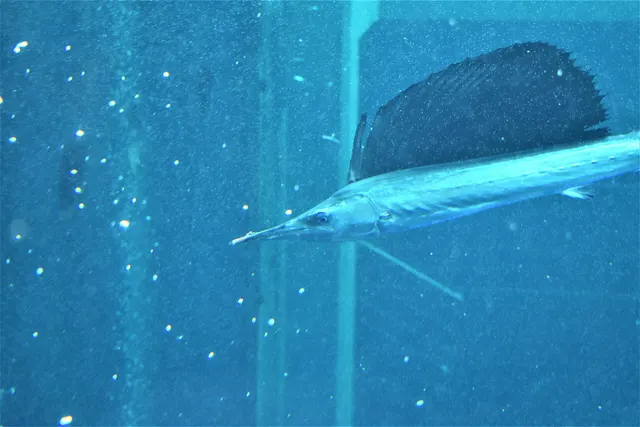 SailfishThe billfish with a sail — a dorsal fin taller than the fish is deep, raised when hunting, and probably the fastest accelerator in the ocean.
出羽雀台 — CC BY-SA 4.0, via Wikimedia Commons
Safety
Contamination and toxins in the catch is set out at the top of this page, where it cannot be missed.
Sun, dehydration and fatigue — Can cause serious injury or death
A full day wading a flat under a tropical sun with constant wind produces severe sunburn and dehydration in people who noticed neither happening, because the wind removes the sensation of heat while the reflected light doubles the exposure.
What reduces it: Cover up completely rather than relying on sunscreen, wear a long-sleeved shirt, a buff and a wide brim, drink far more than thirst suggests, and set a time to come off the water.
Venomous and spined species — Can cause injury needing treatment
Stingrays lie buried in the sand on the flats and are stood on rather than encountered, and fire coral, sea urchins, scorpionfish and invasive lionfish are all present in the shallows.
What reduces it: Wade with a shuffling step so that a buried ray is nudged rather than trodden on, wear footwear, and do not handle unfamiliar fish — lionfish in particular are actively fished here and are venomous.
Moving water and currents — Can cause injury needing treatment
The reef edge drops into deep water abruptly and the current along it runs harder than it appears, and rips form in the gaps in the reef where water returns seaward.
What reduces it: Do not swim or wade near a reef gap, treat the reef edge as a boundary rather than a feature to cross, and take local advice on where the current sets.
Further safety reading
- Venomous and spined fish — Stingrays lie buried on the flats and are stood on rather than met, and invasive lionfish are present, actively fished and venomous.
Check the rules before you fish
Fishing laws, bylaws, access rules, seasons, bait restrictions and permitted methods vary by location and can change. Check the current rules from the relevant authority and the water you intend to fish before fishing.
Check with:
- Current national or regional law for where you are fishing
- Current local bylaws
- The relevant fisheries authority
- The landowner, club or fishery whose water it is
- Any restrictions specific to the species or the method you intend to use
Where to go next
What swims here
- Atlantic tarponJuveniles resident year-round in the brackish lagoons and mangrove channels behind the coast, adults on the flats and in the channels seasonally.
- BonefishOn hundreds of square kilometres of white carbonate sand flat, in the numbers that made this coast a flats destination in the first place.
- Common snookIn the same brackish lagoon and mangrove water as the juvenile tarpon, which is why the two are frequently caught in a single session and why the lagoons matter as much as the flats.
- PermitOver turtle grass and coral rubble, and the species that decides whether a week here is remembered — long-lived, wary, site-attached and the hardest of the flats fish to convert.
- SailfishAlong the drop-off outside the barrier reef, concentrated by the northward current that runs along it and reachable within a short run of shore.
How people fish here
- Fly fishingThe flats fishery is a fly fishery first: sight fishing, wading and shallow-draught skiffs, and one of the few coasts on earth where bonefish, permit, tarpon and snook overlap.
- Sea fishingOffshore trolling along the drop-off, reef fishing and an artisanal beach-launched fishery that is the visible fishing of most of the coast.
Local knowledge
Rules and access
- Licences and permissionA federal licence establishes that a person may fish; a biosphere reserve establishes where and how, with zoning invisible from the water and access in places administered through designated operators. Two offices, two answers.
- Taking crabs, lobsters, squid and shellfish: how the rules are structuredSpiny lobster and conch are separately and tightly controlled with enforced closed seasons, which is the regulation a visitor is most likely to meet without expecting it.
Environment and conservation
Sources and evidence
- FAO Species Identification Guides for Fishery Purposes and the FAO Species Catalogues — Food and Agriculture Organization of the United Nations (Scientific institute)Relied on for: Identification, distribution and habitat association of the fishes and invertebrates of the tropical regions named, and the fisheries they support.States this directlyCitation checked — the work exists and is described correctly
- FishBase: a global information system on fishes — Froese, R. and D. Pauly, eds. — FishBase Consortium (Scientific institute)Relied on for: Recorded distribution, depth range, habitat association and biology of the species named.States this directlyPassage read and verified
- The World's Mangroves and their Fisheries — FAO Forestry and Fisheries assessments — Food and Agriculture Organization of the United Nations, Rome (Standards body)Relied on for: The nursery function of mangrove systems for tropical coastal fisheries, the species dependent on them, and the extent and causes of their loss.States this directlyCitation checked — the work exists and is described correctly
- The Flood Pulse Concept in River-Floodplain Systems — Canadian Special Publication of Fisheries and Aquatic Sciences 106, Department of Fisheries and Oceans, Ottawa, 1989 (Scientific literature)Relied on for: That in river-floodplain systems the seasonal flood pulse rather than the channel drives biological productivity and organises fish movement.Background and mechanism onlyCitation checked — the work exists and is described correctly
- Reef Fish Spawning Aggregations: Biology, Research and Management — Springer, Fish & Fisheries Series vol. 35, 2012 (Scientific literature)Relied on for: Reef fish spawning aggregations, their predictability, their vulnerability to exploitation and the management response to both.States this directlyCitation checked — the work exists and is described correctly
- The IUCN Red List of Threatened Species — International Union for Conservation of Nature (Conservation authority)Relied on for: Current conservation assessment of the reef and pelagic species named, with the assessment date.Background and mechanism onlyCitation checked — the work exists and is described correctly
- Sea Angler — Bauer Media (Specialist angling publication)Relied on for: Long-running published description of the destinations British anglers travel to, the fishing available at each and the way it is organised.FishingHQ's interpretation of what it saysCitation checked — the work exists and is described correctly
- General angling website restatements of established technique — Various (Credible secondary source)Relied on for: Widely restated descriptions of what is conventionally fished at the destinations named and how, recorded as practitioner consensus rather than as scholarship.Background and mechanism onlyCitation checked — the work exists and is described correctly
Why the 12 connections on this page are here, and the sources
What swims here
Backed by research — 5 connections
Supported by peer-reviewed research or fisheries science. The sources are listed and can be checked.
Atlantic tarpon
That a species occurs in these waters, drawn from distribution science. It is a statement about where the animal lives and is not a statement that anybody will catch one, still less where.
- FAO Species Identification Guides for Fishery Purposes and the FAO Species Catalogues — Food and Agriculture Organization of the United Nations (Scientific institute)Relied on for: Identification, distribution and habitat association of the fishes and invertebrates of the tropical region named.States this directlyCitation checked — the work exists and is described correctly
- FishBase: a global information system on fishes — Froese, R. and D. Pauly, eds. — FishBase Consortium (Scientific institute)Relied on for: Recorded distribution, depth range and habitat association of the species named, including its occurrence in the waters concerned.States this directlyPassage read and verified
Bonefish
That a species occurs in these waters, drawn from distribution science. It is a statement about where the animal lives and is not a statement that anybody will catch one, still less where.
- FAO Species Identification Guides for Fishery Purposes and the FAO Species Catalogues — Food and Agriculture Organization of the United Nations (Scientific institute)Relied on for: Identification, distribution and habitat association of the fishes and invertebrates of the tropical region named.States this directlyCitation checked — the work exists and is described correctly
- FishBase: a global information system on fishes — Froese, R. and D. Pauly, eds. — FishBase Consortium (Scientific institute)Relied on for: Recorded distribution, depth range and habitat association of the species named, including its occurrence in the waters concerned.States this directlyPassage read and verified
Common snook
That a species occurs in these waters, drawn from distribution science. It is a statement about where the animal lives and is not a statement that anybody will catch one, still less where.
- FAO Species Identification Guides for Fishery Purposes and the FAO Species Catalogues — Food and Agriculture Organization of the United Nations (Scientific institute)Relied on for: Identification, distribution and habitat association of the fishes and invertebrates of the tropical region named.States this directlyCitation checked — the work exists and is described correctly
- FishBase: a global information system on fishes — Froese, R. and D. Pauly, eds. — FishBase Consortium (Scientific institute)Relied on for: Recorded distribution, depth range and habitat association of the species named, including its occurrence in the waters concerned.States this directlyPassage read and verified
Permit
That a species occurs in these waters, drawn from distribution science. It is a statement about where the animal lives and is not a statement that anybody will catch one, still less where.
- FAO Species Identification Guides for Fishery Purposes and the FAO Species Catalogues — Food and Agriculture Organization of the United Nations (Scientific institute)Relied on for: Identification, distribution and habitat association of the fishes and invertebrates of the tropical region named.States this directlyCitation checked — the work exists and is described correctly
- FishBase: a global information system on fishes — Froese, R. and D. Pauly, eds. — FishBase Consortium (Scientific institute)Relied on for: Recorded distribution, depth range and habitat association of the species named, including its occurrence in the waters concerned.States this directlyPassage read and verified
Sailfish
That a species occurs in these waters, drawn from distribution science. It is a statement about where the animal lives and is not a statement that anybody will catch one, still less where.
- FAO Species Identification Guides for Fishery Purposes and the FAO Species Catalogues — Food and Agriculture Organization of the United Nations (Scientific institute)Relied on for: Identification, distribution and habitat association of the fishes and invertebrates of the tropical region named.States this directlyCitation checked — the work exists and is described correctly
- FishBase: a global information system on fishes — Froese, R. and D. Pauly, eds. — FishBase Consortium (Scientific institute)Relied on for: Recorded distribution, depth range and habitat association of the species named, including its occurrence in the waters concerned.States this directlyPassage read and verified
How people fish here
What experienced anglers do — 2 connections
Widely and independently recommended by experienced anglers and specialist sources. This is real angling knowledge, not proof: controlled evidence for it is limited, and FishingHQ records it as convention rather than as a demonstrated effect.
Fly fishing
That a discipline is conventionally practised in these waters, drawn from published description of practice rather than from participation data.
- Sea Angler — Bauer Media (Specialist angling publication)Relied on for: Long-running published description of the destinations British anglers travel to and the fishing available at each.FishingHQ's interpretation of what it saysCitation checked — the work exists and is described correctly
- General angling website restatements of established technique — Various (Credible secondary source)Relied on for: Widely restated descriptions of what is conventionally fished at the destinations named and how, recorded as practitioner consensus rather than as scholarship.Background and mechanism onlyCitation checked — the work exists and is described correctly
Sea fishing
That a discipline is conventionally practised in these waters, drawn from published description of practice rather than from participation data.
- Sea Angler — Bauer Media (Specialist angling publication)Relied on for: Long-running published description of the destinations British anglers travel to and the fishing available at each.FishingHQ's interpretation of what it saysCitation checked — the work exists and is described correctly
- General angling website restatements of established technique — Various (Credible secondary source)Relied on for: Widely restated descriptions of what is conventionally fished at the destinations named and how, recorded as practitioner consensus rather than as scholarship.Background and mechanism onlyCitation checked — the work exists and is described correctly
Local knowledge
Backed by research — 1 connection
Supported by peer-reviewed research or fisheries science. The sources are listed and can be checked.
Ciguatera and reef fish poisoning
A link from a species or a place to the accumulation mechanism that decides whether what is caught there should be eaten, resting on published seafood-hazard guidance and on the species' recorded diet and trophic position.
- Fish and Fishery Products Hazards and Controls Guidance — US Food and Drug Administration, Center for Food Safety and Applied Nutrition, 2022 (Standards body)Relied on for: Seafood hazards and controls, including ciguatera and methylmercury: the species and regions each is associated with, and why cooking addresses neither.States this directlyPassage read and verified
Safety reading
Official guidance — 1 connection
Stated by a fisheries authority, scientific institute or recognised angling body. Authoritative, but summarising rather than demonstrating.
Venomous and spined fish
A link from the place to the substantial safety topic describing the mechanism that hurts people there.
- United States Lifesaving Association public education on rip currents and the surf zone — United States Lifesaving Association (Water-safety or diver-training authority)Relied on for: Surf zone hazards, rip current formation and behaviour, and the guidance issued to people entering the water from a beach.States this directlyCitation checked — the work exists and is described correctly
- NOAA National Weather Service marine forecasts and marine weather services — National Oceanic and Atmospheric Administration, United States (Government fisheries body)Relied on for: That marine forecasts and sea state are the operative inputs for small-craft and shore decisions in tropical waters.States this directlyCitation checked — the work exists and is described correctly
Rules and access
Official guidance — 2 connections
Stated by a fisheries authority, scientific institute or recognised angling body. Authoritative, but summarising rather than demonstrating.
Licences and permission
This points to the kind of rule that applies rather than to a rule itself. The whole reason this destination is described separately is that permission is administered differently here, so the page says the answer is held elsewhere and changes.
- Code of Conduct for Responsible Fisheries — Food and Agriculture Organization of the United Nations, Rome, 1995 (Standards body)Relied on for: The international framework within which national fisheries authorities set, revise and enforce measures, and the principle that the responsible authority holds the current position.Background and mechanism onlyCitation checked — the work exists and is described correctly
- Reef Fish Spawning Aggregations: Biology, Research and Management — Springer, Fish & Fisheries Series vol. 35, 2012 (Scientific literature)Relied on for: The vulnerability of aggregating and site-attached reef and flats species to concentrated fishing, and the management responses adopted.States this directlyCitation checked — the work exists and is described correctly
Taking crabs, lobsters, squid and shellfish: how the rules are structured
This points to the kind of rule that applies rather than to a rule itself. The whole reason this destination is described separately is that permission is administered differently here, so the page says the answer is held elsewhere and changes.
- Code of Conduct for Responsible Fisheries — Food and Agriculture Organization of the United Nations, Rome, 1995 (Standards body)Relied on for: The international framework within which national fisheries authorities set, revise and enforce measures, and the principle that the responsible authority holds the current position.Background and mechanism onlyCitation checked — the work exists and is described correctly
- Reef Fish Spawning Aggregations: Biology, Research and Management — Springer, Fish & Fisheries Series vol. 35, 2012 (Scientific literature)Relied on for: The vulnerability of aggregating and site-attached reef and flats species to concentrated fishing, and the management responses adopted.States this directlyCitation checked — the work exists and is described correctly
Environment and conservation
Backed by research — 1 connection
Supported by peer-reviewed research or fisheries science. The sources are listed and can be checked.
Marine protected areas and spearfishing
An environmental claim attached to the geography where it operates, resting on published assessment rather than on advocacy.
- The IUCN Red List of Threatened Species — International Union for Conservation of Nature (Conservation authority)Relied on for: Current conservation assessment of the species and systems concerned, with the assessment date.States this directlyCitation checked — the work exists and is described correctly
- Reef Fish Spawning Aggregations: Biology, Research and Management — Springer, Fish & Fisheries Series vol. 35, 2012 (Scientific literature)Relied on for: The exploitation and management of aggregating reef species, and the evidence on which protection is argued.States this directlyCitation checked — the work exists and is described correctly
How FishingHQ labels evidence is explained in the evidence policy.