Mauritius and Réunion
Fishing regions · Last reviewed 2026-08-18
Two volcanic islands a few hundred kilometres apart in the open Indian Ocean, with deep water immediately offshore, a lagoon on one and almost none on the other — and a big-game fishery built on a seamount rather than on a coast.
Safety: encounters with marine life — can cause serious injury or death. 3 more points apply here.
Contamination and toxins in the catch — Can cause injury needing treatment
Ciguatera occurs in Indian Ocean reef predators and is not removed by cooking. Scombroid from tuna and mackerel that were not chilled quickly is the commonest seafood illness in a hot climate.
What reduces it: Take local advice on which reef species are eaten and which are avoided, and ice tuna and mackerel immediately — the window in tropical heat is very short.
Being listed here is not permission to fish. What that meansClose
Access, fishing rights, seasons, licences, local bylaws and permitted methods vary and can change. Check current access, permission, local regulations, closures and restrictions before you travel or fish. FishingHQ describes what the ground is and names who holds the answer; it does not hold the answer itself.
Find the authority for a jurisdiction · What FishingHQ does and does not cover
The Mascarenes rank tenth on FishingHQ's destination priority, and they are here because a very large number of European visitors go and almost nothing about the fishing is written for them in English.
TWO ISLANDS, GEOLOGICALLY SIMILAR AND PRACTICALLY QUITE DIFFERENT. Both are volcanic, both rise from very deep water, and neither has a continental shelf worth the name. Mauritius is older, eroded, and surrounded by an almost continuous fringing reef enclosing a shallow lagoon — which gives it a sheltered inshore fishery and a wading environment. Réunion is much younger, still volcanically active, and has very little reef and almost no lagoon, so its coast drops away almost immediately and its fishing is a deep-water fishing from the first cast.
THE DEEP WATER IS THE DEFINING FACT FOR BOTH. Depths of a thousand metres and more lie within a few kilometres of shore, which puts blue-water species within a short run and makes this one of the few destinations where a half-day trip is genuinely offshore fishing.
AND THE BANKS ARE WHAT MAKE THE BIG-GAME FISHERY. A series of shallow banks and seamounts lie around and between the islands, and they concentrate bait and predators in the way seamounts everywhere do. The marlin fishery here is built on that structure rather than on any coastal feature, which is why it happens where it does rather than where the islands are.
INSIDE THE LAGOON, MAURITIUS OFFERS SOMETHING QUITE DIFFERENT. Shallow sand and coral, seagrass, and a fishery for small reef species, bonefish in places and the trevallies that come in over the reef — much of it reachable on foot or from a small boat, which is what makes the destination useful to a visitor who is not on a fishing holiday.
RÉUNION ADDS SOMETHING THE INDIAN OCEAN ISLANDS MOSTLY DO NOT: fresh water. It is high, wet and steep, with permanent rivers running off the volcanic massif, and it has an inland freshwater fishery including introduced trout in the upper reaches — which makes it one of very few tropical islands where both are possible in a day.
AND THE SHARK POSITION AT RÉUNION IS A GENUINE AND SPECIFIC SAFETY MATTER rather than a general tropical caution, with a documented incident history and management measures that a visitor entering the water needs to understand before doing so.
What fishing here is like
Two volcanic islands rising from very deep water in the open Indian Ocean, with no continental shelf. Mauritius is older and eroded, ringed by an almost continuous fringing reef enclosing a shallow sand-and-coral lagoon. Réunion is young and volcanically active, with little reef, almost no lagoon and a coast that drops away immediately; it is also high, wet and steep, with permanent rivers running off the massif. Shallow banks and seamounts lie around and between the islands and concentrate pelagic life. Both sit in the south-west Indian Ocean cyclone belt.
What dominates
Offshore trolling and live-baiting for marlin, tuna, wahoo and dorado over the banks and seamounts, which is what the islands are known for internationally and which is reachable within a short run. Popping and jigging over reef and drop-off for trevally, dogtooth tuna and grouper. Shore and lagoon fishing inside the Mauritian reef for reef species, bonefish and trevally, much of it reachable on foot. Diving and breath-hold spearfishing, with an established sector on both islands and significant restrictions in places. Freshwater fishing on Réunion in the rivers running off the massif, including introduced trout in the upper reaches. Traditional small-scale coastal fishing, which is the visible fishery of both coasts.
The water available
Fringing coral reef and shallow sand-and-coral lagoon on Mauritius; a steep, reef-poor volcanic coast with immediate deep water on Réunion; offshore banks and seamounts concentrating pelagic life; very deep open ocean within a few kilometres of shore; and steep permanent rivers and upland streams on Réunion, which is the freshwater exception among Indian Ocean islands.
How the rules are structured
The two islands are separate jurisdictions and their frameworks differ: Mauritius is an independent state administering its own fisheries, and Réunion is a French overseas department, so French and European measures apply there alongside local ones. Both administer marine protected areas, fishing reserves and species measures, and both regulate underwater fishing separately from rod fishing. Réunion additionally operates measures relating to shark risk that constrain water entry in defined areas, and those are enforced. Charter and commercial operation, boat registration and the take of protected species and shellfish are administered separately again. FishingHQ does not state what any current rule is. Establish which of the two islands the water belongs to, and check with its fisheries administration and its protected-area authority before going.
Who to ask
- The Mauritian ministry responsible for fisheries, for measures, licensing and protected areas in Mauritian waters.
- The French state services in Réunion, including the maritime directorate, for measures in Réunion's waters under the French and European framework.
- The marine park or reserve administration, where the water is inside one.
- The authority responsible for water-entry measures at Réunion, whose restrictions are independent of any fishing rule.
Words you will meet
- Lagon
- The shallow water enclosed between a fringing reef and the shore. Mauritius has one almost all the way round and Réunion has almost none, which is the single largest practical difference between the two islands for anybody fishing from the shore.
- The banks
- Shallow submarine banks and seamounts lying around and between the islands. They concentrate bait and predators the way seamounts everywhere do, and the big-game fishery is built on them rather than on any coastal feature.
- Pêche à la traîne
- Trolling, the dominant offshore method on both islands, worked over the banks and along the drop-off with lures and live bait.
Conditions and hazards
Deep water immediately offshore means small craft are in open ocean within minutes of leaving, in a region within the south-west Indian Ocean cyclone belt where weather can build quickly and where a return leg against wind and swell is a different proposition from the outward one. Sun, heat and dehydration are severe and constant. In the water, the standard tropical hazards apply — stonefish, scorpionfish, lionfish, urchins, fire coral and cone snails, several of them camouflaged and stood on rather than encountered. Réunion carries a specific and documented shark risk with a recorded incident history and management measures constraining water entry in defined areas; that is a genuine local circumstance rather than a general tropical caution, and it should be understood before entering the water rather than after. On the catch side, ciguatera occurs in Indian Ocean reef predators and local advice about which species are eaten is the primary source, and scombroid from inadequately chilled tuna is a handling problem in a hot climate.
Two islands, one geology, and the lagoon that makes the difference
Mauritius and Réunion are the same kind of island at two different ages, and almost every practical difference between fishing them follows from that one fact.
BOTH ARE VOLCANIC AND BOTH RISE FROM DEEP WATER. Neither has a continental shelf. The seabed falls to a thousand metres and more within a few kilometres of the coast on both, which is why a half-day trip from either is genuinely offshore fishing and why the pelagic species are as close as they are.
RÉUNION IS YOUNG AND STILL BUILDING. Its coast is recent lava, steep, with very little coral and almost no lagoon, so the water is deep from the first cast and there is very little shallow ground to wade or to fish from the shore. It is also high, wet and eroding fast, which gives it permanent rivers — the exception among Indian Ocean islands.
MAURITIUS IS OLDER AND HAS SUBSIDED. A fringing reef has had time to establish almost all the way round it, and the shallow water enclosed between that reef and the shore is the lagoon. That single feature gives Mauritius a wadeable, shore-accessible, sheltered inshore fishery that Réunion simply does not have.
WHICH DECIDES WHAT EACH IS USEFUL FOR. A visitor who is not on a fishing holiday, who has no boat and who wants to fish for an hour, can do so in the Mauritian lagoon and largely cannot on Réunion. A visitor who wants deep water within twenty minutes has it on both.
THE BANKS ARE THE THIRD ELEMENT AND THEY BELONG TO NEITHER ISLAND. Shallow submarine banks and seamounts lie around and between them, and they do what seamounts do everywhere: force deep water upward, concentrate nutrients, hold bait and accumulate predators. The big-game fishery is built on that structure rather than on any coastal feature, which is why it happens where it does rather than off the most convenient harbour.
AND RÉUNION'S RIVERS ARE WORTH NAMING SEPARATELY, because a tropical island with permanent fresh water and an upland trout fishery is rare enough that a visitor would not think to ask.
Backed by research — why, and the sources (4)
Supported by peer-reviewed research or fisheries science. The sources are listed and can be checked.
- FAO Species Identification Guides for Fishery Purposes and the FAO Species Catalogues — Food and Agriculture Organization of the United Nations (Scientific institute)Relied on for: Identification, distribution and habitat association of the fishes and invertebrates of the tropical regions named, and the fisheries they support.States this directlyCitation checked — the work exists and is described correctly
- FishBase: a global information system on fishes — Froese, R. and D. Pauly, eds. — FishBase Consortium (Scientific institute)Relied on for: Recorded distribution, depth range, habitat association and biology of the species named.States this directlyPassage read and verified
- Reef Fish Spawning Aggregations: Biology, Research and Management — Springer, Fish & Fisheries Series vol. 35, 2012 (Scientific literature)Relied on for: Reef fish spawning aggregations, their predictability, their vulnerability to exploitation and the management response to both.States this directlyCitation checked — the work exists and is described correctly
- The IUCN Red List of Threatened Species — International Union for Conservation of Nature (Conservation authority)Relied on for: Current conservation assessment of the reef and pelagic species named, with the assessment date.Background and mechanism onlyCitation checked — the work exists and is described correctly
Two jurisdictions in one archipelago, and the one that regulates water entry
The two islands look like one destination and are administered as two, which is the practical fact a visitor most needs and least expects.
MAURITIUS IS AN INDEPENDENT STATE administering its own fisheries: its own measures, its own licensing, its own marine protected areas and fishing reserves, and its own rules on underwater fishing.
RÉUNION IS A FRENCH OVERSEAS DEPARTMENT, which means French and European fisheries measures apply there alongside local ones — the same framework that governs Brittany, applied to a tropical island four thousand kilometres away. A reader who has understood France has understood a substantial part of Réunion.
SO A LICENCE, A MEASURE OR A PERMISSION FROM ONE SAYS NOTHING ABOUT THE OTHER, and the two are close enough that visitors routinely assume otherwise.
BOTH REGULATE UNDERWATER FISHING SEPARATELY from rod fishing, with their own ages, equipment rules and restricted areas — the standing pattern across FishingHQ and one that catches out visitors who hold a rod licence and pick up a speargun.
AND RÉUNION ADDITIONALLY REGULATES ENTERING THE WATER AT ALL IN DEFINED AREAS, under measures relating to a documented shark risk with a recorded incident history. That is not a fisheries rule and it is not advisory: it constrains where a person may swim, dive or enter the sea, it is enforced, and it is administered by a body that has nothing to do with fishing. A visitor planning to snorkel, spearfish or wade needs to establish the current position before entering the water rather than after.
MARINE RESERVES ON BOTH ISLANDS carry their own zoning, with areas closed to fishing entirely and areas where particular methods are permitted, and the boundaries are not visible from the water.
WHAT A READER SHOULD DO. Establish which island the water belongs to first, then ask that island's fisheries administration — and at Réunion, ask separately about water-entry restrictions, because the two questions have two different answers and two different offices.
Official guidance — why, and the sources (4)
Stated by a fisheries authority, scientific institute or recognised angling body. Authoritative, but summarising rather than demonstrating.
- Words of the Lagoon: Fishing and Marine Lore in the Palau District of Micronesia — University of California Press, Berkeley, 1981 (Reference work)Relied on for: Traditional tropical inshore fishing knowledge, its transmission, and the relationship between local practice and the resource it works.Background and mechanism onlyCitation checked — the work exists and is described correctly
- Code of Conduct for Responsible Fisheries — Food and Agriculture Organization of the United Nations, Rome, 1995 (Standards body)Relied on for: The international framework within which national fisheries authorities set and revise measures, and the place of small-scale and artisanal fisheries within it.Background and mechanism onlyCitation checked — the work exists and is described correctly
- Sea Angler — Bauer Media (Specialist angling publication)Relied on for: Long-running published description of the destinations British anglers travel to, the fishing available at each and the way it is organised.FishingHQ's interpretation of what it saysCitation checked — the work exists and is described correctly
- General angling website restatements of established technique — Various (Credible secondary source)Relied on for: Widely restated descriptions of what is conventionally fished at the destinations named and how, recorded as practitioner consensus rather than as scholarship.Background and mechanism onlyCitation checked — the work exists and is described correctly
Some of what lives here
Fish recorded here that FishingHQ holds a reviewed photograph of. It is not a complete list of what Mauritius and Réunion holds, and it is not a prediction that you will catch any of them — it is a way in to the ones we can show you.
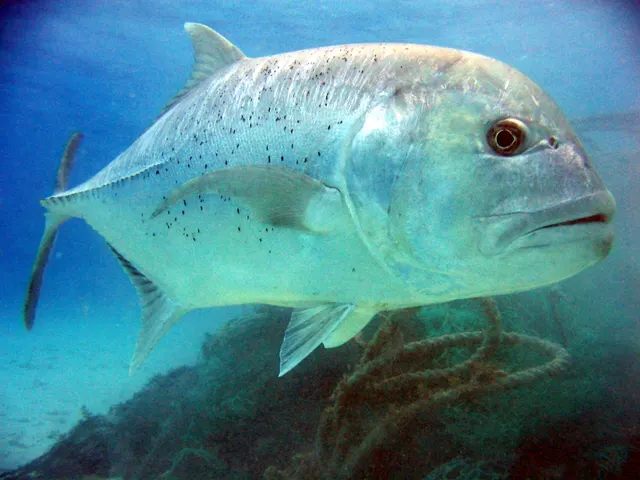 Giant trevallyA hugely powerful Indo-Pacific reef predator that hunts over shallow structure, and the fish popping was built around.
Dr. Dwayne Meadows, NOAA/NMFS/OPR — Public domain, via Wikimedia Commons
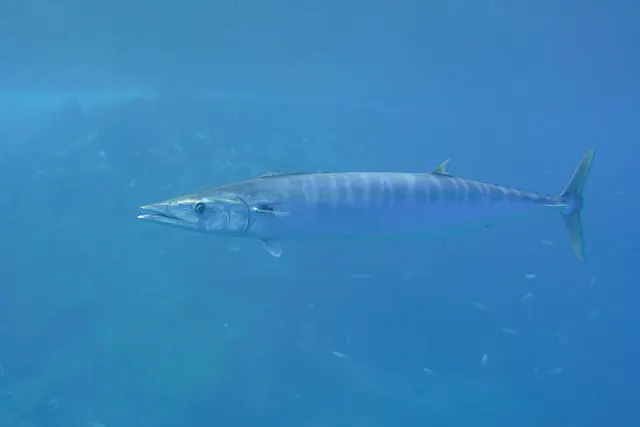 WahooAn extremely fast blue-water mackerel with razor teeth and a long slender body, taken by high-speed trolling and almost always fished on wire.
Bommerer — CC BY 4.0, via Wikimedia Commons
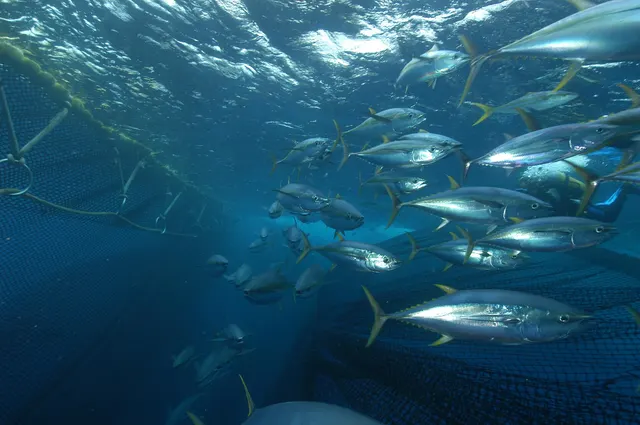 Yellowfin tunaA warm-blooded, high-speed oceanic predator that schools with dolphins and under floating debris, and one of the most commercially important fish in the world.
Marc Taquet — CC BY 4.0, via Wikimedia Commons
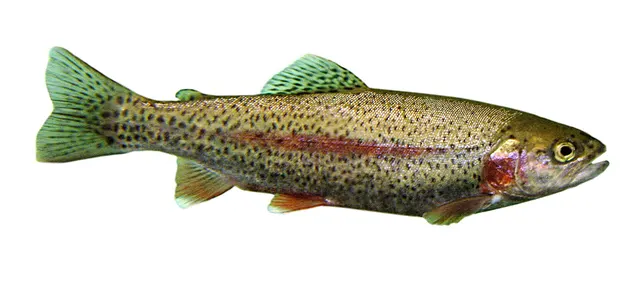 Rainbow troutThe most widely introduced sport fish on Earth — a Pacific salmonid now stocked on every continent except Antarctica, and the same species as the steelhead.
Jonathunder — CC BY-SA 3.0, via Wikimedia Commons
Safety
Contamination and toxins in the catch is set out at the top of this page, where it cannot be missed.
Encounters with marine life — Can cause serious injury or death
Réunion has a documented shark incident history and operates management measures that constrain water entry in defined areas. This is a specific local circumstance with a recorded basis rather than a general tropical caution.
What reduces it: Establish the current position and any water-entry restrictions with the responsible authority before entering the water, observe them, and treat local guidance as the primary source rather than general advice about shark behaviour.
Boat safety — Can cause serious injury or death
Deep water within a few kilometres of shore means a small craft is in open ocean within minutes, in a cyclone-belt region where weather builds quickly and a return leg against wind and swell is a different proposition from the outward one.
What reduces it: Plan the day on the forecast for its whole duration rather than the conditions at departure, make the outward leg the harder one where possible, and treat a building forecast as a reason not to go rather than to come back early.
Venomous and spined species — Can cause serious injury or death
Stonefish, scorpionfish, lionfish, sea urchins, fire coral and cone snails are all present, and several are camouflaged well enough to be stood on rather than encountered. Stonefish envenomation is a medical emergency.
What reduces it: Wear footwear in the water and shuffle rather than step, handle no unfamiliar fish or shell, and know where the nearest medical facility is before entering the water.
Further safety reading
- Boat safety for anglers — Deep water within a few kilometres of shore means a small craft is in open ocean within minutes, in a cyclone-belt region where weather builds quickly and the return leg is the hard one.
- Dangerous animals where you fish — Réunion has a documented shark incident history and operates enforced measures constraining water entry in defined areas. That is a specific local circumstance with a recorded basis rather than a general tropical caution.
Check the rules before you fish
Fishing laws, bylaws, access rules, seasons, bait restrictions and permitted methods vary by location and can change. Check the current rules from the relevant authority and the water you intend to fish before fishing.
Check with:
- Current national or regional law for where you are fishing
- Current local bylaws
- The relevant fisheries authority
- The landowner, club or fishery whose water it is
- Any restrictions specific to the species or the method you intend to use
Where to go next
What swims here
- Giant trevallyOver reef and drop-off and into the Mauritian lagoon on the tide, and the species most of the popping and jigging effort here is directed at.
- Rainbow troutIntroduced into the upland streams of Réunion, which is high, wet and steep enough to hold permanent cold rivers — a combination almost no other Indian Ocean island has.
- Reef stonefishOn reef and rubble in shallow water, camouflaged well enough that it is stood on rather than seen, and the reason footwear and a shuffling step are standard here.
- WahooAlong the drop-off and over the banks, within a short run of shore because there is no shelf to cross first.
- Yellowfin tunaOver the offshore banks and seamounts, which concentrate bait and predators in the way seamounts do everywhere and are the structure the big-game fishery is built on.
How people fish here
- Sea fishingOffshore trolling and live-baiting over the banks, popping and jigging over reef, and — on Mauritius only — a wadeable lagoon fishery reachable on foot.
- SpearfishingAn established diving and breath-hold sector on both islands, with significant restrictions in places and, at Réunion, measures constraining water entry that have nothing to do with fisheries.
Local knowledge
Rules and access
Sources and evidence
- FAO Species Identification Guides for Fishery Purposes and the FAO Species Catalogues — Food and Agriculture Organization of the United Nations (Scientific institute)Relied on for: Identification, distribution and habitat association of the fishes and invertebrates of the tropical regions named, and the fisheries they support.States this directlyCitation checked — the work exists and is described correctly
- FishBase: a global information system on fishes — Froese, R. and D. Pauly, eds. — FishBase Consortium (Scientific institute)Relied on for: Recorded distribution, depth range, habitat association and biology of the species named.States this directlyPassage read and verified
- Reef Fish Spawning Aggregations: Biology, Research and Management — Springer, Fish & Fisheries Series vol. 35, 2012 (Scientific literature)Relied on for: Reef fish spawning aggregations, their predictability, their vulnerability to exploitation and the management response to both.States this directlyCitation checked — the work exists and is described correctly
- The IUCN Red List of Threatened Species — International Union for Conservation of Nature (Conservation authority)Relied on for: Current conservation assessment of the reef and pelagic species named, with the assessment date.Background and mechanism onlyCitation checked — the work exists and is described correctly
- Sea Angler — Bauer Media (Specialist angling publication)Relied on for: Long-running published description of the destinations British anglers travel to, the fishing available at each and the way it is organised.FishingHQ's interpretation of what it saysCitation checked — the work exists and is described correctly
- General angling website restatements of established technique — Various (Credible secondary source)Relied on for: Widely restated descriptions of what is conventionally fished at the destinations named and how, recorded as practitioner consensus rather than as scholarship.Background and mechanism onlyCitation checked — the work exists and is described correctly
- United States Lifesaving Association public education on rip currents and the surf zone — United States Lifesaving Association (Water-safety or diver-training authority)Relied on for: Surf zone hazards, rip current formation and behaviour, and the guidance issued to people entering the water from a beach.States this directlyCitation checked — the work exists and is described correctly
- NOAA National Weather Service marine forecasts and marine weather services — National Oceanic and Atmospheric Administration, United States (Government fisheries body)Relied on for: That marine forecasts and sea state are the operative inputs for small-craft and shore decisions, and the timescales on which tropical weather changes.States this directlyCitation checked — the work exists and is described correctly
Why the 11 connections on this page are here, and the sources
What swims here
Backed by research — 5 connections
Supported by peer-reviewed research or fisheries science. The sources are listed and can be checked.
Giant trevally
That a species occurs in these waters, drawn from distribution science. It is a statement about where the animal lives and is not a statement that anybody will catch one, still less where.
- FAO Species Identification Guides for Fishery Purposes and the FAO Species Catalogues — Food and Agriculture Organization of the United Nations (Scientific institute)Relied on for: Identification, distribution and habitat association of the fishes and invertebrates of the tropical region named.States this directlyCitation checked — the work exists and is described correctly
- FishBase: a global information system on fishes — Froese, R. and D. Pauly, eds. — FishBase Consortium (Scientific institute)Relied on for: Recorded distribution, depth range and habitat association of the species named, including its occurrence in the waters concerned.States this directlyPassage read and verified
Rainbow trout
That a species occurs in these waters, drawn from distribution science. It is a statement about where the animal lives and is not a statement that anybody will catch one, still less where.
- FishBase: a global information system on fishes — Froese, R. and D. Pauly, eds. — FishBase Consortium (Scientific institute)Relied on for: Recorded distribution, habitat association and life history of the freshwater species named, including introduced populations where those are recorded.States this directlyPassage read and verified
- The Flood Pulse Concept in River-Floodplain Systems — Canadian Special Publication of Fisheries and Aquatic Sciences 106, Department of Fisheries and Oceans, Ottawa, 1989 (Scientific literature)Relied on for: That in tropical river-floodplain systems the seasonal flood pulse organises fish movement and production, which is the basis for stating where and when a species is available.Background and mechanism onlyCitation checked — the work exists and is described correctly
Reef stonefish
That a species occurs in these waters, drawn from distribution science. It is a statement about where the animal lives and is not a statement that anybody will catch one, still less where.
- FAO Species Identification Guides for Fishery Purposes and the FAO Species Catalogues — Food and Agriculture Organization of the United Nations (Scientific institute)Relied on for: Identification, distribution and habitat association of the fishes and invertebrates of the tropical region named.States this directlyCitation checked — the work exists and is described correctly
- FishBase: a global information system on fishes — Froese, R. and D. Pauly, eds. — FishBase Consortium (Scientific institute)Relied on for: Recorded distribution, depth range and habitat association of the species named, including its occurrence in the waters concerned.States this directlyPassage read and verified
Wahoo
That a species occurs in these waters, drawn from distribution science. It is a statement about where the animal lives and is not a statement that anybody will catch one, still less where.
- FAO Species Identification Guides for Fishery Purposes and the FAO Species Catalogues — Food and Agriculture Organization of the United Nations (Scientific institute)Relied on for: Identification, distribution and habitat association of the fishes and invertebrates of the tropical region named.States this directlyCitation checked — the work exists and is described correctly
- FishBase: a global information system on fishes — Froese, R. and D. Pauly, eds. — FishBase Consortium (Scientific institute)Relied on for: Recorded distribution, depth range and habitat association of the species named, including its occurrence in the waters concerned.States this directlyPassage read and verified
Yellowfin tuna
That a species occurs in these waters, drawn from distribution science. It is a statement about where the animal lives and is not a statement that anybody will catch one, still less where.
- FAO Species Identification Guides for Fishery Purposes and the FAO Species Catalogues — Food and Agriculture Organization of the United Nations (Scientific institute)Relied on for: Identification, distribution and habitat association of the fishes and invertebrates of the tropical region named.States this directlyCitation checked — the work exists and is described correctly
- FishBase: a global information system on fishes — Froese, R. and D. Pauly, eds. — FishBase Consortium (Scientific institute)Relied on for: Recorded distribution, depth range and habitat association of the species named, including its occurrence in the waters concerned.States this directlyPassage read and verified
How people fish here
What experienced anglers do — 2 connections
Widely and independently recommended by experienced anglers and specialist sources. This is real angling knowledge, not proof: controlled evidence for it is limited, and FishingHQ records it as convention rather than as a demonstrated effect.
Sea fishing
That a discipline is conventionally practised in these waters, drawn from published description of practice rather than from participation data.
- Sea Angler — Bauer Media (Specialist angling publication)Relied on for: Long-running published description of the destinations British anglers travel to and the fishing available at each.FishingHQ's interpretation of what it saysCitation checked — the work exists and is described correctly
- General angling website restatements of established technique — Various (Credible secondary source)Relied on for: Widely restated descriptions of what is conventionally fished at the destinations named and how, recorded as practitioner consensus rather than as scholarship.Background and mechanism onlyCitation checked — the work exists and is described correctly
Spearfishing
That a discipline is conventionally practised in these waters, drawn from published description of practice rather than from participation data.
- Sea Angler — Bauer Media (Specialist angling publication)Relied on for: Long-running published description of the destinations British anglers travel to and the fishing available at each.FishingHQ's interpretation of what it saysCitation checked — the work exists and is described correctly
- General angling website restatements of established technique — Various (Credible secondary source)Relied on for: Widely restated descriptions of what is conventionally fished at the destinations named and how, recorded as practitioner consensus rather than as scholarship.Background and mechanism onlyCitation checked — the work exists and is described correctly
Local knowledge
Backed by research — 1 connection
Supported by peer-reviewed research or fisheries science. The sources are listed and can be checked.
Ciguatera and reef fish poisoning
A link from a species or a place to the accumulation mechanism that decides whether what is caught there should be eaten, resting on published seafood-hazard guidance and on the species' recorded diet and trophic position.
- Fish and Fishery Products Hazards and Controls Guidance — US Food and Drug Administration, Center for Food Safety and Applied Nutrition, 2022 (Standards body)Relied on for: Seafood hazards and controls, including ciguatera and methylmercury: the species and regions each is associated with, and why cooking addresses neither.States this directlyPassage read and verified
Safety reading
Official guidance — 2 connections
Stated by a fisheries authority, scientific institute or recognised angling body. Authoritative, but summarising rather than demonstrating.
Boat safety for anglers
A link from the place to the substantial safety topic describing the mechanism that hurts people there.
- United States Lifesaving Association public education on rip currents and the surf zone — United States Lifesaving Association (Water-safety or diver-training authority)Relied on for: Surf zone hazards, rip current formation and behaviour, and the guidance issued to people entering the water from a beach.States this directlyCitation checked — the work exists and is described correctly
- NOAA National Weather Service marine forecasts and marine weather services — National Oceanic and Atmospheric Administration, United States (Government fisheries body)Relied on for: That marine forecasts and sea state are the operative inputs for small-craft and shore decisions in tropical waters.States this directlyCitation checked — the work exists and is described correctly
Dangerous animals where you fish
A link from the place to the substantial safety topic describing the mechanism that hurts people there.
- United States Lifesaving Association public education on rip currents and the surf zone — United States Lifesaving Association (Water-safety or diver-training authority)Relied on for: Surf zone hazards, rip current formation and behaviour, and the guidance issued to people entering the water from a beach.States this directlyCitation checked — the work exists and is described correctly
- NOAA National Weather Service marine forecasts and marine weather services — National Oceanic and Atmospheric Administration, United States (Government fisheries body)Relied on for: That marine forecasts and sea state are the operative inputs for small-craft and shore decisions in tropical waters.States this directlyCitation checked — the work exists and is described correctly
Rules and access
Official guidance — 1 connection
Stated by a fisheries authority, scientific institute or recognised angling body. Authoritative, but summarising rather than demonstrating.
Licences and permission
This points to the kind of rule that applies rather than to a rule itself. The whole reason this destination is described separately is that permission is administered differently here, so the page says the answer is held elsewhere and changes.
- Code of Conduct for Responsible Fisheries — Food and Agriculture Organization of the United Nations, Rome, 1995 (Standards body)Relied on for: The international framework within which national fisheries authorities set, revise and enforce measures, and the principle that the responsible authority holds the current position.Background and mechanism onlyCitation checked — the work exists and is described correctly
- Reef Fish Spawning Aggregations: Biology, Research and Management — Springer, Fish & Fisheries Series vol. 35, 2012 (Scientific literature)Relied on for: The vulnerability of aggregating and site-attached reef and flats species to concentrated fishing, and the management responses adopted.States this directlyCitation checked — the work exists and is described correctly
How FishingHQ labels evidence is explained in the evidence policy.