The Great Lakes
Fishing regions · Last reviewed 2026-08-13
The largest freshwater system on FishingHQ, shared by two countries, and a fishery that was assembled almost entirely from introductions after the native one collapsed. Nothing else demonstrates so clearly what an invasion does to a food web.
Being listed here is not permission to fish. What that meansClose
Access, fishing rights, seasons, licences, local bylaws and permitted methods vary and can change. Check current access, permission, local regulations, closures and restrictions before you travel or fish. FishingHQ describes what the ground is and names who holds the answer; it does not hold the answer itself.
Find the authority for a jurisdiction · What FishingHQ does and does not cover
The Great Lakes are a system-tier case for a reason that has little to do with their size: they are the clearest worked example anywhere of a large ecosystem being dismantled and reassembled, and the fishery that exists today is the result rather than the survivor.
FIVE CONNECTED LAKES, ONE OUTLET. Superior, Michigan, Huron, Erie and Ontario drain in sequence to the St Lawrence and the Atlantic, and they differ from one another enormously. Superior is deep, cold, oligotrophic and clear. Erie is shallow, warm and highly productive. Michigan and Huron sit between, and Ontario is deep and downstream of everything. That range means the system holds cold-water, cool-water and warm-water fisheries within one hydrological unit, which is why walleye, lake trout, smallmouth bass, muskellunge and Pacific salmon are all Great Lakes fish.
THE NATIVE SYSTEM WAS BUILT ON LAKE TROUT AND CISCOES. The historic offshore food web ran from plankton through a diverse group of native ciscoes and deepwater chubs to lake trout as the apex predator, with lake sturgeon, whitefish and burbot alongside. That structure supported very large commercial fisheries into the twentieth century.
AND IT CAME APART. Canal construction gave the sea lamprey — a parasitic jawless fish that attaches to a host and rasps through the body wall — access above Niagara Falls, which had previously excluded it. Lamprey predation, combined with intensive commercial fishing, collapsed lake trout across most of the system, and several native cisco forms went extinct. With the apex predator gone, the introduced alewife — a small marine clupeid that had also entered through the canals — irrupted to enormous abundance, periodically dying off in masses that washed up on beaches.
THE RESPONSE WAS TO BUILD A NEW PREDATOR LAYER. From the 1960s, Pacific salmon — chinook and coho, native to the other side of the continent — were stocked deliberately, to control alewife and to create a sport fishery. It worked spectacularly on both counts. The modern Great Lakes salmon fishery, worth an enormous amount to the surrounding economies, is an entirely constructed system: a Pacific predator eating an Atlantic forage fish in a lake basin where neither belongs, managed by stocking.
WHICH MAKES THE SYSTEM DEPENDENT ON A BALANCE THAT NOBODY CONTROLS. Later invasions — zebra and quagga mussels arriving in ballast water — have filtered the water column, redirected energy to the lake bed, increased clarity and reduced the plankton that alewife depend on. Alewife numbers have fallen sharply in several lakes, and the salmon fishery that eats them has had to be reduced accordingly. Meanwhile lake trout restoration and lamprey control have made real progress, and native species are recovering in places.
SO THE HONEST DESCRIPTION IS OF A SYSTEM IN CONTINUOUS TRANSITION, whose fishery is actively managed rather than natural, and whose next state is genuinely uncertain.
What fishing here is like
Five very different lakes under one hydrological system, holding cold, cool and warm-water fisheries. The dominant recreational activity is trolling for stocked Pacific salmon and trout in open water, alongside major fisheries for walleye, smallmouth bass, muskellunge, yellow perch and panfish, and a substantial ice fishing culture across the shallower and more northerly waters. The fishery is intensively managed, heavily dependent on stocking, and shaped at every level by introduced species.
What dominates
Open-water trolling with downriggers and planer boards for chinook, coho, steelhead and lake trout is the defining offshore discipline. Jigging and drifting for walleye, particularly on Lake Erie, is enormously popular. Casting for smallmouth bass over rock and reef, and for muskellunge over weed and structure, are major specialist fisheries. Tributary fishing for running salmon and steelhead is a distinct seasonal discipline. Ice fishing for perch, walleye, pike and panfish is widespread in winter. Deep vertical jigging for lake trout is well established.
The water available
Deep, cold, clear oligotrophic water in Superior and northern Lake Michigan and Huron; shallow, warm, highly productive water in Lake Erie's western basin; rocky reefs, shoals and drop-offs; extensive weed beds and bays; drowned river mouths and harbours; connecting rivers and channels between the lakes; and hundreds of tributary rivers used by running salmonids. Substantial winter ice cover on the shallower lakes and bays.
How the rules are structured
Two countries and a large number of sub-national jurisdictions. Eight US states and the Province of Ontario each administer recreational fishing in their own waters, with separate licensing, seasons, size limits and bag limits, and the boundaries run through open water. Several tribal nations hold treaty fishing rights that are administered separately and are legally distinct. The Great Lakes Fishery Commission coordinates across the border on sea lamprey control and on fishery management, but it does not set recreational rules. Stocking programmes, which the salmon fishery depends on, are decided jurisdiction by jurisdiction. Ballast water and invasive species regulation operates at national level in both countries. FishingHQ does not state what any current rule is.
Who to ask
- The state natural resources or fish and wildlife agency for the US state whose waters are being fished.
- The Ontario Ministry responsible for natural resources, for Canadian waters.
- The Great Lakes Fishery Commission, for sea lamprey control and cross-border fishery coordination.
- The relevant tribal natural resources authority where treaty fishing rights apply.
- State and provincial health departments, for fish consumption advisories, which for this system are a genuine and specific consideration.
Words you will meet
- Downrigger
- A device that carries a lure to a controlled depth on a heavy weight and releases the fishing line when a fish takes. Essential to the open-water salmon and trout troll fishery, because the fish hold at a depth set by temperature and that depth must be fished precisely.
- Thermocline
- The layer where water temperature changes sharply with depth in a stratified lake. In summer it determines where cold-water species can be, and finding it is the first task of a Great Lakes troll.
- Sea lamprey
- A parasitic jawless fish that attaches to a host fish and rasps through the body wall. It reached the upper lakes through canal construction and its predation was a principal cause of the collapse of native lake trout. Its control is the longest-running and most successful cross-border fishery programme in the system.
- Steelhead
- The migratory form of rainbow trout. In the Great Lakes these are lake-run rather than sea-run, feeding in open water and ascending tributaries, and they support a major tributary fishery.
Conditions and hazards
These are inland seas rather than lakes in any ordinary sense, and the principal error visitors make is treating them as lakes. Fetch is measured in hundreds of kilometres, so wind builds a large sea, and because the water is shallower than an ocean the resulting waves are short, steep and closely spaced — harder on a small boat than an equivalent ocean swell. Conditions change extremely quickly and a calm morning can become unmanageable by afternoon. Water temperature is very low year-round in the deeper lakes, so immersion is immediately dangerous even in summer, and cold water shock rather than swimming failure is the mechanism. Ice fishing carries its own hazards: thickness varies across a bay, is unreliable near currents, inlets and pressure ridges, and wind-driven ice movement can detach a floe with people on it, which has required large-scale rescues on Lake Erie. Fish consumption advisories exist across the system because of historical industrial contamination and are specific by species, size and location.
A fishery held up by stocking, and what that means for the reader
The most important thing to understand about the Great Lakes salmon fishery is that it is a constructed system maintained by continuous human effort, and that this changes how everything about it should be read.
THE FISH ARE MOSTLY PUT THERE. Chinook and coho salmon are native to the Pacific drainage and were introduced deliberately to consume an introduced forage fish and to create a sport fishery. Natural reproduction does occur in some tributaries and in some lakes it contributes substantially, but the fishery as a whole depends on stocking programmes decided annually by state and provincial agencies.
WHICH MEANS THE FISHERY IS A POLICY OUTPUT AS WELL AS AN ECOLOGICAL ONE. When agencies reduce chinook stocking because alewife abundance has fallen, the fishing changes in a way no natural system would produce, and the decision was made in a meeting rather than by the lake. An angler in this system is fishing a managed portfolio, and understanding that is more useful than any seasonal pattern.
THE FORAGE BASE IS THE BINDING CONSTRAINT. Chinook are highly specialised alewife predators, and alewife abundance depends on plankton, which has been reduced substantially by filter-feeding zebra and quagga mussels that redirect energy from the water column to the lake bed. That chain — mussel to plankton to alewife to salmon — is why an invasive mollusc determines the size of a salmon fishery, and it is the clearest available demonstration that a fishery is a property of a whole food web rather than of a stock.
MEANWHILE THE NATIVE SYSTEM IS PARTLY RECOVERING. Sustained sea lamprey control and lake trout stocking have re-established naturally reproducing lake trout in parts of the system, and native species including lake sturgeon and whitefish are the focus of restoration effort. There is a genuine tension between maintaining the introduced salmon fishery and restoring the native predator, because both eat the same forage base, and it is resolved differently in different lakes.
FOR A READER, THE TRANSFERABLE POINT IS THIS: where a fishery is maintained by stocking, questions about seasons and methods are secondary to questions about what is being stocked and why, and those are answered by the managing agency rather than by observation.
Official guidance — why, and the sources (2)
Stated by a fisheries authority, scientific institute or recognised angling body. Authoritative, but summarising rather than demonstrating.
- FishBase: a global information system on fishes — Froese, R. and D. Pauly, eds. — FishBase Consortium (Scientific institute)Relied on for: Distribution, habitat association and salinity tolerance of the species named as characteristic of these waters.States this directlyPassage read and verified
- The IUCN Red List of Threatened Species — International Union for Conservation of Nature (Conservation authority)Relied on for: Assessment and habitat account for the species named, including the threats operating in this system.Background and mechanism onlyCitation checked — the work exists and is described correctly
Invasion as the organising history of a system
No other water body on FishingHQ has had its ecology rewritten by introductions as comprehensively as the Great Lakes, and the sequence is worth following because each step created the conditions for the next.
THE CANALS CAME FIRST. Niagara Falls was an absolute barrier between Lake Ontario and the upper lakes, and canal construction to allow shipping removed it for anything that could swim or be carried. That single engineering decision connected an isolated system to the Atlantic.
THE SEA LAMPREY FOLLOWED and removed the apex predator. Lamprey attach to large fish and rasp through the body wall to feed on body fluids, and a single lamprey kills or damages a substantial weight of fish over its parasitic phase. Combined with heavy commercial fishing, lamprey predation collapsed lake trout across most of the system by the mid-twentieth century and contributed to the extinction of several native deepwater cisco forms.
THE ALEWIFE IRRUPTED because nothing was left to eat it. With the native predator gone, an introduced marine clupeid reached enormous densities, and its periodic mass die-offs deposited windrows of dead fish on shorelines — a nuisance severe enough to be a political problem, which is a large part of why the salmon programme happened.
PACIFIC SALMON WERE INTRODUCED as a biological control that was also a fishery, and it succeeded at both.
THEN THE MUSSELS ARRIVED IN BALLAST WATER. Zebra and later quagga mussels colonised hard and then soft substrates in vast numbers, filtering the water column with extraordinary efficiency. Water clarity increased markedly; energy was redirected from open water to the lake bed; plankton available to alewife fell; and the offshore food web that the constructed fishery depends on was undercut from below.
AND ROUND GOBY, ANOTHER BALLAST ARRIVAL, changed the nearshore. Gobies eat mussels and are eaten by smallmouth bass, which has restructured the rocky nearshore food web and, in some places, improved smallmouth growth while displacing native benthic fish.
THE LESSON IS THE ONE FISHINGHQ STATES REPEATEDLY AND CAN DEMONSTRATE HERE: an introduction is not an addition. It is a rearrangement, its consequences run through the food web in directions nobody predicts, and it is effectively permanent. Every current management problem in this system traces back to a movement of organisms that seemed, at the time, either accidental or reasonable.
Backed by research — why, and the sources (3)
Supported by peer-reviewed research or fisheries science. The sources are listed and can be checked.
- FishBase: a global information system on fishes — Froese, R. and D. Pauly, eds. — FishBase Consortium (Scientific institute)Relied on for: Distribution, habitat association and salinity tolerance of the species named as characteristic of these waters.States this directlyPassage read and verified
- The IUCN Red List of Threatened Species — International Union for Conservation of Nature (Conservation authority)Relied on for: Assessment and habitat account for the species named, including the threats operating in this system.Background and mechanism onlyCitation checked — the work exists and is described correctly
- Check Clean Dry — biosecurity guidance for water users — GB Non-native Species Secretariat (Conservation authority)Relied on for: The pathways by which aquatic invasive species are moved between water bodies, including ballast water and connected navigations, and the general irreversibility of establishment.Background and mechanism onlyPassage read and verified
Five lakes, one system, and water that behaves like a sea
The Great Lakes are large enough that almost everything about them behaves in ways a lake angler would not predict.
THEY ARE THE LARGEST FRESHWATER SURFACE ON EARTH, connected in a chain draining eastward to the Atlantic, and they hold a very large share of the world's surface fresh water. Their scale is the first thing to understand: these are inland seas with horizons, shipping and genuine sea states.
THEY STRATIFY IN SUMMER AND TURN OVER TWICE A YEAR. Warm surface water sits over cold deep water through the summer, separated by a thermocline; cooling in autumn destroys the stratification and mixes the column; the reverse happens in spring. That cycle governs where cold-water species can be and when.
THE DEEP LAKES ARE COLD AND OLIGOTROPHIC. Superior in particular is cold, deep and nutrient-poor, supporting a low-density community of cold-water species; the shallower southern lakes are warmer and more productive, and Erie is shallow enough to behave quite differently from the rest.
THERMAL BARS AND UPWELLING OCCUR SEASONALLY, with wind-driven upwelling on a lee shore capable of dropping surface temperature by many degrees in hours and moving fish accordingly.
THE CONNECTING CHANNELS AND RIVERS are fisheries in their own right, with current, structure and migratory movement between lakes.
AND THE TRIBUTARIES ARE WHERE THE SALMONIDS SPAWN OR ARE MEANT TO. Hundreds of rivers enter the system, and the runs into them are the visible half of the salmonid fishery.
Backed by research — why, and the sources (2)
Supported by peer-reviewed research or fisheries science. The sources are listed and can be checked.
- NOAA National Ocean Service education on estuaries and the National Estuarine Research Reserve System — National Oceanic and Atmospheric Administration, United States (Government fisheries body)Relied on for: Estuarine, coastal and Great Lakes structure and function in North American waters, and the nursery role of shallow habitat.States this directlyCitation checked — the work exists and is described correctly
- FishBase: a global information system on fishes — Froese, R. and D. Pauly, eds. — FishBase Consortium (Scientific institute)Relied on for: Distribution, habitat association and life history of the species occurring in the area.Background and mechanism onlyPassage read and verified
A fishery almost entirely rebuilt from introductions
The Great Lakes fish community is the most comprehensively altered of any major system on FishingHQ, and telling it honestly means being clear about what is native and what is not.
LAKE TROUT ARE THE NATIVE TOP PREDATOR, a deep, cold, slow-growing char that was the system's defining fish and was nearly eliminated by sea lamprey predation and overfishing in the twentieth century.
SEA LAMPREY IS THE INVASION THAT CAUSED IT. A parasitic lamprey that reached the upper lakes through navigation canals attached to and killed large fish at a rate the native predators could not sustain, and its control programme is one of the longest-running invasive species control efforts anywhere.
ALEWIFE FOLLOWED and, with the native predators gone, exploded to nuisance abundance, producing mass die-offs on the beaches.
PACIFIC SALMON WERE INTRODUCED IN RESPONSE. Chinook and coho salmon were stocked from the 1960s explicitly to control alewife, and they created an enormous recreational fishery in the process. The system's most famous sport fishery is therefore a deliberately engineered one, built on an introduced predator to control an introduced prey species.
WALLEYE, YELLOW PERCH, SMALLMOUTH BASS AND MUSKELLUNGE are native and support major fisheries, with Erie's walleye and perch fisheries among the largest freshwater fisheries in the world.
STEELHEAD AND BROWN TROUT are established introductions running the tributaries.
ZEBRA AND QUAGGA MUSSELS ARE THE MODERN INVASION and have transformed the system. Filtering at enormous aggregate rates, they have increased water clarity dramatically, redirected energy from open water to the bottom, and contributed to the collapse of the food web that supported the alewife and the salmon fishery built on it.
AND THE STORY IS STILL MOVING. A fishery constructed on introduced species, resting on a prey base altered by invasive mussels, is not a stable system, and the honest account says so.
Backed by research — why, and the sources (2)
Supported by peer-reviewed research or fisheries science. The sources are listed and can be checked.
- NOAA National Ocean Service education on estuaries and the National Estuarine Research Reserve System — National Oceanic and Atmospheric Administration, United States (Government fisheries body)Relied on for: Estuarine, coastal and Great Lakes structure and function in North American waters, and the nursery role of shallow habitat.States this directlyCitation checked — the work exists and is described correctly
- FishBase: a global information system on fishes — Froese, R. and D. Pauly, eds. — FishBase Consortium (Scientific institute)Relied on for: Distribution, habitat association and life history of the species occurring in the area.Background and mechanism onlyPassage read and verified
Downriggers, planer boards and a tributary run
Great Lakes disciplines are shaped by fishing for cold-water species in a very large body of water.
TROLLING IS THE DOMINANT OPEN-WATER DISCIPLINE and it is technically elaborate. Downriggers to fish lures at a controlled depth, planer boards to spread lines away from the boat, dipsy divers and lead-core lines to reach specific depths — the whole apparatus exists to present lures at a precise depth over a large area, because that is what finding salmonids in a stratified lake requires.
DEPTH AND TEMPERATURE ARE THE FISHING PROBLEM. In a stratified lake, cold-water species occupy a band; finding that band and putting a lure in it is the entire exercise, which is why temperature probes and depth control matter more than lure choice.
TRIBUTARY FISHING IS THE OTHER HALF. Salmon and steelhead running the rivers in autumn and spring support a bank and drift-boat fishery that is crowded, technical and culturally distinct from the boat fishery on the lakes.
WALLEYE FISHING ON ERIE AND ELSEWHERE is a major discipline in its own right, with trolling and jigging both used, on one of the world's largest freshwater fisheries.
PERCH FISHING IS A MASS PARTICIPATION ACTIVITY, particularly on Erie, and it is the fishery most ordinary people take part in.
SMALLMOUTH BASS FISHING ON ROCK AND SHOAL is world-class in parts of the system and has a tournament structure attached.
ICE FISHING OPERATES ON THE BAYS AND SHALLOWER AREAS in winter, with hut communities on the ice.
AND MUSKELLUNGE FISHING IS THE SPECIALIST PURSUIT, with heavy tackle, long hours and a strict release ethic.
What experienced anglers do — why, and the sources (2)
Widely and independently recommended by experienced anglers and specialist sources. This is real angling knowledge, not proof: controlled evidence for it is limited, and FishingHQ records it as convention rather than as a demonstrated effect.
- General angling website restatements of established technique — Various (Credible secondary source)Relied on for: Widely restated practice associating this discipline or technique with this place, recorded as practitioner consensus rather than as tested fact.Background and mechanism onlyCitation checked — the work exists and is described correctly
- Fishers' Craft and Lettered Art: Tracts on Fishing from the End of the Middle Ages — University of Toronto Press, 1997 (Scientific literature)Relied on for: That fishing traditions develop around the water and fish available to them, and the historical method of reading such traditions from their documentary record.States this directlyCitation checked — the work exists and is described correctly
Stratification, turnover and the runs at either end of the year
The Great Lakes seasonal cycle is a thermal one and it governs where every cold-water fish can be.
SPRING TURNOVER MIXES THE COLUMN. As surface water warms towards the temperature of maximum density, the column destabilises and mixes, and for a period the whole lake is a uniform temperature. Cold-water species are accessible shallow, and the spring fishery is correspondingly good and shallow.
SUMMER STRATIFIES AND SORTS BY DEPTH. A warm surface layer over cold deep water pushes salmon and trout into a band below the thermocline, and the fishery becomes a depth-control exercise. Warm-water species — bass, walleye, perch — spread into the shallows.
WIND-DRIVEN UPWELLING CAN OVERTURN THIS IN HOURS. A sustained wind pushes warm surface water away from a shore and cold water rises to replace it, dropping temperature by many degrees and moving the fish accordingly. It is a genuinely fast change and it catches people out.
AUTUMN TURNOVER MIXES AGAIN, and cold-water species return to accessible depths. This is also when the salmon run the tributaries, and the autumn river fishery is the year's most visible event.
STEELHEAD RUN IN AUTUMN AND SPRING, extending the tributary fishery across both shoulders of the year.
WINTER BRINGS ICE TO THE BAYS AND THE SHALLOWER LAKES, though the deep lakes largely do not freeze over, and the ice fishery operates where the ice is reliable.
AND ICE COVER HAS DECLINED MEASURABLY over recent decades, which affects the ice fishery directly and the lakes' thermal behaviour more broadly — a climate signal visible in a fishing calendar.
Backed by research — why, and the sources (2)
Supported by peer-reviewed research or fisheries science. The sources are listed and can be checked.
- NOAA National Ocean Service education on estuaries and the National Estuarine Research Reserve System — National Oceanic and Atmospheric Administration, United States (Government fisheries body)Relied on for: Estuarine, coastal and Great Lakes structure and function in North American waters, and the nursery role of shallow habitat.States this directlyCitation checked — the work exists and is described correctly
- FishBase: a global information system on fishes — Froese, R. and D. Pauly, eds. — FishBase Consortium (Scientific institute)Relied on for: Distribution, habitat association and life history of the species occurring in the area.Background and mechanism onlyPassage read and verified
Two countries, eight states, a province and a treaty
Great Lakes governance is the most fragmented on FishingHQ and the mechanism that holds it together is worth explaining.
THE SYSTEM CROSSES AN INTERNATIONAL BORDER and touches eight American states and one Canadian province. Each has its own fisheries agency, its own licensing, and its own seasons and limits, and the fish cross all of it.
A BILATERAL COMMISSION COORDINATES. A joint fishery commission established by treaty between the two countries is responsible for coordinating research, for the sea lamprey control programme and for facilitating agreement between the jurisdictions. It is a coordinating and operational body rather than a regulator with quota powers, and the sea lamprey programme is its most visible function.
SEA LAMPREY CONTROL IS A PERMANENT OPERATIONAL PROGRAMME, treating tributaries with a selective lampricide and maintaining barriers, and it has to be sustained indefinitely because stopping would allow the population to rebound. It is one of the largest continuing invasive species control efforts in the world.
INDIGENOUS TREATY FISHING RIGHTS ARE SUBSTANTIAL AND ARE SEPARATELY ADMINISTERED in both countries, with court-affirmed rights in parts of the system, and they are legally distinct from the state or provincial recreational framework.
STOCKING IS A MANAGEMENT DECISION MADE JURISDICTION BY JURISDICTION, and because the salmon fishery depends on it, decisions about how many fish to stock — against a prey base altered by invasive mussels — are a continuing and contested management question.
BALLAST WATER REGULATION IS THE PREVENTIVE FRONT, because the system's invasions arrived substantially through shipping, and it is administered under maritime rather than fisheries law.
AND FISHINGHQ DOES NOT STATE WHAT ANY OF THIS CURRENTLY PERMITS. Licences and limits here differ across a boundary in the middle of a lake.
Official guidance — why, and the sources (2)
Stated by a fisheries authority, scientific institute or recognised angling body. Authoritative, but summarising rather than demonstrating.
- Code of Conduct for Responsible Fisheries — Food and Agriculture Organization of the United Nations, Rome, 1995 (Standards body)Relied on for: Principles for the management of fisheries, including licensing, closed seasons, size limits and the treatment of small-scale and shared stocks.States this directlyCitation checked — the work exists and is described correctly
- Good Fish Guide — Marine Conservation Society (Conservation authority)Relied on for: Assessment of fisheries and the management measures applied to them, including the instruments used and their purpose.Background and mechanism onlyCitation checked — the work exists and is described correctly
Thermocline, downrigger, lampricide
Great Lakes vocabulary is technical because the fishery is: it is a fishery conducted against physical variables rather than against visible structure.
THERMOCLINE NAMES THE BOUNDARY between warm surface water and cold deep water in a stratified lake. It is the single most important feature in summer fishing here, because it determines where cold-water species can be, and finding it is the first act of a summer trolling day.
DOWNRIGGER NAMES THE DEVICE that carries a lure to a controlled depth on a heavy weight and releases it on the take. It is the tool that made precise depth presentation possible and it defines the discipline.
PLANER BOARD NAMES THE DEVICE that carries lines out to the side of the boat, spreading a spread of lures across a width of water rather than trailing them in the wake.
STAGING NAMES THE BEHAVIOUR of salmon gathering off a river mouth before running, and staging fish are a distinct fishery from either lake fish or river fish.
LAMPRICIDE NAMES THE SELECTIVE TREATMENT applied to tributaries to kill larval sea lamprey. It is a control vocabulary rather than a fishing one, and the fact that a fishery has a permanent chemical control programme attached is worth knowing.
ALEWIFE NAMES THE INTRODUCED FORAGE FISH on which the introduced salmon fishery depends, and its abundance is the variable everything else in the salmonid fishery rests on.
AND CHINOOK, KING AND SPRING SALMON ARE THE SAME FISH under different regional names, as coho and silver are, which is the usual North American situation and worth knowing before reading a fishing report.
What experienced anglers do — why, and the sources (2)
Widely and independently recommended by experienced anglers and specialist sources. This is real angling knowledge, not proof: controlled evidence for it is limited, and FishingHQ records it as convention rather than as a demonstrated effect.
- General angling website restatements of established technique — Various (Credible secondary source)Relied on for: Widely restated practice associating this discipline or technique with this place, recorded as practitioner consensus rather than as tested fact.Background and mechanism onlyCitation checked — the work exists and is described correctly
- Fishers' Craft and Lettered Art: Tracts on Fishing from the End of the Middle Ages — University of Toronto Press, 1997 (Scientific literature)Relied on for: That fishing traditions develop around the water and fish available to them, and the historical method of reading such traditions from their documentary record.States this directlyCitation checked — the work exists and is described correctly
Canals, lamprey, salmon and mussels: a century of consequences
The Great Lakes' modern history is a sequence of unintended consequences and deliberate responses, and it is one of the clearest illustrations available of how an ecosystem can be reshaped.
THE COMMERCIAL FISHERY CAME FIRST. Lake trout, whitefish, herring and sturgeon supported major commercial fisheries through the nineteenth and early twentieth centuries, and they were heavily exploited.
THE CANALS OPENED THE SYSTEM. Navigation improvements bypassing Niagara allowed species to move into the upper lakes that had never been able to reach them.
SEA LAMPREY ARRIVED AND THE LAKE TROUT COLLAPSED. Parasitic lamprey killed large fish faster than they could reproduce, and the native top predator was functionally eliminated from most of the system by the mid-twentieth century, with overfishing contributing.
ALEWIFE EXPLODED IN THE PREDATOR VACUUM, reaching nuisance abundance and producing mass die-offs that fouled beaches.
PACIFIC SALMON WERE INTRODUCED TO CONTROL THEM from the 1960s, and the resulting sport fishery became enormous and economically significant. It is one of the largest deliberately engineered recreational fisheries in the world.
LAMPREY CONTROL BECAME PERMANENT, and lake trout restoration has proceeded slowly with stocking and, in places, natural reproduction returning.
ZEBRA AND QUAGGA MUSSELS ARRIVED IN BALLAST WATER in the late twentieth century and transformed the system again, clearing the water, redirecting energy to the bottom and undermining the pelagic food web the salmon fishery depends on.
AND THE SYSTEM IS NOW MANAGED AS A CONSTRUCTED ONE. Stocking levels, lamprey control and invasive species prevention are permanent operational commitments, and the fishery exists because of them rather than in spite of them.
Official guidance — why, and the sources (2)
Stated by a fisheries authority, scientific institute or recognised angling body. Authoritative, but summarising rather than demonstrating.
- Fishers' Craft and Lettered Art: Tracts on Fishing from the End of the Middle Ages — University of Toronto Press, 1997 (Scientific literature)Relied on for: The historical development of fishing practice and its transmission, and the method of reading a fishing tradition from its documentary record.States this directlyCitation checked — the work exists and is described correctly
- Code of Conduct for Responsible Fisheries — Food and Agriculture Organization of the United Nations, Rome, 1995 (Standards body)Relied on for: Principles for fisheries management including the treatment of traditional, small-scale and shared fisheries, against which historical arrangements can be read.Background and mechanism onlyCitation checked — the work exists and is described correctly
Charter ports, tributary crowds and a fishery with a constituency
Great Lakes fishing culture is large, economically significant and unusually engaged with management.
THE SALMON CHARTER FLEET IS A REAL INDUSTRY. Ports around the lakes support charter operations serving a substantial recreational fishery, and the economic weight of that fishery is one reason stocking decisions are politically contested.
THE TRIBUTARY RUN IS A CROWDED SOCIAL EVENT. Autumn salmon and steelhead runs draw large numbers of anglers to accessible river stretches, and the resulting crowding, etiquette problems and occasional friction are a well-known feature of the fishery.
PERCH FISHING IS THE PEOPLE'S FISHERY, particularly on Erie, accessible from piers, small boats and ice, and it involves far more people than the salmon fishery does.
ICE FISHING COMMUNITIES FORM ON THE BAYS each winter, with huts, tracks and a temporary social structure that reappears annually.
TOURNAMENT FISHING IS SUBSTANTIAL for bass and walleye, professionalised and North American in character.
THE ANGLING CONSTITUENCY IS POLITICALLY ENGAGED. Because the fishery depends on stocking, lamprey control and invasive species management, anglers here follow management decisions closely and lobby on them, which is a more direct relationship with fisheries policy than most recreational sectors have.
INDIGENOUS TREATY FISHERIES OPERATE ALONGSIDE, with court-affirmed rights in parts of the system and with allocation arrangements that have been the subject of long negotiation and occasional conflict.
AND CONSUMPTION ADVISORIES ARE PART OF THE CULTURE. Historic industrial contamination means fish consumption guidance is published by the jurisdictions and is a normal consideration in deciding what to keep — a public health layer that most fisheries on FishingHQ do not carry.
What experienced anglers do — why, and the sources (2)
Widely and independently recommended by experienced anglers and specialist sources. This is real angling knowledge, not proof: controlled evidence for it is limited, and FishingHQ records it as convention rather than as a demonstrated effect.
- General angling website restatements of established technique — Various (Credible secondary source)Relied on for: Widely restated practice associating this discipline or technique with this place, recorded as practitioner consensus rather than as tested fact.Background and mechanism onlyCitation checked — the work exists and is described correctly
- Fishers' Craft and Lettered Art: Tracts on Fishing from the End of the Middle Ages — University of Toronto Press, 1997 (Scientific literature)Relied on for: That fishing traditions develop around the water and fish available to them, and the historical method of reading such traditions from their documentary record.States this directlyCitation checked — the work exists and is described correctly
Some of what lives here
Fish recorded here that FishingHQ holds a reviewed photograph of. It is not a complete list of what The Great Lakes holds, and it is not a prediction that you will catch any of them — it is a way in to the ones we can show you.
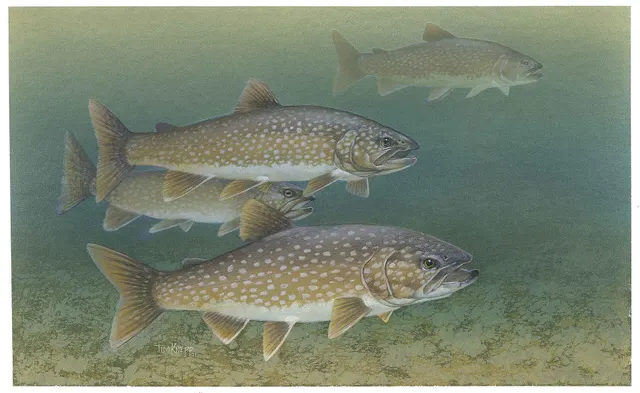 Lake troutA deep, cold, slow-growing char of northern lakes that can live decades and takes a very long time to replace anything removed.
Knepp Timothy, U.S. Fish and Wildlife Service — Public domain, via Wikimedia Commons
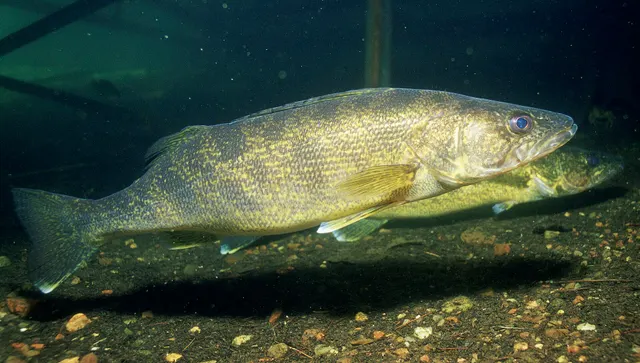 WalleyeA low-light predator of large North American lakes and rivers whose reflective eye lets it hunt in conditions where its prey cannot see it coming.
Engbretson, Eric / U.S. Fish and Wildlife Service, Public domain, via Wikimedia Commons
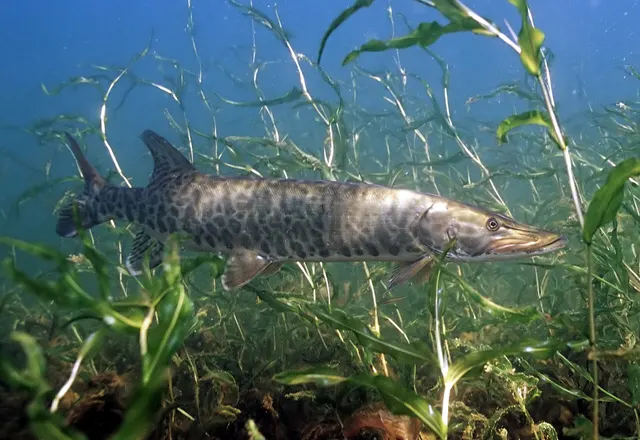 MuskellungeNorth America's largest pike and the fish that gave rise to the phrase "the fish of ten thousand casts" — a solitary ambush predator with a well-earned reputation for refusal.
Engbretson, Eric / U.S. Fish and Wildlife Service — Public domain, via Wikimedia Commons
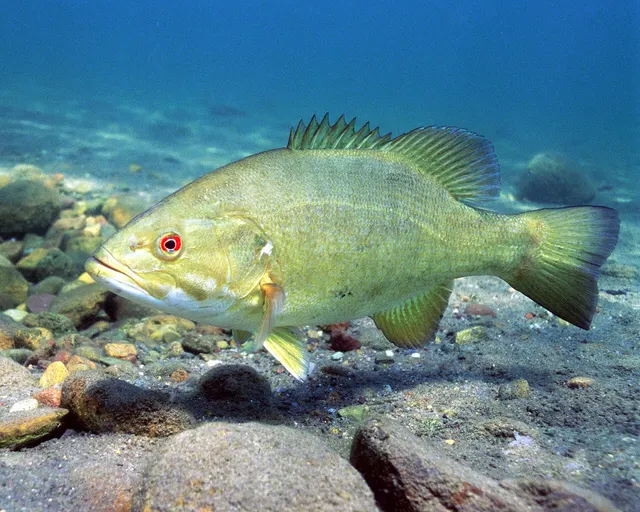 Smallmouth bassA hard-fighting river and rocky-lake predator of North America, reckoned pound for pound the strongest freshwater fish on the continent.
Eric Engbretson, U.S. Fish and Wildlife Service, Public domain, via Wikimedia Commons
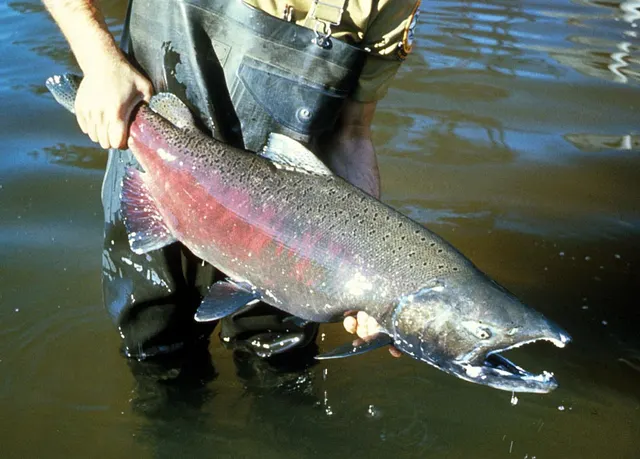 Chinook salmonThe largest Pacific salmon, reaching over sixty kilograms, and the one whose runs carry the most cultural and ecological weight on that coast.
U.S. Geological Survey — public domain, via Wikimedia Commons
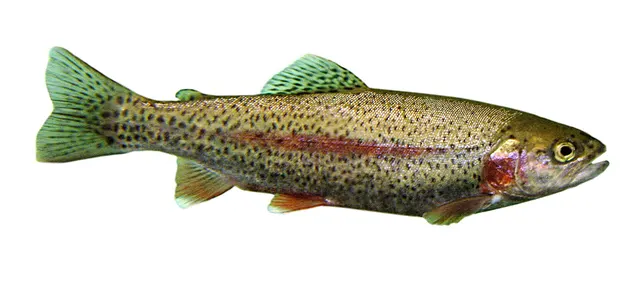 Rainbow troutThe most widely introduced sport fish on Earth — a Pacific salmonid now stocked on every continent except Antarctica, and the same species as the steelhead.
Jonathunder — CC BY-SA 3.0, via Wikimedia Commons
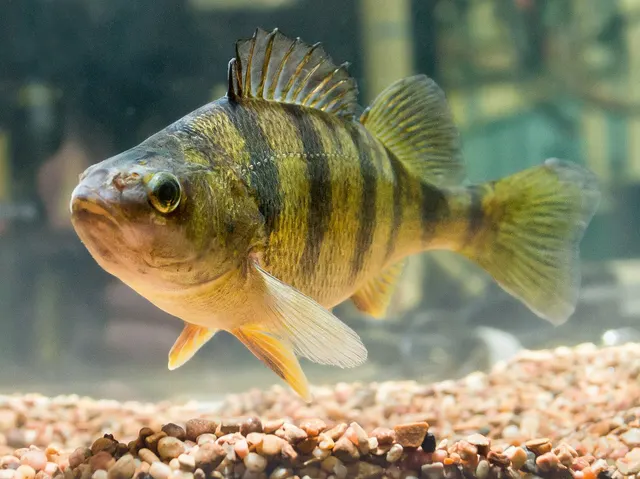 Yellow perchNorth America's most-caught panfish and the walleye's principal prey — the fish that anchors both the food chain and the family fishing trip across a whole continent.
Robert Colletta — Public domain, via Wikimedia Commons
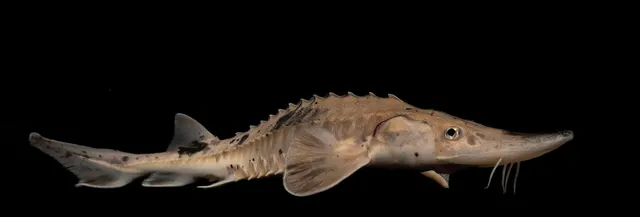 Lake sturgeonAn ancient armoured Great Lakes and Mississippi basin fish that may take twenty years to first spawn and then spawns only every few years.
Sam Stukel, USFWS — public domain, via Wikimedia Commons
Safety
Further safety reading
- Boat safety for anglers — These are inland seas with fetches measured in hundreds of kilometres, and because the water is shallower than an ocean the resulting waves are short, steep and closely spaced — harder on a small boat than an equivalent ocean swell.
- Cold water shock and immersion — Water temperature is very low year-round in the deeper lakes, so immersion is immediately dangerous even in summer and cold water shock rather than swimming failure is the mechanism.
Check the rules before you fish
Fishing laws, bylaws, access rules, seasons, bait restrictions and permitted methods vary by location and can change. Check the current rules from the relevant authority and the water you intend to fish before fishing.
Check with:
- Current national or regional law for where you are fishing
- Current local bylaws
- The relevant fisheries authority
- The landowner, club or fishery whose water it is
- Any restrictions specific to the species or the method you intend to use
Where to go next
What swims here
- AlewifeAn introduced marine clupeid that entered through the canals and irrupted once the native lake trout had collapsed. It became the forage base the entire constructed salmon fishery depends on, and its decline as mussels have reduced the plankton is the system's binding constraint.
- Chinook salmonIntroduced deliberately from the Pacific drainage from the 1960s to control irrupting alewife and to create a sport fishery. The modern open-water troll fishery is built on it and is maintained by stocking.
- CiscoA native coregonine of the historic offshore food web. Several deepwater cisco forms of this system went extinct following lamprey predation on lake trout and intensive commercial fishing, and the survivors are a focus of restoration.
- Coho salmonIntroduced alongside chinook for the same reasons, and supports both an open-water and a tributary fishery.
- Gizzard shadPresent in the warmer lower lakes as a forage species, where it is a significant prey item and a bait species.
- Lake sturgeonA native long-lived species reduced to a fraction of its historic abundance by overfishing and by the loss of access to spawning habitat, and now a focus of restoration across the system.
- Lake troutThe native apex predator of the offshore food web, collapsed across most of the system by sea lamprey predation and commercial fishing, and now partly restored by sustained lamprey control and stocking.
- MuskellungePresent as a low-density apex predator of weed and structure in the connecting waters and bays, where its recruitment is affected by competition with pike.
6 more
- Rainbow smelt Fish
- Rainbow trout Fish
- Sea lamprey Fish
- Smallmouth bass Fish
- Walleye Fish
- Yellow perch Fish
How people fish here
- Coarse fishingJigging and drifting for walleye and yellow perch, and ice fishing for both, account for an enormous share of the system's recreational effort.
- Lure fishingOpen-water trolling with downriggers for salmon and trout is the defining offshore discipline, and casting for smallmouth and muskellunge the defining inshore one.
How this compares
Environment and conservation
- Fish stocks and sustainabilityThe constructed salmon fishery depends on an introduced forage fish whose abundance has fallen as filter-feeding mussels have reduced the plankton, so stocking levels are adjusted to a food web nobody controls.
- Invasive species and biosecuritySea lamprey, alewife, zebra and quagga mussels and round goby have each restructured this system after arriving through canals or ballast water, and the current fishery is the outcome of that sequence rather than a survivor of it.
Sources and evidence
- FishBase: a global information system on fishes — Froese, R. and D. Pauly, eds. — FishBase Consortium (Scientific institute)Relied on for: Distribution, habitat association and salinity tolerance of the species named as characteristic of these waters.States this directlyPassage read and verified
- The IUCN Red List of Threatened Species — International Union for Conservation of Nature (Conservation authority)Relied on for: Assessment and habitat account for the species named, including the threats operating in this system.Background and mechanism onlyCitation checked — the work exists and is described correctly
Why the 21 connections on this page are here, and the sources
What swims here
Backed by research — 14 connections
Supported by peer-reviewed research or fisheries science. The sources are listed and can be checked.
Alewife
Occurrence of the species in this system or along this coast: a statement about the animal's distribution, not a venue recommendation.
- FishBase: a global information system on fishes — Froese, R. and D. Pauly, eds. — FishBase Consortium (Scientific institute)Relied on for: Distribution, salinity tolerance and habitat association recorded for the species, including its occurrence in this system.States this directlyPassage read and verified
- The IUCN Red List of Threatened Species — International Union for Conservation of Nature (Conservation authority)Relied on for: Assessment and range description for the species, including the waters in which it occurs.Background and mechanism onlyCitation checked — the work exists and is described correctly
Chinook salmon
Occurrence of the species in this system or along this coast: a statement about the animal's distribution, not a venue recommendation.
- FishBase: a global information system on fishes — Froese, R. and D. Pauly, eds. — FishBase Consortium (Scientific institute)Relied on for: Distribution, salinity tolerance and habitat association recorded for the species, including its occurrence in this system.States this directlyPassage read and verified
- The IUCN Red List of Threatened Species — International Union for Conservation of Nature (Conservation authority)Relied on for: Assessment and range description for the species, including the waters in which it occurs.Background and mechanism onlyCitation checked — the work exists and is described correctly
Cisco
Occurrence of the species in this system or along this coast: a statement about the animal's distribution, not a venue recommendation.
- FishBase: a global information system on fishes — Froese, R. and D. Pauly, eds. — FishBase Consortium (Scientific institute)Relied on for: Distribution, salinity tolerance and habitat association recorded for the species, including its occurrence in this system.States this directlyPassage read and verified
- The IUCN Red List of Threatened Species — International Union for Conservation of Nature (Conservation authority)Relied on for: Assessment and range description for the species, including the waters in which it occurs.Background and mechanism onlyCitation checked — the work exists and is described correctly
Coho salmon
Occurrence of the species in this system or along this coast: a statement about the animal's distribution, not a venue recommendation.
- FishBase: a global information system on fishes — Froese, R. and D. Pauly, eds. — FishBase Consortium (Scientific institute)Relied on for: Distribution, salinity tolerance and habitat association recorded for the species, including its occurrence in this system.States this directlyPassage read and verified
- The IUCN Red List of Threatened Species — International Union for Conservation of Nature (Conservation authority)Relied on for: Assessment and range description for the species, including the waters in which it occurs.Background and mechanism onlyCitation checked — the work exists and is described correctly
Gizzard shad
Occurrence of the species in this system or along this coast: a statement about the animal's distribution, not a venue recommendation.
- FishBase: a global information system on fishes — Froese, R. and D. Pauly, eds. — FishBase Consortium (Scientific institute)Relied on for: Distribution, salinity tolerance and habitat association recorded for the species, including its occurrence in this system.States this directlyPassage read and verified
- The IUCN Red List of Threatened Species — International Union for Conservation of Nature (Conservation authority)Relied on for: Assessment and range description for the species, including the waters in which it occurs.Background and mechanism onlyCitation checked — the work exists and is described correctly
Lake sturgeon
Occurrence of the species in this system or along this coast: a statement about the animal's distribution, not a venue recommendation.
- FishBase: a global information system on fishes — Froese, R. and D. Pauly, eds. — FishBase Consortium (Scientific institute)Relied on for: Distribution, salinity tolerance and habitat association recorded for the species, including its occurrence in this system.States this directlyPassage read and verified
- The IUCN Red List of Threatened Species — International Union for Conservation of Nature (Conservation authority)Relied on for: Assessment and range description for the species, including the waters in which it occurs.Background and mechanism onlyCitation checked — the work exists and is described correctly
Lake trout
Occurrence of the species in this system or along this coast: a statement about the animal's distribution, not a venue recommendation.
- FishBase: a global information system on fishes — Froese, R. and D. Pauly, eds. — FishBase Consortium (Scientific institute)Relied on for: Distribution, salinity tolerance and habitat association recorded for the species, including its occurrence in this system.States this directlyPassage read and verified
- The IUCN Red List of Threatened Species — International Union for Conservation of Nature (Conservation authority)Relied on for: Assessment and range description for the species, including the waters in which it occurs.Background and mechanism onlyCitation checked — the work exists and is described correctly
Muskellunge
Occurrence of the species in this system or along this coast: a statement about the animal's distribution, not a venue recommendation.
- FishBase: a global information system on fishes — Froese, R. and D. Pauly, eds. — FishBase Consortium (Scientific institute)Relied on for: Distribution, salinity tolerance and habitat association recorded for the species, including its occurrence in this system.States this directlyPassage read and verified
- The IUCN Red List of Threatened Species — International Union for Conservation of Nature (Conservation authority)Relied on for: Assessment and range description for the species, including the waters in which it occurs.Background and mechanism onlyCitation checked — the work exists and is described correctly
Rainbow smelt
Occurrence of the species in this system or along this coast: a statement about the animal's distribution, not a venue recommendation.
- FishBase: a global information system on fishes — Froese, R. and D. Pauly, eds. — FishBase Consortium (Scientific institute)Relied on for: Distribution, salinity tolerance and habitat association recorded for the species, including its occurrence in this system.States this directlyPassage read and verified
- The IUCN Red List of Threatened Species — International Union for Conservation of Nature (Conservation authority)Relied on for: Assessment and range description for the species, including the waters in which it occurs.Background and mechanism onlyCitation checked — the work exists and is described correctly
Rainbow trout
Occurrence of the species in this system or along this coast: a statement about the animal's distribution, not a venue recommendation.
- FishBase: a global information system on fishes — Froese, R. and D. Pauly, eds. — FishBase Consortium (Scientific institute)Relied on for: Distribution, salinity tolerance and habitat association recorded for the species, including its occurrence in this system.States this directlyPassage read and verified
- The IUCN Red List of Threatened Species — International Union for Conservation of Nature (Conservation authority)Relied on for: Assessment and range description for the species, including the waters in which it occurs.Background and mechanism onlyCitation checked — the work exists and is described correctly
Sea lamprey
That the species occurs in these waters, and that its occurrence there is an introduction rather than a native range. Both are statements about where the animal is, not about anybody fishing for it.
- FishBase: a global information system on fishes — Froese, R. and D. Pauly, eds. — FishBase Consortium (Scientific institute)Relied on for: Distribution, environment and diadromous parasitic life history of Petromyzon marinus.States this directlyPassage read and verified
- Freshwater Fishes of the British Isles — HarperCollins (New Naturalist 75), 1992 (Reference work)Relied on for: The lampreys of the British Isles and north-west Europe: identification, the ammocoete larval phase, spawning behaviour and population status.States this directlyCitation checked — the work exists and is described correctly
Smallmouth bass
Occurrence of the species in this system or along this coast: a statement about the animal's distribution, not a venue recommendation.
- FishBase: a global information system on fishes — Froese, R. and D. Pauly, eds. — FishBase Consortium (Scientific institute)Relied on for: Distribution, salinity tolerance and habitat association recorded for the species, including its occurrence in this system.States this directlyPassage read and verified
- The IUCN Red List of Threatened Species — International Union for Conservation of Nature (Conservation authority)Relied on for: Assessment and range description for the species, including the waters in which it occurs.Background and mechanism onlyCitation checked — the work exists and is described correctly
Walleye
Occurrence of the species in this system or along this coast: a statement about the animal's distribution, not a venue recommendation.
- FishBase: a global information system on fishes — Froese, R. and D. Pauly, eds. — FishBase Consortium (Scientific institute)Relied on for: Distribution, salinity tolerance and habitat association recorded for the species, including its occurrence in this system.States this directlyPassage read and verified
- The IUCN Red List of Threatened Species — International Union for Conservation of Nature (Conservation authority)Relied on for: Assessment and range description for the species, including the waters in which it occurs.Background and mechanism onlyCitation checked — the work exists and is described correctly
Yellow perch
Occurrence of the species in this system or along this coast: a statement about the animal's distribution, not a venue recommendation.
- FishBase: a global information system on fishes — Froese, R. and D. Pauly, eds. — FishBase Consortium (Scientific institute)Relied on for: Distribution, salinity tolerance and habitat association recorded for the species, including its occurrence in this system.States this directlyPassage read and verified
- The IUCN Red List of Threatened Species — International Union for Conservation of Nature (Conservation authority)Relied on for: Assessment and range description for the species, including the waters in which it occurs.Background and mechanism onlyCitation checked — the work exists and is described correctly
How people fish here
What experienced anglers do — 2 connections
Widely and independently recommended by experienced anglers and specialist sources. This is real angling knowledge, not proof: controlled evidence for it is limited, and FishingHQ records it as convention rather than as a demonstrated effect.
Coarse fishing
The discipline that dominates fishing in this place, recorded as established practice rather than as a ranking.
- General angling website restatements of established technique — Various (Credible secondary source)Relied on for: Widely restated practice associating this discipline with this coast or system, recorded as practitioner consensus rather than as tested fact.Background and mechanism onlyCitation checked — the work exists and is described correctly
- Fishers' Craft and Lettered Art: Tracts on Fishing from the End of the Middle Ages — University of Toronto Press, 1997 (Scientific literature)Relied on for: That fishing traditions develop around the water and fish available to them, and the historical method of reading such traditions.States this directlyCitation checked — the work exists and is described correctly
Lure fishing
The discipline that dominates fishing in this place, recorded as established practice rather than as a ranking.
- General angling website restatements of established technique — Various (Credible secondary source)Relied on for: Widely restated practice associating this discipline with this coast or system, recorded as practitioner consensus rather than as tested fact.Background and mechanism onlyCitation checked — the work exists and is described correctly
- Fishers' Craft and Lettered Art: Tracts on Fishing from the End of the Middle Ages — University of Toronto Press, 1997 (Scientific literature)Relied on for: That fishing traditions develop around the water and fish available to them, and the historical method of reading such traditions.States this directlyCitation checked — the work exists and is described correctly
How this compares
What experienced anglers do — 1 connection
Widely and independently recommended by experienced anglers and specialist sources. This is real angling knowledge, not proof: controlled evidence for it is limited, and FishingHQ records it as convention rather than as a demonstrated effect.
North American freshwater fishing
A continental overview joined to a record it sits above, so that the synthesis and the detail are reachable from one another rather than duplicating each other.
- FAO fishing gear types and fishing technology information — Food and Agriculture Organization of the United Nations (Scientific institute)Relied on for: Classification and description of world fishing gears and the regions in which each is used.States this directlyCitation checked — the work exists and is described correctly
- General angling website restatements of established technique — Various (Credible secondary source)Relied on for: Widely restated descriptions of regional angling practice, recorded as consensus rather than as scholarship.Background and mechanism onlyCitation checked — the work exists and is described correctly
Safety reading
Official guidance — 2 connections
Stated by a fisheries authority, scientific institute or recognised angling body. Authoritative, but summarising rather than demonstrating.
Boat safety for anglers
A hazard characteristic of this place, connected to the safety topic that explains the mechanism.
- RNLI water safety guidance: cold water shock and Float to Live — Royal National Lifeboat Institution (Water-safety or diver-training authority)Relied on for: Cold water shock and the immersion response, tidal cut-off, shore angling hazards and small-craft guidance.States this directlyPassage read and verified
- RoSPA water safety information and UK accidental drowning statistics — Royal Society for the Prevention of Accidents (Water-safety or diver-training authority)Relied on for: Accidental drowning statistics and the circumstances in which recreational water users are most often killed.States this directlyPassage read and verified
Cold water shock and immersion
A hazard characteristic of this place, connected to the safety topic that explains the mechanism.
- RNLI water safety guidance: cold water shock and Float to Live — Royal National Lifeboat Institution (Water-safety or diver-training authority)Relied on for: Cold water shock and the immersion response, tidal cut-off, shore angling hazards and small-craft guidance.States this directlyPassage read and verified
- RoSPA water safety information and UK accidental drowning statistics — Royal Society for the Prevention of Accidents (Water-safety or diver-training authority)Relied on for: Accidental drowning statistics and the circumstances in which recreational water users are most often killed.States this directlyPassage read and verified
Environment and conservation
Official guidance — 2 connections
Stated by a fisheries authority, scientific institute or recognised angling body. Authoritative, but summarising rather than demonstrating.
Fish stocks and sustainability
An environmental pressure operating in this system, recorded rather than adjudicated.
- ICES Advice on fishing opportunities, catch and effort — International Council for the Exploration of the Sea (Scientific institute)Relied on for: Stock status, environmental pressures and the scientific basis for advice in the sea area concerned.States this directlyCitation checked — the work exists and is described correctly
- Good Fish Guide — Marine Conservation Society (Conservation authority)Relied on for: Stock and method assessment and the conservation measures applied to the fisheries.Background and mechanism onlyCitation checked — the work exists and is described correctly
Invasive species and biosecurity
An environmental pressure operating in this system, recorded rather than adjudicated.
- Check Clean Dry — biosecurity guidance for water users — GB Non-native Species Secretariat (Conservation authority)Relied on for: The pathways by which aquatic invasive species move between water bodies, including connected navigations and ballast water, and the general irreversibility of establishment.States this directlyPassage read and verified
- JNCC species and habitat conservation advice — Joint Nature Conservation Committee (Conservation authority)Relied on for: Conservation advice on native species and the impact of introduced ones.Background and mechanism onlyCitation checked — the work exists and is described correctly
How FishingHQ labels evidence is explained in the evidence policy.