Cisco
Fish · Last reviewed 2026-08-11
A silvery, deep-bodied whitefish of cold northern lakes, and the native prey species that lake trout, muskellunge and northern pike evolved alongside.
Background, not a fishing profile
This page is here so FishingHQ can describe a biological relationship accurately — usually because a fish covered elsewhere on the site feeds on this. It covers what it is, where it lives and the evidence behind that relationship, and deliberately nothing about methods, bait or tackle. Its presence here is not a statement that anybody fishes for it.
Cisco are coregonids — whitefish — and they occupy the open water of cold, deep, well-oxygenated northern lakes in shoals, feeding on zooplankton.
They are the native counterpart to the introduced alewives and smelt that now dominate several of the same systems, and where cisco populations remain intact they support notably better growth in lake trout than the alternatives do. Cisco are large, oily and available in deep water year-round, which is close to an ideal prey profile for a deep-water predator.
The species is also unusually sensitive as an indicator. Cisco require cold, oxygenated deep water, and in lakes where warming surface temperatures and oxygen depletion at depth squeeze that layer, cisco are among the first species to disappear.
They are covered here as background because lake trout, muskellunge, northern pike and walleye diets name cisco directly, and because they are one of the few native forage species in that region that FishingHQ can point at without approximation.
Identification
No photograph of Cisco has passed identity review yet, so none is shown. A photograph is published only once somebody has checked the animal in it against the diagnostic features described on this page.
- Scientific name
- Coregonus artedi
- Family
- Salmonidae
- Water
- Freshwater
- Conservation status
- Least Concern
- Regions
- North America, Arctic & Subarctic
- Slender, silvery, deep-bodied whitefish with a distinct adipose fin and a deeply forked tail.
- Terminal mouth with the lower jaw equal to or projecting slightly beyond the upper, unlike the overhanging snout of a lake whitefish.
- Large, easily shed silver scales and no spots or vermiculation on the flanks.
- Small head relative to body depth, and a fine gill raker count used to separate it from related coregonids.
Size
- Typical
- 25–40 cm
- Large
- up to about 55 cm
Lifecycle and reproduction
Matures at three to four years and can live for over ten. Growth depends heavily on the extent of cold oxygenated water available, and populations in marginal lakes are small and slow-growing.
Spawns in late autumn and early winter in shallow water over gravel, rubble and sand, broadcasting eggs that develop slowly over winter and hatch in spring. Spawning aggregations are brief and dense.
Feeding and senses
Feeds principally on zooplankton, especially cladocerans and copepods, together with mysids, amphipods and emerging aquatic insects taken near the surface in the evening.
A visual zooplanktivore, feeding in the open water column and depending on light. In summer cisco are confined to the layer where cold water and adequate oxygen coincide, which is a physiological constraint that determines where predators find them.
Through the year
Occupies deep cold water in summer, moves shallower as surface water cools, and comes into shallow water to spawn in late autumn. Predators follow the same pattern, which is why lake trout depth patterns are readable from the cisco's requirements.
Distribution
Northern North America, from the Great Lakes basin north and west through Canada to the Northwest Territories, in deep, cold, well-oxygenated lakes.
This is a biological range — where the species occurs, not a prediction that you will catch one. To browse the fishing geography FishingHQ holds, start at fishing places.
Why anglers care
Occasionally caught deliberately through the ice and on small flies where they rise to emerging insects, but not a sport fishery of any scale. Its place here is as native forage, and as the reason lake trout in some lakes reach sizes they do not in others.
Handling and returning
Scales shed extremely easily and the fish is delicate out of water; handle wet and briefly. Where cisco are taken for bait, local restrictions on transporting live fish apply.
Where to go next
Similar and related fish
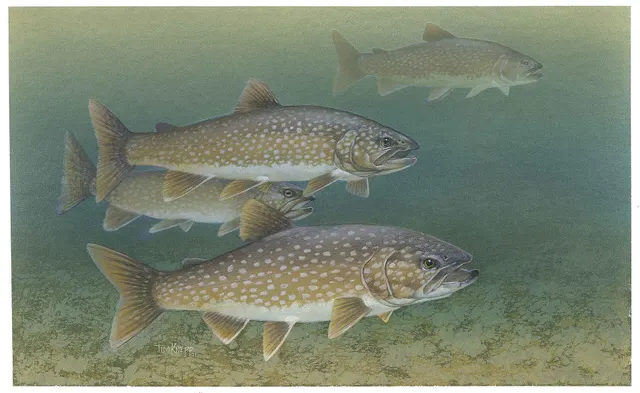 Lake troutCisco is the native forage species lake trout evolved alongside, and lake trout in waters with intact cisco populations grow measurably faster than those without.
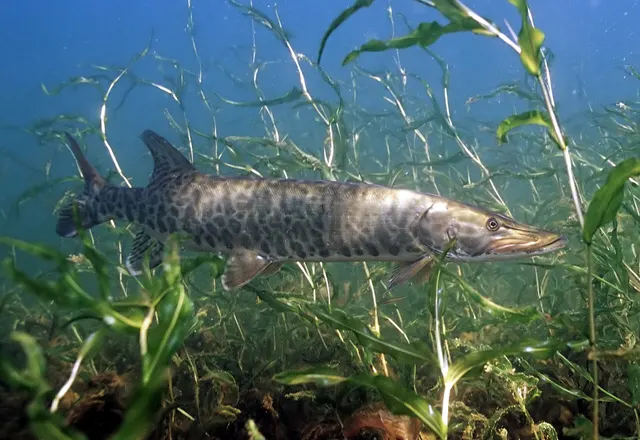 MuskellungeCisco are a substantial prey item for large muskellunge in northern lakes, and their open-water habit is one of the reasons big muskies are found well away from cover.
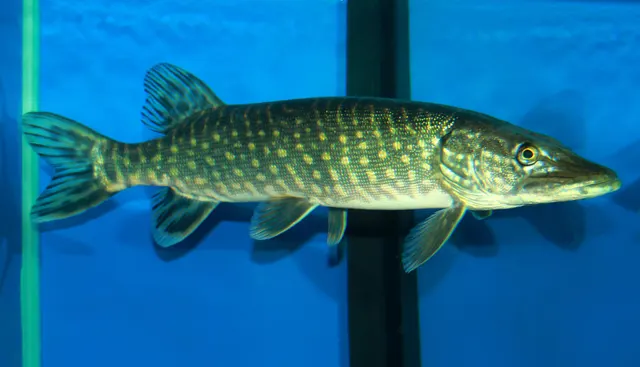 Northern pikeIn North American lakes cisco are a principal pike prey, and pike that key on cisco move deeper and further from cover than the classic weedbed picture suggests.
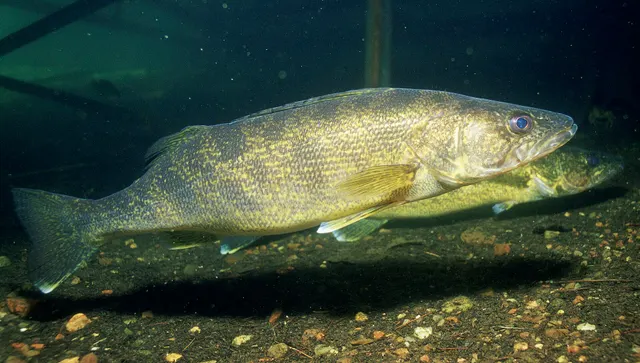 WalleyeCisco are taken where the two overlap, and walleye moving deep in summer are frequently following them.
Where it lives
Where you will find it
Sources and evidence
- FishBase: a global information system on fishes — Froese, R. and D. Pauly, eds. — FishBase Consortium (Scientific institute)Relied on for: Species identity, binomial, family placement, size, distribution and recorded biology for this species.States this directlyPassage read and verified
- FAO Species Identification Guides for Fishery Purposes and the FAO Species Catalogues — Food and Agriculture Organization of the United Nations (Scientific institute)Relied on for: The regional species account describing identity, distribution and the role of this species in the fisheries and food webs it belongs to.States this directlyCitation checked — the work exists and is described correctly
Why the 6 connections on this page are here, and the sources
Similar and related fish
Backed by research — 4 connections
Supported by peer-reviewed research or fisheries science. The sources are listed and can be checked.
Lake trout
Recorded diet evidence identifies Coregonus artedi as a food item of this predator at species level. The edge is written at that granularity and no further.
- FishBase: a global information system on fishes — Froese, R. and D. Pauly, eds. — FishBase Consortium (Scientific institute)Relied on for: Food items recorded for this predator, including Coregonus artedi.States this directlyPassage read and verified
- FAO Species Identification Guides for Fishery Purposes and the FAO Species Catalogues — Food and Agriculture Organization of the United Nations (Scientific institute)Relied on for: Species account describing the diet of this predator in the region where Coregonus artedi occurs.Background and mechanism onlyCitation checked — the work exists and is described correctly
Muskellunge
Recorded diet evidence identifies Coregonus artedi as a food item of this predator at species level. The edge is written at that granularity and no further.
- FishBase: a global information system on fishes — Froese, R. and D. Pauly, eds. — FishBase Consortium (Scientific institute)Relied on for: Food items recorded for this predator, including Coregonus artedi.States this directlyPassage read and verified
- FAO Species Identification Guides for Fishery Purposes and the FAO Species Catalogues — Food and Agriculture Organization of the United Nations (Scientific institute)Relied on for: Species account describing the diet of this predator in the region where Coregonus artedi occurs.Background and mechanism onlyCitation checked — the work exists and is described correctly
Northern pike
Recorded diet evidence identifies Coregonus artedi as a food item of this predator at species level. The edge is written at that granularity and no further.
- FishBase: a global information system on fishes — Froese, R. and D. Pauly, eds. — FishBase Consortium (Scientific institute)Relied on for: Food items recorded for this predator, including Coregonus artedi.States this directlyPassage read and verified
- FAO Species Identification Guides for Fishery Purposes and the FAO Species Catalogues — Food and Agriculture Organization of the United Nations (Scientific institute)Relied on for: Species account describing the diet of this predator in the region where Coregonus artedi occurs.Background and mechanism onlyCitation checked — the work exists and is described correctly
Walleye
Recorded diet evidence identifies Coregonus artedi as a food item of this predator at species level. The edge is written at that granularity and no further.
- FishBase: a global information system on fishes — Froese, R. and D. Pauly, eds. — FishBase Consortium (Scientific institute)Relied on for: Food items recorded for this predator, including Coregonus artedi.States this directlyPassage read and verified
- FAO Species Identification Guides for Fishery Purposes and the FAO Species Catalogues — Food and Agriculture Organization of the United Nations (Scientific institute)Relied on for: Species account describing the diet of this predator in the region where Coregonus artedi occurs.Background and mechanism onlyCitation checked — the work exists and is described correctly
Where it lives
Backed by research — 1 connection
Supported by peer-reviewed research or fisheries science. The sources are listed and can be checked.
Deep cold lakes
A claim that the species depends on the cold layer below the summer thermocline, which is a thermal-tolerance claim about the animal rather than an angling observation, and rests on the reference literature accordingly.
- FishBase: a global information system on fishes — Froese, R. and D. Pauly, eds. — FishBase Consortium (Scientific institute)Relied on for: Recorded depth range, temperature tolerance and habitat association for the species outside north-west Europe.States this directlyPassage read and verified
- The IUCN Red List of Threatened Species — International Union for Conservation of Nature (Conservation authority)Relied on for: Global conservation assessment, range and recorded threats for the species.States this directlyCitation checked — the work exists and is described correctly
Where you will find it
Backed by research — 1 connection
Supported by peer-reviewed research or fisheries science. The sources are listed and can be checked.
The Great Lakes
Occurrence of the species in this system or along this coast: a statement about the animal's distribution, not a venue recommendation.
- FishBase: a global information system on fishes — Froese, R. and D. Pauly, eds. — FishBase Consortium (Scientific institute)Relied on for: Distribution, salinity tolerance and habitat association recorded for the species, including its occurrence in this system.States this directlyPassage read and verified
- The IUCN Red List of Threatened Species — International Union for Conservation of Nature (Conservation authority)Relied on for: Assessment and range description for the species, including the waters in which it occurs.Background and mechanism onlyCitation checked — the work exists and is described correctly
How FishingHQ labels evidence is explained in the evidence policy.