Deep cold lakes
Habitat · Last reviewed 2026-08-15
Large, deep, cold, nutrient-poor lakes whose defining feature is a permanently cold bottom layer — the only fresh water that holds char, whitefish, lake trout and burbot, and the habitat those fish cannot leave.
Safety: cold water shock — can cause serious injury or death. 7 more points apply here.
- Water
- Freshwater
A deep cold lake is one that is deep enough to keep a layer of cold water at the bottom all summer. That single physical fact makes it a different environment from every other stillwater on FishingHQ, and it is why a small group of fish live in it and nowhere else.
What happens is stratification. As spring turns to summer the surface warms and becomes less dense, and it stops mixing with the water beneath. The lake settles into three layers: a warm surface layer, a narrow zone of rapid temperature change called the thermocline, and beneath that a cold, dark, undisturbed bottom layer. In a shallow lake the wind mixes the whole water column and no such bottom layer survives. In a deep one it persists from late spring until the autumn cooling brings the lake back into one temperature and it turns over.
The fish that matter here are the ones that cannot tolerate warm water. Arctic char, whitefish, vendace, cisco, lake trout and burbot are all coldwater species, and in a deep lake they spend the summer below the thermocline while the surface is unusable to them. In many of these lakes those populations are glacial relicts — fish left behind when the ice retreated, isolated ever since, and in some cases found in a handful of waters and nowhere else on earth.
For an angler the consequence is that DEPTH IS THE WHOLE PROBLEM. Through the stratified months a coldwater fish is not distributed through the lake; it is in a band. Finding that band is the fishing, which is why trolling with depth control, deep jigging and vertical presentation dominate here in a way they do not on a lowland water.
These are also among the most fragile freshwater fisheries there are. A relict char population in one deep lake is a closed system with nowhere to go, and warming surface water squeezes the habitat it depends on from above while nutrient enrichment removes the oxygen from below.
What characterises it
Large and deep — deep enough that summer wind cannot mix the whole water column, which in practice means tens of metres rather than a few. Typically glacial or tectonic in origin, cold, clear and nutrient-poor, with a rocky or coarse bottom in the shallows and fine sediment in the depths. Light penetrates far further than in a productive lowland lake, so the productive shallow shelf is a small fraction of the total area and most of the lake is deep, dark and cold.
The defining structure is vertical rather than horizontal. From late spring to autumn the water separates into a warm surface layer, a narrow thermocline where temperature falls sharply over a few metres, and a cold bottom layer that stays close to its winter temperature all summer. In autumn the surface cools until the density difference disappears and the whole lake mixes again — the turnover — and the cycle repeats.
What lives there
Low productivity and a coldwater fish community. Nutrient input is low, plant growth is limited to a narrow shallow margin, and the invertebrate life of the deep water is sparse and dominated by items that tolerate cold and dark — chironomid larvae, opossum shrimp where it occurs, and zooplankton that migrate vertically through the day.
The fish community is what makes these lakes distinctive. Arctic char, whitefish, vendace and cisco are coldwater plankton and invertebrate feeders that occupy the deep water; lake trout and burbot are the coldwater predators that eat them. Many of these populations are post-glacial relicts, isolated in single lakes since the ice retreated, and several are of considerable conservation interest with formal designations attached.
Warmwater fish are present but confined. Perch, pike and cyprinids occupy the shallow margin and the bays, and in summer they cannot follow food into the cold deep water any more than the char can come up into the warm surface. The lake effectively operates as two fisheries at once.
Through the year
The year is organised by stratification rather than by the calendar.
BEFORE STRATIFICATION, in spring, the lake is one temperature from top to bottom and coldwater fish can be anywhere, including in the shallows. This is the period when deep-water species are most accessible from the bank and is short.
DURING STRATIFICATION, through summer, the coldwater fish are below the thermocline and the warmwater fish are above it, and the two do not mix. Finding and fishing the correct depth band is the entire problem, and a bait fished at the wrong depth is fishing an empty part of the lake.
AT TURNOVER, in autumn, the lake mixes and the water column becomes uniform again. Fish redistribute and the fishing can change completely within days.
UNDER ICE, where the lake freezes, the water beneath is stable and slightly warmer at the bottom than at the surface, and the coldwater species remain accessible through the ice — which is why ice fishing traditions for char, whitefish and burbot developed on exactly these lakes.
Spawning is generally in autumn or early winter for the coldwater species, frequently on offshore shoals and reefs rather than in tributaries, which makes those specific pieces of bottom disproportionately important to the population.
Some of what lives here
Fish recorded here that FishingHQ holds a reviewed photograph of. It is not a complete list of what Deep cold lakes holds, and it is not a prediction that you will catch any of them — it is a way in to the ones we can show you.
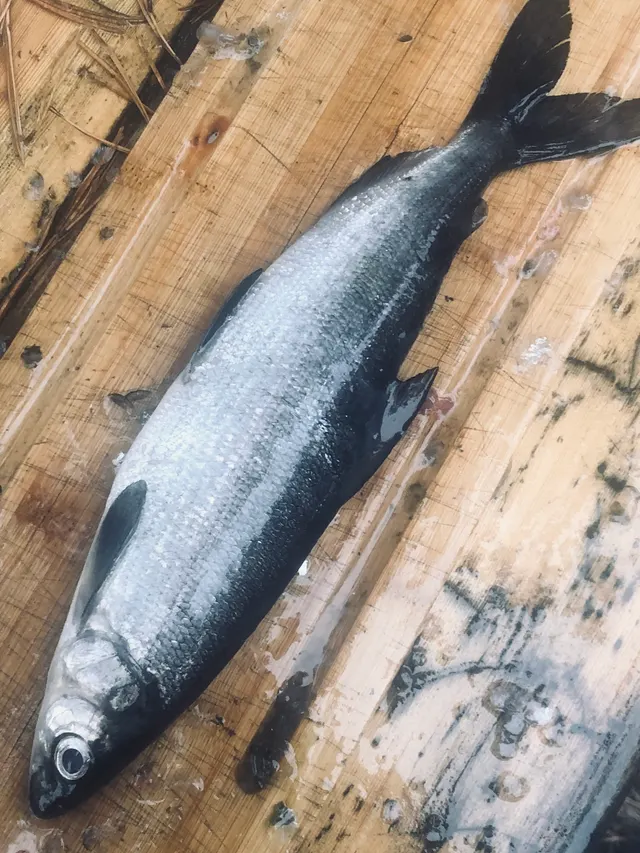 Common whitefishThe Alpine and northern lake fish that carries a different name in every country it lives in — powan, schelly, gwyniad, felchen, renke — and one of the few European species fished with a purpose-built rig of its own.
Vladislav Isaev — CC BY, via iNaturalist
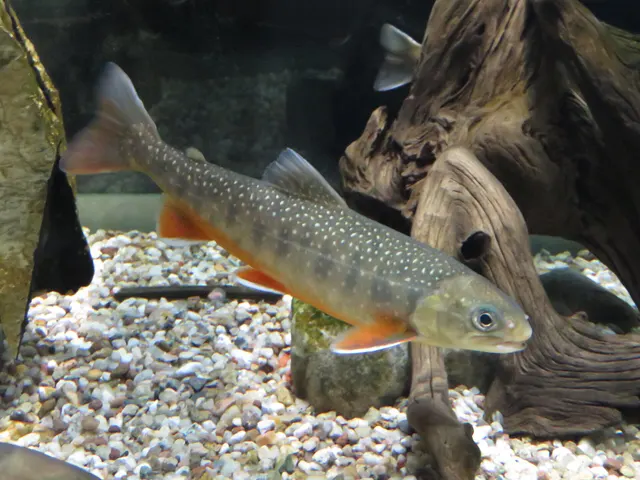 Arctic charThe most northerly freshwater fish in the world, a cold-demanding char with brilliant orange-red spawning bellies and highly distinct landlocked populations.
Xepheid — CC BY-SA 4.0, via Wikimedia Commons
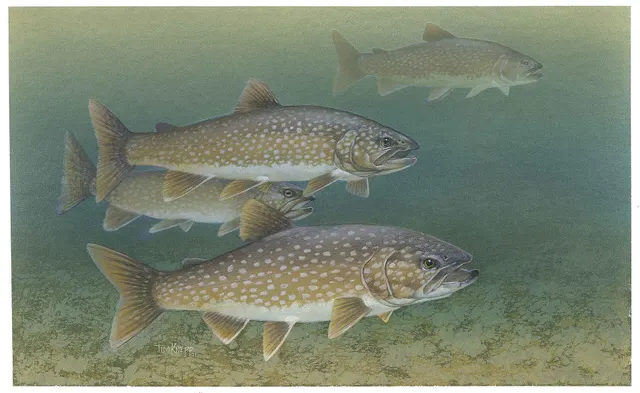 Lake troutA deep, cold, slow-growing char of northern lakes that can live decades and takes a very long time to replace anything removed.
Knepp Timothy, U.S. Fish and Wildlife Service — Public domain, via Wikimedia Commons
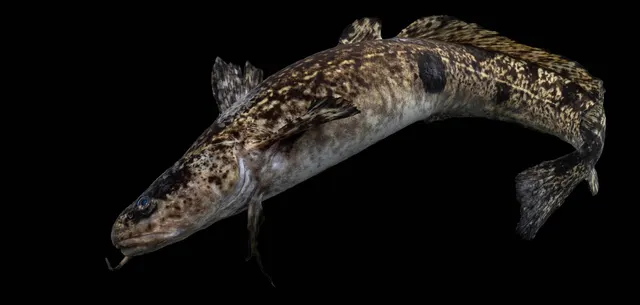 BurbotThe only freshwater cod, a nocturnal cold-water bottom predator with a single chin barbel that spawns under ice in midwinter.
U.S. Fish and Wildlife Service — public domain, via Wikimedia Commons
Safety
Cold water shock — Can cause serious injury or death
The surface of a deep lake stays cold late into the season and the water immediately below the thermocline is close to its winter temperature all year. A person entering it experiences cold water shock — an involuntary gasp and loss of breathing control — regardless of the air temperature on a summer day.
What reduces it: Wear a buoyancy aid in a boat and treat the water as cold whatever the weather is doing. A deep lake in July is not a warm lake with a cold bottom; the surface layer is thin and a person in the water is quickly through it.
Weather and lightning — Can cause serious injury or death
Large deep lakes generate their own conditions. Wind fetch across many kilometres builds a steep, short sea very quickly, and mountain-bounded lakes funnel and accelerate wind in ways a forecast for the surrounding area does not describe.
What reduces it: Watch the upwind end of the lake rather than the sky overhead, plan a route home that does not require crossing the widest water in a rising wind, and set a turn-back point before launching. Deciding not to go out is a legitimate decision.
Drowning and immersion — Can cause serious injury or death
Where these lakes freeze, ice thickness over deep water varies with current, springs, inflows and wind history, and a surface that carries weight in one place may not fifty metres away.
What reduces it: Ice safety is local knowledge and local measurement, not a rule from a website. Go with people who know the water, follow the local authority's or club's guidance for that lake, and carry ice picks and a throw line. If in doubt, do not go on.
Fishing alone — Can cause injury needing treatment
Many of these lakes are large, sparsely populated around their shores and a long way from help by road, so a mechanical failure or an injury a long way out is a slow rescue.
What reduces it: Tell somebody the intended route and return time, carry a means of calling for help that does not depend on mobile coverage, and carry the means to get off the water without an engine.
Precautions that always apply here
- Tell somebody where you are going and when you expect to be back.
- Carry a charged phone in a waterproof case, or another means of calling for help.
- Wear a buoyancy aid or lifejacket. Cold water incapacitates strong swimmers within a minute, long before swimming ability matters.
- Check, clean and dry your kit between different waters — the published guidance is 48 hours’ drying, in sunlight where possible, because a number of invasive species survive over two weeks in damp conditions. Nets, boots and wet mats move invasive species and disease more effectively than anything else anglers do.
Further safety reading
- Boat safety for anglers — Most fishing here is afloat and a long way out, on water with kilometres of fetch that builds a steep short sea very quickly, frequently in mountain-bounded basins that funnel wind in ways a regional forecast does not describe.
- Cold water shock and immersion — The surface layer is thin and everything beneath it is close to its winter temperature all year. Somebody entering a deep lake in July is through the warm layer in a second and into water cold enough to cause the involuntary gasp and loss of breathing control.
Check the rules before you fish
Fishing laws, bylaws, access rules, seasons, bait restrictions and permitted methods vary by location and can change. Check the current rules from the relevant authority and the water you intend to fish before fishing.
Check with:
- Current national or regional law for where you are fishing
- Current local bylaws
- The relevant fisheries authority
- The landowner, club or fishery whose water it is
- Any restrictions specific to the species or the method you intend to use
Where to go next
Fish found here
- Arctic charThe most cold-adapted freshwater fish of the northern hemisphere. Southern populations survive only in deep lakes where a cold bottom layer persists through summer, and are relicts isolated since the last glaciation.
- BurbotThe only wholly freshwater cod, and a coldwater fish that occupies the deep cold layer of large lakes through summer and becomes accessible in shallow water in winter.
- CiscoA North American coregonid of large, deep, cold lakes, occupying open water and moving with the depth of the coldwater layer through the year.
- Common whitefishA deep-lake coregonid feeding on zooplankton and bottom invertebrates in cold open water, occupying depths through the stratified season that shallow lakes cannot provide.
- Lake troutA large coldwater char of deep lakes, holding below the thermocline through the stratified season and spawning on offshore rocky shoals rather than in tributaries.
- VendaceA coldwater coregonid of deep, cold, oxygen-rich lakes, occupying open water and descending below the summer thermocline. Its British populations are glacial relicts in a handful of deep lakes and are of conservation concern.
Reading this water
- Dissolved oxygen and fishThe cold bottom layer is cut off from the surface for the whole stratified season, so it cannot be re-oxygenated. In an enriched lake the oxygen there is consumed and the coldwater habitat is squeezed from below at the same time as warming squeezes it from above — which is the mechanism behind the loss of relict char and coregonid populations.
- Thermoclines and stratificationThe habitat is defined by stratification. Understanding where the thermocline sits, how it moves through the season and what happens at turnover is not background here — it is the mechanism that decides where every coldwater fish in the lake is on a given day.
- Water temperature and fish activityThe lake is two fisheries at once and temperature is what separates them. Above the thermocline the warmwater fish are active and the coldwater ones cannot go; below it the reverse. A bait at the wrong temperature is not fishing slowly — it is fishing a part of the lake the target species is physiologically excluded from.
Sources and evidence
- Freshwater Fishes of the British Isles — HarperCollins (New Naturalist 75), 1992 (Reference work)Relied on for: Habitat character, thermal and chemical behaviour, and the fish communities associated with the freshwater environments described.States this directlyCitation checked — the work exists and is described correctly
- Environment Agency fisheries management, byelaws and rod licensing information — Environment Agency (Government fisheries body)Relied on for: That freshwater fisheries are managed under a licensing framework and that access, close seasons and stocking are regulated activities that differ between water types and jurisdictions.Background and mechanism onlyCitation checked — the work exists and is described correctly
- General angling website restatements of established technique — Various (Credible secondary source)Relied on for: That the practical angling patterns described — fishing a spate river on a falling flow, working depth over a summer thermocline, reading a tailwater's generation schedule — are widely restated practitioner knowledge rather than measured findings.Background and mechanism onlyCitation checked — the work exists and is described correctly
- The IUCN Red List of Threatened Species — International Union for Conservation of Nature (Conservation authority)Relied on for: That several of the coldwater fishes characteristic of deep glacial lakes carry unfavourable conservation assessments, and that isolated relict populations are assessed separately from widespread species.States this directlyCitation checked — the work exists and is described correctly
- JNCC species and habitat conservation advice — Joint Nature Conservation Committee (Conservation authority)Relied on for: That glacial relict fish populations in British and Irish deep lakes are a recognised conservation interest with designated sites and monitoring.Background and mechanism onlyCitation checked — the work exists and is described correctly
Why the 11 connections on this page are here, and the sources
Fish found here
Backed by research — 6 connections
Supported by peer-reviewed research or fisheries science. The sources are listed and can be checked.
Arctic char
A claim that the species depends on the cold layer below the summer thermocline, which is a thermal-tolerance claim about the animal rather than an angling observation, and rests on the reference literature accordingly.
- Freshwater Fishes of the British Isles — HarperCollins (New Naturalist 75), 1992 (Reference work)Relied on for: Distribution, habitat association, thermal requirements and life history of the freshwater fishes of the British Isles and north-west Europe.States this directlyCitation checked — the work exists and is described correctly
- FishBase: a global information system on fishes — Froese, R. and D. Pauly, eds. — FishBase Consortium (Scientific institute)Relied on for: Recorded depth range, temperature tolerance and habitat association for the species.States this directlyPassage read and verified
Burbot
A claim that the species depends on the cold layer below the summer thermocline, which is a thermal-tolerance claim about the animal rather than an angling observation, and rests on the reference literature accordingly.
- Freshwater Fishes of the British Isles — HarperCollins (New Naturalist 75), 1992 (Reference work)Relied on for: Distribution, habitat association, thermal requirements and life history of the freshwater fishes of the British Isles and north-west Europe.States this directlyCitation checked — the work exists and is described correctly
- FishBase: a global information system on fishes — Froese, R. and D. Pauly, eds. — FishBase Consortium (Scientific institute)Relied on for: Recorded depth range, temperature tolerance and habitat association for the species.States this directlyPassage read and verified
Cisco
A claim that the species depends on the cold layer below the summer thermocline, which is a thermal-tolerance claim about the animal rather than an angling observation, and rests on the reference literature accordingly.
- FishBase: a global information system on fishes — Froese, R. and D. Pauly, eds. — FishBase Consortium (Scientific institute)Relied on for: Recorded depth range, temperature tolerance and habitat association for the species outside north-west Europe.States this directlyPassage read and verified
- The IUCN Red List of Threatened Species — International Union for Conservation of Nature (Conservation authority)Relied on for: Global conservation assessment, range and recorded threats for the species.States this directlyCitation checked — the work exists and is described correctly
Common whitefish
A claim that the species depends on the cold layer below the summer thermocline, which is a thermal-tolerance claim about the animal rather than an angling observation, and rests on the reference literature accordingly.
- Freshwater Fishes of the British Isles — HarperCollins (New Naturalist 75), 1992 (Reference work)Relied on for: Distribution, habitat association, thermal requirements and life history of the freshwater fishes of the British Isles and north-west Europe.States this directlyCitation checked — the work exists and is described correctly
- FishBase: a global information system on fishes — Froese, R. and D. Pauly, eds. — FishBase Consortium (Scientific institute)Relied on for: Recorded depth range, temperature tolerance and habitat association for the species.States this directlyPassage read and verified
Lake trout
A claim that the species depends on the cold layer below the summer thermocline, which is a thermal-tolerance claim about the animal rather than an angling observation, and rests on the reference literature accordingly.
- FishBase: a global information system on fishes — Froese, R. and D. Pauly, eds. — FishBase Consortium (Scientific institute)Relied on for: Recorded depth range, temperature tolerance and habitat association for the species outside north-west Europe.States this directlyPassage read and verified
- The IUCN Red List of Threatened Species — International Union for Conservation of Nature (Conservation authority)Relied on for: Global conservation assessment, range and recorded threats for the species.States this directlyCitation checked — the work exists and is described correctly
Vendace
A claim that the species depends on the cold layer below the summer thermocline, which is a thermal-tolerance claim about the animal rather than an angling observation, and rests on the reference literature accordingly.
- Freshwater Fishes of the British Isles — HarperCollins (New Naturalist 75), 1992 (Reference work)Relied on for: Distribution, habitat association, thermal requirements and life history of the freshwater fishes of the British Isles and north-west Europe.States this directlyCitation checked — the work exists and is described correctly
- FishBase: a global information system on fishes — Froese, R. and D. Pauly, eds. — FishBase Consortium (Scientific institute)Relied on for: Recorded depth range, temperature tolerance and habitat association for the species.States this directlyPassage read and verified
Reading this water
Backed by research — 3 connections
Supported by peer-reviewed research or fisheries science. The sources are listed and can be checked.
Dissolved oxygen and fish
A link from a water type to the physical mechanism that governs it, which is a claim about limnology rather than about fishing.
- Freshwater Fishes of the British Isles — HarperCollins (New Naturalist 75), 1992 (Reference work)Relied on for: Distribution, habitat association, thermal requirements and life history of the freshwater fishes of the British Isles and north-west Europe.States this directlyCitation checked — the work exists and is described correctly
- FishBase: a global information system on fishes — Froese, R. and D. Pauly, eds. — FishBase Consortium (Scientific institute)Relied on for: Recorded depth range, temperature tolerance and habitat association for the species.States this directlyPassage read and verified
Thermoclines and stratification
A link from a water type to the physical mechanism that governs it, which is a claim about limnology rather than about fishing.
- Freshwater Fishes of the British Isles — HarperCollins (New Naturalist 75), 1992 (Reference work)Relied on for: Distribution, habitat association, thermal requirements and life history of the freshwater fishes of the British Isles and north-west Europe.States this directlyCitation checked — the work exists and is described correctly
- FishBase: a global information system on fishes — Froese, R. and D. Pauly, eds. — FishBase Consortium (Scientific institute)Relied on for: Recorded depth range, temperature tolerance and habitat association for the species.States this directlyPassage read and verified
Water temperature and fish activity
A link from a water type to the physical mechanism that governs it, which is a claim about limnology rather than about fishing.
- Freshwater Fishes of the British Isles — HarperCollins (New Naturalist 75), 1992 (Reference work)Relied on for: Distribution, habitat association, thermal requirements and life history of the freshwater fishes of the British Isles and north-west Europe.States this directlyCitation checked — the work exists and is described correctly
- FishBase: a global information system on fishes — Froese, R. and D. Pauly, eds. — FishBase Consortium (Scientific institute)Relied on for: Recorded depth range, temperature tolerance and habitat association for the species.States this directlyPassage read and verified
Safety reading
Official guidance — 2 connections
Stated by a fisheries authority, scientific institute or recognised angling body. Authoritative, but summarising rather than demonstrating.
Boat safety for anglers
A statement that a water type presents a particular hazard, resting on water-safety guidance issued by bodies with responsibility for it rather than on angling practice.
- RNLI water safety guidance: cold water shock and Float to Live — Royal National Lifeboat Institution (Water-safety or diver-training authority)Relied on for: Water-safety guidance on cold water shock, immersion, and the behaviour of moving and rising water.States this directlyPassage read and verified
- RoSPA water safety information and UK accidental drowning statistics — Royal Society for the Prevention of Accidents (Water-safety or diver-training authority)Relied on for: Guidance on inland and coastal water safety, including wading, sudden level change and the hazards of engineered structures.States this directlyPassage read and verified
Cold water shock and immersion
A statement that a water type presents a particular hazard, resting on water-safety guidance issued by bodies with responsibility for it rather than on angling practice.
- RNLI water safety guidance: cold water shock and Float to Live — Royal National Lifeboat Institution (Water-safety or diver-training authority)Relied on for: Water-safety guidance on cold water shock, immersion, and the behaviour of moving and rising water.States this directlyPassage read and verified
- RoSPA water safety information and UK accidental drowning statistics — Royal Society for the Prevention of Accidents (Water-safety or diver-training authority)Relied on for: Guidance on inland and coastal water safety, including wading, sudden level change and the hazards of engineered structures.States this directlyPassage read and verified
How FishingHQ labels evidence is explained in the evidence policy.